Questions with solutions
Question 1NEET 2026, Q157
Match List I with List II:
| List I (Drug) | List II (Effect) |
|---|
| A. Nicotine | I. Causes sense of euphoria and increased energy |
| B. Morphine | II. Stimulates adrenal gland to release catecholamines into blood circulation |
| C. Heroin | III. Effective sedative and painkiller |
| D. Cocaine | IV. A depressant; slows down body function |
Choose the correct answer from the options given below:
- 1A-III, B-II, C-IV, D-I
- 2A-II, B-III, C-IV, D-I
- 3A-II, B-III, C-I, D-IV
- 4A-III, B-II, C-I, D-IV
Show answer and solution
Correct: option 2, A-II, B-III, C-IV, D-I
Nicotine stimulates the adrenal gland to release adrenaline and nor-adrenaline (catecholamines). Morphine is a very effective sedative and painkiller. Heroin is a depressant that slows down body functions. Cocaine stimulates the central nervous system, giving euphoria and increased energy. So A-II, B-III, C-IV, D-I.
Question 2NEET 2026, Q170
The following are the stages of life cycle of Plasmodium. Arrange the stages in the proper order.
A. The parasites reproduce asexually in RBCs, bursting the cells.
B. The parasites reproduce asexually in liver cells, bursting the cells and releasing into blood.
C. Gametocytes develop in RBCs.
D. Sporozoites reach the liver through the blood.
E. Female mosquito injects sporozoites into humans during bite.
Choose the correct answer from the options given below:
- 1A, B, C, D, E
- 2E, D, B, A, C
- 3C, A, B, D, E
- 4E, C, D, B, A
Show answer and solution
Correct: option 2, E, D, B, A, C
The female Anopheles injects sporozoites with its bite (E). They travel in the blood to the liver (D), multiply asexually in liver cells and are released into the blood (B), then multiply asexually in RBCs and burst them (A). Finally the sexual stages, the gametocytes, develop in RBCs (C). The order is E, D, B, A, C.
Question 3NEET 2026 Re-exam, Q165
Which of the following are secondary lymphoid organs?
(a) Bone marrow
(b) Tonsils
(c) Spleen
(d) Thymus
Choose the correct answer from the options given below:
- 1(a) and (b) only
- 2(b) and (c) only
- 3(b) and (d) only
- 4(a) and (d) only
Show answer and solution
Correct: option 2, (b) and (c) only
Bone marrow and thymus are primary lymphoid organs, where lymphocytes are formed and mature. Tonsils and spleen, like the lymph nodes and Peyer's patches, are secondary lymphoid organs where lymphocytes meet antigens. So (b) and (c) only.
Question 4NEET 2026 Re-exam, Q171
Colostrum, secreted by mother during initial days of lactation, is abundant in __________.
- 1IgG
- 2IgM
- 3IgA
- 4IgD
Show answer and solution
Correct: option 3, IgA
The yellowish colostrum produced in the first days of lactation is rich in IgA antibodies, which protect the newborn. This is an example of passive immunity.
Question 5NEET 2026 Re-exam, Q177
Which of the following is used as an effective sedative and painkiller for treating post-surgery patients?
- 1Interferon
- 2Antibiotics
- 3Morphine
- 4Anti-retroviral drugs
Show answer and solution
Correct: option 3, Morphine
Morphine is an opioid obtained from the latex of the poppy plant. It is a very effective sedative and painkiller and is given to patients who have undergone surgery.
Question 6NEET 2026 Re-exam, Q179
Which of the following statements is correct about Plasmodium?
- 1Reproduces sexually in liver cells
- 2Reproduces sexually in RBCs
- 3Gametocytes develop in mosquito gut
- 4Fertilization takes place in mosquito gut
Show answer and solution
Correct: option 4, Fertilization takes place in mosquito gut
In humans Plasmodium multiplies asexually, first in liver cells and then in red blood cells, and the gametocytes develop in the red blood cells. The female Anopheles takes up the gametocytes with a blood meal, and fertilization takes place in the mosquito's gut.
Question 7NEET 2025, Q120
Which are correct:
A. Computed tomography and magnetic resonance imaging detect cancers of internal organs.
B. Chemotherapeutics drugs are used to kill non-cancerous cells.
C. α-interferon activate the cancer patients' immune system and helps in destroying the tumour.
D. Chemotherapeutic drugs are biological response modifiers.
E. In the case of leukaemia blood cell counts are decreased.
Choose the correct answer from the options given below:
- 1B and D only
- 2D and E only
- 3C and D only
- 4A and C only
Show answer and solution
Correct: option 4, A and C only
A is correct: radiography, CT and MRI are used to detect cancers of the internal organs. C is correct: α-interferon is a biological response modifier that activates the patient's immune system and helps destroy the tumour. B is wrong because chemotherapeutic drugs are meant to kill cancerous cells, D is wrong because those drugs are not biological response modifiers, and E is wrong because blood cell counts are raised in leukaemia. So A and C only.
Question 8NEET 2025, Q135
Neoplastic characteristics of cells refer to:
A. A mass of proliferating cell
B. Rapid growth of cells
C. Invasion and damage to the surrounding tissue
D. Those confined to original location
Choose the correct answer from the options given below:
- 1A, B only
- 2A, B, C only
- 3A, B, D only
- 4B, C, D only
Show answer and solution
Correct: option 2, A, B, C only
Neoplastic, or tumour, cells are the cells of a malignant tumour: a mass of proliferating cells (A) that grow very rapidly (B) and invade and damage the surrounding normal tissue (C). Staying confined to the original location (D) is the feature of a benign tumour. So A, B and C only.
Question 9NEET 2025, Q143
Identify the statement that is NOT correct.
- 1Each antibody has two light and two heavy chains.
- 2The heavy and light chains are held together by disulfide bonds.
- 3Antigen binding site is located at C-terminal region of antibody molecules.
- 4Constant region of heavy and light chains are located at C-terminus of antibody molecules.
Show answer and solution
Correct: option 3, Antigen binding site is located at C-terminal region of antibody molecules.
An antibody is : two heavy and two light chains joined by disulfide bonds. The antigen binding site is formed by the variable regions at the N-terminal ends of the chains, not the C-terminal ends, where the constant regions lie. So statement (3) is the incorrect one.
Question 10NEET 2025, Q156
After maturation, in primary lymphoid organs, the lymphocytes migrate for interaction with antigens to secondary lymphoid organ(s) / tissue(s) like:
A. thymus
B. bone marrow
C. spleen
D. lymph nodes
E. Peyer's patches
Choose the correct answer from the options given below:
- 1B, C, D only
- 2A, B, C only
- 3E, A, B only
- 4C, D, E only
Show answer and solution
Correct: option 4, C, D, E only
Thymus and bone marrow are the primary lymphoid organs, where lymphocytes mature. The spleen, lymph nodes and Peyer's patches (along with tonsils and appendix) are secondary lymphoid organs, where lymphocytes meet antigens. So C, D and E only.
Question 11NEET 2025, Q167
Which of the following type of immunity is present at the time of birth and is a non-specific type of defence in the human body?
- 1Acquired Immunity
- 2Innate Immunity
- 3Cell-mediated Immunity
- 4Humoral Immunity
Show answer and solution
Correct: option 2, Innate Immunity
Innate immunity is the non-specific defence present from birth, made up of physical, physiological, cellular and cytokine barriers. Acquired immunity (humoral and cell-mediated) is pathogen specific and develops after exposure.
Question 12NEET 2024, Q158
Match List I with List II:
| List I | List II |
|---|
| A. Cocaine | I. Effective sedative in surgery |
| B. Heroin | II. Cannabis sativa |
| C. Morphine | III. Erythroxylum |
| D. Marijuana | IV. Papaver somniferum |
Choose the correct answer from the options given below:
- 1A-III, B-IV, C-I, D-II
- 2A-IV, B-III, C-I, D-II
- 3A-I, B-III, C-II, D-IV
- 4A-II, B-I, C-III, D-IV
Show answer and solution
Correct: option 1, A-III, B-IV, C-I, D-II
Cocaine comes from the coca plant Erythroxylum coca. Heroin is made from morphine, which is extracted from the latex of the poppy Papaver somniferum. Morphine is a very effective sedative and painkiller used for patients who have had surgery. Marijuana is obtained from Cannabis sativa. So A-III, B-IV, C-I, D-II.
Question 13NEET 2024, Q170
Match List I with List II:
| List I | List II |
|---|
| A. Common cold | I. Plasmodium |
| B. Haemozoin | II. Typhoid |
| C. Widal test | III. Rhinoviruses |
| D. Allergy | IV. Dust mites |
Choose the correct answer from the options given below:
- 1A-IV, B-II, C-III, D-I
- 2A-II, B-IV, C-III, D-I
- 3A-I, B-III, C-II, D-IV
- 4A-III, B-I, C-II, D-IV
Show answer and solution
Correct: option 4, A-III, B-I, C-II, D-IV
The common cold is caused by rhinoviruses. Haemozoin is the toxic substance released when red blood cells infected with Plasmodium burst, causing the chill and fever of malaria. The Widal test confirms typhoid. Dust mites are common allergens. So A-III, B-I, C-II, D-IV.
Question 14NEET 2024, Q175
Match List I with List II:
| List I | List II |
|---|
| A. Typhoid | I. Fungus |
| B. Leishmaniasis | II. Nematode |
| C. Ringworm | III. Protozoa |
| D. Filariasis | IV. Bacteria |
Choose the correct answer from the options given below:
- 1A-II, B-IV, C-III, D-I
- 2A-I, B-III, C-II, D-IV
- 3A-IV, B-III, C-I, D-II
- 4A-III, B-I, C-IV, D-II
Show answer and solution
Correct: option 3, A-IV, B-III, C-I, D-II
Typhoid is caused by the bacterium Salmonella typhi. Leishmaniasis (kala-azar) is caused by the protozoan Leishmania. Ringworm is caused by fungi such as Microsporum, Trichophyton and Epidermophyton. Filariasis is caused by the nematode Wuchereria. So A-IV, B-III, C-I, D-II.
Question 15NEET 2024, Q182
Which of the following are Autoimmune disorders?
A. Myasthenia gravis
B. Rheumatoid arthritis
C. Gout
D. Muscular dystrophy
E. Systemic Lupus Erythematosus (SLE)
Choose the most appropriate answer from the options given below:
- 1C, D & E only
- 2A, B & D only
- 3A, B & E only
- 4B, C & E only
Show answer and solution
Correct: option 3, A, B & E only
In myasthenia gravis, rheumatoid arthritis and SLE the immune system attacks the body's own tissues, so these are autoimmune disorders. Gout is inflammation of joints due to deposition of uric acid crystals, and muscular dystrophy is a genetic disorder with progressive degeneration of skeletal muscle. So A, B and E only.
Question 16NEET 2024, Q195
Given below are two statements:
Statement I: Bone marrow is the main lymphoid organ where all blood cells including lymphocytes are produced.
Statement II: Both bone marrow and thymus provide micro environments for the development and maturation of T-lymphocytes.
In the light of the above statements, choose the most appropriate answer from the options given below:
- 1Statement I is incorrect but Statement II is correct.
- 2Both Statement I and Statement II are correct.
- 3Both Statement I and Statement II are incorrect.
- 4Statement I is correct but Statement II is incorrect.
Show answer and solution
Correct: option 2, Both Statement I and Statement II are correct.
Bone marrow and thymus are the primary lymphoid organs. All blood cells, including lymphocytes, are produced in the bone marrow, and the two organs together provide the micro-environments in which T-lymphocytes develop and mature. Both statements are taken as correct, as worded in the NCERT textbook.
Question 17NEET 2024 Re-exam, Q175
Match List-I with List-II:
| List I | List II |
|---|
| A. Malignant tumors | I. Destroy tumors |
| B. MALT | II. AIDS |
| C. NACO | III. Metastasis |
| D. -Interferons | IV. Lymphoid tissue |
Choose the correct answer from the options given below:
- 1A-III, B-IV, C-II, D-I
- 2A-IV, B-III, C-II, D-I
- 3A-III, B-IV, C-I, D-II
- 4A-III, B-I, C-IV, D-II
Show answer and solution
Correct: option 1, A-III, B-IV, C-II, D-I
Malignant tumours spread to distant sites, a property called metastasis. MALT is the mucosa-associated lymphoid tissue. NACO, the National AIDS Control Organisation, works on AIDS. Alpha-interferons are biological response modifiers that activate the immune system and help to destroy tumours. So A-III, B-IV, C-II, D-I.
Question 18NEET 2024 Re-exam, Q199
Match List I with List II:
| List - I | List - II |
|---|
| A. B-Lymphocytes | I. Passive immunity |
| B. Interferons | II. Cell mediated immunity |
| C. T-Lymphocytes | III. Produce an army of proteins in response to pathogens |
| D. Colostrum | IV. Innate immunity |
Choose the correct answer from the options given below:
- 1A-I, B-IV, C-II, D-III
- 2A-IV, B-II, C-III, D-I
- 3A-III, B-IV, C-II, D-I
- 4A-II, B-IV, C-I, D-III
Show answer and solution
Correct: option 3, A-III, B-IV, C-II, D-I
B-lymphocytes produce an army of proteins, the antibodies, in response to pathogens. Interferons, released by virus-infected cells, are a cytokine barrier of innate immunity. T-lymphocytes carry out cell mediated immunity. Colostrum gives the infant ready-made antibodies, which is passive immunity. So A-III, B-IV, C-II, D-I.
Question 19NEET 2023, Q156
Match List I with List II.
| List I | List II |
|---|
| A. Heroin | I. Effect on cardiovascular system |
| B. Marijuana | II. Slow down body function |
| C. Cocaine | III. Painkiller |
| D. Morphine | IV. Interfere with transport of dopamine |
Choose the correct answer from the options given below:
- 1A-II, B-I, C-IV, D-III
- 2A-I, B-II, C-III, D-IV
- 3A-IV, B-III, C-II, D-I
- 4A-III, B-IV, C-I, D-II
Show answer and solution
Correct: option 1, A-II, B-I, C-IV, D-III
Heroin (smack) is a depressant and slows down body functions (II). Marijuana is a cannabinoid, and cannabinoids affect the cardiovascular system (I). Cocaine interferes with the transport of the neurotransmitter dopamine (IV). Morphine is a very effective sedative and painkiller (III). This is option (1).
Question 20NEET 2023, Q163
Match List I with List II.
| List I | List II |
|---|
| A. Ringworm | I. Haemophilus influenzae |
| B. Filariasis | II. Trichophyton |
| C. Malaria | III. Wuchereria bancrofti |
| D. Pneumonia | IV. Plasmodium vivax |
Choose the correct answer from the options given below:
- 1A-II, B-III, C-IV, D-I
- 2A-II, B-III, C-I, D-IV
- 3A-III, B-II, C-I, D-IV
- 4A-III, B-II, C-IV, D-I
Show answer and solution
Correct: option 1, A-II, B-III, C-IV, D-I
Ringworm is caused by fungi such as Trichophyton (II). Filariasis is caused by the worm Wuchereria bancrofti (III). Malaria is caused by Plasmodium, for example Plasmodium vivax (IV). Pneumonia is caused by the bacteria Streptococcus pneumoniae and Haemophilus influenzae (I). This is option (1).
Question 21NEET 2023, Q184
In which blood corpuscles, the HIV undergoes replication and produces progeny viruses?
- 1 cells
- 2B-lymphocytes
- 3Basophils
- 4Eosinophils
Show answer and solution
Correct: option 1, cells
After entering the body HIV first multiplies in macrophages, which act as an HIV factory. It then enters helper T-lymphocytes ( cells), replicates there and produces progeny viruses, which attack other helper T-cells. The fall in helper T-cells causes the immune deficiency. So option (1) is right.
Question 22NEET 2023 Manipur, Q165
Diacetyl morphine is also called as:
- 1Crack
- 2Smack
- 3Amphetamine
- 4Barbiturate
Show answer and solution
Correct: option 2, Smack
Heroin, commonly called smack, is chemically diacetylmorphine, made by acetylation of morphine. Crack is a form of cocaine, and amphetamines and barbiturates are synthetic drugs.
Question 23NEET 2023 Manipur, Q174
Match List - I with List - II.
| List - I | List - II |
|---|
| (A) Typhoid | (I) Protozoan |
| (B) Elephantiasis | (II) Salmonella |
| (C) Ringworm | (III) Aschelminthes |
| (D) Malaria | (IV) Microsporum |
Choose the correct answer from the options given below:
- 1A-II, B-III, C-IV, D-I
- 2A-II, B-IV, C-III, D-I
- 3A-I, B-IV, C-III, D-II
- 4A-I, B-III, C-IV, D-II
Show answer and solution
Correct: option 1, A-II, B-III, C-IV, D-I
Typhoid is caused by the bacterium Salmonella typhi, elephantiasis by the filarial worm Wuchereria (an aschelminth), ringworm by fungi such as Microsporum, and malaria by the protozoan Plasmodium. So A-II, B-III, C-IV, D-I.
Question 24NEET 2023 Manipur, Q190
Match List-I with List-II.
| List-I | List-II |
|---|
| (A) Cytokine barriers | (I) Mucus coating of respiratory tract |
| (B) Cellular barriers | (II) Interferons |
| (C) Physiological barriers | (III) Neutrophils and Macrophages |
| (D) Physical barriers | (IV) Tears and Saliva |
Choose the correct answer from the options given below:
- 1A-III, B-I, C-II, D-IV
- 2A-II, B-III, C-I, D-IV
- 3A-II, B-III, C-IV, D-I
- 4A-III, B-I, C-IV, D-II
Show answer and solution
Correct: option 3, A-II, B-III, C-IV, D-I
These are the four barriers of innate immunity. Interferons are cytokine barriers, neutrophils and macrophages are cellular barriers, tears and saliva are physiological barriers, and the mucus coating of the respiratory tract is a physical barrier. So A-II, B-III, C-IV, D-I.
Question 25NEET 2022, Q179
Given below are two statements:
Statement I: Autoimmune disorder is a condition where body defense mechanism recognizes its own cells as foreign bodies.
Statement II: Rheumatoid arthritis is a condition where body does not attack self cells.
In the light of the above statements, choose the most appropriate answer from the options given below:
- 1Statement I is incorrect but Statement II is correct
- 2Both Statement I and Statement II are correct
- 3Both Statement I and Statement II are incorrect
- 4Statement I is correct but Statement II is incorrect
Show answer and solution
Correct: option 4, Statement I is correct but Statement II is incorrect
In an autoimmune disorder the immune system treats the body's own cells as foreign and attacks them, so Statement I is correct. Rheumatoid arthritis is itself an autoimmune disease in which the body attacks its own joint tissue, so Statement II is incorrect.
Question 26NEET 2022, Q186
Select the incorrect statement with respect to acquired immunity.
- 1Acquired immunity is non-specific type of defense present at the time of birth.
- 2Primary response is produced when our body encounters a pathogen for the first time.
- 3Anamnestic response is elicited on subsequent encounters with the same pathogen.
- 4Anamnestic response is due to memory of first encounter.
Show answer and solution
Correct: option 1, Acquired immunity is non-specific type of defense present at the time of birth.
Acquired immunity is pathogen-specific and develops after birth; the non-specific defence present at the time of birth is innate immunity, so statement (1) is incorrect. The other statements correctly describe the primary response and the secondary (anamnestic) response, which depends on memory of the first encounter.
Question 27NEET 2022 Re-exam, Q155
Which of the following reasons is mainly responsible for graft rejection in transplantation of organs?
- 1Cell-mediated response
- 2Inability of recipient to differentiate between ‘self’ and ‘non-self’ tissues/cells
- 3Humoral immune response only
- 4Auto-immune response
Show answer and solution
Correct: option 1, Cell-mediated response
The body recognises a graft as non-self, and the T-lymphocytes attack it. This cell-mediated immune response is what rejects the graft, which is why tissue matching and immunosuppressants are needed.
Question 28NEET 2022 Re-exam, Q200
Match List-I with List-II:
| List-I | List-II |
|---|
| (a) Cellular barrier | (i) Interferons |
| (b) Cytokine barrier | (ii) Mucus |
| (c) Physical barrier | (iii) Neutrophils |
| (d) Physiological barrier | (iv) HCl in gastric juice |
Choose the correct answer from the options given below:
- 1a-iii, b-i, c-ii, d-iv
- 2a-ii, b-iii, c-iv, d-i
- 3a-ii, b-iii, c-i, d-iv
- 4a-iii, b-iv, c-ii, d-i
Show answer and solution
Correct: option 1, a-iii, b-i, c-ii, d-iv
These are the four barriers of innate immunity. Neutrophils are phagocytic cells, a cellular barrier (iii). Interferons from virus-infected cells are the cytokine barrier (i). The mucus coating of the epithelium traps microbes, a physical barrier (ii). Acid in the stomach is a physiological barrier (iv). So a-iii, b-i, c-ii, d-iv.
Question 29NEET 2021, Q196
Match List - I with List - II.
| List - I | List - II |
|---|
| (a) Filariasis | (i) Haemophilus influenzae |
| (b) Amoebiasis | (ii) Trichophyton |
| (c) Pneumonia | (iii) Wuchereria bancrofti |
| (d) Ringworm | (iv) Entamoeba histolytica |
Choose the correct answer from the options given below.
- 1a-iv, b-i, c-iii, d-ii
- 2a-iii, b-iv, c-i, d-ii
- 3a-i, b-ii, c-iv, d-iii
- 4a-ii, b-iii, c-i, d-iv
Show answer and solution
Correct: option 2, a-iii, b-iv, c-i, d-ii
Filariasis is caused by the worm Wuchereria bancrofti (iii). Amoebiasis is caused by the protozoan Entamoeba histolytica (iv). Pneumonia is caused by bacteria such as Haemophilus influenzae (i). Ringworm is caused by fungi such as Trichophyton (ii). So a-iii, b-iv, c-i, d-ii.
Question 30NEET 2020, Q69
Identify the wrong statement with reference to immunity.
- 1When exposed to antigen (living or dead) antibodies are produced in the host's body. It is called "Active immunity".
- 2When ready-made antibodies are directly given, it is called "Passive immunity".
- 3Active immunity is quick and gives full response.
- 4Foetus receives some antibodies from mother, it is an example for passive immunity.
Show answer and solution
Correct: option 3, Active immunity is quick and gives full response.
Active immunity develops when the body makes its own antibodies after meeting an antigen; it is slow and takes time to give its full effective response. Passive immunity, where ready-made antibodies are given (as from mother to foetus across the placenta), is the quick one. So statement (3) is wrong.
Question 31NEET 2020, Q72
Match the following diseases with the causative organism and select the correct option.
| Column - I | Column - II |
|---|
| (a) Typhoid | (i) Wuchereria |
| (b) Pneumonia | (ii) Plasmodium |
| (c) Filariasis | (iii) Salmonella |
| (d) Malaria | (iv) Haemophilus |
- 1a-i, b-iii, c-ii, d-iv
- 2a-iii, b-iv, c-i, d-ii
- 3a-ii, b-i, c-iii, d-iv
- 4a-iv, b-i, c-ii, d-iii
Show answer and solution
Correct: option 2, a-iii, b-iv, c-i, d-ii
Typhoid is caused by the bacterium Salmonella typhi (a-iii). Pneumonia is caused by Streptococcus pneumoniae and Haemophilus influenzae (b-iv). Filariasis is caused by the worm Wuchereria (c-i). Malaria is caused by the protozoan Plasmodium (d-ii).
Question 32NEET 2020, Q101
The infectious stage of Plasmodium that enters the human body is:
- 1Trophozoites
- 2Sporozoites
- 3Female gametocytes
- 4Male gametocytes
Show answer and solution
Correct: option 2, Sporozoites
Plasmodium enters the human body as sporozoites, injected with the saliva of an infected female Anopheles mosquito when it bites. Gametocytes form later inside red blood cells and are the stage taken up by the mosquito.
Question 33NEET 2020 Phase 2, Q65
Match the following columns and select the correct option:
| Column - I | Column - II |
|---|
| (i) Typhoid | (a) Haemophilus influenzae |
| (ii) Malaria | (b) Wuchereria bancrofti |
| (iii) Pneumonia | (c) Plasmodium vivax |
| (iv) Filariasis | (d) Salmonella typhi |
- 1i-c, ii-d, iii-b, iv-a
- 2i-a, ii-c, iii-b, iv-d
- 3i-a, ii-b, iii-d, iv-c
- 4i-d, ii-c, iii-a, iv-b
Show answer and solution
Correct: option 4, i-d, ii-c, iii-a, iv-b
Typhoid is caused by the bacterium Salmonella typhi. Malaria is caused by Plasmodium, for example Plasmodium vivax. Pneumonia is caused by Haemophilus influenzae (and Streptococcus pneumoniae), and filariasis by the worm Wuchereria bancrofti. So the matching is i-d, ii-c, iii-a, iv-b.
Question 34NEET 2020 Phase 2, Q85
The yellowish fluid "colostrum" secreted by mammary glands of mother during the initial days of lactation has abundant antibodies (IgA) to protect the infant. This type of immunity is called as:
- 1Active immunity
- 2Acquired immunity
- 3Autoimmunity
- 4Passive immunity
Show answer and solution
Correct: option 4, Passive immunity
The infant does not make these antibodies; it receives them ready-made from the mother. Protection by ready-made antibodies given to the body is passive immunity. In active immunity the body makes its own antibodies after meeting the antigen.
Question 35NEET 2019, Q92
Colostrum, the yellowish fluid, secreted by mother during the initial days of lactation is very essential to impart immunity to the newborn infants because it contains:
- 1Natural killer cells
- 2Monocytes
- 3Macrophages
- 4Immunoglobulin A
Show answer and solution
Correct: option 4, Immunoglobulin A
Colostrum is rich in ready-made antibodies of the IgA class. The infant receives them through the milk, which gives it passive immunity during the first days of life, so the answer is Immunoglobulin A.
Question 36NEET 2019, Q149
Drug called 'Heroin' is synthesized by:
- 1methylation of morphine
- 2acetylation of morphine
- 3glycosylation of morphine
- 4nitration of morphine
Show answer and solution
Correct: option 2, acetylation of morphine
Heroin, commonly called smack, is diacetylmorphine. It is made by acetylation of morphine, which is extracted from the latex of the poppy plant Papaver somniferum.
Question 37NEET 2019, Q162
Which of the following immune responses is responsible for rejection of kidney graft?
- 1Auto-immune response
- 2Humoral immune response
- 3Inflammatory immune response
- 4Cell-mediated immune response
Show answer and solution
Correct: option 4, Cell-mediated immune response
The body tells 'self' from 'non-self', and the response mediated by T-lymphocytes, called cell-mediated immunity, attacks the foreign cells of a transplanted organ. This is why tissue and blood group matching and immunosuppressants are needed for a kidney graft.
Question 38NEET 2019, Q175
Identify the correct pair representing the causative agent of typhoid fever and the confirmatory test for typhoid.
- 1Plasmodium vivax / UTI test
- 2Streptococcus pneumoniae / Widal test
- 3Salmonella typhi / Anthrone test
- 4Salmonella typhi / Widal test
Show answer and solution
Correct: option 4, Salmonella typhi / Widal test
Typhoid fever is caused by the bacterium Salmonella typhi and is confirmed by the Widal test. Plasmodium vivax causes malaria and Streptococcus pneumoniae causes pneumonia; the anthrone test is a chemical test for carbohydrates.
Question 39NEET 2019 Odisha, Q94
Humans have acquired immune system that produces antibodies to neutralize pathogens. Still innate immune system is present at the time of birth because it
- 1has natural killer cells which can phagocytose and destroy microbes.
- 2provides passive immunity.
- 3is very specific and uses different macrophages.
- 4produces memory cells for mounting fast secondary response.
Show answer and solution
Correct: option 1, has natural killer cells which can phagocytose and destroy microbes.
Innate immunity is the non-specific defence present from birth. Its cellular barriers include natural killer cells, neutrophils and macrophages, which destroy microbes straight away. Specificity and memory cells belong to acquired immunity, and passive immunity means ready-made antibodies, so the other options do not describe innate immunity.
Question 40NEET 2019 Odisha, Q169
Coca alkaloid or cocaine is obtained from:
- 1Erythroxylum coca
- 2Datura
- 3Papaver somniferum
- 4Atropa belladonna
Show answer and solution
Correct: option 2, Datura
Cocaine is obtained from the coca plant, Erythroxylum coca, which is native to South America. It interferes with the transport of the neurotransmitter dopamine. Papaver somniferum gives the opioids (morphine), while Atropa belladonna and Datura are plants with hallucinogenic properties.
Question 41NEET 2018, Q157
Which part of poppy plant is used to obtain the drug “Smack” ?
- 1Roots
- 2Latex
- 3Flowers
- 4Leaves
Show answer and solution
Correct: option 2, Latex
Smack is heroin (diacetylmorphine), made by acetylation of morphine. Morphine is extracted from the latex of the unripe capsule of the poppy plant, Papaver somniferum.
Question 42NEET 2018, Q175
In which disease does mosquito transmitted pathogen cause chronic inflammation of lymphatic vessels ?
- 1Ringworm disease
- 2Ascariasis
- 3Elephantiasis
- 4Amoebiasis
Show answer and solution
Correct: option 3, Elephantiasis
Elephantiasis (filariasis) is caused by the filarial worms Wuchereria bancrofti and W. malayi, which are spread by the bite of female mosquitoes. The worms live in the lymphatic vessels, usually of the lower limbs, and cause slowly developing chronic inflammation.
Question 43NEET 2018, Q176
Which of the following is not an autoimmune disease ?
- 1Alzheimer’s disease
- 2Rheumatoid arthritis
- 3Psoriasis
- 4Vitiligo
Show answer and solution
Correct: option 1, Alzheimer’s disease
Alzheimer's disease is a degenerative disorder of the brain, not an attack by the immune system on the body's own cells. Rheumatoid arthritis, psoriasis and vitiligo are autoimmune conditions.
Question 44NEET 2017, Q110
Transplantation of tissues/organs fails often due to non-acceptance by the patient's body. Which type of immune-response is responsible for such rejections?
- 1Autoimmune response
- 2Cell - mediated immune response
- 3Hormonal immune response
- 4Physiological immune response
Show answer and solution
Correct: option 2, Cell - mediated immune response
Graft rejection is brought about by T-lymphocytes, which recognise the transplanted tissue as non-self and attack it. This is the cell-mediated immune response, which is why tissue matching and immunosuppressants are needed.
Question 45NEET 2017, Q167
MALT constitutes about __________ percent of the lymphoid tissue in human body.
- 150%
- 220%
- 370%
- 410%
Show answer and solution
Correct: option 1, 50%
Mucosa-associated lymphoid tissue lines the respiratory, digestive and urogenital tracts and makes up about 50 percent of the lymphoid tissue of the human body.
Question 46NEET 2016 Phase 1, Q112
Asthma may be attributed to:
- 1bacterial infection of the lungs
- 2allergic reaction of the mast cells in the lungs
- 3inflammation of the trachea
- 4accumulation of fluid in the lungs
Show answer and solution
Correct: option 2, allergic reaction of the mast cells in the lungs
Asthma is an allergic condition. Allergens make the mast cells in the lungs release histamine and similar chemicals, which inflame and narrow the bronchi and bronchioles and cause wheezing and difficulty in breathing.
Question 47NEET 2016 Phase 1, Q125
In higher vertebrates, the immune system can distinguish self-cells and non-self. If this property is lost due to genetic abnormality and it attacks self-cells, then it leads to:
- 1Allergic response
- 2Graft rejection
- 3Auto-immune disease
- 4Active immunity
Show answer and solution
Correct: option 3, Auto-immune disease
When the immune system fails to recognise the body's own cells as self and attacks them, the result is an auto-immune disease, for example rheumatoid arthritis. Allergy is an over-reaction to outside antigens and graft rejection is a normal response to foreign tissue.
Question 48NEET 2016 Phase 1, Q135
Antivenom injection contains preformed antibodies while polio drops that are administered into the body contain:
- 1Activated pathogens
- 2Harvested antibodies
- 3Gamma globulin
- 4Attenuated pathogens
Show answer and solution
Correct: option 4, Attenuated pathogens
Antivenom gives passive immunity through ready-made antibodies. The oral polio vaccine gives active immunity: it contains live but weakened (attenuated) polio virus, which makes the body produce its own antibodies and memory cells.
Question 49NEET 2016 Phase 1, Q146
Which of the following statements is not true for cancer cells in relation to mutations?
- 1Mutations in proto-oncogenes accelerate the cell cycle.
- 2Mutations destroy telomerase inhibitor.
- 3Mutations inactivate the cell control.
- 4Mutations inhibit production of telomerase.
Show answer and solution
Correct: option 4, Mutations inhibit production of telomerase.
Cancer cells keep dividing because telomerase stays active and rebuilds their telomeres; mutations remove the inhibition of telomerase, they do not stop its production. So statement (4) is the untrue one. The other three describe real changes in cancer cells: activated proto-oncogenes speed up the cell cycle and the normal controls on division are lost.
Question 50NEET 2016 Phase 2, Q136
Which of the following sets of diseases is caused by bacteria?
- 1Cholera and tetanus
- 2Typhoid and smallpox
- 3Tetanus and mumps
- 4Herpes and influenza
Show answer and solution
Correct: option 1, Cholera and tetanus
Cholera (Vibrio cholerae) and tetanus (Clostridium tetani) are both bacterial diseases. Smallpox, mumps, herpes and influenza are caused by viruses, so every other pair contains at least one viral disease.
Question 51NEET 2016 Phase 2, Q173
Which of the following is correct regarding AIDS causative agent HIV?
- 1HIV is enveloped virus containing one molecule of single-stranded RNA and one molecule of reverse transcriptase.
- 2HIV is enveloped virus that contains two identical molecules of single-stranded RNA and two molecules of reverse transcriptase.
- 3HIV is unenveloped retrovirus.
- 4HIV does not escape but attacks the acquired immune response.
Show answer and solution
Correct: option 2, HIV is enveloped virus that contains two identical molecules of single-stranded RNA and two molecules of reverse transcriptase.
HIV is an enveloped retrovirus whose core holds two identical single-stranded RNA molecules together with reverse transcriptase. That rules out (1), which gives one RNA molecule, and (3), which says it has no envelope.
Question 52AIPMT 2015, Q93
HIV that causes AIDS, first starts destroying:
- 1Leucocytes
- 2Helper T- Lymphocytes
- 3Thrombocytes
- 4B- Lymphocytes
Show answer and solution
Correct: option 2, Helper T- Lymphocytes
HIV binds to the CD4 receptor, so it enters helper T-lymphocytes, multiplies in them and kills them. The steady fall in helper T-cells is what weakens the immune response in AIDS.
Question 53AIPMT 2015, Q124
The active form of Entamoeba histolytica feeds upon:
- 1mucosa and submucosa of colon only
- 2food in intestine
- 3blood only
- 4erythrocytes; mucosa and submucosa of colon
Show answer and solution
Correct: option 4, erythrocytes; mucosa and submucosa of colon
The trophozoite (active form) of Entamoeba histolytica lives in the large intestine, where it dissolves and eats the cells of the mucosa and submucosa and also engulfs red blood cells. This causes the ulcers and blood in the stool seen in amoebic dysentery.
Question 54AIPMT 2015, Q132
Match each disease with its correct type of vaccine:
| Disease | Type of vaccine |
|---|
| (a) tuberculosis | (i) harmless virus |
| (b) whooping cough | (ii) inactivated toxin |
| (c) diphtheria | (iii) killed bacteria |
| (d) polio | (iv) harmless bacteria |
- 1a-iii, b-ii, c-iv, d-i
- 2a-iv, b-iii, c-ii, d-i
- 3a-i, b-ii, c-iv, d-iii
- 4a-ii, b-i, c-iii, d-iv
Show answer and solution
Correct: option 2, a-iv, b-iii, c-ii, d-i
The tuberculosis vaccine (BCG) is a live weakened, harmless bacterium (iv). The whooping cough vaccine is made of killed bacteria (iii). The diphtheria vaccine is a toxoid, an inactivated toxin (ii). The oral polio vaccine is a weakened, harmless virus (i).
Question 55AIPMT 2015 Re-test, Q80
Grafted kidney may be rejected in a patient due to:
- 1Innate immune response
- 2Humoral immune response
- 3Cell-mediated immune response
- 4Passive immune response
Show answer and solution
Correct: option 3, Cell-mediated immune response
T-lymphocytes recognise the grafted tissue as non-self and attack it. This cell-mediated immune response is responsible for graft rejection, which is why tissue matching and immunosuppressants are needed.
Question 56AIPMT 2015 Re-test, Q96
Which of the following diseases is caused by a protozoan?
- 1Blastomycosis
- 2Syphilis
- 3Influenza
- 4Babesiosis
Show answer and solution
Correct: option 4, Babesiosis
Babesiosis is caused by Babesia, a protozoan that lives in red blood cells and is spread by ticks. Blastomycosis is a fungal disease, syphilis is caused by the bacterium Treponema pallidum and influenza by a virus.
Question 57AIPMT 2015 Re-test, Q101
If you suspect major deficiency of antibodies in a person, to which of the following would you look for confirmatory evidence?
- 1Serum globulins
- 2Fibrinogen in plasma
- 3Serum albumins
- 4Haemocytes
Show answer and solution
Correct: option 1, Serum globulins
Antibodies are immunoglobulins, which make up the gamma globulin fraction of serum proteins. A marked fall in serum globulins therefore confirms an antibody deficiency. Fibrinogen is for clotting, albumins maintain osmotic balance and haemocytes are blood cells.
Question 58AIPMT 2015 Re-test, Q133
Which of the following immunoglobulins does constitute the largest percentage in human milk?
- 1IgG
- 2IgD
- 3IgM
- 4IgA
Show answer and solution
Correct: option 4, IgA
IgA is the antibody of body secretions. Colostrum and mother's milk are rich in IgA, which protects the newborn's gut from infection. This is an example of natural passive immunity.
Question 59AIPMT 2014, Q7
Which is the particular type of drug that is obtained from the plant whose one flowering branch is shown below?
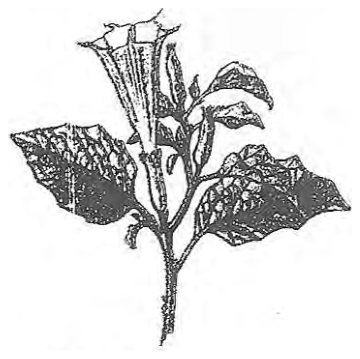
- 1Pain-killer
- 2Hallucinogen
- 3Depressant
- 4Stimulant
Show answer and solution
Correct: option 2, Hallucinogen
The branch with a large trumpet-shaped flower is Datura. Datura, like Atropa belladona, is a plant with hallucinogenic properties.
Question 60AIPMT 2014, Q58
At which stage of HIV infection does one usually show symptoms of AIDS?
- 1When the viral DNA is produced by reverse transcriptase.
- 2Within 15 days of sexual contact with an infected person.
- 3When the infected retro virus enters host cells.
- 4When HIV damages large number of helper T-Lymphocytes.
Show answer and solution
Correct: option 4, When HIV damages large number of helper T-Lymphocytes.
HIV multiplies in helper T-lymphocytes and destroys them over a long period, often years. Symptoms of AIDS appear only when the number of helper T-cells has fallen so far that the body cannot fight even minor infections. Entry of the virus and the making of viral DNA happen early, long before any symptoms.
Question 61NEET 2013, Q59
Infection of Ascaris usually occurs by:
- 1eating imperfectly cooked pork.
- 2Tse-tse fly.
- 3mosquito bite.
- 4drinking water containing eggs of Ascaris.
Show answer and solution
Correct: option 4, drinking water containing eggs of Ascaris.
The eggs of Ascaris leave the body in the faeces of an infected person and contaminate soil, water and vegetables. A healthy person is infected by taking in these eggs with contaminated water or food. Undercooked pork spreads Taenia, the tse-tse fly spreads sleeping sickness, and mosquitoes spread malaria and filaria.
Question 62NEET 2013, Q75
The cell-mediated immunity inside the human body is carried out by:
- 1B-lymphocytes
- 2Thrombocytes
- 3Erythrocytes
- 4T-lymphocytes
Show answer and solution
Correct: option 4, T-lymphocytes
T-lymphocytes carry out cell-mediated immunity, which is also the response that rejects grafts. B-lymphocytes produce antibodies and give humoral immunity. Thrombocytes take part in clotting and erythrocytes carry oxygen.
Question 63NEET 2013 Karnataka, Q68
Identify the site where Wuchereria bancrofti is normally found on human body:-
- 1Muscles of the legs
- 2Blood vessels of the thigh region
- 3Skin between the fingers
- 4Lymphatic vessels of the lower limbs
Show answer and solution
Correct: option 4, Lymphatic vessels of the lower limbs
Wuchereria bancrofti, the filarial worm, lives in the lymphatic vessels, usually of the lower limbs, where it causes chronic inflammation and the swelling called elephantiasis.
Question 64NEET 2013 Karnataka, Q117
Which one of the following is a hallucinogenic drug?
- 1Caffeine
- 2Morphine
- 3Lysergic acid diethylamide
- 4Opium
Show answer and solution
Correct: option 3, Lysergic acid diethylamide
LSD (lysergic acid diethylamide), obtained from the ergot fungus, is a strong hallucinogen. Caffeine is a stimulant, while opium and its derivative morphine are narcotic pain relievers and depressants.
Question 65AIPMT 2012 Prelims, Q51
Motile zygote of Plasmodium occurs in:
- 1Gut of female Anopheles
- 2Salivary glands of Anopheles
- 3Human RBCs
- 4Human liver
Show answer and solution
Correct: option 1, Gut of female Anopheles
The gametocytes taken up with a blood meal fuse in the gut of the female Anopheles mosquito. The zygote formed there is motile (the ookinete) and bores into the gut wall. Sporozoites, not zygotes, reach the salivary glands, and only asexual stages occur in the human liver and RBCs.
Question 66AIPMT 2012 Prelims, Q61
Widal Test is carried out to test:
- 1Malaria
- 2Diabetes mellitus
- 3HIV/AIDS
- 4Typhoid fever
Show answer and solution
Correct: option 4, Typhoid fever
The Widal test detects antibodies against Salmonella typhi in the patient's serum and is used to confirm typhoid fever.
Question 67AIPMT 2012 Prelims, Q65
Common cold differs from pneumonia in, that:
- 1Pneumonia is a communicable disease whereas the common cold is a nutritional deficiency disease.
- 2Pneumonia can be prevented by a live attenuated bacterial vaccine whereas the common cold has no effective vaccine.
- 3Pneumonia is caused by a virus while the common cold is caused by the bacterium Haemophilus influenzae.
- 4Pneumonia pathogen infects alveoli whereas the common cold affects nose and respiratory passage but not the lungs.
Show answer and solution
Correct: option 4, Pneumonia pathogen infects alveoli whereas the common cold affects nose and respiratory passage but not the lungs.
Pneumonia is caused by bacteria such as Streptococcus pneumoniae and Haemophilus influenzae, which infect the alveoli of the lungs. The common cold is caused by rhinoviruses, which infect the nose and respiratory passage but not the lungs. Both are communicable, so only option (4) states a true difference.
Question 68AIPMT 2012 Prelims, Q97
Which one of the following is not a property of cancerous cells whereas the remaining three are?
- 1They compete with normal cells for vital nutrients.
- 2They do not remain confined in the area of formation.
- 3They divide in an uncontrolled manner
- 4They show contact inhibition.
Show answer and solution
Correct: option 4, They show contact inhibition.
Normal cells stop dividing when they touch neighbouring cells, a property called contact inhibition. Cancer cells have lost it, so they keep dividing, spread to other sites and starve normal cells of nutrients.
Question 69AIPMT 2012 Prelims, Q108
In which one of the following options the two examples are correctly matched with their particular type of immunity?
Examples - Type of immunity
- 1Polymorphonuclear leukocytes and monocytes - Cellular barriers
- 2Anti-tetanus and anti-snake bite injection - Active immunity
- 3Saliva in mouth and Tears in eyes - Physical barriers
- 4Mucus coating of epithelium lining the urinogenital tract and the HCl in stomach - Physiological barriers
Show answer and solution
Correct: option 1, Polymorphonuclear leukocytes and monocytes - Cellular barriers
Innate immunity has four kinds of barriers. Polymorphonuclear leukocytes (neutrophils) and monocytes are phagocytic cells, so they are cellular barriers. Anti-tetanus and anti-snake-venom injections supply ready-made antibodies, which is passive immunity. Saliva and tears are physiological barriers, while the mucus coating of epithelia is a physical barrier (the acid in the stomach is physiological), so the other pairs are mismatched.
Question 70AIPMT 2012 Prelims, Q115
Cirrhosis of liver is caused by the chronic intake of
- 1Opium
- 2Alcohol
- 3Tobacco (Chewing)
- 4Cocaine
Show answer and solution
Correct: option 2, Alcohol
Alcohol is broken down in the liver, and long-term heavy drinking damages liver cells, which are replaced by fat and then by fibrous scar tissue. This scarring and shrinking of the liver is cirrhosis. Chewing tobacco is linked with oral cancer, and opium and cocaine mainly act on the nervous system.
Question 71AIPMT 2012 Mains, Q116
Identify the molecules (a) and (b) shown below and select the right option giving their source and use.
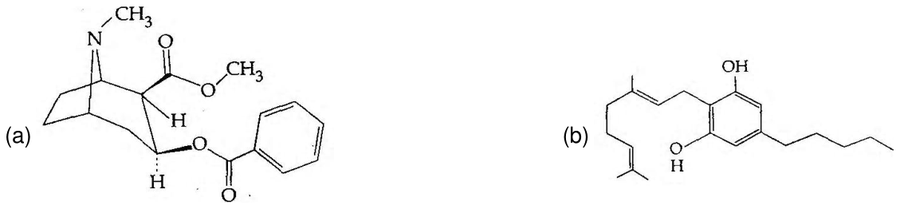
- 1(a) Cocaine - Erythroxylum coca - Accelerates the transport of dopamine
- 2(b) Heroin - Cannabis sativa - Depressant and slows down body functions
- 3(b) Cannabinoid - Atropa belladonna - Produces hallucinations
- 4(a) Morphine - Papaver somniferum - Sedative and pain killer
Show answer and solution
Correct: option 4, (a) Morphine - Papaver somniferum - Sedative and pain killer
The answer key used for this paper marks option (4): morphine is an opioid obtained from the latex of the poppy Papaver somniferum and is a very effective sedative and pain killer. The other rows each contain an error: cocaine interferes with, rather than accelerates, the transport of dopamine; heroin is made from morphine, not from Cannabis; and cannabinoids come from Cannabis sativa, not Atropa belladonna. Note that structure (a) as drawn in this copy, with its methyl ester and benzoate groups, is that of cocaine.
Question 72AIPMT 2012 Mains, Q117
Which one of the following statements is correct with respect to immunity?
- 1Preformed antibodies need to be injected to treat the bite by a viper snake
- 2The antibodies against small pox pathogen are produced by T - lymphocytes
- 3Antibodies are protein molecules, each of which has four light chains
- 4Rejection of a kidney graft is the function of B-lymphocytes
Show answer and solution
Correct: option 1, Preformed antibodies need to be injected to treat the bite by a viper snake
A snake bite needs an immediate response, so ready-made antibodies against the venom (antivenom) are injected; this is passive immunisation. Antibodies are made by B-lymphocytes, each antibody has two light and two heavy chains, and graft rejection is brought about by T-lymphocytes (cell-mediated immunity).
Question 73AIPMT 2011 Prelims, Q63
Where will you look for the sporozoites of the malarial parasite?
- 1Saliva of infected female Anopheles mosquito
- 2red blood corpuscles of humans suffering from malaria
- 3Spleen of infected humans
- 4Salivary glands of freshly moulted female Anopheles mosquito
Show answer and solution
Correct: option 1, Saliva of infected female Anopheles mosquito
Sporozoites are the infective stage of Plasmodium. They form in the gut wall of an infected female Anopheles, migrate to its salivary glands and are passed with its saliva into a human at the next bite. A freshly moulted mosquito has not yet taken an infected blood meal, and in humans the red cells carry the later stages, not sporozoites.
Question 74AIPMT 2011 Prelims, Q74
At which stage of HIV infection does one usually show symptoms of AIDS
- 1When the infecting retrovirus enters host cells
- 2When viral DNA is produced by reverse transcriptase
- 3When HIV replicates rapidly in helper T-lymphocytes and damages large number of these
- 4Within 15 day of sexual contact with an infected person.
Show answer and solution
Correct: option 3, When HIV replicates rapidly in helper T-lymphocytes and damages large number of these
HIV multiplies in helper T-lymphocytes and the progeny viruses attack more of them. Symptoms appear only when the number of helper T cells has fallen so much that immunity fails, which usually takes years, not days.
Question 75AIPMT 2011 Prelims, Q117
Which one of the following acts as a physiological barrier to the entry of microorganisms in human body?
- 1Epithelium of urogenital tract
- 2Tears
- 3Monocytes
- 4Skin
Show answer and solution
Correct: option 4, Skin
The source key marks option (4), Skin. In the NCERT classification of innate immunity, skin and the mucus-coated epithelium of the urogenital tract are physical barriers, monocytes are cellular barriers, and tears, saliva and stomach acid are the physiological barriers. By that classification the expected answer is option (2), Tears, so this key entry is doubtful.
Question 76AIPMT 2011 Prelims, Q134
A certain patient is suspected to be suffering from Acquired Immune Deficiency syndrome. Which diagnostic technique will you recommend for its detection?
- 1ELISA
- 2MRI
- 3Ultra sound
- 4WIDAL
Show answer and solution
Correct: option 1, ELISA
The widely used diagnostic test for AIDS is ELISA (enzyme-linked immunosorbent assay), which detects antibodies against HIV. MRI and ultrasound are imaging methods, and the Widal test is used for typhoid.
Question 77AIPMT 2011 Mains, Q50
Which one of the following option gives the correct matching of a disease with its causative organism and mode of infection.
Disease, Causative Organisms, Mode of Infection
- 1Typhoid, Salmonella typhi, With inspired air
- 2Pneumonia, Streptococcus pneumoniae, Droplet infection
- 3Elephantiasis, Wuchereria bancrofti, infected water and food
- 4Malaria, Plasmodium vivax, Bite of male anopheles mosquito
Show answer and solution
Correct: option 2, Pneumonia, Streptococcus pneumoniae, Droplet infection
Pneumonia is caused by Streptococcus pneumoniae and spreads by inhaling droplets released by an infected person, so that row is correct. Typhoid spreads through contaminated food and water, not air. Elephantiasis is passed on by the bite of a female Culex mosquito, and malaria by the bite of a female, not male, Anopheles mosquito.
Question 78AIPMT 2011 Mains, Q69
Common cold is not cured by antibiotics because it is
- 1caused by a virus
- 2caused by a Gram-positive bacterium
- 3caused by a Gram-negative bacterium
- 4not an infectious disease
Show answer and solution
Correct: option 1, caused by a virus
The common cold is caused by rhinoviruses. Antibiotics act on bacterial structures and processes, such as the cell wall and bacterial ribosomes, which viruses do not have, so they have no effect on a cold. The cold is infectious and spreads through droplets and contaminated objects.
Question 79AIPMT 2011 Mains, Q74
Select the correct statement with respect to diseases and immunisation:
- 1If due to some reason B-and T-lymphocytes are damaged, the body will not produce antibodies against a pathogen
- 2Injection of dead / inactivated pathogens causes passive immunity
- 3Certain protozoans have been used to mass produce hepatitis B vaccine.
- 4Injection of snake antivenom against snake bite is an example of active immunisation
Show answer and solution
Correct: option 1, If due to some reason B-and T-lymphocytes are damaged, the body will not produce antibodies against a pathogen
Antibodies are made by B-lymphocytes with the help of T-lymphocytes, so if both are damaged no antibodies are produced. Injecting dead or inactivated pathogens is vaccination, which gives active immunity. The hepatitis B vaccine is produced in yeast, not in protozoans. Antivenom contains ready-made antibodies, so it gives passive immunity.
Question 80AIPMT 2010 Mains, Q67
A person suffering from a disease caused by Plasmodium, experiences recurring chill and fever at the time when
- 1The microgametocytes and megagametocytes are being destroyed by the WBCs.
- 2The sporozoites released from RBCs are being rapidly killed and broken down inside spleen.
- 3The trophozoites reach maximum growth and give out certain toxins
- 4The parasite after its rapid multiplication inside RBCs ruptures them, releasing the stage to enter fresh RBCs.
Show answer and solution
Correct: option 3, The trophozoites reach maximum growth and give out certain toxins
The chill and fever of malaria are caused by the toxin haemozoin, formed by the parasite as it grows and multiplies inside the red blood cells. The answer key used for this paper gives option (3), the release of toxins by the fully grown parasite. Note that NCERT links the fever to the rupture of the RBCs, which is when haemozoin is released into the blood, as described in option (4).
Question 81AIPMT 2010 Mains, Q70
Which one of the following techniques is safest for the detection of cancers
- 1Histopathological studies
- 2Magnetic resonance imaging (MRI)
- 3Radiography (X-ray)
- 4Computed tomography (CT)
Show answer and solution
Correct: option 2, Magnetic resonance imaging (MRI)
MRI uses a strong magnetic field and non-ionising radiation, so it harms no tissue and needs no cutting. X-ray radiography and CT use ionising X-rays, and histopathology needs a piece of tissue to be removed (biopsy).
Question 82AIPMT 2010 Mains, Q85
Which one of the following can not be used for preparation of vaccines against plague
- 1Heat-Killed suspensions of virulent bacteria
- 2Formalin-inactivated suspensions of virulent bacteria
- 3Avirulent live bacteria
- 4Synthetic capsular polysaccharide material
Show answer and solution
Correct: option 1, Heat-Killed suspensions of virulent bacteria
The answer key of the source copy gives option (1). Plague vaccines have been made from formalin-inactivated suspensions of virulent Yersinia pestis and from live avirulent strains. Note that killed whole-cell plague vaccines prepared with heat have also been used, and the capsular antigen of the plague bacterium is a protein and not a polysaccharide, so many textbooks give option (4) for this question.
Question 83AIPMT 2010 Prelims, Q107
Ringworm in humans is caused by
- 1Fungi
- 2Nematodes
- 3Viruses
- 4Bacteria
Show answer and solution
Correct: option 1, Fungi
Ringworm is a skin infection caused by fungi of the genera Microsporum, Trichophyton and Epidermophyton. It shows as dry, scaly, itchy patches on the skin, nails and scalp. In spite of the name, no worm is involved.
Question 84AIPMT 2010 Prelims, Q109
Widal test is used for the diagnosis of
- 1Pneumonia
- 2Tuberculosis
- 3Typhoid
- 4Malaria
Show answer and solution
Correct: option 3, Typhoid
The Widal test detects antibodies in the patient's serum against the antigens of Salmonella typhi, the bacterium that causes typhoid. A positive agglutination reaction confirms typhoid fever.
Question 85AIPMT 2010 Prelims, Q152
Consider the following four statements (a-d) regarding kidney transplant and select the two correct ones out of these.
(a) Even if a kidney transplant is proper the recipient may need to take immunosuppressants for a long time
(b) The cell-mediated immune response is responsible for the graft rejection
(c) The B-lymphocytes are responsible for rejection of the graft
(d) The acceptance or rejection of a kidney transplant depends on specific interferons
The two correct statements are
- 1(c) and (d)
- 2(a) and (c)
- 3(a) and (b)
- 4(b) and (c)
Show answer and solution
Correct: option 3, (a) and (b)
A graft is rejected by the cell-mediated immune response, which is carried out by T-lymphocytes, so (b) is correct and (c) is wrong. Even after good tissue matching the recipient has to take immunosuppressants for life, so (a) is correct. Interferons protect cells against viruses and do not decide graft acceptance, so (d) is wrong. The correct pair is (a) and (b).
Question 86AIPMT 2010 Prelims, Q186
Select the correct statement from the ones given below
- 1Morphine is often given to persons who have undergone surgery as a pain killer
- 2Chewing tobacco lowers blood pressure and heart rate
- 3Cocaine is given to patients after surgery as it stimulates recovery
- 4Barbiturates when given to criminals make them tell the truth
Show answer and solution
Correct: option 1, Morphine is often given to persons who have undergone surgery as a pain killer
Morphine is a very effective sedative and pain killer and is useful for patients who have undergone surgery. Nicotine in tobacco raises blood pressure and heart rate, cocaine is a stimulant drug of abuse and not a recovery medicine, and barbiturates are sedatives, so the other statements are wrong.
Question 87AIPMT 2010 Prelims, Q197
Which one of following statements is correct with respect of AIDS
- 1Drug addicts are least susceptible to HIV infection
- 2AIDS patients are being fully cured cent per cent with proper care and nutrition
- 3The causative HIV retrovirus enters helper T-lymphocyte thus reducing their numbers
- 4The HIV can be transmitted through eating food together with an infected person.
Show answer and solution
Correct: option 3, The causative HIV retrovirus enters helper T-lymphocyte thus reducing their numbers
HIV is a retrovirus. After multiplying in macrophages it enters helper T-lymphocytes, replicates in them and destroys them, so their number falls steadily and immunity is lost. Drug addicts who share needles are at high risk, AIDS has no complete cure, and HIV does not spread through food or casual contact.
Question 88AIPMT 2009 Prelims, Q72
A person likely to develop tetanus is immunised by administering:
- 1Preformed antibodies
- 2Wide spectrum antibiotics
- 3Weakened germs
- 4Dead germs
Show answer and solution
Correct: option 3, Weakened germs
A person who is already at risk of tetanus needs a quick response, so preformed antibodies (antitoxin) are injected; this is passive immunisation. Weakened or dead germs give active immunity, which takes time to build up. By this working the answer is option (1). The answer key supplied with this copy of the paper marks option (3), and that is the answer recorded here.
Question 89AIPMT 2009 Prelims, Q92
The letter T in T-lymphocyte refers to:
- 1Thalamus
- 2Tonsil
- 3Thymus
- 4Thyroid
Show answer and solution
Correct: option 3, Thymus
T-lymphocytes are formed in the bone marrow but mature in the thymus, from which they take their name.
Question 90AIPMT 2009 Prelims, Q101
Which of the following is a pair of viral diseases?
- 1Common Cold, AIDS
- 2Dysentery, Common Cold
- 3Typhoid, Tuberculosis
- 4Ringworm, AIDS
Show answer and solution
Correct: option 1, Common Cold, AIDS
Common cold is caused by rhinoviruses and AIDS by HIV, so both are viral. Dysentery is bacterial or amoebic, typhoid and tuberculosis are bacterial, and ringworm is a fungal infection.
Question 91AIPMT 2009 Prelims, Q125
Which one of the following statements is correct?
- 1Benign tumours show the property of metastasis.
- 2Heroin accelerates body functions.
- 3Malignant tumours may exhibit metastasis.
- 4Patients who have undergone surgery are given cannabinoids to relieve pain.
Show answer and solution
Correct: option 3, Malignant tumours may exhibit metastasis.
Malignant tumours can shed cells that travel in blood and lymph and start new tumours elsewhere, which is metastasis; benign tumours stay in place. Heroin is a depressant that slows body functions, and the painkiller given after surgery is morphine, an opioid, not a cannabinoid.
Question 92AIPMT 2009 Prelims, Q127
Use of anti-histamines and steroids give a quick relief from:
- 1Nausea
- 2Cough
- 3Headache
- 4Allergy
Show answer and solution
Correct: option 4, Allergy
Allergy symptoms are caused by histamine and serotonin released from mast cells. Anti-histamines block the action of histamine, and steroids (and adrenaline) suppress the reaction, so the symptoms subside quickly.
Question 93AIPMT 2008 Prelims, Q186
To which type of barriers under innate immunity, do the saliva in the mouth and the tears from the eyes, belong?
- 1Physical barriers
- 2Cytokine barriers
- 3Cellular barriers
- 4Physiological barriers
Show answer and solution
Correct: option 4, Physiological barriers
Acid in the stomach, saliva in the mouth and tears from the eyes prevent the growth of microbes and are classed as physiological barriers. Skin and mucus are physical barriers, phagocytes are cellular barriers and interferons are cytokine barriers.
Question 94AIPMT 2008 Prelims, Q187
Match the disease in Column I with the appropriate items (pathogen/prevention/treatment) in Column II
| Column I | Column II |
|---|
| (a) Amoebiasis | (i) Treponema pallidum |
| (b) Diphtheria | (ii) Use only sterilized food and water |
| (c) Cholera | (iii) DPT Vaccine |
| (d) Syphilis | (iv) Use oral rehydration therapy |
- 1a-ii, b-iii, c-iv, d-i
- 2a-i, b-ii, c-iii, d-iv
- 3a-ii, b-iv, c-i, d-iii
- 4a-ii, b-i, c-iii, d-iv
Show answer and solution
Correct: option 1, a-ii, b-iii, c-iv, d-i
Amoebiasis spreads through contaminated food and water, so it is prevented by using sterilized food and water (ii). Diphtheria is prevented by the DPT vaccine (iii). Cholera causes severe loss of water and is treated with oral rehydration therapy (iv). Syphilis is caused by Treponema pallidum (i).
Question 95AIPMT 2008 Prelims, Q188
Consider the following statements about biomedical technologies
(a) During open heart surgery blood is circulated in the heart-lung machine
(b) Blockage in coronary arteries is removed by angiography
(c) Computerised Axial Tomography (CAT) shows detailed internal structure as seen in a section of body
(d) X-ray provides clear and detailed images of organs like prostate glands and lungs
Which two of the above statements are correct?
- 1a and b
- 2b and d
- 3c and d
- 4a and c
Show answer and solution
Correct: option 4, a and c
(a) is correct: the heart-lung machine takes over circulation and oxygenation of blood during open heart surgery. (c) is correct: a CAT scan gives detailed images of sections of the body. (b) is wrong because angiography only shows a blockage (angioplasty removes it), and (d) is wrong because plain X-rays do not show soft organs like the prostate clearly.
Question 96AIPMT 2008 Prelims, Q190
Which one of the following is the correct statement regarding the particular psychotropic drug specified?
- 1Barbiturates cause relaxation and temporary euphoria
- 2Hashish causes after thought perceptions and hallucinations
- 3Opium stimulates nervous system and causes hallucinations
- 4Morphine leads to delusions and disturbed emotions
Show answer and solution
Correct: option 2, Hashish causes after thought perceptions and hallucinations
Hashish is a cannabinoid, a hallucinogen that changes thoughts and perceptions and can cause hallucinations. Barbiturates are sedatives that depress the brain, and opium and morphine are opiates that depress the nervous system and relieve pain rather than stimulate it.
Question 97AIPMT 2008 Prelims, Q198
Cornea transplant in humans is almost never rejected. This is because
- 1It is a non-living layer
- 2Its cells are least penetrable by bacteria
- 3It has no blood supply
- 4It is composed of enucleated cells
Show answer and solution
Correct: option 3, It has no blood supply
The cornea has no blood vessels, so the cells and antibodies of the immune system of the recipient hardly reach the grafted tissue. With no immune attack, the graft is not rejected.
Question 98AIPMT 2007 Prelims, Q94
Increased asthmatic attacks in certain seasons are related to:
- 1Low temperature
- 2Hot and humid environment
- 3Eating fruits preserved in tin containers
- 4Inhalation of seasonal pollen
Show answer and solution
Correct: option 4, Inhalation of seasonal pollen
Asthma is commonly an allergic response. Pollen grains are allergens that are present in the air only in the flowering season of particular plants, so attacks that become more frequent in certain seasons are linked to breathing in seasonal pollen.
Question 99AIPMT 2007 Prelims, Q99
Ultrasound of how much frequency is beamed into human body for sonography?
- 145 - 70 MHz
- 230 - 45 MHz
- 315 - 30 MHz
- 41 - 15 MHz
Show answer and solution
Correct: option 4, 1 - 15 MHz
Diagnostic ultrasound uses sound waves of about 1 to 15 MHz. Lower frequencies in this range penetrate deep organs and higher ones give finer detail of shallow structures; frequencies well above this are absorbed too strongly by tissue to be useful.
Question 100AIPMT 2007 Prelims, Q100
Lysozyme that is present in perspiration, saliva and tears, destroys:
- 1most virus-infected cells
- 2certain fungi
- 3certain types of bacteria
- 4all viruses
Show answer and solution
Correct: option 3, certain types of bacteria
Lysozyme is an enzyme of innate immunity that breaks the peptidoglycan of bacterial cell walls, so it kills certain bacteria (mainly Gram-positive ones). It has no action on viruses or virus-infected cells.
Question 101AIPMT 2006 Prelims, Q141
A person showing unpredictable moods, outbursts of emotion, quarrelsome behaviour and conflicts with others is suffering from-
- 1Schizophrenia
- 2Borderline Personality Disorder (BPD)
- 3Mood disorders
- 4Addictive disorders
Show answer and solution
Correct: option 2, Borderline Personality Disorder (BPD)
Unstable moods, emotional outbursts, quarrelsome behaviour and unstable relations with others are the features of borderline personality disorder. Schizophrenia shows disordered thinking with delusions and hallucinations, and mood disorders show lasting depression or mania.
Question 102AIPMT 2006 Prelims, Q178
Antibodies in our body are complex
- 1Lipoproteins
- 2Steroids
- 3Prostaglandins
- 4Glycoproteins
Show answer and solution
Correct: option 4, Glycoproteins
Antibodies (immunoglobulins) are proteins made of two heavy and two light polypeptide chains with carbohydrate chains attached, so they are glycoproteins. They are produced by B-lymphocytes.
Question 103AIPMT 2006 Prelims, Q186
The causative agent of mad-cow disease is a
- 1Bacterium
- 2Prion
- 3Worm
- 4Virus
Show answer and solution
Correct: option 2, Prion
Mad-cow disease (bovine spongiform encephalopathy) is caused by a prion, an abnormally folded infectious protein that contains no nucleic acid and damages brain tissue.
Question 104AIPMT 2006 Prelims, Q195
HIV that causes AIDS, first starts destroying
- 1B-lymphocytes
- 2Leucocytes
- 3Thrombocytes
- 4Helper T-lymphocytes
Show answer and solution
Correct: option 4, Helper T-lymphocytes
HIV binds the CD4 receptor, so it enters helper T-lymphocytes, multiplies in them and kills them. The steady fall in the number of helper T cells is what weakens the immune system in AIDS.
Question 105AIPMT 2005 Prelims, Q173
Damage to thymus in a child may lead to
- 1A reduction in haemoglobin content of blood
- 2A reduction in stem cell production
- 3Loss of antibody mediated immunity
- 4Loss of cell mediated immunity
Show answer and solution
Correct: option 4, Loss of cell mediated immunity
T-lymphocytes mature in the thymus, and T-cells carry out cell mediated immunity. If the thymus of a child is damaged, mature T-cells are not formed and this immunity is lost. Stem cells and haemoglobin come from the bone marrow, and antibodies are made by B-cells.
Question 106AIPMT 2005 Prelims, Q174
Which one of the following depresses brain activity and produces feelings of calmness, relaxation and drowsiness
- 1Morphine
- 2Valium
- 3Hashish
- 4Amphetamines
Show answer and solution
Correct: option 2, Valium
Valium (diazepam) is a benzodiazepine tranquilliser, a sedative that depresses the activity of the brain and brings calmness, relaxation and drowsiness. Morphine is an opiate painkiller, hashish is a cannabinoid that alters perception, and amphetamines are stimulants.
Question 107AIPMT 2005 Prelims, Q181
AIDS is caused by HIV that principally infects
- 1Activator B cells
- 2T4 lymphocytes
- 3Cytotoxic T cells
- 4All lymphocytes
Show answer and solution
Correct: option 2, T4 lymphocytes
HIV attaches to the CD4 receptor, which is found on helper T cells (T4 lymphocytes). The virus multiplies in these cells and destroys them, and the fall in their number is what cripples the immune system.
Question 108AIPMT 2004 Prelims, Q130
Which of the following statements is not true for retroviruses :-
- 1Retroviruses carry gene for RNA-dependent DNA polymerase
- 2The genetic material in mature retroviruses is RNA
- 3Retroviruses are causative agents for certain kinds of cancer in man
- 4DNA is not present at any stage in the life cycle of retroviruses.
Show answer and solution
Correct: option 4, DNA is not present at any stage in the life cycle of retroviruses.
Retroviruses have an RNA genome and carry reverse transcriptase (RNA-dependent DNA polymerase), which copies the RNA into DNA inside the host cell; this DNA is inserted into the host genome. So a DNA stage does exist in their life cycle and statement 4 is the false one. Some retroviruses do cause cancers.
Question 109AIPMT 2004 Prelims, Q165
Cancer cells are more easily damaged by radiation than normal cells because they are -
- 1Undergoing rapid division
- 2Different in structure
- 3Non-dividing
- 4Starved of mutation
Show answer and solution
Correct: option 1, Undergoing rapid division
Radiation damages DNA, and a cell is most easily killed while it is copying its DNA and dividing. Cancer cells divide rapidly and without control, so more of them are hit at a sensitive stage than slowly dividing normal cells. This is the basis of radiotherapy.
Question 110AIPMT 2004 Prelims, Q166
Which one of the following is not correctly matched
- 1Culex pipiens – Filariasis
- 2Aedes aegypti – Yellow fever
- 3Anopheles culicifacies – Leishmaniasis
- 4Glossina palpalis – Sleeping sickness
Show answer and solution
Correct: option 3, Anopheles culicifacies – Leishmaniasis
Anopheles carries malaria. Leishmaniasis (kala-azar) is spread by the sand fly Phlebotomus, so pair (3) is wrong. Culex spreads filariasis, Aedes aegypti spreads yellow fever (and dengue), and the tsetse fly Glossina spreads sleeping sickness.
Question 111AIPMT 2003 Prelims, Q121
- 1Malignant tumours of the connective tissue
- 2Malignant tumours of the skin or mucous membrane
- 3Malignant tumours of the colon
- 4Benign tumours of the connective tissue
Show answer and solution
Correct: option 2, Malignant tumours of the skin or mucous membrane
Cancers are named by the tissue they arise from. A carcinoma is a malignant tumour of epithelial tissue, such as the skin and the mucous membranes lining organs. A malignant tumour of connective tissue is a sarcoma.
Question 112AIPMT 2003 Prelims, Q124
Short-lived immunity acquired from mother to foetus across placenta or through mother's milk to the infant is categorised as:
- 1Active immunity
- 2Passive immunity
- 3Cellular immunity
- 4Innate non-specific immunity
Show answer and solution
Correct: option 2, Passive immunity
The foetus receives ready-made IgG antibodies across the placenta and the infant receives IgA in colostrum and milk. Because the antibodies are received and not made by the baby's own immune system, the protection is passive and lasts only a short time.
Question 113AIPMT 2003 Prelims, Q126
What is true about T-lymphocytes in mammals:
- 1There are three main types-cytotoxic T-cells, helper T-cells and suppressor T-cells
- 2These originate in lymphoid tissues
- 3They scavenge damaged cells and cellular debris
- 4These are produced in thyroid
Show answer and solution
Correct: option 1, There are three main types-cytotoxic T-cells, helper T-cells and suppressor T-cells
T-lymphocytes arise from stem cells of the bone marrow and mature in the thymus, not the thyroid. Their main types are cytotoxic (killer), helper and suppressor T-cells. Scavenging of debris is the work of macrophages.
Question 114AIPMT 2002 Prelims, Q124
Which of the following is used in the treatment of Thyroid cancer:-
- 1
- 2
- 3
- 4
Show answer and solution
Correct: option 1,
The thyroid gland takes up and concentrates iodine to make thyroxine. Radioactive iodine-131 given to the patient therefore collects in thyroid tissue, and its radiation destroys the cancerous thyroid cells with little harm to other organs.
Question 115AIPMT 2002 Prelims, Q135
Cancerous cells can easily be destroyed by radiations due to:-
- 1Rapid cell division
- 2Lack of nutrition
- 3Fast mutation
- 4Lack of oxygen
Show answer and solution
Correct: option 1, Rapid cell division
Radiation damages DNA, and the damage is most lethal to cells that are dividing, because they replicate their DNA often and have little time to repair it. Cancer cells divide rapidly and without control, so they are destroyed more easily than the surrounding normal cells.
Question 116AIPMT 2001 Prelims, Q102
What is true for monoclonal antibodies:-
- 1These antibodies obtained from one parent and for one antigen
- 2These obtained from different parents and for one antigen
- 3These obtained from one parent and for many antigens
- 4These obtained from many parents and for many antigen
Show answer and solution
Correct: option 2, These obtained from different parents and for one antigen
Monoclonal antibodies are identical antibodies directed against a single antigen. They are made by a hybridoma, which is formed by fusing two different cells, an antibody-producing B lymphocyte and a myeloma cell; the key reads these as the "different parents". Note that many books prefer "one parent and one antigen", because all the antibody molecules come from one clone of cells; the answer shown here is the one given in the key.
Question 117AIPMT 2001 Prelims, Q135
Which fish selectively feed on larva of mosquito:-
- 1Gambusia
- 2Rohu
- 3Clarias
- 4Exocoetus
Show answer and solution
Correct: option 1, Gambusia
Gambusia is a small larvivorous fish that feeds on mosquito larvae. It is released into ponds and tanks for the biological control of mosquitoes and so of malaria.
Question 118AIPMT 2001 Prelims, Q136
Which one of the following is correct match
- 1Reserpine – Tranquilliser
- 2Cocaine – opiatic narcotic
- 3Morphine – Hallucinogenic
- 4Bhang – Analgesic
Show answer and solution
Correct: option 1, Reserpine – Tranquilliser
Reserpine, from Rauwolfia, is a tranquilliser that also lowers blood pressure. Cocaine is a stimulant and not an opiate, morphine is an opiate pain-killer and not a hallucinogen, and bhang is a hallucinogenic product of Cannabis.
Question 119AIPMT 2001 Prelims, Q141
- 1Hallucinogenic
- 2Sedative
- 3Stimulant
- 4Tranquiliser
Show answer and solution
Correct: option 1, Hallucinogenic
LSD (lysergic acid diethylamide), obtained from the ergot fungus Claviceps, is a powerful hallucinogen. It changes perception, thoughts and feelings.
Question 120AIPMT 2001 Prelims, Q143
Salmonella is related with:-
- 1Typhoid
- 2Polio
- 3T.B.
- 4Tetanus
Show answer and solution
Correct: option 1, Typhoid
Typhoid is caused by the bacterium Salmonella typhi. Polio is caused by a virus, T.B. by Mycobacterium tuberculosis and tetanus by Clostridium tetani.
Question 121AIPMT 2001 Prelims, Q148
Which of the most infectious disease is:-
- 1Hepatitis -B
- 2AIDS
- 3Cough and cold
- 4Malaria
Show answer and solution
Correct: option 1, Hepatitis -B
Among the choices the key picks hepatitis B: the hepatitis B virus spreads through blood and body fluids like HIV but is far more easily passed on, since a very small amount of infected blood is enough. Malaria needs a mosquito vector to pass from person to person.
Question 122AIPMT 2001 Prelims, Q149
Interferons are synthesized in response to
- 1Mycoplasma
- 2Bacteria
- 3Viruses
- 4Fungi
Show answer and solution
Correct: option 3, Viruses
Interferons are proteins released by cells that have been infected by a virus. They make the neighbouring uninfected cells resistant to viral infection.
Question 123AIPMT 2001 Prelims, Q151
- 1Coal mining
- 2Calcium fluoride
- 3Cement factory
- 4Bauxite mining
Show answer and solution
Correct: option 3, Cement factory
Workers in cement factories breathe in fine dust carrying silica and asbestos-like fibres for years. This long-term irritation of the lung lining is linked with lung cancer. Coal dust mainly causes black lung (pneumoconiosis), fluoride causes fluorosis, and bauxite mining is not the classic cause, so the keyed option is cement factory.
Question 124AIPMT 2000 Prelims, Q110
Which is showing accurate pairing:
- 1Syphilis - Treponema pallidum
- 2AIDS - Bacillus conjugalis
- 3Gonorrhoea - Leishmania donovani
- 4Typhoid - Mycobacterium leprae
Show answer and solution
Correct: option 1, Syphilis - Treponema pallidum
Syphilis is caused by the spirochaete Treponema pallidum. AIDS is caused by the virus HIV, gonorrhoea by Neisseria gonorrhoeae (Leishmania donovani causes kala-azar), and typhoid by Salmonella typhi (Mycobacterium leprae causes leprosy).
Question 125AIPMT 2000 Prelims, Q139
Which disease of man is similar with cattle's, bovine spongiform encephalopathy:
- 1Encephalitis
- 2Jakob-Creutzfeldt disease
- 3Spongiocitis of cerebrum
- 4Spondylitis
Show answer and solution
Correct: option 2, Jakob-Creutzfeldt disease
Bovine spongiform encephalopathy (mad cow disease) is a prion disease in which the brain tissue becomes spongy. The corresponding prion disease of humans is Creutzfeldt-Jakob disease.
Question 126AIPMT 2000 Prelims, Q148
During viral infection the protein formed in host cells to resist is:
- 1Interferon
- 2Antitoxin
- 3Antibody
- 4Histone
Show answer and solution
Correct: option 1, Interferon
Cells infected by a virus release proteins called interferons, which make neighbouring uninfected cells resistant to viral multiplication. Antibodies and antitoxins are made by the B cells of the immune system, not by the infected host cells, and histones are DNA-packing proteins.
Question 127AIPMT 2000 Prelims, Q173
Saline solution is given to patients of Cholera because:
- 1 prevents water loss from body
- 2NaCl function as regulatory material
- 3NaCl produces energy
- 4NaCl is antibacterial
Show answer and solution
Correct: option 1, prevents water loss from body
Cholera causes severe diarrhoea, so the body loses a great deal of water and salts. Sodium ions help the body absorb and hold water, so saline restores the fluid and prevents further dehydration. NaCl neither gives energy nor kills the bacteria.
Question 128AIPMT 1999 Prelims, Q108
Koch's postulates not applicable to:
- 1Mycobacterium leprae
- 2Tuberculosis
- 3Pneumonia
- 4Cholera
Show answer and solution
Correct: option 1, Mycobacterium leprae
Koch's postulates require the suspected germ to be isolated from the patient and grown in pure culture on artificial medium. Mycobacterium leprae, the leprosy bacillus, has never been grown on artificial media, so the postulates cannot be fulfilled for it. The bacteria of tuberculosis, pneumonia and cholera can all be cultured.
Question 129AIPMT 1999 Prelims, Q126
- 1RBC
- 2T – helper cells
- 3B - cells
- 4Basophils
Show answer and solution
Correct: option 2, T – helper cells
HIV attaches to the CD4 receptor, which is found on helper T lymphocytes. The virus multiplies in these cells and destroys them, and the fall in their number causes the immune deficiency of AIDS.
Question 130AIPMT 1999 Prelims, Q147
During injury mast cells secrete:
- 1Histamine
- 2Heparin
- 3Prothrombin
- 4Antibodies
Show answer and solution
Correct: option 1, Histamine
When tissue is injured the mast cells release histamine, which widens the blood vessels and makes them leaky, producing the redness and swelling of inflammation. Mast cells also hold heparin, but the injury response asked about is histamine release. Prothrombin comes from the liver and antibodies from plasma cells.
Question 131AIPMT 1999 Prelims, Q192
- 1Treated bacteria, virus & protein
- 2Treated algae
- 3Treated fungi
- 4Treated plasmodium
Show answer and solution
Correct: option 1, Treated bacteria, virus & protein
A vaccine is a preparation of killed or weakened (attenuated) bacteria or viruses, or of their antigenic proteins or inactivated toxins. It cannot cause the disease but makes the body form antibodies and memory cells against the pathogen.
Question 132AIPMT 1998 Prelims, Q109
- 1ss RNA
- 2ds RNA
- 3ss DNA
- 4ds DNA
Show answer and solution
Correct: option 1, ss RNA
HIV is a retrovirus. Its genome is single-stranded RNA (two identical copies in each particle), which reverse transcriptase copies into DNA inside the host cell. So the answer is ss RNA.
Question 133AIPMT 1998 Prelims, Q139
- 1Rickettsiae
- 2Chlamydia
- 3Salmonella typhi
- 4Mycobacterium
Show answer and solution
Correct: option 3, Salmonella typhi
Typhoid fever is caused by the bacterium Salmonella typhi, which enters with contaminated food and water and is confirmed by the Widal test. Mycobacterium causes tuberculosis and leprosy.
Question 134AIPMT 1998 Prelims, Q172
- 1Bone deformation
- 2Muscular dystrophy and paralysis
- 3Asphyxia
- 4Cardiac arrest
Show answer and solution
Correct: option 2, Muscular dystrophy and paralysis
Lathyrism comes from eating khesari dal (Lathyrus sativus) over a long time. Its neurotoxin damages motor nerves, giving weakness and stiffness of the leg muscles and finally paralysis of the legs.
Question 135AIPMT 1998 Prelims, Q194
- 1Digestive system
- 2Blood vascular system
- 3Nervous system
- 4Respiratory system
Show answer and solution
Correct: option 3, Nervous system
Botulism is caused by the toxin of Clostridium botulinum in badly preserved food. The toxin is a neurotoxin: it stops the release of acetylcholine at nerve endings and causes paralysis.