Questions with solutions
Question 1NEET 2026, Q169
Match List I with List II:
| List I | List II |
|---|
| A. Cortisol | I. Stimulates the formation of alveoli in mammary glands |
| B. Aldosterone | II. Produces anti-inflammatory reactions |
| C. Cholecystokinin | III. Stimulates reabsorption of and water from renal tubule |
| D. Progesterone | IV. Stimulates secretion of pancreatic enzymes and bile juice |
Choose the correct answer from the options given below:
- 1A-III, B-II, C-IV, D-I
- 2A-II, B-III, C-IV, D-I
- 3A-IV, B-II, C-I, D-III
- 4A-II, B-III, C-I, D-IV
Show answer and solution
Correct: option 2, A-II, B-III, C-IV, D-I
Cortisol is a glucocorticoid that produces anti-inflammatory reactions and suppresses the immune response. Aldosterone makes the renal tubules reabsorb and water. Cholecystokinin acts on the pancreas and gall bladder to release pancreatic enzymes and bile. Progesterone stimulates the formation of alveoli in the mammary glands. So A-II, B-III, C-IV, D-I.
Question 2NEET 2026 Re-exam, Q99
Which of the following statements related to pituitary gland are correct?
(a) It is divided anatomically into adenohypophysis and neurohypophysis
(b) It secretes follicle stimulating hormone
(c) It secretes melanocyte stimulating hormone
(d) It does not secrete prolactin
Choose the correct answer from the options given below:
- 1(a) and (b) only
- 2(a), (b) and (c) only
- 3(c) and (d) only
- 4(b) and (c) only
Show answer and solution
Correct: option 2, (a), (b) and (c) only
The pituitary is divided into the adenohypophysis and the neurohypophysis, so (a) is right. The pars distalis secretes FSH along with GH, PRL, TSH, ACTH and LH, and the pars intermedia secretes MSH, so (b) and (c) are right. Prolactin is a pituitary hormone, so (d) is wrong.
Question 3NEET 2026 Re-exam, Q124
Which one of the following statements is incorrect?
- 1-cells of pancreas secrete glucagon
- 2-cells of pancreas secrete insulin
- 3Glucagon stimulates glycogenolysis
- 4-cells of pancreas secrete insulin
Show answer and solution
Correct: option 2, -cells of pancreas secrete insulin
In the islets of Langerhans the -cells secrete glucagon and the -cells secrete insulin. Glucagon acts on liver cells and stimulates glycogenolysis, which raises blood sugar. So the statement that -cells secrete insulin is the incorrect one.
Question 4NEET 2026 Re-exam, Q148
Match List-I with List-II.
| List-I | List-II |
|---|
| A. Excess growth hormone | I. Reabsorption of water and electrolytes in kidney |
| B. Luteinizing hormone | II. Contraction of uterus during child birth |
| C. Vasopressin | III. Acromegaly |
| D. Oxytocin | IV. Ovulation |
Choose the correct answer from the options given below:
- 1A-III, B-IV, C-II, D-I
- 2A-III, B-IV, C-I, D-II
- 3A-II, B-IV, C-I, D-III
- 4A-IV, B-III, C-I, D-II
Show answer and solution
Correct: option 2, A-III, B-IV, C-I, D-II
Excess growth hormone in an adult causes acromegaly (III). Luteinizing hormone brings about ovulation (IV). Vasopressin makes the kidney tubules reabsorb water and electrolytes (I). Oxytocin makes the uterus contract during child birth (II). So A-III, B-IV, C-I, D-II.
Question 5NEET 2025, Q148
Match List - I with List - II.
| List - I | List - II |
|---|
| A. Heart | I. Erythropoietin |
| B. Kidney | II. Aldosterone |
| C. Gastro-intestinal tract | III. Atrial natriuretic factor |
| D. Adrenal Cortex | IV. Secretin |
Choose the correct answer from the options given below:
- 1A-II, B-I, C-III, D-IV
- 2A-IV, B-III, C-II, D-I
- 3A-I, B-III, C-IV, D-II
- 4A-III, B-I, C-IV, D-II
Show answer and solution
Correct: option 4, A-III, B-I, C-IV, D-II
The atrial wall of the heart secretes atrial natriuretic factor (III). The kidney secretes erythropoietin (I). Secretin comes from the gastro-intestinal tract (IV). Aldosterone is a mineralocorticoid of the adrenal cortex (II). So A-III, B-I, C-IV, D-II.
Question 6NEET 2025, Q160
Consider the following statements regarding function of adrenal medullary hormones:
A. It causes pupilary constriction
B. It is a hyperglycemic hormone
C. It causes piloerection
D. It increases strength of heart contraction
Choose the correct answer from the options given below:
- 1C and D Only
- 2B, C and D Only
- 3A, C and D Only
- 4D Only
Show answer and solution
Correct: option 2, B, C and D Only
Adrenaline and noradrenaline are the emergency hormones. They dilate the pupil (so A is wrong), raise blood glucose by stimulating glycogen breakdown (B), cause piloerection (C) and increase the heart rate and the strength of heart contraction (D). So B, C and D only.
Question 7NEET 2025, Q165
Which of the following hormones released from the pituitary is actually synthesized in the hypothalamus?
- 1Luteinizing hormone (LH)
- 2Anti-diuretic hormone (ADH)
- 3Follicle-stimulating hormone (FSH)
- 4Adrenocorticotrophic hormone (ACTH)
Show answer and solution
Correct: option 2, Anti-diuretic hormone (ADH)
ADH (vasopressin) and oxytocin are made by neurosecretory cells of the hypothalamus, carried down their axons and stored in and released from the posterior pituitary. LH, FSH and ACTH are made in the anterior pituitary.
Question 8NEET 2025, Q178
Match List - I with List - II.
| List - I | List - II |
|---|
| A. Progesterone | I. Pars intermedia |
| B. Relaxin | II. Ovary |
| C. Melanocyte stimulating hormone | III. Adrenal Medulla |
| D. Catecholamines | IV. Corpus luteum |
Choose the correct answer from the options given below:
- 1A-IV, B-II, C-I, D-III
- 2A-IV, B-II, C-III, D-I
- 3A-II, B-IV, C-I, D-III
- 4A-III, B-II, C-IV, D-I
Show answer and solution
Correct: option 1, A-IV, B-II, C-I, D-III
Progesterone is secreted mainly by the corpus luteum (IV). Relaxin is secreted by the ovary in late pregnancy (II). Melanocyte stimulating hormone comes from the pars intermedia of the pituitary (I). Catecholamines (adrenaline and noradrenaline) come from the adrenal medulla (III). So A-IV, B-II, C-I, D-III.
Question 9NEET 2024, Q168
Which of the following is not a steroid hormone?
- 1Glucagon
- 2Cortisol
- 3Testosterone
- 4Progesterone
Show answer and solution
Correct: option 1, Glucagon
Cortisol, testosterone and progesterone are all steroids made from cholesterol. Glucagon, secreted by the alpha cells of the pancreas, is a peptide hormone.
Question 10NEET 2024, Q192
Match List I with List II:
| List I | List II |
|---|
| A. Exophthalmic goiter | I. Excess secretion of cortisol, moon face & hyperglycemia |
| B. Acromegaly | II. Hypo-secretion of thyroid hormone and stunted growth. |
| C. Cushing's syndrome | III. Hyper secretion of thyroid hormone & protruding eye balls. |
| D. Cretinism | IV. Excessive secretion of growth hormone. |
Choose the correct answer from the options given below:
- 1A-III, B-IV, C-I, D-II
- 2A-I, B-III, C-II, D-IV
- 3A-IV, B-II, C-I, D-III
- 4A-III, B-IV, C-II, D-I
Show answer and solution
Correct: option 1, A-III, B-IV, C-I, D-II
Exophthalmic goiter (Graves' disease) is hyperthyroidism with protruding eyeballs. Acromegaly is due to excess growth hormone in adults. Cushing's syndrome is due to excess cortisol, giving a moon face and high blood sugar. Cretinism is due to low thyroid hormone in childhood, causing stunted growth. So A-III, B-IV, C-I, D-II.
Question 11NEET 2024 Re-exam, Q160
Match List-I with List-II.
| List-I | List-II |
|---|
| A. Epinephrine | I. Hyperglycemia |
| B. Thyroxine | II. Smooth muscle contraction |
| C. Oxytocin | III. Basal metabolic rate |
| D. Glucagon | IV. Emergency hormone |
Choose the correct answer from the options given below:
- 1A-II, B-I, C-IV, D-III
- 2A-III, B-II, C-I, D-IV
- 3A-IV, B-III, C-II, D-I
- 4A-I, B-IV, C-III, D-II
Show answer and solution
Correct: option 3, A-IV, B-III, C-II, D-I
Epinephrine (adrenaline) is released in stress and is called the emergency hormone. Thyroxine controls the basal metabolic rate. Oxytocin makes smooth muscle contract, in the uterus at childbirth and in the mammary gland for milk ejection. Glucagon raises the blood glucose level, which is hyperglycemia. So A-IV, B-III, C-II, D-I.
Question 12NEET 2024 Re-exam, Q189
Identify the wrong statements:
(A) Erythropoietin is produced by juxtaglomerular cells of the kidney
(B) Leydig cells produce Androgens
(C) Atrial Natriuretic factor, a peptide hormone is secreted by the seminiferous tubules of the testes
(D) Cholecystokinin is produced by gastrointestinal tract
(E) Gastrin acts on intestinal wall and helps in the production of pepsinogen
Choose the most appropriate answer from the options given below:
- 1(D) and (E) only
- 2(A) and (B) only
- 3(C) and (E) only
- 4(A) and (C) only
Show answer and solution
Correct: option 3, (C) and (E) only
Atrial natriuretic factor is secreted by the atrial wall of the heart, not by the seminiferous tubules, so (C) is wrong. Gastrin acts on the gastric glands of the stomach, not on the intestinal wall, to stimulate the secretion of hydrochloric acid and pepsinogen, so (E) is wrong. The other three are right: the juxtaglomerular cells of the kidney produce erythropoietin, Leydig cells produce androgens, and cholecystokinin is a hormone of the gastrointestinal tract.
Question 13NEET 2023, Q161
Match List I with List II.
| List I | List II |
|---|
| A. CCK | I. Kidney |
| B. GIP | II. Heart |
| C. ANF | III. Gastric gland |
| D. ADH | IV. Pancreas |
Choose the correct answer from the options given below:
- 1A-IV, B-III, C-II, D-I
- 2A-III, B-II, C-IV, D-I
- 3A-II, B-IV, C-I, D-III
- 4A-IV, B-II, C-III, D-I
Show answer and solution
Correct: option 1, A-IV, B-III, C-II, D-I
The list pairs each hormone with a target or source. Cholecystokinin (CCK) acts on the pancreas and gall bladder (IV). Gastric inhibitory peptide (GIP) inhibits gastric secretion, so it acts on the gastric glands (III). Atrial natriuretic factor (ANF) is secreted by the atrial wall of the heart (II). ADH acts on the kidney tubules (I). This is option (1).
Question 14NEET 2023, Q190
Which of the following are NOT under the control of thyroid hormone?
A. Maintenance of water and electrolyte balance
B. Regulation of basal metabolic rate
C. Normal rhythm of sleep-wake cycle
D. Development of immune system
E. Support the process of R.B.Cs formation
Choose the correct answer from the options given below:
- 1A and D only
- 2B and C only
- 3C and D only
- 4D and E only
Show answer and solution
Correct: option 3, C and D only
Thyroid hormones regulate the basal metabolic rate, support the formation of red blood cells and influence the maintenance of water and electrolyte balance, so A, B and E are under their control. The sleep-wake rhythm is controlled by melatonin from the pineal gland, and the development of the immune system by thymosins from the thymus. So C and D, option (3).
Question 15NEET 2023 Manipur, Q151
Which of the following statements are correct with respect to the hormone and its function?
(A) Thyrocalcitonin (TCT) regulates the blood calcium level.
(B) In males, FSH and androgens regulate spermatogenesis.
(C) Hyperthyroidism can lead to goitre.
(D) Glucocorticoids are secreted in Adrenal Medulla.
(E) Parathyroid hormone is regulated by circulating levels of sodium ions.
Choose the most appropriate answer from the options given below:
- 1(B) and (C) only
- 2(A) and (D) only
- 3(C) and (E) only
- 4(A) and (B) only
Show answer and solution
Correct: option 4, (A) and (B) only
Thyrocalcitonin from the thyroid lowers and so regulates blood calcium, and spermatogenesis is controlled by FSH together with androgens, so (A) and (B) are correct. Glucocorticoids come from the adrenal cortex, not the medulla, and parathyroid hormone secretion is governed by circulating calcium ions, not sodium, so (D) and (E) are wrong. Goitre is taught mainly as a result of iodine deficiency and hypothyroidism, and no option combines (C) with (A) and (B), so the answer is (A) and (B) only.
Question 16NEET 2023 Manipur, Q196
Given below are two statements:
Statement I: Parathyroid hormone acts on bones and stimulates the process of bone resorption.
Statement II: Parathyroid hormone along with Thyrocalcitonin plays a significant role in carbohydrate metabolism.
In the light of the above statements, choose the correct answer from the options given below:
- 1Both Statement I and Statement II are true
- 2Both Statement I and Statement II are false
- 3Statement I is correct but Statement II is false
- 4Statement I is incorrect but Statement II is true
Show answer and solution
Correct: option 3, Statement I is correct but Statement II is false
Parathyroid hormone raises blood calcium, partly by stimulating bone resorption (demineralisation), so Statement I is correct. Together with thyrocalcitonin it controls calcium balance in the body, not carbohydrate metabolism, so Statement II is false.
Question 17NEET 2022, Q192
Which of the following are not the effects of Parathyroid hormone?
(a) Stimulates the process of bone resorption
(b) Decreases level in blood
(c) Reabsorption of by renal tubules
(d) Decreases the absorption of from digested food
(e) Increases metabolism of carbohydrates
Choose the most appropriate answer from the options given below:
- 1(b) and (c) only
- 2(a) and (c) only
- 3(b), (d) and (e) only
- 4(a) and (e) only
Show answer and solution
Correct: option 3, (b), (d) and (e) only
Parathyroid hormone is hypercalcaemic: it stimulates bone resorption (a), increases reabsorption of by the renal tubules (c) and increases absorption from digested food, so blood rises. Hence (b) and (d) are the opposite of its effects, and (e) is not a function of this hormone. The answer is (b), (d) and (e) only.
Question 18NEET 2022 Re-exam, Q157
Given below are two statements: one is labelled as Assertion (A) and the other is labelled as Reason (R).
Assertion (A): FSH which interacts with membrane bound receptors does not enter the target cell.
Reason (R): Binding of FSH to its receptors generates second messenger (cyclic AMP) for its biochemical and physiological responses.
In the light of the above statements, choose the most appropriate answer from the options given below
- 1(A) is not correct but (R) is correct
- 2Both (A) and (R) are correct and (R) is the correct explanation of (A)
- 3Both (A) and (R) are correct but (R) is not the correct explanation of (A)
- 4(A) is correct but (R) is not correct
Show answer and solution
Correct: option 3, Both (A) and (R) are correct but (R) is not the correct explanation of (A)
FSH is a protein hormone. It cannot cross the cell membrane, so it binds to membrane-bound receptors and stays outside the cell: (A) is correct. The binding produces the second messenger cyclic AMP, which carries out the response: (R) is correct. But (R) describes what follows the binding; it is not the reason the hormone stays outside, so it does not explain (A).
Question 19NEET 2021, Q166
Erythropoietin hormone which stimulates R.B.C. formation is produced by:
- 1Alpha cells of pancreas
- 2The cells of rostral adenohypophysis
- 3The cells of bone marrow
- 4Juxtaglomerular cells of the kidney
Show answer and solution
Correct: option 4, Juxtaglomerular cells of the kidney
The juxtaglomerular cells of the kidney produce the peptide hormone erythropoietin, which stimulates erythropoiesis, the formation of RBCs in the bone marrow.
Question 20NEET 2020, Q71
Select the correct statement.
- 1Glucocorticoids stimulate gluconeogenesis.
- 2Glucagon is associated with hypoglycemia.
- 3Insulin acts on pancreatic cells and adipocytes.
- 4Insulin is associated with hyperglycemia.
Show answer and solution
Correct: option 1, Glucocorticoids stimulate gluconeogenesis.
Glucocorticoids such as cortisol stimulate gluconeogenesis, lipolysis and proteolysis, so statement (1) is correct. Glucagon raises blood sugar (hyperglycemia), insulin lowers it (hypoglycemia), and insulin acts mainly on hepatocytes and adipocytes, not on pancreatic cells.
Question 21NEET 2020, Q111
Match the following columns and select the correct option.
| Column - I | Column - II |
|---|
| (a) Pituitary gland | (i) Grave's disease |
| (b) Thyroid gland | (ii) Diabetes mellitus |
| (c) Adrenal gland | (iii) Diabetes insipidus |
| (d) Pancreas | (iv) Addison's disease |
- 1a-iv, b-iii, c-i, d-ii
- 2a-iii, b-ii, c-i, d-iv
- 3a-iii, b-i, c-iv, d-ii
- 4a-ii, b-i, c-iv, d-iii
Show answer and solution
Correct: option 3, a-iii, b-i, c-iv, d-ii
Lack of ADH from the pituitary causes diabetes insipidus (iii). Grave's disease is hyperthyroidism (i). Underproduction of adrenal cortex hormones causes Addison's disease (iv). Lack of insulin from the pancreas causes diabetes mellitus (ii). This is a-iii, b-i, c-iv, d-ii.
Question 22NEET 2020 Phase 2, Q59
Match the following columns and select the correct option:
| Column - I | Column - II |
|---|
| (a) Pituitary hormone | (i) Steroid |
| (b) Epinephrine | (ii) Neuropeptides |
| (c) Endorphins | (iii) Peptides, proteins |
| (d) Cortisol | (iv) Biogenic amines |
- 1a-iii, b-iv, c-ii, d-i
- 2a-iv, b-iii, c-i, d-ii
- 3a-iii, b-iv, c-i, d-ii
- 4a-iv, b-i, c-ii, d-iii
Show answer and solution
Correct: option 1, a-iii, b-iv, c-ii, d-i
Pituitary hormones are peptides or proteins. Epinephrine is made from the amino acid tyrosine and is a biogenic amine. Endorphins are neuropeptides made in the brain, and cortisol from the adrenal cortex is a steroid. So the matching is a-iii, b-iv, c-ii, d-i.
Question 23NEET 2020 Phase 2, Q88
Hormones stored and released from neurohypophysis are:
- 1Oxytocin and Vasopressin
- 2Follicle stimulating hormone and Luteinizing hormone
- 3Prolactin and Vasopressin
- 4Thyroid stimulating hormone and Oxytocin
Show answer and solution
Correct: option 1, Oxytocin and Vasopressin
The neurohypophysis (posterior pituitary) stores and releases oxytocin and vasopressin, which are actually made in the hypothalamus and carried down the axons. FSH, LH, prolactin and TSH are made by the adenohypophysis (anterior pituitary).
Question 24NEET 2019, Q109
How does steroid hormone influence the cellular activities?
- 1Changing the permeability of the cell membrane.
- 2Binding to DNA and forming a gene-hormone complex.
- 3Activating cyclic AMP located on the cell membrane.
- 4Using aquaporin channels as second messenger.
Show answer and solution
Correct: option 2, Binding to DNA and forming a gene-hormone complex.
Steroid hormones are lipid soluble, so they pass through the cell membrane and bind to intracellular receptors, mostly in the nucleus. The hormone-receptor complex then interacts with the genome and regulates gene expression. Second messengers such as cyclic AMP are used by hormones that act on membrane-bound receptors, not by steroids.
Question 25NEET 2019, Q161
Which of the following glucose transporters is insulin-dependent?
- 1GLUT I
- 2GLUT II
- 3GLUT III
- 4GLUT IV
Show answer and solution
Correct: option 4, GLUT IV
GLUT IV is the glucose transporter of muscle and fat cells. Insulin makes these cells move GLUT IV from inside the cell to the membrane, which is how insulin increases glucose uptake. GLUT I, II and III work without insulin.
Question 26NEET 2019, Q179
Match the following hormones with the respective disease:
| |
|---|
| (a) Insulin | (i) Addison's disease |
| (b) Thyroxin | (ii) Diabetes insipidus |
| (c) Corticoids | (iii) Acromegaly |
| (d) Growth Hormone | (iv) Goitre |
| (v) Diabetes mellitus |
Select the correct option.
- 1a-v, b-i, c-ii, d-iii
- 2a-ii, b-iv, c-iii, d-i
- 3a-v, b-iv, c-i, d-iii
- 4a-ii, b-iv, c-i, d-iii
Show answer and solution
Correct: option 3, a-v, b-iv, c-i, d-iii
Lack of insulin causes diabetes mellitus (v). Lack of thyroxin, as in iodine deficiency, causes goitre (iv). Underproduction of adrenal corticoids causes Addison's disease (i). Excess growth hormone in an adult causes acromegaly (iii). Diabetes insipidus is due to lack of ADH and is not used.
Question 27NEET 2019 Odisha, Q93
Identify A, B and C in the diagrammatic representation of the mechanism of hormone action.
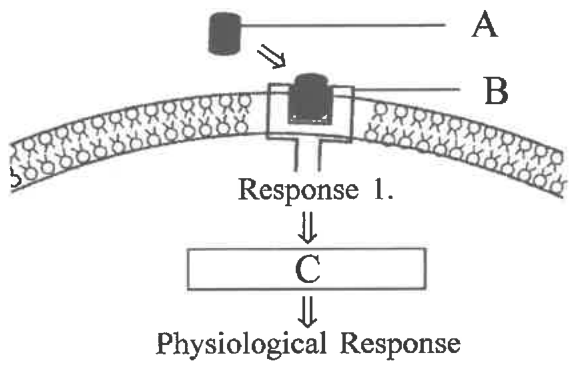
Select the correct option from the following:
- 1A = Steroid Hormone; B = Receptor; C = Second Messenger
- 2A = Protein Hormone; B = Cyclic AMP; C = Hormone-receptor Complex
- 3A = Steroid Hormone; B = Hormone-receptor Complex; C = Protein
- 4A = Protein Hormone; B = Receptor; C = Cyclic AMP
Show answer and solution
Correct: option 4, A = Protein Hormone; B = Receptor; C = Cyclic AMP
The hormone in the picture does not enter the cell; it binds a receptor sitting in the cell membrane, which is how protein hormones act (steroid hormones pass through the membrane to receptors inside the cell). So A is a protein hormone and B is its membrane receptor. Binding generates a second messenger such as cyclic AMP (C), which brings about the physiological response.
Question 28NEET 2019 Odisha, Q134
Artificial light, extended work-time and reduced sleep-time disrupt the activity of -
- 1Adrenal gland
- 2Posterior pituitary gland
- 3Thymus gland
- 4Pineal gland
Show answer and solution
Correct: option 4, Pineal gland
The pineal gland secretes melatonin, which regulates the 24-hour (diurnal) rhythm of the body, including the sleep-wake cycle. Its secretion follows the natural cycle of light and darkness, so artificial light at night, long working hours and too little sleep upset its activity.
Question 29NEET 2019 Odisha, Q135
Which of the following conditions will stimulate parathyroid gland to release parathyroid hormone?
- 1Fall in bone levels
- 2Rise in blood levels
- 3Fall in active Vitamin D levels
- 4Fall in blood levels
Show answer and solution
Correct: option 4, Fall in blood levels
Secretion of parathyroid hormone is regulated by the level of calcium ions circulating in the blood. PTH is a hypercalcaemic hormone: it raises blood calcium by releasing it from bone and increasing its reabsorption and absorption. A fall in blood calcium therefore stimulates its release.
Question 30NEET 2018, Q140
Which of the following is an amino acid derived hormone ?
- 1Estradiol
- 2Ecdysone
- 3Epinephrine
- 4Estriol
Show answer and solution
Correct: option 3, Epinephrine
Epinephrine (adrenaline) is made from the amino acid tyrosine, so it is an amino acid derivative. Estradiol, estriol and the insect moulting hormone ecdysone are all steroids.
Question 31NEET 2018, Q141
Which of the following hormones can play a significant role in osteoporosis ?
- 1Estrogen and Parathyroid hormone
- 2Progesterone and Aldosterone
- 3Aldosterone and Prolactin
- 4Parathyroid hormone and Prolactin
Show answer and solution
Correct: option 1, Estrogen and Parathyroid hormone
Osteoporosis is loss of bone mass. Estrogen protects bone, so its fall after menopause promotes bone loss, and excess parathyroid hormone dissolves bone by stimulating resorption to raise blood calcium. Aldosterone, progesterone and prolactin do not have this role.
Question 32NEET 2017, Q108
A temporary endocrine gland in the human body is:
- 1Pineal gland
- 2Corpus cardiacum
- 3Corpus luteum
- 4Corpus allatum
Show answer and solution
Correct: option 3, Corpus luteum
The corpus luteum forms from the ruptured Graafian follicle after ovulation and secretes progesterone. Without pregnancy it degenerates within about two weeks, so it is a temporary endocrine gland. Corpus cardiacum and corpus allatum are insect glands.
Question 33NEET 2017, Q169
Hypersecretion of Growth Hormone in adults does not cause further increase in height, because
- 1Growth Hormone becomes inactive in adults.
- 2Epiphyseal plates close after adolescence.
- 3Bones lose their sensitivity to Growth Hormone in adults.
- 4Muscle fibres do not grow in size after birth.
Show answer and solution
Correct: option 2, Epiphyseal plates close after adolescence.
Long bones grow in length at the epiphyseal plates. These plates ossify and close after adolescence, so extra growth hormone in an adult cannot add height; it causes acromegaly instead.
Question 34NEET 2016 Phase 1, Q108
Which of the following pairs of hormones are not antagonistic (having opposite effects) to each other?
- 1Parathormone - Calcitonin
- 2Insulin - Glucagon
- 3Aldosterone - Atrial Natriuretic Factor
- 4Relaxin - Inhibin
Show answer and solution
Correct: option 4, Relaxin - Inhibin
Parathormone raises blood calcium and calcitonin lowers it; insulin lowers blood glucose and glucagon raises it; aldosterone retains sodium and raises blood pressure while ANF does the opposite. Relaxin loosens the pelvic ligaments at childbirth and inhibin suppresses FSH secretion, so these two act on unrelated things and are not antagonists.
Question 35NEET 2016 Phase 1, Q147
The amino acid Tryptophan is the precursor for the synthesis of:
- 1Melatonin and Serotonin
- 2Thyroxine and Triiodothyronine
- 3Estrogen and Progesterone
- 4Cortisol and Cortisone
Show answer and solution
Correct: option 1, Melatonin and Serotonin
Tryptophan is converted to serotonin (5-hydroxytryptamine), and serotonin is converted to melatonin in the pineal gland. Thyroxine and triiodothyronine are made from tyrosine, while estrogen, progesterone, cortisol and cortisone are steroids made from cholesterol.
Question 36NEET 2016 Phase 2, Q150
Graves' disease is caused due to
- 1hyposecretion of thyroid gland
- 2hypersecretion of thyroid gland
- 3hyposecretion of adrenal gland
- 4hypersecretion of adrenal gland
Show answer and solution
Correct: option 2, hypersecretion of thyroid gland
Graves' disease is exophthalmic goitre: the thyroid enlarges and secretes too much thyroid hormone, giving a raised metabolic rate, weight loss and protruding eyeballs. It is therefore a hypersecretion of the thyroid gland.
Question 37NEET 2016 Phase 2, Q153
Name a peptide hormone which acts mainly on hepatocytes, adipocytes and enhances cellular glucose uptake and utilization.
- 1Insulin
- 2Glucagon
- 3Secretin
- 4Gastrin
Show answer and solution
Correct: option 1, Insulin
Insulin, a peptide hormone from the beta cells of the pancreas, acts mainly on liver cells and fat cells and increases the uptake and use of glucose, lowering blood glucose. Glucagon has the opposite effect, and secretin and gastrin act on digestion.
Question 38NEET 2016 Phase 2, Q157
The posterior pituitary gland is not a 'true' endocrine gland because
- 1it is provided with a duct
- 2it only stores and releases hormones
- 3it is under the regulation of hypothalamus
- 4it secretes enzymes
Show answer and solution
Correct: option 2, it only stores and releases hormones
Oxytocin and vasopressin are made by neurosecretory cells of the hypothalamus and carried down their axons to the posterior pituitary. The posterior pituitary makes no hormone of its own; it only stores and releases these two.
Question 39AIPMT 2015, Q91
A chemical signal that has both endocrine and neural roles is?
- 1Calcitonin
- 2Epinephrine
- 3Cortisol
- 4Melatonin
Show answer and solution
Correct: option 2, Epinephrine
Epinephrine (adrenaline) is released into the blood by the adrenal medulla as a hormone, and it also acts as a neurotransmitter at nerve endings. Calcitonin, cortisol and melatonin act only as hormones.
Question 40AIPMT 2015 Re-test, Q95
Which one of the following hormones is not involved in sugar metabolism?
- 1Glucagon
- 2Cortisone
- 3Aldosterone
- 4Insulin
Show answer and solution
Correct: option 3, Aldosterone
Insulin lowers blood glucose, glucagon raises it, and cortisone is a glucocorticoid that promotes gluconeogenesis. Aldosterone is a mineralocorticoid: it controls sodium and potassium balance and water retention, not carbohydrate metabolism.
Question 41AIPMT 2015 Re-test, Q117
Which one of the following hormones though synthesised elsewhere, is stored and released by the master gland?
- 1Melanocyte stimulating hormone
- 2Antidiuretic hormone
- 3Luteinizing hormone
- 4Prolactin
Show answer and solution
Correct: option 2, Antidiuretic hormone
Antidiuretic hormone (vasopressin) is made by neurosecretory cells of the hypothalamus, carried down their axons and stored in the posterior pituitary, which releases it. MSH, LH and prolactin are made in the pituitary itself.
Question 42AIPMT 2014, Q8
Identify the hormone with its correct matching of source and function:
- 1Atrial natriuretic factor - ventricular wall increases the blood pressure.
- 2Oxytocin - posterior pituitary, growth and maintenance of mammary glands.
- 3Melatonin - pineal gland, regulates the normal rhythm of sleep-wake cycle.
- 4Progesterone - corpus-luteum, stimulation of growth and activities of female secondary sex organs.
Show answer and solution
Correct: option 3, Melatonin - pineal gland, regulates the normal rhythm of sleep-wake cycle.
Melatonin is secreted by the pineal gland and regulates the 24-hour rhythm of the body, including the sleep-wake cycle. Atrial natriuretic factor comes from the atrial wall and lowers blood pressure. Oxytocin causes contraction of the uterus and milk ejection. Growth and activities of the female secondary sex organs are stimulated by estrogens; progesterone supports pregnancy.
Question 43AIPMT 2014, Q36
Fight-or-flight reactions cause activation of:
- 1the pancreas leading to a reduction in the blood sugar levels.
- 2the parathyroid glands, leading to increased metabolic rate.
- 3the kidney, leading to suppression of renin-angiotensin-aldosterone pathway.
- 4the adrenal medulla, leading to increased secretion of epinephrine and norepinephrine.
Show answer and solution
Correct: option 4, the adrenal medulla, leading to increased secretion of epinephrine and norepinephrine.
In an emergency the sympathetic nervous system stimulates the adrenal medulla, which pours out epinephrine and norepinephrine, the fight-or-flight hormones. They raise heart rate, breathing rate and blood glucose.
Question 44NEET 2013, Q49
Which of the following statements is correct in relation to the endocrine system?
- 1Organs in the body like gastrointestinal tract, heart, kidney and liver do not produce any hormones.
- 2Non-nutrient chemicals produced by the body in trace amount that act as intercellular messenger are known as hormones.
- 3Releasing and inhibitory hormones are produced by the pituitary gland.
- 4Adenohypophysis is under direct neural regulation of the hypothalamus.
Show answer and solution
Correct: option 2, Non-nutrient chemicals produced by the body in trace amount that act as intercellular messenger are known as hormones.
Statement (2) is the current definition of a hormone. The others are wrong: the gut, heart, kidney and liver do produce hormones; releasing and inhibiting hormones are made by the hypothalamus, not the pituitary; and the adenohypophysis is controlled by these hormones carried in the portal blood vessels, while it is the neurohypophysis that is under direct neural control.
Question 45NEET 2013, Q52
A pregnant female delivers a baby who suffers from stunted growth, mental retardation, low intelligence quotient and abnormal skin.
This is the result of:
- 1Low secretion of growth hormone
- 2Cancer of the thyroid gland
- 3Over secretion of pars distalis
- 4Deficiency of iodine in diet
Show answer and solution
Correct: option 4, Deficiency of iodine in diet
These are the signs of cretinism, caused by too little thyroid hormone during pregnancy and early development. Iodine is needed to make thyroid hormones, so lack of iodine in the mother's diet leads to it. Low growth hormone gives dwarfism without mental retardation.
Question 46NEET 2013, Q79
Select the answer which correctly matches the endocrine gland with the hormone it secretes and its function/deficiency symptom:
- 1Posterior pituitary - Growth Hormone (GH) - Oversecretion stimulates abnormal growth
- 2Thyroid gland - Thyroxine - Lack of iodine in diet results in goitre
- 3Corpus luteum - Testosterone - Stimulates spermatogenesis
- 4Anterior pituitary - Oxytocin - Stimulates uterus contraction during child birth
Show answer and solution
Correct: option 2, Thyroid gland - Thyroxine - Lack of iodine in diet results in goitre
The thyroid gland secretes thyroxine, and lack of iodine in the diet leads to goitre, so row (2) is correct. Growth hormone comes from the anterior pituitary, not the posterior. The corpus luteum secretes progesterone, not testosterone. Oxytocin is released from the posterior pituitary, not the anterior.
Question 47NEET 2013 Karnataka, Q107
Select the option which correctly matches the endocrine gland with its hormone and its function:
Endocrine gland - Hormone - Function
- 1Placenta - estrogen - initiates secretion of the milk
- 2Corpus luteum - estrogen - essential for maintenance of endometrium
- 3Leydig cells - androgen - initiates the production of sperms
- 4Ovary - FSH - stimulates follicular development and the secretion of estrogens
Show answer and solution
Correct: option 3, Leydig cells - androgen - initiates the production of sperms
Leydig cells of the testis secrete androgens, which stimulate spermatogenesis. Milk secretion is started by prolactin; the endometrium is maintained mainly by progesterone from the corpus luteum; FSH is made by the anterior pituitary, not by the ovary.
Question 48NEET 2013 Karnataka, Q123
Which of the following represents the action of insulin?
- 1Increases blood glucose levels by stimulating glucagon production
- 2Decreases blood glucose levels by forming glycogen
- 3Increases blood glucose level by promoting cellular uptake of glucose
- 4Increases blood glucose levels by hydrolysis of glycogen
Show answer and solution
Correct: option 2, Decreases blood glucose levels by forming glycogen
Insulin lowers blood glucose. It makes liver cells and fat cells take up glucose and promotes glycogenesis, the conversion of glucose to glycogen. Raising blood glucose by breaking down glycogen is the action of glucagon.
Question 49AIPMT 2012 Prelims, Q78
A person entering an empty room suddenly finds a snake right in front on opening the door. Which one of the following is likely to happen in his neuro-hormonal control system?
- 1Sympathetic nervous system is activated releasing epinephrin and norepinephrin from adrenal medulla.
- 2Neurotransmitters diffuse rapidly across the cleft and transmit a nerve impulse.
- 3Hypothalamus activates the parasympathetic division of brain.
- 4Sympathetic nervous system is activated releasing epinephrin and norepinephrin from adrenal cortex.
Show answer and solution
Correct: option 1, Sympathetic nervous system is activated releasing epinephrin and norepinephrin from adrenal medulla.
A sudden fright activates the sympathetic nervous system, which stimulates the adrenal medulla to release epinephrine and norepinephrine, the emergency (fight or flight) hormones. These hormones come from the medulla, not the cortex, so option (4) is wrong.
Question 50AIPMT 2012 Prelims, Q124
Which one of the following pairs of hormones are the examples of those that can easily pass through the cell membrane of the target cell and bind to a receptor inside it (Mostly in the nucleus)?
- 1Insulin, glucagon
- 2Thyroxin, insulin
- 3Somatostatin, oxytocin
- 4Cortisol, testosterone
Show answer and solution
Correct: option 4, Cortisol, testosterone
Steroid hormones are lipid soluble, so they cross the plasma membrane and bind to intracellular receptors, mostly in the nucleus, where they regulate gene expression. Cortisol and testosterone are both steroids. Insulin, glucagon, somatostatin and oxytocin are peptide or protein hormones that bind to membrane receptors, so every other pair contains at least one of these.
Question 51AIPMT 2012 Prelims, Q133
What is correct to say about the hormone action in humans?
- 1Glucagon is secreted by -cells of Islets of Langerhans and stimulates glycogenolysis
- 2Secretion of thymosins is stimulated with aging
- 3In females FSH first binds with specific receptors on ovarian cell membrane
- 4FSH stimulates the secretion of estrogen and progesterone
Show answer and solution
Correct: option 3, In females FSH first binds with specific receptors on ovarian cell membrane
FSH is a glycoprotein hormone that cannot enter the cell, so it first binds to its receptor on the membrane of ovarian follicle cells and acts through a second messenger. Glucagon comes from the -cells, not the -cells; the thymus degenerates with age so thymosin secretion falls; and progesterone secretion by the corpus luteum is under LH, not FSH.
Question 52AIPMT 2011 Prelims, Q80
Match the source gland with respective hormone as well the function.
| Source gland | Hormone | Function |
|---|
| 1 | Anterior pituitary | Oxytocin | Contraction of uterus muscles during child birth |
| 2 | Posterior pituitary | Vasopressin | Stimulates resorption of water in the distal tubules in the nephron |
| 3 | Corpus luteum | Estrogen | Supports pregnancy |
| 4 | Thyroid | Thyroxine | Regulates blood calcium level |
- 1Anterior pituitary, Oxytocin, Contraction of uterus muscles during child birth
- 2Posterior pituitary, Vasopressin, Stimulates resorption of water in the distal tubules in the nephron
- 3Corpus luteum, Estrogen, Supports pregnancy
- 4Thyroid, Thyroxine, Regulates blood calcium level
Show answer and solution
Correct: option 2, Posterior pituitary, Vasopressin, Stimulates resorption of water in the distal tubules in the nephron
Vasopressin (ADH) is released from the posterior pituitary and makes the distal tubules and collecting ducts take back water, so row 2 is fully correct. Oxytocin also comes from the posterior pituitary, not the anterior; the corpus luteum supports pregnancy mainly through progesterone; and blood calcium is regulated by calcitonin and parathyroid hormone, not thyroxine.
Question 53AIPMT 2011 Prelims, Q91
Given below is an incomplete table about certain hormones, their source glands and one major effect of each on the body in humans. Identify the correct option for the three blanks A, B and C.
| GLAND | SECRETION | EFFECT ON BODY |
|---|
| A | Oestrogen | Maintenance of secondary sexual characters |
| Alpha cells of islets of Langerhans | B | Raises blood sugar level |
| Anterior pituitary | C | Over secretion leads to gigantism |
Options:
- 1A-Ovary, B-Glucagon, C-Growth hormone
- 2A-Placenta, B-Insulin, C-Vasopressin
- 3A-Ovary, B-Insulin, C-Calcitonin
- 4A-Placenta, B-Glucagon, C-Calcitonin
Show answer and solution
Correct: option 1, A-Ovary, B-Glucagon, C-Growth hormone
Oestrogen that maintains the female secondary sexual characters comes from the ovary (A). The alpha cells of the islets secrete glucagon (B), which raises blood sugar; insulin comes from the beta cells and lowers it. Over-secretion of growth hormone (C) from the anterior pituitary causes gigantism.
Question 54AIPMT 2011 Mains, Q83
The 24 hour (diurnal) rhythm of our body such as the sleep-wake cycle is regulated by the hormone:
- 1calcitonin
- 2prolactin
- 3adrenaline
- 4melatonin
Show answer and solution
Correct: option 4, melatonin
Melatonin, secreted by the pineal gland, sets the 24-hour (diurnal) rhythms of the body, including the sleep-wake cycle and body temperature. Calcitonin lowers blood calcium, prolactin acts on milk formation and adrenaline is the emergency hormone.
Question 55AIPMT 2010 Mains, Q65
Select the correct matching of a hormone, its source and function.
- 1Hormone: Prolactin; Source: Posterior pituitary; Function: Regulates growth of mammary glands and milk formation in females
- 2Hormone: Vasopressin; Source: Posterior pituitary; Function: Increases loss of water through urine
- 3Hormone: Norepinephrine; Source: Adrenal medulla; Function: Increases heart beat, rate of respiration and alertness
- 4Hormone: Glucagon; Source: Beta-cells of Islets of langerhans; Function: Stimulates glycogenolysis
Show answer and solution
Correct: option 3, Hormone: Norepinephrine; Source: Adrenal medulla; Function: Increases heart beat, rate of respiration and alertness
Norepinephrine is secreted by the adrenal medulla and raises the heart beat, the rate of respiration and alertness, so row 3 is fully correct. Prolactin comes from the anterior pituitary, vasopressin reduces loss of water in urine, and glucagon is made by the alpha-cells of the islets.
Question 56AIPMT 2010 Prelims, Q108
Which one of the following pair is incorrectly matched
- 1Somatostatin - Delta cells (Source)
- 2Corpus luteum - Relaxin (secretion)
- 3Insulin - Diabetes mellitus (disease)
- 4Glucagon - Beta cells (source)
Show answer and solution
Correct: option 4, Glucagon - Beta cells (source)
Glucagon is secreted by the alpha cells of the islets of Langerhans; the beta cells secrete insulin. So the pair in option (4) is wrong. The other pairs are right: delta cells secrete somatostatin, the corpus luteum secretes relaxin late in pregnancy, and lack of insulin causes diabetes mellitus.
Question 57AIPMT 2010 Prelims, Q125
Toxic agents present in food which interfere with thyroxine synthesis lead to the development of
- 1cretinism
- 2simple goitre
- 3thyrotoxicosis
- 4toxic goitre
Show answer and solution
Correct: option 2, simple goitre
Substances in food that block thyroxine synthesis (goitrogens) lower the thyroxine level in blood. The pituitary then releases more TSH, which makes the thyroid gland enlarge. This enlargement with low hormone output is simple goitre. Thyrotoxicosis and toxic goitre are conditions of excess thyroid hormone.
Question 58AIPMT 2010 Prelims, Q165
Injury to adrenal cortex is not likely to affect the secretion of which of the following
- 1Both Androstenedione and Dehydroepiandrosterone
- 2Adrenaline
- 3Cortisol
- 4Aldosterone
Show answer and solution
Correct: option 2, Adrenaline
The adrenal cortex secretes cortisol (a glucocorticoid), aldosterone (a mineralocorticoid) and small amounts of androgens such as androstenedione and dehydroepiandrosterone. Adrenaline is secreted by the adrenal medulla, so damage to the cortex does not affect it.
Question 59AIPMT 2009 Prelims, Q112
A health disorder that results from the deficiency of thyroxine in adults and characterised by (i) a low metabolic rate, (ii) increase in body weight and (iii) tendency to retain water in tissues is:
- 1simple goitre
- 2myxoedema
- 3cretinism
- 4hypothyroidism
Show answer and solution
Correct: option 2, myxoedema
Thyroxine deficiency in adults causes myxoedema, with a low metabolic rate, weight gain and puffiness from fluid held in the tissues. Cretinism is the deficiency in childhood, simple goitre is an enlarged thyroid from lack of iodine, and hypothyroidism is the general condition and not the name of this adult disorder.
Question 60AIPMT 2008 Prelims, Q154
The blood calcium level is lowered by the deficiency of
- 1Calcitonin
- 2Parathormone
- 3Thyroxine
- 4Both Calcitonin and Parathormone
Show answer and solution
Correct: option 2, Parathormone
Parathormone raises blood calcium by releasing it from bone and increasing its reabsorption and absorption. If parathormone is deficient, blood calcium falls (which can lead to tetany). Calcitonin lowers blood calcium, so its deficiency would not lower the level.
Question 61AIPMT 2008 Prelims, Q168
In human adult females oxytocin
- 1Causes strong uterine contractions during parturition
- 2Is secreted by anterior pituitary
- 3Stimulates growth of mammary glands
- 4Stimulates pituitary to secrete vasopressin
Show answer and solution
Correct: option 1, Causes strong uterine contractions during parturition
Oxytocin is made in the hypothalamus and released from the posterior pituitary. It makes the smooth muscle of the uterus contract strongly at childbirth and also causes milk ejection; it does not make the mammary glands grow.
Question 62AIPMT 2008 Prelims, Q199
Which of the following pairs of organs includes only the endocrine glands?
- 1Adrenal and Ovary
- 2Parathyroid and Adrenal
- 3Pancreas and Parathyroid
- 4Thymus and Testes
Show answer and solution
Correct: option 2, Parathyroid and Adrenal
The parathyroid and the adrenal are purely endocrine glands. The ovary and testes also produce gametes, and the pancreas also has an exocrine part that secretes digestive enzymes.
Question 63AIPMT 2007 Prelims, Q52
Compared to a bull a bullock is docile because of:
- 1lower levels of adrenalin / noradrenalin in its blood
- 2higher levels of thyroxin
- 3higher levels of cortisone
- 4lower levels of blood testosterone
Show answer and solution
Correct: option 4, lower levels of blood testosterone
A bullock is a castrated bull. With the testes removed, very little testosterone is made, and it is testosterone that produces the aggressive male behaviour of a bull. So the bullock is docile because its blood testosterone is low.
Question 64AIPMT 2007 Prelims, Q57
Feeling the tremors of an earthquake a scared resident of seventh floor of a multistoryed building starts climbing down the stairs rapidly. Which hormone initiated this action?
- 1Gastrin
- 2Thyroxin
- 3Adrenaline
- 4Glucagon
Show answer and solution
Correct: option 3, Adrenaline
Fear is an emergency situation. The adrenal medulla releases adrenaline, the fight-or-flight hormone, which raises heart rate, breathing rate and blood glucose and so prepares the body for rapid action.
Question 65AIPMT 2007 Prelims, Q62
A person is having problems with calcium and phosphorous metabolism in his body. Which one of the following glands may not be functioning properly?
- 1Thyroid
- 2Parathyroid
- 3Parotid
- 4Pancreas
Show answer and solution
Correct: option 2, Parathyroid
Parathyroid hormone (PTH) from the parathyroid glands is the main regulator of calcium and phosphate levels: it raises blood calcium by acting on bone, kidney and gut and increases phosphate excretion. A fault in calcium and phosphorus metabolism therefore points to the parathyroid.
Question 66AIPMT 2006 Prelims, Q108
Which one of the following statements is correct?
- 1Neurons regulate endocrine activity, but not vice versa
- 2Endocrine glands regulate neural activity, and nervous system regulates endocrine glands
- 3Neither hormones control neural activity nor the neurons control endocrine activity
- 4Endocrine glands regulate neural activity, but not vice versa
Show answer and solution
Correct: option 2, Endocrine glands regulate neural activity, and nervous system regulates endocrine glands
Control runs both ways. The hypothalamus, a part of the brain, controls the pituitary and through it other endocrine glands, while hormones such as thyroxine and adrenaline affect the development and working of the nervous system.
Question 67AIPMT 2006 Prelims, Q165
A steroid hormone which regulates glucose metabolism is
- 1Cortisol
- 2Corticosterone
- 311-deoxycorticosterone
- 4Cortisone
Show answer and solution
Correct: option 1, Cortisol
Cortisol is the main glucocorticoid of the human adrenal cortex. It raises blood glucose by promoting gluconeogenesis and reducing glucose uptake by cells. The other steroids listed have only minor glucocorticoid action in humans or act mainly as mineralocorticoids.
Question 68AIPMT 2006 Prelims, Q167
Which one of the following is not a second messenger in hormone action?
- 1cGMP
- 2Calcium
- 3Sodium
- 4cAMP
Show answer and solution
Correct: option 3, Sodium
Hormones that bind membrane receptors act through second messengers produced or released inside the cell, such as cAMP, cGMP, and . Sodium ions do not serve as a second messenger.
Question 69AIPMT 2006 Prelims, Q181
Which of the following is an accumulation and release centre of neurohormones?
- 1Posterior pituitary lobe
- 2Intermediate lobe of the pituitary
- 3Hypothalamus
- 4Anterior pituitary lobe
Show answer and solution
Correct: option 1, Posterior pituitary lobe
Oxytocin and vasopressin are neurohormones made by neurosecretory cells of the hypothalamus. They travel down the axons and are stored in, and released from, the posterior lobe of the pituitary (neurohypophysis), which makes no hormones of its own. The hypothalamus is where they are synthesised, not where they accumulate.
Question 70AIPMT 2006 Prelims, Q185
Which hormone causes dilation of blood vessels, increased oxygen consumption and glucogenesis?
- 1ACTH
- 2Insulin
- 3Adrenalin
- 4Glucagon
Show answer and solution
Correct: option 3, Adrenalin
Adrenalin, the emergency hormone of the adrenal medulla, dilates the blood vessels supplying skeletal muscles and the heart, raises the metabolic rate and oxygen consumption, and raises blood glucose by breaking down glycogen. Insulin lowers blood glucose, glucagon does not affect blood vessels, and ACTH acts on the adrenal cortex.
Question 71AIPMT 2004 Prelims, Q123
Which one of the following hormones is a modified amino acid?
- 1Progesterone
- 2Prostaglandin
- 3Estrogen
- 4Epinephrine
Show answer and solution
Correct: option 4, Epinephrine
Epinephrine (adrenaline) is a catecholamine made from the amino acid tyrosine. Progesterone and estrogen are steroids, and prostaglandins are derived from fatty acids.
Question 72AIPMT 2004 Prelims, Q168
Which one of the following pairs correctly matches a hormone with a disease resulting from its deficiency:-
- 1Insulin – Diabetes insipidus
- 2Thyroxine – Tetany
- 3Parathyroid hormone – Diabetes mellitus
- 4Luteinizing hormone – Failure of ovulation
Show answer and solution
Correct: option 4, Luteinizing hormone – Failure of ovulation
The LH surge at mid-cycle ruptures the Graafian follicle, so a lack of luteinizing hormone means no ovulation. Lack of insulin causes diabetes mellitus (diabetes insipidus is lack of ADH), lack of parathyroid hormone causes tetany, and lack of thyroxine causes cretinism or myxoedema.
Question 73AIPMT 2004 Prelims, Q181
Chemically hormones are:-
- 1Proteins, steroids & biogenic amines
- 2Proteins only
- 3Steroids only
- 4Biogenic amines only
Show answer and solution
Correct: option 1, Proteins, steroids & biogenic amines
Hormones belong to several chemical groups: peptides and proteins (insulin, glucagon, pituitary hormones), steroids (cortisol, testosterone, estradiol) and amines made from amino acids (adrenaline, thyroxine). No single group covers them all.
Question 74AIPMT 2003 Prelims, Q120
Which one of the following pairs correctly matches a hormone with a disease resulting from its deficiency:
- 1Relaxin – Gigantism
- 2Prolactin – Cretinism
- 3Parathyroid hormone – Tetany
- 4Insulin – Diabetes insipidus
Show answer and solution
Correct: option 3, Parathyroid hormone – Tetany
Lack of parathyroid hormone lowers blood calcium, which makes muscles go into sustained spasm (tetany). Gigantism is due to excess growth hormone, cretinism to lack of thyroxine in childhood, and diabetes insipidus to lack of ADH; lack of insulin causes diabetes mellitus.
Question 75AIPMT 2002 Prelims, Q122
When both ovary of rat are removed then which hormone is decreased in blood:-
- 1Oxytocin
- 2Prolactin
- 3Estrogen
- 4Gonadotrophic releasing factor
Show answer and solution
Correct: option 3, Estrogen
Estrogen is secreted by the follicles of the ovary, so removing both ovaries makes its level in blood fall. Oxytocin, prolactin and the gonadotrophin releasing factor come from the hypothalamus and pituitary; with the negative feedback of estrogen gone, the releasing factor would in fact rise.
Question 76AIPMT 2002 Prelims, Q127
Adrenalin direct affect on:-
- 1S.A. Node
- 2-cells of Langerhans
- 3Dorsal root of spinal cord
- 4Epithelial cells of stomach
Show answer and solution
Correct: option 1, S.A. Node
Adrenalin, the emergency hormone of the adrenal medulla, acts directly on the S.A. node (the pacemaker) and increases the rate of the heart beat as well as the force of contraction.
Question 77AIPMT 2002 Prelims, Q128
Acromegaly is caused by:-
- 1Excess of S.T.H.
- 2Excess of Thyroxin
- 3Deficiency of Thyroxin
- 4Excess of Adrenalin
Show answer and solution
Correct: option 1, Excess of S.T.H.
Acromegaly results from over-secretion of growth hormone (somatotrophic hormone, S.T.H.) of the anterior pituitary in an adult. As the long bones can no longer lengthen, the bones of the jaw, hands and feet thicken and enlarge. Excess of the same hormone in childhood gives gigantism.
Question 78AIPMT 2000 Prelims, Q134
Melatonin is secreted by:
- 1Pineal body
- 2Skin
- 3Pituitary Gland
- 4Thyroid
Show answer and solution
Correct: option 1, Pineal body
Melatonin is the hormone of the pineal gland; it helps regulate the daily (sleep-wake) rhythm. It should not be confused with melanin, the pigment of the skin.
Question 79AIPMT 2000 Prelims, Q135
- 1Anterior lobe of pituitary
- 2Middle lobe of pituitary
- 3Posterior lobe of pituitary
- 4Endostyle
Show answer and solution
Correct: option 2, Middle lobe of pituitary
Melanocyte stimulating hormone (MSH) is secreted by the pars intermedia, the middle (intermediate) lobe of the pituitary. It acts on melanocytes and controls skin pigmentation.
Question 80AIPMT 1999 Prelims, Q119
Parathormone deficiency leads to:
- 1Decrease of level in blood
- 2Increase of level in blood
- 3Osteoporosis
- 4Hypercalemia
Show answer and solution
Correct: option 1, Decrease of level in blood
Parathormone raises blood calcium by releasing it from bone, increasing its reabsorption in the kidney and its absorption from food. When the hormone is deficient the blood calcium level falls, which can cause tetany. A raised level and bone loss are effects of too much hormone.
Question 81AIPMT 1999 Prelims, Q134
Oxytocin mainly helps in:
- 1Milk production
- 2Child birth
- 3Diuresis
- 4Gametogenesis
Show answer and solution
Correct: option 2, Child birth
Oxytocin makes the smooth muscle of the uterus contract strongly during labour, so its main role is in child birth. It also causes ejection of milk, but the production of milk is the work of prolactin.
Question 82AIPMT 1999 Prelims, Q149
Insulin differs from Growth hormone in:
- 1Increases activity of m-RNA and Ribosomes
- 2Increase the permeability of cell membrane
- 3Affects metabolism of fats by inducing lipogenesis
- 4Increasing protein synthesis
Show answer and solution
Correct: option 3, Affects metabolism of fats by inducing lipogenesis
Both hormones are anabolic for protein: they raise amino acid uptake and protein synthesis. They differ in their effect on fat. Insulin promotes the making and storage of fat (lipogenesis), while growth hormone breaks fat down (lipolysis).
Question 83AIPMT 1999 Prelims, Q154
Which gland decreases in size with increasing age:
- 1Thyroid
- 2Adrenal
- 3Thymus
- 4Pituitary
Show answer and solution
Correct: option 3, Thymus
The thymus is large in childhood and begins to shrink after puberty; in old people it is largely replaced by fat and fibrous tissue, which is one reason immunity weakens with age. The other glands listed do not degenerate in this way.
Question 84AIPMT 1999 Prelims, Q176
Minute quantity of hormones & steroid are detected by:
- 1Electrophoresis
- 2Radio immunoassay
- 3Electro encephalogram
- 4Fractional analysis
Show answer and solution
Correct: option 2, Radio immunoassay
Radioimmunoassay uses a radioactively labelled hormone that competes with the hormone in the sample for a specific antibody. It is sensitive enough to measure hormones and steroids present in blood in nanogram or picogram amounts. An electroencephalogram records the electrical activity of the brain.
Question 85AIPMT 1998 Prelims, Q156
Function of thyrocalcitonin:
- 1To reduce the calcium level in blood
- 2To increase the calcium level in blood
- 3Oppose the action of thyroxine
- 4Maturation of gonads
Show answer and solution
Correct: option 1, To reduce the calcium level in blood
Thyrocalcitonin (calcitonin) is secreted by the parafollicular cells of the thyroid. It lowers blood calcium by checking the release of calcium from bone, the opposite of parathyroid hormone, which raises it.