Questions with solutions
Question 1NEET 2026, Q91
"The Evil Quartet" of biodiversity loss includes which of the following?
- 1Over-exploitation; Alien species invasions; Air pollution; Co-extinctions
- 2Habitat loss and fragmentation; over-exploitation; Alien species invasions; Co-extinctions
- 3Habitat loss and fragmentation; Air pollution; Water pollution; Co-extinctions
- 4Over-exploitation; Alien species invasions; Soil pollution; Co-extinctions
Show answer and solution
Correct: option 2, Habitat loss and fragmentation; over-exploitation; Alien species invasions; Co-extinctions
The four major causes of accelerated species loss, called the Evil Quartet, are habitat loss and fragmentation, over-exploitation, alien species invasions and co-extinctions. Pollution of air, water or soil is not one of the four, so only option (2) lists them correctly.
Question 2NEET 2026, Q95
Which of the following statements are correct?
A. The Amazon rainforest being cut and cleared for cultivation of soyabeans is an example of habitat loss.
B. Steller's sea cow and passenger pigeon became extinct due to over-exploitation by humans.
C. The Nile perch introduced into Lake Victoria in East Africa helped in population growth of cichlid fish in the lake.
D. Water hyacinth is an invasive species.
E. When a species becomes extinct, the plant and animal species associated with it are not affected.
Choose the correct answer from the options given below:
- 1B, C and D only
- 2A, B and D only
- 3A, B and E only
- 4C, D and E only
Show answer and solution
Correct: option 2, A, B and D only
A, B and D are correct: clearing the Amazon for soyabean is habitat loss, Steller's sea cow and the passenger pigeon were over-exploited, and water hyacinth is an invasive alien species. C is wrong because the Nile perch led to the extinction of more than 200 cichlid species. E is wrong because associated species also die out (co-extinction).
Question 3NEET 2026, Q117
Exploring molecular, genetic and species-level diversity for products of economic importance is called:
- 1Biomagnification
- 2Biofortification
- 3Bioremediation
- 4Bioprospecting
Show answer and solution
Correct: option 4, Bioprospecting
Bioprospecting is the search through molecular, genetic and species-level diversity for products of economic importance. Biomagnification is the build-up of a toxicant along a food chain, biofortification is breeding crops for higher nutrient content, and bioremediation is cleaning up pollutants using organisms.
Question 4NEET 2026, Q124
Which of the following is an in situ conservation method?
- 1Sacred Groves
- 2Wildlife Safari Parks
- 3Botanical Gardens
- 4Seed Banks
Show answer and solution
Correct: option 1, Sacred Groves
In situ conservation protects organisms in their natural habitat, as in sacred groves, national parks, sanctuaries and biosphere reserves. Wildlife safari parks, botanical gardens and seed banks keep organisms outside their natural habitat, which is ex situ conservation.
Question 5NEET 2026, Q129
Since the origin and diversification of life on Earth, there have been five episodes of mass extinction of species. How is the sixth extinction, which is in progress, different from the previous episodes?
- 1The current species extinction rates are far lower than those in previous episodes.
- 2The present species extinction rates are 100 to 1000 times faster than in the pre-human times.
- 3The present net species extinction rate is zero.
- 4The current species extinction rate is nearly 10 times faster than that in previous episodes.
Show answer and solution
Correct: option 2, The present species extinction rates are 100 to 1000 times faster than in the pre-human times.
The sixth extinction differs from the earlier five in its rate: current species extinction rates are estimated to be 100 to 1000 times faster than in pre-human times, and human activities are responsible for the faster rates.
Question 6NEET 2026 Re-exam, Q144
Arrange the following in descending order of number of species in the Amazonian rain forest.
(a) Plants
(b) Birds
(c) Fishes
(d) Invertebrates
(e) Mammals
Choose the correct answer from the options given below:
- 1(c) > (b) > (d) > (e) > (a)
- 2(d) > (a) > (c) > (b) > (e)
- 3(e) > (b) > (a) > (c) > (d)
- 4(b) > (a) > (d) > (c) > (e)
Show answer and solution
Correct: option 2, (d) > (a) > (c) > (b) > (e)
The Amazonian rain forest holds more than 1,25,000 invertebrate species, over 40,000 plant species, about 3,000 fishes, about 1,300 birds and 427 mammals. In descending order that is invertebrates, plants, fishes, birds, mammals: (d) > (a) > (c) > (b) > (e).
Question 7NEET 2026 Re-exam, Q172
Given below are two statements: one is labelled as Assertion A and the other is labelled as Reason R.
Assertion A: Abingdon tortoise in Galapagos islands became extinct within a decade after goats were introduced.
Reason R: Goats were more efficient at browsing than Abingdon tortoise.
In the light of the above statements, choose the most appropriate answer from the options given below:
- 1Both A and R are correct and R is the correct explanation of A
- 2Both A and R are correct but R is not the correct explanation of A
- 3A is correct but R is not correct
- 4A is not correct but R is correct
Show answer and solution
Correct: option 1, Both A and R are correct and R is the correct explanation of A
The Abingdon tortoise died out within a decade of goats being brought to its island, because the goats browsed the vegetation more efficiently and outcompeted it for food. Both A and R are correct and R is the reason for A.
Question 8NEET 2025, Q99
Which one of the following is an example of ex-situ conservation?
- 1National Park
- 2Wildlife Sanctuary
- 3Zoos and botanical gardens
- 4Protected areas
Show answer and solution
Correct: option 3, Zoos and botanical gardens
Ex-situ conservation protects threatened organisms outside their natural habitat, as in zoological parks, botanical gardens, seed banks and wildlife safari parks. National parks, wildlife sanctuaries and other protected areas conserve species inside their natural habitat (in-situ). So zoos and botanical gardens is the answer.
Question 9NEET 2025, Q164
Match List I with List II:
| List I | List II |
|---|
| A. The Evil Quartet | I. Cryopreservation |
| B. Ex situ conservation | II. Alien species invasion |
| C. Lantana camara | III. Causes of biodiversity losses |
| D. Dodo | IV. Extinction |
Choose the option with all correct matches.
- 1A-III, B-II, C-I, D-IV
- 2A-III, B-I, C-II, D-IV
- 3A-III, B-IV, C-II, D-I
- 4A-III, B-II, C-IV, D-I
Show answer and solution
Correct: option 2, A-III, B-I, C-II, D-IV
'The Evil Quartet' names the four major causes of biodiversity loss (III). Cryopreservation of gametes is an ex situ conservation method (I). Lantana camara is an invasive alien species (II). The dodo is an extinct bird (IV). So A-III, B-I, C-II, D-IV.
Question 10NEET 2024, Q108
These are regarded as major causes of biodiversity loss:
A. Over exploitation
B. Co-extinction
C. Mutation
D. Habitat loss and fragmentation
E. Migration
Choose the correct option:
- 1A, B and D only
- 2A, C and D only
- 3A, B, C and D only
- 4A, B and E only
Show answer and solution
Correct: option 1, A, B and D only
The four major causes of biodiversity loss (the 'Evil Quartet') are habitat loss and fragmentation, over-exploitation, alien species invasions and co-extinctions. Mutation and migration are not among them, so A, B and D are correct.
Question 11NEET 2024, Q116
The type of conservation in which the threatened species are taken out from their natural habitat and placed in special setting where they can be protected and given special care is called;
- 1Sustainable development
- 2in-situ conservation
- 3Biodiversity conservation
- 4Semi-conservative method
Show answer and solution
Correct: option 3, Biodiversity conservation
The description is that of ex-situ (off-site) conservation, as in zoological parks, botanical gardens and seed banks. Ex-situ conservation is not listed, and it is one of the two approaches of biodiversity conservation, so that is the keyed option. In-situ conservation protects species inside their natural habitat, and the other two options are not types of conservation.
Question 12NEET 2024, Q126
List of endangered species was released by-
- 1IUCN
- 2GEAC
- 3WWF
- 4FOAM
Show answer and solution
Correct: option 1, IUCN
The Red List of threatened and endangered species is published by the IUCN (International Union for Conservation of Nature and Natural Resources). GEAC is the committee that deals with genetically modified organisms in India.
Question 13NEET 2024, Q130
Tropical regions show greatest level of species richness because
A. Tropical latitudes have remained relatively undisturbed for millions of years, hence more time was available for species diversification.
B. Tropical environments are more seasonal.
C. More solar energy is available in tropics.
D. Constant environments promote niche specialization.
E. Tropical environments are constant and predictable.
Choose the correct answer from the options given below:
- 1A, B and D only
- 2A, C, D and E only
- 3A and B only
- 4A, B and E only
Show answer and solution
Correct: option 2, A, C, D and E only
Three reasons are given for the greater species richness of the tropics: they have remained undisturbed for millions of years, giving a long time for diversification (A); their environments are less seasonal, more constant and predictable, which promotes niche specialisation (D and E); and more solar energy is available, giving higher productivity (C). Statement B is the opposite of the fact.
Question 14NEET 2024, Q142
Match List I with List II
| List I | List II |
|---|
| A. Robert May | I. Species-Area relationship |
| B. Alexander von Humboldt | II. Long term ecosystem experiment using out door plots |
| C. Paul Ehrlich | III. Global species diversity at about 7 million |
| D. David Tilman | IV. Rivet popper hypothesis |
Choose the correct answer from the options given below:
- 1A-III, B-IV, C-II, D-I
- 2A-II, B-III, C-I, D-IV
- 3A-III, B-I, C-IV, D-II
- 4A-I, B-III, C-II, D-IV
Show answer and solution
Correct: option 3, A-III, B-I, C-IV, D-II
Robert May estimated global species diversity at about 7 million (A-III). Alexander von Humboldt described the species-area relationship (B-I). Paul Ehrlich proposed the rivet popper hypothesis (C-IV). David Tilman carried out long-term ecosystem experiments using outdoor plots (D-II).
Question 15NEET 2024 Re-exam, Q101
The regions with high level of species richness, high degree of endemism and a loss of 70% of the species and habitat are identified as:
- 1Natural Reserves
- 2Sacred Groves
- 3Biodiversity Hotspots
- 4Biogeographical Regions
Show answer and solution
Correct: option 3, Biodiversity Hotspots
Biodiversity hotspots are regions that hold very many species, a large share of which are endemic (found nowhere else), and that are losing habitat fast. These are exactly the criteria listed in the question, so the answer is biodiversity hotspots.
Question 16NEET 2024 Re-exam, Q110
Which one of the following is not included under in-situ conservation?
- 1Wild-life sanctuary
- 2Botanical garden
- 3Biosphere reserve
- 4National park
Show answer and solution
Correct: option 2, Botanical garden
In-situ conservation protects species inside their natural habitat, as in national parks, wildlife sanctuaries and biosphere reserves. A botanical garden keeps plants outside their natural habitat, so it is ex-situ conservation.
Question 17NEET 2024 Re-exam, Q124
Cryopreservation technique is used for:
- 1Protection of environment
- 2Protection of Biodiversity hotspots
- 3Preservation of gametes in viable and fertile condition for a long period
- 4In-situ conservation
Show answer and solution
Correct: option 3, Preservation of gametes in viable and fertile condition for a long period
Cryopreservation means storing living material at a very low temperature, in liquid nitrogen at . Gametes of threatened species kept this way stay viable and fertile for a long time. It is an ex-situ method, not in-situ.
Question 18NEET 2024 Re-exam, Q149
Match List-I with List-II:
| List-I | List-II |
|---|
| A. Biodiversity hotspot | I. Khasi and Jaintia hills in Meghalaya |
| B. Sacred groves | II. World Summit on Sustainable |
| C. Johannesburg South Africa | III. Parthenium |
| D. Alien species invasion | IV. Western Ghats |
Choose the correct answer from the options given below:
- 1A-IV, B-I, C-II, D-III
- 2A-II, B-III, C-IV, D-I
- 3A-I, B-IV, C-III, D-II
- 4A-III, B-I, C-II, D-IV
Show answer and solution
Correct: option 1, A-IV, B-I, C-II, D-III
The Western Ghats (with Sri Lanka) are a biodiversity hotspot (A-IV). Sacred groves are found in the Khasi and Jaintia hills of Meghalaya (B-I). The World Summit on Sustainable Development was held in Johannesburg, South Africa, in 2002 (C-II). Parthenium (carrot grass) is an invasive alien species (D-III).
Question 19NEET 2023, Q107
Among ‘The Evil Quartet’, which one is considered the most important cause driving extinction of species?
- 1Habitat loss and fragmentation
- 2Over exploitation for economic gain
- 3Alien species invasions
- 4Co-extinctions
Show answer and solution
Correct: option 1, Habitat loss and fragmentation
The Evil Quartet is habitat loss and fragmentation, over-exploitation, alien species invasions and co-extinctions. Habitat loss and fragmentation is the most important of the four, the loss of tropical rain forests being the most dramatic example.
Question 20NEET 2023, Q125
The historic Convention on Biological Diversity, ‘The Earth Summit’ was held in Rio de Janeiro in the year:
- 11985
- 21992
- 31986
- 42002
Show answer and solution
Correct: option 2, 1992
The Earth Summit, the Convention on Biological Diversity, was held in Rio de Janeiro in 1992. The year 2002 was the World Summit on Sustainable Development in Johannesburg.
Question 21NEET 2023 Manipur, Q107
The species of plants that plays a vital role in controlling the relative abundance of other species in a community is called _______.
- 1Exotic species
- 2Keystone species
- 3Alien species
- 4Endemic species
Show answer and solution
Correct: option 2, Keystone species
A keystone species has an effect on the community far larger than its own abundance and controls the relative abundance of the other species. Exotic and alien species are introduced from elsewhere, and endemic species are confined to one region. So the answer is option (2).
Question 22NEET 2023 Manipur, Q110
In 'rivet popper hypothesis', Paul Ehrlich compared the rivets in an airplane to
- 1Ecosystem
- 2Genera within a family
- 3Species within a genus
- 4Genetic diversity
Show answer and solution
Correct: option 3, Species within a genus
In the rivet popper hypothesis the airplane stands for the ecosystem and the rivets holding it together stand for its species; removing rivets is like species going extinct. Of the choices only option (3) names species, and it is the keyed answer.
Question 23NEET 2023 Manipur, Q154
Which of the following is/are cause(s) of biodiversity losses?
- 1Over-exploitation only
- 2Habitat loss and fragmentation only
- 3Over-exploitation, habitat loss and fragmentation
- 4Climate change only
Show answer and solution
Correct: option 3, Over-exploitation, habitat loss and fragmentation
The four major causes of biodiversity loss (the 'Evil Quartet') are habitat loss and fragmentation, over-exploitation, alien species invasions and co-extinctions. The option that lists more than one of these, over-exploitation together with habitat loss and fragmentation, is the most complete answer.
Question 24NEET 2022, Q118
Which of the following is not a method of ex situ conservation?
- 1Cryopreservation
- 2In vitro fertilization
- 3National Parks
- 4Micropropagation
Show answer and solution
Correct: option 3, National Parks
Ex situ conservation protects organisms outside their natural habitat, for example by cryopreservation of gametes, in vitro fertilisation and tissue culture (micropropagation). A national park protects species inside their natural habitat, which is in situ conservation.
Question 25NEET 2022, Q131
Habitat loss and fragmentation, over exploitation, alien species invasion and co-extinction are causes for:
- 1Natality
- 2Population explosion
- 3Competition
- 4Biodiversity loss
Show answer and solution
Correct: option 4, Biodiversity loss
These four are known as the "Evil Quartet", the four main causes of the accelerated loss of species, that is, biodiversity loss.
Question 26NEET 2022, Q173
In-situ conservation refers to:
- 1Conserve only extinct species
- 2Protect and conserve the whole ecosystem
- 3Conserve only high risk species
- 4Conserve only endangered species
Show answer and solution
Correct: option 2, Protect and conserve the whole ecosystem
In-situ (on-site) conservation protects the whole ecosystem so that all its biodiversity is protected in its natural habitat, as in national parks, sanctuaries and biosphere reserves.
Question 27NEET 2022 Re-exam, Q104
Give the correct descending order of organisms with reference to their estimated number found in Amazon forest.
(a) Plants
(b) Invertebrates
(c) Fishes
(d) Mammals
(e) Birds
Choose the correct answer from the options given below:
- 1(b) > (a) > (c) > (e) > (d)
- 2(a) > (b) > (e) > (d) > (c)
- 3(a) > (c) > (d) > (b) > (e)
- 4(b) > (a) > (e) > (d) > (c)
Show answer and solution
Correct: option 1, (b) > (a) > (c) > (e) > (d)
The Amazon rain forest is estimated to hold more than 1,25,000 invertebrate species, more than 40,000 plant species, 3,000 fishes, 1,300 birds and 427 mammals. In descending order this is invertebrates > plants > fishes > birds > mammals, that is (b) > (a) > (c) > (e) > (d).
Question 28NEET 2022 Re-exam, Q120
The World Summit on sustainable development held in 2002 in Johannesburg, South Africa pledged for
- 1Collection and preservation of seeds of different genetic strains of commercially important plants.
- 2A significant reduction in the current rate of biodiversity loss.
- 3Declaration of more biodiversity hotspots.
- 4Increase in agricultural production.
Show answer and solution
Correct: option 2, A significant reduction in the current rate of biodiversity loss.
At the World Summit on Sustainable Development in Johannesburg in 2002, 190 countries pledged to achieve by 2010 a significant reduction in the current rate of biodiversity loss at global, regional and local levels.
Question 29NEET 2022 Re-exam, Q143
Match the List-I with List-II:
| List-I | List-II |
|---|
| (a) Sacred groves | (i) Alien species |
| (b) Zoological park | (ii) Release of large quantity of oxygen |
| (c) Nile perch | (iii) Ex-situ conservation |
| (d) Amazon forest | (iv) Khasi Hills in Meghalaya |
Choose the correct answer from the options given below:
- 1a-iv, b-iii, c-ii, d-i
- 2a-iv, b-iii, c-i, d-ii
- 3a-ii, b-iv, c-i, d-iii
- 4a-iv, b-i, c-ii, d-iii
Show answer and solution
Correct: option 2, a-iv, b-iii, c-i, d-ii
Sacred groves are found in the Khasi and Jaintia Hills of Meghalaya (iv). A zoological park is a means of ex-situ conservation (iii). The Nile perch introduced into Lake Victoria is an alien species (i). The Amazon forest, the "lungs of the planet", releases a large quantity of oxygen (ii).
Question 30NEET 2022 Re-exam, Q147
Frugivorous birds are found in large numbers in tropical forests mainly because of:
- 1Temperature conducive for their breeding
- 2Lack of niche specialisation
- 3Higher annual rainfall
- 4Availability of fruits throughout the year
Show answer and solution
Correct: option 4, Availability of fruits throughout the year
Tropical environments are less seasonal and more constant and predictable than temperate ones, so fruits are available all through the year. A steady food supply lets fruit-eating birds specialise and occur in large numbers.
Question 31NEET 2022 Re-exam, Q171
Western Ghats have a large number of plants and animal species that are not found anywhere else. Which of the following term is used to notify such species?
- 1Vulnerable species
- 2Threatened species
- 3Keystone species
- 4Endemic species
Show answer and solution
Correct: option 4, Endemic species
Species confined to one region and found nowhere else are called endemic species. A high level of endemism is one of the reasons the Western Ghats are a biodiversity hotspot.
Question 32NEET 2020, Q46
Which of the following regions of the globe exhibits highest species diversity?
- 1Western Ghats of India
- 2Madagascar
- 3Himalayas
- 4Amazon forests
Show answer and solution
Correct: option 4, Amazon forests
The Amazon rain forest of South America has the greatest biodiversity on Earth, with tens of thousands of plant species and thousands of fish, bird, mammal, amphibian and reptile species. Species diversity is highest in the tropics, and no other region listed matches the Amazon.
Question 33NEET 2020, Q83
According to Robert May, the global species diversity is about:
- 11.5 million
- 220 million
- 350 million
- 47 million
Show answer and solution
Correct: option 4, 7 million
Robert May made a sound and conservative estimate that puts global species diversity at about 7 million. About 1.5 million is the number of species described so far, and 20 to 50 million are some of the extreme estimates.
Question 34NEET 2020 Phase 2, Q10
In the following in each set a conservation approach and an example of method of conservation are given
(a) In situ conservation - Biosphere Reserve
(b) Ex situ conservation - Sacred groves
(c) In situ conservation - Seed bank
(d) Ex situ conservation - Cryopreservation
Select the option with correct match of approach and method:
- 1(a) and (d)
- 2(b) and (d)
- 3(a) and (b)
- 4(a) and (c)
Show answer and solution
Correct: option 1, (a) and (d)
In situ conservation protects organisms in their natural habitat: biosphere reserves, national parks, sanctuaries and sacred groves. Ex situ conservation protects them outside it: seed banks, zoological parks, botanical gardens and cryopreservation. So pairs (a) and (d) are correct, while sacred groves (b) are in situ and seed banks (c) are ex situ.
Question 35NEET 2020 Phase 2, Q21
According to Alexander von Humboldt:
- 1Species richness increases with increasing area, but only up to limit
- 2There is no relationship between species richness and area explored.
- 3Species richness goes on increasing with increasing area of exploration
- 4Species richness decreases with increasing area of exploration
Show answer and solution
Correct: option 1, Species richness increases with increasing area, but only up to limit
Humboldt observed that within a region species richness increases with the area explored, but only up to a limit. This gives the species-area relationship, a rectangular hyperbola described by .
Question 36NEET 2019, Q91
The Earth Summit held in Rio de Janeiro in 1992 was called:
- 1to reduce emissions and global warming.
- 2for conservation of biodiversity and sustainable utilization of its benefits.
- 3to assess threat posed to native species by invasive weed species.
- 4for immediate steps to discontinue use of CFCs that were damaging the ozone layer.
Show answer and solution
Correct: option 2, for conservation of biodiversity and sustainable utilization of its benefits.
The 1992 Earth Summit at Rio de Janeiro produced the Convention on Biological Diversity, which asked all nations to conserve biodiversity and to use its benefits sustainably. Cutting emissions belongs to the Kyoto Protocol and ending CFC use to the Montreal Protocol, so option (2) is right.
Question 37NEET 2019, Q98
Which of the following is the most important cause for animals and plants being driven to extinction?
- 1Habitat loss and fragmentation
- 2Drought and floods
- 3Economic exploitation
- 4Alien species invasion
Show answer and solution
Correct: option 1, Habitat loss and fragmentation
Of the four major causes of biodiversity loss (the "Evil Quartet": habitat loss and fragmentation, over-exploitation, alien species invasions and co-extinctions), habitat loss and fragmentation is the most important one driving animals and plants to extinction.
Question 38NEET 2019, Q106
Which one of the following is not a method of in situ conservation of biodiversity?
- 1Biosphere Reserve
- 2Wildlife Sanctuary
- 3Botanical Garden
- 4Sacred Grove
Show answer and solution
Correct: option 3, Botanical Garden
In situ conservation protects organisms in their natural habitat, as in biosphere reserves, national parks, wildlife sanctuaries and sacred groves. A botanical garden keeps plants outside their natural home, so it is an ex situ method.
Question 39NEET 2019 Odisha, Q109
Decline in the population of Indian native fishes due to introduction of Clarias gariepinus in river Yamuna can be categorised as
- 1Over exploitation
- 2Alien species invasion
- 3Co-extinction
- 4Habitat fragmentation
Show answer and solution
Correct: option 2, Alien species invasion
Clarias gariepinus, the African catfish, was brought in for aquaculture and is not native to Indian rivers. An introduced species that spreads and causes the decline of native species is an alien species invasion, one of the four major causes of biodiversity loss; here it threatens the native catfishes.
Question 40NEET 2019 Odisha, Q151
Western Ghats have a large number of plant and animal species that are not found anywhere else. Which of the following terms will you use to notify such species?
- 1Threatened
- 2Keystone
- 3Endemic
- 4Vulnerable
Show answer and solution
Correct: option 1, Threatened
A species that is confined to one particular region and found nowhere else is called endemic. A high degree of endemism is one of the features that make the Western Ghats a biodiversity hotspot. Threatened and vulnerable describe the risk of extinction, and a keystone species is one with a very large effect on its community.
Question 41NEET 2019 Odisha, Q153
Exploration of molecular, genetic and species level diversity for novel products of economic importance is known as:
- 1Bioremediation
- 2Bioprospecting
- 3Biopiracy
- 4Bioenergetics
Show answer and solution
Correct: option 4, Bioenergetics
Searching through molecular, genetic and species level diversity for products of economic value is bioprospecting. Bioremediation is the use of organisms to clean up pollutants, biopiracy is the use of bioresources without proper authorisation or compensation, and bioenergetics is the study of energy flow in living systems.
Question 42NEET 2018, Q154
All of the following are included in ‘Ex-situ conservation’ except
- 1Botanical gardens
- 2Sacred groves
- 3Wildlife safari parks
- 4Seed banks
Show answer and solution
Correct: option 2, Sacred groves
Ex-situ conservation protects organisms outside their natural habitat, as in botanical gardens, wildlife safari parks and seed banks. Sacred groves are patches of forest protected where they stand, so they are in-situ conservation.
Question 43NEET 2017, Q106
The region of Biosphere Reserve which is legally protected and where no human activity is allowed is known as:
- 1Core zone
- 2Buffer zone
- 3Transition zone
- 4Restoration zone
Show answer and solution
Correct: option 1, Core zone
A biosphere reserve has three zones. The innermost core zone is legally protected and undisturbed, with no human activity. The buffer zone around it allows limited activity such as research and education, and the outer transition zone allows settlements and cropping.
Question 44NEET 2017, Q121
Which one of the following is related to Ex-situ conservation of threatened animals and plants?
- 1Wildlife Safari parks
- 2Biodiversity hot spots
- 3Amazon rainforest
- 4Himalayan region
Show answer and solution
Correct: option 1, Wildlife Safari parks
Ex-situ conservation protects organisms outside their natural habitat, as in zoological parks, botanical gardens and wildlife safari parks. Hot spots, the Amazon rainforest and the Himalayan region are natural habitats, so protecting them is in-situ conservation.
Question 45NEET 2017, Q170
Alexander Von Humboldt described for the first time:
- 1Ecological Biodiversity
- 2Laws of limiting factor
- 3Species area relationships
- 4Population Growth equation
Show answer and solution
Correct: option 3, Species area relationships
Alexander von Humboldt observed that, within a region, species richness increases with the area explored but only up to a limit. This is the species-area relationship.
Question 46NEET 2016 Phase 1, Q106
Which is the National Aquatic Animal of India?
- 1Gangetic shark
- 2River dolphin
- 3Blue whale
- 4Sea-horse
Show answer and solution
Correct: option 2, River dolphin
The Ganges river dolphin (Platanista gangetica) was declared the National Aquatic Animal of India in 2009.
Question 47NEET 2016 Phase 1, Q120
Which of the following is the most important cause of animals and plants being driven to extinction?
- 1Over-exploitation
- 2Alien species invasion
- 3Habitat loss and fragmentation
- 4Co-extinctions
Show answer and solution
Correct: option 3, Habitat loss and fragmentation
All four belong to the 'Evil Quartet' of causes of biodiversity loss, but habitat loss and fragmentation is the most important one. The clearing of tropical rain forests is the standard example.
Question 48NEET 2016 Phase 2, Q130
How many hot spots of biodiversity in the world have been identified till date by Norman Myers?
- 117
- 225
- 334
- 443
Show answer and solution
Correct: option 3, 34
Biodiversity hot spots are regions with very high species richness and endemism. 25 were identified at first and 9 more were added later, making 34 in all.
Question 49NEET 2016 Phase 2, Q134
Which of the following is correctly matched?
- 1Aerenchyma—Opuntia
- 2Age pyramid—Biome
- 3Parthenium hysterophorus—Threat to biodiversity
- 4Stratification—Population
Show answer and solution
Correct: option 3, Parthenium hysterophorus—Threat to biodiversity
Parthenium hysterophorus (carrot grass) is an invasive alien weed that crowds out native species, so it is a threat to biodiversity. Aerenchyma is found in hydrophytes, not in the xerophyte Opuntia; an age pyramid describes a population; and stratification is a feature of a community.
Question 50NEET 2016 Phase 2, Q135
Red List contains data or information on
- 1all economically important plants
- 2plants whose products are in international trade
- 3threatened species
- 4marine vertebrates only
Show answer and solution
Correct: option 3, threatened species
The IUCN Red List records the conservation status of species and lists those that are threatened with extinction (critically endangered, endangered, vulnerable and so on), covering plants and animals of all habitats.
Question 51NEET 2016 Phase 2, Q178
Which of the following National Parks is home to the famous musk deer or hangul?
- 1Keibul Lamjao National Park, Manipur
- 2Bandhavgarh National Park, Madhya Pradesh
- 3Eaglenest Wildlife Sanctuary, Arunachal Pradesh
- 4Dachigam National Park, Jammu & Kashmir
Show answer and solution
Correct: option 4, Dachigam National Park, Jammu & Kashmir
The hangul (Kashmir stag) is found in Dachigam National Park near Srinagar in Jammu and Kashmir. Keibul Lamjao is known for the sangai (brow-antlered deer) and Bandhavgarh for tigers.
Question 52AIPMT 2015, Q47
Cryopreservation of gametes of threatened species in viable and fertile condition can be referred to as:
- 1Advanced ex-situ conservation of biodiversity
- 2In situ conservation by sacred groves
- 3In situ cryo-conservation of biodiversity
- 4In situ conservation of biodiversity
Show answer and solution
Correct: option 1, Advanced ex-situ conservation of biodiversity
Gametes kept frozen at very low temperature are stored outside the natural habitat of the species, so this is ex situ conservation, and cryopreservation is one of its advanced methods. In situ conservation means protecting the organism within its own habitat, which is not what a frozen store does.
Question 53AIPMT 2015, Q92
In which of the following both pairs have correct combination:
- 1In situ conservation: Cryopreservation
Ex situ conservation: Wildlife Sanctuary
- 2In situ conservation: Seed Bank
Ex situ conservation: National Park
- 3In situ conservation: Tissue culture
Ex situ conservation: Sacred groves
- 4In situ conservation: National Park
Ex situ conservation: Botanical Garden
Show answer and solution
Correct: option 4, In situ conservation: National Park
Ex situ conservation: Botanical Garden
In situ conservation protects organisms in their natural habitat: national parks, wildlife sanctuaries, sacred groves. Ex situ conservation keeps them outside it: botanical gardens, seed banks, tissue culture, cryopreservation. Only the pair National Park and Botanical Garden is correct on both lines.
Question 54AIPMT 2015 Re-test, Q71
The species confined to a particular region and not found elsewhere is termed as:
- 1Rare
- 2Keystone
- 3Alien
- 4Endemic
Show answer and solution
Correct: option 4, Endemic
A species restricted to one region and found nowhere else is endemic to that region. An alien species is one brought in from outside, and a keystone species is one with a very large effect on its community.
Question 55AIPMT 2014, Q11
The organization which publishes the Red List of species is:
- 1WWF
- 2ICFRE
- 3IUCN
- 4UNEP
Show answer and solution
Correct: option 3, IUCN
The Red List (Red Data Book) of threatened species is brought out by the IUCN, the International Union for Conservation of Nature and Natural Resources.
Question 56AIPMT 2014, Q23
A species facing extremely high risk of extinction in the immediate future is called:
- 1Extinct
- 2Vulnerable
- 3Endemic
- 4Critically Endangered
Show answer and solution
Correct: option 4, Critically Endangered
In the IUCN categories, a critically endangered species faces an extremely high risk of extinction in the wild in the immediate future. A vulnerable species faces a high risk only in the medium term, and endemic means confined to one region.
Question 57AIPMT 2014, Q28
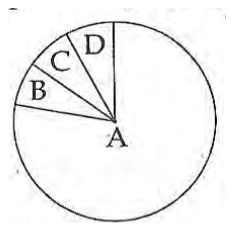
Given below is the representation of the extent of global diversity of invertebrates. What groups the four portions (A-D) represent respectively?
- 1Insects, Molluscs, Crustaceans, Other animal groups
- 2Insects, Crustaceans, Other animal groups, Molluscs
- 3Crustaceans, Insects, Molluscs, Other animal groups
- 4Molluscs, Other animal groups, Crustaceans, Insects
Show answer and solution
Correct: option 1, Insects, Molluscs, Crustaceans, Other animal groups
The examiners dropped this question and gave every candidate the 4 marks.
The official answer key marks this question as dropped, so every candidate gets the marks. In the usual textbook chart of invertebrate diversity the largest portion is insects, followed by molluscs, then crustaceans, then other animal groups, which is the order in option (1).
Question 58AIPMT 2014, Q53
An example of ex situ conservation is:
- 1Sacred Grove
- 2National Park
- 3Seed Bank
- 4Wildlife Sanctuary
Show answer and solution
Correct: option 3, Seed Bank
Ex situ conservation protects organisms outside their natural habitat. A seed bank stores seeds away from the place where the plants grow, so it is ex situ. Sacred groves, national parks and wildlife sanctuaries protect organisms in their own habitat, which is in situ conservation.
Question 59NEET 2013, Q99
Which of the following represent maximum number of species among global biodiversity?
- 1Lichens
- 2Fungi
- 3Mosses and Ferns
- 4Algae
Show answer and solution
Correct: option 2, Fungi
Among the groups listed, fungi have by far the most described species, more than algae, lichens, mosses and ferns. In the global biodiversity chart for plants and related groups, fungi form the second largest share after angiosperms.
Question 60NEET 2013, Q104
Which one of the following is not used for ex situ plant conservation?
- 1Seed banks
- 2Shifting cultivation
- 3Botanical Gardens
- 4Field gene banks
Show answer and solution
Correct: option 2, Shifting cultivation
Ex situ conservation protects plants outside their natural habitat, in seed banks, botanical gardens and field gene banks. Shifting (slash and burn) cultivation is a farming practice that clears forest and is a cause of deforestation, not a conservation method.
Question 61NEET 2013 Karnataka, Q48
The largest tiger reserve in India is:-
- 1Valmiki
- 2Nagarjunsagar - Srisailam
- 3Periyar
- 4Nagarhole
Show answer and solution
Correct: option 2, Nagarjunsagar - Srisailam
The Nagarjunsagar-Srisailam reserve in the Nallamala hills is the largest tiger reserve in India by area, far larger than Valmiki, Periyar or Nagarhole.
Question 62NEET 2013 Karnataka, Q98
Which of the following has maximum genetic diversity in India?
- 1Mango
- 2Wheat
- 3Groundnut
- 4Rice
Show answer and solution
Correct: option 4, Rice
India has more than 50,000 genetically different strains of rice, against about 1,000 varieties of mango. Rice therefore shows the greatest genetic diversity among the four.
Question 63NEET 2013 Karnataka, Q135
Which organization publishes the 'Red Data Book'?
- 1IUCN
- 2UNEP
- 3WWF
- 4GEF
Show answer and solution
Correct: option 1, IUCN
The Red Data Book (Red List), which records threatened species, is brought out by the IUCN, the International Union for Conservation of Nature and Natural Resources.
Question 64AIPMT 2012 Prelims, Q101
Which one of the following areas in India, is a hotspot of biodiversity?
- 1Eastern Ghats
- 2Gangetic Plain
- 3Sunderbans
- 4Western Ghats
Show answer and solution
Correct: option 4, Western Ghats
A biodiversity hotspot is a region with very high species richness and endemism that is under threat. India's hotspots are the Western Ghats (with Sri Lanka), the Himalaya and Indo-Burma, so of the four areas listed only the Western Ghats qualifies.
Question 65AIPMT 2012 Prelims, Q107
The highest number of species in the world is represented by
- 1Fungi
- 2Mosses
- 3Algae
- 4Lichens
Show answer and solution
Correct: option 1, Fungi
Among the plant-like groups, fungi have by far the largest number of described species, more than algae, lichens, mosses, ferns and other groups. Globally the number of fungal species is even greater than the combined total of fishes, amphibians, reptiles and mammals.
Question 66AIPMT 2012 Mains, Q81
Sacred groves are specially useful in:
- 1generating environmental awareness
- 2preventing soil erosion
- 3year-round flow of water in rivers
- 4conserving rare and threatened species
Show answer and solution
Correct: option 4, conserving rare and threatened species
Sacred groves are patches of forest protected by local communities for religious reasons, so nothing in them is cut or hunted. They have become the last refuges of many rare and threatened plants and animals, which makes them a form of in situ conservation.
Question 67AIPMT 2012 Mains, Q111
Select the correct statement about biodiversity:
- 1The desert areas of Rajasthan and Gujarat have a very high level of desert animal species as well as numerous rare animals.
- 2Large scale planting of Bt cotton has no adverse effect on biodiversity.
- 3Western Ghats have a very high degree of species richness and endemism.
- 4Conservation of biodiversity is just a fad pursued by the developed countries.
Show answer and solution
Correct: option 3, Western Ghats have a very high degree of species richness and endemism.
The Western Ghats are one of the biodiversity hotspots, regions defined by very high species richness together with a high degree of endemism. Deserts are poor in species, large-scale monoculture of any one crop reduces diversity, and conservation is a real necessity for every country.
Question 68AIPMT 2011 Prelims, Q67
Which one of the following expanded forms of the following acronyms is correct
- 1IPCC= International Panel for Climate Change
- 2UNEP = United Nations Environmental Policy
- 3EPA = Environmental Pollution Agency
- 4IUCN = International Union for Conservation of Nature and Natural Resources
Show answer and solution
Correct: option 4, IUCN = International Union for Conservation of Nature and Natural Resources
IUCN is the International Union for Conservation of Nature and Natural Resources. The correct forms of the others are Intergovernmental Panel on Climate Change, United Nations Environment Programme and Environmental Protection Agency.
Question 69AIPMT 2011 Prelims, Q81
Which one of the following have the highest number of species in nature
- 1Fungi
- 2Insects
- 3Birds
- 4Angiosperms
Show answer and solution
Correct: option 2, Insects
Insects are the most species-rich group: they make up more than 70 per cent of all animal species, far more than the fungi, the angiosperms or the birds.
Question 70AIPMT 2011 Prelims, Q147
Which one of the following shows maximum genetic diversity in India?
- 1Groundnut
- 2Rice
- 3Maize
- 4Mango
Show answer and solution
Correct: option 2, Rice
Genetic diversity is the variation within a single species. India has more than 50,000 genetically different strains of rice, against about 1,000 varieties of mango, so rice shows the maximum genetic diversity.
Question 71AIPMT 2011 Mains, Q71
Biodiversity of a geographical region represents
- 1Endangered species found in the region.
- 2The diversity in the organisms living in the region.
- 3Genetic diversity present in the dominant species of the region.
- 4Species endemic to the region.
Show answer and solution
Correct: option 2, The diversity in the organisms living in the region.
Biodiversity is the total variety of living organisms in an area, at the genetic, species and ecosystem levels. Endangered species, endemic species, or the genetic variation of one dominant species each describe only a part of it.
Question 72AIPMT 2010 Mains, Q78
The Indian Rhinoceros is a natural inhabitant of which one of the Indian states
- 1Assam
- 2Uttarakhand
- 3Uttar Pradesh
- 4Himachal Pradesh
Show answer and solution
Correct: option 1, Assam
The one-horned Indian rhinoceros lives naturally in the grasslands of the Brahmaputra valley in Assam, where Kaziranga National Park protects most of the population.
Question 73AIPMT 2010 Prelims, Q110
Which one of the following is an example of ex-situ conservation
- 1Seed bank
- 2Sacred groves
- 3National park
- 4Wildlife sanctuary
Show answer and solution
Correct: option 1, Seed bank
Ex-situ conservation protects organisms outside their natural home, as in zoos, botanical gardens, seed banks and cryopreservation. A seed bank stores seeds away from the habitat, so it is ex-situ. Sacred groves, national parks and wildlife sanctuaries protect organisms where they naturally live, which is in-situ conservation.
Question 74AIPMT 2010 Prelims, Q199
A renewable exhaustible natural resource is
- 1Petroleum
- 2Minerals
- 3Forest
- 4Coal
Show answer and solution
Correct: option 3, Forest
A forest can regrow, so it is renewable, but it can be used up if it is cut faster than it grows back, so it is also exhaustible. Petroleum, coal and minerals are non-renewable resources.
Question 75AIPMT 2009 Prelims, Q81
Which one of the following has maximum genetic diversity in India?
- 1Mango
- 2Wheat
- 3Tea
- 4Teak
Show answer and solution
Correct: option 2, Wheat
Genetic diversity is the variation within one species. The NCERT textbook gives rice (more than 50,000 strains) and mango (about 1,000 varieties) as the Indian examples, so among these options mango would be chosen by this working, option (1). The answer key supplied with this copy of the paper marks option (2), and that is the answer recorded here.
Question 76AIPMT 2009 Prelims, Q85
Tiger is not a resident in which one of the following national park?
- 1Sunderbans
- 2Gir
- 3Jim Corbett
- 4Ranthambhor
Show answer and solution
Correct: option 2, Gir
Gir National Park in Gujarat is the home of the Asiatic lion and has no tigers. Sunderbans, Jim Corbett and Ranthambhor are all tiger reserves.
Question 77AIPMT 2008 Prelims, Q172
Which one of the following is not observed in biodiversity hotspots?
- 1Species richness
- 2Endemism
- 3Accelerated species loss
- 4Lesser inter-specific competition
Show answer and solution
Correct: option 4, Lesser inter-specific competition
Hotspots are regions with very high species richness, a high degree of endemism and rapid loss of habitat and species. With so many species living together, competition between species is strong, not less.
Question 78AIPMT 2008 Prelims, Q173
World summit on Sustainable Development (2002) was held in
- 1South Africa
- 2Brazil
- 3Sweden
- 4Argentina
Show answer and solution
Correct: option 1, South Africa
The World Summit on Sustainable Development of 2002 was held at Johannesburg in South Africa. The earlier Earth Summit of 1992 was held at Rio de Janeiro in Brazil.
Question 79AIPMT 2008 Prelims, Q177
The table below gives the populations (in thousands) of ten species (A - J) in four areas (a - d) consisting of the number of habitats given within brackets against each. Study the table and answer the question which follows
Species, and their populations (in thousands) in the areas
| Area and Number of habitats | A | B | C | D | E | F | G | H | I | J |
|---|
| a (11) | 2.3 | 1.2 | 0.52 | 6.0 | – | 3.1 | 1.1 | 9.0 | – | 10.3 |
| b (11) | 10.2 | – | 0.62 | – | 1.5 | 3.0 | – | 8.2 | 1.1 | 11.2 |
| c (13) | 11.3 | 0.9 | 0.48 | 2.4 | 1.4 | 4.2 | 0.8 | 8.4 | 2.2 | 4.1 |
| d (12) | 3.2 | 10.2 | 11.1 | 4.8 | 0.4 | 3.3 | 0.8 | 7.3 | 11.3 | 2.1 |
Which area out of a to d shows maximum species diversity?
- 1a
- 2b
- 3c
- 4d
Show answer and solution
Correct: option 4, d
Areas a and b each lack some species (a has 8, b has 7), while c and d have all ten. Of these two, d has its ten species in fewer habitats (12 against 13) and several of them present in large, more comparable numbers, so its species diversity is the highest.
Question 80AIPMT 2007 Prelims, Q63
Identify the odd combination of the habitat and the particular animal concerned:
- 1Rann of Kutch - Wild Ass
- 2Dachigam National Park - Snow Leopard
- 3Sunderbans - Bengal Tiger
- 4Periyar - Elephant
Show answer and solution
Correct: option 2, Dachigam National Park - Snow Leopard
Dachigam National Park in Kashmir is known for the hangul (Kashmir stag), not the snow leopard, so that pair is the odd one. The Rann of Kutch is the home of the Indian wild ass, the Sunderbans of the Bengal tiger, and Periyar in Kerala is famous for its elephants.
Question 81AIPMT 2007 Prelims, Q71
Which one of the following pairs of organisms are exotic species introduced in India?
- 1Nile perch, Ficus religiosa
- 2Ficus religiosa, Lantana camara
- 3Lantana camara, Water hyacinth
- 4Water hyacinth, Prosopis cineraria
Show answer and solution
Correct: option 3, Lantana camara, Water hyacinth
Lantana camara and water hyacinth (Eichhornia) were both brought into India from tropical America and have become invasive weeds. Ficus religiosa (peepal) and Prosopis cineraria (khejri) are native Indian trees, and the Nile perch was introduced into Lake Victoria in Africa, not into India.
Question 82AIPMT 2007 Prelims, Q72
One of endangered species of Indian medicinal plants is that of:
- 1Nepenthes
- 2Podophyllum
- 3Ocimum
- 4Garlic
Show answer and solution
Correct: option 2, Podophyllum
Podophyllum is a Himalayan medicinal herb whose rhizome yields a drug used against tumours; over-collection has made it endangered. Ocimum (tulsi) and garlic are common cultivated plants, and Nepenthes is an insectivorous plant rather than a medicinal one.
Question 83AIPMT 2006 Prelims, Q121
Which one of the following is not included under in-situ conservation?
- 1Sanctuary
- 2Botanical garden
- 3Biosphere reserve
- 4National park
Show answer and solution
Correct: option 2, Botanical garden
In-situ conservation protects organisms in their natural habitat, as in sanctuaries, national parks and biosphere reserves. A botanical garden keeps plants outside their natural habitat, so it is ex-situ conservation.
Question 84AIPMT 2006 Prelims, Q140
Which one of the following is the correctly matched pair of an endangered animal and a National Park?
- 1Lion – Corbett National Park
- 2Rhinoceros – Kaziranga National Park
- 3Wild Ass – Dudhwa National Park
- 4Great Indian Bustard – Keoladeo National Park
Show answer and solution
Correct: option 2, Rhinoceros – Kaziranga National Park
Kaziranga National Park in Assam is known for the one-horned rhinoceros. The lion is protected in Gir (Corbett is known for tigers), the wild ass in the Rann of Kutch, and the Great Indian Bustard in the Desert National Park (Keoladeo is a wetland bird park).
Question 85AIPMT 2006 Prelims, Q153
Which of the following pairs of an animal and a plant represents endangered organisms in India
- 1Bentinckia nicobarica and Red Panda
- 2Tamarind and Rhesus monkey
- 3Cinchona and Leopard
- 4Banyan and Black buck
Show answer and solution
Correct: option 1, Bentinckia nicobarica and Red Panda
Bentinckia nicobarica is a palm found only in the Nicobar Islands and is endangered, and the Red Panda of the eastern Himalayas is an endangered animal. Tamarind, Cinchona, Banyan and the Rhesus monkey are common, so the other pairs do not fit.
Question 86AIPMT 2006 Prelims, Q160
Which of the following is considered a hot-spot of biodiversity in India?
- 1Western Ghats
- 2Indo-Gangetic Plain
- 3Eastern Ghats
- 4Aravalli Hills
Show answer and solution
Correct: option 1, Western Ghats
A biodiversity hot-spot is a region with very high species richness and endemism that is under threat. Of the places listed, only the Western Ghats (with Sri Lanka) is a recognised hot-spot; the others are not.
Question 87AIPMT 2005 Prelims, Q138
One of the most important functions of botanical gardens is that
- 1They allow ex-situ conservation of germ plasm
- 2They provide the natural habitat for wild life
- 3One can observe tropical plants there
- 4They provide a beautiful area for recreation
Show answer and solution
Correct: option 1, They allow ex-situ conservation of germ plasm
Botanical gardens keep living collections of plants away from their natural habitats, which is ex-situ conservation of germplasm. They are not natural habitats, and recreation or display is a secondary use.
Question 88AIPMT 2005 Prelims, Q143
Biodiversity Act of India was passed by the Parliament in the year
- 12002
- 21992
- 31996
- 42000
Show answer and solution
Correct: option 1, 2002
The Biological Diversity Act of India was passed by Parliament in 2002. 1992 is the year of the Convention on Biological Diversity at the Rio Earth Summit.
Question 89AIPMT 2005 Prelims, Q197
According to IUCN Red List, what is the status of Red Panda (Ailurus fulgens)?
- 1Critically endangered species
- 2Vulnerable species
- 3Extinct species
- 4Endangered species
Show answer and solution
Correct: option 4, Endangered species
The red panda of the eastern Himalayas has a small and falling population because of habitat loss and poaching, and the IUCN Red List places it in the Endangered category. It still survives in the wild, so it is not extinct.
Question 90AIPMT 2004 Prelims, Q104
What is a keystone species?
- 1A common species that has plenty of biomass, yet has a fairly low impact on the community's organization
- 2A rare species that has minimal impact on the biomass and on other species in the community
- 3A dominant species that constitutes a large proportion of the biomass and which affects many other species
- 4A species which makes up only a small proportion of the total biomass of a community, yet has a huge impact on the community's organization and survival
Show answer and solution
Correct: option 4, A species which makes up only a small proportion of the total biomass of a community, yet has a huge impact on the community's organization and survival
A keystone species has an effect on its community that is far larger than its abundance or biomass would suggest; removing it changes the whole community structure. A species that is important because it is abundant is a dominant species, not a keystone species.
Question 91AIPMT 2004 Prelims, Q150
In your opinion, which is the most effective way to conserve the plant diversity of an area :-
- 1By creating biosphere reserve
- 2By creating botanical garden
- 3By developing seed bank
- 4By tissue culture method
Show answer and solution
Correct: option 1, By creating biosphere reserve
A biosphere reserve protects the whole natural ecosystem in place (in situ), so all the plant species of the area are conserved together with their habitat and interactions. Botanical gardens, seed banks and tissue culture are ex situ methods that save only selected species.
Question 92AIPMT 2003 Prelims, Q111
Which group of vertebrates comprises the highest number of endangered species:
- 1Mammals
- 2Fishes
- 3Reptiles
- 4Birds
Show answer and solution
Correct: option 3, Reptiles
The answer key of the source copy gives reptiles. Note that this is doubtful: in the IUCN Red List counts of that period, mammals and birds each had many more threatened species than reptiles, and most books answer this question with mammals. The keyed answer is kept here as given.
Question 93AIPMT 2003 Prelims, Q122
Which endangered animal is the source of the world's finest, lightest, warmest and most expensive wool-the shahtoosh:
- 1Nilgai
- 2Cheetal
- 3Kashmiri goat
- 4Chiru
Show answer and solution
Correct: option 4, Chiru
Shahtoosh is made from the fine underfur of the chiru, the Tibetan antelope, which is killed to obtain it and has become endangered as a result. The Kashmiri goat gives pashmina, a different wool.
Question 94AIPMT 2002 Prelims, Q149
Number of wild life is continuously decreasing. What is the main reason of this:-
- 1Predation
- 2Cutting down of forest
- 3Destruction of habitat
- 4Hunting
Show answer and solution
Correct: option 3, Destruction of habitat
Loss and fragmentation of habitat is the most important cause of the decline of wild animals and plants: when forests, wetlands and grasslands are cleared, the organisms lose their food, shelter and breeding places. Cutting down forests is only one form of habitat destruction, so the wider option is the answer; hunting and predation matter much less.
Question 95AIPMT 2000 Prelims, Q177
Viable material of endangered species can be preserved by:
- 1Gene bank
- 2Gene library
- 3Herbarium
- 4Gene pool
Show answer and solution
Correct: option 1, Gene bank
A gene bank stores living material such as seeds, pollen, gametes, embryos and tissues, often at very low temperature, so that the species can be raised again. A herbarium holds dried, dead plants, and a gene library is a collection of cloned DNA fragments.
Question 96AIPMT 2000 Prelims, Q200
What shall be the effect of destruction of wild life:
- 1Wild gene of disease resistance will not be obtained
- 2Soil erosion
- 3Floods
- 4Green house effect
Show answer and solution
Correct: option 1, Wild gene of disease resistance will not be obtained
Wild plants and animals are a store of useful genes, such as genes for disease resistance that breeders transfer into crops and livestock. If wild life is destroyed, these genes are lost for ever. Soil erosion and floods follow from loss of forest cover rather than of wild life as such.
Question 97AIPMT 1999 Prelims, Q105
Main reason of disturbance of biological diversity:
- 1Green house effect
- 2Hunting
- 3Soil erosion
- 4Destruction of natural habitats
Show answer and solution
Correct: option 4, Destruction of natural habitats
Loss and fragmentation of habitat, through clearing of forests, draining of wetlands and spread of farms and towns, removes the living space of whole communities at once. It is the largest single cause of species loss, greater than hunting, soil erosion or climate effects.
Question 98AIPMT 1999 Prelims, Q106
Best method to preserve the wild relatives of plants:
- 1By growing them in natural habitats
- 2Gene library
- 3By storing seeds
- 4Cryopreservation
Show answer and solution
Correct: option 1, By growing them in natural habitats
Wild relatives of crop plants are best kept in situ, that is, growing in their own natural habitat, where the whole population survives and goes on evolving with its environment. Gene libraries, seed stores and cryopreservation are ex situ methods that keep only a sample of the variation.
Question 99AIPMT 1999 Prelims, Q143
Species diversity is maximum in:
- 1Tropical rain forest
- 2Temperate forest
- 3Deserts
- 4Hill slopes
Show answer and solution
Correct: option 1, Tropical rain forest
Tropical rain forests have warmth, heavy rain and a stable climate all year, with many layers of vegetation. They hold more species than any other land habitat, far more than temperate forests or deserts.
Question 100AIPMT 1999 Prelims, Q196
Recently extinct animal from India is:
- 1Acinonyx
- 2Rhinoceros unicornis
- 3Panthera leo
- 4Panthera tigris
Show answer and solution
Correct: option 1, Acinonyx
Acinonyx jubatus, the cheetah, was hunted out in India and was last recorded there around the middle of the twentieth century. The one-horned rhinoceros, the lion (in Gir) and the tiger still survive in India, although they are threatened.
Question 101AIPMT 1998 Prelims, Q186
Reason for elimination of wild life is:
- 1Deforestation
- 2Forest fire
- 3Floods
- 4Less Rain fall
Show answer and solution
Correct: option 1, Deforestation
Loss of habitat is the main cause of the disappearance of wild life. Cutting down forests removes the food, shelter and breeding places of animals over large areas and for good, while fires, floods and poor rain act only now and then.