Questions with solutions
Question 1NEET 2026, Q62
Identify the incorrect statement from the following:
- 1Carbon has the ability to form - multiple bond with itself.
- 2 (E = B and Al) is a monomer when E = B and a dimer when E = Al.
- 3Oxygen exhibits only oxidation state.
- 4The order of catenation property of Group 14 elements is .
Show answer and solution
Correct: option 3, Oxygen exhibits only oxidation state.
Oxygen also shows in peroxides, in superoxides and positive states (, ) in its fluorides, so statement (3) is incorrect. The other three are true: carbon forms double and triple bonds with itself, is monomeric while dimerises to , and catenation falls sharply from carbon down the group.
Question 2NEET 2026, Q67
Identify the incorrect statement from the following:
- 1 and form - bond with transition metals.
- 2Nitrogen can form - bond with oxygen.
- 3Nitrogen can form - multiple bonds with itself.
- 4Phosphorus, arsenic and antimony show catenation property.
Show answer and solution
Correct: option 2, Nitrogen can form - bond with oxygen.
Nitrogen has no d orbitals in its valence shell, so it cannot form a - bond; statement (2) is incorrect. The heavier members can use d orbitals (as in the phosphine and arsine ligands), nitrogen does form - bonds as in , and P, As and Sb show catenation.
Question 3NEET 2026 Re-exam, Q49
In potash alum, the ratio of and ions is
- 11:2
- 22:1
- 32:3
- 43:2
Show answer and solution
Correct: option 1, 1:2
Potash alum is . One formula unit has 2 ions and ions, so the ratio is 2:4 = 1:2.
Question 4NEET 2026 Re-exam, Q65
Given below are two statements:
Statement-I: Heating NaCl with concentrated and results in oxidation of Mn.
Statement-II: Heating NaI with concentrated and results in reduction of Mn.
In light of the above statements, choose the most appropriate answer from the options given below:
- 1Both Statement-I and Statement-II are correct.
- 2Both Statement-I and Statement-II are incorrect.
- 3Statement-I is correct but Statement-II is incorrect.
- 4Statement-I is incorrect but Statement-II is correct.
Show answer and solution
Correct: option 4, Statement-I is incorrect but Statement-II is correct.
In both reactions is the oxidising agent: it oxidises the halide to the free halogen ( or ) and is itself reduced from Mn(IV) to . So Mn is reduced in both cases; Statement-I is incorrect and Statement-II is correct.
Question 5NEET 2025, Q52
Given below are two statements:
Statement I: Like nitrogen that can form ammonia, arsenic can form arsine.
Statement II: Antimony cannot form antimony pentoxide.
In the light of the above statements, choose the most appropriate answer from the options given below:
- 1Both Statement I and Statement II are correct
- 2Both Statement I and Statement II are incorrect
- 3Statement I is correct but Statement II is incorrect
- 4Statement I is incorrect but Statement II is correct
Show answer and solution
Correct: option 3, Statement I is correct but Statement II is incorrect
All group 15 elements form hydrides of the type , so arsenic forms arsine, : Statement I is correct. Antimony shows the +5 state and forms the pentoxide , so Statement II is incorrect. Option (3).
Question 6NEET 2025, Q64
Match List - I with List - II
| List-I | List-II |
|---|
| A. | I. ; linear |
| B. | II. ; pyramidal |
| C. | III. ; distorted octahedral |
| D. | IV. ; square pyramidal |
Choose the correct answer from the options given below:
- 1A-II, B-I, C-IV, D-III
- 2A-II, B-I, C-III, D-IV
- 3A-IV, B-II, C-III, D-I
- 4A-IV, B-II, C-I, D-III
Show answer and solution
Correct: option 1, A-II, B-I, C-IV, D-III
has three bond pairs and one lone pair: , pyramidal (II). has two bond pairs and three lone pairs: , linear (I). has five bond pairs and one lone pair: , square pyramidal (IV). has six bond pairs and one lone pair: , distorted octahedral (III). Option (1).
Question 7NEET 2024, Q58
Among Group 16 elements, which one does NOT show oxidation state?
- 1Po
- 2O
- 3Se
- 4Te
Show answer and solution
Correct: option 1, Po
The tendency to show the oxidation state falls down Group 16 as electronegativity decreases and metallic character increases. Polonium, the last and most metallic member, hardly shows ; it shows and . O, Se and Te all form compounds (oxides, selenides, tellurides). So the answer is Po, option (1).
Question 8NEET 2024, Q81
Given below are two statements:
Statement I: The boiling point of hydrides of Group 16 elements follow the order
.
Statement II: On the basis of molecular mass, is expected to have lower boiling point than the other members of the group but due to the presence of extensive H-bonding in , it has higher boiling point.
In the light of the above statements, choose the correct answer from the options given below:
- 1Statement I is false but Statement II is true.
- 2Both Statement I and Statement II are true.
- 3Both Statement I and Statement II are false.
- 4Statement I is true but Statement II is false.
Show answer and solution
Correct: option 2, Both Statement I and Statement II are true.
The boiling points are 373 K, 269 K, 232 K and 213 K, so Statement I is true. From to the boiling point rises with molecular mass (stronger van der Waals forces); water, the lightest, is out of line only because of its extensive hydrogen bonding, as Statement II says. Both statements are true, option (2).
Question 9NEET 2024 Re-exam, Q58
Match List-I with List-II:
| List-I (Atom/Molecule) | List-II (Property) |
|---|
| A. Nitrogen atom | I. Paramagnetic |
| B. Fluorine molecule | II. Most reactive element in group 18 |
| C. Oxygen molecule | III. Element with highest ionisation enthalpy in group 15 |
| D. Xenon atom | IV. Strongest oxidising agent |
Identify the correct answer from the options given below:
- 1A-III, B-I, C-IV, D-II
- 2A-I, B-IV, C-III, D-II
- 3A-II, B-IV, C-I, D-III
- 4A-III, B-IV, C-I, D-II
Show answer and solution
Correct: option 4, A-III, B-IV, C-I, D-II
Nitrogen is the smallest atom of group 15 and has the highest ionisation enthalpy in the group (A-III). has the highest standard reduction potential and is the strongest oxidising agent (B-IV). has two unpaired electrons in its antibonding orbitals and is paramagnetic (C-I). Xenon, with the lowest ionisation enthalpy among the common noble gases, is the one that forms most compounds (D-II).
Question 10NEET 2024 Re-exam, Q71
Identify the incorrect statement from the following:
- 1The acidic strength of HX (X = F, Cl, Br and I) follows the order: HF > HCl > HBr > HI.
- 2Fluorine exhibits –1 oxidation state whereas other halogens exhibit +1, +3, +5 and +7 oxidation states also.
- 3The enthalpy of dissociation of is smaller than that of .
- 4Fluorine is stronger oxidising agent than chlorine.
Show answer and solution
Correct: option 1, The acidic strength of HX (X = F, Cl, Br and I) follows the order: HF > HCl > HBr > HI.
The H-X bond gets weaker down the group, so the acid strength rises: HF < HCl < HBr < HI. The order given in (1) is the reverse and is incorrect. The other statements are true: fluorine, the most electronegative element with no d orbitals, shows only –1; the F-F bond is weak because of lone pair repulsion in the small molecule; and is the strongest oxidising halogen.
Question 11NEET 2024 Re-exam, Q87
Identify the incorrect statement.
- 1 and as ligands can form - bond with transition metals
- 2The N – N single bond is as strong as the P – P single bond
- 3Nitrogen has unique ability to form - multiple bonds with nitrogen, carbon and oxygen
- 4Nitrogen cannot form - bond as other heavier elements of its group
Show answer and solution
Correct: option 2, The N – N single bond is as strong as the P – P single bond
The N-N single bond is weaker than the P-P single bond, because the short bond length brings the lone pairs on the two small nitrogen atoms close together and they repel strongly. Statement (2) is therefore incorrect. The others are true: nitrogen, being small, forms - multiple bonds but has no d orbitals for - bonding, while P and As in ligands such as and can use empty d orbitals for - back bonding with transition metals.
Question 12NEET 2024 Re-exam, Q88
Match List-I with List-II:
| List-I (Test/reagent) | List-II (Radical identified) |
|---|
| A. Lake Test | I. |
| B. Nessler’s Reagent | II. |
| C. Potassium sulphocyanide | III. |
| D. Brown Ring Test | IV. |
Choose the correct answer from the options given below:
- 1A-IV, B-II, C-III, D-I
- 2A-II, B-IV, C-III, D-I
- 3A-II, B-III, C-IV, D-I
- 4A-III, B-IV, C-II, D-I
Show answer and solution
Correct: option 4, A-III, B-IV, C-II, D-I
In the lake test adsorbs blue litmus and floats as a blue lake, identifying (A-III). Nessler's reagent ( in KOH) gives a brown precipitate with (B-IV). Potassium sulphocyanide (KSCN) gives a blood red colour with (C-II). The brown ring test with and concentrated detects (D-I).
Question 13NEET 2024 Re-exam, Q91
Match List-I with List-II:
| List-I Solid salt treated with dil. | List-II Anion detected |
|---|
| A. effervescence of colourless gas | I. |
| B. gas with smell of rotten egg | II. |
| C. gas with pungent smell | III. |
| D. brown fumes | IV. |
Choose the correct answer from the options given below:
- 1A-II, B-III, C-IV, D-I
- 2A-IV, B-III, C-II, D-I
- 3A-I, B-II, C-III, D-IV
- 4A-II, B-III, C-I, D-IV
Show answer and solution
Correct: option 1, A-II, B-III, C-IV, D-I
With dilute a carbonate gives brisk effervescence of colourless, odourless (A-II); a sulphide gives , which smells of rotten eggs (B-III); a sulphite gives , which has a pungent smell of burning sulphur (C-IV); and a nitrite gives NO, which turns into brown fumes in air (D-I).
Question 14NEET 2023, Q52
Match List - I with List - II:
| List - I | List - II |
|---|
| A. Coke | I. Carbon atoms are hybridised. |
| B. Diamond | II. Used as a dry lubricant |
| C. Fullerene | III. Used as a reducing agent |
| D. Graphite | IV. Cage like molecules |
Choose the correct answer from the options given below:
- 1A-II, B-IV, C-I, D-III
- 2A-IV, B-I, C-II, D-III
- 3A-III, B-I, C-IV, D-II
- 4A-III, B-IV, C-I, D-II
Show answer and solution
Correct: option 3, A-III, B-I, C-IV, D-II
Coke is used as a reducing agent in metallurgy (A-III). In diamond every carbon is hybridised (B-I). Fullerenes such as are cage like molecules (C-IV). Graphite, with layers that slide over each other, is used as a dry lubricant (D-II).
Question 15NEET 2023, Q60
Given below are two statements: one is labelled as Assertion A and the other is labelled as Reason R:
Assertion A: Helium is used to dilute oxygen in diving apparatus.
Reason R: Helium has high solubility in .
In the light of the above statements, choose the correct answer from the options given below:
- 1Both A and R are true and R is the correct explanation of A.
- 2Both A and R are true and R is NOT the correct explanation of A.
- 3A is true but R is false.
- 4A is false but R is true.
Show answer and solution
Correct: option 3, A is true but R is false.
Helium is used as a diluent for oxygen in modern diving apparatus, so A is true. The reason for this is its very low solubility in blood, which avoids the bends; the statement about a high solubility in oxygen is false. So A is true but R is false.
Question 16NEET 2023, Q79
Taking stability as the factor, which one of the following represents correct relationship?
- 1
- 2
- 3
- 4
Show answer and solution
Correct: option 4,
Because of the inert pair effect, the +1 oxidation state becomes more stable than +3 down group 13, and for thallium +1 is the stable state. So is more stable than , which is the relationship given as correct. For aluminium the +3 state is the stable one, so (3) is wrong, and is more stable than , so (1) is wrong.
Question 17NEET 2023, Q86
Match List - I with List - II:
| List - I (Oxoacids of Sulphur) | List - II (Bonds) |
|---|
| A. Peroxodisulphuric acid | I. Two S-OH, Four S=O, One S-O-S |
| B. Sulphuric acid | II. Two S-OH, One S=O |
| C. Pyrosulphuric acid | III. Two S-OH, Four S=O, One S-O-O-S |
| D. Sulphurous acid | IV. Two S-OH, Two S=O |
Choose the correct answer from the options given below:
- 1A-I, B-III, C-II, D-IV
- 2A-III, B-IV, C-I, D-II
- 3A-I, B-III, C-IV, D-II
- 4A-III, B-IV, C-II, D-I
Show answer and solution
Correct: option 2, A-III, B-IV, C-I, D-II
Peroxodisulphuric acid, , has a peroxide S-O-O-S link with two S-OH and four S=O (A-III). Sulphuric acid, , has two S-OH and two S=O (B-IV). Pyrosulphuric acid, , has an S-O-S bridge with two S-OH and four S=O (C-I). Sulphurous acid, , has two S-OH and one S=O (D-II).
Question 18NEET 2023 Manipur, Q52
Select the element (M) whose trihalides cannot be hydrolysed to produce an ion of the form .
- 1Al
- 2B
- 3Ga
- 4In
Show answer and solution
Correct: option 2, B
Boron has no d orbitals in its valence shell, so its covalence cannot exceed 4 and it can never hold six water molecules; its halides hydrolyse to or instead. Al, Ga and In can expand to coordination number 6 and give .
Question 19NEET 2023 Manipur, Q78
The values for
and
and .
Identify the incorrect statement.
- 1 is unstable in solution.
- 2Tl can be easily oxidised to than .
- 3Al is more electropositive than Tl.
- 4 is a good reducing agent than .
Show answer and solution
Correct: option 4, is a good reducing agent than .
A positive for means is readily reduced, so it is unstable in solution. Oxidising Tl to has V against V for , so forms more easily. Al, with V, is more electropositive than Tl. has a high positive reduction potential and is in its highest oxidation state, so it is a strong oxidising agent and cannot be a reducing agent; statement (4) is incorrect.
Question 20NEET 2022, Q55
Which of the following statement is not correct about diborane?
- 1Both the Boron atoms are hybridised.
- 2There are two 3-centre-2-electron bonds.
- 3The four terminal B-H bonds are two centre two electron bonds.
- 4The four terminal Hydrogen atoms and the two Boron atoms lie in one plane.
Show answer and solution
Correct: option 1, Both the Boron atoms are hybridised.
In each boron is bonded to four hydrogens (two terminal, two bridging) and is hybridised, not . The two B-H-B bridges are 3-centre-2-electron bonds, the four terminal B-H bonds are ordinary 2-centre-2-electron bonds, and the terminal hydrogens lie in one plane with the two borons. So option (1) is the wrong statement.
Question 21NEET 2022, Q60
Choose the correct statement:
- 1Both diamond and graphite are used as dry lubricants.
- 2Diamond and graphite have two dimensional network.
- 3Diamond is covalent and graphite is ionic.
- 4Diamond is hybridised and graphite is hybridized.
Show answer and solution
Correct: option 4, Diamond is hybridised and graphite is hybridized.
In diamond each carbon is hybridised and bonded to four others in a three dimensional network; in graphite each carbon is hybridised and bonded to three others in layers. Only graphite is a dry lubricant, diamond is not two dimensional, and both are covalent solids. So (4) is correct.
Question 22NEET 2022, Q82
Given below are two statements:
Statement I:
The boiling points of the following hydrides of group 16 elements increases in the order -
.
Statement II:
The boiling points of these hydrides increase with increase in molar mass.
In the light of the above statements, choose the most appropriate answer from the options given below:
- 1Statement I is incorrect but Statement II is correct
- 2Both Statement I and Statement II are correct
- 3Both Statement I and Statement II are incorrect
- 4Statement I is correct but Statement II is incorrect
Show answer and solution
Correct: option 3, Both Statement I and Statement II are incorrect
Water has by far the highest boiling point of the four because of hydrogen bonding; the real order is . So Statement I is wrong, and since water, the lightest, boils highest, the boiling points do not simply rise with molar mass: Statement II is wrong too.
Question 23NEET 2022, Q84
Given below are two statements: one is labelled as Assertion (A) and the other is labelled as Reason (R).
Assertion (A): ICl is more reactive than .
Reason (R): I-Cl bond is weaker than I-I bond.
In the light of the above statements, choose the most appropriate answer from the options given below:
- 1(A) is not correct but (R) is correct.
- 2Both (A) and (R) are correct and (R) is the correct explanation of (A).
- 3Both (A) and (R) are correct but (R) is not the correct explanation of (A).
- 4(A) is correct but (R) is not correct.
Show answer and solution
Correct: option 2, Both (A) and (R) are correct and (R) is the correct explanation of (A).
Interhalogen compounds are in general more reactive than the halogens (except fluorine), and the textbook reason is that the bond between two different halogen atoms, X-X', is weaker than the X-X bond. So both the assertion and the reason are taken as correct, and the reason explains the assertion.
Question 24NEET 2022 Re-exam, Q55
Match List-I with List-II:
| List-I (Compounds) | List-II (Molecular formula) |
|---|
| (a) Borax | (i) |
| (b) Kernite | (ii) |
| (c) Orthoboric acid | (iii) |
| (d) Borax bead | (iv) |
Choose the correct answer from the options given below:
- 1a-i, b-iii, c-iv, d-ii
- 2a-iv, b-ii, c-iii, d-i
- 3a-ii, b-iv, c-iii, d-i
- 4a-iii, b-i, c-iv, d-ii
Show answer and solution
Correct: option 2, a-iv, b-ii, c-iii, d-i
Borax is the decahydrate (iv) and kernite is the tetrahydrate (ii). Orthoboric acid is (iii). The glassy borax bead formed on heating borax is sodium metaborate with (i). So a-iv, b-ii, c-iii, d-i.
Question 25NEET 2022 Re-exam, Q60
Which of the following reactions is a part of the large scale industrial preparation of nitric acid?
- 1
- 2
- 3
- 4
Show answer and solution
Correct: option 3,
Nitric acid is made on a large scale by the Ostwald process. Its first step is the catalytic oxidation of ammonia by air over a platinum-rhodium gauze at about 500 K and 9 bar, giving NO; the NO is then oxidised to , which is absorbed in water to give .
Question 26NEET 2022 Re-exam, Q63
in the above reaction the product "X" is:
- 1
- 2
- 3
- 4
Show answer and solution
Correct: option 3,
Anhydrous borax breaks down on strong heating into sodium metaborate and boric anhydride: . This glassy mixture is the borax bead, so X is .
Question 27NEET 2022 Re-exam, Q76
Fluorine is a stronger oxidising agent than chlorine because:
(a) F-F bond has a low enthalpy of dissociation.
(b) Fluoride ion () has high hydration enthalpy.
(c) Electron gain enthalpy of fluorine is less negative than chlorine.
(d) Fluorine has a very small size.
Choose the most appropriate answer from the options given:
- 1(b) and (c) only
- 2(a) and (b) only
- 3(a) and (c) only
- 4(a) and (d) only
Show answer and solution
Correct: option 2, (a) and (b) only
Oxidising power in water depends on the total energy change for : dissociation, electron gain and hydration. Fluorine's electron gain enthalpy is actually less negative than chlorine's, which works against it, but the weak F-F bond (a) and the very large hydration enthalpy of the small ion (b) more than make up for this. So (a) and (b) are the reasons.
Question 28NEET 2021, Q52
Noble gases are named because of their inertness towards reactivity. Identify an incorrect statement about them.
- 1Noble gases are sparingly soluble in water.
- 2Noble gases have very high melting and boiling points.
- 3Noble gases have weak dispersion forces.
- 4Noble gases have large positive values of electron gain enthalpy.
Show answer and solution
Correct: option 2, Noble gases have very high melting and boiling points.
Noble gas atoms are held together only by weak dispersion forces, so their melting and boiling points are very low, not high. The other statements are true: they are sparingly soluble in water, the forces between atoms are weak, and their filled shells give large positive electron gain enthalpies.
Question 29NEET 2021, Q61
Statement I:
Acid strength increases in the order given as HF << HCl << HBr << HI.
Statement II:
As the size of the elements F, Cl, Br, I increases down the group, the bond strength of HF, HCl, HBr and HI decreases and so the acid strength increases.
In the light of the above statements, choose the correct answer from the options given below.
- 1Both Statement I and Statement II are true.
- 2Both Statement I and Statement II are false.
- 3Statement I is correct but Statement II is false.
- 4Statement I is incorrect but Statement II is true.
Show answer and solution
Correct: option 1, Both Statement I and Statement II are true.
Down the group the halogen atom gets larger, the H-X bond gets longer and weaker, and the proton is released more easily. So acid strength rises from HF to HI, and both statements are true.
Question 30NEET 2021, Q91
In which one of the following arrangements the given sequence is not strictly according to the properties indicated against it?
- 1: Increasing acidic strength
- 2: Increasing values
- 3: Increasing acidic character
- 4: Increasing oxidizing power
Show answer and solution
Correct: option 2, : Increasing values
Acid strength of the group 16 hydrides increases from to as the H-E bond weakens, so increases and decreases along the sequence, not increases. The other three sequences match the stated property.
Question 31NEET 2020, Q13
Identify the correct statements from the following:
(a) is used as refrigerant for ice-cream and frozen food.
(b) The structure of contains twelve six carbon rings and twenty five carbon rings.
(c) ZSM-5, a type of zeolite, is used to convert alcohols into gasoline.
(d) CO is colorless and odourless gas.
- 1(a), (b) and (c) only
- 2(a) and (c) only
- 3(b) and (c) only
- 4(c) and (d) only
Show answer and solution
Correct: option 4, (c) and (d) only
(a) is wrong: it is solid (dry ice), not the gas, that is used as a refrigerant. (b) is wrong: has twenty six-membered rings and twelve five-membered rings. (c) is right: ZSM-5 converts alcohols directly into gasoline. (d) is right: CO is a colourless, odourless gas.
Question 32NEET 2020, Q30
Urea reacts with water to form A which will decompose to form B. B when passed through (aq), deep blue colour solution C is formed. What is the formula of C from the following?
- 1
- 2
- 3
- 4
Show answer and solution
Correct: option 2,
Urea is hydrolysed to ammonium carbonate (A), , which decomposes to give ammonia (B). Ammonia forms the deep blue complex ion with (C).
Question 33NEET 2020, Q38
Which of the following oxoacid of sulphur has linkage?
- 1, sulphurous acid
- 2, sulphuric acid
- 3, peroxodisulphuric acid
- 4, pyrosulphuric acid
Show answer and solution
Correct: option 3, , peroxodisulphuric acid
Peroxodisulphuric acid is : its two sulphur atoms are joined through a peroxide () bridge. In pyrosulphuric acid the two sulphur atoms are joined through a single oxygen (S-O-S), and the other two acids have one sulphur atom only.
Question 34NEET 2020 Phase 2, Q144
The reaction of concentrated sulphuric acid with carbohydrates is an example of
- 1Oxidation
- 2Reduction
- 3Sulphonation
- 4Dehydration
Show answer and solution
Correct: option 4, Dehydration
Concentrated has a strong affinity for water and pulls out the elements of water from sugar: . Only black carbon is left (charring), so the reaction is a dehydration.
Question 35NEET 2020 Phase 2, Q169
Which of the following oxide is amphoteric in nature?
- 1
- 2
- 3
- 4
Show answer and solution
Correct: option 4,
In group 14 the dioxides become less acidic down the group. , and are acidic, while and are amphoteric: they react with both acids and alkalis.
Question 36NEET 2020 Phase 2, Q178
Match the compounds of Xe in column I with the molecular structure in column II.
| Column I | Column II |
|---|
| (a) | (i) Square planar |
| (b) | (ii) Linear |
| (c) | (iii) Square pyramidal |
| (d) | (iv) Pyramidal |
- 1a-ii, b-iv, c-iii, d-i
- 2a-ii, b-iii, c-i, d-iv
- 3a-ii, b-i, c-iv, d-iii
- 4a-ii, b-i, c-iii, d-iv
Show answer and solution
Correct: option 3, a-ii, b-i, c-iv, d-iii
has 2 bond pairs and 3 lone pairs: linear (a-ii). has 4 bond pairs and 2 lone pairs: square planar (b-i). has 3 bonds and 1 lone pair: pyramidal (c-iv). has 5 bonds and 1 lone pair: square pyramidal (d-iii).
Question 37NEET 2019, Q48
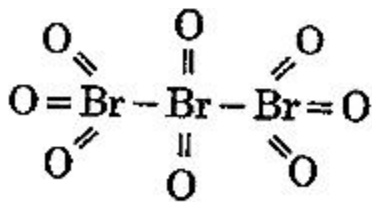
The correct structure of tribromooctaoxide is:
- 1
- 2
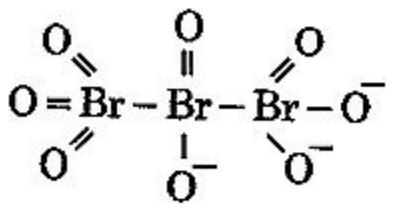
- 3
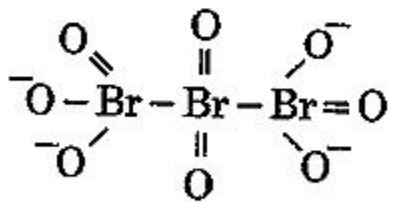
- 4
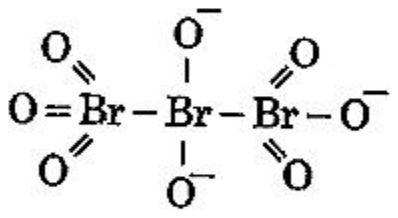
Show answer and solution
Correct: option 1
is a neutral molecule, so its structure carries no charges on oxygen: with every oxygen doubly bonded to bromine. Only option (1) has eight bonds and no charged oxygen; the other options would be anions.
Question 38NEET 2019, Q56
Which is the correct thermal stability order for (E = O, S, Se, Te and Po)?
- 1
- 2
- 3
- 4
Show answer and solution
Correct: option 3,
Down group 16 the atom E gets larger, the H–E bond gets longer and weaker, and the hydride decomposes more easily. Thermal stability therefore falls from to , which written in increasing order is .
Question 39NEET 2019, Q57
Which of the following is incorrect statement?
- 1 is covalent in nature
- 2 is easily hydrolysed
- 3 (X = F, Cl, Br, I) is more stable than
- 4 is ionic in nature
Show answer and solution
Correct: option 1, is covalent in nature
Most group 14 tetrahalides are covalent, but and are ionic, so calling covalent is wrong. The others are true: hydrolyses readily because silicon has vacant d orbitals, and germanium is more stable in the +4 state than in +2.
Question 40NEET 2019, Q58
Match the following:
| |
|---|
| (a) Pure nitrogen | (i) Chlorine |
| (b) Haber process | (ii) Sulphuric acid |
| (c) Contact process | (iii) Ammonia |
| (d) Deacon's process | (iv) Sodium azide or Barium azide |
Which of the following is the correct option?
- 1a-i, b-ii, c-iii, d-iv
- 2a-ii, b-iv, c-i, d-iii
- 3a-iii, b-iv, c-ii, d-i
- 4a-iv, b-iii, c-ii, d-i
Show answer and solution
Correct: option 4, a-iv, b-iii, c-ii, d-i
Very pure nitrogen is made by heating sodium azide or barium azide (a-iv). The Haber process makes ammonia (b-iii), the Contact process makes sulphuric acid (c-ii), and Deacon's process oxidises HCl with air over to give chlorine (d-i).
Question 41NEET 2019, Q76
Identify the incorrect statement related to from the following:
- 1Three equatorial P–Cl bonds make an angle of 120° with each other
- 2Two axial P–Cl bonds make an angle of 180° with each other
- 3Axial P–Cl bonds are longer than equatorial P–Cl bonds
- 4 molecule is non-reactive
Show answer and solution
Correct: option 4, molecule is non-reactive
is trigonal bipyramidal: three equatorial bonds at 120° and two axial bonds at 180° to each other. The axial bonds feel more repulsion and are longer and weaker, which makes a reactive molecule. So the statement that it is non-reactive is the incorrect one.
Question 42NEET 2019, Q79
Match the Xenon compounds in Column - I with its structure in Column - II and assign the correct code:
| Column - I | Column - II |
|---|
| (a) | (i) pyramidal |
| (b) | (ii) square planar |
| (c) | (iii) distorted octahedral |
| (d) | (iv) square pyramidal |
Code:
- 1a-i, b-ii, c-iii, d-iv
- 2a-ii, b-iii, c-iv, d-i
- 3a-ii, b-iii, c-i, d-iv
- 4a-iii, b-iv, c-i, d-ii
Show answer and solution
Correct: option 2, a-ii, b-iii, c-iv, d-i
has 4 bond pairs and 2 lone pairs: square planar (a-ii). has 6 bond pairs and 1 lone pair: distorted octahedral (b-iii). has 5 bonded atoms and 1 lone pair: square pyramidal (c-iv). has 3 bonded atoms and 1 lone pair: pyramidal (d-i).
Question 43NEET 2019, Q81
Which of the following species is not stable?
- 1
- 2
- 3
- 4
Show answer and solution
Correct: option 4,
Silicon is small, and six large chloride ions cannot be fitted around it; the lone pairs of chlorine also interact only weakly with . So does not exist, while the small fluoride gives stable and the larger Ge and Sn atoms can hold six ligands.
Question 44NEET 2019 Odisha, Q49
Aluminium chloride in acidified aqueous solution forms a complex 'A', in which hybridisation state of Al is 'B'. What are 'A' and 'B', respectively?
- 1,
- 2,
- 3,
- 4,
Show answer and solution
Correct: option 3, ,
In acidified water aluminium chloride gives the octahedral ion . Aluminium has no inner d orbitals available (its 3d orbitals are the outer ones), so the six bonds use the 3s, three 3p and two 3d orbitals: hybridisation.
Question 45NEET 2019 Odisha, Q50
Which of the following compounds is used in cosmetic surgery?
- 1Silicones
- 2Zeolites
- 3Silica
- 4Silicates
Show answer and solution
Correct: option 1, Silicones
Silicones are chemically inert, water repelling and compatible with body tissue, so they are used in surgical and cosmetic implants. Zeolites, silica and silicates have no such use.
Question 46NEET 2019 Odisha, Q52
A compound 'X' upon reaction with produces a colorless gas 'Y' with rotten fish smell. Gas 'Y' is absorbed in a solution of to give as one of the products. Predict the compound 'X'.
- 1
- 2
- 3
- 4
Show answer and solution
Correct: option 3,
The colourless gas with a rotten fish smell is phosphine. Calcium phosphide gives it with water: . Phosphine is absorbed by copper sulphate solution: . So X is .
Question 47NEET 2019 Odisha, Q53
Which of the following oxoacids of phosphorus has strongest reducing property?
- 1
- 2
- 3
- 4
Show answer and solution
Correct: option 1,
The reducing power of a phosphorus oxoacid comes from its P-H bonds. has two P-H bonds, has one, and and have none. So is the strongest reducing agent.
Question 48NEET 2019 Odisha, Q54
Identify the correct formula of 'oleum' from the following.
- 1
- 2
- 3
- 4
Show answer and solution
Correct: option 3,
Oleum (pyrosulphuric acid) is made in the contact process by dissolving in concentrated sulphuric acid: .
Question 49NEET 2018, Q46
The correct order of N-compounds in its decreasing order of oxidation states is
- 1
- 2
- 3
- 4
Show answer and solution
Correct: option 3,
The oxidation state of nitrogen is in , in , in and in . In decreasing order this is .
Question 50NEET 2018, Q47
Which one of the following elements is unable to form ion?
- 1B
- 2Al
- 3Ga
- 4In
Show answer and solution
Correct: option 1, B
Boron has only the 2s and 2p orbitals in its valence shell and no d orbitals, so its covalency cannot go beyond 4 (as in ). Al, Ga and In have vacant d orbitals and can hold six fluorides as .
Question 51NEET 2018, Q49
The correct order of atomic radii in group 13 elements is
- 1B < Ga < Al < Tl < In
- 2B < Al < Ga < In < Tl
- 3B < Al < In < Ga < Tl
- 4B < Ga < Al < In < Tl
Show answer and solution
Correct: option 4, B < Ga < Al < In < Tl
Radius generally increases down the group, but Ga (135 pm) is slightly smaller than Al (143 pm) because the ten 3d electrons of Ga shield the nucleus poorly and the outer electrons are pulled in. The order is B < Ga < Al < In < Tl.
Question 52NEET 2018, Q50
Which of the following statements is not true for halogens?
- 1All but fluorine show positive oxidation states.
- 2All are oxidizing agents.
- 3All form monobasic oxyacids.
- 4Chlorine has the highest electron-gain enthalpy.
Show answer and solution
Correct: option 3, All form monobasic oxyacids.
Fluorine, the most electronegative element, shows only the state while the others also show positive states; all halogens are oxidising agents; and chlorine has the most negative electron-gain enthalpy. The key takes statement 3 as the untrue one: fluorine does not form the series of oxyacids that the other halogens do, giving only the unstable .
Question 53NEET 2017, Q56
It is because of inability of electrons of the valence shell to participate in bonding that
- 1 is reducing while is oxidising
- 2 is oxidising while is reducing
- 3 and are both oxidising and reducing
- 4 is reducing while is oxidising
Show answer and solution
Correct: option 1, is reducing while is oxidising
This is the inert pair effect, which grows stronger down group 14. For tin the +4 state is still the more stable one, so gives up electrons and acts as a reducing agent. For lead the +2 state is more stable, so takes electrons and acts as an oxidising agent.
Question 54NEET 2017, Q65
In which pair of ions both the species contain S−S bond?
- 1
- 2
- 3
- 4
Show answer and solution
Correct: option 2,
Thiosulphate, , has a central sulphur bonded to a second sulphur, and tetrathionate, , has a chain of four sulphur atoms, so both have S–S bonds. Pyrosulphate, , has an S–O–S bridge and peroxodisulphate, , an S–O–O–S bridge, with no S–S bond.
Question 55NEET 2017, Q67
Match the interhalogen compounds of column I with the geometry in column II and assign the correct code.
| Column I | Column II |
|---|
| (a) | (i) T-shape |
| (b) | (ii) Pentagonal bipyramidal |
| (c) | (iii) Linear |
| (d) | (iv) Square-pyramidal |
| (v) Tetrahedral |
- 1a-iii, b-iv, c-i, d-ii
- 2a-iii, b-i, c-iv, d-ii
- 3a-v, b-iv, c-iii, d-ii
- 4a-iv, b-iii, c-ii, d-i
Show answer and solution
Correct: option 2, a-iii, b-i, c-iv, d-ii
is diatomic and so linear. has 3 bond pairs and 2 lone pairs () and is T-shaped. has 5 bond pairs and 1 lone pair () and is square pyramidal. has 7 bond pairs () and is pentagonal bipyramidal.
Question 56NEET 2017, Q82
Name the gas that can readily decolourise acidified solution:
- 1
- 2
- 3
- 4
Show answer and solution
Correct: option 2,
is a reducing agent. It reduces purple to colourless : . In the other oxides the element is already in its highest (or a high) oxidation state and does not reduce permanganate.
Question 57NEET 2016 Phase 1, Q48
Among the following, the correct order of acidity is:
- 1
- 2
- 3
- 4
Show answer and solution
Correct: option 2,
The more oxygen atoms on chlorine, the higher its oxidation state and the better the negative charge of the conjugate base is spread out, so the anion is more stable and the acid stronger. Acidity therefore rises steadily from to .
Question 58NEET 2016 Phase 1, Q59
Which one of the following statements is correct when is passed through acidified solution?
- 1The solution turns blue.
- 2The solution is decolourized.
- 3 is reduced.
- 4Green is formed.
Show answer and solution
Correct: option 4, Green is formed.
is a reducing agent: . The orange dichromate () is reduced to green , present as chromium(III) sulphate, while itself is oxidised to sulphate. The solution turns green; it does not become blue or colourless.
Question 59NEET 2016 Phase 1, Q62
When copper is heated with conc. it produces:
- 1 and
- 2 and
- 3, and
- 4 and
Show answer and solution
Correct: option 1, and
Concentrated nitric acid is reduced by copper to nitrogen dioxide: . Dilute acid would give instead.
Question 60NEET 2016 Phase 1, Q66
Which one of the following orders is correct for the bond dissociation enthalpy of halogen molecules?
- 1
- 2
- 3
- 4
Show answer and solution
Correct: option 2,
Bond enthalpy normally falls down the group as the atoms get larger, so . Fluorine is the exception: its atoms are so small that the lone pairs on the two atoms repel strongly and weaken the bond, placing it below bromine but above iodine. The values are about 243, 193, 158 and 151 for , , and .
Question 61NEET 2016 Phase 1, Q73
Match the compounds given in column I with the hybridisation and shape given in column II and mark the correct option.
| Column I | Column II |
|---|
| (a) | (i) distorted octahedral |
| (b) | (ii) square planar |
| (c) | (iii) pyramidal |
| (d) | (iv) square pyramidal |
- 1a-i, b-iii, c-iv, d-ii
- 2a-i, b-ii, c-iv, d-iii
- 3a-iv, b-iii, c-i, d-ii
- 4a-iv, b-i, c-ii, d-iii
Show answer and solution
Correct: option 1, a-i, b-iii, c-iv, d-ii
has six bond pairs and one lone pair (), giving a distorted octahedron (a-i). has three bonds and one lone pair (), so it is pyramidal (b-iii). has five bonds and one lone pair (), so it is square pyramidal (c-iv). has four bonds and two lone pairs (), so it is square planar (d-ii).
Question 62NEET 2016 Phase 1, Q78
Which is the correct statement for the given acids?
- 1Phosphinic acid is a diprotic acid while phosphonic acid is a monoprotic acid.
- 2Phosphinic acid is a monoprotic acid while phosphonic acid is a diprotic acid.
- 3Both are triprotic acids.
- 4Both are diprotic acids.
Show answer and solution
Correct: option 2, Phosphinic acid is a monoprotic acid while phosphonic acid is a diprotic acid.
Only hydrogens of groups are acidic; hydrogens bonded directly to phosphorus are not. Phosphinic acid, , has one and two bonds, so it is monoprotic. Phosphonic acid, , has two and one bond, so it is diprotic.
Question 63NEET 2016 Phase 2, Q61
Boric acid is an acid because its molecule
- 1contains replaceable ion
- 2gives up a proton
- 3accepts from water releasing proton
- 4combines with proton from water molecule
Show answer and solution
Correct: option 3, accepts from water releasing proton
Boric acid does not give away its own hydrogen. Boron in is electron deficient, so it accepts a hydroxide ion from water: . The proton set free comes from the water molecule, which makes boric acid a weak monobasic Lewis acid.
Question 64NEET 2016 Phase 2, Q62
is soluble in HF only in presence of KF. It is due to the formation of
- 1
- 2
- 3
- 4
Show answer and solution
Correct: option 2,
Anhydrous HF is strongly hydrogen bonded and has almost no free fluoride ions, so does not dissolve in it. KF supplies free ions, which combine with to form the soluble complex: .
Question 65NEET 2016 Phase 2, Q66
Which of the following fluoro-compounds is most likely to behave as a Lewis base?
- 1
- 2
- 3
- 4
Show answer and solution
Correct: option 2,
A Lewis base donates a lone pair. Phosphorus in has a lone pair that it can donate, for example to transition metals. is electron deficient and has empty d orbitals, so both act as Lewis acids, while the carbon in has neither a lone pair nor empty orbitals.
Question 66NEET 2016 Phase 2, Q69
Hot concentrated sulphuric acid is a moderately strong oxidizing agent. Which of the following reactions does not show oxidizing behaviour?
- 1
- 2
- 3
- 4
Show answer and solution
Correct: option 4,
When sulphuric acid acts as an oxidising agent, its sulphur is reduced from to and is formed, as in the reactions with Cu, S and C. In the reaction with no oxidation state changes: the acid simply displaces the more volatile HF from its salt. That reaction shows its low volatility and acidic nature, not oxidising behaviour.
Question 67NEET 2016 Phase 2, Q72
Among the following, which one is a wrong statement?
- 1 and do not exist.
- 2- bonds are present in .
- 3 and have same shape.
- 4 has bent geometry.
Show answer and solution
Correct: option 3, and have same shape.
has four bond pairs and one lone pair on selenium, so it is see-saw shaped, while is tetrahedral. Statement (3) is wrong. The others are true: and are not known, has one - bond along with a - bond, and has two bond pairs and two lone pairs, so it is bent.
Question 68AIPMT 2015, Q18
Nitrogen dioxide and sulphur dioxide have some properties in common. Which property is shown by one of these compounds, but not by the other?
- 1is a reducing agent
- 2is soluble in water
- 3is used as a food-preservative
- 4forms 'acid-rain'
Show answer and solution
Correct: option 3, is used as a food-preservative
Both gases dissolve in water, both can be oxidised further (so can act as reducing agents) and both give acid rain. Only is used to preserve food such as dried fruit and squashes; is not. Hence option (3).
Question 69AIPMT 2015 Re-test, Q10
Strong reducing behaviour of is due to:
- 1High oxidation state of phosphorus
- 2Presence of two groups and one bond
- 3Presence of one group and two bonds
- 4High electron gain enthalpy of phosphorus
Show answer and solution
Correct: option 3, Presence of one group and two bonds
In hypophosphorous acid, , phosphorus carries one , one and two bonds. The hydrogens bonded directly to phosphorus are the ones that reduce other substances, and this acid has two of them, so it is a strong reducing agent. Option (3).
Question 70AIPMT 2015 Re-test, Q18
Which of the statements given below is incorrect?
- 1ONF is isoelectronic with
- 2 is an oxide of fluorine
- 3 is an anhydride of perchloric acid
- 4 molecule is bent
Show answer and solution
Correct: option 2, is an oxide of fluorine
ONF has 8 + 7 + 9 = 24 electrons and has 7 + 16 + 1 = 24, so (1) is true. with water gives , so (3) is true, and ozone is a bent molecule, so (4) is true. Fluorine is more electronegative than oxygen, so is oxygen difluoride, a fluoride of oxygen and not an oxide of fluorine. The incorrect statement is option (2).
Question 71AIPMT 2015 Re-test, Q28
The stability of +1 oxidation state among Al, Ga, In and Tl increases in the sequence:
- 1
- 2
- 3
- 4
Show answer and solution
Correct: option 4,
Down group 13 the electrons become more reluctant to take part in bonding (the inert pair effect), because the poorly shielding d and f electrons leave them held tightly. So the +1 state grows steadily more stable from Al to Tl: , option (4).
Question 72AIPMT 2015 Re-test, Q38
The variation of the boiling points of the hydrogen halides is in the order .
What explains the higher boiling point of hydrogen fluoride?
- 1The bond energy of HF molecules is greater than in other hydrogen halides.
- 2The effect of nuclear shielding is much reduced in fluorine which polarises the HF molecule.
- 3The electronegativity of fluorine is much higher than for other elements in the group.
- 4There is strong hydrogen bonding between HF molecules.
Show answer and solution
Correct: option 4, There is strong hydrogen bonding between HF molecules.
Boiling breaks the forces between molecules, not the bonds inside them, so bond energy is not the reason. From HCl to HI the boiling point rises with molecular size because van der Waals forces increase. HF is out of line because its molecules are linked by strong hydrogen bonds, which need extra energy to break. Option (4) states this directly; the high electronegativity of fluorine is only the cause of those hydrogen bonds.
Question 73AIPMT 2014, Q178
Acidity of diprotic acids in aqueous solutions increases in the order:
- 1
- 2
- 3
- 4
Show answer and solution
Correct: option 2,
Down group 16 the atom gets bigger and the H–E bond gets longer and weaker, so the hydride gives up more easily. Acidity therefore increases as .
Question 74NEET 2013, Q5
Which of the following structure is similar to graphite?
- 1B
- 2
- 3
- 4BN
Show answer and solution
Correct: option 4, BN
Hexagonal boron nitride is built of flat sheets of fused six-membered rings in which B and N atoms alternate, the same layered arrangement as graphite, and a BN unit has the same number of electrons as a CC unit. It is often called inorganic graphite, so option (4) is right.
Question 75NEET 2013, Q12
Which of these is not a monomer for a high molecular mass silicone polymer?
- 1
- 2
- 3
- 4
Show answer and solution
Correct: option 2,
After hydrolysis, gives two groups and builds chains, while and give three and build cross-linked networks. gives only one group, so it can only cap the end of a chain and stop its growth. Option (2) is therefore not a monomer for a high polymer.
Question 76NEET 2013, Q25
The basic structural unit of silicates is:
- 1
- 2
- 3
- 4
Show answer and solution
Correct: option 1,
All silicates are built from the tetrahedral orthosilicate unit, a silicon atom bonded to four oxygen atoms. With Si as +4 and four oxygens as -2 each, the charge is , giving , option (1).
Question 77NEET 2013, Q27
Which is the strongest acid in the following?
- 1
- 2
- 3
- 4
Show answer and solution
Correct: option 2,
Among oxoacids, acid strength rises with the oxidation state and electronegativity of the central atom. In chlorine is in the +7 state and the ion spreads its charge over four oxygen atoms, making it the most stable conjugate base of the four. Perchloric acid is therefore the strongest, option (2).
Question 78NEET 2013, Q30
Roasting of sulphides gives the gas X as a by-product. This is a colorless gas with choking smell of burnt sulphur and causes great damage to respiratory organs as a result of acid rain. Its aqueous solution is acidic, acts as a reducing agent and its acid has never been isolated. The gas X is:
- 1
- 2
- 3
- 4
Show answer and solution
Correct: option 1,
Roasting a sulphide ore in air, for example , releases sulphur dioxide. is colourless with the choking smell of burning sulphur, causes acid rain, and dissolves in water to give sulphurous acid , a reducing acid known only in solution. So X is , option (1).
Question 79NEET 2013, Q34
Which of the following is electron-deficient?
- 1
- 2
- 3
- 4
Show answer and solution
Correct: option 2,
Diborane, or , has only 12 valence electrons, too few for ordinary two-electron bonds between all its atoms, so it uses two three-centre two-electron B-H-B bridge bonds. Disilane, phosphine and ethane all have enough electrons for normal bonds. Option (2) is right.
Question 80NEET 2013 Karnataka, Q20
Identify the incorrect statements, regarding the molecule :
- 1 molecule is square planar
- 2There are four bonds
- 3There are four , bonds
- 4 molecule is tetrahedral
Show answer and solution
Correct: option 1, molecule is square planar
In xenon is hybridised with no lone pair, so the molecule is tetrahedral, not square planar. Each Xe=O double bond is one – sigma bond plus one – bond, giving four of each. Statement (1) is the incorrect one.
Question 81NEET 2013 Karnataka, Q26
Which statement is wrong?
- 1Beryl is an example of cyclic silicate
- 2 is orthosilicate.
- 3Basic structural unit in silicates is the tetrahedron.
- 4Feldspars are not aluminosilicates.
Show answer and solution
Correct: option 4, Feldspars are not aluminosilicates.
Feldspars are three-dimensional silicates in which some silicon is replaced by aluminium, so they are aluminosilicates and statement (4) is wrong. Beryl contains the cyclic ion and has discrete units, so (1) and (2) are true. Note that the building unit of silicates is the tetrahedron, so statement (3) as printed with is also inaccurate; the key accepts (4).
Question 82AIPMT 2012 Prelims, Q191
Which of the following statements is not valid for oxoacids of phosphorus?
- 1Orthophosphoric acid is used in the manufacture of triple superphosphate
- 2Hypophosphorous acid is a diprotic acid
- 3All oxoacids contain tetrahedral four coordinated phosphorus
- 4All oxoacids contain atleast one unit and one group
Show answer and solution
Correct: option 2, Hypophosphorous acid is a diprotic acid
Hypophosphorous acid, , has one group and two bonds; only the OH hydrogen ionises, so it is monoprotic, not diprotic. Statement (2) is not valid. The other statements hold for the oxoacids of phosphorus.
Question 83AIPMT 2012 Prelims, Q193
Sulphur trioxide can be obtained by which of the following reaction:
- 1
- 2
- 3
- 4
Show answer and solution
Correct: option 2,
Ferric sulphate decomposes on heating: . Carbon reduces and sulphur reduces , both giving , and converts to sulphuryl chloride. So option (2).
Question 84AIPMT 2012 Mains, Q48
In which of the following arrangements the given sequence is not strictly according to the property indicated against it?
- 1: increasing acidic strength
- 2: increasing values
- 3: increasing acidic character
- 4: increasing oxidising power
Show answer and solution
Correct: option 2, : increasing values
Acid strength of the group 16 hydrides increases from to as the H–E bond weakens. A stronger acid has a larger and so a smaller , which means the values decrease along this sequence, not increase. The other three sequences are in the stated order.
Question 85AIPMT 2011 Prelims, Q21
Name the type of the structure of silicate in which one oxygen atom of is shared?
- 1Linear chain silicate
- 2Sheet silicate
- 3Pyrosilicate
- 4Three dimensional
Show answer and solution
Correct: option 3, Pyrosilicate
When two tetrahedra share one oxygen corner, the result is the discrete unit, a pyrosilicate. Chain silicates share two oxygens per tetrahedron, sheet silicates three, and three-dimensional silicates all four.
Question 86AIPMT 2011 Prelims, Q48
Which one of the following is present as an active ingredient in bleaching powder for bleaching action?
- 1
- 2
- 3
- 4
Show answer and solution
Correct: option 2,
Bleaching powder is made by passing chlorine over slaked lime and is a mixture whose active component is calcium hypochlorite, . The hypochlorite ion releases chlorine (or nascent oxygen), which does the bleaching.
Question 87AIPMT 2011 Mains, Q28
Which of the following oxide is amphoteric?
- 1
- 2
- 3
- 4
Show answer and solution
Correct: option 1,
reacts with acids and also with alkalis (giving stannates such as ), so it is amphoteric. CaO is a basic oxide, and and are acidic oxides.
Question 88AIPMT 2010 Mains, Q44
Match List I (substances) with List II (processes) employed in the manufacture of the substances and select the correct option:
| List I (Substances) | List II (Processes) |
|---|
| (a) Sulphuric acid | (i) Haber's process |
| (b) Steel | (ii) Bessemer's process |
| (c) Sodium hydroxide | (iii) Leblanc process |
| (d) Ammonia | (iv) Contact process |
- 1a-i, b-iv, c-ii, d-iii
- 2a-i, b-ii, c-iii, d-iv
- 3a-iv, b-iii, c-ii, d-i
- 4a-iv, b-ii, c-iii, d-i
Show answer and solution
Correct: option 4, a-iv, b-ii, c-iii, d-i
Sulphuric acid is made by the Contact process (iv), steel by Bessemer's process (ii) and ammonia by Haber's process (i). That leaves the Leblanc process (iii), an old alkali process, for sodium hydroxide. So a-iv, b-ii, c-iii, d-i.
Question 89AIPMT 2010 Mains, Q55
How many bridging oxygen atoms are present in ?
- 16
- 24
- 32
- 45
Show answer and solution
Correct: option 1, 6
In the four P atoms sit at the corners of a tetrahedron. Each of the six edges carries one P-O-P bridging oxygen, and each P has one terminal P=O oxygen: 6 bridging + 4 terminal = 10.
Question 90AIPMT 2010 Prelims, Q76
Oxidation states of P in , , are respectively:
- 1+3, +5, +4
- 2+5, +3, +4
- 3+5, +4, +3
- 4+3, +4, +5
Show answer and solution
Correct: option 4, +3, +4, +5
Take H as +1, O as −2 and P as . In : , so . In : , so . In : , so .
Question 91AIPMT 2010 Prelims, Q99
Which one of the following molecular hydrides acts as a Lewis acid?
- 1
- 2
- 3
- 4
Show answer and solution
Correct: option 3,
A Lewis acid accepts an electron pair. Diborane is electron deficient: boron does not have a complete octet, so it accepts electron pairs from donors such as or CO. and have lone pairs and are Lewis bases, and is electron precise and is neither.
Question 92AIPMT 2010 Prelims, Q100
The tendency of , and to behave as Lewis acid decreases in the sequence:
- 1
- 2
- 3
- 4
Show answer and solution
Correct: option 2,
The empty 2p orbital of boron receives electron density from a filled p orbital of the halogen (back bonding), which reduces boron's electron deficiency. This overlap is best for fluorine, whose 2p orbital matches boron's in size, and gets weaker for the larger 3p of chlorine and 4p of bromine. So is the weakest Lewis acid and the strongest: .
Question 93AIPMT 2009 Prelims, Q157
The stability of +1 oxidation state increases in the sequence:
- 1Tl < In < Ga < Al
- 2In < Tl < Ga < Al
- 3Ga < In < Al < Tl
- 4Al < Ga < In < Tl
Show answer and solution
Correct: option 4, Al < Ga < In < Tl
Down group 13 the pair is held more and more firmly and takes less part in bonding (the inert pair effect). So the state becomes steadily more stable from Al to Tl: Al < Ga < In < Tl.
Question 94AIPMT 2009 Prelims, Q190
The straight chain polymer is formed by:
- 1hydrolysis of followed by condensation polymerisation
- 2hydrolysis of by addition polymerisation
- 3hydrolysis of followed by condensation polymerisation
- 4hydrolysis of followed by condensation polymerisation
Show answer and solution
Correct: option 3, hydrolysis of followed by condensation polymerisation
hydrolyses to , which has two groups and so joins at both ends into a straight silicone chain. gives three groups and a cross-linked polymer, gives only a dimer (it ends chains), and does not hydrolyse.
Question 95AIPMT 2009 Prelims, Q193
Among the following which is the strongest oxidising agent?
- 1
- 2
- 3
- 4
Show answer and solution
Correct: option 4,
Fluorine has the highest standard reduction potential of the halogens (), helped by its weak bond and the high hydration energy of the small ion. It accepts electrons most readily, so is the strongest oxidising agent.
Question 96AIPMT 2008 Prelims, Q78
Which one of the following arrangements does not give the correct picture of the trends indicated against it?
- 1: Electronegativity
- 2: Oxidizing power
- 3: Electron gain enthalpy
- 4: Bond dissociation energy
Show answer and solution
Correct: option 4, : Bond dissociation energy
Electronegativity and oxidizing power do fall steadily from fluorine to iodine. Bond dissociation energy does not: the F–F bond is weakened by repulsion between the lone pairs on the two small atoms, so the real order is and (4) is the wrong trend. Note that the electron gain enthalpy order in (3) is also not strictly right, since chlorine releases more energy than fluorine; the key takes (4).
Question 97AIPMT 2007 Prelims, Q127
Which one of the following anions is present in the chain structure of silicates?
- 1
- 2
- 3
- 4
Show answer and solution
Correct: option 4,
is the single tetrahedron of orthosilicates and is two tetrahedra sharing one corner (pyrosilicates). When each tetrahedron shares two corners a single chain forms, and when each shares three corners the unit is , usually described as a sheet. The answer key of the source used here marks ; the usual textbook answer for a simple chain silicate is .
Question 98AIPMT 2007 Prelims, Q128
Which one of the following orders correctly represents the increasing acid strengths of the given acids?
- 1
- 2
- 3
- 4
Show answer and solution
Correct: option 2,
The more oxygen atoms on chlorine, the higher its oxidation state and the better the negative charge of the anion is spread out, so the acid is stronger. Acid strength therefore rises . The keyed option is the one that ends ; its first term is printed in the source as , where HOCl is meant.
Question 99AIPMT 2007 Prelims, Q129
Which of the following oxidation states are the most characteristic for lead and tin respectively?
- 1+2, +2
- 2+4, +2
- 3+2, +4
- 4+4, +4
Show answer and solution
Correct: option 3, +2, +4
Going down group 14 the pair of s electrons becomes harder to use in bonding (the inert pair effect), so the +2 state becomes more stable than +4. The effect is strongest for lead, whose usual state is +2, while tin is still most stable as +4. So lead is +2 and tin is +4.
Question 100AIPMT 2006 Prelims, Q63
can be converted to anhydrous by heating:
- 1 with HCl gas
- 2 with NaCl in solid state
- 3A mixture of and carbon in dry gas
- 4 with gas
Show answer and solution
Correct: option 3, A mixture of and carbon in dry gas
Alumina is very stable and chlorine alone cannot remove its oxygen. When carbon is present it takes up the oxygen as CO, and dry chlorine then forms the chloride: . The dry conditions keep the product anhydrous.
Question 101AIPMT 2006 Prelims, Q94
Which of the following is the most basic oxide:
- 1
- 2
- 3
- 4
Show answer and solution
Correct: option 3,
Oxides become more basic as the element becomes more metallic. is the oxide of a non-metal and is acidic; and are amphoteric. Bismuth is the most metallic element of group 15, and is a purely basic oxide.
Question 102AIPMT 2006 Prelims, Q98
Which one of the following orders is not in accordance with the property stated against it?
- 1; Oxidising power
- 2; Acidic property in water
- 3; Electronegativity
- 4; Bond dissociation energy
Show answer and solution
Correct: option 4, ; Bond dissociation energy
The bond in is unusually weak because the lone pairs on the two small fluorine atoms repel each other strongly. The real order of bond dissociation energy is , so option (4) is the wrong order. Oxidising power and electronegativity do fall from fluorine to iodine, and acid strength in water does rise from HF to HI.
Question 103AIPMT 2005 Prelims, Q86
What is the correct relationship between the pHs of isomolar solutions of sodium oxide (), sodium sulphide (), sodium selenide () and sodium telluride ()?
- 1
- 2
- 3
- 4
Show answer and solution
Correct: option 2,
The acid strength of the hydrides rises down the group, , as the H–E bond weakens. The stronger the acid, the weaker its conjugate base, so the anions hydrolyse less and less from oxide to telluride. The solutions become steadily less alkaline: .
Question 104AIPMT 2005 Prelims, Q98
Which of the following is the electron deficient molecule -
- 1
- 2
- 3
- 4
Show answer and solution
Correct: option 4,
Diborane has only 12 valence electrons, too few to give every pair of bonded atoms an ordinary two-electron bond; it holds together with two three-centre two-electron B–H–B bridges. Ethane and silane have exactly enough electrons for normal bonds, and phosphine even has a lone pair.
Question 105AIPMT 2005 Prelims, Q100
The correct order of acid strength is -
- 1
- 2
- 3
- 4
Show answer and solution
Correct: option 4,
The more oxygen atoms on chlorine, the higher its oxidation state and the more the negative charge of the anion is spread over the oxygens by resonance. The conjugate base becomes more stable from to , so acid strength rises as .
Question 106AIPMT 2004 Prelims, Q90
Which one of the following statements about the zeolites is false:
- 1They have open structure which enables them to take up small molecules
- 2Zeolites are aluminosilicates having three dimensional network
- 3Some of the units are replaced by and ions in zeolites
- 4They are used as cation exchangers.
Show answer and solution
Correct: option 3, Some of the units are replaced by and ions in zeolites
Zeolites are three dimensional aluminosilicates with an open, cage-like framework, so they can take up small molecules and exchange cations; statements (1), (2) and (4) are true. In the framework some tetrahedra are replaced only by tetrahedra; there are no octahedral units. So statement (3) is false.
Question 107AIPMT 2003 Prelims, Q52
Which one of the following compounds is not a protonic acid:
- 1
- 2
- 3
- 4
Show answer and solution
Correct: option 1,
Boric acid, , does not give up its own proton. It acts as a Lewis acid, accepting from water to form and so releasing from the water. The other three (, , ) ionise their own O-H protons.
Question 108AIPMT 2003 Prelims, Q63
Which of the following statements is not true:
- 1Among halide ions, iodide is the most powerful reducing agent
- 2Fluorine is the only halogen that does not show a variable oxidation state
- 3HOCl is a stronger acid than HOBr
- 4HF is a stronger acid than HCl
Show answer and solution
Correct: option 4, HF is a stronger acid than HCl
The H-F bond is very strong, so HF ionises only slightly in water and is a weak acid, much weaker than HCl. The other statements are true: iodide loses electrons most easily, fluorine shows only the state, and HOCl is stronger than HOBr because chlorine is more electronegative than bromine.
Question 109AIPMT 2002 Prelims, Q68
Which reaction is not feasible:
- 1
- 2
- 3
- 4
Show answer and solution
Correct: option 2,
Oxidising power falls down the group: . A halogen can displace only a halide lying below it, so oxidises iodide, oxidises bromide and oxidises water, but cannot oxidise bromide to .
Question 110AIPMT 2002 Prelims, Q70
Which of the following statement is true:
- 1Silicon exhibits 4 coordination number in its compound
- 2Bond energy of is less than
- 3Mn(III) oxidation state is more stable than Mn (II) in aqueous state
- 4Elements of 15th gp shows only + 3 and + 5 oxidation states
Show answer and solution
Correct: option 2, Bond energy of is less than
The F–F bond is weaker than the Cl–Cl bond because the lone pairs on the two small fluorine atoms repel each other strongly. The others fail: silicon can also show coordination number 6 as in , () is more stable than in water, and group 15 elements also show other states such as .
Question 111AIPMT 2002 Prelims, Q83
In borax bead test which compound is formed
- 1Ortho borate
- 2Meta borate
- 3Double oxide
- 4Tetra borate
Show answer and solution
Correct: option 2, Meta borate
On heating, borax gives a glassy bead of sodium metaborate and boric anhydride. The in the bead reacts with a metal oxide to give a coloured metaborate, for example .
Question 112AIPMT 2002 Prelims, Q84
Zn gives gas with & but not with because:
- 1Zn act as oxidising agent when react with
- 2 is weaker acid then &
- 3In electrochemical series Zn is above hydrogen
- 4 is reduced in preference to hydronium ion
Show answer and solution
Correct: option 4, is reduced in preference to hydronium ion
Nitric acid is an oxidising acid: the nitrate ion is a stronger oxidising agent than , so zinc reduces nitrate (to oxides of nitrogen or ammonium, depending on the concentration) instead of reducing hydronium ions to hydrogen. Zinc is the reducing agent here, and nitric acid is not a weak acid.
Question 113AIPMT 2001 Prelims, Q97
Nitrogen form , but phosphorous form , it's at a time convert in , reason is:
- 1Triple bond present between phosphorous atom
- 2 bonding is weak
- 3 bonding is strong
- 4Multiple bond form easily
Show answer and solution
Correct: option 2, bonding is weak
Phosphorus atoms are large and their orbitals overlap poorly sideways, so bonds between them are weak. Phosphorus therefore prefers three single P–P bonds per atom, as in tetrahedral , to a triply bonded .
Question 114AIPMT 2000 Prelims, Q77
Which statement is wrong:
- 1Bond energy of
- 2Electronegativity of F > Cl
- 3F is more oxidising than Cl
- 4Electron affinity of Cl > F
Show answer and solution
Correct: option 1, Bond energy of
The F atom is very small, so the lone pairs on the two atoms of repel each other strongly and weaken the bond: the bond energy of (about 158 kJ/mol) is less than that of (about 243 kJ/mol). Statement 1 is wrong. The other three are true; chlorine has the higher electron affinity for the same reason of fluorine's small size.
Question 115AIPMT 2000 Prelims, Q86
Which compound has planar structure:
- 1
- 2
- 3
- 4
Show answer and solution
Correct: option 1,
In xenon has four bond pairs and two lone pairs (). The lone pairs take opposite positions of the octahedron, leaving the four fluorines at the corners of a square, so the molecule is square planar. is see-saw shaped and is tetrahedral. ( is T-shaped; is the keyed answer.)
Question 116AIPMT 1999 Prelims, Q74
O.N. of P in pyrophosphoric acid is:
- 1+ 5
- 2+ 2
- 3+ 3
- 4+ 4
Show answer and solution
Correct: option 1, + 5
Pyrophosphoric acid is . Taking H as +1 and O as –2: , so and .
Question 117AIPMT 1999 Prelims, Q76
In which of the following comp. H atom is directly linked with phosphorus:
- 1
- 2
- 3
- 4
Show answer and solution
Correct: option 1 or 2
The answer key accepts options 1 and 2.
has two P–H bonds and one P–OH group (it is monobasic), and has one P–H bond and two P–OH groups (dibasic). In and every hydrogen is on oxygen. The key accepts both (1) and (2).
Question 118AIPMT 1999 Prelims, Q93
General behaviour of is:
- 1Gives electrons
- 2Gives
- 3Reaction with
- 4Accept electrons
Show answer and solution
Correct: option 2, Gives
Ozone is unstable and readily breaks down as ; in almost all its reactions it uses only one oxygen atom for oxidation and sets free a molecule of . The key takes this release of as its general behaviour. (Since ozone is an oxidising agent, option (4) can also be argued.)