Questions with solutions
Question 1NEET 2026, Q51
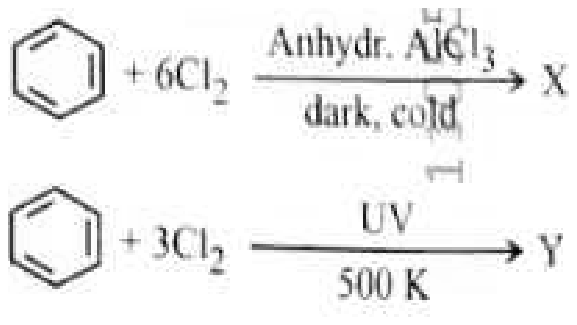
The number of chlorine atoms present in the organic products X and Y of the following reactions, respectively, are:
- 13 and 6
- 26 and 6
- 36 and 3
- 43 and 3
Show answer and solution
Correct: option 2, 6 and 6
With excess chlorine and anhydrous in the dark and cold, all six hydrogens of benzene are substituted, giving hexachlorobenzene (X, 6 Cl). Under UV light at 500 K three molecules add to the ring, giving benzene hexachloride (Y, 6 Cl). So the answer is 6 and 6.
Question 2NEET 2026, Q71
Methane reacts with steam at 1273 K in the presence of nickel catalyst to form:
- 1CO and
- 2CO and
- 3 and
- 4 and
Show answer and solution
Correct: option 1, CO and
This is steam reforming: . The products are carbon monoxide and dihydrogen.
Question 3NEET 2026 Re-exam, Q76
Given below are two statements:
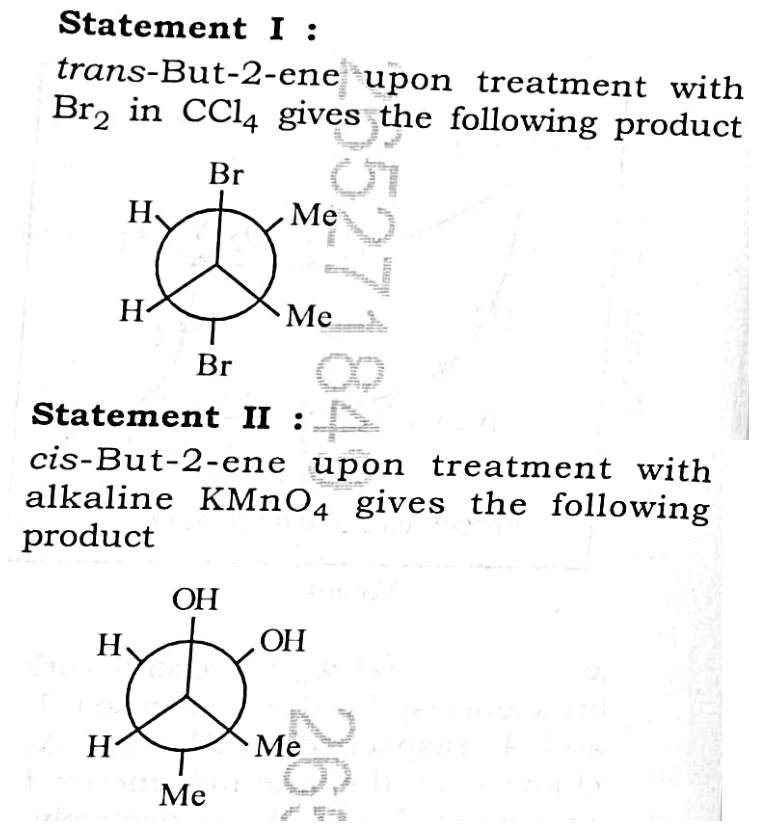
In the light of the above statements, choose the most appropriate answer from the options given below.
- 1Both Statement I and Statement II are correct
- 2Both Statement I and Statement II are incorrect
- 3Statement I is correct but Statement II is incorrect
- 4Statement I is incorrect but Statement II is correct
Show answer and solution
Correct: option 4, Statement I is incorrect but Statement II is correct
adds anti to an alkene, so trans-but-2-ene gives meso-2,3-dibromobutane. In the meso form with the two Br atoms anti, each H must also be anti to the other H and each Me anti to the other Me; the projection shown has the two H atoms on the same side, so it is one of the optically active forms and Statement I is incorrect. Alkaline adds the two OH groups syn, so cis-but-2-ene gives meso-butane-2,3-diol. Turning the back carbon of the second projection until the OH groups eclipse also brings H over H and Me over Me, so it is the meso diol and Statement II is correct.
Question 4NEET 2026 Re-exam, Q77
Consider the following reaction sequences and choose the correct option.
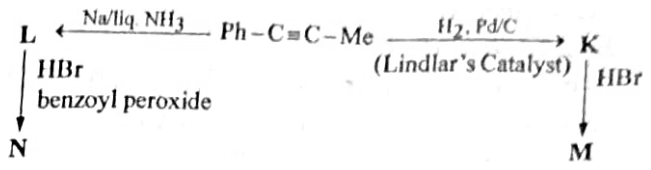
- 1K and L are geometrical isomers
- 2K and L are enantiomers
- 3M and N are geometrical isomers
- 4M and N are stereoisomers
Show answer and solution
Correct: option 1, K and L are geometrical isomers
Sodium in liquid ammonia reduces the alkyne to the trans alkene (L), while hydrogen on Lindlar's catalyst gives the cis alkene (K). K and L are cis and trans forms of , that is geometrical isomers. HBr adds to K to place Br on the benzylic carbon (M), whereas HBr with benzoyl peroxide adds the other way round to L (N), so M and N are position isomers, not stereoisomers.
Question 5NEET 2026 Re-exam, Q83
Among the following, the compound having conjugated double bonds is
- 1hepta-1,3-diene
- 2hepta-1,4-diene
- 3hepta-1,5-diene
- 4hepta-1,6-diene
Show answer and solution
Correct: option 1, hepta-1,3-diene
Double bonds are conjugated when they are separated by exactly one single bond. Hepta-1,3-diene, , has this arrangement. In the other three the double bonds are separated by one or more carbons, so they are isolated.
Question 6NEET 2025, Q58
Which one of the following compounds can exist as cis-trans isomers?
- 1Pent-1-ene
- 22-Methylhex-2-ene
- 31,1-Dimethylcyclopropane
- 41,2-Dimethylcyclohexane
Show answer and solution
Correct: option 4, 1,2-Dimethylcyclohexane
Cis-trans isomerism needs restricted rotation with two different groups on each of the two carbons concerned. Pent-1-ene has , 2-methylhex-2-ene has two methyl groups on one doubly bonded carbon, and 1,1-dimethylcyclopropane has both methyls on the same carbon, so none of them qualifies. In 1,2-dimethylcyclohexane the two methyl groups can be on the same side or on opposite sides of the ring, option (4).
Question 7NEET 2025, Q60
Which one of the following reactions does NOT give benzene as the product?
- 1
- 2

- 3

- 4
Show answer and solution
Correct: option 4
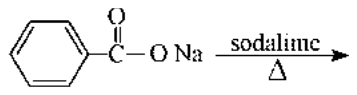
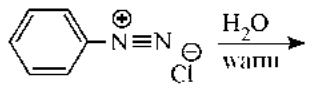
Sodium benzoate heated with sodalime is decarboxylated to benzene; n-hexane is aromatised to benzene over at 773 K and 10 - 20 atm; ethyne trimerises to benzene in a red hot iron tube at 873 K. Benzenediazonium chloride warmed with water is hydrolysed to phenol, not benzene. Option (4).
Question 8NEET 2025, Q77
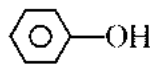
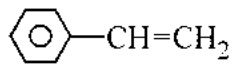
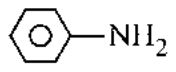
Which one of the following compounds does not decolourize bromine water?
- 1

- 2
- 3
- 4
Show answer and solution
Correct: option 1
Cyclohexane is a saturated hydrocarbon and does not react with bromine water. Phenol and aniline have strongly activated rings and give 2,4,6-tribromo products, and styrene adds bromine across its double bond, so these three decolourize bromine water. Option (1).
Question 9NEET 2024, Q70
Given below are two statements:
Statement I: The boiling point of three isomeric pentanes follows the order
n-pentane > isopentane > neopentane
Statement II: When branching increases, the molecule attains a shape of sphere. This results in smaller surface area for contact, due to which the intermolecular forces between the spherical molecules are weak, thereby lowering the boiling point.
In the light of the above statements, choose the most appropriate answer from the options given below:
- 1Statement I is incorrect but Statement II is correct.
- 2Both Statement I and Statement II are correct.
- 3Both Statement I and Statement II are incorrect.
- 4Statement I is correct but Statement II is incorrect.
Show answer and solution
Correct: option 2, Both Statement I and Statement II are correct.
The boiling points are about 309 K for n-pentane, 301 K for isopentane and 282.5 K for neopentane, so Statement I is correct. The reason is the one given in Statement II: a more branched molecule is more nearly spherical, has less surface in contact with its neighbours and so has weaker van der Waals forces. Both statements are correct, option (2).
Question 10NEET 2024, Q90
- 1
- 2
- 3
- 4
Show answer and solution
Correct: option 3
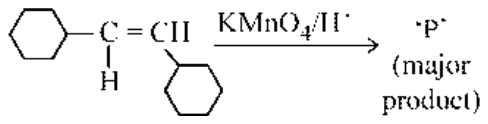
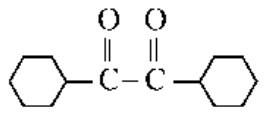
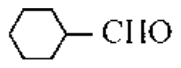
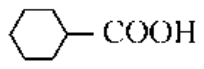
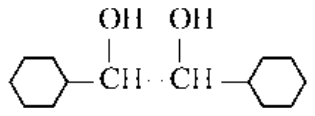
Acidified is a strong oxidising agent that breaks a C=C double bond completely. Each doubly bonded carbon here carries one hydrogen and one ring, so each end is oxidised past the aldehyde stage to a group. The symmetrical alkene therefore gives two molecules of the ring carboxylic acid shown in option (3). The diol of option (4) would need cold, dilute, alkaline .
Question 11NEET 2024 Re-exam, Q53
Given below are two statements:
Statement I: Propene on treatment with diborane gives an addition product with the formula .
Statement II: Oxidation of with hydrogen peroxide in presence of NaOH gives propan-2-ol.
In the light of the above statements, choose the most appropriate answer from the options given below:
- 1Statement I is correct but Statement II is incorrect
- 2Statement I is incorrect but Statement II is correct
- 3Both Statement I and Statement II are correct
- 4Both Statement I and Statement II are incorrect
Show answer and solution
Correct: option 2, Statement I is incorrect but Statement II is correct
In hydroboration the boron atom adds to the less substituted (terminal) carbon of propene, so the product is tripropylborane, , not the isopropyl compound; Statement I is incorrect. Oxidation with alkaline replaces each C-B bond by C-OH on the same carbon, so the isopropyl borane named in Statement II would indeed give propan-2-ol; Statement II is correct.
Question 12NEET 2024 Re-exam, Q54
- 1Acidic potassium permanganate solution
- 2Acidic potassium dichromate solution
- 3Cold, dilute, aqueous solution of potassium permanganate
- 4Hot, concentrated solution of potassium permanganate
Show answer and solution
Correct: option 3, Cold, dilute, aqueous solution of potassium permanganate
Baeyer's reagent is a cold, dilute, aqueous (slightly alkaline) solution of . It converts an alkene to a vicinal diol and loses its purple colour, which is used as a test for unsaturation.
Question 13NEET 2024 Re-exam, Q95
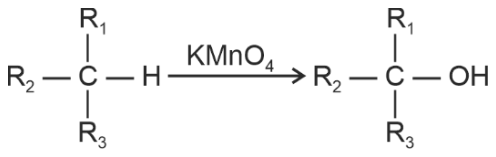
The alkane that can be oxidized to the corresponding alcohol by as per the equation
- 1
- 2
- 3
- 4
Show answer and solution
Correct: option 2,
Alkanes generally resist oxidation, but an alkane with a tertiary hydrogen is oxidised by to the corresponding tertiary alcohol; for example 2-methylpropane gives 2-methylpropan-2-ol. The C-H carbon is tertiary only when all three groups are alkyl, that is .
Question 14NEET 2023, Q76
Weight (g) of two moles of the organic compound, which is obtained by heating sodium ethanoate with sodium hydroxide in presence of calcium oxide is:
- 116
- 232
- 330
- 418
Show answer and solution
Correct: option 2, 32
Heating sodium ethanoate with soda lime is decarboxylation: . The organic product is methane, molar mass , so two moles weigh 32 g.
Question 15NEET 2023, Q89
Consider the following compounds/species:
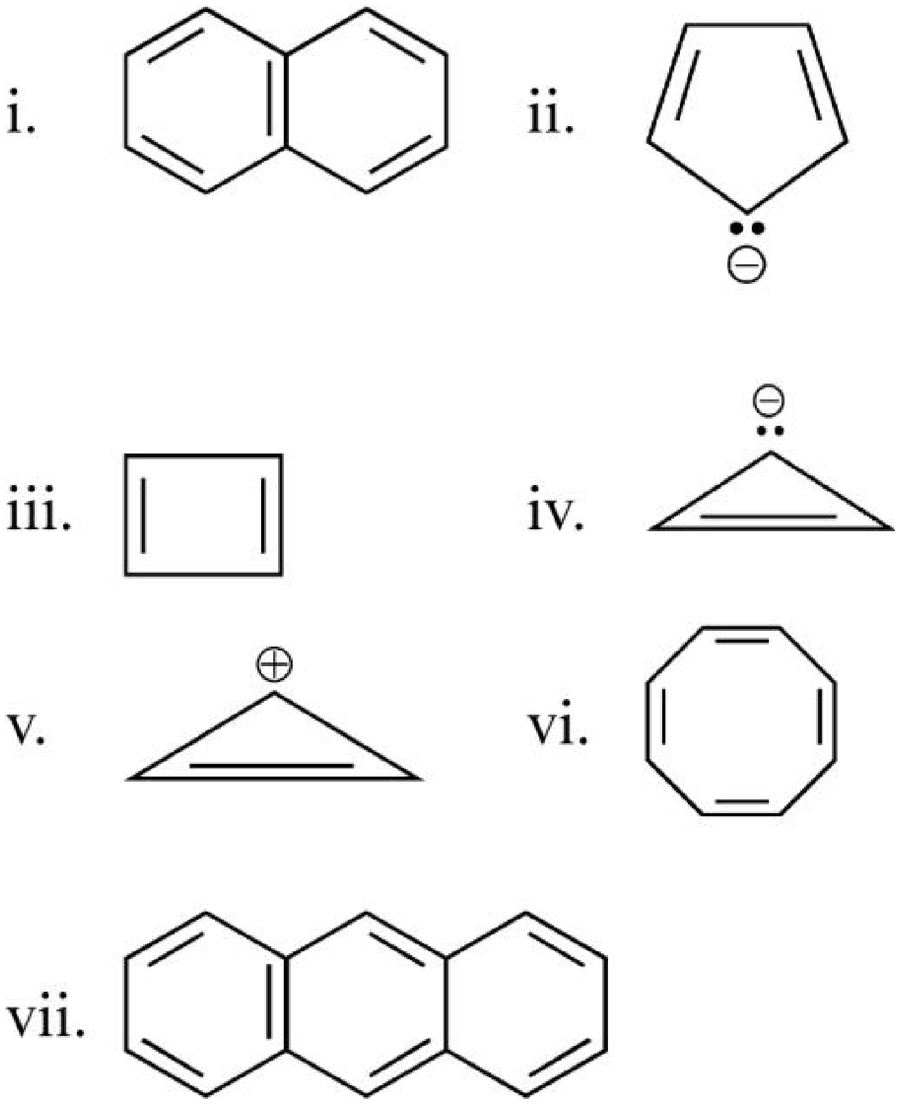
The number of compounds/species which obey Huckel's rule is ______.
- 14
- 26
- 32
- 45
Show answer and solution
Correct: option 1, 4
Huckel's rule needs a planar, cyclic, fully conjugated system with electrons. Naphthalene (i, 10 electrons), cyclopentadienyl anion (ii, 6), cyclopropenyl cation (v, 2) and anthracene (vii, 14) obey it. Cyclobutadiene (iii, 4), cyclopropenyl anion (iv, 4) and cyclooctatetraene (vi, 8) have electrons and do not. So four species obey the rule.
Question 16NEET 2023 Manipur, Q51
Which amongst the following compounds will show geometrical isomerism?
- 12-Methylprop-1-ene
- 23,4-Dimethylhex-3-ene
- 3Pent-1-ene
- 42,3-Dimethylbut-2-ene
Show answer and solution
Correct: option 2, 3,4-Dimethylhex-3-ene
Geometrical isomerism needs each doubly bonded carbon to carry two different groups. In 3,4-dimethylhex-3-ene each carbon of the double bond holds one methyl and one ethyl group, so cis and trans forms exist. In 2-methylprop-1-ene and pent-1-ene one carbon carries two H atoms, and in 2,3-dimethylbut-2-ene each carbon carries two methyl groups, so these three cannot show it.
Question 17NEET 2022, Q70
Which compound amongst the following is not an aromatic compound?
- 1
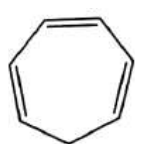
- 2
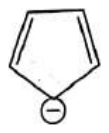
- 3
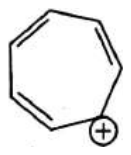
- 4

Show answer and solution
Correct: option 1
An aromatic ring is planar, fully conjugated and has electrons. Structure (1), cyclooctatetraene, has electrons and is tub shaped, so it is not aromatic. The cyclopentadienyl anion in (2) has electrons, the tropylium cation in (3) has 6, and the cyclopropenyl cation in (4) has 2, so all three are aromatic.
Question 18NEET 2022, Q86
Compound X on reaction with followed by gives formaldehyde and 2-methyl propanal as products. The compound X is:
- 1Pent-2-ene
- 23-Methylbut-1-ene
- 32-Methylbut-1-ene
- 42-Methylbut-2-ene
Show answer and solution
Correct: option 2, 3-Methylbut-1-ene
Ozonolysis cuts the double bond and puts an oxygen on each carbon. Joining the carbonyl carbons of HCHO and back together gives , which is 3-methylbut-1-ene.
Question 19NEET 2022 Re-exam, Q70
The decreasing order of boiling points of the following alkanes is:
(a) heptane
(b) butane
(c) 2-methylbutane
(d) 2-methylpropane
(e) hexane
Choose the correct answer from the options given below:
- 1(a) > (e) > (c) > (b) > (d)
- 2(a) > (c) > (e) > (d) > (b)
- 3(c) > (d) > (a) > (e) > (b)
- 4(a) > (e) > (b) > (c) > (d)
Show answer and solution
Correct: option 1, (a) > (e) > (c) > (b) > (d)
Boiling point rises with the number of carbon atoms and, for isomers, falls with branching because a more compact molecule has less surface for van der Waals attraction. Heptane () > hexane () > 2-methylbutane () > butane (, unbranched) > 2-methylpropane (, branched).
Question 20NEET 2022 Re-exam, Q97
The incorrect method for the synthesis of alkenes is
- 1Treating vicinal dihalides with Zn metal
- 2Treating of alkynes with Na in liquid
- 3Heating alkyl halides with alcoholic KOH
- 4Treating alkyl halides in aqueous KOH solution
Show answer and solution
Correct: option 4, Treating alkyl halides in aqueous KOH solution
Zinc removes both halogens from a vicinal dihalide to give an alkene; sodium in liquid ammonia reduces an alkyne to a trans alkene; alcoholic KOH removes HX from an alkyl halide to give an alkene. Aqueous KOH instead replaces the halogen by OH (nucleophilic substitution) and gives an alcohol, so it is not a way to make alkenes.
Question 21NEET 2021, Q51
Dihedral angle of least stable conformer of ethane is:
- 1
- 2
- 3
- 4
Show answer and solution
Correct: option 4,
The least stable conformer of ethane is the eclipsed form, where the C-H bonds on the two carbons lie directly behind one another and torsional strain is greatest. In that form the dihedral angle is . The staggered form () is the most stable.
Question 22NEET 2021, Q53
The major product of the following chemical reaction is:
?
- 1
- 2
- 3
- 4
Show answer and solution
Correct: option 1,
Benzoyl peroxide makes HBr add by the free-radical path (peroxide effect), which is anti-Markovnikov. The Br atom adds to the terminal carbon to give the more stable secondary radical, so the product is .
Question 23NEET 2021, Q95
.
Consider the above reaction and identify the missing reagent/chemical.
- 1
- 2Red Phosphorus
- 3CaO
- 4DIBAL-H
Show answer and solution
Correct: option 3, CaO
This is decarboxylation: the sodium salt of a carboxylic acid is heated with soda lime, a mixture of NaOH and CaO, and gives an alkane with one carbon less. The missing chemical is CaO.
Question 24NEET 2020, Q24
Which of the following alkane cannot be made in good yield by Wurtz reaction?
- 1n-Hexane
- 22,3-Dimethylbutane
- 3n-Heptane
- 4n-Butane
Show answer and solution
Correct: option 3, n-Heptane
The Wurtz reaction joins two alkyl halide molecules, so it gives a good yield only of symmetrical alkanes with an even number of carbon atoms. n-Heptane has seven carbons and would need two different alkyl halides, which gives a mixture of three alkanes. The other three are symmetrical and are made from one halide each.
Question 25NEET 2020, Q39
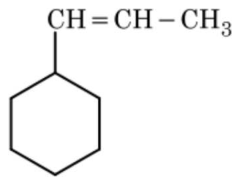
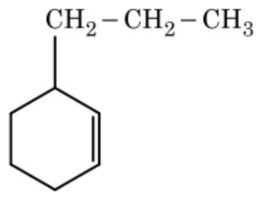
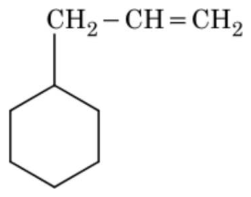
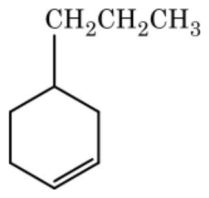
An alkene on ozonolysis gives methanal as one of the product. Its structure is:
- 1
- 2
- 3
- 4
Show answer and solution
Correct: option 3
Ozonolysis cuts a C=C bond and turns each carbon of it into a carbonyl group. Methanal (HCHO) can form only from a terminal group. Only option (3), with the side chain , has one.
Question 26NEET 2020 Phase 2, Q164
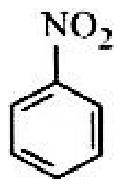
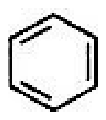
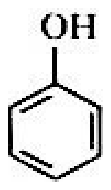
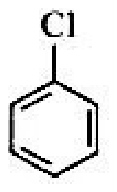
Which of the following compound is most reactive in electrophilic aromatic substitution?
- 1
- 2
- 3
- 4
Show answer and solution
Correct: option 3
An electrophile attacks fastest the ring with the highest electron density. The group of phenol (option 3) pushes a lone pair into the ring by resonance and activates it strongly. deactivates slightly and deactivates strongly, so the order of reactivity is phenol > benzene > chlorobenzene > nitrobenzene.
Question 27NEET 2020 Phase 2, Q177
Which of the following is a free radical substitution reaction?
- 1Acetylene with
- 2Methane with
- 3Propene with
- 4Benzene with
Show answer and solution
Correct: option 2, Methane with
Light splits into bromine radicals, which replace a hydrogen of methane by a chain mechanism: a free radical substitution. Acetylene with is an electrophilic addition, propene with and peroxide is a free radical addition, and benzene with is an electrophilic substitution.
Question 28NEET 2019, Q55
The most suitable reagent for the following conversion, is:
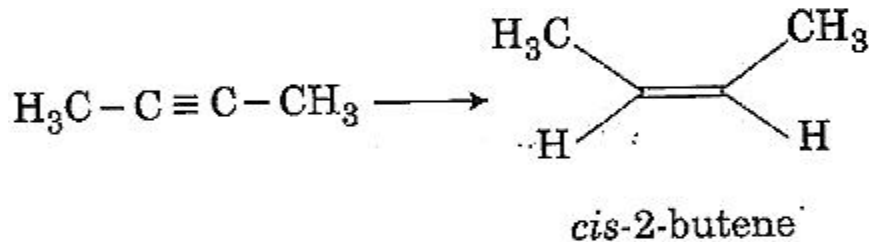
- 1
- 2, Pd/C, quinoline
- 3
- 4
Show answer and solution
Correct: option 2, , Pd/C, quinoline
But-2-yne has to be reduced only as far as the alkene, with both hydrogens added to the same side. Hydrogen over palladium poisoned with quinoline (Lindlar-type catalyst) does this syn addition and gives cis-2-butene. Sodium in liquid ammonia gives the trans alkene, and hydrates the alkyne to a ketone.
Question 29NEET 2019, Q65
Among the following, the reaction that proceeds through an electrophilic substitution, is:
- 1

- 2

- 3
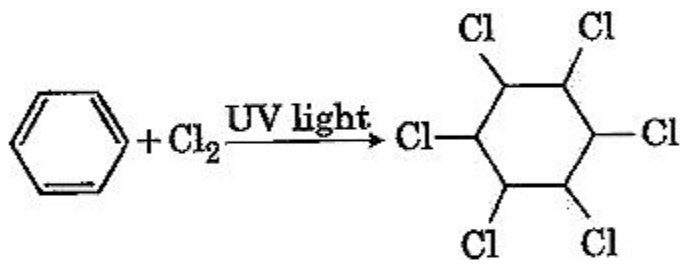
- 4

Show answer and solution
Correct: option 2
In option (2) polarises to give the electrophile , which replaces a ring hydrogen of benzene: electrophilic aromatic substitution. Option (1) is the Sandmeyer reaction (radical-type substitution of the diazonium group), option (3) is free-radical addition of chlorine to give benzene hexachloride, and option (4) is nucleophilic substitution of the OH of benzyl alcohol.
Question 30NEET 2019, Q74
An alkene "A" on reaction with and gives propanone and ethanal in equimolar ratio. Addition of HCl to alkene "A" gives "B" as the major product. The structure of product "B" is:
- 1
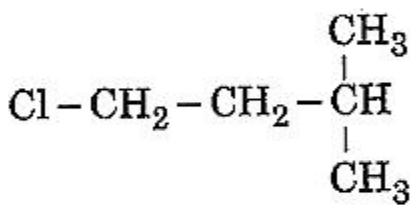
- 2
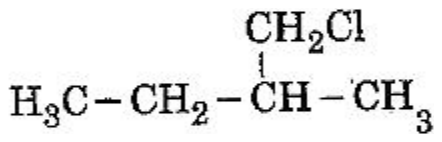
- 3
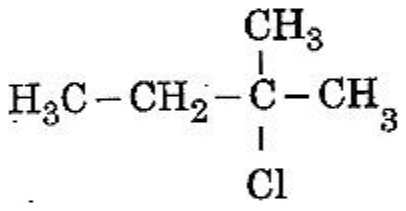
- 4
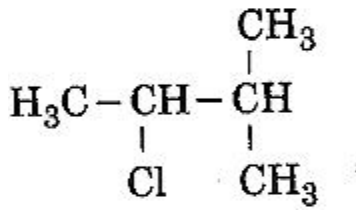
Show answer and solution
Correct: option 3
Joining the carbonyl carbons of propanone and ethanal gives the alkene A, (2-methylbut-2-ene). HCl adds by Markovnikov's rule through the more stable tertiary carbocation, so Cl ends up on the carbon carrying the two methyl groups: 2-chloro-2-methylbutane, option (3).
Question 31NEET 2019 Odisha, Q70
The alkane that gives only one mono-chloro product on chlorination with in presence of diffused sunlight is -
- 1n-pentane
- 2Isopentane
- 32, 2 - dimethylbutane
- 4neopentane
Show answer and solution
Correct: option 4, neopentane
Neopentane, , has twelve hydrogens that are all equivalent, so replacing any one of them gives the same product, 1-chloro-2,2-dimethylpropane. n-Pentane has 3 kinds of hydrogen, isopentane 4 and 2,2-dimethylbutane 3, so each of them gives a mixture.
Question 32NEET 2019 Odisha, Q71
In the following reaction,
,
the number of sigma () bonds present in the product A, is -
- 124
- 218
- 321
- 49
Show answer and solution
Correct: option 3, 21
Three molecules of propyne join in a red hot iron tube to give mesitylene (1,3,5-trimethylbenzene), . It has 6 C-C sigma bonds in the ring, 3 C-C sigma bonds to the methyl groups and 12 C-H bonds (3 on the ring and 9 in the methyl groups): .
Question 33NEET 2018, Q61
The compound undergoes the following reactions :
The product 'C' is
- 13-bromo-2,4,6-trichlorotoluene
- 2o-bromotoluene
- 3m-bromotoluene
- 4p-bromotoluene
Show answer and solution
Correct: option 3, m-bromotoluene
is toluene. Chlorine with heat substitutes the side chain to give benzotrichloride, (A). The group is electron withdrawing and meta directing, so gives m-bromobenzotrichloride (B). Zn/HCl reduces back to , giving m-bromotoluene (C).
Question 34NEET 2018, Q62
Hydrocarbon (A) reacts with bromine by substitution to form an alkyl bromide which by Wurtz reaction is converted to gaseous hydrocarbon containing less than four carbon atoms. (A) is
- 1
- 2
- 3
- 4
Show answer and solution
Correct: option 4,
The Wurtz reaction joins two alkyl groups, doubling the carbon count. For the product to have fewer than four carbons the alkyl bromide must have one carbon: , and . So A is methane. Ethane would give butane, which has four carbons.
Question 35NEET 2017, Q46
With respect to the conformers of ethane, which of the following statements is true?
- 1Bond angle remains same but bond length changes
- 2Bond angle changes but bond length remains same
- 3Both bond angle and bond length change
- 4Both bond angles and bond length remains same
Show answer and solution
Correct: option 4, Both bond angles and bond length remains same
Conformers of ethane differ only by rotation about the C–C single bond. Rotation changes the dihedral (torsion) angle between the C–H bonds on the two carbons, but the bond angles and the bond lengths stay the same.
Question 36NEET 2017, Q57
Predict the correct intermediate and product in the following reaction
- 1A: B:
- 2A: B:
- 3A: B:
- 4A: B:
Show answer and solution
Correct: option 4, A: B:
Water adds to propyne in the presence of and acid according to Markovnikov's rule, so OH goes to the middle carbon and the enol is the intermediate (A). The enol is unstable and tautomerises to the ketone, propanone (B).
Question 37NEET 2017, Q62
Which one is the correct order of acidity?
- 1
- 2
- 3
- 4
Show answer and solution
Correct: option 2,
Acidity of a C–H bond rises with the s-character of the carbon: (50%) > (33%) > (25%). So alkynes are more acidic than ethene, and ethene more than ethane. Propyne is a little less acidic than ethyne because the methyl group releases electrons (+I effect) and destabilises the carbanion.
Question 38NEET 2016 Phase 1, Q47
In the reaction
,
X and Y are:
- 1X = 1-Butyne; Y = 3-Hexyne
- 2X = 2-Butyne; Y = 3-Hexyne
- 3X = 2-Butyne; Y = 2-Hexyne
- 4X = 1-Butyne; Y = 2-Hexyne
Show answer and solution
Correct: option 1, X = 1-Butyne; Y = 3-Hexyne
Sodamide removes the acidic terminal hydrogen of ethyne to give the acetylide ion, which attacks ethyl bromide to give , 1-butyne (X). 1-Butyne still has one terminal hydrogen, so the same two steps add a second ethyl group on the other carbon, giving , 3-hexyne (Y).
Question 39NEET 2016 Phase 1, Q69
Consider the nitration of benzene using mixed conc. and . If a large amount of is added to the mixture, the rate of nitration will be
- 1faster
- 2slower
- 3unchanged
- 4doubled
Show answer and solution
Correct: option 2, slower
The attacking electrophile is the nitronium ion, formed by . Adding supplies a lot of , a product of this equilibrium, which pushes it back to the left. Less is available, so nitration becomes slower.
Question 40NEET 2016 Phase 1, Q81
The correct statement regarding the comparison of staggered and eclipsed conformations of ethane, is
- 1The staggered conformation of ethane is less stable than eclipsed conformation, because staggered conformation has torsional strain.
- 2The eclipsed conformation of ethane is more stable than staggered conformation, because eclipsed conformation has no torsional strain.
- 3The eclipsed conformation of ethane is more stable than staggered conformation even though the eclipsed conformation has torsional strain.
- 4The staggered conformation of ethane is more stable than eclipsed conformation, because staggered conformation has no torsional strain.
Show answer and solution
Correct: option 4, The staggered conformation of ethane is more stable than eclipsed conformation, because staggered conformation has no torsional strain.
In the staggered form the bonds on the two carbons are as far apart as possible, so the repulsion between their electron pairs (torsional strain) is at its minimum, taken as zero. In the eclipsed form the bonds line up and the strain is greatest. The staggered form is therefore more stable, by about .
Question 41NEET 2016 Phase 2, Q80
Which of the following compounds shall not produce propene by reaction with HBr followed by elimination or direct only elimination reaction?
- 1
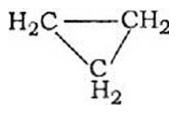
- 2
- 3
- 4
Show answer and solution
Correct: option 3,
Cyclopropane is opened by HBr to give 1-bromopropane, which loses HBr to give propene. Propan-1-ol gives propene by dehydration, and 1-bromopropane by dehydrohalogenation. Ketene, , has only two carbon atoms, and with HBr it gives acetyl bromide, so it cannot give the three-carbon propene.
Question 42NEET 2016 Phase 2, Q84
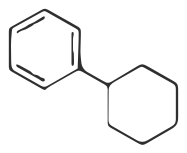
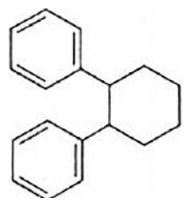
- 1
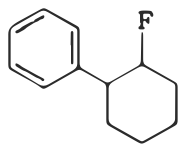
- 2
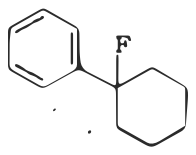
- 3
- 4
Show answer and solution
Correct: option 3
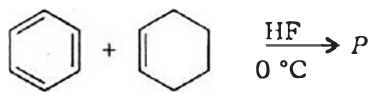
HF protonates the double bond of cyclohexene to give the cyclohexyl carbocation. This cation attacks benzene in a Friedel-Crafts alkylation, and loss of a proton restores the aromatic ring. The product is cyclohexylbenzene, option (3); fluorine does not end up in the product.
Question 43NEET 2016 Phase 2, Q90
The compound that will react most readily with gaseous bromine has the formula
- 1
- 2
- 3
- 4
Show answer and solution
Correct: option 1,
Bromine adds to a carbon-carbon multiple bond as an electrophile, so the most electron-rich multiple bond reacts fastest. is an alkane and does not add bromine, and the alkyne reacts more slowly than alkenes. Of the two alkenes, propene () has a methyl group that pushes electrons towards the double bond, so it reacts more readily than ethene.
Question 44AIPMT 2015, Q1
The reaction of with HBr produces:
- 1
- 2
- 3
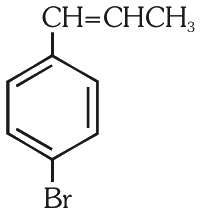
- 4
Show answer and solution
Correct: option 4,
HBr adds across the side-chain double bond by the ionic mechanism. The proton goes to the carbon that leaves the positive charge on the benzylic carbon, because that carbocation is stabilised by resonance with the ring. Bromide then attacks the benzylic carbon, giving , option (4).
Question 45AIPMT 2015, Q36
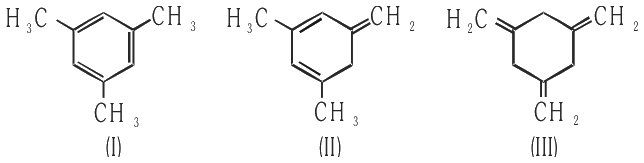
The enthalpy of the hydrogenation of these compounds will be in the order as:
- 1III > II > I
- 2II > III > I
- 3II > I > III
- 4I > II > III
Show answer and solution
Correct: option 1, III > II > I
The more stable an unsaturated compound, the less heat it gives out on hydrogenation. (I) is a benzene ring, strongly stabilised by aromatic resonance. (II) is a conjugated triene with two double bonds in the ring, less stable than (I). (III) has three isolated exocyclic double bonds with no conjugation and is the least stable. So the enthalpy of hydrogenation is III > II > I, option (1).
Question 46AIPMT 2015, Q45
A single compound of the structure:
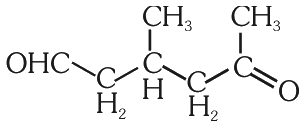
is obtainable from ozonolysis of which of the following cyclic compounds?
- 1
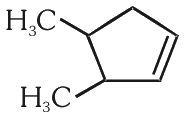
- 2
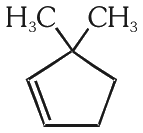
- 3
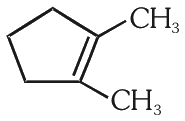
- 4
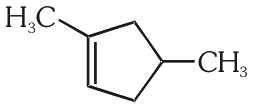
Show answer and solution
Correct: option 4
Ozonolysis cuts a ring double bond and turns each of its carbons into a carbonyl group, so joining the two carbonyl carbons of the product gives back the alkene. The product is ; joining the CHO carbon to the ketone carbon gives a five-membered ring with a methyl on one double-bond carbon and another methyl on the ring carbon two places away, 1,4-dimethylcyclopentene. That is option (4).
Question 47AIPMT 2015 Re-test, Q1
2,3-Dimethyl-2-butene can be prepared by heating which of the following compounds with a strong acid?
- 1
- 2
- 3
- 4
Show answer and solution
Correct: option 4,
The product has six carbons with a 2,3-dimethylbutane skeleton. Protonating gives a secondary carbocation next to the quaternary carbon; a methyl shift turns it into the tertiary cation , which loses a proton to give the most substituted alkene, 2,3-dimethyl-2-butene. Options (1) and (2) have a 2-methylpentane skeleton and option (3) has seven carbons, so only option (4) works.
Question 48AIPMT 2015 Re-test, Q14
In the reaction with HCl, an alkene reacts in accordance with the Markovnikov's rule, to give a product 1-chloro-1-methylcyclohexane. The possible alkene is:
- 1
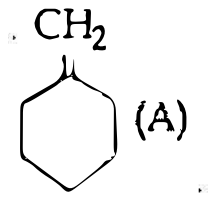
- 2
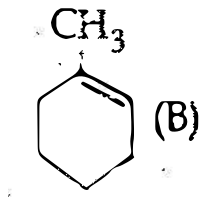
- 3(A) and (B)
- 4
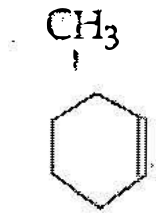
Show answer and solution
Correct: option 3, (A) and (B)
(A) is methylenecyclohexane and (B) is 1-methylcyclohexene. In both, adding to the carbon with more hydrogens gives the same tertiary carbocation on the ring carbon, and chloride then attaches there to give 1-chloro-1-methylcyclohexane. The alkene in option (4) has its double bond away from the methyl-bearing carbon and would put the chlorine on a different carbon. So both (A) and (B) are possible, option (3).
Question 49AIPMT 2015 Re-test, Q40
The oxidation of benzene by in the presence of air produces:
- 1benzoic acid
- 2benzaldehyde
- 3benzoic anhydride
- 4maleic anhydride
Show answer and solution
Correct: option 4, maleic anhydride
Benzene has no side chain to oxidise, so benzoic acid or benzaldehyde cannot form. With air over hot (about 773 K) the ring itself is broken: two carbons are lost as and the remaining four form maleic anhydride. Option (4).
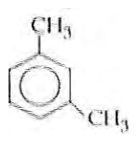
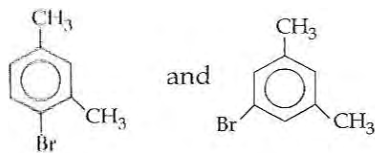
Question 50AIPMT 2014, Q179
What products are formed when the following compound is treated with in the presence of ?
- 1
- 2
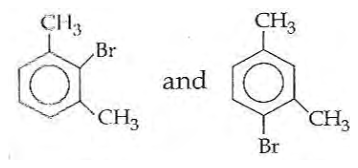
- 3
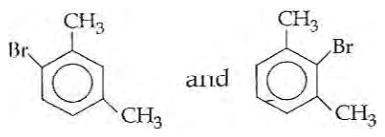
- 4
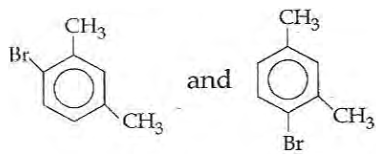
Show answer and solution
Correct: option 4
The compound is m-xylene, and brings about electrophilic substitution on the ring. Both methyl groups direct to their ortho and para positions. Position 4 (ortho to one methyl and para to the other) is activated by both groups and is open, so 4-bromo-1,3-dimethylbenzene is the product; position 2, between the two methyl groups, is crowded, and position 5 is meta to both. Both drawings in option (4) show the 4-bromo compound, which is why the key picks it; options (2) and (3) include the hindered 2-bromo compound and option (1) the 5-bromo compound.
Question 51NEET 2013, Q6
Some meta-directing substituents in aromatic substitution are given. Which one is most deactivating?
- 1
- 2
- 3
- 4
Show answer and solution
Correct: option 3,
All four groups withdraw electrons from the ring, but the nitro group does so most strongly, through both a strong inductive effect and a strong resonance effect. It therefore lowers the ring's reactivity towards electrophiles the most, which is option (3).
Question 52NEET 2013, Q23
Which of the following compounds will not undergo Friedel-Craft's reaction easily:
- 1Xylene
- 2Nitrobenzene
- 3Toluene
- 4Cumene
Show answer and solution
Correct: option 2, Nitrobenzene
The Friedel-Crafts reaction is an electrophilic substitution, so it needs an electron-rich ring. Xylene, toluene and cumene carry electron-releasing alkyl groups and react readily. The nitro group of nitrobenzene withdraws electrons strongly and deactivates the ring so much that the reaction does not take place easily, which is option (2).
Question 53NEET 2013, Q29
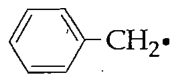
is aromatic because it has:
- 17 p-orbitals and 6 unpaired electrons
- 27 p-orbitals and 7 unpaired electrons
- 36 p-orbitals and 7 unpaired electrons
- 46 p-orbitals and 6 unpaired electrons
Show answer and solution
Correct: option 4, 6 p-orbitals and 6 unpaired electrons
Aromatic character belongs to the benzene ring of the benzyl radical. The ring is planar with six carbons, each giving one p orbital and one electron to a closed loop of electrons, which fits Huckel's rule with . That is 6 p-orbitals and 6 electrons, option (4); the odd electron on the carbon is not needed for the ring's aromaticity.
Question 54NEET 2013, Q45
Nitrobenzene on reaction with conc. at 80-100°C forms which one of the following products?
- 11,3-Dinitrobenzene
- 21,4-Dinitrobenzene
- 31,2,4-Trinitrobenzene
- 41,2-Dinitrobenzene
Show answer and solution
Correct: option 1, 1,3-Dinitrobenzene
The nitro group withdraws electrons and deactivates the ortho and para positions most, so the incoming nitronium ion enters the meta position. Nitration of nitrobenzene therefore gives m-dinitrobenzene, that is 1,3-dinitrobenzene, option (1).
Question 55NEET 2013 Karnataka, Q5
- 1identical
- 2a pair of conformers
- 3a pair of geometrical isomers
- 4a pair of optical isomers
Show answer and solution
Correct: option 2, a pair of conformers
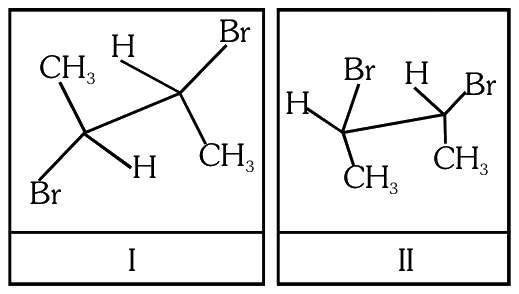
Both drawings show 2,3-dibromobutane with the same groups on each carbon; they differ only in how one carbon is turned about the central C-C single bond relative to the other. Structures that interconvert by rotation about a single bond are conformers, which is the keyed option (2).
Question 56NEET 2013 Karnataka, Q22
Which of the following chemical system is non aromatic:
- 1
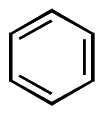
- 2
- 3
- 4
Show answer and solution
Correct: option 4
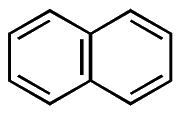
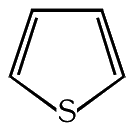
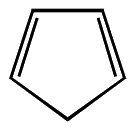
Benzene (6 electrons), naphthalene (10 electrons) and thiophene (6 electrons, counting a lone pair of sulphur) are planar, fully conjugated rings that obey Hückel's rule. Cyclopenta-1,3-diene, option (4), has an carbon that breaks the cyclic conjugation, so it is non aromatic.
Question 57NEET 2013 Karnataka, Q44
In the following reaction:
'P'
Product 'P' will not give
- 1Tollen's reagent test
- 2Brady's reagent test
- 3Victor Meyer test
- 4Iodoform test
Show answer and solution
Correct: option 3, Victor Meyer test
Hydration of ethyne with and gives vinyl alcohol, which tautomerises to ethanal, . Ethanal reduces Tollens' reagent, forms a 2,4-dinitrophenylhydrazone with Brady's reagent and, having a group, gives the iodoform test. The Victor Meyer test is used to distinguish primary, secondary and tertiary alcohols, so ethanal does not give it.
Question 58AIPMT 2012 Prelims, Q170
Among the following compounds the one that is most reactive towards electrophilic nitration is:
- 1Benzoic Acid
- 2Nitrobenzene
- 3Toluene
- 4Benzene
Show answer and solution
Correct: option 3, Toluene
Electrophilic substitution is faster when the ring is richer in electrons. The methyl group of toluene releases electrons (+I and hyperconjugation) and activates the ring, while and withdraw electrons and deactivate it. The order is toluene > benzene > benzoic acid > nitrobenzene, so option (3).
Question 59AIPMT 2012 Prelims, Q200
In the following reaction:
The major product is:
- 1
- 2
- 3
- 4
Show answer and solution
Correct: option 1,
Protonation of the double bond gives the secondary carbocation . A methyl group shifts from the neighbouring carbon to give the more stable tertiary carbocation , and water adds there. The major product is 2,3-dimethylbutan-2-ol, option (1); the unrearranged alcohol of option (3) is the minor product.
Question 60AIPMT 2012 Mains, Q57
Which of the following reagents will be able to distinguish between 1-butyne and 2-butyne?
- 1
- 2
- 3
- 4
Show answer and solution
Correct: option 1,
1-Butyne is a terminal alkyne with an acidic hydrogen on the triply bonded carbon, so it reacts with sodamide to form a sodium alkynide and ammonia. 2-Butyne has no such hydrogen and does not react. HCl, and react with both alkynes alike.
Question 61AIPMT 2011 Prelims, Q11
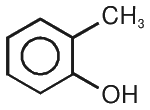
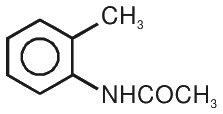
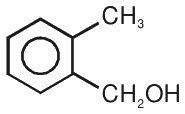
Which one of the following is most reactive towards electrophilic reagent?
- 1
- 2
- 3
- 4
Show answer and solution
Correct: option 2
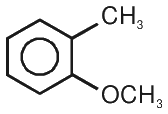
All four rings carry a methyl group; they differ in the second substituent. The group is the strongest activator here because its lone pair is donated to the ring most effectively (+M effect), more than or (whose nitrogen lone pair is also pulled towards the carbonyl group), while has no +M effect on the ring. So the methylphenol (o-cresol) is the most reactive towards electrophiles.
Question 62AIPMT 2010 Mains, Q52
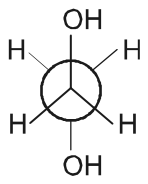
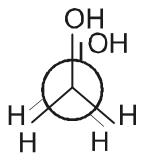
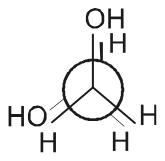
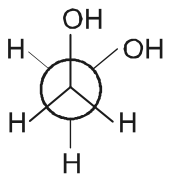
Which of the following conformers for ethylene glycol is most stable?
- 1
- 2
- 3
- 4
Show answer and solution
Correct: option 4
Option (4) is the staggered gauche form, with the two OH groups 60 degrees apart. Being staggered it has no torsional strain, and the OH groups are close enough to form an intramolecular hydrogen bond, which makes it more stable than the anti form (1), where they are too far apart. Options (2) and (3) are eclipsed forms and are the least stable.
Question 63AIPMT 2010 Prelims, Q52
Liquid hydrocarbons can be converted to a mixture of gaseous hydrocarbons by:
- 1Oxidation
- 2Cracking
- 3Distillation under reduced pressure
- 4Hydrolysis
Show answer and solution
Correct: option 2, Cracking
Cracking (pyrolysis) is the heating of large hydrocarbon molecules so that their carbon chains break into smaller ones. The larger molecules are liquids and the small fragments are gases, so a liquid hydrocarbon gives a mixture of gaseous hydrocarbons. Distillation only separates, and hydrocarbons do not hydrolyse.
Question 64AIPMT 2010 Prelims, Q91
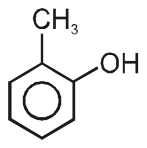
Which one is most reactive towards electrophilic reagent?
- 1
- 2
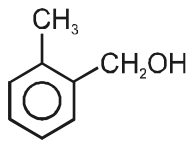
- 3
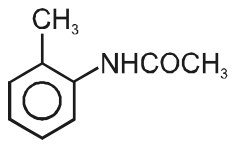
- 4
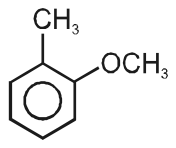
Show answer and solution
Correct: option 1
All four rings carry a methyl group plus a second group at the ortho position: , , and . The more strongly that group pushes electrons into the ring, the faster an electrophile attacks. is the strongest activator of these (stronger than and , whose lone pair is partly drawn to the carbonyl; has no lone pair on the ring atom), so o-cresol in option (1) is the most reactive.
Question 65AIPMT 2010 Prelims, Q93
In the following the most stable conformation of n-butane is:
- 1
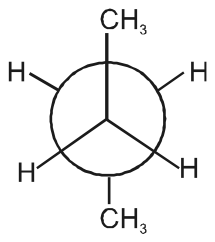
- 2
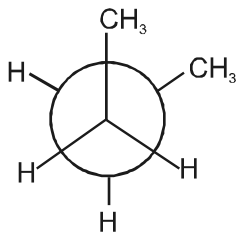
- 3
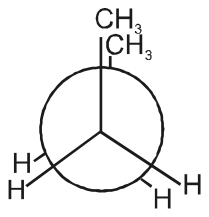
- 4
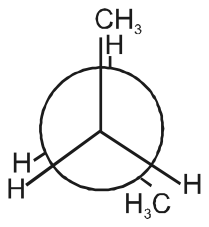
Show answer and solution
Correct: option 1
The most stable conformation of n-butane is the staggered one in which the two methyl groups are opposite each other (anti, 180° apart), because both torsional strain and the repulsion between the bulky methyl groups are at a minimum. Option (1) shows this: one methyl points up on the front carbon and the other points down on the back carbon. Option (2) is the gauche form and the other two are eclipsed forms, which are higher in energy.
Question 66AIPMT 2009 Prelims, Q172
Benzene reacts with in the presence of anhydrous to form:
- 1Chlorobenzene
- 2Benzylchloride
- 3Xylene
- 4Toluene
Show answer and solution
Correct: option 4, Toluene
This is Friedel-Crafts alkylation. helps give a methyl electrophile, which replaces one hydrogen of the ring to form methylbenzene, that is toluene.
Question 67AIPMT 2009 Prelims, Q184
Which of the following compounds will exhibit cis-trans (geometrical) isomerism?
- 1Butanol
- 22-Butyne
- 32-Butenol
- 42-Butene
Show answer and solution
Correct: option 4, 2-Butene
Geometrical isomerism needs a double bond with two different groups on each doubly bonded carbon. In 2-butene, , each carbon carries H and , so cis and trans forms exist. Butanol has no double bond and 2-butyne is linear about its triple bond.
Question 68AIPMT 2009 Prelims, Q195
Nitrobenzene can be prepared from benzene by using a mixture of conc. and conc. in the mixture, nitric acid acts as a/an:
- 1acid
- 2base
- 3catalyst
- 4reducing agent
Show answer and solution
Correct: option 2, base
Sulphuric acid is the stronger acid, so it gives a proton to nitric acid: , and then loses water to give the electrophile . Nitric acid accepts the proton, so it acts as a base.
Question 69AIPMT 2008 Prelims, Q92
A (predominantly) is
- 1
- 2
- 3
- 4
Show answer and solution
Correct: option 3,
adds to the end (Markovnikov), giving a secondary carbocation next to the branched carbon. A 1,2-hydride shift from that carbon turns it into a more stable tertiary carbocation, and then attacks there. The main product is 2-bromo-2-methylbutane, option (3).
Question 70AIPMT 2008 Prelims, Q94
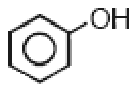
Which one the following is most reactive towards electrophilic attack?
- 1
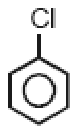
- 2
- 3
- 4
Show answer and solution
Correct: option 4
The ring that is richest in electrons reacts fastest with an electrophile. The –OH group of phenol pushes a lone pair into the ring by resonance and activates it strongly. has only a weak effect, –Cl deactivates slightly and deactivates strongly. So phenol, option (4), is the most reactive.
Question 71AIPMT 2007 Prelims, Q141
The order of decreasing reactivity towards an electrophilic reagent, for the following:
(a) Benzene
(b) Toluene
(c) Chlorobenzene
(d) Phenol
would be
- 1d > b > a > c
- 2a > b > c > d
- 3b > d > a > c
- 4d > c > b > a
Show answer and solution
Correct: option 1, d > b > a > c
An electrophile attacks faster when the ring is richer in electrons. The –OH group of phenol releases electrons strongly by resonance, the group of toluene releases them weakly, and chlorine withdraws electrons by its inductive effect and deactivates the ring below benzene. So the order is phenol > toluene > benzene > chlorobenzene, d > b > a > c.
Question 72AIPMT 2007 Prelims, Q143
Which of the compounds with molecular formula yields acetone on ozonolysis?
- 12-Methyl-1-butene
- 22-Methyl-2-butane
- 33-Methyl-1-butane
- 4Cyclopentane
Show answer and solution
Correct: option 2, 2-Methyl-2-butane
Ozonolysis cuts a C=C bond and puts an oxygen on each carbon. Acetone, , forms only if one doubly bonded carbon carries two methyl groups. That is the case in the 2-methyl-2-butene skeleton: . The source prints this option, the second, as \"2-Methyl-2-butane\". 2-Methyl-1-butene would give butanone and formaldehyde.
Question 73AIPMT 2005 Prelims, Q66
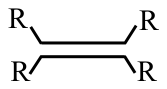
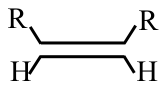
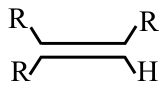
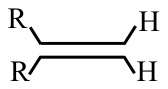
Which one of the following alkenes will react faster with under catalytic hydrogenation conditions:-
[R = Alkyl substituent]
- 1
- 2
- 3
- 4
Show answer and solution
Correct: option 2
In catalytic hydrogenation the alkene must lie flat on the metal surface, so the fewer and less crowding the alkyl groups, and the less stable the alkene, the faster it reacts. The tetra- and tri-substituted alkenes are the most hindered and most stable. Of the two disubstituted alkenes, the cis alkene of option (2), with one R and one H on each carbon, is strained by its two R groups on the same side and is hydrogenated fastest.
Question 74AIPMT 2005 Prelims, Q91
Products of the following reaction:
are -
- 1
- 2
- 3
- 4
Show answer and solution
Correct: option 2,
Ozonolysis of an alkyne followed by hydrolysis cleaves the triple bond and turns each triply bonded carbon into a –COOH group. Pent-2-yne is cut between C2 and C3, giving acetic acid from the end and propanoic acid from the end.
Question 75AIPMT 2004 Prelims, Q77
Reaction of HBr with propene in the presence of peroxide gives:
- 13-bromo propane
- 2Allyl bromide
- 3n-propyl bromide
- 4Isopropyl bromide
Show answer and solution
Correct: option 3, n-propyl bromide
With peroxide, HBr adds by a free radical mechanism in the anti-Markovnikov way (peroxide effect): the bromine atom goes to the terminal carbon. , which is n-propyl bromide. Isopropyl bromide is the product without peroxide.
Question 76AIPMT 2004 Prelims, Q96
Using anhydrous as catalyst, which one of the following reactions produces ethylbenzene (PhEt):
- 1
- 2
- 3
- 4
Show answer and solution
Correct: option 2,
This is a Friedel-Crafts alkylation. With (and a trace of HCl) ethene gives the ethyl carbocation, which attacks benzene to form ethylbenzene, . Propene would give isopropylbenzene (cumene), ethane does not react, and ethanol mainly forms a complex with anhydrous instead of alkylating benzene.
Question 77AIPMT 2003 Prelims, Q78
The compound on reaction with in the presence of given:
- 1
- 2
- 3
- 4
Show answer and solution
Correct: option 2,
with cleaves the double bond oxidatively. The end has no hydrogen and becomes the ketone acetone; the end is oxidised past the aldehyde to acetic acid. Products: .
Question 78AIPMT 2003 Prelims, Q90
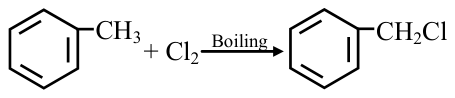
Which one of the following is a free-radical substitution reaction:
- 1
- 2
- 3
- 4
Show answer and solution
Correct: option 1
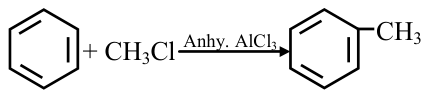
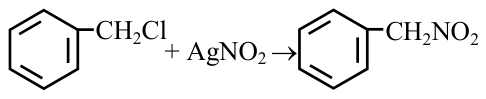
(1) Toluene with chlorine at the boiling point is chlorinated in the side chain to benzyl chloride; this goes through chlorine atoms and a benzyl radical, so it is free-radical substitution. (2) Benzene with chloromethane and anhydrous aluminium chloride is Friedel-Crafts alkylation, an electrophilic substitution. (3) Benzyl chloride with silver nitrite is a nucleophilic substitution. (4) HCN adding to ethanal is a nucleophilic addition.
Question 79AIPMT 2003 Prelims, Q93
The correct order of reactivity towards the electrophilic substitution of the compounds aniline (I), benzene (II) and nitrobenzene (III) is
- 1III > II > I
- 2II > III > I
- 3I < II > III
- 4I > II > III
Show answer and solution
Correct: option 4, I > II > III
The group pushes electron density into the ring and activates it strongly, while withdraws electrons and deactivates it. So aniline reacts fastest with electrophiles and nitrobenzene slowest: I > II > III.
Question 80AIPMT 2002 Prelims, Q99
When is treated with , the product formed is:
- 1
- 2
- 3
- 4
Show answer and solution
Correct: option 2,
Sodamide is a very strong base. It removes two molecules of from the geminal dihalide, one after the other, to give an alkyne: (propyne).
Question 81AIPMT 2001 Prelims, Q53
Which alkene on ozonolysis gives and :
- 1
- 2
- 3
- 4
Show answer and solution
Correct: option 1,
Ozonolysis cuts the double bond and puts an oxygen on each carbon. Joining the carbonyl carbons of propanal and acetone gives (2-methylpent-2-ene), which is option (1).
Question 82AIPMT 2000 Prelims, Q51
Increasing order of electrophilic substitution for following compounds:
- 1IV < I < II < III
- 2III < II < I < IV
- 3I < IV < III < II
- 4II < III < I < IV
Show answer and solution
Correct: option 1, IV < I < II < III
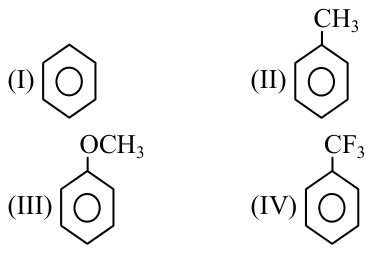
Electrophilic substitution is faster when the ring is richer in electrons. donates strongly by resonance and donates weakly by induction and hyperconjugation, so both activate the ring, the methoxy group more. withdraws electrons strongly and deactivates the ring below benzene. The order is IV < I < II < III.
Question 83AIPMT 2000 Prelims, Q56
In Friedal craft reaction Toluene can be prepared by:
- 1
- 2
- 3
- 4
Show answer and solution
Correct: option 1,
Friedel-Crafts alkylation puts an alkyl group on benzene using an alkyl halide and anhydrous : . Acetyl chloride would give acetophenone, and would link two rings.
Question 84AIPMT 2000 Prelims, Q61
Correct order of stability is:
- 11-butene > Trans-2-butene > Cis-2-butene
- 2Trans-2-butene > 1-butene > Cis-2-butene
- 3Trans-2-butene > Cis-2-butene > 1-butene
- 4Cis-2-butene > Trans-2-butene > 1-butene
Show answer and solution
Correct: option 3, Trans-2-butene > Cis-2-butene > 1-butene
A more substituted double bond is more stable because of more hyperconjugation: both 2-butenes (disubstituted, six -hydrogens) are more stable than 1-butene (monosubstituted, two -hydrogens). Of the 2-butenes the trans isomer is more stable because its two methyl groups are far apart, while in the cis isomer they crowd each other. So trans-2-butene > cis-2-butene > 1-butene.
Question 85AIPMT 2000 Prelims, Q62
2-butene shows geometrical isomerism due to:
- 1Restricted rotation about double bond
- 2Free rotation about double bond
- 3Free rotation about single bond
- 4Chiral carbon
Show answer and solution
Correct: option 1, Restricted rotation about double bond
Rotation about C=C would break the bond, so it does not happen at ordinary temperatures. Each doubly bonded carbon of 2-butene carries two different groups (H and ), so the fixed arrangement gives separate cis and trans isomers.
Question 86AIPMT 2000 Prelims, Q63
Dihedral angle in staggered form of ethane is:
- 1
- 2
- 3
- 4
Show answer and solution
Correct: option 3,
In the Newman projection of staggered ethane each C-H bond of the front carbon lies midway between two C-H bonds of the back carbon. The bonds on one carbon are apart, so the angle between a front and the nearest back C-H bond is . ( is the eclipsed form.)
Question 87AIPMT 1999 Prelims, Q51
Phenyl acetylene reacts with dil. in presence of gives:
- 1
- 2
- 3
- 4
Show answer and solution
Correct: option 1,
Water adds across the triple bond in the Markovnikov sense, so the OH goes to the carbon attached to the ring. The enol formed tautomerises to the ketone (acetophenone), which is option (1).
Question 88AIPMT 1999 Prelims, Q64
Compound 'A' on chlorination gives compound 'B'. 'B' reacts with alc. KOH gives gas 'C', which decolourises Baeyer reagent and ozonolysis of compound 'C' gives only HCHO compound 'A' is:
- 1
- 2
- 3
- 4
Show answer and solution
Correct: option 1,
An alkene that gives only HCHO on ozonolysis is ethene, , so C is ethene. Ethene comes from (B) by loss of HCl with alcoholic KOH, and comes from chlorination of ethane. So A is .
Question 89AIPMT 1998 Prelims, Q56
Which of the following is not the characteristic of arenes:
- 1More stability
- 2Resonance
- 3Delocalization of electrons
- 4Electrophilic addition
Show answer and solution
Correct: option 4, Electrophilic addition
Arenes are stabilised by resonance, that is, by delocalisation of the ring electrons. Addition would destroy this aromatic stabilisation, so their typical reaction is electrophilic substitution, not electrophilic addition.
Question 90AIPMT 1998 Prelims, Q57
Which of the following gives most easily electrophilic substitution reaction:
- 1
- 2
- 3
- 4
Show answer and solution
Correct: option 1
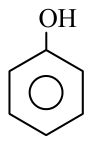
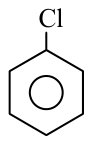
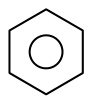
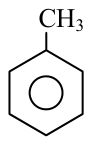
The four compounds are phenol, chlorobenzene, benzene and toluene. Electrophilic substitution is fastest on the most electron-rich ring. The –OH group donates a lone pair into the ring by resonance and activates it far more than does, while –Cl deactivates the ring. Phenol reacts most easily.