Questions with solutions
Question 1NEET 2026, Q60
In a test tube containing a salt, a few drops of dilute was added, which gave colourless vapours having the smell of vinegar. The vapours turned the blue litmus paper red.
Identify the correct anion from the following:
- 1Acetate,
- 2Carbonate,
- 3Sulphate,
- 4Sulphide,
Show answer and solution
Correct: option 1, Acetate,
Dilute displaces acetic acid from an acetate. Its vapours are colourless, smell of vinegar and are acidic, so they turn blue litmus red. Carbonate gives odourless , sulphide gives with a rotten-egg smell, and sulphate does not react.
Question 2NEET 2026, Q72
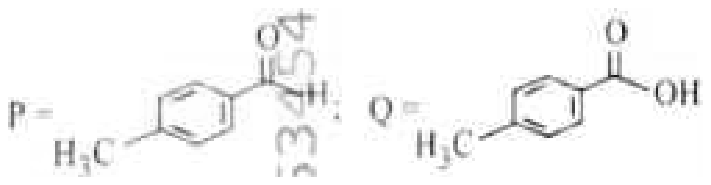
Compound P gives a red orange precipitate with 2,4-DNP reagent and it does not reduce Fehling's reagent. On drastic oxidation with chromic acid, P gives an aromatic product Q that produces effervescence on treating with aq. . Compounds P and Q, respectively, are:
- 1
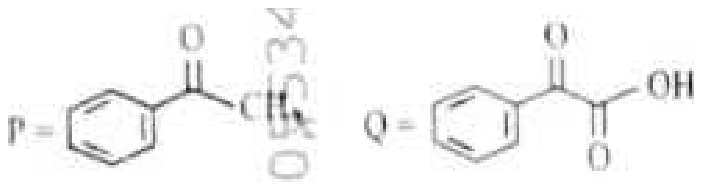
- 2
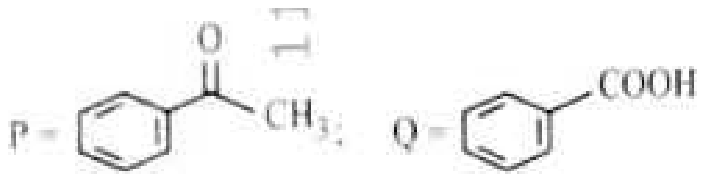
- 3
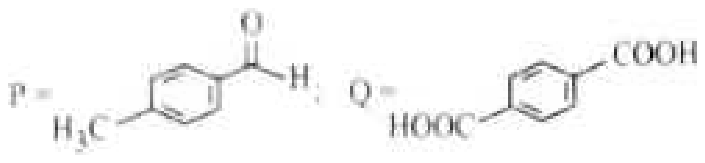
- 4
Show answer and solution
Correct: option 2
A 2,4-DNP precipitate shows a carbonyl group. Of the structures offered, the one with formula that is a ketone is acetophenone, . Drastic oxidation with chromic acid cleaves the side chain to benzoic acid, , which liberates from . So P is acetophenone and Q is benzoic acid, option (2).
Question 3NEET 2026 Re-exam, Q46
For the following reaction sequence, choose the correct option
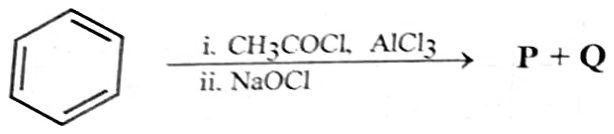
- 1If P is the sodium salt of a carboxylic acid, Q is a primary alcohol.
- 2P and Q are aromatic compounds.
- 3If P gives a carboxylic acid on acidification, Q gives a poisonous gas on exposure to air and light.
- 4Both P and Q are carbonyl compounds.
Show answer and solution
Correct: option 3, If P gives a carboxylic acid on acidification, Q gives a poisonous gas on exposure to air and light.
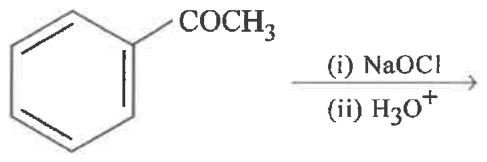
Friedel-Crafts acylation of benzene with gives acetophenone, a methyl ketone. NaOCl then carries out the haloform reaction, giving sodium benzoate and chloroform. Sodium benzoate gives benzoic acid on acidification, and chloroform is slowly oxidised by air in light to the poisonous gas phosgene, . Chloroform is neither an alcohol, an aromatic compound nor a carbonyl compound, so only option (3) fits.
Question 4NEET 2026 Re-exam, Q82
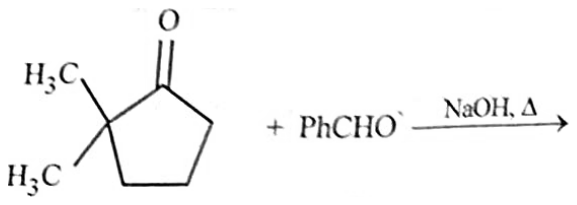
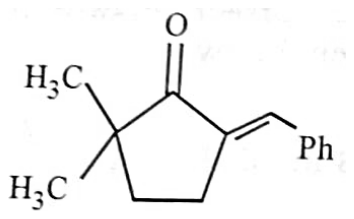
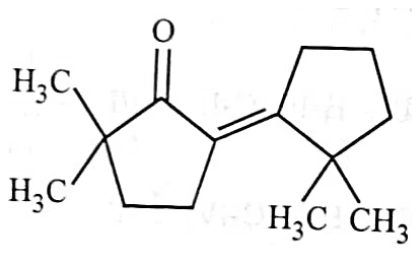
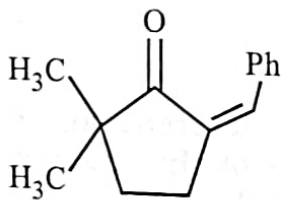
The compound that CANNOT be obtained from the aldol condensation reaction shown below, is
- 1
- 2
- 3
- 4
Show answer and solution
Correct: option 1
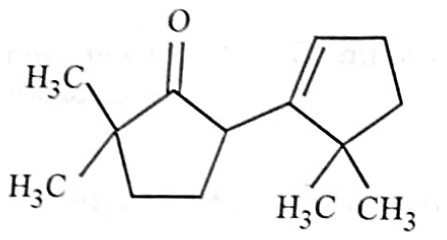
2,2-Dimethylcyclopentanone has -hydrogens only on C5, and benzaldehyde has none. The enolate can attack benzaldehyde and lose water to give the benzylidene ketone, as either geometrical isomer (options 2 and 4), or attack another molecule of the ketone and lose water to give the conjugated product with a C=C between the two rings (option 3). Aldol condensation always gives an -unsaturated carbonyl compound; option (1), with the double bond inside the second ring and not conjugated with the C=O group, is not formed.
Question 5NEET 2026 Re-exam, Q86
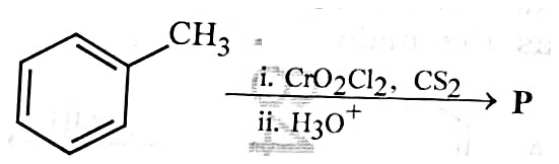
Consider the following reaction, and choose the correct option.
- 1On treating compound P with saturated solution, brisk effervescence is observed.
- 2Compound P can be prepared by treating benzene with anhydrous and .
- 3On treatment with bromine water, compound P gives a white precipitate.
- 4Compound P is obtained by the hydrogenation of benzoyl chloride with Pd on .
Show answer and solution
Correct: option 4, Compound P is obtained by the hydrogenation of benzoyl chloride with Pd on .
Toluene with chromyl chloride followed by hydrolysis (Etard reaction) gives benzaldehyde, P. Benzaldehyde is also made by the Rosenmund reduction of benzoyl chloride with hydrogen over Pd on . It is not an acid (no effervescence with ), Friedel-Crafts acylation with gives acetophenone, and the white precipitate with bromine water is given by phenol or aniline.
Question 6NEET 2025, Q70
The correct order of decreasing acidity of the following aliphatic acids is:
- 1 > > >
- 2 > > >
- 3 > > >
- 4 > > >
Show answer and solution
Correct: option 3, > > >
Alkyl groups are electron releasing (+I); they destabilise the carboxylate ion and lower the acidity. The more alkyl groups on the carbon next to , the weaker the acid, and formic acid with no alkyl group is the strongest. Order: > > > , option (3).
Question 7NEET 2025, Q78
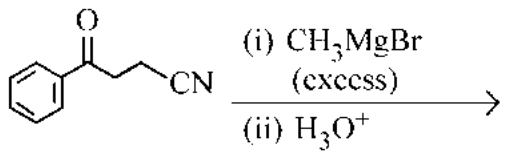
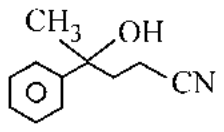
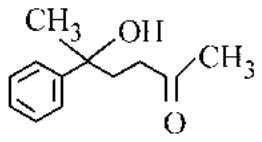
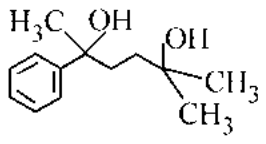
The major product of the following reaction is:
- 1
- 2
- 3
- 4
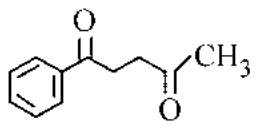
Show answer and solution
Correct: option 2
Excess attacks both groups. The ketone gives a tertiary alcohol, . The nitrile adds one to give an imine salt, which does not react further and is hydrolysed by to a methyl ketone, . The product is the hydroxy ketone in option (2).
Question 8NEET 2025, Q83
Identify the suitable reagent for the following conversion.
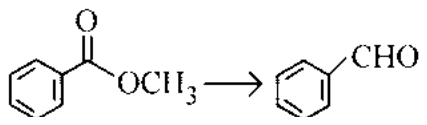
- 1(i) , (ii)
- 2(i) (ii)
- 3(i) , (ii)
- 4 /
Show answer and solution
Correct: option 2, (i) (ii)
An ester is reduced only as far as the aldehyde by diisobutylaluminium hydride, (DIBAL-H), followed by hydrolysis, so methyl benzoate gives benzaldehyde. takes the ester all the way to the alcohol, does not reduce esters, and /Pd- (Rosenmund) works on acid chlorides. Option (2).
Question 9NEET 2024, Q61
Identify the correct reagents that would bring about the following transformation.
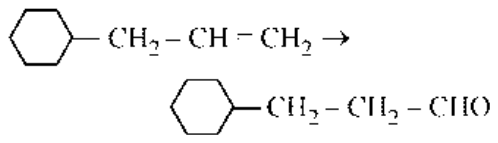
- 1(i)
(ii) PCC
- 2(i)
(ii)
- 3(i)
(ii)
(iii) PCC
- 4(i)
(ii)
(iii) alk.
(iv)
Show answer and solution
Correct: option 3, (i)
(ii)
(iii) PCC
The terminal alkene has to become , so oxygen must go to the end carbon (anti-Markovnikov). Hydroboration-oxidation (, then ) gives the primary alcohol , and PCC oxidises a primary alcohol only as far as the aldehyde. Acid-catalysed hydration would give the secondary alcohol and then a ketone, and alkaline would carry the oxidation on to the acid. So option (3).
Question 10NEET 2024, Q64
Fehling's solution 'A' is
- 1aqueous sodium citrate
- 2aqueous copper sulphate
- 3alkaline copper sulphate
- 4alkaline solution of sodium potassium tartrate (Rochelle's salt)
Show answer and solution
Correct: option 2, aqueous copper sulphate
Fehling's reagent is made by mixing two solutions just before use. Fehling solution A is aqueous copper sulphate, and Fehling solution B is alkaline sodium potassium tartrate (Rochelle salt). So solution A is option (2).
Question 11NEET 2024, Q67
Match List I with List II.
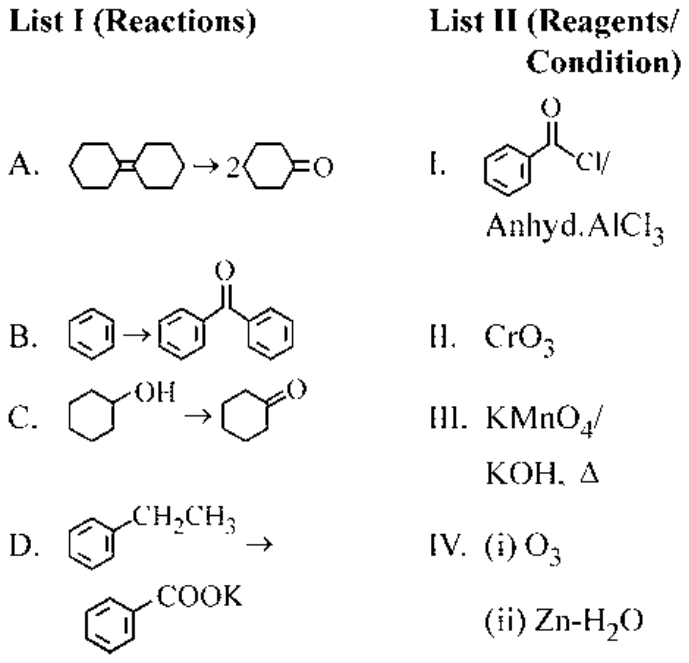
Choose the correct answer from the options given below:
- 1A-I, B-IV, C-II, D-III
- 2A-IV, B-I, C-III, D-II
- 3A-III, B-I, C-II, D-IV
- 4A-IV, B-I, C-II, D-III
Show answer and solution
Correct: option 4, A-IV, B-I, C-II, D-III
A: an alkene is split at its double bond into two molecules of cyclohexanone by reductive ozonolysis, then (IV). B: benzene gives benzophenone by Friedel-Crafts acylation with benzoyl chloride and anhydrous (I). C: the secondary alcohol cyclohexanol is oxidised to cyclohexanone by (II). D: the ethyl side chain of ethylbenzene is oxidised to potassium benzoate by hot alkaline (III). So A-IV, B-I, C-II, D-III, option (4).
Question 12NEET 2024 Re-exam, Q67
Select the incorrect reaction among the following:
- 1
- 2
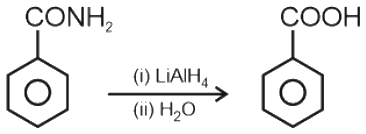
- 3
- 4
Show answer and solution
Correct: option 2
is a reducing agent: it reduces an amide to an amine, so benzamide gives benzylamine (), not benzoic acid. Reaction (2) is therefore wrong. The other three are correct: an acid chloride is hydrolysed by water to the acid, and primary alcohols are oxidised to carboxylic acids by alkaline or by in (Jones reagent).
Question 13NEET 2023, Q78
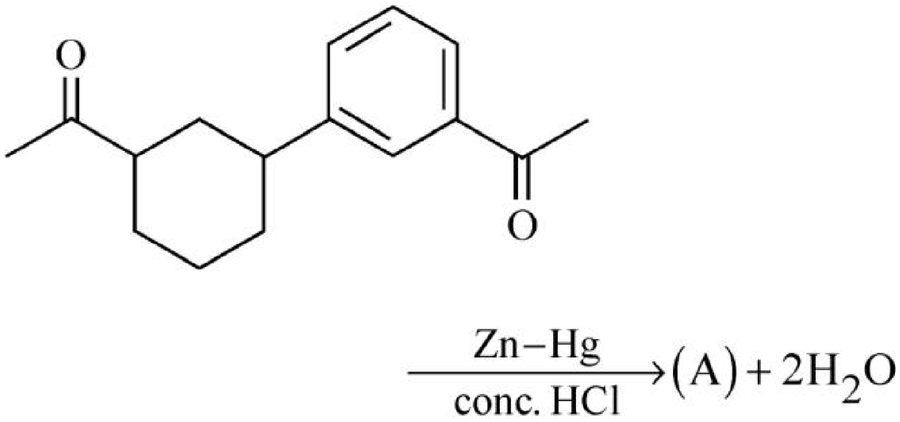
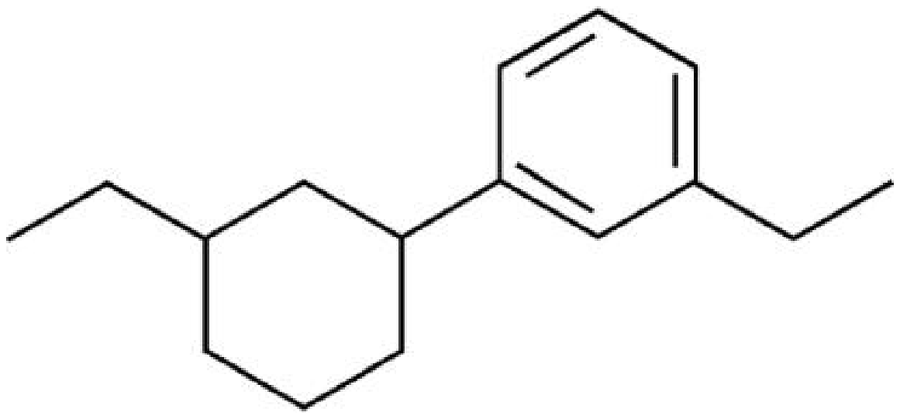
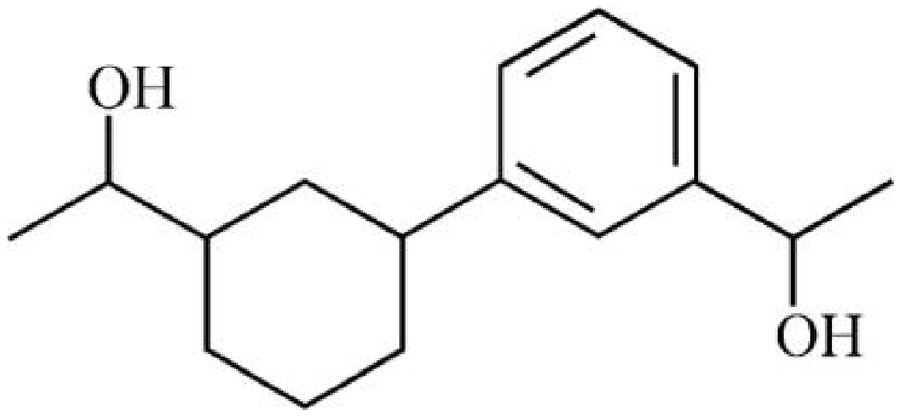
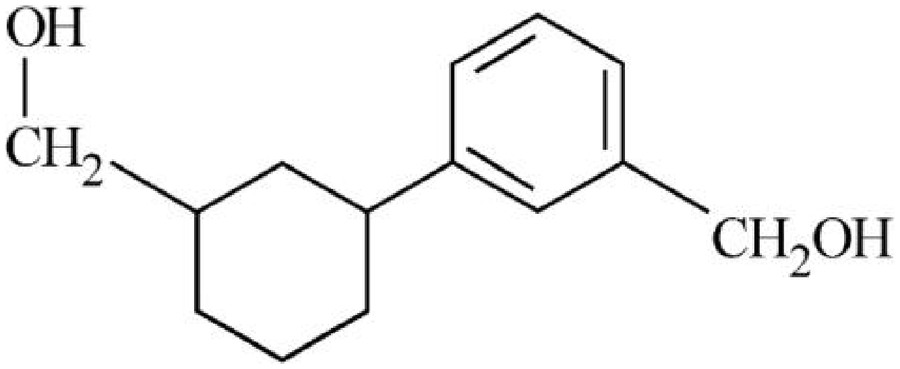
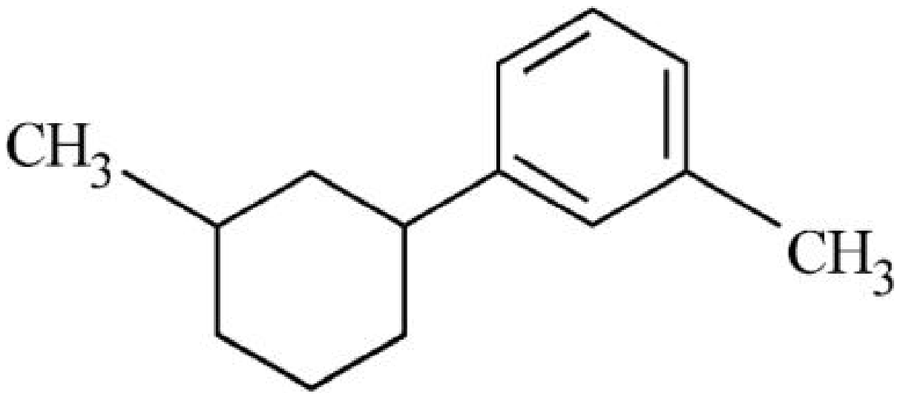
Identify product (A) in the following reaction:
- 1
- 2
- 3
- 4
Show answer and solution
Correct: option 1
Zinc amalgam with concentrated HCl is the Clemmensen reduction, which converts a carbonyl group into . Both acetyl groups () become ethyl groups () and two molecules of water are formed, which is option (1).
Question 14NEET 2023, Q81
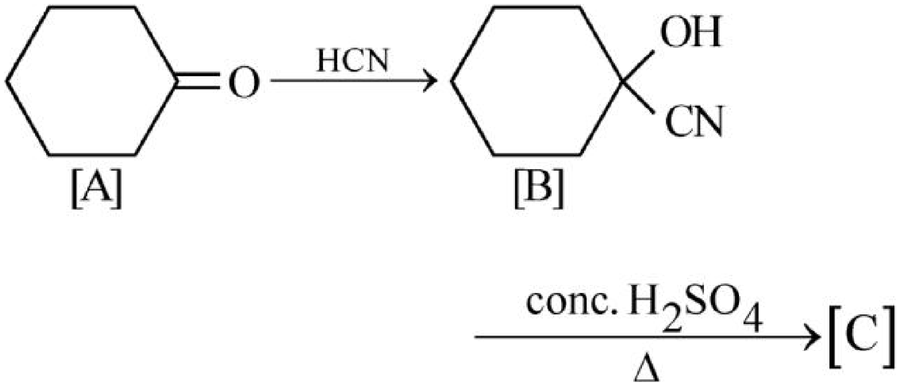
Complete the following reaction:
- 1
- 2
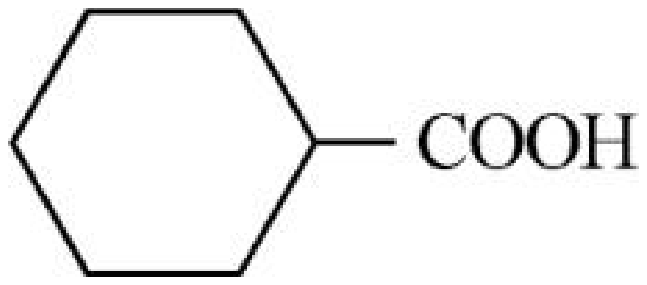
- 3
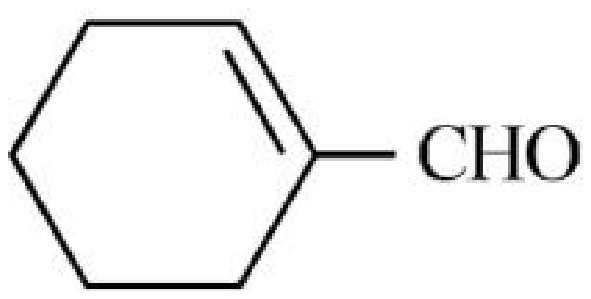
- 4
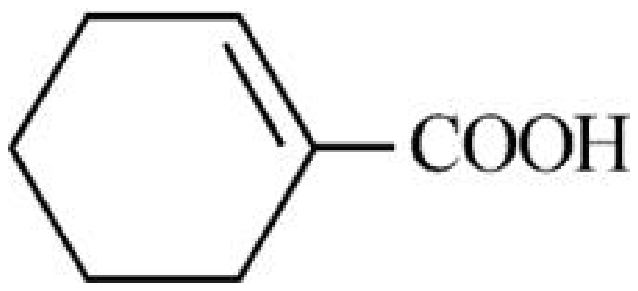
Show answer and solution
Correct: option 4
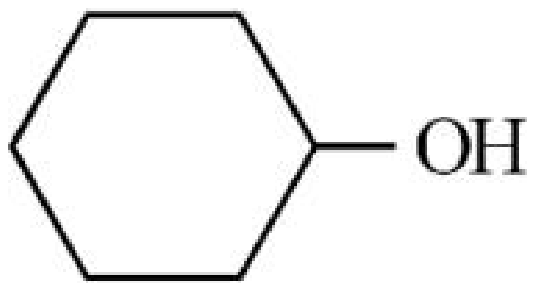
Cyclohexanone adds HCN to give the cyanohydrin [B]. On heating with concentrated the group is hydrolysed to and the tertiary is lost as water, giving a double bond in conjugation with the acid group. [C] is cyclohex-1-ene-1-carboxylic acid, option (4).
Question 15NEET 2023, Q95
Identify the major product obtained in the following reaction:
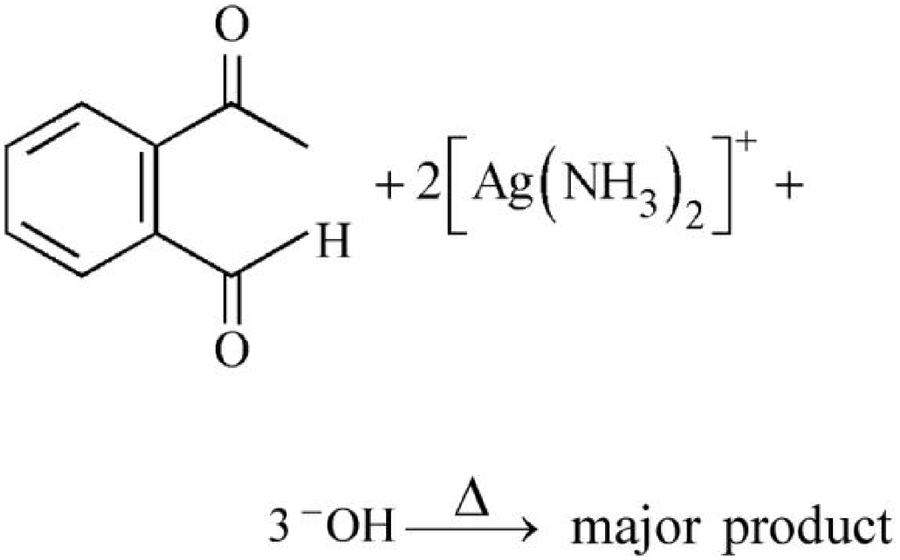
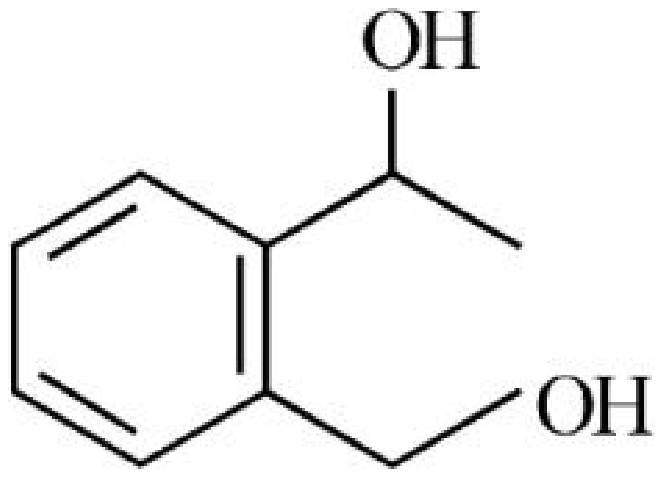
- 1
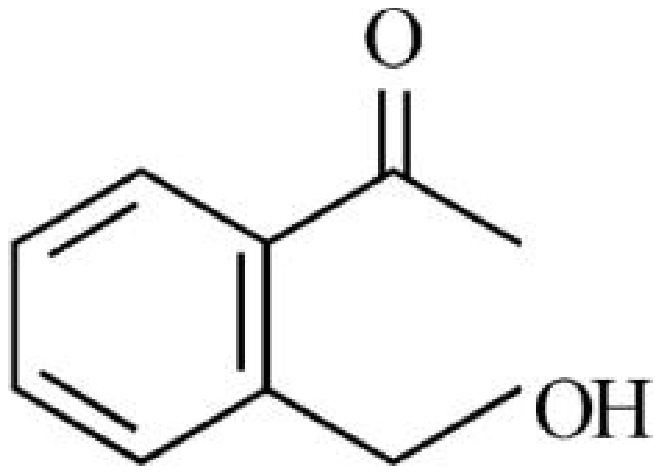
- 2
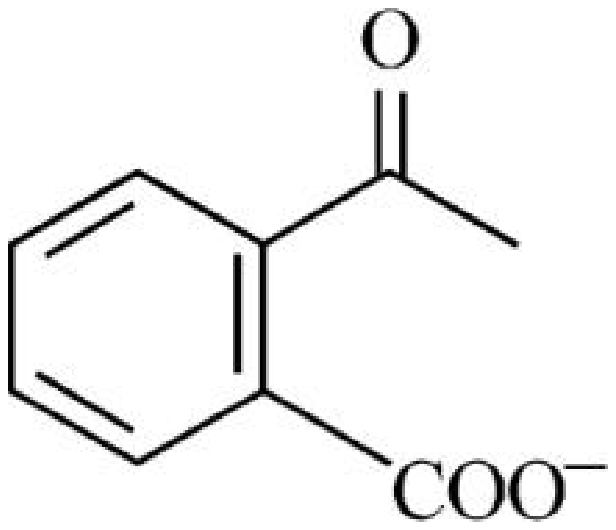
- 3
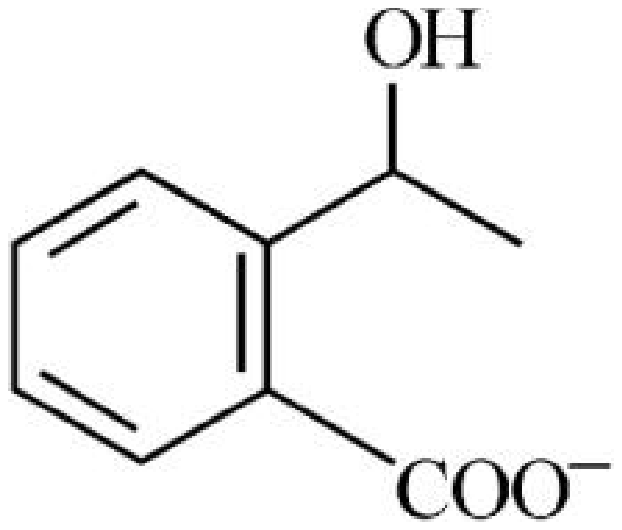
- 4
Show answer and solution
Correct: option 3
with hydroxide is Tollens' reagent, a mild oxidising agent that oxidises an aldehyde to the carboxylate ion and leaves a ketone untouched. The group becomes while the acetyl group stays as it is, giving option (3).
Question 16NEET 2023 Manipur, Q56
Consider the given reaction:
"X"
The functional groups present in compound “X” are
- 1Alcohol and aldehyde
- 2Alcohol and ketone
- 3Ketone and double bond
- 4Double bond and aldehyde
Show answer and solution
Correct: option 2, Alcohol and ketone
With dilute base, acetone (which has -hydrogens) undergoes aldol addition: the enolate of one molecule adds to the carbonyl carbon of another, giving (4-hydroxy-4-methylpentan-2-one, a ketol). No heat is applied, so water is not lost. The product has an alcohol group and a ketone group.
Question 17NEET 2023 Manipur, Q61
Identify ‘X’ in above reactions.
- 1
- 2
- 3
- 4
Show answer and solution
Correct: option 3,
The second reaction, an alkene giving the anti-Markovnikov alcohol after treatment with alkaline , is hydroboration-oxidation, so X is diborane. Diborane also reduces a carboxylic acid to a primary alcohol, which fits the first reaction. does not reduce acids, does not add to an isolated C=C, and would only give the alkane.
Question 18NEET 2023 Manipur, Q70
The following conversion is known as
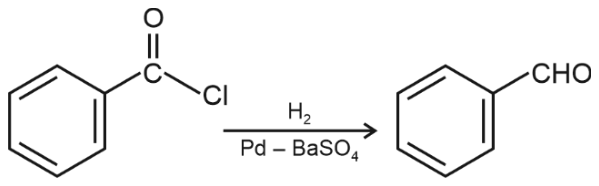
- 1Etard reaction
- 2Rosenmund reaction
- 3Stephen reaction
- 4Gattermann-Koch reaction
Show answer and solution
Correct: option 2, Rosenmund reaction
Benzoyl chloride is hydrogenated over palladium supported on barium sulphate (a poisoned catalyst that stops the reduction at the aldehyde) to give benzaldehyde. Reduction of an acyl chloride to an aldehyde in this way is the Rosenmund reduction. Etard uses chromyl chloride on toluene, Stephen starts from a nitrile, and Gattermann-Koch uses CO and HCl on benzene.
Question 19NEET 2023 Manipur, Q99
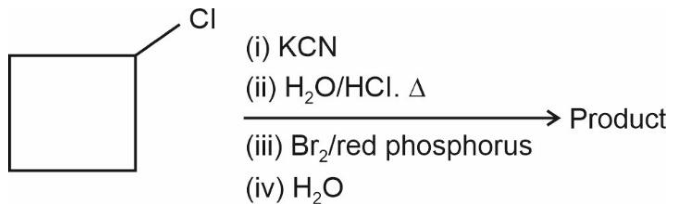
Identify the product in the following reaction.
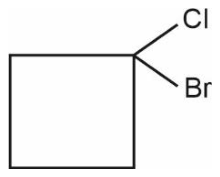
- 1
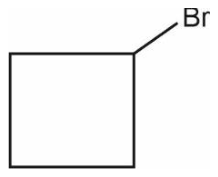
- 2
- 3
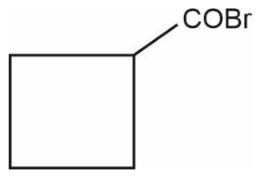
- 4
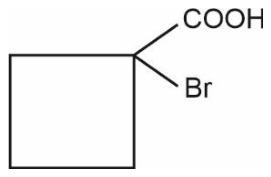
Show answer and solution
Correct: option 4
KCN replaces Cl by CN, giving cyclobutanecarbonitrile, and heating with hydrolyses the nitrile to cyclobutanecarboxylic acid. with red phosphorus followed by water is the Hell-Volhard-Zelinsky reaction, which puts bromine on the -carbon of the acid. The product is 1-bromocyclobutanecarboxylic acid, with COOH and Br on the same ring carbon, option (4).
Question 20NEET 2022, Q56
What is Y in the above reaction?
- 1
- 2
- 3
- 4
Show answer and solution
Correct: option 2,
The alkyl group of the Grignard reagent adds to the carbon of , giving the magnesium salt of the carboxylic acid, . Acid hydrolysis of this salt then gives RCOOH. So Y is option (2).
Question 21NEET 2022, Q78
Match List-I with List-II.
| List-I (Products formed) | List-II (Reaction of carbonyl compound with) |
|---|
| (a) Cyanohydrin | (i) |
| (b) Acetal | (ii) |
| (c) Schiff's base | (iii) alcohol |
| (d) Oxime | (iv) HCN |
Choose the correct answer from the options given below:
- 1a-iv, b-iii, c-ii, d-i
- 2a-iii, b-iv, c-ii, d-i
- 3a-ii, b-iii, c-iv, d-i
- 4a-i, b-iii, c-ii, d-iv
Show answer and solution
Correct: option 1, a-iv, b-iii, c-ii, d-i
HCN adds to a carbonyl group to give a cyanohydrin (iv). Two molecules of alcohol give an acetal (iii). A primary amine gives a substituted imine, called a Schiff's base (ii). Hydroxylamine gives an oxime (i). So a-iv, b-iii, c-ii, d-i.
Question 22NEET 2022, Q81
Given below are two statements:
Statement I:
The boiling points of aldehydes and ketones are higher than hydrocarbons of comparable molecular masses because of weak molecular association in aldehydes and ketones due to dipole - dipole interactions.
Statement II:
The boiling points of aldehydes and ketones are lower than the alcohols of similar molecular masses due to the absence of H-bonding.
In the light of the above statements, choose the most appropriate answer from the options given below:
- 1Statement I is incorrect but Statement II is correct.
- 2Both Statement I and Statement II are correct.
- 3Both Statement I and Statement II are incorrect.
- 4Statement I is correct but Statement II is incorrect.
Show answer and solution
Correct: option 2, Both Statement I and Statement II are correct.
The polar carbonyl group gives aldehydes and ketones dipole-dipole attractions, so they boil higher than non-polar hydrocarbons of similar mass. They have no O-H bond and cannot hydrogen bond with each other, so they boil lower than alcohols of similar mass. Both statements are correct.
Question 23NEET 2022, Q97
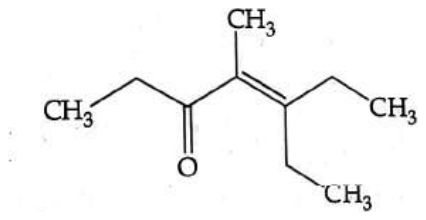
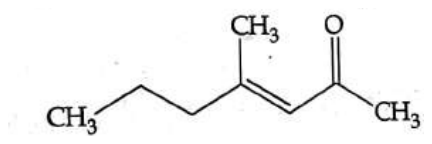
Which one of the following is not formed when acetone reacts with 2-pentanone in the presence of dilute NaOH followed by heating?
- 1
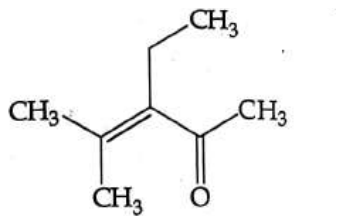
- 2
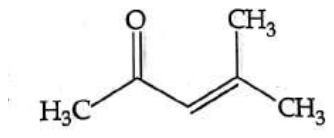
- 3
- 4
Show answer and solution
Correct: option 3
Both ketones have -hydrogens, so aldol condensation gives self and cross products, each built from the carbon skeletons of acetone (3 C) and 2-pentanone (5 C). Structure (2) is the self product of acetone (6 C); (1) and (4) are cross products (8 C), formed from the two different -carbons involved. Structure (3) has an ethyl ketone unit, , and two ethyl groups on the double bond; that needs 3-pentanone, so it cannot form here.
Question 24NEET 2022 Re-exam, Q73
Which of the following reactions is not an example for nucleophilic addition-elimination reaction?
- 1
- 2
- 3
- 4
Show answer and solution
Correct: option 2,
Ammonia and its derivatives (, phenylhydrazine) first add to the carbonyl group and then lose water to give a C=N compound: addition followed by elimination. Sodium hydrogensulphite only adds across the C=O bond to give the bisulphite addition compound; nothing is eliminated, so reaction (2) is a simple nucleophilic addition.
Question 25NEET 2022 Re-exam, Q75
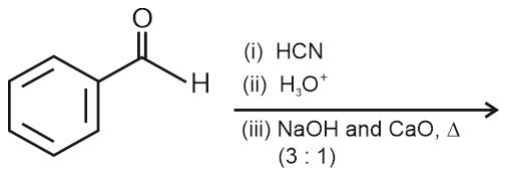
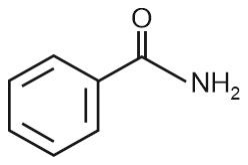
The product formed from the following reaction sequence is
- 1
- 2
- 3
- 4
Show answer and solution
Correct: option 3
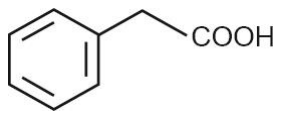
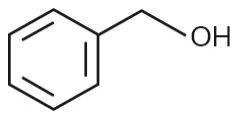
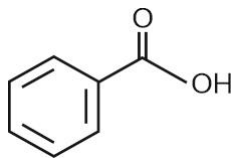
HCN adds to benzaldehyde to give the cyanohydrin . Acid hydrolysis turns the CN group into COOH, giving . Heating with soda lime (NaOH and CaO) removes the carboxyl group as carbonate, leaving , benzyl alcohol, option (3).
Question 26NEET 2022 Re-exam, Q95
The products A and B in the following reaction sequence are:

- 1
- 2
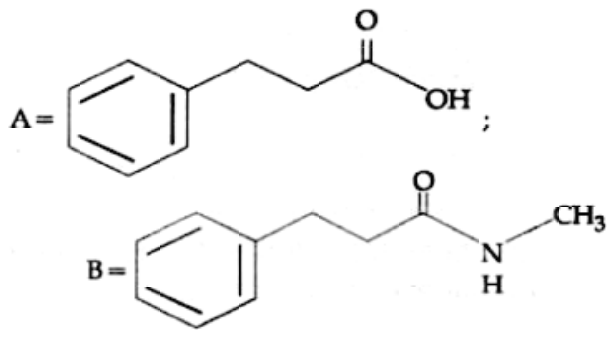
- 3
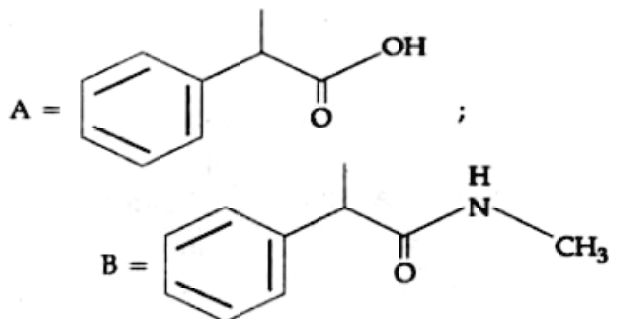
- 4
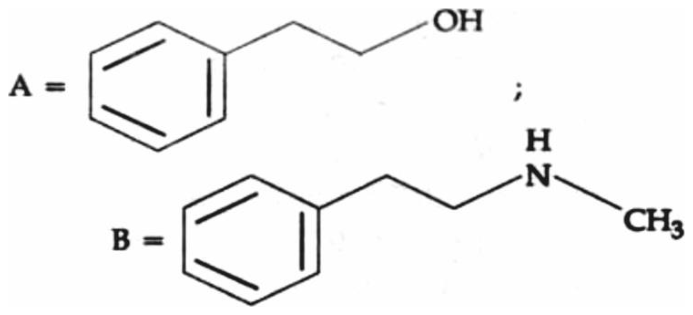
Show answer and solution
Correct: option 3
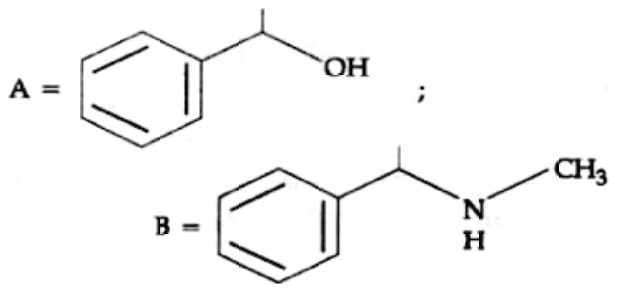
HBr adds to styrene by Markovnikov's rule, placing Br on the benzylic carbon: . Magnesium in dry ether makes the Grignard reagent, which adds to and on acid work-up gives the acid A, . converts A to its acid chloride, and methylamine then gives the N-methyl amide B, . This is option (3).
Question 27NEET 2022 Re-exam, Q100
The incorrect method to synthesize benzaldehyde is
- 1
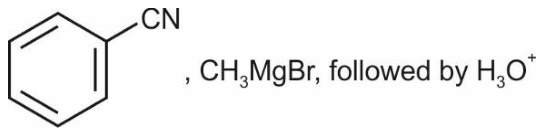
- 2
- 3
- 4
Show answer and solution
Correct: option 1
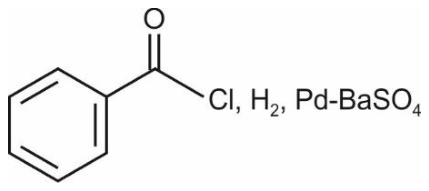
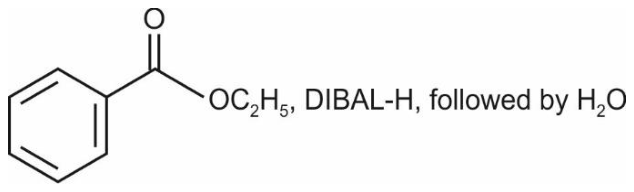
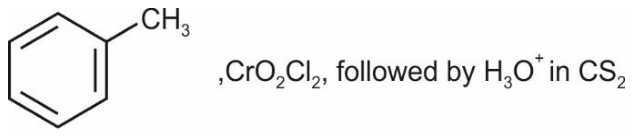
A Grignard reagent adds its methyl group to the nitrile carbon, and hydrolysis of the imine salt gives a ketone: benzonitrile with gives acetophenone , not benzaldehyde. The other three do give benzaldehyde: hydrogenation of benzoyl chloride over (Rosenmund), reduction of the ester with DIBAL-H, and oxidation of toluene with chromyl chloride (Etard).
Question 28NEET 2021, Q92
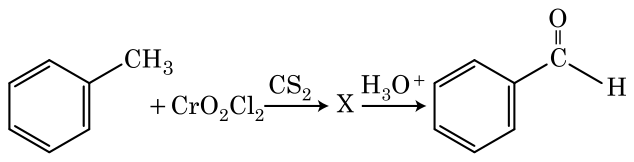
The intermediate compound 'X' in the following chemical reaction is:
- 1
- 2
- 3
- 4
Show answer and solution
Correct: option 1
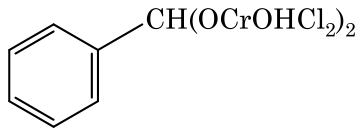
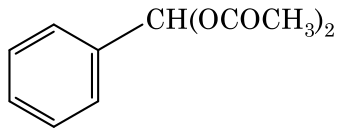
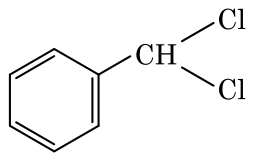
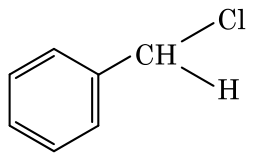
This is the Etard reaction. Chromyl chloride in oxidises the methyl group of toluene to a brown chromium complex, , which gives benzaldehyde on hydrolysis. The diacetate in the second option is the intermediate when in acetic anhydride is used instead.
Question 29NEET 2021, Q96
Match List - I with List - II.
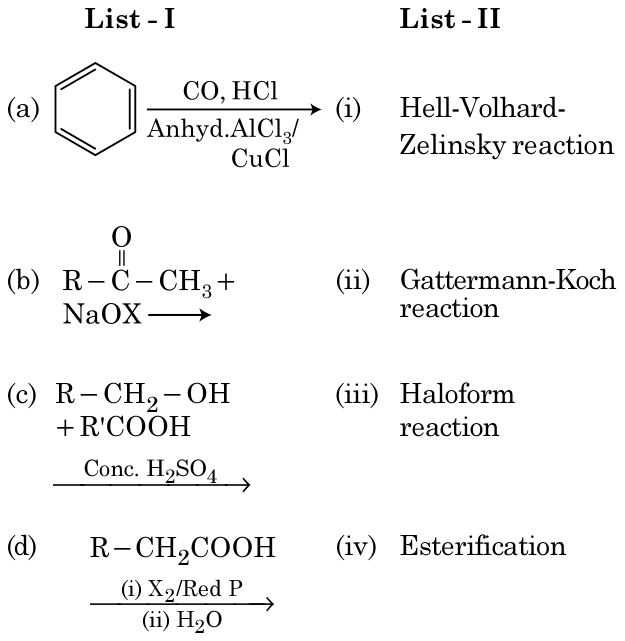
Choose the correct answer from the options given below.
- 1a-iv, b-i, c-ii, d-iii
- 2a-iii, b-ii, c-i, d-iv
- 3a-i, b-iv, c-iii, d-ii
- 4a-ii, b-iii, c-iv, d-i
Show answer and solution
Correct: option 4, a-ii, b-iii, c-iv, d-i
(a) Benzene with CO and HCl over anhydrous /CuCl gives benzaldehyde: Gattermann-Koch reaction (ii). (b) A methyl ketone with NaOX gives a haloform: haloform reaction (iii). (c) An alcohol with a carboxylic acid and conc. gives an ester: esterification (iv). (d) A carboxylic acid with and red phosphorus is halogenated at the alpha carbon: Hell-Volhard-Zelinsky reaction (i).
Question 30NEET 2021, Q97
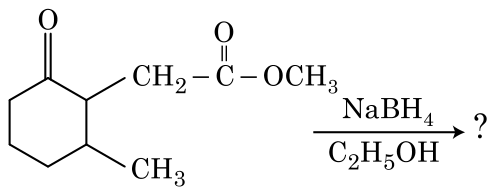
The product formed in the following chemical reaction is:
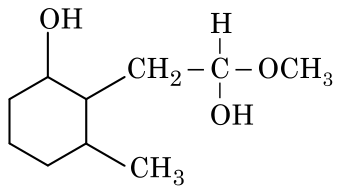
- 1
- 2
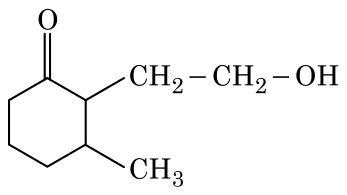
- 3
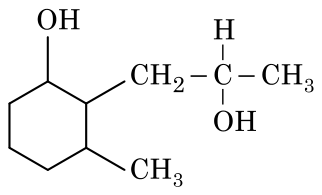
- 4
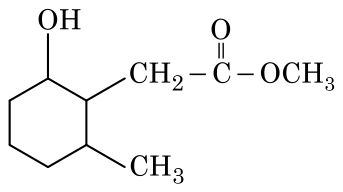
Show answer and solution
Correct: option 4
is a mild reducing agent: it reduces aldehydes and ketones to alcohols but does not reduce esters. So only the ring ketone becomes a secondary alcohol, and the ester group is left unchanged.
Question 31NEET 2020, Q26
Reaction between benzaldehyde and acetophenone in presence of dilute NaOH is known as:
- 1Aldol condensation
- 2Cannizzaro's reaction
- 3Cross Cannizzaro's reaction
- 4Cross Aldol condensation
Show answer and solution
Correct: option 4, Cross Aldol condensation
Acetophenone has α-hydrogens and forms a carbanion with dilute NaOH, which attacks benzaldehyde (which has no α-hydrogen). Since two different carbonyl compounds combine, it is a cross aldol condensation; the product is benzalacetophenone, .
Question 32NEET 2020, Q45
Identify compound X in the following sequence of reactions:
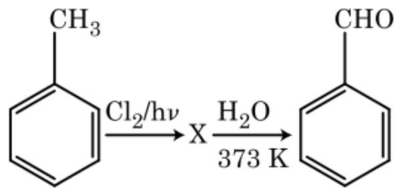
- 1
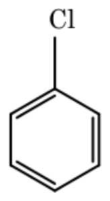
- 2
- 3
- 4
Show answer and solution
Correct: option 3
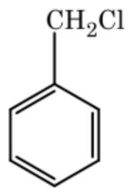
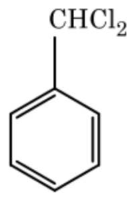
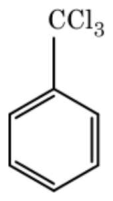
Chlorine in the presence of light substitutes the hydrogens of the methyl side chain of toluene by a free radical mechanism. Hydrolysis at 373 K gives benzaldehyde only from benzal chloride, : its two chlorines are replaced by two OH groups on the same carbon, which lose water to give . So X is option (3).
Question 33NEET 2020 Phase 2, Q136
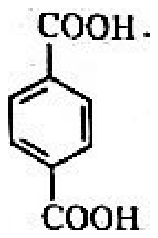
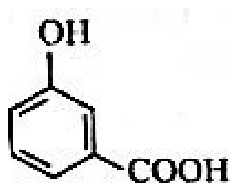
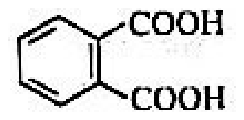
Which of the following acid will form an (a) Anhydride on heating and (b) Acid imide on strong heating with ammonia?
- 1
- 2
- 3
- 4
Show answer and solution
Correct: option 4
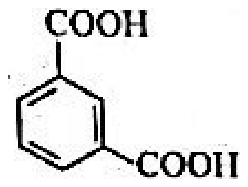
A cyclic anhydride or imide can form only when two groups sit on neighbouring ring carbons, so that a stable five-membered ring closes. Option (4) is phthalic acid (benzene-1,2-dicarboxylic acid): heating gives phthalic anhydride, and strong heating with ammonia gives phthalimide. The 1,3- and 1,4-diacids in (1) and (2) have their groups too far apart, and (3) has only one group.
Question 34NEET 2020 Phase 2, Q162
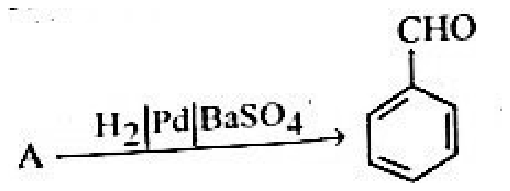
Identify compound (A) in the following reaction:
- 1Toluene
- 2Acetophenone
- 3Benzoic acid
- 4Benzoyl chloride
Show answer and solution
Correct: option 4, Benzoyl chloride
Hydrogen over palladium supported on (a partly poisoned catalyst) reduces an acid chloride only as far as the aldehyde. This is the Rosenmund reduction: . So A is benzoyl chloride.
Question 35NEET 2019, Q78
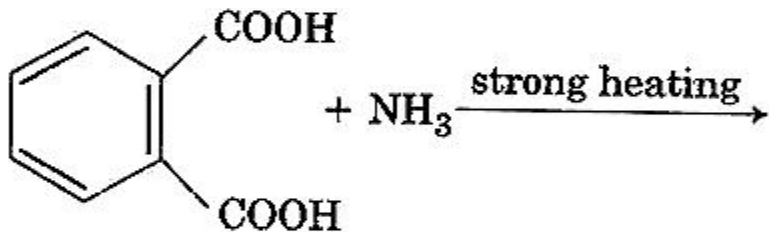
The major product of the following reaction is:
- 1
- 2
- 3
- 4
Show answer and solution
Correct: option 2
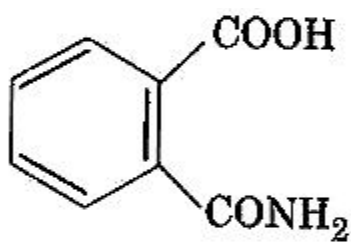
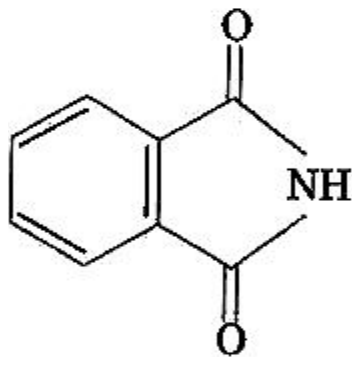
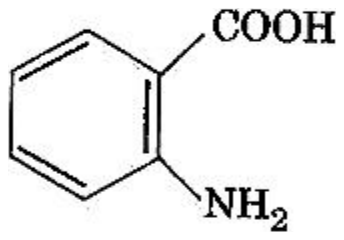
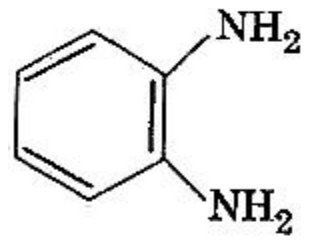
Phthalic acid and ammonia first form ammonium phthalate, which loses water on heating to give phthalamide. On strong heating this loses ammonia and closes the five-membered ring to give phthalimide, the cyclic imide shown in option (2).
Question 36NEET 2019 Odisha, Q81
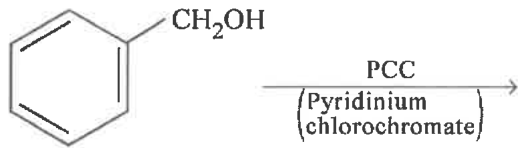
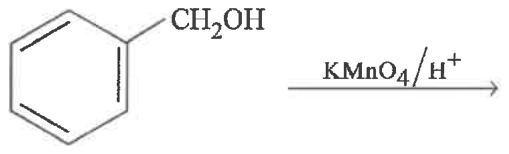
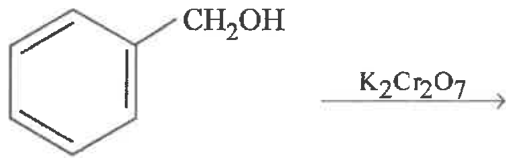
The reaction that does not give benzoic acid as the major product is -
- 1
- 2
- 3
- 4
Show answer and solution
Correct: option 1
PCC is a mild oxidising agent that stops at the aldehyde, so benzyl alcohol gives benzaldehyde in (1). Acidified in (2) and in (3) are strong oxidising agents that take benzyl alcohol all the way to benzoic acid. In (4) acetophenone undergoes the haloform reaction with NaOCl to give sodium benzoate, which gives benzoic acid on acidification.
Question 37NEET 2018, Q67
Carboxylic acids have higher boiling points than aldehydes, ketones and even alcohols of comparable molecular mass. It is due to their
- 1more extensive association of carboxylic acid via van der Waals force of attraction
- 2formation of carboxylate ion
- 3formation of intramolecular H-bonding
- 4formation of intermolecular H-bonding
Show answer and solution
Correct: option 4, formation of intermolecular H-bonding
Carboxylic acid molecules join through two intermolecular hydrogen bonds each to form dimers, which persist even in the vapour phase. This association is more extensive than in alcohols, so more energy is needed to boil the acid.
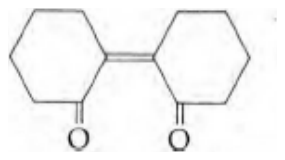
Question 38NEET 2017, Q52
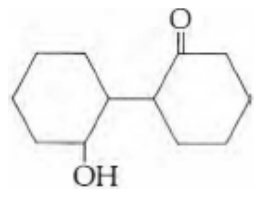
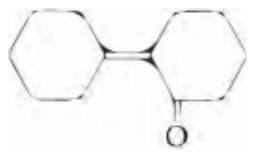
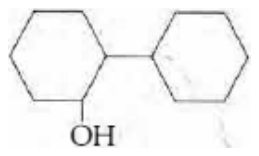
Of the following, which is the product formed when cyclohexanone undergoes aldol condensation followed by heating?
- 1
- 2
- 3
- 4
Show answer and solution
Correct: option 2
The enolate formed at the -carbon of one cyclohexanone molecule adds to the carbonyl carbon of a second molecule, giving a -hydroxy ketone. On heating this loses water, forming a C=C double bond between the -carbon of the first ring and the former carbonyl carbon of the second ring. The product is the -unsaturated ketone with one C=O left, which is option (2).
Question 39NEET 2017, Q61
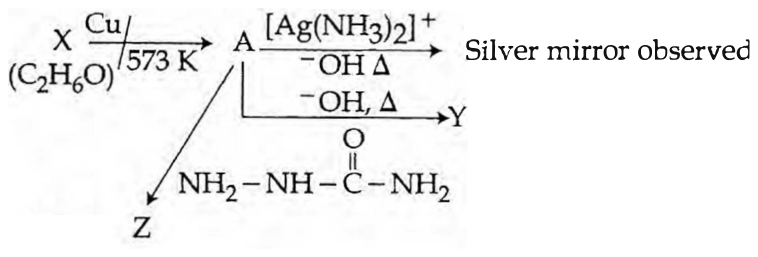
Consider the reactions:
Identify A, X, Y and Z
- 1A-Methoxymethane, X-Ethanoic acid, Y-Acetate ion, Z-hydrazine.
- 2A-Methoxymethane, X-Ethanol, Y-Ethanoic acid, Z-Semicarbazide.
- 3A-Ethanal, X-Ethanol, Y-But-2-enal, Z-Semicarbazone.
- 4A-Ethanol, X-Acetaldehyde, Y-Butanone, Z-Hydrazone.
Show answer and solution
Correct: option 3, A-Ethanal, X-Ethanol, Y-But-2-enal, Z-Semicarbazone.
X () is ethanol, which is dehydrogenated over copper at 573 K to ethanal (A); an aldehyde gives the silver mirror with Tollens' reagent. With and heat, ethanal undergoes aldol condensation to but-2-enal (Y). With semicarbazide, , it forms a semicarbazone (Z).
Question 40NEET 2016 Phase 1, Q54
The correct statement regarding a carbonyl compound with a hydrogen atom on its alpha-carbon, is:
- 1a carbonyl compound with a hydrogen atom on its alpha-carbon never equilibrates with its corresponding enol.
- 2a carbonyl compound with a hydrogen atom on its alpha-carbon rapidly equilibrates with its corresponding enol and this process is known as aldehyde-ketone equilibration.
- 3a carbonyl compound with a hydrogen atom on its alpha-carbon rapidly equilibrates with its corresponding enol and this process is known as carbonylation.
- 4a carbonyl compound with a hydrogen atom on its alpha-carbon rapidly equilibrates with its corresponding enol and this process is known as keto-enol tautomerism.
Show answer and solution
Correct: option 4, a carbonyl compound with a hydrogen atom on its alpha-carbon rapidly equilibrates with its corresponding enol and this process is known as keto-enol tautomerism.
An alpha-hydrogen is acidic and can shift to the carbonyl oxygen, turning the form (keto form) into the form (enol form). The two forms are structural isomers that interconvert rapidly, and this equilibrium is called keto-enol tautomerism.
Question 41NEET 2016 Phase 1, Q83
The product formed by the reaction of an aldehyde with a primary amine is
- 1Schiff base
- 2Ketone
- 3Carboxylic acid
- 4Aromatic acid
Show answer and solution
Correct: option 1, Schiff base
A primary amine adds to the carbonyl group of the aldehyde and water is then lost: . The product, a substituted imine with a bond, is called a Schiff base.
Question 42NEET 2016 Phase 2, Q87
The correct structure of the product A formed in the reaction
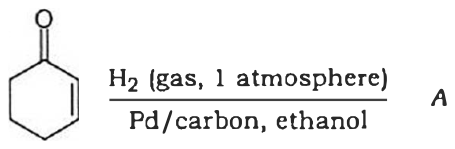
- 1
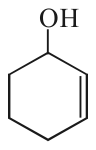
- 2
- 3
- 4
Show answer and solution
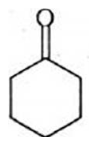
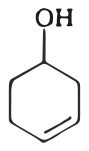
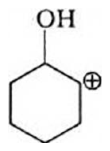
Correct: option 2
The starting compound is cyclohex-2-enone. Hydrogen at 1 atmosphere over palladium on carbon adds to the carbon-carbon double bond but does not reduce the carbonyl group under these mild conditions. The product is cyclohexanone, option (2).
Question 43NEET 2016 Phase 2, Q88
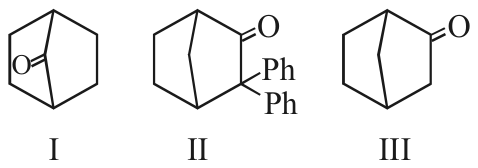
Which among the given molecules can exhibit tautomerism?
- 1III only
- 2Both I and III
- 3Both I and II
- 4Both II and III
Show answer and solution
Correct: option 1, III only
Keto-enol tautomerism needs a hydrogen on a carbon next to the carbonyl group, and the enol double bond must be able to form. In I and II the only such hydrogens are on bridgehead carbons (in II the other neighbouring carbon carries two phenyl groups and no hydrogen), and a double bond at a bridgehead of these small bicyclic rings is not allowed by Bredt's rule. III has a group next to the carbonyl, so only III can enolise.
Question 44NEET 2016 Phase 2, Q89
The correct order of strengths of the carboxylic acids
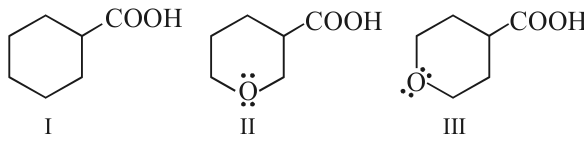
- 1I > II > III
- 2II > III > I
- 3III > II > I
- 4II > I > III
Show answer and solution
Correct: option 2, II > III > I
The ring oxygen is electronegative and pulls electrons away through the bonds, which stabilises the carboxylate ion and makes the acid stronger. This effect weakens with distance. In II the oxygen is closer to the group than in III, and I has no oxygen in the ring. So the order of acid strength is II > III > I.
Question 45AIPMT 2015, Q10
An organic compound 'X' having molecular formula yields phenyl hydrazone and gives negative response to the Iodoform test and Tollen's test. It produces n-pentane on reduction. 'X' could be:
- 12-pentanone
- 23-pentanone
- 3n-amyl alcohol
- 4pentanal
Show answer and solution
Correct: option 2, 3-pentanone
A phenyl hydrazone shows a carbonyl group, and a negative Tollen's test rules out an aldehyde, so X is a ketone. A negative iodoform test means it has no group, which rules out 2-pentanone. Reduction to n-pentane shows a straight five-carbon chain. X is 3-pentanone, option (2).
Question 46AIPMT 2015, Q12
Treatment of cyclopentanone
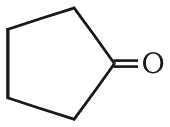
with methyl lithium gives which of the following species?
- 1Cyclopentanonyl cation
- 2Cyclopentanonyl radical
- 3Cyclopentanonyl biradical
- 4Cyclopentanonyl anion
Show answer and solution
Correct: option 4, Cyclopentanonyl anion
Methyl lithium behaves as the carbanion with , a very strong nucleophile and base. Its reaction with the ketone is ionic and leaves the negative charge on the organic part (on oxygen), with lithium as the counter-ion. No cation or radical is formed, so the species is an anion, option (4).
Question 47AIPMT 2015, Q43
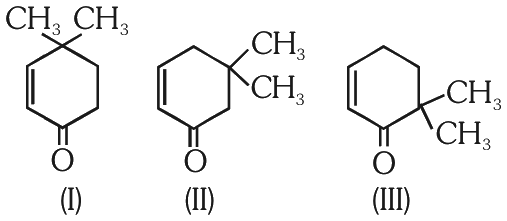
Which of the given compounds can exhibit tautomerism?
- 1I and III
- 2II and III
- 3I, II and III
- 4I and II
Show answer and solution
Correct: option 3, I, II and III
Keto-enol tautomerism needs a hydrogen that can shift to the carbonyl oxygen. (I) and (II) each have a group next to the carbonyl carbon, so they enolise in the usual way. In (III) the saturated -carbon carries two methyl groups and no hydrogen, but the carbonyl is conjugated with the ring double bond and a hydrogen from the -carbon can shift to give a dienol. So all three can show tautomerism, option (3).
Question 48AIPMT 2015 Re-test, Q32
Reaction of a carbonyl compound with one of the following reagents involves nucleophilic addition followed by elimination of water. The reagent is:
- 1hydrocyanic acid
- 2sodium hydrogen sulphite
- 3a Grignard reagent
- 4hydrazine in presence of feebly acidic solution
Show answer and solution
Correct: option 4, hydrazine in presence of feebly acidic solution
HCN, and Grignard reagents simply add across the bond. Ammonia derivatives such as hydrazine first add to the carbonyl carbon and the adduct then loses a molecule of water to form a bond (a hydrazone); the reaction is run in weakly acidic solution. Option (4).
Question 49AIPMT 2015 Re-test, Q33
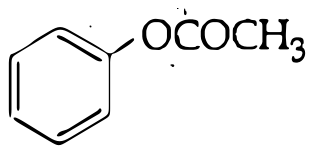
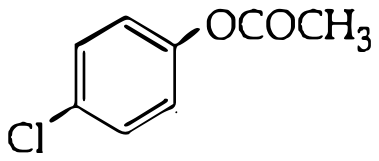
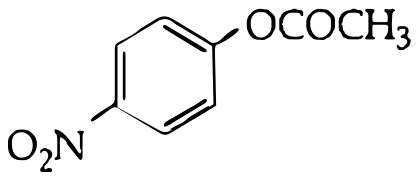
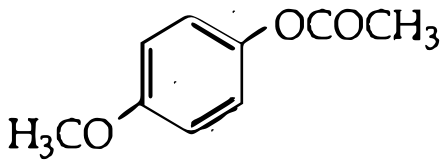
Which one of the following esters gets hydrolysed most easily under alkaline conditions?
- 1
- 2
- 3
- 4
Show answer and solution
Correct: option 3
The four esters are phenyl acetate and its para-chloro, para-nitro and para-methoxy derivatives. In alkaline hydrolysis attacks the carbonyl carbon and the phenoxide ion leaves; an electron-withdrawing group on the ring makes the carbonyl carbon more electron-poor and the phenoxide a better leaving group. The nitro group withdraws electrons most strongly (methoxy donates), so the para-nitro ester in option (3) is hydrolysed most easily.
Question 50AIPMT 2014, Q137
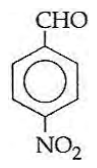
Which one is most reactive towards Nucleophilic addition reaction?
- 1
- 2
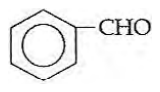
- 3
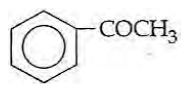
- 4
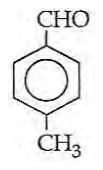
Show answer and solution
Correct: option 1
A nucleophile attacks the carbonyl carbon, so the more electron-poor that carbon is, the faster the addition. Aldehydes are more reactive than ketones, which rules out acetophenone. Among the aldehydes, the group in p-nitrobenzaldehyde withdraws electrons (−I and −R) and makes the carbonyl carbon more positive, while in p-tolualdehyde donates electrons and lowers reactivity. So p-nitrobenzaldehyde, option (1), is the most reactive.
Question 51NEET 2013, Q8
The order of stability of the following tautomeric compounds is:
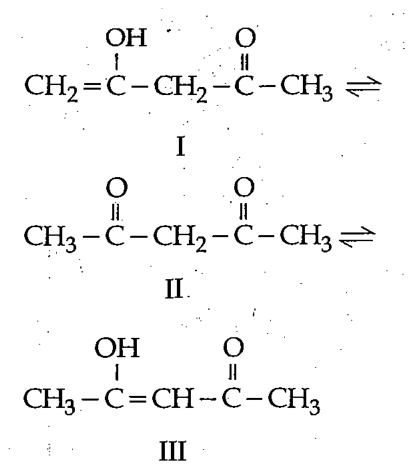
- 1III > II > I
- 2II > I > III
- 3II > III > I
- 4I > II > III
Show answer and solution
Correct: option 1, III > II > I
II is the diketo form of pentane-2,4-dione and I and III are its enol forms. In III the is conjugated with the remaining and the forms an internal hydrogen bond with it in a six-membered ring, which makes III the most stable. In I the double bond is terminal and not conjugated, so I is the least stable. The order is III > II > I, option (1).
Question 52NEET 2013, Q28
Reaction by which Benzaldehyde cannot be prepared:
- 1
- 2
- 3

- 4
Show answer and solution
Correct: option 3
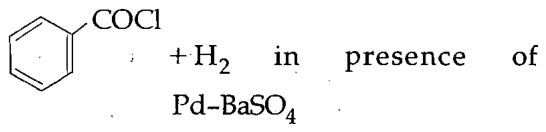
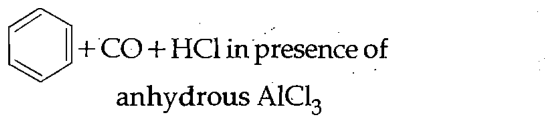
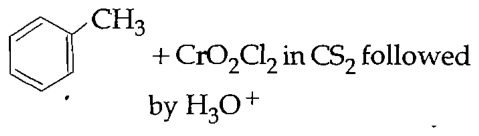
Option (1) is the Rosenmund reduction of benzoyl chloride, option (2) is the Gattermann-Koch reaction of benzene, and option (4) is the Etard reaction of toluene; all three give benzaldehyde. Zinc amalgam with concentrated HCl (the Clemmensen reagent) reduces the carbonyl group of aldehydes and ketones to ; it does not convert benzoic acid into benzaldehyde. So option (3) is right.
Question 53AIPMT 2012 Prelims, Q164
Predict the product in the given reaction.
- 1
- 2
- 3
- 4
Show answer and solution
Correct: option 3
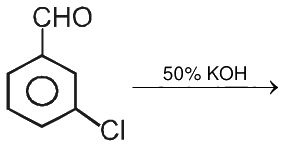
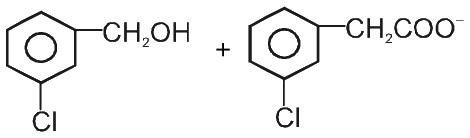
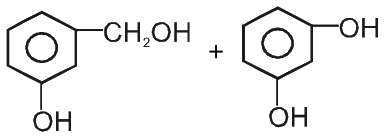
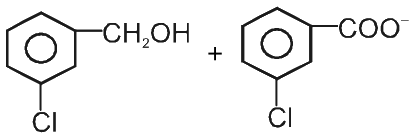
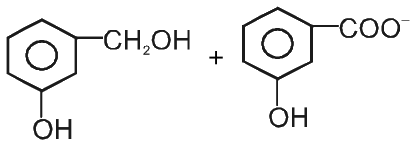
m-Chlorobenzaldehyde has no -hydrogen, so with 50% KOH it undergoes the Cannizzaro reaction: one molecule is reduced to m-chlorobenzyl alcohol and another is oxidised to the m-chlorobenzoate ion. The chlorine on the ring is not replaced. That is the pair with and , both with Cl, option (3).
Question 54AIPMT 2012 Prelims, Q165
Acetone is treated with excess of ethanol in the presence of hydrochloric acid. The product obtained is:
- 1
- 2
- 3
- 4
Show answer and solution
Correct: option 4,
In acid a ketone adds one molecule of alcohol to give a hemiketal, , and with excess alcohol the OH is replaced by a second alkoxy group to give the ketal . With excess ethanol the product is option (4).
Question 55AIPMT 2012 Prelims, Q172
The correct order of decreasing acid strength of trichloroacetic acid (A), trifluoroacetic acid (B), acetic acid (C) and formic acid (D) is:
- 1B > A > D > C
- 2B > D > C > A
- 3A > B > C > D
- 4A > C > B > D
Show answer and solution
Correct: option 1, B > A > D > C
Electron-withdrawing groups stabilise the carboxylate ion and raise acidity; fluorine withdraws more strongly than chlorine, so . The methyl group of acetic acid releases electrons, so acetic acid is weaker than formic acid. The order is B > A > D > C, option (1).
Question 56AIPMT 2012 Prelims, Q178
In the following sequence of reactions
, the end product (C) is:
- 1Acetone
- 2Methane
- 3Acetaldehyde
- 4Ethyl alcohol
Show answer and solution
Correct: option 4, Ethyl alcohol
KCN replaces Br by CN to give (A). Acid hydrolysis of the nitrile gives acetic acid, (B). reduces the acid to the primary alcohol (C), ethyl alcohol, option (4).
Question 57AIPMT 2012 Prelims, Q187
and can be distinguished chemically by:
- 1Benedict test
- 2Iodoform test
- 3Tollen's reagent test
- 4Fehling solution test
Show answer and solution
Correct: option 2, Iodoform test
The iodoform test is given by compounds with a group. Acetaldehyde, , has it and gives yellow ; phenylacetaldehyde has no methyl ketone unit and does not. Both are aliphatic-type aldehydes and respond to Tollen's, Fehling and Benedict tests, so those cannot tell them apart. Option (2).
Question 58AIPMT 2012 Mains, Q54
Consider the following reaction:
- 1
- 2
- 3
- 4
Show answer and solution
Correct: option 1,
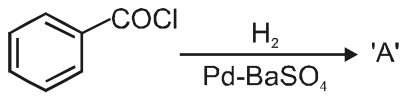
Hydrogen over palladium supported on barium sulphate reduces an acid chloride only as far as the aldehyde (Rosenmund reduction); the barium sulphate poisons the catalyst so the aldehyde is not reduced further. Benzoyl chloride therefore gives benzaldehyde, .
Question 59AIPMT 2012 Mains, Q58
Consider the reaction:
What sort of reaction is it?
- 1Electrophilic addition - elimination reaction
- 2Free radical addition - elimination reaction
- 3Electrophilic substitution - elimination reaction
- 4Nucleophilic addition - elimination reaction
Show answer and solution
Correct: option 4, Nucleophilic addition - elimination reaction
The lone pair on nitrogen of hydrazine attacks the electron-poor carbonyl carbon (nucleophilic addition), and the addition product then loses a molecule of water to give the hydrazone with a C=N bond (elimination). It is a nucleophilic addition-elimination reaction.
Question 60AIPMT 2012 Mains, Q59
Which of the following compounds will give a yellow precipitate with iodine and alkali?
- 1Acetophenone
- 2Methyl acetate
- 3Acetamide
- 42-Hydroxypropane
Show answer and solution
Correct: option 1 or 4
The answer key accepts options 1 and 4.
The yellow precipitate is iodoform, , given by compounds with a group joined to carbon or hydrogen, or a group that is oxidised to it. Acetophenone () has the first and 2-hydroxypropane () has the second, so both give the test, and the key accepts options (1) and (4). Methyl acetate and acetamide do not respond.
Question 61AIPMT 2011 Prelims, Q32
Clemmensen reduction of a ketone is carried out in the presence of which of the following?
- 1Glycol with KOH
- 2Zn-Hg with HCl
- 3
- 4 and Pt as catalyst
Show answer and solution
Correct: option 2, Zn-Hg with HCl
Clemmensen reduction converts the carbonyl group of an aldehyde or ketone into using zinc amalgam and concentrated hydrochloric acid. Glycol with KOH (together with hydrazine) belongs to the Wolff-Kishner reduction, while and reduce a ketone only to an alcohol.
Question 62AIPMT 2011 Mains, Q10
The order of reactivity of phenyl magnesium bromide (PhMgBr) with the following compounds:
- 1III > II > I
- 2II > I > III
- 3I > III > II
- 4I > II > III
Show answer and solution
Correct: option 4, I > II > III
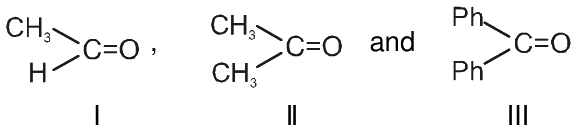
PhMgBr adds as a nucleophile to the carbonyl carbon. The addition is fastest when that carbon is least crowded and most electron poor. Ethanal (I) has one small alkyl group and a hydrogen, acetone (II) has two methyl groups, and benzophenone (III) has two bulky phenyl groups that also reduce the positive character of the carbon by resonance. So the order is I > II > III.
Question 63AIPMT 2011 Mains, Q15
Match the compounds given in List-I with List-II and select the suitable option using the code given below:
| List-I | List-II |
|---|
| (a) Benzaldehyde | (i) Phenolphthalein |
| (b) Phthalic anhydride | (ii) Benzoin condensation |
| (c) Phenyl benzoate | (iii) Oil of wintergreen |
| (d) Methyl salicylate | (iv) Fries rearrangement |
Code:
- 1a-iv, b-i, c-iii, d-ii
- 2a-iv, b-ii, c-iii, d-i
- 3a-ii, b-iii, c-iv, d-i
- 4a-ii, b-i, c-iv, d-iii
Show answer and solution
Correct: option 4, a-ii, b-i, c-iv, d-iii
Benzaldehyde, an aromatic aldehyde with no -hydrogen, undergoes the benzoin condensation with cyanide ion (ii). Phthalic anhydride condenses with two molecules of phenol in acid to give phenolphthalein (i). Phenyl benzoate, an aryl ester, rearranges to hydroxy ketones with , the Fries rearrangement (iv). Methyl salicylate is oil of wintergreen (iii). So a-ii, b-i, c-iv, d-iii.
Question 64AIPMT 2010 Mains, Q58
Following compounds are given
(i)
(ii)
(iii)
(iv)
Which of the above compound (s), on being warmed with iodine solution and NaOH, will give iodoform?
- 1(i), (iii) and (iv)
- 2Only (ii)
- 3(i), (ii) and (iii)
- 4(i) and (ii)
Show answer and solution
Correct: option 3, (i), (ii) and (iii)
The iodoform test is given by compounds with a group, or a group that the reagent oxidises to it. Ethanol (i), acetone (ii) and propan-2-ol (iii) have one of these groups; methanol (iv) does not.
Question 65AIPMT 2010 Prelims, Q61
In a set of reactions, ethyl benzene yielded a product D.

- 1
- 2
- 3
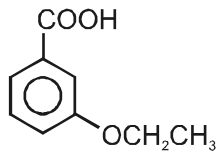
- 4
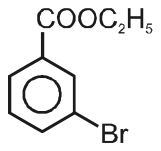
Show answer and solution
Correct: option 4
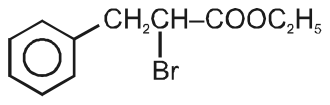
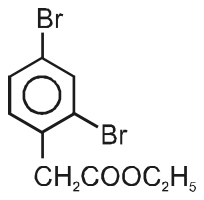
Alkaline oxidises the whole side chain to , so B is benzoic acid. is meta directing, so gives m-bromobenzoic acid (C). Ethanol with acid then esterifies it to ethyl m-bromobenzoate, the structure in option (4).
Question 66AIPMT 2010 Prelims, Q79
Among the given compounds, the most susceptible to nucleophilic attack at the carbonyl group is:
- 1
- 2
- 3
- 4
Show answer and solution
Correct: option 4,
The reactivity of acid derivatives towards nucleophiles is acid chloride > anhydride > ester > amide. Chlorine withdraws electrons strongly by its −I effect and donates very little back by resonance, so the carbonyl carbon of is the most electron deficient; is also the best leaving group.
Question 67AIPMT 2010 Prelims, Q94
Which of the following reactions will not result in the formation of carbon-carbon bonds?
- 1Reimer-Tiemann reaction
- 2Cannizzaro reaction
- 3Wurtz reaction
- 4Friedel-Crafts acylation
Show answer and solution
Correct: option 2, Cannizzaro reaction
In the Cannizzaro reaction an aldehyde with no alpha hydrogen is oxidised and reduced at the same time, e.g. ; no new C–C bond forms. The Reimer-Tiemann reaction joins a group to the phenol ring, the Wurtz reaction joins two alkyl groups (R–R), and Friedel-Crafts acylation joins an acyl group to the ring, so each of those makes a C–C bond.
Question 68AIPMT 2009 Prelims, Q175
Propionic acid with yields a dibromo product. Its structure would be:
- 1
- 2
- 3
- 4
Show answer and solution
Correct: option 3,
Bromine with red phosphorus is the Hell-Volhard-Zelinsky reaction, which replaces only the hydrogens on the carbon next to the group. Propionic acid has two such hydrogens, so the dibromo product is .
Question 69AIPMT 2008 Prelims, Q87
A strong base can abstract an -hydrogen from
- 1Alkane
- 2Alkene
- 3Amine
- 4Ketone
Show answer and solution
Correct: option 4, Ketone
The hydrogen on the carbon next to a carbonyl group is acidic because the carbanion left behind is stabilised by resonance with the C=O group (an enolate ion). Alkanes, alkenes and amines give no such stabilised anion, so the answer is a ketone.
Question 70AIPMT 2008 Prelims, Q90
The relative reactivities of acyl compounds towards nucleophilic substitution are in the order of
- 1Acyl chloride > Ester > Acid anhydride > Amide
- 2Acyl chloride > Acid anhydride > Ester > Amide
- 3Ester > Acyl chloride > Amide > Acid anhydride
- 4Acid anhydride > Amide > Ester > Acyl chloride
Show answer and solution
Correct: option 2, Acyl chloride > Acid anhydride > Ester > Amide
Reactivity follows how easily the group on the acyl carbon leaves, and a weaker base is a better leaving group. Basicity rises in the order , so reactivity falls as acyl chloride > acid anhydride > ester > amide.
Question 71AIPMT 2008 Prelims, Q97
Acetophenone when reacted with a base, , yields a stable compound which has the structure?
- 1
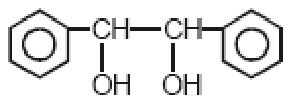
- 2
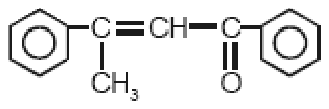
- 3
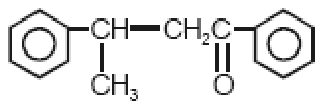
- 4
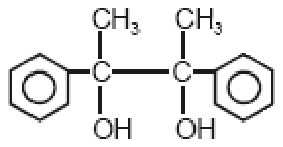
Show answer and solution
Correct: option 2
Acetophenone has -hydrogens, so the base brings about an aldol condensation. The enolate of one molecule adds to the carbonyl carbon of another to give a -hydroxy ketone, which loses water to form the conjugated, stable -unsaturated ketone , option (2).
Question 72AIPMT 2007 Prelims, Q135
Which of the following presents the correct order of the acidity in the given compounds?
- 1
- 2
- 3
- 4
Show answer and solution
Correct: option 1,
A halogen on the carbon next to the –COOH group pulls electrons away (the –I effect) and stabilises the carboxylate ion, making the acid stronger. The pull follows electronegativity, F > Cl > Br, and acetic acid with no halogen is the weakest. So acidity falls as .
Question 73AIPMT 2007 Prelims, Q136
The product formed in Aldol condensation is
- 1an alpha, beta unsaturated ester
- 2a beta-hydroxy acid
- 3a beta-hydroxy aldehyde or a beta-hydroxy ketone
- 4an alpha-hydroxy aldehyde or ketone
Show answer and solution
Correct: option 3, a beta-hydroxy aldehyde or a beta-hydroxy ketone
In the aldol reaction, dilute base removes an alpha hydrogen from one molecule of an aldehyde or ketone, and the carbanion formed adds to the carbonyl carbon of a second molecule. The new –OH group ends up on the carbon that is beta to the remaining carbonyl group, so the product is a beta-hydroxy aldehyde (aldol) or a beta-hydroxy ketone (ketol).
Question 74AIPMT 2007 Prelims, Q137
Reduction of aldehydes and ketones into hydrocarbons using zinc amalgam and conc. HCl is called
- 1Wolff-Kishner Reduction
- 2Clemmensen Reduction
- 3Cope Reduction
- 4Dow Reduction
Show answer and solution
Correct: option 2, Clemmensen Reduction
Clemmensen reduction uses zinc amalgam and concentrated HCl to turn the C=O group of an aldehyde or ketone into . Wolff-Kishner reduction does the same change but with hydrazine and a strong base.
Question 75AIPMT 2007 Prelims, Q138
Consider the following compounds
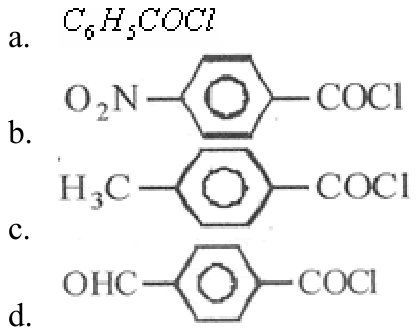
The correct decreasing order of their reactivity towards hydrolysis is
- 1(b) > (d) > (a) > (c)
- 2(b) > (d) > (c) > (a)
- 3(a) > (b) > (c) > (d)
- 4(d) > (b) > (a) > (c)
Show answer and solution
Correct: option 1, (b) > (d) > (a) > (c)
Hydrolysis of an acid chloride starts with water attacking the carbonyl carbon, so the more electron-poor that carbon is, the faster the reaction. A para group withdraws electrons most strongly, CHO withdraws less, and donates electrons. Reactivity therefore falls from the nitro compound (b) to the aldehyde (d) to benzoyl chloride (a) to the methyl compound (c).
Question 76AIPMT 2006 Prelims, Q71
A carbonyl compound reacts with hydrogen cyanide to form cyanohydrin which on hydrolysis forms a racemic mixture of -hydroxy acid. The carbonyl compound is:
- 1Acetaldehyde
- 2Acetone
- 3diethyl ketone
- 4Formaldehyde
Show answer and solution
Correct: option 1, Acetaldehyde
A racemic mixture needs a chiral carbon in the product. Acetaldehyde gives and then lactic acid, , whose carbon carries four different groups; attack of cyanide on either face of the planar carbonyl gives both mirror forms equally. Formaldehyde, acetone and diethyl ketone give hydroxy acids with two identical groups on that carbon, so they are not chiral.
Question 77AIPMT 2006 Prelims, Q74
Nucleophilic addition reaction will be most favoured in:
- 1
- 2
- 3
- 4
Show answer and solution
Correct: option 4,
Nucleophilic addition is easier when the carbonyl carbon is more positive and less crowded. Alkyl groups donate electrons and add bulk, so aldehydes react faster than ketones, and a smaller alkyl group is better than a larger one. Acetaldehyde, with only one methyl group, is the most reactive of the four.
Question 78AIPMT 2006 Prelims, Q76
Self condensation of two moles of ethyl acetate in presence of sodium ethoxide yields:
- 1Ethyl butyrate
- 2Acetoacetic ester
- 3Methyl acetoacetate
- 4Ethyl propionate
Show answer and solution
Correct: option 2, Acetoacetic ester
This is the Claisen condensation. Ethoxide removes an -hydrogen from one ester molecule and the carbanion attacks the carbonyl of the second, losing ethanol: . The product, ethyl acetoacetate, is known as acetoacetic ester.
Question 79AIPMT 2005 Prelims, Q89
In a set of reactions acetic acid yielded a product D
The structure of D would be -
- 1
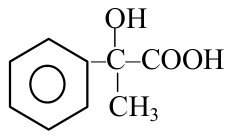
- 2
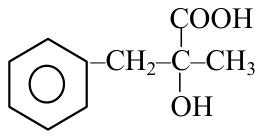
- 3
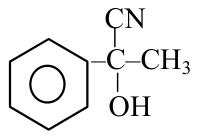
- 4
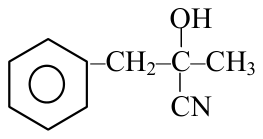
Show answer and solution
Correct: option 1
turns acetic acid into acetyl chloride (A). Friedel-Crafts acylation of benzene gives acetophenone, (B). HCN adds to the carbonyl group to give the cyanohydrin (C), and hydrolysis of the –CN group gives the hydroxy acid (D), which is option (1).
Question 80AIPMT 2003 Prelims, Q75
In this reaction:
an asymmetric centre is generated. The acid obtained would be:
- 1D-isomer
- 2L-isomer
- 350% D + 50% L -isomer
- 420% D + 80% L -isomer
Show answer and solution
Correct: option 3, 50% D + 50% L -isomer
The carbonyl carbon of ethanal is flat, so attacks from either face with equal chance. The cyanohydrin, and the lactic acid made from it by hydrolysis, is therefore a racemic mixture: 50% D and 50% L.
Question 81AIPMT 2003 Prelims, Q77
In a set of the given reactions, acetic acid yielded a product C.
product C would be
- 1
- 2
- 3
- 4
Show answer and solution
Correct: option 4,
turns acetic acid into acetyl chloride (A). Friedel-Crafts acylation of benzene gives acetophenone, (B). The Grignard reagent adds an ethyl group to the carbonyl carbon, and after hydrolysis this gives the tertiary alcohol .
Question 82AIPMT 2003 Prelims, Q92
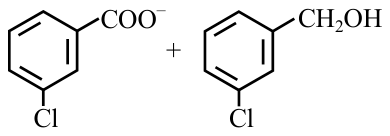
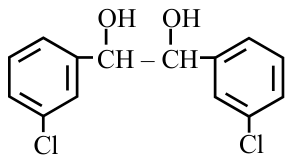
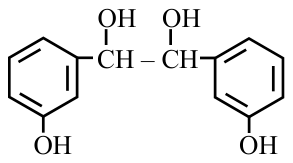
When m-chlorobenzaldehyde is treated with 50% KOH solution, the product(s) obtained is (are)
- 1
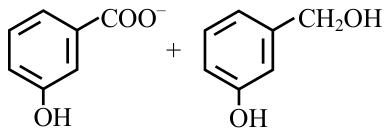
- 2
- 3
- 4
Show answer and solution
Correct: option 2
m-Chlorobenzaldehyde has no alpha hydrogen, so with concentrated alkali it undergoes the Cannizzaro reaction: one molecule is oxidised to the m-chlorobenzoate ion and another is reduced to m-chlorobenzyl alcohol. The chlorine on the ring is not replaced under these conditions, which rules out (1) and (4).
Question 83AIPMT 2003 Prelims, Q94
Which of the following orders of acid strength is correct:
- 1
- 2
- 3
- 4
Show answer and solution
Correct: option 2,
Approximate values: carboxylic acid about 5, water about 15.7, alcohol about 16 to 18, ethyne about 25. A carboxylate ion is stabilised by resonance; an alkoxide ion is destabilised by the electron-releasing alkyl group compared with hydroxide; the acetylide carbanion is the least stable. So .
Question 84AIPMT 2003 Prelims, Q96
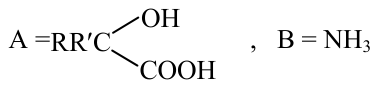
A and B in the following reactions are:

- 1
- 2
- 3,
- 4
Show answer and solution
Correct: option 4
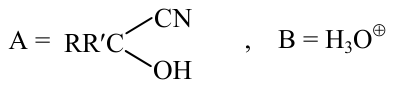
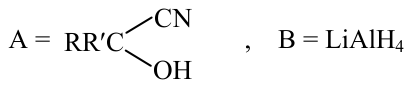
HCN (with KCN) adds across the carbonyl group to give the cyanohydrin , which is A. To turn into the nitrile must be reduced, and does this. Acid hydrolysis () would give the hydroxy acid instead.
Question 85AIPMT 2002 Prelims, Q86
- 1
- 2
- 3
- 4
Show answer and solution
Correct: option 2
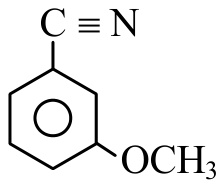
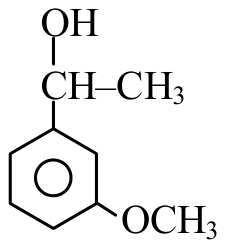
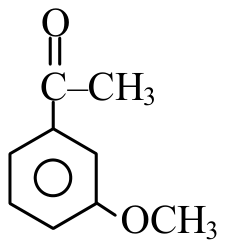
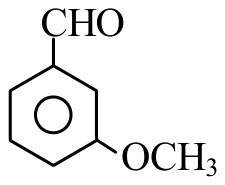
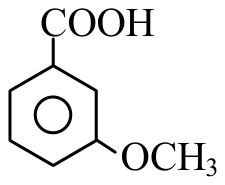
A Grignard reagent adds once to the carbon of a nitrile group to give an imine salt, . Acid hydrolysis turns this into a ketone, so the group becomes and the product is the methyl ketone (3-methoxyacetophenone), option 2. The methoxy group is not affected.
Question 86AIPMT 2002 Prelims, Q88
In the following reaction product 'P' is:
- 1
- 2
- 3
- 4
Show answer and solution
Correct: option 3,
This is the Rosenmund reduction. Hydrogen over palladium that is partly poisoned by barium sulphate reduces an acid chloride only as far as the aldehyde: . The poisoned catalyst stops further reduction to the alcohol.
Question 87AIPMT 2002 Prelims, Q92
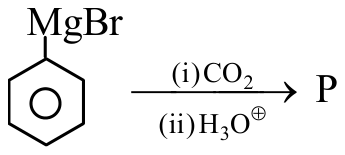
In the above reaction product 'P' is:
- 1
- 2
- 3
- 4
Show answer and solution
Correct: option 2
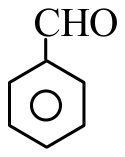
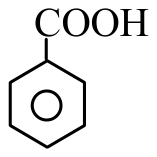
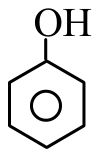
Phenylmagnesium bromide adds to carbon dioxide to give the salt , and acid hydrolysis of this salt gives benzoic acid, . Carbonation of a Grignard reagent is a standard way of making a carboxylic acid with one more carbon atom.
Question 88AIPMT 2001 Prelims, Q56
Which of the following is incorrect:
- 1 is used in detection of phenol
- 2Fehling solution is used in detection of glucose
- 3Tollen reagent is used in detection of unsaturation
- 4 is used in detection of carbonyl compound
Show answer and solution
Correct: option 3, Tollen reagent is used in detection of unsaturation
Tollens' reagent (ammoniacal silver nitrate) detects aldehydes by the silver mirror; unsaturation is detected with bromine water or Baeyer's reagent. The other three statements are true: phenols give a violet colour with neutral , glucose reduces Fehling solution, and carbonyl compounds form crystalline bisulphite addition products.
Question 89AIPMT 2000 Prelims, Q52
Ethyl benzoate can be prepared from benzoic acid by using:
- 1Ethyl alcohol
- 2Ethyl alcohol and dry HCl
- 3Ethyl chloride
- 4Sodium ethoxide
Show answer and solution
Correct: option 2, Ethyl alcohol and dry HCl
A carboxylic acid forms an ester with an alcohol only in the presence of an acid catalyst (Fischer esterification): . Alcohol alone reacts far too slowly, and ethyl chloride or sodium ethoxide do not esterify the free acid.
Question 90AIPMT 2000 Prelims, Q55
First product of the reaction between RCHO and :
- 1
- 2
- 3
- 4
Show answer and solution
Correct: option 1,
Hydrazine adds to the carbonyl group and a molecule of water is lost, giving a hydrazone: . This hydrazone is the first product (further heating with base would reduce it to the alkane).
Question 91AIPMT 2000 Prelims, Q58
Reduction by of hydrolysed product of an ester gives:
- 1Two alcohols
- 2Two aldehyde
- 3One acid and one alcohol
- 4Two acids
Show answer and solution
Correct: option 1, Two alcohols
Hydrolysis of an ester gives a carboxylic acid RCOOH and an alcohol . reduces the acid to the primary alcohol and leaves unchanged, so two alcohols are obtained.
Question 92AIPMT 1999 Prelims, Q60
Which of the following gives ethyl benzene with phenyl methyl ketone:
- 1
- 2
- 3
- 4None of the above
Show answer and solution
Correct: option 1,
Zinc amalgam with concentrated HCl (Clemmensen reduction) reduces a carbonyl group to , turning into . stops at the alcohol and is an oxidising agent.
Question 93AIPMT 1999 Prelims, Q61
Acetaldehyde reacts with semicarbazide product will be:
- 1
- 2
- 3
- 4
Show answer and solution
Correct: option 1,
Semicarbazide is . Its group next to NH (the one not attached to the carbonyl, so not deactivated by resonance) condenses with the aldehyde, losing water: . This semicarbazone is option (1).
Question 94AIPMT 1999 Prelims, Q62
Cyanohydrin of the following compound on hydrolysis gives optically active product:
- 1
- 2
- 3
- 4All of the above
Show answer and solution
Correct: option 2,
Hydrolysis of a cyanohydrin gives an -hydroxy acid. From the product is lactic acid, , whose central carbon carries four different groups, so it is chiral. HCHO gives and acetone gives , neither of which has a chiral carbon.
Question 95AIPMT 1999 Prelims, Q84
Clemmensen's reaction is:
- 1
- 2
- 3
- 4All the above
Show answer and solution
Correct: option 1,
Clemmensen reduction converts a carbonyl group to using zinc (amalgam) and hydrochloric acid, as in option (1). Option (2), with hydrazine and a base, is the Wolff-Kishner reduction, and option (3) is reduction with HI and red phosphorus.
Question 96AIPMT 1998 Prelims, Q54
Which of the following does not give iodoform test:
- 13-pentanone
- 22-pentanone
- 3Ethanol
- 4Ethanal
Show answer and solution
Correct: option 1, 3-pentanone
The iodoform test needs a group, or a group that is oxidised to it. 2-Pentanone and ethanal have and ethanol has . 3-Pentanone, , has no methyl group next to the carbonyl, so it does not respond.
Question 97AIPMT 1998 Prelims, Q58
Which of the following does not give claisen condensation reaction:
- 1
- 2
- 3
- 4None of the above
Show answer and solution
Correct: option 1,
Claisen condensation needs an ester with a hydrogen on the carbon next to the ester carbonyl, so that a base can form the enolate. Ethyl benzoate, , has no such hydrogen and cannot condense with itself. The other two esters both have -hydrogens.