Questions with solutions
Question 1NEET 2026, Q54
Identify the correct statement about from the following options:
- 1It has a trigonal pyramidal geometry with two lone pairs on Cl atom.
- 2It has T-shaped geometry with two lone pairs on Cl atom.
- 3It has a planar trigonal geometry with two lone pairs on Cl atom.
- 4It has T-shaped geometry with three lone pairs on Cl atom.
Show answer and solution
Correct: option 2, It has T-shaped geometry with two lone pairs on Cl atom.
Chlorine has 7 valence electrons; three are used in the Cl-F bonds, leaving two lone pairs. Five electron pairs () take a trigonal bipyramidal arrangement with both lone pairs in equatorial positions, so the molecule is T-shaped.
Question 2NEET 2026, Q69
Match List I with List II:
| List I | List II |
|---|
| A. | I. 3 bonds, 2 bonds |
| B. | II. 3 bonds, one lone pair |
| C. | III. 4 bonds |
| D. | IV. 5 bonds, 1 bond |
Choose the correct answer from the options given below:
- 1A-IV, B-I, C-III, D-II
- 2A-III, B-IV, C-II, D-I
- 3A-I, B-II, C-IV, D-III
- 4A-II, B-III, C-I, D-IV
Show answer and solution
Correct: option 1, A-IV, B-I, C-III, D-II
Ethene has four C-H and one C-C bond plus one bond (IV). Ethyne has two C-H and one C-C bond plus two bonds (I). Methane has four bonds (III). Ammonia has three bonds and one lone pair (II).
Question 3NEET 2026, Q86
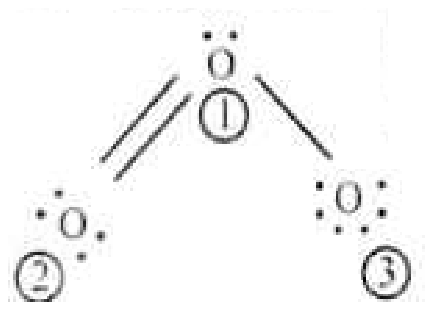
The correct formal charges on oxygen atoms numbered 2, 1 and 3 respectively are:
- 1
- 2
- 3
- 4
Show answer and solution
Correct: option 2,
Formal charge valence electrons non-bonding electrons half the bonding electrons. Atom 2 (double bond, two lone pairs): . Atom 1 (central, three bonds, one lone pair): . Atom 3 (single bond, three lone pairs): .
Question 4NEET 2026 Re-exam, Q75
Match the species in List I with their geometry in List II
| List I | List II |
|---|
| A. | I. Tetrahedral |
| B. | II. Square Planar |
| C. | III. Trigonal bipyramidal |
| D. | IV. Square pyramidal |
Choose the correct answer from the options given below:
- 1A-IV, B-III, C-I, D-II
- 2A-III, B-IV, C-I, D-II
- 3A-III, B-I, C-II, D-IV
- 4A-III, B-II, C-I, D-IV
Show answer and solution
Correct: option 2, A-III, B-IV, C-I, D-II
has five bond pairs and is trigonal bipyramidal. has five bond pairs and one lone pair, so it is square pyramidal. has four bond pairs and is tetrahedral. is a complex and is square planar. So A-III, B-IV, C-I, D-II.
Question 5NEET 2026 Re-exam, Q90
The highest occupied molecular orbital for is
- 1
- 2
- 3
- 4
Show answer and solution
Correct: option 4,
would have 20 electrons, which fill every molecular orbital formed from the n = 1 and n = 2 shells: , , , , , , and finally . The highest occupied orbital is therefore (and the bond order is zero).
Question 6NEET 2025, Q62
Given below are two statements:
Statement I: A hypothetical diatomic molecule with bond order zero is quite stable.
Statement II: As bond order increases, the bond length increases.
In the light of the above statements, choose the most appropriate answer from the options given below:
- 1Both Statement I and Statement II are true
- 2Both Statement I and Statement II are false
- 3Statement I is true but Statement II is false
- 4Statement I is false but Statement II is true
Show answer and solution
Correct: option 2, Both Statement I and Statement II are false
A bond order of zero means there is no net bond, so such a molecule is unstable and does not exist (for example ): Statement I is false. A higher bond order means a stronger and shorter bond, so bond length decreases: Statement II is false. Option (2).
Question 7NEET 2025, Q87
Identify the correct orders against the property mentioned
A. - dipole moment
B. - number of lone pairs on central atom
C. O-H > C-H > N-O - bond length
D. - bond enthalpy
Choose the correct answer from the options given below:
- 1A, D only
- 2B, D only
- 3A, C only
- 4B, C only
Show answer and solution
Correct: option 1, A, D only
A is correct: dipole moments are 1.85 D, 1.47 D, 1.04 D. B is wrong: the lone pairs on Xe are 2 in , 1 in and 3 in . C is wrong: O-H (96 pm) is the shortest of the three and N-O (136 pm) the longest. D is correct: bond enthalpies are 946, 498 and 436 kJ mol. Option (1).
Question 8NEET 2024, Q52
Match List I with List II.
| List I (Compound) | List II (Shape/geometry) |
|---|
| A. | I. Trigonal Pyramidal |
| B. | II. Square Planar |
| C. | III. Octahedral |
| D. | IV. Square Pyramidal |
Choose the correct answer from the options given below:
- 1A-II, B-III, C-IV, D-I
- 2A-I, B-IV, C-II, D-III
- 3A-II, B-IV, C-III, D-I
- 4A-III, B-IV, C-I, D-II
Show answer and solution
Correct: option 2, A-I, B-IV, C-II, D-III
Count bond pairs and lone pairs on the central atom (VSEPR). has 3 bond pairs and 1 lone pair: trigonal pyramidal (I). has 5 bond pairs and 1 lone pair: square pyramidal (IV). has 4 bond pairs and 2 lone pairs: square planar (II). has 6 bond pairs: octahedral (III). So A-I, B-IV, C-II, D-III, option (2).
Question 9NEET 2024, Q53
Match List I with List II.
| List I (Molecule) | List II (Number and types of bond/s between two carbon atoms) |
|---|
| A. ethane | I. one -bond and two -bonds |
| B. ethene | II. two -bonds |
| C. carbon molecule, | III. one -bond |
| D. ethyne | IV. one -bond and one -bond |
Choose the correct answer from the options given below:
- 1A-III, B-IV, C-I, D-II
- 2A-I, B-IV, C-II, D-III
- 3A-IV, B-III, C-II, D-I
- 4A-III, B-IV, C-II, D-I
Show answer and solution
Correct: option 4, A-III, B-IV, C-II, D-I
Ethane has a C-C single bond: one -bond (III). Ethene has a double bond: one and one (IV). Ethyne has a triple bond: one and two (I). In , molecular orbital theory puts the four bonding electrons beyond the filled and in the two orbitals, so the double bond is made of two -bonds (II). So A-III, B-IV, C-II, D-I, option (4).
Question 10NEET 2024, Q75
Intramolecular hydrogen bonding is present in
- 1HF
- 2
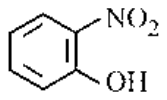
- 3
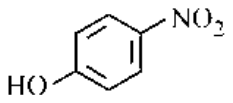
- 4
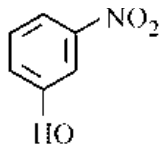
Show answer and solution
Correct: option 2
An intramolecular hydrogen bond forms inside one molecule, which needs the hydrogen and an electronegative atom to be close together. In o-nitrophenol, option (2), the and groups are on neighbouring carbons and form a six-membered chelate ring. In the meta and para isomers the groups are too far apart, and HF has only intermolecular hydrogen bonds.
Question 11NEET 2024, Q87
Identify the correct answer.
- 1Three canonical forms can be drawn for ion.
- 2Three resonance structures can be drawn for ozone.
- 3 has non-zero dipole moment.
- 4Dipole moment of is greater than that of .
Show answer and solution
Correct: option 1, Three canonical forms can be drawn for ion.
In the C=O double bond can be placed on any of the three oxygen atoms, giving three canonical forms, so (1) is correct. Ozone has only two resonance structures. is trigonal planar and its bond dipoles cancel, so its dipole moment is zero. In the N-F bond dipoles oppose the lone-pair dipole, so its moment (0.23 D) is smaller than that of (1.47 D).
Question 12NEET 2024 Re-exam, Q55
Which of the following molecules has "NON ZERO" dipole moment value?
- 1
- 2HI
- 3
- 4
Show answer and solution
Correct: option 2, HI
(tetrahedral), (linear) and (trigonal planar) are symmetrical, so their bond dipoles cancel and the net dipole moment is zero. HI is a diatomic molecule of two different atoms, so its single bond dipole cannot cancel and the molecule is polar.
Question 13NEET 2024 Re-exam, Q63
Identify the incorrect statement about .
- 1 possesses two different Cl – P – Cl bond angles
- 2All five P – Cl bonds are identical in length
- 3 exhibits hybridisation
- 4 consists of five P – Cl (sigma) bonds
Show answer and solution
Correct: option 2, All five P – Cl bonds are identical in length
is trigonal bipyramidal with hybridised phosphorus and five P-Cl sigma bonds. It has bond angles of 120° (between equatorial bonds) and 90° (axial to equatorial). The two axial bonds suffer more repulsion and are longer than the three equatorial bonds, so the statement that all five bonds are equal in length is the incorrect one.
Question 14NEET 2024 Re-exam, Q89
Match List-I with List-II:
| List-I Molecule | List-II Bond enthalpy () |
|---|
| A. HCl | I. 435.8 |
| B. | II. 498 |
| C. | III. 946.0 |
| D. | IV. 431.0 |
Choose the correct answer from the options given below:
- 1A-III, B-IV, C-I, D-II
- 2A-IV, B-I, C-III, D-II
- 3A-IV, B-III, C-II, D-I
- 4A-IV, B-III, C-I, D-II
Show answer and solution
Correct: option 4, A-IV, B-III, C-I, D-II
Bond enthalpy rises with bond order. has a triple bond and the largest value, 946.0 (B-III); has a double bond, 498 (D-II). Of the two single bonds, H-H is 435.8 (C-I) and H-Cl is slightly weaker at 431.0 (A-IV).
Question 15NEET 2023, Q64
Amongst the following, the total number of species NOT having eight electrons around central atom in its outer most shell, is
:
- 13
- 22
- 34
- 41
Show answer and solution
Correct: option 1, 3
Count the electrons around the central atom: N in has 8, Al in has 6, Be in has 4, C in has 8 and P in has 10. Three species (, and ) do not have an octet.
Question 16NEET 2023, Q65
The correct order of energies of molecular orbitals of molecule, is:
- 1
- 2
- 3
- 4
Show answer and solution
Correct: option 1,
For molecules up to , mixing of the 2s and 2p orbitals pushes above the pair. The order is therefore , which is option (1). Option (2) is the order for and .
Question 17NEET 2023 Manipur, Q59
The correct order of dipole moments for molecules
and HF, is
- 1
- 2
- 3
- 4
Show answer and solution
Correct: option 2,
Methane is a symmetrical tetrahedron, so its bond moments cancel and . HF has the most polar bond (about 1.78 D), pyramidal comes next (about 1.47 D), and bent , with much less polar S-H bonds, is lower (about 0.95 D). The order is .
Question 18NEET 2023 Manipur, Q63
Which one of the following statements is incorrect related to Molecular Orbital Theory?
- 1Molecular orbitals obtained from and orbitals are symmetrical around the bond axis.
- 2A -bonding molecular orbital has larger electron density above and below the internuclear axis.
- 3The antibonding molecular orbital has a node between the nuclei.
- 4In the formation of bonding molecular orbital, the two electron waves of the bonding atoms reinforce each other.
Show answer and solution
Correct: option 1, Molecular orbitals obtained from and orbitals are symmetrical around the bond axis.
With the z-axis as the internuclear axis, and overlap sideways and give molecular orbitals, which are not symmetrical about the bond axis (only orbitals are). So statement (1) is the incorrect one. The other three are correct descriptions: a bonding orbital has its electron density above and below the axis, has a node between the nuclei, and a bonding orbital comes from constructive interference of the two electron waves.
Question 19NEET 2022, Q58
Which amongst the following is incorrect statement?
- 1 ion is diamagnetic.
- 2The bond orders of , , and are 2.5, 2, 1.5 and 1, respectively.
- 3 molecule has four electrons in its two degenerate molecular orbitals.
- 4 ion has one electron.
Show answer and solution
Correct: option 1, ion is diamagnetic.
has 15 electrons, with one unpaired electron left in a orbital, so it is paramagnetic, not diamagnetic. The bond orders in (2) follow from , has its last four electrons in the two orbitals, and has a single electron. Option (1) is the incorrect statement.
Question 20NEET 2022, Q59
Amongst the following which one will have maximum 'lone pair - lone pair' electron repulsions?
- 1
- 2
- 3
- 4
Show answer and solution
Correct: option 1,
Count the lone pairs on the central atom: has 3, has 2, has 1 and has 1. Lone pair - lone pair repulsion needs at least two lone pairs, and with three of them has the most such repulsions.
Question 21NEET 2022 Re-exam, Q59
Match List-I with List-II:
| List-I (Molecules) | List-II (Shape) |
|---|
| (a) | (i) Square pyramidal |
| (b) | (ii) Trigonal bipyramidal |
| (c) | (iii) Trigonal pyramidal |
| (d) | (iv) T-shape |
Choose the correct answer from the options given below:
- 1a-iii, b-iv, c-i, d-ii
- 2a-ii, b-iii, c-iv, d-i
- 3a-iii, b-iv, c-ii, d-i
- 4a-iv, b-iii, c-i, d-ii
Show answer and solution
Correct: option 3, a-iii, b-iv, c-ii, d-i
By VSEPR: has 3 bond pairs and 1 lone pair, trigonal pyramidal (iii). has 3 bond pairs and 2 lone pairs, T-shape (iv). has 5 bond pairs, trigonal bipyramidal (ii). has 5 bond pairs and 1 lone pair, square pyramidal (i).
Question 22NEET 2022 Re-exam, Q81
The correct order of bond angles in the following compounds/species is:
- 1
- 2
- 3
- 4
Show answer and solution
Correct: option 2,
is linear (). The other three have four electron pairs around the central atom: has no lone pair (), has one () and has two (), because lone pairs repel more strongly than bond pairs. So .
Question 23NEET 2021, Q63
Match List - I with List - II.
| List - I | List - II |
|---|
| (a) | (i) Square pyramidal |
| (b) | (ii) Trigonal planar |
| (c) | (iii) Octahedral |
| (d) | (iv) Trigonal bipyramidal |
Choose the correct answer from the options given below.
- 1a-iv, b-iii, c-i, d-ii
- 2a-ii, b-iii, c-iv, d-i
- 3a-iii, b-i, c-iv, d-ii
- 4a-iv, b-iii, c-ii, d-i
Show answer and solution
Correct: option 1, a-iv, b-iii, c-i, d-ii
has five bond pairs and is trigonal bipyramidal (iv). has six bond pairs and is octahedral (iii). has five bond pairs and one lone pair, so it is square pyramidal (i). has three bond pairs and is trigonal planar (ii).
Question 24NEET 2021, Q80
is planar and electron deficient compound. Hybridization and number of electrons around the central atom, respectively are:
- 1 and 4
- 2 and 6
- 3 and 6
- 4 and 8
Show answer and solution
Correct: option 3, and 6
Boron forms three sigma bonds and has no lone pair, so it is hybridised and the molecule is trigonal planar. Three bond pairs give only 6 electrons around boron, which is why it is electron deficient.
Question 25NEET 2021, Q98
Which of the following molecules is non-polar in nature?
- 1
- 2
- 3
- 4
Show answer and solution
Correct: option 3,
is a symmetrical trigonal bipyramid with five identical bonds, so the bond dipoles cancel and the molecule is non-polar. and have different atoms around the centre, and is bent, so each has a net dipole moment.
Question 26NEET 2020, Q15
Which of the following set of molecules will have zero dipole moment?
- 1Ammonia, beryllium difluoride, water, 1,4-dichlorobenzene
- 2Boron trifluoride, hydrogen fluoride, carbon dioxide, 1,3-dichlorobenzene
- 3Nitrogen trifluoride, beryllium difluoride, water, 1,3-dichlorobenzene
- 4Boron trifluoride, beryllium difluoride, carbon dioxide, 1,4-dichlorobenzene
Show answer and solution
Correct: option 4, Boron trifluoride, beryllium difluoride, carbon dioxide, 1,4-dichlorobenzene
(trigonal planar), and (linear) and 1,4-dichlorobenzene (two equal C-Cl dipoles pointing in opposite directions) are symmetrical, so their bond dipoles cancel. Each of the other sets has a polar molecule: ammonia, water, HF, or 1,3-dichlorobenzene.
Question 27NEET 2020, Q37
Identify a molecule which does not exist.
- 1
- 2
- 3
- 4
Show answer and solution
Correct: option 1,
has the configuration , so its bond order is and it does not exist. The bond orders of , and are 1, 2 and 2.
Question 28NEET 2020 Phase 2, Q151
Identify the wrongly matched pair.
Molecule - Shape or geometry of molecule
- 1 - Octahedral
- 2 - Linear
- 3 - Trigonal pyramidal
- 4 - Trigonal planar
Show answer and solution
Correct: option 4, - Trigonal planar
has five bond pairs and no lone pair on phosphorus (), so it is trigonal bipyramidal, not trigonal planar. The others are right: has six bond pairs (octahedral), has two (linear) and has three bond pairs and one lone pair (trigonal pyramidal).
Question 29NEET 2020 Phase 2, Q160
Among the compounds shown below which one revealed a linear structure?
- 1
- 2
- 3
- 4
Show answer and solution
Correct: option 3,
(N-N-O) has 16 valence electrons like ; its central nitrogen is hybridised with no lone pair, so the molecule is linear. and have lone pairs on the central oxygen and has an odd electron on nitrogen, so all three are bent.
Question 30NEET 2020 Phase 2, Q165
The potential energy (y) curve for formation as a function of internuclear distance (x) of the H atoms is shown below.
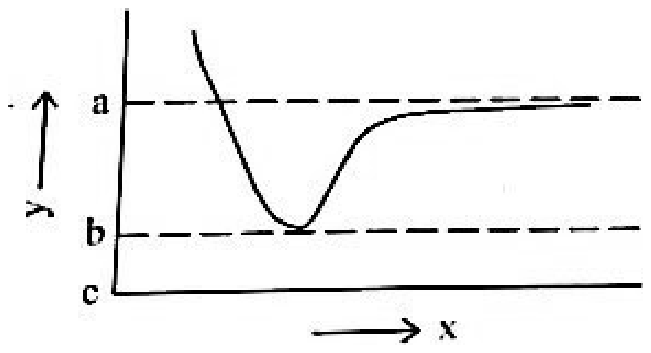
- 1
- 2
- 3
- 4
Show answer and solution
Correct: option 4,
Level a is the energy of two separate H atoms (large x) and level b is the bottom of the well, the energy of the molecule at its bond length. The bond energy is the gap between these two levels, the energy change when one bond forms, which the options write as . Level c is only the base line of the graph, and no halving is needed because the curve is for a single bond.
Question 31NEET 2019, Q59
Which of the following diatomic molecular species has only bonds according to Molecular Orbital Theory?
- 1
- 2
- 3
- 4
Show answer and solution
Correct: option 3,
has 12 electrons: . The bonding and antibonding pairs cancel, so the bond order of 2 comes entirely from the four electrons in the two orbitals. and also have a bond, and has bond order zero.
Question 32NEET 2019 Odisha, Q46
Which of the following is the correct order of dipole moment?
- 1
- 2
- 3
- 4
Show answer and solution
Correct: option 4,
is trigonal planar, so its bond dipoles cancel and its dipole moment is zero. In the N-F bond dipoles point away from the lone pair and partly cancel it (about 0.23 D), while in the N-H bond dipoles add to the lone pair (about 1.47 D). Water has the largest value (about 1.85 D). So the order is .
Question 33NEET 2019 Odisha, Q86
Which of the following is paramagnetic?
- 1
- 2
- 3
- 4
Show answer and solution
Correct: option 2,
Molecular orbital theory puts the last two electrons of singly into the two degenerate orbitals, so has two unpaired electrons and is paramagnetic. In , and every electron is paired, so they are diamagnetic.
Question 34NEET 2018, Q51
In the structure of , the number of lone pairs of electrons on central atom 'Cl' is
- 1four
- 2two
- 3one
- 4three
Show answer and solution
Correct: option 2, two
Chlorine has 7 valence electrons. Three are used in the three Cl–F bonds, leaving 4 electrons, which is 2 lone pairs. The 5 electron pairs give hybridisation and a T-shaped molecule.
Question 35NEET 2018, Q87
Consider the following species :
, , NO and CN
Which one of these will have the highest bond order?
- 1
- 2
- 3NO
- 4CN
Show answer and solution
Correct: option 2,
By molecular orbital theory, has 14 electrons like and a bond order of 3. CN (13 electrons) and NO (15 electrons) each have bond order 2.5, and (12 electrons) has bond order 2. So is highest.
Question 36NEET 2018, Q88
Magnesium reacts with an element (X) to form an ionic compound. If the ground state electronic configuration of (X) is , the simplest formula for this compound is
- 1
- 2
- 3
- 4
Show answer and solution
Correct: option 4,
X has 5 valence electrons (it is nitrogen) and gains 3 to form . Magnesium forms . Balancing the charges needs three for two , giving .
Question 37NEET 2017, Q47
Which of the following pairs of compounds is isoelectronic and isostructural
- 1
- 2
- 3
- 4
Show answer and solution
Correct: option 3,
In the central atom has 2 bond pairs and 3 lone pairs (), so it is linear. also has 2 bond pairs and 3 lone pairs on iodine and is linear, and both species have the same number of valence electrons (22). is linear but has only 16 valence electrons, is bent and is T-shaped.
Question 38NEET 2017, Q53
The species, having bond angles of 120° is:
- 1
- 2
- 3
- 4
Show answer and solution
Correct: option 4,
has three bond pairs and no lone pair on boron (), so it is trigonal planar with bond angles of 120°. and are pyramidal and is T-shaped, so their angles are smaller.
Question 39NEET 2017, Q79
Which one of the following pairs of species have the same bond order?
- 1
- 2
- 3
- 4
Show answer and solution
Correct: option 3,
and CO both have 14 electrons, like , and so both have bond order 3. For the others: NO is 2.5, is 2, is 3 and is 1.5.
Question 40NEET 2016 Phase 1, Q46
Consider the molecules , and . Which of the given statements is false?
- 1The bond angle in , the bond angle in , and the bond angle in are all greater than .
- 2The bond angle in is larger than the bond angle in .
- 3The bond angle in is smaller than the bond angle in .
- 4The bond angle in is larger than the bond angle in .
Show answer and solution
Correct: option 2, The bond angle in is larger than the bond angle in .
All three central atoms are hybridised, but lone pairs repel more strongly than bond pairs and squeeze the bond angle. has no lone pair (), has one () and has two (). So the angle in water is the smallest of the three, not larger than that in methane, and statement (2) is the false one.
Question 41NEET 2016 Phase 1, Q70
Predict the correct order among the following
- 1lone pair - lone pair > lone pair - bond pair > bond pair - bond pair
- 2lone pair - lone pair > bond pair - bond pair > lone pair - bond pair
- 3bond pair - bond pair > lone pair - bond pair > lone pair - lone pair
- 4lone pair - bond pair > bond pair - bond pair > lone pair - lone pair
Show answer and solution
Correct: option 1, lone pair - lone pair > lone pair - bond pair > bond pair - bond pair
This is the VSEPR order of repulsions. A lone pair is held by only one nucleus, so it spreads out and takes more room around the central atom than a bond pair shared between two nuclei. Two lone pairs therefore repel most, a lone pair and a bond pair less, and two bond pairs least.
Question 42NEET 2016 Phase 2, Q46
Which one of the following compounds shows the presence of intramolecular hydrogen bond?
- 1
- 2HCN
- 3Cellulose
- 4Concentrated acetic acid
Show answer and solution
Correct: option 3, Cellulose
An intramolecular hydrogen bond forms between two groups of the same molecule. Cellulose is a long chain of glucose units, and the many groups along one chain hydrogen-bond with oxygen atoms of neighbouring units in the same chain. , HCN and concentrated acetic acid (which forms dimers) are held together by hydrogen bonds between separate molecules.
Question 43NEET 2016 Phase 2, Q65
The hybridizations of atomic orbitals of nitrogen in , and respectively are
- 1, and
- 2, and
- 3, and
- 4, and
Show answer and solution
Correct: option 3, , and
Count the sigma bonds and lone pairs on nitrogen. In there are 2 sigma bonds and no lone pair, so it is linear and . In there are 3 sigma bonds and no lone pair, so it is trigonal planar and . In there are 4 sigma bonds, so it is tetrahedral and .
Question 44NEET 2016 Phase 2, Q67
Which of the following pairs of ions is isoelectronic and isostructural?
- 1,
- 2,
- 3,
- 4,
Show answer and solution
Correct: option 1, ,
The examiners dropped this question and gave every candidate the 4 marks.
The official answer key gives no single option for this question: every candidate was awarded the marks, so it is treated as dropped. The reason is that two options are correct. and both have 32 electrons and are trigonal planar. and both have 42 electrons and are pyramidal. So options (1) and (4) both fit.
Question 45NEET 2016 Phase 2, Q71
The correct geometry and hybridization for are
- 1octahedral,
- 2trigonal bipyramidal,
- 3planar triangle,
- 4square planar,
Show answer and solution
Correct: option 4, square planar,
Xenon has 8 valence electrons. Four are used in the four Xe-F bonds and four remain as two lone pairs, giving six electron pairs and hybridisation. The two lone pairs sit opposite each other, so the four fluorine atoms lie in one plane and the molecule is square planar.
Question 46AIPMT 2015, Q6
The correct bond order in the following species is:
- 1
- 2
- 3
- 4
Show answer and solution
Correct: option 3,
From the molecular orbital picture, has bond order 2 with two electrons in antibonding orbitals. Adding an electron gives with bond order 1.5; removing one gives with 2.5; removing two gives with 3. So the order is , option (3).
Question 47AIPMT 2015, Q9
Which of the following pairs of ions are isoelectronic and isostructural?
- 1,
- 2,
- 3,
- 4,
Show answer and solution
Correct: option 3, ,
Electron counts: has , has , while and have 32 each. and both have three bond pairs and one lone pair on the central atom, so both are pyramidal. They are the pair that is isoelectronic and isostructural, option (3).
Question 48AIPMT 2015, Q11
Which of the following options represents the correct bond order?
- 1
- 2
- 3
- 4
Show answer and solution
Correct: option 1,
The extra electron of enters an antibonding orbital, and the electron lost in leaves one. The bond orders are 1.5, 2 and 2.5. So , option (1).
Question 49AIPMT 2015, Q21
Maximum bond angle at nitrogen is present in which of the following?
- 1
- 2
- 3
- 4
Show answer and solution
Correct: option 2,
has no lone pair or odd electron on nitrogen; it is sp hybridised and linear with a bond angle of 180°. (about 134°), (120°) and (about 115°) all have smaller angles. Hence option (2).
Question 50AIPMT 2015, Q39
Which of the following species contains equal number of - and - bonds:
- 1
- 2
- 3
- 4
Show answer and solution
Correct: option 1,
has four double bonds: 4 and 4 . has 3 and 4 ; has 6 and 4 ; has 4 and 1 . Only has equal numbers, option (1).
Question 51AIPMT 2015 Re-test, Q11
Decreasing order of stability of , , and is:
- 1
- 2
- 3
- 4
Show answer and solution
Correct: option 3,
Stability follows bond order. In the bond order is 2; the extra electrons of the anions go into antibonding orbitals, while the cation has lost one antibonding electron. Bond orders: 2.5, 2, 1.5, 1. So the order is , option (3).
Question 52AIPMT 2015 Re-test, Q13
In which of the following pairs, both the species are not isostructural?
- 1,
- 2,
- 3,
- 4diamond, silicon carbide
Show answer and solution
Correct: option 2, ,
and are both pyramidal; and are both tetrahedral; diamond and silicon carbide are both tetrahedral network solids. has four bond pairs and two lone pairs and is square planar, while has no lone pair and is tetrahedral. Option (2).
Question 53AIPMT 2014, Q138
Which of the following molecules has the maximum dipole moment?
- 1
- 2
- 3
- 4
Show answer and solution
Correct: option 4,
(linear) and (tetrahedral) are symmetrical, so their bond dipoles cancel and the dipole moment is zero. Both and are pyramidal, but in the N–H bond dipoles point the same way as the lone pair dipole and add up (about 1.47 D), while in the N–F bond dipoles oppose the lone pair (about 0.23 D). So has the largest dipole moment.
Question 54AIPMT 2014, Q142
Which one of the following species has plane triangular shape?
- 1
- 2
- 3
- 4
Show answer and solution
Correct: option 3,
In the nitrogen has three bond pairs and no lone pair (), so the ion is planar triangular. and the azide species are linear, and ( with one lone pair) is bent.
Question 55NEET 2013, Q35
Which one of the following molecules contains no bond?
- 1
- 2
- 3
- 4
Show answer and solution
Correct: option 1,
Water has only two O-H single bonds, which are both sigma bonds. , and all have multiple bonds between the central atom and oxygen and so contain bonds. Option (1) is right.
Question 56NEET 2013, Q37
Which of the following is a polar molecule?
- 1
- 2
- 3
- 4
Show answer and solution
Correct: option 1,
has four bond pairs and one lone pair on sulphur, giving an unsymmetrical see-saw shape in which the bond dipoles do not cancel. (tetrahedral), (square planar) and (trigonal planar) are symmetrical and have zero dipole moment. Option (1) is right.
Question 57NEET 2013, Q39
Which of the following is paramagnetic?
- 1
- 2
- 3
- 4CO
Show answer and solution
Correct: option 1,
, and CO each have 14 electrons, the same as , and all their electrons are paired. The superoxide ion has 17 electrons, leaving one unpaired electron in a orbital, so it is paramagnetic. Option (1) is right.
Question 58NEET 2013, Q41
is isostructural with:
- 1
- 2
- 3
- 4
Show answer and solution
Correct: option 1,
In xenon has two bond pairs and three lone pairs (), and the lone pairs take the equatorial positions, so the molecule is linear. has the same count, two bond pairs and three lone pairs on iodine, and is also linear. is pyramidal, is bent and is ionic, so option (1) is right.
Question 59NEET 2013 Karnataka, Q14
The pair of species that has the same bond order in the following is:
- 1,
- 2,
- 3,
- 4,
Show answer and solution
Correct: option 1, ,
CO and both have 14 electrons and are isoelectronic with , so both have bond order 3. In the other pairs the orders differ: 2 and 3; 2 and 3; 2 and 1.
Question 60NEET 2013 Karnataka, Q27
The outer orbitals of C in ethene molecule can be considered to be hybridized to give three equivalent orbitals. The total number of sigma () and pi() bonds in ethene molecule is:
- 13 sigma () and 2 pi() bonds
- 24 sigma () and 1 pi() bonds
- 35 sigma () and 1 pi() bonds
- 41 sigma () and 2 pi() bonds
Show answer and solution
Correct: option 3, 5 sigma () and 1 pi() bonds
Ethene, , has four C–H sigma bonds and one C–C sigma bond, five in all. The unhybridised p orbitals on the two carbons overlap sideways to form the single pi bond of the double bond.
Question 61NEET 2013 Karnataka, Q35
In which of the following pair both the species have hybridization?
- 1,
- 2,
- 3,
- 4,
Show answer and solution
Correct: option 2, ,
N in has three bond pairs and one lone pair, and O in has two bond pairs and two lone pairs; four electron pairs means in both. is and is , which rules out the other pairs.
Question 62NEET 2013 Karnataka, Q43
In which of the following ionization processes the bond energy increases and the magnetic behaviour changes from paramagnetic to diamagnetic:
- 1
- 2
- 3
- 4
Show answer and solution
Correct: option 3,
NO has 15 electrons with one unpaired electron in an antibonding orbital: bond order 2.5 and paramagnetic. Removing that electron gives with bond order 3 and all electrons paired, so the bond gets stronger and the species becomes diamagnetic. stays paramagnetic, while and start diamagnetic and lose bond order.
Question 63AIPMT 2012 Prelims, Q175
Which one of the following pairs is isostructural (i.e. having the same shape and hybridization)?
- 1[ and ]
- 2[ and ]
- 3[ and ]
- 4[ and ]
Show answer and solution
Correct: option 4, [ and ]
and each have four bond pairs and no lone pair on the central atom: both are and tetrahedral. In the other pairs the shapes differ: is trigonal planar () but is T-shaped (); and are pyramidal () but and are planar (). So option (4).
Question 64AIPMT 2012 Prelims, Q176
Bond order of 1.5 is shown by:
- 1
- 2
- 3
- 4
Show answer and solution
Correct: option 2,
has 10 bonding and 6 antibonding electrons, bond order . Removing an antibonding electron gives with 2.5; adding one gives with ; adding two gives with 1. So option (2).
Question 65AIPMT 2012 Prelims, Q196
Which of the following species contains three bond pairs and one lone pair around the central atom?
- 1
- 2
- 3
- 4
Show answer and solution
Correct: option 4,
Phosphorus has 5 valence electrons: three form the bonds and two remain as one lone pair. and have two bond pairs and two lone pairs, and has three bond pairs and no lone pair. So option (4).
Question 66AIPMT 2012 Prelims, Q198
The pair of species with the same bond order is:
- 1,
- 2,
- 3NO, CO
- 4,
Show answer and solution
Correct: option 1, ,
From molecular orbital theory (18 electrons) has bond order 1 and (10 electrons) also has bond order 1. The other pairs differ: 2.5 and 3; NO 2.5 and CO 3; 3 and 2. So option (1).
Question 67AIPMT 2012 Mains, Q35
During change of to ion, the electron adds on which one of the following orbitals?
- 1 orbital
- 2 orbital
- 3 orbital
- 4 orbital
Show answer and solution
Correct: option 1, orbital
In (16 electrons) the bonding orbitals up to are full and the two degenerate antibonding orbitals hold one electron each. The extra electron of goes into one of these half-filled orbitals, which is why the bond order falls from 2 to 1.5.
Question 68AIPMT 2012 Mains, Q49
Four diatomic species are listed below. Identify the correct order in which the bond order is increasing in them:
- 1
- 2
- 3
- 4
Show answer and solution
Correct: option 4,
From molecular orbital theory, bond order = (bonding electrons − antibonding electrons)/2. (3 electrons) has 0.5, (17 electrons) has 1.5, NO (15 electrons) has 2.5 and (14 electrons, like ) has 3. So the increasing order is .
Question 69AIPMT 2011 Prelims, Q5
Which of the following has the minimum bond length?
- 1
- 2
- 3
- 4
Show answer and solution
Correct: option 1,
Bond length falls as bond order rises. From molecular orbital theory the bond orders are 2.5, 2, 1.5 and 1. has the highest bond order and therefore the shortest bond.
Question 70AIPMT 2011 Prelims, Q13
Which of the two ions from the list given below that have the geometry that is explained by the same hybridization of orbitals, , , , , ?
- 1 and
- 2 and
- 3 and
- 4 and
Show answer and solution
Correct: option 1, and
Count the electron pairs around the central atom. (two bonded atoms and one lone pair) and (three bonded atoms) are both . and are , and is sp. Only the pair and shares the same hybridisation among the options.
Question 71AIPMT 2011 Prelims, Q43
The correct order of increasing bond length of C–H, C–O, C–C and C=C is:
- 1C–H < C=C < C–O < C–C
- 2C–C < C=C < C–O < C–H
- 3C–O < C–H < C–C < C=C
- 4C–H < C–O < C–C < C=C
Show answer and solution
Correct: option 1, C–H < C=C < C–O < C–C
Hydrogen is the smallest atom, so C–H is the shortest bond (about 110 pm). A double bond is shorter than a single bond, so C=C (about 134 pm) comes next. Oxygen is smaller than carbon, so C–O (about 143 pm) is shorter than C–C (about 154 pm). The order is C–H < C=C < C–O < C–C.
Question 72AIPMT 2011 Mains, Q17
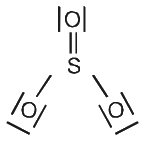
Which of the following structures is the most preferred and hence of lowest energy for ?
- 1
- 2
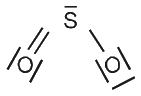
- 3
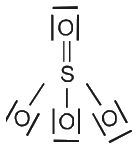
- 4
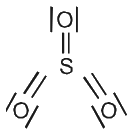
Show answer and solution
Correct: option 4
Among possible Lewis structures the one with the smallest formal charges on the atoms has the lowest energy. With three S=O double bonds, as in option (4), sulphur and all three oxygen atoms have zero formal charge. Structures with S–O single bonds put a negative charge on those oxygens and a positive charge on sulphur, and options (2) and (3) do not even have the right number of oxygen atoms.
Question 73AIPMT 2011 Mains, Q24
The pairs of species of oxygen and their magnetic behaviours are noted below. Which of the following presents the correct description?
- 1, – Both diamagnetic
- 2, – Both paramagnetic
- 3, – Both paramagnetic
- 4, – Both paramagnetic
Show answer and solution
Correct: option 3, , – Both paramagnetic
By molecular orbital theory has two unpaired electrons in its orbitals and has one, so both are paramagnetic and option (3) is correct. also has one unpaired electron (paramagnetic), while in the orbitals are full and it is diamagnetic, which rules out the other three pairs.
Question 74AIPMT 2010 Mains, Q42
In which of the following molecules, the central atom does not have hybridization?
- 1
- 2
- 3
- 4
Show answer and solution
Correct: option 2,
, and each have four bond pairs and no lone pair on the central atom, so it is . In sulphur has four bond pairs and one lone pair, five electron pairs in all, so it is (see-saw shape).
Question 75AIPMT 2010 Mains, Q56
Some of the properties of the two species, and are described below. Which one of them is correct?
- 1Dissimilar in hybridization for the central atom with different structures
- 2Isostructural with same hybridization for the central atom
- 3Isostructural with different hybridization for the central atom
- 4Similar in hybridization for the central atom with different structures
Show answer and solution
Correct: option 1, Dissimilar in hybridization for the central atom with different structures
In nitrogen has three sigma bonds and no lone pair, so it is and the ion is trigonal planar. In oxygen has three bond pairs and one lone pair, so it is and the ion is pyramidal. Both the hybridization and the shape differ.
Question 76AIPMT 2010 Prelims, Q53
In which of the following pairs of molecules/ions, the central atoms have hybridization?
- 1 and
- 2 and
- 3 and
- 4 and
Show answer and solution
Correct: option 2, and
Count sigma bonds plus lone pairs on the central atom; three means . has 3 bonds and no lone pair (3), and has 2 bonds and 1 lone pair (3), so both are . , and each have a total of 4 and are .
Question 77AIPMT 2010 Prelims, Q55
Which one of the following species does not exist under normal conditions?
- 1
- 2
- 3
- 4
Show answer and solution
Correct: option 2,
A species with bond order zero does not exist. has 8 electrons: , giving bond order . The bond orders of , and are 0.5, 1 and 1, so they can exist.
Question 78AIPMT 2010 Prelims, Q78
The correct order of increasing bond angles in the following species are:
- 1
- 2
- 3
- 4
Show answer and solution
Correct: option 4,
has two lone pairs on chlorine and the smallest angle (about ). also has two lone pairs on its central oxygen, but the bulky chlorine atoms open the angle slightly (about ). has only one lone pair and one odd electron on chlorine, so repulsion on the bond pairs is least and the angle is largest (about ).
Question 79AIPMT 2010 Prelims, Q87
In which one of the following species the central atom has the type of hybridization which is not the same as that present in the other three?
- 1
- 2
- 3
- 4
Show answer and solution
Correct: option 3,
Count bond pairs plus lone pairs on the central atom. has 4 + 1 = 5, has 2 + 3 = 5 and has 5 + 0 = 5, so all three are . has 5 bond pairs and 1 lone pair, 6 in all, so it is and is the odd one out.
Question 80AIPMT 2009 Prelims, Q180
According to MO theory which of the following lists ranks the nitrogen species in terms of increasing bond order?
- 1
- 2
- 3
- 4
Show answer and solution
Correct: option 1,
has bond order 3. Each added electron goes into an antibonding orbital and lowers the bond order by 0.5, so has 2.5 and has 2. The increasing order is .
Question 81AIPMT 2009 Prelims, Q194
In which of the following molecules / ions , , and , the central atom is hybridized?
- 1 and
- 2 and
- 3 and
- 4 and
Show answer and solution
Correct: option 3, and
Count sigma bonds plus lone pairs on the central atom. B in has 3 bonds and no lone pair, and N in has 2 bonds and 1 lone pair: three in each case, so both are . and have 2 bonds and 2 lone pairs, which is .
Question 82AIPMT 2008 Prelims, Q81
The angular shape of molecule () consists of
- 12 sigma and 1 pi bond
- 21 sigma and 2 pi bonds
- 32 sigma and 2 pi bonds
- 41 sigma and 1 pi bond
Show answer and solution
Correct: option 1, 2 sigma and 1 pi bond
In ozone the central oxygen is joined to the two end oxygens, written O=O–O in a resonance structure. That is one double bond (1 sigma + 1 pi) and one single bond (1 sigma), so 2 sigma and 1 pi bond in all.
Question 83AIPMT 2008 Prelims, Q82
The correct order of increasing bond angles in the following triatomic species is
- 1
- 2
- 3
- 4
Show answer and solution
Correct: option 3,
has no non-bonding electrons on nitrogen and is linear (180°). has a single odd electron on nitrogen, which repels the bonds only a little (about 134°). has a full lone pair, which pushes the bonds closest together (about 115°). So .
Question 84AIPMT 2008 Prelims, Q83
Four diatomic species are listed below the different sequences. Which of these presents the correct order of their increasing bond order?
- 1
- 2
- 3
- 4
Show answer and solution
Correct: option 1,
From molecular orbital theory: (3 electrons) has bond order 0.5, (17 electrons) 1.5, NO (15 electrons) 2.5 and (14 electrons, like ) 3. The increasing order is .
Question 85AIPMT 2007 Prelims, Q120
In which of the following pairs, the two species are iso-structural?
- 1 and
- 2 and
- 3 and
- 4 and
Show answer and solution
Correct: option 1, and
and each have three bonded oxygens and one lone pair on the central atom, so both are pyramidal. is see-saw but is square planar; is pyramidal but is planar; is planar but is pyramidal.
Question 86AIPMT 2007 Prelims, Q121
The correct order of C–O bond length among , , is:
- 1
- 2
- 3
- 4
Show answer and solution
Correct: option 1,
A higher bond order means a shorter bond. The C–O bond order is 3 in CO, 2 in and about 1.33 in (one double bond shared over three positions by resonance). So the bond length rises as .
Question 87AIPMT 2006 Prelims, Q89
In which of the following molecules all the bonds are not equal:
- 1
- 2
- 3
- 4
Show answer and solution
Correct: option 1,
has five electron pairs around chlorine () with two lone pairs in the equatorial plane, giving a T shape. The two axial Cl-F bonds are longer than the one equatorial bond. In , and the three fluorines are equivalent, so the bonds are equal.
Question 88AIPMT 2006 Prelims, Q90
The electronegativity difference between N and F is greater than that between N and H yet the dipole moment of (1.5 D) is larger than that of (0.2 D). This is because:
- 1In as well as in the atomic dipole and bond dipole are in the same direction
- 2In the atomic dipole and bond dipole are in the same direction whereas in these are in opposite directions
- 3In as well as the atomic dipole and bond dipole are in opposite directions
- 4In the atomic dipole and bond dipole are in the opposite directions whereas in these are in the same direction
Show answer and solution
Correct: option 2, In the atomic dipole and bond dipole are in the same direction whereas in these are in opposite directions
The lone pair on nitrogen has its own dipole (the atomic or orbital dipole) pointing away from the nucleus. In the N-H bond dipoles point towards nitrogen, the same way as the lone pair dipole, so they add. In the N-F bond dipoles point towards fluorine, against the lone pair dipole, so they largely cancel.
Question 89AIPMT 2006 Prelims, Q93
Which of the following species has a linear shape:
- 1
- 2
- 3
- 4
Show answer and solution
Correct: option 3,
has 16 valence electrons like : nitrogen forms two double bonds and has no lone pair, so it is hybridised and linear. In , and the central atom carries a lone pair, which makes them bent.
Question 90AIPMT 2006 Prelims, Q96
Which of the following is not a correct statement:
- 1The electron-deficient molecules can act as Lewis acids
- 2The canonical structures have no real existence
- 3Every molecule does infact have square pyramid structure
- 4Multiple bonds are always shorter than corresponding single bonds
Show answer and solution
Correct: option 3, Every molecule does infact have square pyramid structure
molecules with no lone pair on the central atom, such as , are trigonal bipyramidal; only those with one lone pair, such as , are square pyramidal. So the word \"every\" makes statement (3) wrong. The other three statements are true.
Question 91AIPMT 2006 Prelims, Q97
The number of unpaired electrons in a paramagnetic diatomic molecule of an element with atomic number 16 is:
- 12
- 23
- 34
- 41
Show answer and solution
Correct: option 1, 2
The element is sulphur, and has the same valence molecular orbital pattern as . Its last two electrons enter the two degenerate antibonding orbitals singly (Hund's rule), so the molecule has 2 unpaired electrons.
Question 92AIPMT 2006 Prelims, Q99
Which of the following is not isostructural with :
- 1
- 2
- 3
- 4
Show answer and solution
Correct: option 1,
is tetrahedral: four bond pairs and no lone pair on silicon. , and are tetrahedral too. In sulphur has four bond pairs and one lone pair (), which gives a see-saw shape.
Question 93AIPMT 2005 Prelims, Q52
Which one of the following oxides is expected to exhibit paramagnetic behaviour -
- 1
- 2
- 3
- 4
Show answer and solution
Correct: option 2,
has valence electrons, an odd number, so one electron must stay unpaired and the molecule is paramagnetic. , and have all their electrons paired.
Question 94AIPMT 2005 Prelims, Q80
The correct order in which the O-O bond length increases in the following is:-
- 1
- 2
- 3
- 4
Show answer and solution
Correct: option 2,
Bond length increases as bond order falls. has a double bond (order 2, about 121 pm), ozone has two equivalent resonance bonds of order 1.5 (about 128 pm) and has an O–O single bond (about 148 pm). So .
Question 95AIPMT 2005 Prelims, Q81
Which of the following molecules has trigonal planar geometry;
- 1
- 2
- 3
- 4
Show answer and solution
Correct: option 2,
Boron in has three bond pairs and no lone pair (), so the molecule is trigonal planar with 120° angles. and have one lone pair and are pyramidal, and with two lone pairs is T-shaped.
Question 96AIPMT 2005 Prelims, Q92
Which of the following would have a permanent dipole moment -
- 1
- 2
- 3
- 4
Show answer and solution
Correct: option 2,
has four bond pairs and one lone pair on sulphur, giving an unsymmetrical see-saw shape in which the bond dipoles do not cancel. (trigonal planar), (tetrahedral) and (square planar) are symmetrical, so their bond dipoles cancel to zero.
Question 97AIPMT 2005 Prelims, Q94
The correct sequence of increasing covalent character is represented by -
- 1
- 2
- 3
- 4
Show answer and solution
Correct: option 2,
By Fajans' rules a smaller, more highly charged cation polarises the chloride ion more and makes the bond more covalent. Polarising power rises as , so covalent character rises as .
Question 98AIPMT 2004 Prelims, Q61
Among the following, the pair in which the two species are not isostructural is:
- 1 and
- 2 and
- 3 and
- 4 and
Show answer and solution
Correct: option 4, and
has four bond pairs and no lone pair on Si, so it is tetrahedral (). has four bond pairs and one lone pair on S (), so it is see-saw shaped. The other pairs match: and are both pyramidal, and both tetrahedral, and both octahedral.
Question 99AIPMT 2004 Prelims, Q71
is dipolar, whereas is not. It is because:
- 1 involves hydrogen bonding whereas is a discrete molecule
- 2 is linear and is angular
- 3 is angular and is linear
- 4The electronegativity of F is greater than that of O
Show answer and solution
Correct: option 3, is angular and is linear
Both molecules have polar bonds. is linear, so its two equal bond dipoles point in opposite directions and cancel. is bent (about 104.5°) because of the two lone pairs on oxygen, so its bond dipoles add up to a net dipole moment.
Question 100AIPMT 2004 Prelims, Q80
In a regular octahedral molecule, the number of X–M–X bonds at 180° is:
- 1Two
- 2Six
- 3Four
- 4Three
Show answer and solution
Correct: option 4, Three
In an octahedron the six X atoms lie at the two ends of three mutually perpendicular axes through M. Each axis gives one linear X–M–X arrangement, so there are three X–M–X angles of 180° (the other twelve are 90°).
Question 101AIPMT 2004 Prelims, Q100
In molecule, the lone pairs occupy equatorial positions to minimize:
- 1Bond pair – bond pair repulsion only
- 2Lone pair – lone pair repulsion and lone pair–bond pair repulsion
- 3Lone pair–lone pair repulsion only
- 4Lone pair–bond pair repulsion only
Show answer and solution
Correct: option 2, Lone pair – lone pair repulsion and lone pair–bond pair repulsion
Bromine in has three bond pairs and two lone pairs in a trigonal bipyramidal arrangement (). With both lone pairs equatorial they are 120° apart and each has only two bond pairs at 90°; any other placement puts the lone pairs at 90° to each other or gives more lone pair–bond pair contacts at 90°. So this arrangement keeps both lone pair–lone pair and lone pair–bond pair repulsions lowest, giving the T-shape.
Question 102AIPMT 2003 Prelims, Q54
Which of the following statements is not correct for sigma- and pi- bonds formed between two carbon atoms:
- 1Sigma-bond is stronger than a pi-bond
- 2Bond energies of sigma- and pi-bonds are of the order of 264 KJ/mol and 347 KJ/mol, respectively
- 3Free rotation of atoms about a sigma bond is allowed but not in case of a pi-bond
- 4Sigma-bond determines the direction between carbon atoms but a pi-bond has no primary effect in this regard
Show answer and solution
Correct: option 2, Bond energies of sigma- and pi-bonds are of the order of 264 KJ/mol and 347 KJ/mol, respectively
A sigma bond comes from head-on overlap and is stronger than a pi bond, which comes from sideways overlap. The C-C sigma bond energy is about 347 kJ/mol and the pi bond about 264 kJ/mol, so option (2) has the two values the wrong way round. The other three statements are true.
Question 103AIPMT 2002 Prelims, Q74
Which of the following is iso-electronic:
- 1,
- 2,
- 3,
- 4,
Show answer and solution
Correct: option 3, ,
Count the electrons. : and : , so they are isoelectronic. The others do not match: has 22, has 23, has 24 and has 32.
Question 104AIPMT 2002 Prelims, Q75
Which of the following has bonding
- 1
- 2
- 3
- 4
Show answer and solution
Correct: option 2,
A – bond needs a central atom with vacant d orbitals. N, B and C belong to the second period and have none, so their bonds are –. Sulphur in sulphite has empty 3d orbitals that overlap with the filled 2p orbitals of oxygen.
Question 105AIPMT 2002 Prelims, Q76
In ion number of bond pair and lone pair of electrons on nitrogen atom are:
- 12, 2
- 23, 1
- 31, 3
- 44, 0
Show answer and solution
Correct: option 4, 4, 0
In nitrate, nitrogen forms one double bond and two single bonds to oxygen (three bonds and one bond), which uses all of its valence electrons. So nitrogen has 4 bond pairs and no lone pair.
Question 106AIPMT 2001 Prelims, Q81
Which of the following two species in the pair are isostructural:
- 1,
- 2,
- 3,
- 4,
Show answer and solution
Correct: option 1, ,
and both have two bond pairs and three lone pairs on the central atom () and are linear. In the other pairs the shapes differ: pyramidal and planar; planar and pyramidal; trigonal bipyramidal and square pyramidal.
Question 107AIPMT 2001 Prelims, Q82
In which of the following bond angle is maximum:
- 1
- 2
- 3
- 4
Show answer and solution
Correct: option 2,
All four central atoms are hybridised, but only has no lone pair, so it keeps the full tetrahedral angle of . Lone pairs in (about ), and squeeze the bond angle to smaller values.
Question 108AIPMT 2001 Prelims, Q89
In X-H-----Y, X and Y both are electronegative elements:
- 1Electron density on X will increase and on H will decrease
- 2In both electron density will increase
- 3In both electron density will decrease
- 4On X electron density will decrease and on H increases
Show answer and solution
Correct: option 1, Electron density on X will increase and on H will decrease
X is more electronegative than H and pulls the bonding pair towards itself, so electron density rises on X and falls on H. The partly positive hydrogen is then attracted by the lone pair of Y, which is the hydrogen bond.
Question 109AIPMT 2001 Prelims, Q90
Main axis of a diatomic molecule is z, molecular orbital and overlaps to form, which of the following orbital:
- 1 molecular orbital
- 2 molecular orbital
- 3 molecular orbital
- 4No bond will form
Show answer and solution
Correct: option 1, molecular orbital
With z as the internuclear axis, the orbitals overlap end to end and give a orbital. The and orbitals lie at right angles to the axis and overlap sideways with the same orbital on the other atom ( with , with ), which gives molecular orbitals.
Question 110AIPMT 2000 Prelims, Q75
Which of the following compound is electron defficient:
- 1
- 2
- 3
- 4
Show answer and solution
Correct: option 2,
In boron has only three bond pairs, six electrons in its valence shell, so its octet is incomplete and it readily accepts an electron pair (a Lewis acid). has a complete octet and an expanded one. Monomeric also has an incomplete octet, but is the standard example and the keyed answer.
Question 111AIPMT 2000 Prelims, Q76
- 1
- 2
- 3
- 4
Show answer and solution
Correct: option 2,
Carbon and nitrogen belong to the second period and have no d orbitals, so their bonds with oxygen are -. Phosphorus has vacant 3d orbitals; in its s and p orbitals are used in the four bonds and the bond to oxygen is formed by a d orbital of P with a p orbital of O.
Question 112AIPMT 2000 Prelims, Q78
Which compound form linear polymer due to H-bond:
- 1
- 2
- 3HBr
- 4HCl
Show answer and solution
Correct: option 2,
HBr and HCl do not form hydrogen bonds of any strength. Water has two lone pairs and two hydrogens, so each molecule bonds to four others and builds a three-dimensional network. Ammonia has only one lone pair on nitrogen, so each molecule can accept just one hydrogen bond and the molecules join into chains. Of the given options is the keyed answer.
Question 113AIPMT 2000 Prelims, Q80
Correct order of dissociation energy of and is:
- 1
- 2
- 3
- 4None
Show answer and solution
Correct: option 1,
has 10 bonding and 4 antibonding electrons, bond order . has lost one bonding electron, bond order . A higher bond order means a stronger bond, so the dissociation energy of is greater.
Question 114AIPMT 2000 Prelims, Q81
Isoelectronic species are:
- 1
- 2
- 3
- 4
Show answer and solution
Correct: option 1,
Count the electrons: CO has , has , has and has . All four species in option 1 have 14 electrons. In the other options the counts differ (for example CO 14, CN 13, NO 15, 12).
Question 115AIPMT 2000 Prelims, Q88
Which species does not exhibits paramagnetism:
- 1
- 2
- 3CO
- 4NO
Show answer and solution
Correct: option 3, CO
A species with an odd number of electrons must have an unpaired electron: (13), (17) and NO (15) are all paramagnetic. CO has 14 electrons, the same arrangement as , with every electron paired, so it is diamagnetic.
Question 116AIPMT 1999 Prelims, Q81
Increasing order of bond length is:
- 1
- 2
- 3
- 4
Show answer and solution
Correct: option 4,
Bond length increases as bond order falls. From molecular orbital theory the bond orders are = 3, NO = 2.5, = 2 and = 1.5. So the bond length increases in the order .
Question 117AIPMT 1999 Prelims, Q97
The dipole moment of compound AB is 10.92 D and that of compound CD is 12.45 D. The bond length AB is 2.72 Å and that of CD is 2.56 Å then for these compound true statement is:
- 1More ionic nature in AB
- 2More ionic nature in CD
- 3Equal in both
- 4Not predicted
Show answer and solution
Correct: option 2, More ionic nature in CD
Fractional ionic character = observed dipole moment divided by the moment for complete charge separation, (in D, with in Å). For AB: . For CD: . CD has the larger ionic character.
Question 118AIPMT 1998 Prelims, Q67
The number of antibonding electron pair in is:
- 14
- 23
- 32
- 41
Show answer and solution
Correct: option 1, 4
The peroxide ion has 18 electrons: . The antibonding orbitals , and the two orbitals are all full, which is 8 antibonding electrons, or 4 pairs. (Counting only the valence shell would give 3 pairs; the key counts the inner shell as well.)
Question 119AIPMT 1998 Prelims, Q90
In formal charge on every oxygen atom and P-O bond order is respectively:
- 10.75 and 1.25
- 20.5 and 2
- 31 and 1.5
- 40.75 and 2
Show answer and solution
Correct: option 1, 0.75 and 1.25
Each resonance structure has one P=O and three P– bonds, and the four oxygens are equivalent. The charge of −3 is shared by four oxygens, on each (negative). The bond order is the 5 bonds spread over 4 positions, .