Questions with solutions
Question 1NEET 2026, Q52
In the following reaction sequence, X and Z, respectively are:
- 1;
- 2;
- 3;
- 4;
Show answer and solution
Correct: option 4, ;
An alcohol with gives the alkyl chloride, (X) and HCl. Alcoholic KOH removes HCl from 1-chloropropane to give propene (Y). HBr adds to propene in the presence of benzoyl peroxide in the anti-Markovnikov way, so Z is 1-bromopropane, .
Question 2NEET 2026 Re-exam, Q72
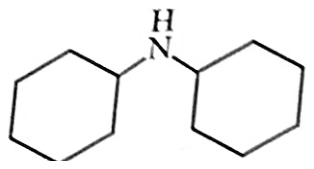
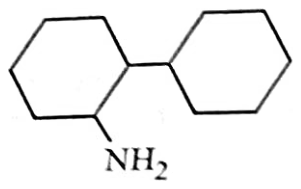
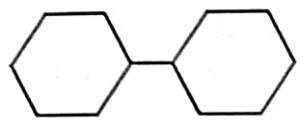
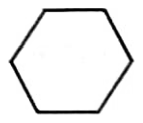
One of the products formed in the following reaction is

- 1
- 2
- 3
- 4
Show answer and solution
Correct: option 4
A Grignard reagent is a very strong base and reacts with any compound that has an acidic hydrogen. The N-H hydrogen of cyclohexylamine protonates the cyclohexyl group of cyclohexylmagnesium bromide, giving the hydrocarbon cyclohexane (option 4) along with the magnesium salt of the amine. No new C-C or C-N bond is formed.
Question 3NEET 2025, Q75
How many products (including stereoisomers) are expected from monochlorination of the following compound?
- 12
- 23
- 35
- 46
Show answer and solution
Correct: option 4, 6
2-Methylbutane has four kinds of hydrogen, giving four structural products: 1-chloro-2-methylbutane (chiral, 2 enantiomers), 2-chloro-2-methylbutane (1), 2-chloro-3-methylbutane (chiral, 2 enantiomers) and 1-chloro-3-methylbutane (1). Total 2 + 1 + 2 + 1 = 6, option (4).
Question 4NEET 2025, Q84
Given below are two statements: one is labelled as Assertion (A) and the other is labelled as Reason (R).
Assertion (A): undergoes reaction faster than .
Reason (R): Iodine is a better leaving group because of its large size.
In the light of the above statements, choose the correct answer from the options given below:
- 1Both A and R are true and R is the correct explanation of A
- 2Both A and R are true but R is not the correct explanation of A
- 3A is true but R is false
- 4A is false but R is true
Show answer and solution
Correct: option 1, Both A and R are true and R is the correct explanation of A
For the same alkyl group the rate follows R-I > R-Br > R-Cl > R-F, so 1-iodobutane reacts faster than 1-chlorobutane: A is true. The reason is that the large iodide ion spreads its charge well and the C-I bond is weak, making iodide the better leaving group: R is true and explains A. Option (1).
Question 5NEET 2024, Q84
The compound that will undergo reaction with the fastest rate is
- 1
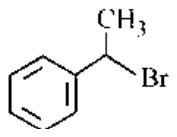
- 2
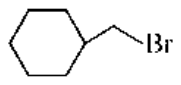
- 3
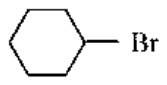
- 4
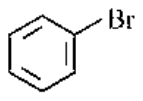
Show answer and solution
Correct: option 1
The rate of an reaction depends on how stable the carbocation formed in the slow step is. The bromide in option (1) gives a secondary benzylic carbocation, which is stabilised by resonance with the benzene ring, so it ionises fastest. Option (2) would give a primary carbocation, option (3) an ordinary secondary one, and the aryl bromide in option (4) does not ionise because its C-Br bond has partial double-bond character.
Question 6NEET 2024, Q86
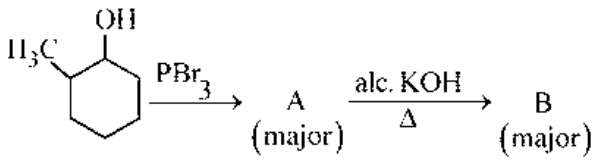
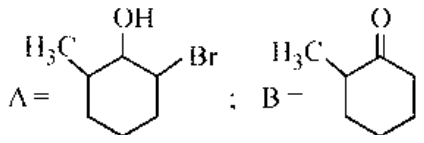
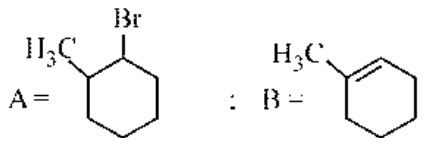
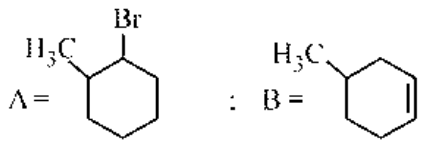
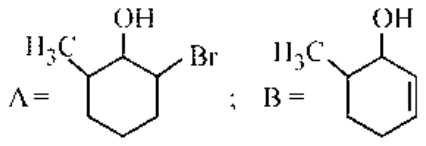
Major products A and B formed in the following reaction sequence, are
- 1
- 2
- 3
- 4
Show answer and solution
Correct: option 2
replaces the group of 2-methylcyclohexanol by , so A is 1-bromo-2-methylcyclohexane. Alcoholic KOH on heating then removes HBr (-elimination). By Saytzeff's rule the more substituted alkene is the major product, so the double bond forms towards the carbon carrying the methyl group and B is 1-methylcyclohexene. This is option (2); option (3) shows the less substituted alkene.
Question 7NEET 2024, Q92
The products A and B obtained in the following reactions, respectively, are
- 1 and
- 2 and
- 3 and
- 4 and
Show answer and solution
Correct: option 1, and
Balancing the atoms gives the by-products. With : , so A is phosphorous acid. With : , so B is phosphorus oxychloride. That is option (1).
Question 8NEET 2024 Re-exam, Q77
The major product C in the below mentioned reaction is:
- 1Propan-1-ol
- 2Propan-2-ol
- 3Propane
- 4Propyne
Show answer and solution
Correct: option 2, Propan-2-ol
Alcoholic KOH removes HBr from 1-bromopropane to give propene (A). HBr adds to propene by Markovnikov's rule, giving 2-bromopropane (B). Aqueous KOH replaces Br by OH, so C is propan-2-ol.
Question 9NEET 2024 Re-exam, Q94
The following reaction method

is not suitable for the preparation of the corresponding haloarene products, due to high reactivity of halogen, when X is:
- 1F
- 2I
- 3Cl
- 4Br
Show answer and solution
Correct: option 1, F
Electrophilic halogenation of toluene with Fe in the dark works well for chlorine and bromine. Fluorine is so reactive that the reaction is violent and cannot be controlled, so fluoroarenes are not made this way. Iodination also fails by this simple method, but for the opposite reason: it is reversible and needs an oxidising agent. The halogen ruled out for high reactivity is F.
Question 10NEET 2023, Q58
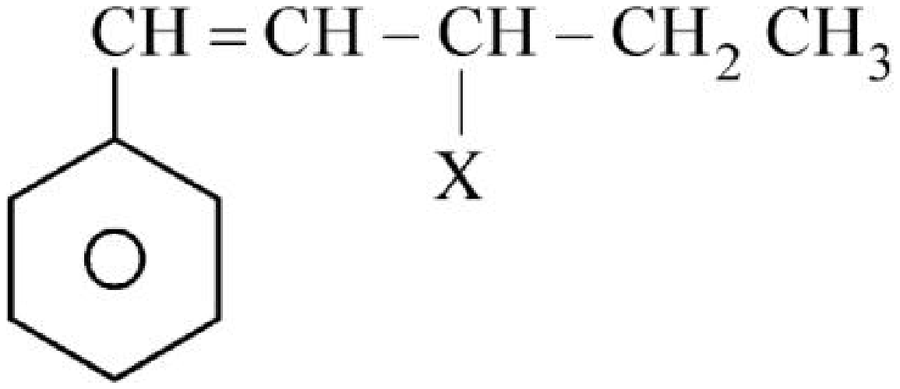
is an example of ________.
- 1benzylic halide
- 2aryl halide
- 3allylic halide
- 4vinylic halide
Show answer and solution
Correct: option 3, allylic halide
The halogen X is on an carbon that is directly attached to the carbon-carbon double bond (). Such a halide is an allylic halide. It is not benzylic because the carbon bearing X is not attached to the ring, and not vinylic or aryl because X is not on an carbon.
Question 11NEET 2023, Q59
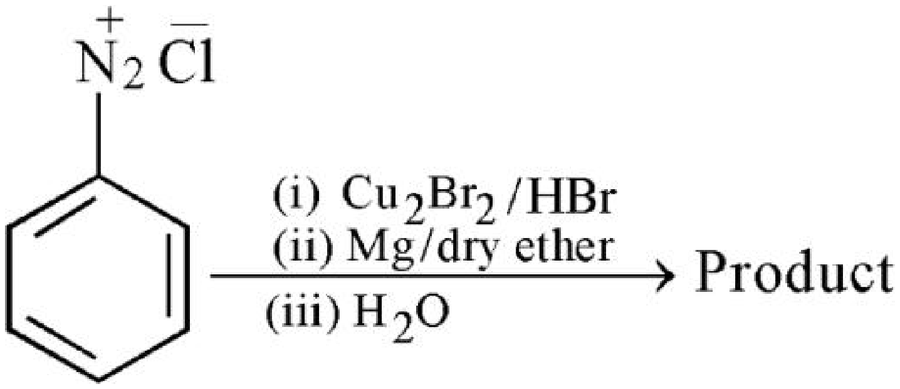
Identify the product in the following reaction:
- 1
- 2
- 3
- 4
Show answer and solution
Correct: option 2
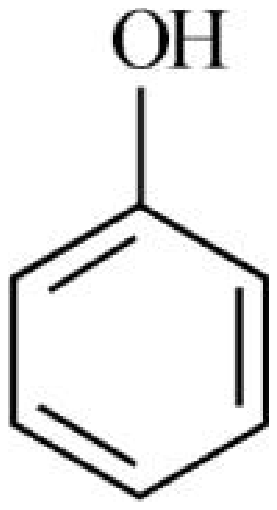
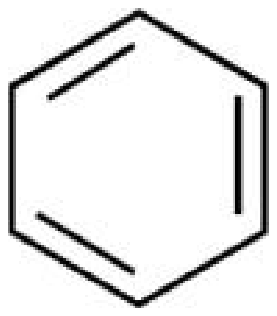
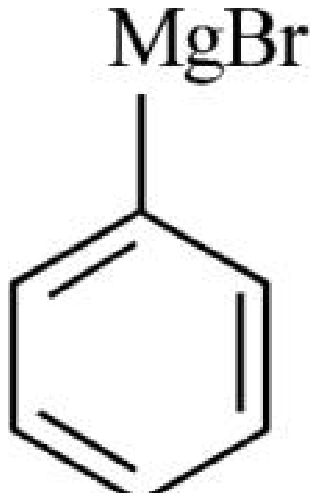
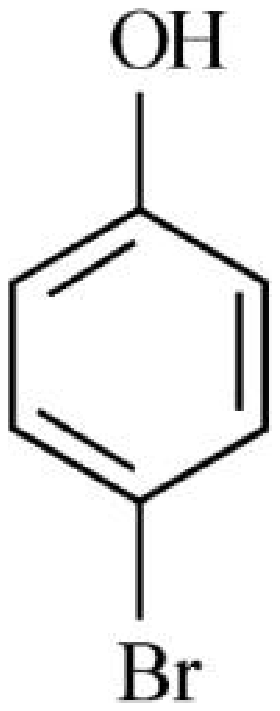
Step (i) is the Sandmeyer reaction: benzenediazonium chloride with gives bromobenzene. Step (ii) with Mg in dry ether gives the Grignard reagent phenylmagnesium bromide. Step (iii): water protonates the Grignard reagent to give benzene, option (2).
Question 12NEET 2023, Q96
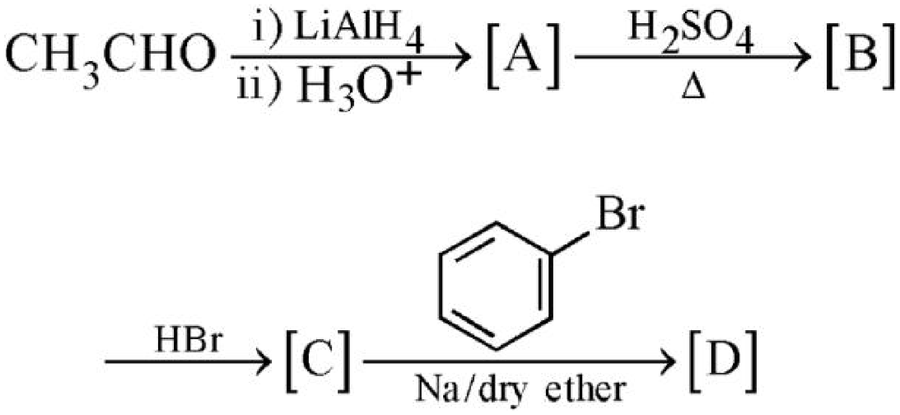
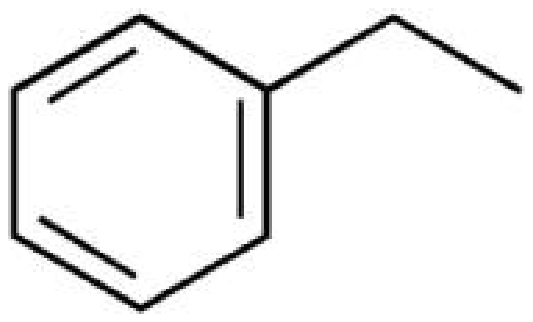
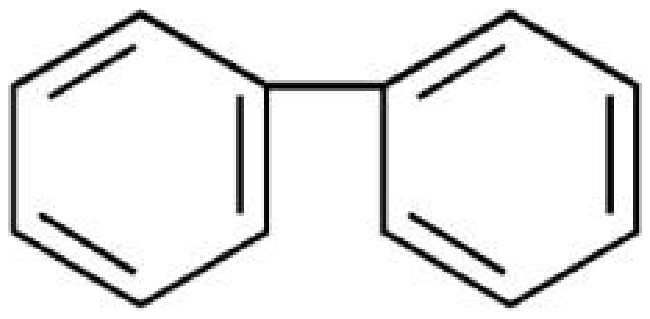
Identify the final product [D] obtained in the following sequence of reactions.
- 1
- 2
- 3
- 4
Show answer and solution
Correct: option 1
reduces ethanal to ethanol [A]. Heating with dehydrates it to ethene [B]. HBr adds to give bromoethane [C]. Bromoethane and bromobenzene with sodium in dry ether undergo the Wurtz-Fittig reaction, joining the ethyl group to the ring. [D] is ethylbenzene, option (1).
Question 13NEET 2023 Manipur, Q84
Which amongst the following reaction of alkyl halides produces isonitrile as a major products?
(A)
(B)
(C)
(D)
Choose the most appropriate answer from the options given below
- 1(B) only
- 2(A) and (B) only
- 3(D) only
- 4(C) and (D) only
Show answer and solution
Correct: option 1, (B) only
Cyanide is an ambident nucleophile. KCN and NaCN are ionic, so the free ion attacks through carbon (the C-C bond formed is stronger) and gives the nitrile R-CN. AgCN is mainly covalent with the carbon bonded to silver, so only the nitrogen lone pair is free to attack and the isonitrile R-NC is the major product. Only reaction (B) gives the isonitrile.
Question 14NEET 2023 Manipur, Q85
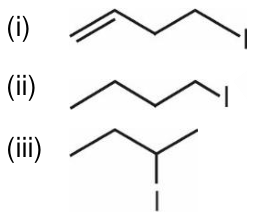
The correct order for the rate of -dehydrohalogenation for the following compounds is ________.
- 1(iii) < (ii) < (i)
- 2(ii) < (iii) < (i)
- 3(i) < (ii) < (iii)
- 4(ii) < (i) < (iii)
Show answer and solution
Correct: option 2, (ii) < (iii) < (i)
Loss of HI is faster when the alkene formed is more stable. Compound (i), 4-iodobut-1-ene, gives buta-1,3-diene, a conjugated diene, so it reacts fastest. Compound (iii), 2-iodobutane, is a secondary iodide and gives the disubstituted but-2-ene. Compound (ii), 1-iodobutane, is a primary iodide and gives only the monosubstituted but-1-ene, so it is slowest. The order is (ii) < (iii) < (i).
Question 15NEET 2023 Manipur, Q95
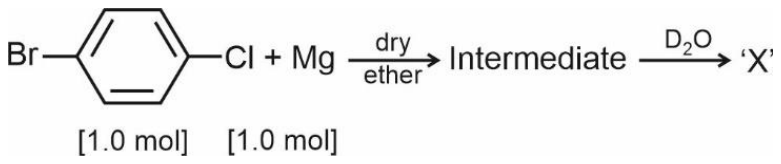
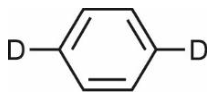
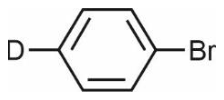
Identify ‘X’ in the following reaction.
- 1
- 2
- 3
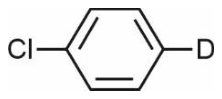
- 4
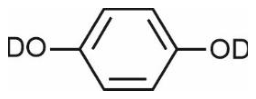
Show answer and solution
Correct: option 3
With only one mole of magnesium, the Grignard reagent forms at the more reactive C-Br bond (weaker than C-Cl), giving 4-chlorophenylmagnesium bromide. then replaces the MgBr group by deuterium. X is 1-chloro-4-deuteriobenzene, option (3).
Question 16NEET 2022, Q69
The incorrect statement regarding chirality is:
- 1A racemic mixture shows zero optical rotation.
- 2 reaction yields 1 : 1 mixture of both enantiomers.
- 3The product obtained by reaction of haloalkane having chirality at the reactive site shows inversion of configuration.
- 4Enantiomers are superimposable mirror images on each other.
Show answer and solution
Correct: option 4, Enantiomers are superimposable mirror images on each other.
Enantiomers are mirror images that cannot be superimposed on each other, so statement (4) is incorrect. A racemic mixture has equal amounts of both enantiomers and no net rotation, goes through a planar carbocation and gives a racemic product, and attack from the back side inverts the configuration.
Question 17NEET 2022, Q79
Which of the following sequence of reactions is suitable to synthesize chlorobenzene?
- 1
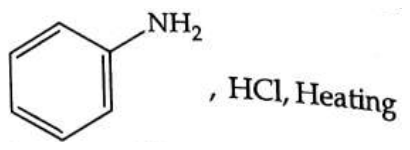
- 2Benzene, , anhydrous
- 3Phenol, , HCl, CuCl
- 4
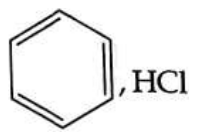
Show answer and solution
Correct: option 2, Benzene, , anhydrous
Benzene is chlorinated by with anhydrous as Lewis acid (electrophilic substitution), giving chlorobenzene. Aniline heated with HCl only forms its salt, phenol cannot be diazotised (the Sandmeyer route needs aniline), and benzene does not react with HCl alone.
Question 18NEET 2022 Re-exam, Q53
Given below are two statements: one is labelled as Assertion (A) and the other is labelled as Reason (R).
Assertion (A): Chlorine is an electron withdrawing group but it is ortho, para directing in electrophilic aromatic substitution.
Reason (R): Inductive effect of chlorine destabilises the intermediate carbocation formed during the electrophilic substitution, however due to the more pronounced resonance effect, the halogen stabilises the carbocation at ortho and para positions.
In the light of the above statements, choose the most appropriate answer from the options given below:
- 1(A) is not correct but (R) is correct
- 2Both (A) and (R) are correct and (R) is the correct explanation of (A)
- 3Both (A) and (R) are correct but (R) is not the correct explanation of (A)
- 4(A) is correct but (R) is not correct
Show answer and solution
Correct: option 4, (A) is correct but (R) is not correct
The assertion is true: chlorine withdraws electrons through its inductive effect and deactivates the ring, yet its lone pairs stabilise by resonance the carbocation formed by attack at the ortho and para positions, so it directs there. The reason is marked not correct because it calls the resonance effect the more pronounced one; in haloarenes the inductive effect is the stronger of the two (that is why the ring is deactivated), and resonance only decides the orientation. Hence option (4). Note that the reason is close to the textbook wording, so option (2) is also argued for this question.
Question 19NEET 2022 Re-exam, Q58
Predict the order of reactivity of the following four isomers towards reaction.
(I)
(II)
(III)
(IV)
- 1(IV) > (II) > (III) > (I)
- 2(IV) > (III) > (II) > (I)
- 3(I) > (II) > (III) > (IV)
- 4(I) > (III) > (II) > (IV)
Show answer and solution
Correct: option 4, (I) > (III) > (II) > (IV)
An reaction needs the nucleophile to reach the carbon from the back, so it slows as crowding at that carbon grows: primary > secondary > tertiary. (I) is an unbranched primary halide; (III) is also primary but branched at the next carbon, so it is a little slower; (II) is secondary; (IV) is tertiary and slowest. Order: (I) > (III) > (II) > (IV).
Question 20NEET 2021, Q68
The major product formed in dehydrohalogenation reaction of 2-Bromo pentane is Pent-2-ene. This product formation is based on?
- 1Saytzeff's Rule
- 2Hund's Rule
- 3Hofmann Rule
- 4Huckel's Rule
Show answer and solution
Correct: option 1, Saytzeff's Rule
Saytzeff's (Zaitsev's) rule says that in dehydrohalogenation the preferred alkene is the one with more alkyl groups on the doubly bonded carbons. Pent-2-ene is more substituted than pent-1-ene, so it is the major product.
Question 21NEET 2021, Q77
The correct sequence of bond enthalpy of 'C-X' bond is:
- 1
- 2
- 3
- 4
Show answer and solution
Correct: option 2,
From F to I the halogen atom gets larger, the C-X bond gets longer and the orbital overlap gets poorer, so the bond gets weaker. The bond enthalpy therefore falls steadily from C-F to C-I.
Question 22NEET 2020, Q5
Elimination reaction of 2-Bromo-pentane to form pent-2-ene is:
(a) β-Elimination reaction
(b) Follows Zaitsev rule
(c) Dehydrohalogenation reaction
(d) Dehydration reaction
- 1(a), (b), (c)
- 2(a), (c), (d)
- 3(b), (c), (d)
- 4(a), (b), (d)
Show answer and solution
Correct: option 1, (a), (b), (c)
HBr is lost from 2-bromopentane, so it is a dehydrohalogenation (c). The hydrogen leaves from the carbon next to the one bearing bromine, so it is a β-elimination (a). The more substituted alkene, pent-2-ene, is the product, as the Zaitsev rule predicts (b). No water is removed, so it is not a dehydration; (d) is wrong.
Question 23NEET 2020 Phase 2, Q176
Which of the following will NOT undergo reaction with ?
- 1
- 2
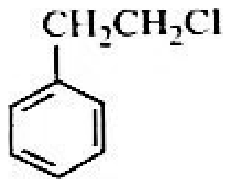
- 3
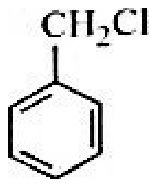
- 4
Show answer and solution
Correct: option 2
An reaction needs a stable carbocation. is tertiary, and the benzyl and allyl cations from (3) and (4) are stabilised by resonance. The halide in (2), 2-phenylethyl chloride, would give a primary carbocation that is one carbon away from the ring and not resonance stabilised, so it does not react by the path.
Question 24NEET 2019 Odisha, Q73
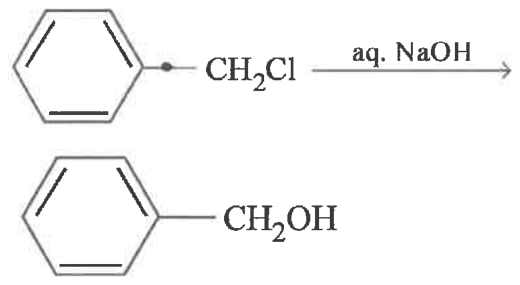
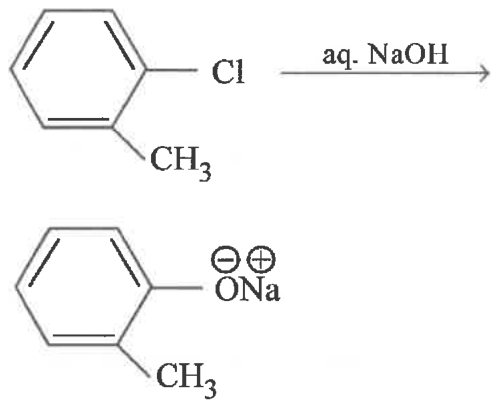
The hydrolysis reaction that takes place at the slowest rate, among the following, is -
- 1
- 2
- 3
- 4
Show answer and solution
Correct: option 3
In option (3) the chlorine is bonded directly to the benzene ring (an aryl halide). Resonance gives the C-Cl bond partial double bond character, the carbon is hybridised and the ring repels the incoming nucleophile, so aryl halides are hydrolysed only under drastic conditions. Allyl chloride (1) and benzyl chloride (2) react fast because their carbocations are stabilised by resonance, and ethyl chloride (4) is an ordinary primary alkyl halide. So (3) is the slowest.
Question 25NEET 2017, Q80
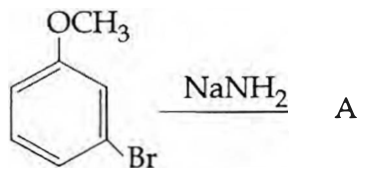
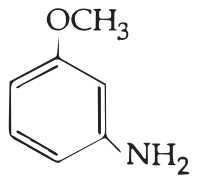
Identify A and predict the type of reaction
- 1and substitution reaction
- 2and elimination addition reaction
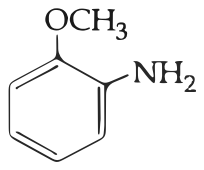
- 3and cine substitution reaction
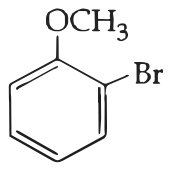
- 4and cine substitution reaction
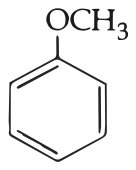
Show answer and solution
Correct: option 1, and substitution reaction
removes HBr from the bromoanisole to give a benzyne, and then adds to the triple bond. The addition places the negative charge on the carbon next to the one carrying , where the electron-withdrawing inductive effect of the oxygen stabilises it, so ends up meta to . Overall Br has been replaced by at the same position, which the key counts as a substitution reaction: option (1).
Question 26NEET 2016 Phase 1, Q85
For the following reactions:
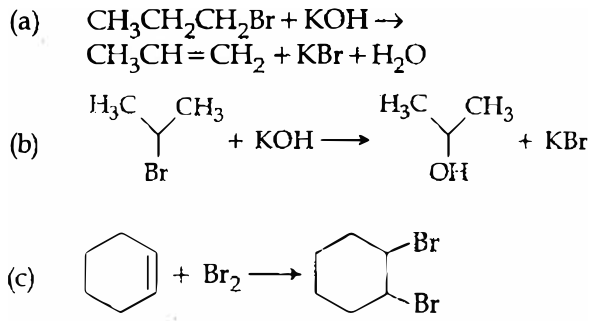
Which of the following statements is correct?
- 1(a) and (b) are elimination reactions and (c) is addition reaction.
- 2(a) is elimination, (b) is substitution and (c) is addition reaction.
- 3(a) is elimination, (b) and (c) are substitution reactions.
- 4(a) is substitution, (b) and (c) are addition reactions.
Show answer and solution
Correct: option 2, (a) is elimination, (b) is substitution and (c) is addition reaction.
In (a) 1-bromopropane loses HBr to give propene, a double bond is formed, so it is elimination. In (b) the of 2-bromopropane is replaced by , which is substitution. In (c) bromine adds across the double bond of cyclohexene to give 1,2-dibromocyclohexane, which is addition.
Question 27NEET 2016 Phase 2, Q76
Which of the following can be used as the halide component for Friedel-Crafts reaction?
- 1Chlorobenzene
- 2Bromobenzene
- 3Chloroethene
- 4Isopropyl chloride
Show answer and solution
Correct: option 4, Isopropyl chloride
In a Friedel-Crafts reaction the Lewis acid pulls the halogen off the halide to give a carbocation. In aryl halides (chlorobenzene, bromobenzene) and vinyl halides (chloroethene) the carbon-halogen bond has partial double bond character and the resulting cations are very unstable, so they do not react. Isopropyl chloride is an alkyl halide and gives a stable secondary carbocation easily.
Question 28NEET 2016 Phase 2, Q86
Consider the reaction
This reaction will be the fastest in
- 1ethanol
- 2methanol
- 3-dimethylformamide (DMF)
- 4water
Show answer and solution
Correct: option 3, -dimethylformamide (DMF)
A primary halide reacting with the strong nucleophile follows the path. Ethanol, methanol and water are protic solvents: they hydrogen-bond to and make it less reactive. DMF is a polar aprotic solvent, which dissolves the salt by solvating but leaves free, so the reaction is fastest in it.
Question 29AIPMT 2015 Re-test, Q29
Two possible stereo-structures of , which are optically active, are called:
- 1Enantiomers
- 2Mesomers
- 3Diastereomers
- 4Atropisomers
Show answer and solution
Correct: option 1, Enantiomers
Lactic acid has one chiral carbon, bonded to H, OH, and COOH. It therefore exists as two forms that are non-superimposable mirror images and rotate plane polarised light in opposite directions. Such a pair is called enantiomers, option (1). Diastereomers and meso forms need at least two chiral centres.
Question 30AIPMT 2015 Re-test, Q34
In an reaction on chiral centres, there is:
- 1100% retention
- 2100% inversion
- 3100% racemization
- 4inversion more than retention leading to partial racemization
Show answer and solution
Correct: option 4, inversion more than retention leading to partial racemization
An reaction goes through a planar carbocation that can be attacked from either face, which would give a racemic mixture. In practice the leaving group stays close to the face it left for a short time and partly blocks it, so attack from the opposite face is slightly favoured. The product has a little more inversion than retention, that is partial racemization, option (4).
Question 31AIPMT 2015 Re-test, Q43
Which of the following reaction(s) can be used for the preparation of alkyl halides?
(I)
(II)
(III)
(IV)
- 1(IV) only
- 2(III) and (IV) only
- 3(I), (III) and (IV) only
- 4(I) and (II) only
Show answer and solution
Correct: option 3, (I), (III) and (IV) only
Primary and secondary alcohols react with HCl only when anhydrous is present to help the OH group leave, so (I) and (IV) work and (II), a primary alcohol with HCl alone, does not. A tertiary alcohol forms a stable carbocation and reacts with concentrated HCl even without the catalyst, so (III) works. The answer is (I), (III) and (IV) only, option (3).
Question 32AIPMT 2014, Q152
Which of the following compounds will undergo racemisation when solution of KOH hydrolyses?
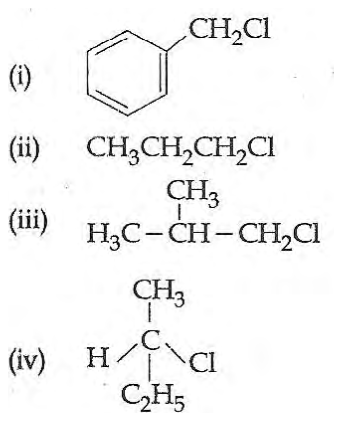
- 1(i) and (iv)
- 2(i) and (ii)
- 3(ii) and (iv)
- 4(iii) and (iv)
Show answer and solution
Correct: option 1, (i) and (iv)
Racemisation goes with the path, where a planar carbocation is attacked from both faces. (i) is benzyl chloride, which gives a resonance-stabilised benzyl cation and reacts by ; (iv) is 2-chlorobutane, a secondary halide with a chiral carbon, which is partly racemised on hydrolysis. (ii) 1-chloropropane and (iii) 1-chloro-2-methylpropane are primary halides that react by . The key therefore gives (i) and (iv). Strictly, only (iv) has a chiral carbon, so only it can actually show racemisation; (i) is included because it follows the same mechanism.
Question 33AIPMT 2012 Mains, Q47
In the replacement reaction
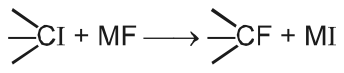
The reaction will be most favourable if M happens to be:
- 1Na
- 2K
- 3Rb
- 4Li
Show answer and solution
Correct: option 3, Rb
The halogen on carbon is exchanged for fluorine, and the metal fluoride MF becomes the metal iodide MI. The exchange is easiest when MF gives up its fluoride ion readily, that is when MF is the most ionic and has the lowest lattice energy. Among Li, Na, K and Rb the largest cation is , so RbF is the most favourable.
Question 34AIPMT 2011 Prelims, Q45
Which one is a nucleophilic substitution reaction among the following?
- 1
- 2
- 3
- 4
Show answer and solution
Correct: option 3,
In the third reaction the leaving group on a saturated carbon is replaced by the nucleophile (ending as ): a nucleophilic substitution. Hydration of propene is an electrophilic addition, and the Grignard and HCN reactions are nucleophilic additions to a carbonyl group.
Question 35AIPMT 2011 Mains, Q5
Which of the following compounds undergoes nucleophilic substitution reaction most easily?
- 1
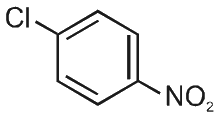
- 2
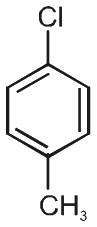
- 3
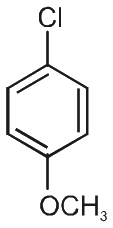
- 4
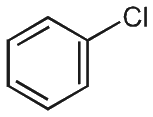
Show answer and solution
Correct: option 1
Nucleophilic substitution on an aryl chloride goes through a negatively charged intermediate, which is stabilised by an electron-withdrawing group at the ortho or para position. The group para to chlorine in option (1) does this, while and release electrons and make the reaction harder than in chlorobenzene itself. So p-nitrochlorobenzene reacts most easily.
Question 36AIPMT 2011 Mains, Q25
Consider the reactions:
(i)
(ii)
The mechanisms of reactions (i) and (ii) are respectively:
- 1 and
- 2 and
- 3 and
- 4 and
Show answer and solution
Correct: option 1, and
The question turns on the nucleophile. In (i) ethanol is a weak, neutral nucleophile and a polar protic solvent, the conditions of solvolysis that favour the path. In (ii) ethoxide ion is a strong nucleophile that attacks the primary carbon directly and displaces bromide in one step, the path. So the key's answer is and .
Question 37AIPMT 2010 Mains, Q60
In the following reaction,
, the product 'X' is:
- 1
- 2
- 3
- 4
Show answer and solution
Correct: option 3,
Magnesium in ether converts benzyl bromide into the Grignard reagent . A Grignard reagent is a strong base and takes a proton from , giving the hydrocarbon toluene, .
Question 38AIPMT 2010 Prelims, Q59
The reaction of toluene with in presence of gives 'X' and reaction in presence of light gives 'Y'. Thus, 'X' and 'Y' are:
- 1X = Benzal chloride, Y = o-chlorotoluene
- 2X = m-chlorotoluene, Y = p-chlorotoluene
- 3X = o-and p-chlorotoluene, Y = Trichloromethyl benzene
- 4X = Benzyl chloride, Y = m-chlorotoluene
Show answer and solution
Correct: option 3, X = o-and p-chlorotoluene, Y = Trichloromethyl benzene
With (a Lewis acid) chlorine attacks the ring as an electrophile, and the methyl group directs it to the ortho and para positions, giving o- and p-chlorotoluene. In light the reaction is a free-radical substitution on the side chain, which goes through benzyl chloride and benzal chloride to trichloromethyl benzene. Only option (3) puts ring substitution under X and side-chain substitution under Y.
Question 39AIPMT 2010 Prelims, Q64
The correct order of increasing reactivity of bond towards nucleophile in the following compounds is:
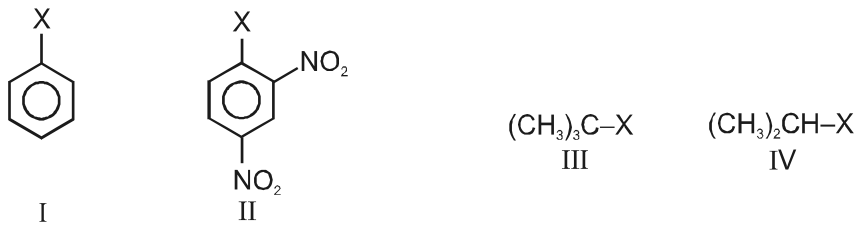
- 1I < II < IV < III
- 2II < III < I < IV
- 3IV < III < I < II
- 4III < II < I < IV
Show answer and solution
Correct: option 1, I < II < IV < III
In the aryl halide (I) the bond has partial double-bond character from resonance, so it is the least reactive. The two groups at the ortho and para positions in II withdraw electrons and make it more reactive than I, though still less than alkyl halides. Of the alkyl halides, the tertiary halide (III) forms the more stable carbocation and reacts faster than the secondary one (IV). So I < II < IV < III.
Question 40AIPMT 2010 Prelims, Q96
Which one is most reactive towards reaction?
- 1
- 2
- 3
- 4
Show answer and solution
Correct: option 3,
The rate of an reaction depends on the stability of the carbocation formed when bromide leaves. gives a tertiary carbocation stabilised by resonance with two phenyl rings and also by the methyl group, the most stable of the four. The others give carbocations with fewer stabilising groups (two phenyls only, one phenyl and one methyl, or one phenyl).
Question 41AIPMT 2009 Prelims, Q154
Which of the following reactions is an example of nucleophilic substitution reaction?
- 1
- 2
- 3
- 4
Show answer and solution
Correct: option 4,
In the nucleophile attacks the carbon and replaces the halide ion, which is a nucleophilic substitution. The first is the Wurtz coupling, the second is a reduction and the third is the formation of a Grignard reagent.
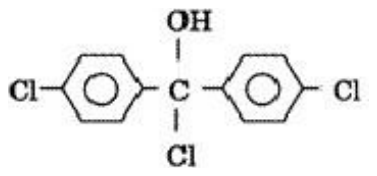
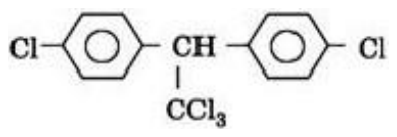
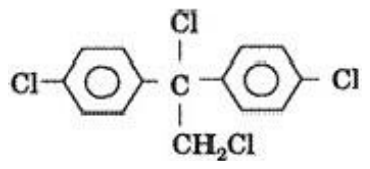
Question 42AIPMT 2009 Prelims, Q198
Trichloroacetaldehyde, reacts with chlorobenzene in presence of sulphuric acid and produces:
- 1
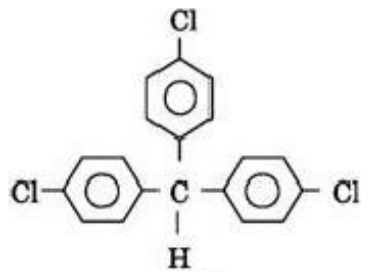
- 2
- 3
- 4
Show answer and solution
Correct: option 3
With sulphuric acid, one molecule of chloral condenses with two molecules of chlorobenzene at their para positions and loses one molecule of water. The aldehyde carbon becomes a CH joined to two p-chlorophenyl rings and still carries the group. This product is DDT.
Question 43AIPMT 2008 Prelims, Q88
How many stereoisomers does the molecules have?
- 12
- 24
- 36
- 48
Show answer and solution
Correct: option 2, 4
The molecule has one double bond that can be cis or trans (each doubly bonded carbon carries two different groups) and one chiral carbon, the CHBr carbon, which can be R or S. The number of stereoisomers is .
Question 44AIPMT 2008 Prelims, Q96
In a substitution reaction of the type
Which one of the following has the highest relative rate?
- 1
- 2
- 3
- 4
Show answer and solution
Correct: option 1,
In an reaction the nucleophile attacks from the back of the carbon carrying bromine, so crowding near that carbon slows it down. All four are primary bromides, but the branching on the next carbon increases from (1) to (4). Ethyl bromide is the least hindered and reacts fastest.
Question 45AIPMT 2007 Prelims, Q145
For the following
(a)
(b)
(c)
the increasing order of nucleophilicity would be:
- 1
- 2
- 3
- 4
Show answer and solution
Correct: option 3,
In water and other protic solvents the small chloride ion is held tightly by hydrogen bonding and is the least free to attack, while the large iodide ion is weakly solvated and its electron cloud is easily distorted. Nucleophilicity therefore rises with size: .
Question 46AIPMT 2006 Prelims, Q78
Which of the following is not chiral:
- 12-Butanol
- 22,3-Dibromopentane
- 33-Bromopentane
- 42-Hydroxypropanoic acid
Show answer and solution
Correct: option 3, 3-Bromopentane
In 3-bromopentane, , the carbon bearing bromine carries two identical ethyl groups, so there is no chiral centre. 2-Butanol and 2-hydroxypropanoic acid each have one carbon with four different groups, and 2,3-dibromopentane has two such carbons with unlike ends, so all three are chiral.
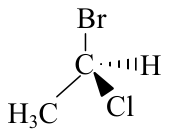
Question 47AIPMT 2005 Prelims, Q61
The chirality of the compound
- 1E
- 2R
- 3S
- 4Z
Show answer and solution
Correct: option 2, R
Priorities by atomic number are Br > Cl > > H. The lowest priority group H is on the dashed bond, pointing away from the viewer, so the molecule is already viewed correctly. Going Br (top) to Cl (lower right) to (lower left) is a clockwise turn, so the configuration is R. E and Z describe double bonds, not chiral centres.
Question 48AIPMT 2005 Prelims, Q72
Which of the following undergoes nucleophilic substitution exclusively by mechanism:
- 1Ethyl chloride
- 2Isopropyl chloride
- 3Benzyl chloride
- 4Chlorobenzene
Show answer and solution
Correct: option 3, Benzyl chloride
The path needs a stable carbocation. Benzyl chloride ionises to the benzyl cation, which is stabilised by resonance with the ring, so among the choices it is the one that reacts by . Ethyl chloride (primary) reacts by , isopropyl chloride by a mixture of both, and chlorobenzene does not undergo ordinary nucleophilic substitution.
Question 49AIPMT 2004 Prelims, Q70
Which of the following is least reactive in a nucleophilic substitution reaction:
- 1
- 2
- 3
- 4
Show answer and solution
Correct: option 1,
In vinyl chloride, , a lone pair on chlorine is delocalised into the double bond, which gives the C–Cl bond partial double bond character, and the carbon is hybridised. The bond is therefore short and strong and is very hard to break, so vinyl chloride is the least reactive. Allyl and tert-butyl chlorides are highly reactive and ethyl chloride reacts normally.
Question 50AIPMT 2004 Prelims, Q78
Chloropicrin is obtained by the reaction of
- 1Nitric acid on chlorobenzene
- 2Chlorine on picric acid
- 3Nitric acid on chloroform
- 4Steam on carbon tetrachloride
Show answer and solution
Correct: option 3, Nitric acid on chloroform
Chloropicrin is trichloronitromethane, . It forms when concentrated nitric acid replaces the hydrogen of chloroform by a nitro group: .
Question 51AIPMT 2002 Prelims, Q90
Reactivity order of halides for dehydrohalogenation is:
- 1
- 2
- 3
- 4
Show answer and solution
Correct: option 2,
In dehydrohalogenation the carbon–halogen bond is broken, so the weaker the bond and the better the leaving group, the faster the reaction. The C–X bond strength falls from C–F to C–I, so the reactivity order is R–I > R–Br > R–Cl > R–F.
Question 52AIPMT 2001 Prelims, Q52
obtained by chlorination of n-butane, will be:
- 1Meso form
- 2Racemic mixture
- 3d-form
- 4l-form
Show answer and solution
Correct: option 2, Racemic mixture
2-Chlorobutane has one chiral carbon. Free-radical chlorination passes through a planar secondary butyl radical that chlorine attacks equally from both faces, so the d and l forms are made in equal amounts: a racemic mixture.
Question 53AIPMT 2001 Prelims, Q55
An organic compound A() on reaction with Na/diethyl ether gives a hydrocarbon which on monochlorination gives only one chloro derivative then, A is:
- 1t-butyl chloride
- 2sec. butyl chloride
- 3Iso butyl chloride
- 4n-butyl chloride
Show answer and solution
Correct: option 1, t-butyl chloride
The Wurtz reaction joins two alkyl groups. Two t-butyl groups give 2,2,3,3-tetramethylbutane, , in which all eighteen hydrogens are equivalent, so only one monochloro product is possible. The other three chlorides give octanes with several kinds of hydrogen.
Question 54AIPMT 2000 Prelims, Q100
R and S enantiomer are differ in:
- 1Rotation of PPL
- 2Solubility in achiral solvent
- 3Chemical properties
- 4Dipole moment
Show answer and solution
Correct: option 1, Rotation of PPL
Enantiomers are mirror images, so they have the same physical properties (solubility in ordinary solvents, dipole moment, melting point) and the same chemical properties towards achiral reagents. They differ only in the direction in which they rotate plane polarised light: one turns it to the right and the other to the left by the same angle.
Question 55AIPMT 1998 Prelims, Q62
2-Bromo pentane reacts with ethanolic KOH gives main product:
- 1Trans-2-pentene
- 2Cis-2-pentene
- 31-pentene
- 4None of the above
Show answer and solution
Correct: option 1, Trans-2-pentene
Alcoholic KOH brings about dehydrohalogenation. By Saytzeff's rule the more substituted alkene, 2-pentene, is preferred over 1-pentene. Of its two geometrical forms the trans isomer is the more stable and is formed in the larger amount.
Question 56AIPMT 1998 Prelims, Q75
The chiral centre is absent in:
- 1
- 2
- 3
- 4
Show answer and solution
Correct: option 1,
A chiral carbon carries four different groups. In every carbon has at least two identical hydrogens, so there is no chiral centre. In the others one carbon has four different groups: C-2 with , H, D, ; C-2 with , H, Cl, ; and C-2 with , H, OH, .