A cylinder contains hydrogen gas at pressure of 249 kPa and temperature 27°C. Its density is: ()
- 1
- 2
- 3
- 4
Show answer and solution
Correct: option 2,
For an ideal gas , so . With , for hydrogen and , .
180 questions · 3 h · held on 13 September 2020 · booklet code E3
Answers are checked against the final answer key published by NTA.
A cylinder contains hydrogen gas at pressure of 249 kPa and temperature 27°C. Its density is: ()
Correct: option 2,
For an ideal gas , so . With , for hydrogen and , .
When a uranium isotope is bombarded with a neutron, it generates , three neutrons and:
Correct: option 1,
Charge number and mass number are both conserved in fission. Mass number: , so . Charge number: , so , which is barium. The other fragment is .
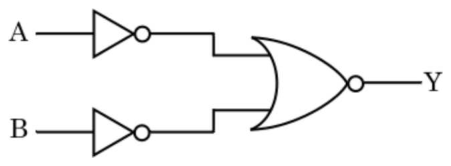
For the logic circuit shown, the truth table is:
Correct: option 1,
Each input passes through a NOT gate, so the NOR gate receives and . Its output is by De Morgan's theorem. The circuit therefore behaves as an AND gate: Y is 1 only when both A and B are 1, which is the first table.
A capillary tube of radius r is immersed in water and water rises in it to a height h. The mass of the water in the capillary is 5 g. Another capillary tube of radius 2r is immersed in water. The mass of water that will rise in this tube is:
Correct: option 3, 10.0 g
The weight of the liquid column is held up by surface tension acting round the circumference: , so . (Equivalently and the mass .) Doubling the radius doubles the mass, from 5 g to 10 g.
An electron is accelerated from rest through a potential difference of V volt. If the de Broglie wavelength of the electron is , the potential difference is:
Correct: option 4,
For an electron accelerated through V volt, . Setting this equal to gives , so .
In a certain region of space with volume , the electric potential is found to be 5 V throughout. The magnitude of electric field in this region is:
Correct: option 1, zero
The electric field is the rate at which the potential changes with position, . The potential is the same (5 V) everywhere in the region, so it does not change with position and the field is zero. The volume given is not needed.
The average thermal energy for a mono-atomic gas is: ( is Boltzmann constant and T, absolute temperature)
Correct: option 2,
By the law of equipartition of energy each degree of freedom carries an average energy . A mono-atomic gas molecule has only 3 translational degrees of freedom, so its average thermal energy is .
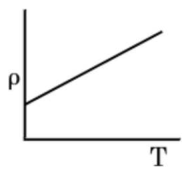
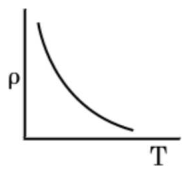
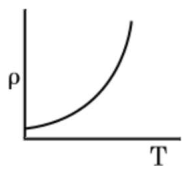
Which of the following graph represents the variation of resistivity () with temperature (T) for copper?
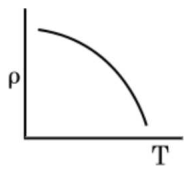
Correct: option 3
Copper is a metal, so its resistivity rises as the temperature rises, which rules out the two falling curves. The resistivity does not fall to zero at low temperature: it starts from a small finite value, rises slowly at first and then more steeply, being nearly linear only over a limited range near room temperature. The curve that starts at a small value and bends upwards, graph (3), shows this.
A short electric dipole has a dipole moment of . The electric potential due to the dipole at a point at a distance of 0.6 m from the centre of the dipole, situated on a line making an angle of 60° with the dipole axis is:
Correct: option 2, 200 V
For a short dipole . Here .
Light with an average flux of falls on a non-reflecting surface at normal incidence having surface area . The energy received by the surface during time span of 1 minute is:
Correct: option 3,
Energy = flux × area × time. The power falling on the surface is . In 60 s the energy received is .
The Brewsters angle for an interface should be:
Correct: option 3,
Brewster's law gives , where is the refractive index of the second medium relative to the first. For light going from a rarer to a denser medium , so and ; since is finite, . Hence .
Two cylinders A and B of equal capacity are connected to each other via a stop cock. A contains an ideal gas at standard temperature and pressure. B is completely evacuated. The entire system is thermally insulated. The stop cock is suddenly opened. The process is:
Correct: option 2, adiabatic
The system is thermally insulated, so no heat enters or leaves the gas while it expands into the evacuated cylinder. A process with no heat exchange is adiabatic. (This is a free expansion: no work is done either, so the internal energy and temperature of the ideal gas stay the same, but the process is sudden and is classed by the absence of heat exchange.)
Two bodies of mass 4 kg and 6 kg are tied to the ends of a massless string. The string passes over a pulley which is frictionless (see figure). The acceleration of the system in terms of acceleration due to gravity (g) is:
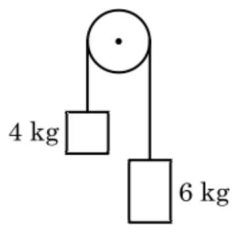
Correct: option 3, g/5
The heavier body goes down and the lighter one goes up with the same acceleration. The net driving force is and the total mass moved is , so .
In Young's double slit experiment, if the separation between coherent sources is halved and the distance of the screen from the coherent sources is doubled, then the fringe width becomes:
Correct: option 3, four times
The fringe width is . With and , the new fringe width is , four times the original.
For transistor action, which of the following statements is correct?
Correct: option 4, The base region must be very thin and lightly doped.
In a transistor the emitter is heavily doped, the base is very thin and lightly doped, and the collector is moderately doped and the largest region, so the three differ in both doping and size. For transistor action the emitter junction is forward biased and the collector junction reverse biased. A thin, lightly doped base lets most of the carriers from the emitter cross to the collector without recombining, so statement (4) is the correct one.
Assume that light of wavelength 600 nm is coming from a star. The limit of resolution of telescope whose objective has a diameter of 2 m is:
Correct: option 1,
The limit of resolution of a telescope is . Here .
A resistance wire connected in the left gap of a metre bridge balances a resistance in the right gap at a point which divides the bridge wire in the ratio 3 : 2. If the length of the resistance wire is 1.5 m, then the length of of the resistance wire is:
Correct: option 2,
At balance the resistances are in the ratio of the two parts of the bridge wire: , so . This is the resistance of 1.5 m of the wire, so corresponds to .
The energy equivalent of 0.5 g of a substance is:
Correct: option 2,
By Einstein's mass-energy relation . With and , .
The mean free path for a gas, with molecular diameter d and number density n can be expressed as:
Correct: option 2,
A molecule of diameter d sweeps out a collision cross-section , and allowing for the motion of the other molecules brings in a factor . The mean free path is therefore . A dimension check agrees: is in and in , giving a length.
The energy required to break one bond in DNA is . This value in eV is nearly:
Correct: option 3, 0.06
Since , the energy is , which is nearly 0.06 eV.
Find the torque about the origin when a force of acts on a particle whose position vector is .
Correct: option 3,
Torque is . Since , reversing the order gives . So .
The increase in the width of the depletion region in a p-n junction diode is due to:
Correct: option 2, reverse bias only
In reverse bias the applied voltage adds to the barrier potential and pulls the majority carriers away from the junction, so more immobile ions are uncovered and the depletion region widens. In forward bias the applied voltage opposes the barrier and the depletion region becomes narrower. So the width increases only under reverse bias.
The ratio of contributions made by the electric field and magnetic field components to the intensity of an electromagnetic wave is: (c = speed of electromagnetic waves)
Correct: option 2, 1 : 1
The average energy density of the electric field is and that of the magnetic field is . Using and , the two are equal. The electric and magnetic fields therefore contribute equally to the intensity, a ratio of 1 : 1.
A spherical conductor of radius 10 cm has a charge of distributed uniformly. What is the magnitude of electric field at a point 15 cm from the centre of the sphere?
Correct: option 2,
The point is outside the sphere (15 cm > 10 cm), so the charge acts as if it were at the centre: .
Dimensions of stress are:
Correct: option 4,
Stress is force per unit area. Force has dimensions and area , so stress has dimensions , the same as pressure.
The phase difference between displacement and acceleration of a particle in a simple harmonic motion is:
Correct: option 1, rad
If the displacement is , the acceleration is . The acceleration is always opposite to the displacement, so the two differ in phase by rad.
A series LCR circuit is connected to an ac voltage source. When L is removed from the circuit, the phase difference between current and voltage is . If instead C is removed from the circuit, the phase difference is again between current and voltage. The power factor of the circuit is:
Correct: option 3, 1.0
With L removed (an RC circuit) ; with C removed (an RL circuit) . So , the full LCR circuit is at resonance and its impedance is just R. The power factor is .
A capacitor is connected to a 200 V, 50 Hz ac supply. The rms value of the current in the circuit is, nearly:
Correct: option 3, 2.5 A
The capacitive reactance is , so , nearly 2.5 A.
In a guitar, two strings A and B made of same material are slightly out of tune and produce beats of frequency 6 Hz. When tension in B is slightly decreased, the beat frequency increases to 7 Hz. If the frequency of A is 530 Hz, the original frequency of B will be:
Correct: option 2, 524 Hz
A beat frequency of 6 Hz means B is at , that is 524 Hz or 536 Hz. The frequency of a string is proportional to , so lowering the tension lowers the frequency of B. If B were at 536 Hz, lowering it would bring it closer to 530 Hz and reduce the beats; the beats increase instead, so B was below A, at 524 Hz.
A ray is incident at an angle of incidence on one surface of a small angle prism (with angle of prism A) and emerges normally from the opposite surface. If the refractive index of the material of the prism is , then the angle of incidence is nearly equal to:
Correct: option 3,
The ray emerges normally, so the angle of incidence inside the prism at the second face is , and since , . Snell's law at the first face gives . For a small-angle prism both angles are small, so .
The color code of a resistance is given below:
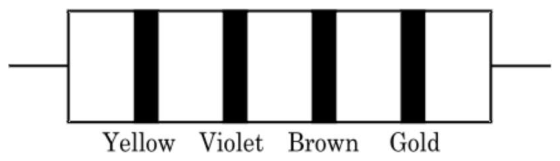
The values of resistance and tolerance, respectively, are:
Correct: option 4, , 5%
The first two bands give the digits: yellow is 4 and violet is 7, making 47. The third band is the multiplier: brown is . The fourth band, gold, is a tolerance of 5%. So the resistance is with 5% tolerance.
The capacitance of a parallel plate capacitor with air as medium is . With the introduction of a dielectric medium, the capacitance becomes . The permittivity of the medium is: ()
Correct: option 3,
Filling the capacitor with a dielectric multiplies the capacitance by the dielectric constant, so . The permittivity of the medium is .
Two particles of mass 5 kg and 10 kg respectively are attached to the two ends of a rigid rod of length 1 m with negligible mass. The centre of mass of the system from the 5 kg particle is nearly at a distance of:
Correct: option 3, 67 cm
Take the 5 kg particle as the origin, with the 10 kg particle 1 m away. Then . The centre of mass lies nearer the heavier particle.
A charged particle having drift velocity of in an electric field of , has a mobility in of:
Correct: option 2,
Mobility is the drift velocity per unit electric field: .
A ball is thrown vertically downward with a velocity of 20 m/s from the top of a tower. It hits the ground after some time with a velocity of 80 m/s. The height of the tower is: ()
Correct: option 4, 300 m
Taking downward as positive, . So .
The solids which have the negative temperature coefficient of resistance are:
Correct: option 4, insulators and semiconductors
A negative temperature coefficient means the resistance falls as the temperature rises. In metals the resistance rises with temperature because the electrons collide more often. In both semiconductors and insulators, heating frees more charge carriers across the energy gap, and this outweighs the extra collisions, so their resistance falls. Hence insulators and semiconductors.
Light of frequency 1.5 times the threshold frequency is incident on a photosensitive material. What will be the photoelectric current if the frequency is halved and intensity is doubled?
Correct: option 4, zero
The original frequency is . When it is halved it becomes , which is below the threshold frequency . Below the threshold no photoelectrons are emitted, whatever the intensity, so the photoelectric current is zero.
The quantities of heat required to raise the temperature of two solid copper spheres of radii and () through 1 K are in the ratio:
Correct: option 1,
Heat needed is . Both spheres are copper (same specific heat and density) and the temperature rise is the same, so . The ratio is .
A body weighs 72 N on the surface of the earth. What is the gravitational force on it, at a height equal to half the radius of the earth?
Correct: option 2, 32 N
The gravitational force varies as , with r measured from the centre of the earth. At a height the distance is , so the force is .
Taking into account of the significant figures, what is the value of ?
Correct: option 2, 9.98 m
The plain difference is 9.9801 m. In addition or subtraction the result keeps only as many decimal places as the term with the fewest decimal places. 9.99 m has two decimal places, so the answer is rounded to two decimal places: 9.98 m.
A screw gauge has least count of 0.01 mm and there are 50 divisions in its circular scale. The pitch of the screw gauge is:
Correct: option 3, 0.5 mm
Least count . So pitch .
For which one of the following, Bohr model is not valid?
Correct: option 4, Singly ionised neon atom ()
Bohr's model works only for hydrogen-like systems, which have a single electron moving round the nucleus. The hydrogen atom, the deuterium atom and each have one electron. still has 9 electrons, and the model cannot deal with the forces between electrons, so it is not valid for .
A wire of length L, area of cross section A is hanging from a fixed support. The length of the wire changes to when mass M is suspended from its free end. The expression for Young's modulus is:
Correct: option 4,
Young's modulus is stress divided by strain. The stress is and the strain is the extension over the original length, . So .
A long solenoid of 50 cm length having 100 turns carries a current of 2.5 A. The magnetic field at the centre of the solenoid is: ()
Correct: option 1,
Inside a long solenoid , where n is the number of turns per unit length: . So .
An iron rod of susceptibility 599 is subjected to a magnetising field of . The permeability of the material of the rod is: ()
Correct: option 1,
Permeability is . The magnetising field of is not needed.
Which of the following is a basic amino acid?
Correct: option 4, Lysine
An amino acid is basic when it has more amino groups than carboxyl groups. Lysine carries a second group in its side chain, so it is basic. Serine, alanine and tyrosine each have one amino and one carboxyl group and are neutral.
The correct option for free expansion of an ideal gas under adiabatic condition is:
Correct: option 1, , and
In free expansion the external pressure is zero, so . Adiabatic means . Then , and for an ideal gas the internal energy depends only on temperature, so .
Measuring Zeta potential is useful in determining which property of colloidal solution?
Correct: option 3, Stability of the colloidal particles
Zeta potential is the potential difference between the fixed layer and the diffused layer of charge around a colloidal particle. A large zeta potential means strong repulsion between particles, so they do not coagulate. It is therefore a measure of the stability of the colloid.
The calculated spin only magnetic moment of ion is:
Correct: option 2, 4.90 BM
Cr is , so is with unpaired electrons. BM.
Elimination reaction of 2-Bromo-pentane to form pent-2-ene is: (a) β-Elimination reaction (b) Follows Zaitsev rule (c) Dehydrohalogenation reaction (d) Dehydration reaction
Correct: option 1, (a), (b), (c)
HBr is lost from 2-bromopentane, so it is a dehydrohalogenation (c). The hydrogen leaves from the carbon next to the one bearing bromine, so it is a β-elimination (a). The more substituted alkene, pent-2-ene, is the product, as the Zaitsev rule predicts (b). No water is removed, so it is not a dehydration; (d) is wrong.
On electrolysis of dil. sulphuric acid using Platinum (Pt) electrode, the product obtained at anode will be:
Correct: option 2, Oxygen gas
In dilute sulphuric acid, water is oxidised at the anode more easily than sulphate ions: . So oxygen gas is released at the anode, and hydrogen at the cathode.
Which of the following is not correct about carbon monoxide?
Correct: option 3, The carboxyhaemoglobin (haemoglobin bound to CO) is less stable than oxyhaemoglobin.
CO is formed by incomplete combustion of carbon and binds to haemoglobin to form carboxyhaemoglobin, which is about 300 times more stable than oxyhaemoglobin. This is why it lowers the oxygen carrying ability of blood. The statement that carboxyhaemoglobin is less stable is the wrong one.
Sucrose on hydrolysis gives:
Correct: option 3, α-D-Glucose + β-D-Fructose
Sucrose is made of α-D-glucose and β-D-fructose joined by a glycosidic linkage between C1 of glucose and C2 of fructose. Hydrolysis breaks this linkage and gives these two units.
Match the following and identify the correct option.
| (a) | (i) |
| (b) Temporary hardness of water | (ii) An electron deficient hydride |
| (c) | (iii) Synthesis gas |
| (d) | (iv) Non-planar structure |
Correct: option 1, a-iii, b-i, c-ii, d-iv
A mixture of CO and is synthesis gas (a-iii). Temporary hardness is due to the hydrogencarbonates of magnesium and calcium (b-i). Diborane has too few electrons for normal two-electron bonds, so it is an electron deficient hydride (c-ii). has an open-book, non-planar structure (d-iv).
An increase in the concentration of the reactants of a reaction leads to change in:
Correct: option 4, collision frequency
With more reactant molecules in the same volume, they collide more often, so the collision frequency rises. Activation energy, threshold energy and heat of reaction are fixed for a given reaction and do not depend on concentration.
Which of the following is a natural polymer?
Correct: option 1, cis-1,4-polyisoprene
Natural rubber is cis-1,4-polyisoprene. The other three (Buna-S, polybutadiene and Buna-N) are synthetic rubbers.
The rate constant for a first order reaction is . The time required to reduce 2.0 g of the reactant to 0.2 g is:
Correct: option 3, 500 s
For a first order reaction s.
Identify the correct statements from the following: (a) is used as refrigerant for ice-cream and frozen food. (b) The structure of contains twelve six carbon rings and twenty five carbon rings. (c) ZSM-5, a type of zeolite, is used to convert alcohols into gasoline. (d) CO is colorless and odourless gas.
Correct: option 4, (c) and (d) only
(a) is wrong: it is solid (dry ice), not the gas, that is used as a refrigerant. (b) is wrong: has twenty six-membered rings and twelve five-membered rings. (c) is right: ZSM-5 converts alcohols directly into gasoline. (d) is right: CO is a colourless, odourless gas.
A mixture of and Ar gases in a cylinder contains 7 g of and 8 g of Ar. If the total pressure of the mixture of the gases in the cylinder is 27 bar, the partial pressure of is: [Use atomic masses (in ): N = 14, Ar = 40]
Correct: option 3, 15 bar
Moles of and moles of Ar . Mole fraction of . Partial pressure bar.
Which of the following set of molecules will have zero dipole moment?
Correct: option 4, Boron trifluoride, beryllium difluoride, carbon dioxide, 1,4-dichlorobenzene
(trigonal planar), and (linear) and 1,4-dichlorobenzene (two equal C-Cl dipoles pointing in opposite directions) are symmetrical, so their bond dipoles cancel. Each of the other sets has a polar molecule: ammonia, water, HF, or 1,3-dichlorobenzene.
Hydrolysis of sucrose is given by the following reaction. If the equilibrium constant () is at 300 K, the value of at the same temperature will be:
Correct: option 1,
The standard Gibbs energy change is related to the equilibrium constant by . With , K and , this is the expression in option (1), with the minus sign.
Anisole on cleavage with HI gives:
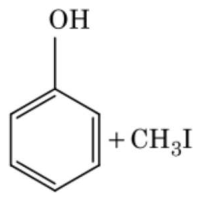
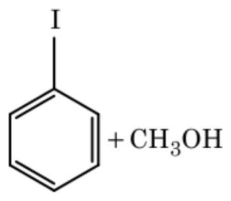
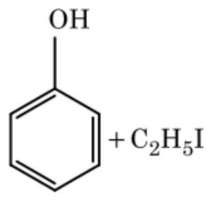
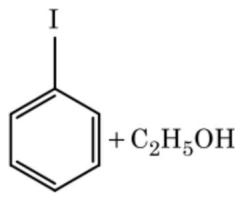
Correct: option 1
Anisole is . The bond between oxygen and the benzene ring has partial double bond character and does not break, so iodide attacks the methyl carbon. The products are phenol and methyl iodide, .
The number of protons, neutrons and electrons in , respectively, are:
Correct: option 1, 71, 104 and 71
The atomic number 71 gives 71 protons, and a neutral atom has the same number of electrons, 71. Neutrons = mass number - atomic number = 175 - 71 = 104.
Paper chromatography is an example of:
Correct: option 2, Partition chromatography
In paper chromatography the water held in the fibres of the paper is the stationary phase and the solvent is the mobile phase. The components separate by distributing (partitioning) themselves differently between these two liquids, so it is partition chromatography.
Identify the incorrect match.
| Name | IUPAC Official Name |
|---|---|
| (a) Unnilunium | (i) Mendelevium |
| (b) Unniltrium | (ii) Lawrencium |
| (c) Unnilhexium | (iii) Seaborgium |
| (d) Unununnium | (iv) Darmstadtium |
Correct: option 4, (d), (iv)
The roots give the atomic number: un = 1, nil = 0, tri = 3, hex = 6. Unnilunium is 101 (Mendelevium), Unniltrium is 103 (Lawrencium) and Unnilhexium is 106 (Seaborgium), all correct. Unununnium is 111, which is Roentgenium; Darmstadtium is element 110. So (d), (iv) is the incorrect match.
Which one of the followings has maximum number of atoms?
Correct: option 4, 1 g of Li(s) [Atomic mass of Li = 7]
Number of atoms = moles of atoms . The moles of atoms in 1 g are 1/108 for Ag, 1/24 for Mg, 1/16 for oxygen ( mol of , two atoms each) and 1/7 for Li. 1/7 is the largest, so 1 g of Li has the most atoms.
A tertiary butyl carbocation is more stable than a secondary butyl carbocation because of which of the following?
Correct: option 4, Hyperconjugation
The tertiary butyl carbocation has nine α-hydrogens whose C-H bonds can overlap with the empty p orbital, while the secondary butyl carbocation has only five. More hyperconjugation spreads the positive charge better, so the tertiary cation is more stable. Methyl groups have a effect, not , and show no resonance effect.
Which of the following amine will give the carbylamine test?
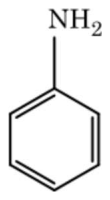
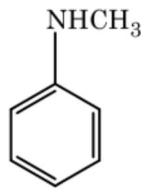
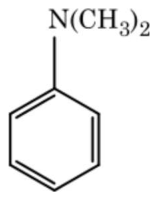
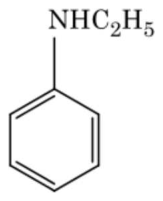
Correct: option 1
Only primary amines give the carbylamine test: on heating with chloroform and alcoholic KOH they form a foul-smelling isocyanide. Aniline, , is a primary amine. N-methylaniline and N-ethylaniline are secondary and N,N-dimethylaniline is tertiary, so they do not respond.
Which of the following alkane cannot be made in good yield by Wurtz reaction?
Correct: option 3, n-Heptane
The Wurtz reaction joins two alkyl halide molecules, so it gives a good yield only of symmetrical alkanes with an even number of carbon atoms. n-Heptane has seven carbons and would need two different alkyl halides, which gives a mixture of three alkanes. The other three are symmetrical and are made from one halide each.
The mixture which shows positive deviation from Raoult's law is:
Correct: option 1, Ethanol + Acetone
In pure ethanol the molecules are held by hydrogen bonds. Acetone molecules get in between and break some of these bonds, so the molecules escape more easily and the vapour pressure is higher than Raoult's law predicts: positive deviation. Benzene + toluene and chloroethane + bromoethane are nearly ideal, and acetone + chloroform shows negative deviation because the two form a hydrogen bond.
Reaction between benzaldehyde and acetophenone in presence of dilute NaOH is known as:
Correct: option 4, Cross Aldol condensation
Acetophenone has α-hydrogens and forms a carbanion with dilute NaOH, which attacks benzaldehyde (which has no α-hydrogen). Since two different carbonyl compounds combine, it is a cross aldol condensation; the product is benzalacetophenone, .
Which of the following is the correct order of increasing field strength of ligands to form coordination compounds?
Correct: option 1,
The spectrochemical series runs . Picking out the four ligands gives .
Which of the following is a cationic detergent?
Correct: option 3, Cetyltrimethyl ammonium bromide
In a cationic detergent the long hydrocarbon chain is part of the positive ion. Cetyltrimethylammonium bromide is a quaternary ammonium salt whose long chain is in the cation. Sodium lauryl sulphate and sodium dodecylbenzene sulphonate are anionic detergents, and sodium stearate is a soap.
Reaction between acetone and methylmagnesium chloride followed by hydrolysis will give:
Correct: option 3, Tert. butyl alcohol
A Grignard reagent adds to a ketone to give a tertiary alcohol after hydrolysis. The methyl group adds to the carbonyl carbon of acetone: , which is tert-butyl alcohol.
Urea reacts with water to form A which will decompose to form B. B when passed through (aq), deep blue colour solution C is formed. What is the formula of C from the following?
Correct: option 2,
Urea is hydrolysed to ammonium carbonate (A), , which decomposes to give ammonia (B). Ammonia forms the deep blue complex ion with (C).
The number of Faradays (F) required to produce 20 g of calcium from molten (Atomic mass of Ca = 40 ) is:
Correct: option 1, 1
, so one mole of calcium (40 g) needs 2 F. 20 g is 0.5 mol, which needs F.
For the reaction, , the correct option is:
Correct: option 4, and
A bond is formed, which releases energy, so . Two moles of gaseous atoms become one mole of gas molecules, so the disorder falls and .
Find out the solubility of in 0.1 M NaOH. Given that the ionic product of is .
Correct: option 1, M
. In 0.1 M NaOH the hydroxide comes almost entirely from NaOH, so M. Solubility M.
The freezing point depression constant () of benzene is . The freezing point depression for the solution of molality 0.078 m containing a non-electrolyte solute in benzene is (rounded off upto two decimal places):
Correct: option 3, 0.40 K
For a non-electrolyte, K, which rounds to 0.40 K.
Identify the incorrect statement.
Correct: option 4, The oxidation states of chromium in and are not the same.
In : , so . In : , so . Chromium is +6 in both, so statement (4) is incorrect. The other three are correct: goes to the stable arrangement of and so is the stronger reducing agent.
An element has a body centered cubic (bcc) structure with a cell edge of 288 pm. The atomic radius is:
Correct: option 1, pm
In a bcc cell the atoms touch along the body diagonal, whose length is and which holds four radii. So and pm.
Identify a molecule which does not exist.
Correct: option 1,
has the configuration , so its bond order is and it does not exist. The bond orders of , and are 1, 2 and 2.
Which of the following oxoacid of sulphur has linkage?
Correct: option 3, , peroxodisulphuric acid
Peroxodisulphuric acid is : its two sulphur atoms are joined through a peroxide () bridge. In pyrosulphuric acid the two sulphur atoms are joined through a single oxygen (S-O-S), and the other two acids have one sulphur atom only.
An alkene on ozonolysis gives methanal as one of the product. Its structure is:
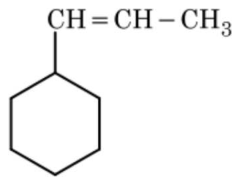
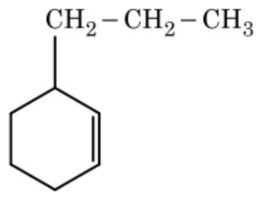
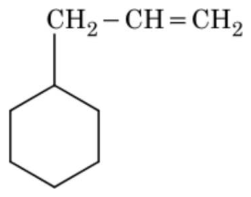
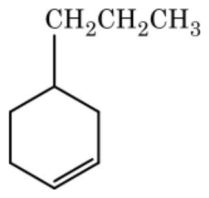
Correct: option 3
Ozonolysis cuts a C=C bond and turns each carbon of it into a carbonyl group. Methanal (HCHO) can form only from a terminal group. Only option (3), with the side chain , has one.
HCl was passed through a solution of , and NaCl. Which of the following compound(s) crystallise(s)?
Correct: option 2, Only NaCl
This is how crude sodium chloride is purified. HCl raises the chloride ion concentration, and by the common ion effect the ionic product of NaCl exceeds its solubility product, so NaCl crystallises. and are more soluble than NaCl and stay in solution.
Match the following:
| Oxide | Nature |
|---|---|
| (a) CO | (i) Basic |
| (b) BaO | (ii) Neutral |
| (c) | (iii) Acidic |
| (d) | (iv) Amphoteric |
Which of the following is correct option?
Correct: option 2, a-ii, b-i, c-iv, d-iii
CO is a neutral oxide (a-ii). BaO is the oxide of a strongly electropositive metal and is basic (b-i). reacts with both acids and bases, so it is amphoteric (c-iv). is a non-metal oxide that gives perchloric acid with water, so it is acidic (d-iii).
The following metal ion activates many enzymes, participates in the oxidation of glucose to produce ATP and with Na, is responsible for the transmission of nerve signals.
Correct: option 4, Potassium
Potassium ions are the main cations inside cells. They activate many enzymes, take part in the oxidation of glucose to produce ATP and, together with sodium ions, carry nerve signals.
What is the change in oxidation number of carbon in the following reaction?
Correct: option 3, to
In , hydrogen is +1, so carbon is . In , chlorine is , so carbon is . The change is from to .
Identify the correct statement from the following:
Correct: option 4, Pig iron can be moulded into a variety of shapes.
Pig iron can be cast into a variety of shapes, so (4) is correct. Wrought iron is the purest form of commercial iron; it is pig iron that has about 4% carbon. Blister copper gets its blisters from escaping . Nickel is refined by the Mond process; the Van Arkel method is for zirconium and titanium.
Identify compound X in the following sequence of reactions:
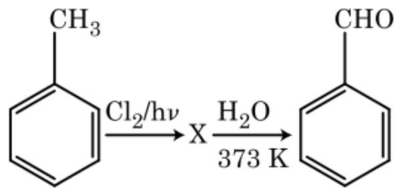
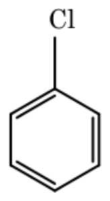
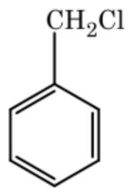
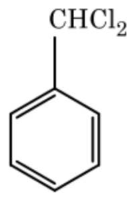
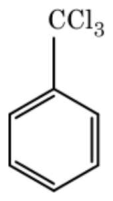
Correct: option 3
Chlorine in the presence of light substitutes the hydrogens of the methyl side chain of toluene by a free radical mechanism. Hydrolysis at 373 K gives benzaldehyde only from benzal chloride, : its two chlorines are replaced by two OH groups on the same carbon, which lose water to give . So X is option (3).
Which of the following regions of the globe exhibits highest species diversity?
Correct: option 4, Amazon forests
The Amazon rain forest of South America has the greatest biodiversity on Earth, with tens of thousands of plant species and thousands of fish, bird, mammal, amphibian and reptile species. Species diversity is highest in the tropics, and no other region listed matches the Amazon.
In water hyacinth and water lily, pollination takes place by:
Correct: option 1, insects or wind
Not every aquatic plant is pollinated by water. In water hyacinth and water lily the flowers come out above the water surface and are pollinated by insects or wind, as in most land plants.
The enzyme enterokinase helps in conversion of:
Correct: option 2, trypsinogen into trypsin
Enterokinase is secreted by the intestinal mucosa. It activates the inactive pancreatic enzyme trypsinogen into active trypsin, which then activates the other enzymes of the pancreatic juice. Pepsinogen is activated by HCl, not by enterokinase.
Presence of which of the following conditions in urine are indicative of Diabetes Mellitus?
Correct: option 3, Ketonuria and Glycosuria
In diabetes mellitus glucose is not taken up by cells, so it spills into the urine (glycosuria), and the heavy use of fat for energy produces ketone bodies that also appear in the urine (ketonuria). Uremia and renal calculi are kidney disorders, and hyperglycaemia is a condition of the blood, not of urine.
Experimental verification of the chromosomal theory of inheritance was done by:
Correct: option 4, Morgan
Sutton and Boveri proposed the chromosomal theory of inheritance. Thomas Hunt Morgan and his colleagues verified it experimentally through their work on sex-linked genes in the fruit fly Drosophila melanogaster.
Which of the following is not an attribute of a population?
Correct: option 4, Species interaction
A population is a group of individuals of one species, and it has attributes such as birth rate (natality), death rate (mortality), sex ratio and age distribution. Species interaction happens between populations of different species, so it is a feature of a community, not of a population.
Goblet cells of alimentary canal are modified from:
Correct: option 2, Columnar epithelial cells
Goblet cells are unicellular mucus-secreting glands found in the lining of the alimentary canal. They are isolated columnar epithelial cells that have become specialised for secretion.
Floridean starch has structure similar to:
Correct: option 2, Amylopectin and glycogen
Floridean starch is the stored food of red algae (Rhodophyceae). It is a highly branched glucose polymer, very similar in structure to amylopectin and glycogen.
Identify the correct statement with reference to human digestive system.
Correct: option 3, Ileum is a highly coiled part.
The ileum is the last and highly coiled part of the small intestine, so statement (3) is correct. The ileum opens into the large intestine, serosa is the outermost layer of the gut wall, and the vermiform appendix arises from the caecum.
Secondary metabolites such as nicotine, strychnine and caffeine are produced by plants for their:
Correct: option 3, Defence action
Nicotine, strychnine and caffeine are alkaloids. Such secondary metabolites are not needed for the basic growth of the plant; they are bitter or poisonous and protect the plant against grazing animals and pathogens, so they serve as a chemical defence.
From his experiments, S.L. Miller produced amino acids by mixing the following in a closed flask:
Correct: option 1, , , and water vapor at 800°C
In 1953 Miller passed an electric discharge through a closed flask holding methane (), hydrogen (), ammonia () and water vapour at 800°C, copying the conditions of the early Earth, and found amino acids among the products. Only option (1) has the right gases and the right temperature.
Identify the incorrect statement.
Correct: option 3, Sapwood is the innermost secondary xylem and is lighter in colour.
Heartwood is the central, older secondary xylem; it is dark because of tannins, resins, oils and gums, does not conduct water and only gives mechanical support. Sapwood is the outer (peripheral), lighter coloured secondary xylem that conducts water and minerals. So calling sapwood the innermost secondary xylem is the incorrect statement.
Name the plant growth regulator which upon spraying on sugarcane crop, increases the length of stem, thus increasing the yield of sugarcane crop.
Correct: option 2, Gibberellin
Sugarcane stores sugar in its stem. Spraying gibberellins lengthens the internodes and so the stem, which raises the yield by as much as 20 tonnes per acre.
The first phase of translation is:
Correct: option 3, Aminoacylation of tRNA
Translation begins with the activation of amino acids in the presence of ATP and their linking to their own tRNAs. This step is called charging or aminoacylation of tRNA, and it comes before the mRNA binds to the small subunit of the ribosome.
Embryological support for evolution was disapproved by:
Correct: option 1, Karl Ernst von Baer
Ernst Haeckel proposed embryological support for evolution, saying that embryos pass through the adult stages of their ancestors. Karl Ernst von Baer studied embryos carefully and showed that embryos never pass through the adult stages of other animals, so he disapproved the proposal.
Dissolution of the synaptonemal complex occurs during:
Correct: option 3, Diplotene
The synaptonemal complex forms in zygotene when homologous chromosomes pair, and crossing over takes place in pachytene. In diplotene the complex dissolves and the homologues begin to separate, staying joined only at the chiasmata.
Meiotic division of the secondary oocyte is completed:
Correct: option 4, At the time of fusion of a sperm with an ovum
The secondary oocyte is released at ovulation while arrested in metaphase of the second meiotic division. The entry of a sperm makes it complete meiosis II, giving the ovum (ootid) and the second polar body. So the division is completed at the time of fusion of the sperm with the ovum.
Which of the following pairs is of unicellular algae?
Correct: option 4, Chlorella and Spirulina
Chlorella is a unicellular green alga and Spirulina is a microscopic blue-green alga treated here as unicellular; both are grown as protein-rich food supplements. Laminaria and Sargassum are large brown algae, Gelidium and Gracilaria are multicellular red algae, Anabaena is filamentous and Volvox is colonial.
Identify the substances having glycosidic bond and peptide bond, respectively in their structure:
Correct: option 4, Inulin, insulin
Glycosidic bonds join sugar units in polysaccharides, and peptide bonds join amino acids in proteins. Inulin is a polymer of fructose (glycosidic bonds) and insulin is a protein hormone (peptide bonds). Cholesterol and lecithin are lipids and glycerol is a simple alcohol, so the other pairs fail.
Strobili or cones are found in:
Correct: option 4, Equisetum
In some pteridophytes the sporophylls are packed into compact structures called strobili or cones, as in Selaginella and Equisetum. Salvinia and Pteris are ferns without cones, and Marchantia is a liverwort (a bryophyte).
The roots that originate from the base of the stem are:
Correct: option 1, Fibrous roots
In monocots such as wheat the primary root is short lived and is replaced by a large number of roots that arise from the base of the stem; these form the fibrous root system. The primary root grows from the radicle, lateral roots branch from the primary root, and prop roots hang down from branches.
The ovary is half inferior in:
Correct: option 4, Plum
In a perigynous flower the gynoecium sits in the centre and the other parts are borne on the rim of the thalamus at about the same level, so the ovary is called half inferior. Plum, rose and peach are examples. Brinjal and mustard have a superior ovary, and sunflower has an inferior ovary.
Match the following columns and select the correct option.
| Column - I | Column - II |
|---|---|
| (a) Organ of Corti | (i) Connects middle ear and pharynx |
| (b) Cochlea | (ii) Coiled part of the labyrinth |
| (c) Eustachian tube | (iii) Attached to the oval window |
| (d) Stapes | (iv) Located on the basilar membrane |
Correct: option 3, a-iv, b-ii, c-i, d-iii
The organ of Corti, which holds the hair cells, lies on the basilar membrane (a-iv). The cochlea is the coiled part of the labyrinth (b-ii). The Eustachian tube connects the middle ear cavity with the pharynx (c-i). The stapes is the ear ossicle attached to the oval window (d-iii).
Identify the wrong statement with reference to immunity.
Correct: option 3, Active immunity is quick and gives full response.
Active immunity develops when the body makes its own antibodies after meeting an antigen; it is slow and takes time to give its full effective response. Passive immunity, where ready-made antibodies are given (as from mother to foetus across the placenta), is the quick one. So statement (3) is wrong.
Some dividing cells exit the cell cycle and enter vegetative inactive stage. This is called quiescent stage (). This process occurs at the end of:
Correct: option 2, phase
Cells that do not divide further leave the cycle from the phase and enter the quiescent stage, where they stay metabolically active but do not proliferate unless called on to do so. The exit happens before the cell commits to DNA synthesis, so it is placed in , which is the keyed answer.
Select the correct statement.
Correct: option 1, Glucocorticoids stimulate gluconeogenesis.
Glucocorticoids such as cortisol stimulate gluconeogenesis, lipolysis and proteolysis, so statement (1) is correct. Glucagon raises blood sugar (hyperglycemia), insulin lowers it (hypoglycemia), and insulin acts mainly on hepatocytes and adipocytes, not on pancreatic cells.
Match the following diseases with the causative organism and select the correct option.
| Column - I | Column - II |
|---|---|
| (a) Typhoid | (i) Wuchereria |
| (b) Pneumonia | (ii) Plasmodium |
| (c) Filariasis | (iii) Salmonella |
| (d) Malaria | (iv) Haemophilus |
Correct: option 2, a-iii, b-iv, c-i, d-ii
Typhoid is caused by the bacterium Salmonella typhi (a-iii). Pneumonia is caused by Streptococcus pneumoniae and Haemophilus influenzae (b-iv). Filariasis is caused by the worm Wuchereria (c-i). Malaria is caused by the protozoan Plasmodium (d-ii).
Select the correct match.
Correct: option 3, Sickle cell anaemia - Autosomal recessive trait, chromosome-11
Sickle cell anaemia is an autosomal recessive disorder caused by a mutation in the beta globin gene on chromosome 11, so (3) is correctly matched. Haemophilia is X-linked recessive, phenylketonuria is autosomal recessive, and thalassemia is autosomal recessive.
Which is the important site of formation of glycoproteins and glycolipids in eukaryotic cells?
Correct: option 3, Golgi bodies
Proteins and lipids made in the endoplasmic reticulum are modified in the cisternae of the Golgi apparatus, where sugars are added to them. The Golgi apparatus is therefore the important site of formation of glycoproteins and glycolipids.
In relation to Gross primary productivity and Net primary productivity of an ecosystem, which one of the following statements is correct?
Correct: option 2, Gross primary productivity is always more than net primary productivity.
Gross primary productivity (GPP) is the total rate of production of organic matter by photosynthesis. Plants use part of it in respiration (R), and what is left is net primary productivity: NPP = GPP - R. Since R is never zero, GPP is always more than NPP.
Which of the following would help in prevention of diuresis?
Correct: option 2, Reabsorption of and water from renal tubules due to aldosterone
Diuresis is the passing of a large volume of urine, so it is prevented by anything that makes the tubules take back more water. Aldosterone causes reabsorption of and water from the distal parts of the tubule. Undersecretion of ADH lowers water reabsorption, atrial natriuretic factor causes vasodilation, and less renin means less aldosterone, so the other options would increase urine output or are untrue.
Identify the correct statement with regard to phase (Gap 1) of interphase.
Correct: option 3, Cell is metabolically active, grows but does not replicate its DNA.
is the interval between mitosis and the start of DNA replication. In it the cell is metabolically active and grows continuously but does not replicate its DNA. DNA replication belongs to the S phase and nuclear division to the M phase.
Which of the following refer to correct example(s) of organisms which have evolved due to changes in environment brought about by anthropogenic action? (a) Darwin's Finches of Galapagos islands. (b) Herbicide resistant weeds. (c) Drug resistant eukaryotes. (d) Man-created breeds of domesticated animals like dogs.
Correct: option 3, (b), (c) and (d)
Anthropogenic means caused by humans. Herbicide resistant weeds and drug resistant eukaryotes were selected by the herbicides and drugs that people use, and breeds of dogs were made by artificial selection, so (b), (c) and (d) qualify. Darwin's finches evolved by natural adaptive radiation on the Galapagos islands with no human role.
The plant parts which consist of two generations - one within the other: (a) Pollen grains inside the anther (b) Germinated pollen grain with two male gametes (c) Seed inside the fruit (d) Embryo sac inside the ovule
Correct: option 4, (a) and (d)
The anther and the ovule belong to the diploid sporophyte, while the pollen grain (male gametophyte) and the embryo sac (female gametophyte) are the haploid gametophyte generation. So pollen grains inside the anther and the embryo sac inside the ovule each show one generation inside the other, which is (a) and (d). A germinated pollen grain with its male gametes is entirely gametophyte.
Match the trophic levels with their correct species examples in grassland ecosystem.
| (a) Fourth trophic level | (i) Crow |
| (b) Second trophic level | (ii) Vulture |
| (c) First trophic level | (iii) Rabbit |
| (d) Third trophic level | (iv) Grass |
Select the correct option:
Correct: option 1, a-ii, b-iii, c-iv, d-i
Grass is the producer and forms the first trophic level (c-iv). The rabbit eats grass, so it is a primary consumer at the second level (b-iii). The crow is taken as the secondary consumer at the third level (d-i) and the vulture as the top consumer at the fourth level (a-ii).
The QRS complex in a standard ECG represents:
Correct: option 3, Depolarisation of ventricles
In an ECG the P wave shows depolarisation of the atria, the QRS complex shows depolarisation of the ventricles (which starts ventricular contraction), and the T wave shows repolarisation of the ventricles.
The process responsible for facilitating loss of water in liquid form from the tip of grass blades at night and in early morning is:
Correct: option 2, Root pressure
At night and in the early morning evaporation is low, so the positive root pressure built up by active absorption of ions pushes extra water out as drops through special openings near the tips of grass blades. This loss of liquid water is called guttation and it is driven by root pressure. Transpiration is loss of water as vapour.
According to Robert May, the global species diversity is about:
Correct: option 4, 7 million
Robert May made a sound and conservative estimate that puts global species diversity at about 7 million. About 1.5 million is the number of species described so far, and 20 to 50 million are some of the extreme estimates.
In gel electrophoresis, separated DNA fragments can be visualized with the help of:
Correct: option 2, Ethidium bromide in UV radiation
DNA fragments on an agarose gel cannot be seen in visible light without staining. The gel is stained with ethidium bromide and exposed to UV radiation, and the DNA then shows up as bright orange bands.
Match the following concerning essential elements and their functions in plants:
| (a) Iron | (i) Photolysis of water |
| (b) Zinc | (ii) Pollen germination |
| (c) Boron | (iii) Required for chlorophyll biosynthesis |
| (d) Manganese | (iv) IAA biosynthesis |
Select the correct option:
Correct: option 3, a-iii, b-iv, c-ii, d-i
Iron is essential for the formation of chlorophyll (a-iii). Zinc is needed for the synthesis of auxin, IAA (b-iv). Boron is required for pollen germination (c-ii). Manganese takes part in the splitting of water to release oxygen during photosynthesis (d-i).
Flippers of Penguins and Dolphins are examples of:
Correct: option 2, Convergent evolution
A penguin is a bird and a dolphin is a mammal, yet both have flippers for swimming. These are analogous structures: similar function evolved in unrelated groups living in the same kind of habitat, which is convergent evolution.
If the distance between two consecutive base pairs is 0.34 nm and the total number of base pairs of a DNA double helix in a typical mammalian cell is bp, then the length of the DNA is approximately:
Correct: option 3, 2.2 meters
Length = number of base pairs × distance between two consecutive base pairs , which is approximately 2.2 meters.
Match the following columns and select the correct option.
| Column - I | Column - II |
|---|---|
| (a) Floating Ribs | (i) Located between second and seventh ribs |
| (b) Acromion | (ii) Head of the Humerus |
| (c) Scapula | (iii) Clavicle |
| (d) Glenoid cavity | (iv) Do not connect with the sternum |
Correct: option 4, a-iv, b-iii, c-i, d-ii
The floating ribs (11th and 12th pairs) are not connected to the sternum (a-iv). The acromion is the process of the scapula with which the clavicle articulates (b-iii). The scapula lies on the back of the thorax between the second and the seventh ribs (c-i). The glenoid cavity receives the head of the humerus to form the shoulder joint (d-ii).
Montreal protocol was signed in 1987 for control of:
Correct: option 2, Emission of ozone depleting substances
The Montreal Protocol, signed at Montreal in Canada in 1987 and effective from 1989, is an international treaty to control the emission of ozone depleting substances such as CFCs. Greenhouse gases are covered by the Kyoto Protocol.
Choose the correct pair from the following:
Correct: option 1, Ligases - Join the two DNA molecules
DNA ligases join two DNA molecules or fragments by sealing their ends, so pair (1) is correct. Polymerases build DNA, nucleases cut DNA (helicase separates the strands), and exonucleases remove nucleotides from the ends; cuts at specific positions inside DNA are made by endonucleases.
Which of the following statements about inclusion bodies is incorrect?
Correct: option 2, These are involved in ingestion of food particles.
Inclusion bodies of prokaryotic cells (phosphate granules, cyanophycean granules, glycogen granules) store reserve material; they have no membrane and lie free in the cytoplasm. They play no part in taking in food particles, so statement (2) is the incorrect one.
Ray florets have:
Correct: option 1, Inferior ovary
Ray florets are the outer florets of the head in the sunflower family (Asteraceae). Their flowers are epigynous: the other floral parts arise above the ovary, so the ovary is inferior.
Which of the following is not an inhibitory substance governing seed dormancy?
Correct: option 1, Gibberellic acid
Abscisic acid, phenolic acids and para-ascorbic acid are chemical inhibitors that keep a seed dormant. Gibberellic acid does the opposite: it breaks dormancy and promotes germination, so it is not an inhibitory substance.
Bt cotton variety that was developed by the introduction of toxin gene of Bacillus thuringiensis (Bt) is resistant to:
Correct: option 1, Insect pests
The cry genes of Bacillus thuringiensis code for a protein that becomes toxic in the alkaline gut of certain insects and kills them. Bt cotton carrying these genes is therefore resistant to insect pests such as the cotton bollworm.
Identify the wrong statement with reference to transport of oxygen.
Correct: option 3, Higher conc. in alveoli favours the formation of oxyhaemoglobin.
Oxyhaemoglobin forms in the alveoli, where is high, is low, the concentration is low and the temperature is lower. A higher concentration favours the release of oxygen, not its binding, so statement (3) is wrong. The other three statements are correct.
Bilaterally symmetrical and acoelomate animals are exemplified by:
Correct: option 2, Platyhelminthes
Flatworms (Platyhelminthes) are bilaterally symmetrical and have no body cavity. Ctenophores are radially symmetrical, Aschelminthes are pseudocoelomate and Annelida are coelomate.
Match the following columns and select the correct option.
| Column - I | Column - II |
|---|---|
| (a) Bt cotton | (i) Gene therapy |
| (b) Adenosine deaminase deficiency | (ii) Cellular defence |
| (c) RNAi | (iii) Detection of HIV infection |
| (d) PCR | (iv) Bacillus thuringiensis |
Correct: option 1, a-iv, b-i, c-ii, d-iii
Bt cotton carries a toxin gene from Bacillus thuringiensis (iv). Adenosine deaminase deficiency was the first disorder treated by gene therapy (i). RNA interference is a method of cellular defence in eukaryotes (ii). PCR is used to detect HIV infection early (iii). This is a-iv, b-i, c-ii, d-iii.
By which method was a new breed 'Hisardale' of sheep formed by using Bikaneri ewes and Marino rams?
Correct: option 3, Cross breeding
Hisardale was produced by mating females of one breed (Bikaneri ewes) with superior males of a different breed (Marino rams). Mating animals of two different breeds is cross breeding.
Match the following columns and select the correct option.
| Column - I | Column - II |
|---|---|
| (a) Eosinophils | (i) Immune response |
| (b) Basophils | (ii) Phagocytosis |
| (c) Neutrophils | (iii) Release histaminase, destructive enzymes |
| (d) Lymphocytes | (iv) Release granules containing histamine |
Correct: option 1, a-iii, b-iv, c-ii, d-i
Eosinophils release histaminase and destructive enzymes (iii). Basophils release granules containing histamine (iv). Neutrophils are phagocytic cells (ii). Lymphocytes carry out the immune response (i). This is a-iii, b-iv, c-ii, d-i.
Which of the following statements is correct?
Correct: option 1, Adenine pairs with thymine through two H-bonds.
In the DNA double helix adenine on one strand pairs with thymine on the other through two hydrogen bonds, while guanine pairs with cytosine through three.
The infectious stage of Plasmodium that enters the human body is:
Correct: option 2, Sporozoites
Plasmodium enters the human body as sporozoites, injected with the saliva of an infected female Anopheles mosquito when it bites. Gametocytes form later inside red blood cells and are the stage taken up by the mosquito.
The body of the ovule is fused within the funicle at:
Correct: option 1, Hilum
The ovule is attached to the placenta by a stalk called the funicle. The region where the body of the ovule joins the funicle is the hilum.
Snow-blindness in Antarctic region is due to:
Correct: option 2, Inflammation of cornea due to high dose of UV-B radiation
The cornea absorbs UV-B radiation, and a high dose inflames it. This condition is called snow-blindness; the ozone hole over Antarctica lets more UV-B reach the ground there.
Which of the following statements is not correct?
Correct: option 3, The functional insulin has A and B chains linked together by hydrogen bonds.
Mature insulin has two polypeptide chains, A and B, held together by disulphide bridges, not hydrogen bonds, so statement (3) is not correct. Insulin is made as proinsulin, which carries an extra C-peptide that is removed, and genetically engineered insulin is produced in E. coli.
Identify the wrong statement with regard to Restriction Enzymes.
Correct: option 4, Sticky ends can be joined by using DNA ligases.
The official answer key gives option (4). Statements (1), (2) and (3) follow the NCERT description of restriction enzymes: each enzyme inspects the length of a DNA sequence, binds at its specific palindromic recognition site and cuts both strands there, which makes these enzymes a basic tool of genetic engineering. Statement (4) is the only one that is not about what a restriction enzyme does, since the joining is done by a different enzyme, DNA ligase. Note that the statement itself is true (sticky ends are joined by DNA ligase), so this key is open to question.
Match the following with respect to meiosis:
| (a) Zygotene | (i) Terminalization |
| (b) Pachytene | (ii) Chiasmata |
| (c) Diplotene | (iii) Crossing over |
| (d) Diakinesis | (iv) Synapsis |
Select the correct option from the following:
Correct: option 2, a-iv, b-iii, c-ii, d-i
In zygotene homologous chromosomes pair, which is synapsis (iv). Crossing over takes place in pachytene (iii). In diplotene the homologues separate except at the X-shaped chiasmata (ii). Diakinesis is marked by terminalization of the chiasmata (i). This is a-iv, b-iii, c-ii, d-i.
Which of the following statements are true for the phylum-Chordata? (a) In Urochordata notochord extends from head to tail and it is present throughout their life. (b) In Vertebrata notochord is present during the embryonic period only. (c) Central nervous system is dorsal and hollow. (d) Chordata is divided into 3 subphyla: Hemichordata, Tunicata and Cephalochordata.
Correct: option 4, (b) and (c)
(a) is false: in Urochordata the notochord is found only in the larval tail; it is in Cephalochordata that it runs from head to tail throughout life. (b) is true, since in vertebrates the notochord is replaced by the vertebral column in the adult. (c) is true for all chordates. (d) is false: the three subphyla are Urochordata (Tunicata), Cephalochordata and Vertebrata. So (b) and (c) are true.
Which of the following is correct about viroids?
Correct: option 2, They have free RNA without protein coat.
A viroid, discovered by T.O. Diener as the cause of potato spindle tuber disease, is a free RNA of low molecular weight with no protein coat.
The specific palindromic sequence which is recognized by EcoRI is:
Correct: option 1, 5' - GAATTC - 3' 3' - CTTAAG - 5'
EcoRI recognizes the palindrome 5'-GAATTC-3' (3'-CTTAAG-5' on the other strand) and cuts each strand between G and A, leaving sticky ends. Option (2) is not a palindrome, option (3) is the sequence written the wrong way round, and option (4) is the site of BamHI.
Select the correct events that occur during inspiration. (a) Contraction of diaphragm (b) Contraction of external inter-costal muscles (c) Pulmonary volume decreases (d) Intra pulmonary pressure increases
Correct: option 1, (a) and (b)
During inspiration the diaphragm and the external inter-costal muscles contract, which enlarges the thoracic chamber. Pulmonary volume therefore increases and intra-pulmonary pressure falls below atmospheric pressure, so air moves in. Only (a) and (b) are correct.
Match the following columns and select the correct option.
| Column - I | Column - II |
|---|---|
| (a) Pituitary gland | (i) Grave's disease |
| (b) Thyroid gland | (ii) Diabetes mellitus |
| (c) Adrenal gland | (iii) Diabetes insipidus |
| (d) Pancreas | (iv) Addison's disease |
Correct: option 3, a-iii, b-i, c-iv, d-ii
Lack of ADH from the pituitary causes diabetes insipidus (iii). Grave's disease is hyperthyroidism (i). Underproduction of adrenal cortex hormones causes Addison's disease (iv). Lack of insulin from the pancreas causes diabetes mellitus (ii). This is a-iii, b-i, c-iv, d-ii.
Match the following columns and select the correct option.
| Column - I | Column - II |
|---|---|
| (a) 6 - 15 pairs of gill slits | (i) Trygon |
| (b) Heterocercal caudal fin | (ii) Cyclostomes |
| (c) Air Bladder | (iii) Chondrichthyes |
| (d) Poison sting | (iv) Osteichthyes |
Correct: option 1, a-ii, b-iii, c-iv, d-i
Cyclostomes have 6 to 15 pairs of gill slits (ii). Cartilaginous fishes (Chondrichthyes) have a heterocercal caudal fin (iii). Bony fishes (Osteichthyes) have an air bladder (iv). Trygon, the sting ray, has a poison sting (i). This is a-ii, b-iii, c-iv, d-i.
If the head of cockroach is removed, it may live for few days because:
Correct: option 3, the head holds a small proportion of a nervous system while the rest is situated along the ventral part of its body.
The nervous system of a cockroach is a series of segmentally arranged ganglia joined by paired connectives on the ventral side: three ganglia in the thorax and six in the abdomen. Only a small part lies in the head, so a headless cockroach can survive for some days.
How many true breeding pea plant varieties did Mendel select as pairs, which were similar except in one character with contrasting traits?
Correct: option 3, 14
Mendel studied seven characters of the garden pea, each with two contrasting traits, and used a true breeding variety for each trait. That makes true breeding varieties.
Cuboidal epithelium with brush border of microvilli is found in:
Correct: option 3, proximal convoluted tubule of nephron
The proximal convoluted tubule of the nephron is lined by simple cuboidal epithelium whose microvilli form a brush border that increases the surface for reabsorption. The intestine is lined by columnar epithelium.
The sequence that controls the copy number of the linked DNA in the vector, is termed:
Correct: option 2, Ori site
The origin of replication (ori) is the sequence where replication starts, and any DNA linked to it replicates in the host cell. It also controls the copy number of the linked DNA.
Match the organism with its use in biotechnology.
| (a) Bacillus thuringiensis | (i) Cloning vector |
| (b) Thermus aquaticus | (ii) Construction of first rDNA molecule |
| (c) Agrobacterium tumefaciens | (iii) DNA polymerase |
| (d) Salmonella typhimurium | (iv) Cry proteins |
Select the correct option from the following:
Correct: option 2, a-iv, b-iii, c-i, d-ii
Bacillus thuringiensis produces Cry proteins (iv). Thermus aquaticus is the source of the heat-stable DNA polymerase used in PCR (iii). The Ti plasmid of Agrobacterium tumefaciens is used as a cloning vector for plants (i). The first recombinant DNA molecule was made using a plasmid of Salmonella typhimurium (ii). This is a-iv, b-iii, c-i, d-ii.
In light reaction, plastoquinone facilitates the transfer of electrons from:
Correct: option 1, PS-II to Cytbf complex
In the Z scheme, electrons leaving PS II are accepted and passed on by plastoquinone to the cytochrome bf complex. Plastocyanin then carries them from the cytochrome complex to PS I.
The process of growth is maximum during:
Correct: option 1, Log phase
On the sigmoid growth curve the lag phase has slow growth, the log (exponential) phase has the fastest growth, and growth then slows in the stationary phase. Growth is therefore maximum in the log phase.
The product(s) of reaction catalyzed by nitrogenase in root nodules of leguminous plants is/are:
Correct: option 4, Ammonia and hydrogen
Nitrogenase reduces nitrogen as . The products are ammonia and hydrogen.
Match the following columns and select the correct option.
| Column - I | Column - II |
|---|---|
| (a) Gregarious, polyphagous pest | (i) Asterias |
| (b) Adult with radial symmetry and larva with bilateral symmetry | (ii) Scorpion |
| (c) Book lungs | (iii) Ctenoplana |
| (d) Bioluminescence | (iv) Locusta |
Correct: option 2, a-iv, b-i, c-ii, d-iii
Locusta (locust) is a gregarious pest that feeds on many kinds of plants (iv). Asterias, an echinoderm, has a radially symmetrical adult and a bilaterally symmetrical larva (i). Scorpions breathe with book lungs (ii). Ctenoplana is a ctenophore and shows bioluminescence (iii). This is a-iv, b-i, c-ii, d-iii.
Which one of the following is the most abundant protein in the animals?
Correct: option 2, Collagen
Collagen, the fibrous protein of connective tissue, is the most abundant protein in the animal world. (RuBisCO is the most abundant protein in the whole biosphere.)
Identify the basic amino acid from the following.
Correct: option 3, Lysine
Lysine has a second amino group in its side chain, which makes it a basic amino acid. Glutamic acid is acidic, valine is neutral and tyrosine is an aromatic amino acid.
Match the following columns and select the correct option.
| Column - I | Column - II |
|---|---|
| (a) Clostridium butylicum | (i) Cyclosporin-A |
| (b) Trichoderma polysporum | (ii) Butyric Acid |
| (c) Monascus purpureus | (iii) Citric Acid |
| (d) Aspergillus niger | (iv) Blood cholesterol lowering agent |
Correct: option 2, a-ii, b-i, c-iv, d-iii
Clostridium butylicum produces butyric acid (ii). Trichoderma polysporum gives cyclosporin A, an immunosuppressive agent (i). The yeast Monascus purpureus gives statins, which lower blood cholesterol (iv). Aspergillus niger produces citric acid (iii). This is a-ii, b-i, c-iv, d-iii.
Which of the following hormone levels will cause release of ovum (ovulation) from the graffian follicle?
Correct: option 1, High concentration of Estrogen
Estrogen from the growing follicle peaks around the middle of the cycle, and this high level triggers the LH surge that ruptures the Graafian follicle and releases the ovum. Low LH or FSH cannot cause ovulation, and high progesterone belongs to the luteal phase after ovulation.
The oxygenation activity of RuBisCo enzyme in photorespiration leads to the formation of:
Correct: option 2, 1 molecule of 3-C compound
When RuBisCO binds instead of , the 5-carbon RuBP splits into one molecule of phosphoglycerate (3-C) and one molecule of phosphoglycolate (2-C). Only one 3-C molecule is formed, against two in carboxylation.
Select the option including all sexually transmitted diseases.
Correct: option 1, Gonorrhoea, Syphilis, Genital herpes
Gonorrhoea, syphilis and genital herpes are all spread by sexual contact. Malaria and filaria are spread by mosquitoes and cancer is not an infectious disease, so the other options each contain something that is not a sexually transmitted disease.
The transverse section of a plant shows following anatomical features: (a) Large number of scattered vascular bundles surrounded by bundle sheath. (b) Large conspicuous parenchymatous ground tissue. (c) Vascular bundles conjoint and closed. (d) Phloem parenchyma absent. Identify the category of plant and its part:
Correct: option 1, Monocotyledonous stem
Many scattered vascular bundles, each with a sclerenchymatous bundle sheath, that are conjoint and closed, lie in a large parenchymatous ground tissue and lack phloem parenchyma: these are the features of a monocot stem. Roots have radial bundles, and a dicot stem has open bundles arranged in a ring.
The number of substrate level phosphorylations in one turn of citric acid cycle is:
Correct: option 2, One
In one turn of the citric acid cycle a single substrate level phosphorylation occurs, when succinyl-CoA is converted to succinic acid and a molecule of GTP (which gives ATP) is formed.
Match the following:
| (a) Inhibitor of catalytic activity | (i) Ricin |
| (b) Possess peptide bonds | (ii) Malonate |
| (c) Cell wall material in fungi | (iii) Chitin |
| (d) Secondary metabolite | (iv) Collagen |
Choose the correct option from the following:
Correct: option 1, a-ii, b-iv, c-iii, d-i
Malonate is a competitive inhibitor of succinic dehydrogenase (ii). Collagen is a protein, so it has peptide bonds (iv). Chitin forms the cell wall of fungi (iii). Ricin is a toxin, one of the secondary metabolites (i). This is a-ii, b-iv, c-iii, d-i.
Identify the wrong statement with reference to the gene 'I' that controls ABO blood groups.
Correct: option 3, When and are present together, they express same type of sugar.
Gene I has three alleles, , and i, of which a diploid person carries two. and produce slightly different sugars and i produces none. When and are together both express their own sugar (co-dominance), so statement (3) is wrong.
In which of the following techniques, the embryos are transferred to assist those females who cannot conceive?
Correct: option 1, ZIFT and IUT
ZIFT (zygote intra fallopian transfer) places a zygote or early embryo of up to 8 blastomeres in the fallopian tube, and IUT (intra uterine transfer) places an embryo of more than 8 blastomeres in the uterus. GIFT transfers a gamete (an ovum) and ICSI injects a sperm into an ovum, so neither is an embryo transfer.
Which of the following is put into Anaerobic sludge digester for further sewage treatment?
Correct: option 4, Activated sludge
In secondary treatment the bacterial flocs settle in a tank as activated sludge. A small part is pumped back to the aeration tank as inoculum, and the major part goes into the anaerobic sludge digesters, where anaerobic bacteria digest it and produce biogas.
Name the enzyme that facilitates opening of DNA helix during transcription.
Correct: option 4, RNA polymerase
In transcription RNA polymerase binds the promoter, opens the DNA helix itself and builds the RNA chain. DNA helicase opens the helix during replication, not transcription.
Match the following columns and select the correct option.
| Column - I | Column - II |
|---|---|
| (a) Placenta | (i) Androgens |
| (b) Zona pellucida | (ii) Human Chorionic Gonadotropin (hCG) |
| (c) Bulbo-urethral glands | (iii) Layer of the ovum |
| (d) Leydig cells | (iv) Lubrication of the Penis |
Correct: option 4, a-ii, b-iii, c-iv, d-i
The placenta secretes hCG (ii). The zona pellucida is a layer around the ovum (iii). The secretion of the bulbo-urethral glands helps to lubricate the penis (iv). Leydig cells make androgens (i). This is a-ii, b-iii, c-iv, d-i.