NEET 2019 Physics questions
Question 1NEET 2019, Q1
When a block of mass M is suspended by a long wire of length L, the length of the wire becomes . The elastic potential energy stored in the extended wire is:
- 1
- 2
- 3
- 4
Show answer and solution
Correct: option 3,
The stretching force grows from zero to as the wire extends by , so the energy stored is the average force times the extension: . The other half of the lost gravitational energy is dissipated as the block settles.
Question 2NEET 2019, Q2
A mass m is attached to a thin wire and whirled in a vertical circle. The wire is most likely to break when:
- 1the mass is at the highest point
- 2the wire is horizontal
- 3the mass is at the lowest point
- 4inclined at an angle of from vertical
Show answer and solution
Correct: option 3, the mass is at the lowest point
At an angle from the lowest point the tension is . At the lowest point the speed is greatest and the weight acts fully against the tension, so is maximum there and the wire is most likely to break.
Question 3NEET 2019, Q3
Ionized hydrogen atoms and -particles with same momenta enters perpendicular to a constant magnetic field, B. The ratio of their radii of their paths will be:
- 12 : 1
- 21 : 2
- 34 : 1
- 41 : 4
Show answer and solution
Correct: option 1, 2 : 1
The radius of the circular path is . With the same momentum and field, . The hydrogen ion has charge and the -particle , so .
Question 4NEET 2019, Q4
Body A of mass 4m moving with speed collides with another body B of mass 2m, at rest. The collision is head on and elastic in nature. After the collision the fraction of energy lost by the colliding body A is:
- 1
- 2
- 3
- 4
Show answer and solution
Correct: option 2,
In a head-on elastic collision with a body at rest, the fraction of kinetic energy transferred is . Check: A moves on with , keeping of its energy, so it loses .
Question 5NEET 2019, Q5
In a double slit experiment, when light of wavelength 400 nm was used, the angular width of the first minima formed on a screen placed 1 m away, was found to be . What will be the angular width of the first minima, if the entire experimental apparatus is immersed in water? ()
- 1
- 2
- 3
- 4
Show answer and solution
Correct: option 2,
Angular width is proportional to the wavelength (). In water the wavelength becomes , so .
Question 6NEET 2019, Q6
In which of the following devices, the eddy current effect is not used?
- 1induction furnace
- 2magnetic braking in train
- 3electromagnet
- 4electric heater
Show answer and solution
Correct: option 3 or 4
The answer key accepts options 3 and 4.
An induction furnace heats metal by eddy currents and magnetic braking in trains uses the drag of eddy currents. An electromagnet works by the magnetic effect of the current in its coil, and an electric heater by Joule heating in a resistance wire; neither uses eddy currents. The official final key accepts both option (3) and option (4).
Question 7NEET 2019, Q7
A soap bubble, having radius of 1 mm, is blown from a detergent solution having a surface tension of N/m. The pressure inside the bubble equals at a point below the free surface of water in a container. Taking , density of water , the value of is:
- 1100 cm
- 210 cm
- 31 cm
- 40.5 cm
Show answer and solution
Correct: option 3, 1 cm
A soap bubble has two surfaces, so the excess pressure inside is Pa. Setting this equal to the gauge pressure gives m cm.
Question 8NEET 2019, Q8
Which colour of the light has the longest wavelength?
- 1red
- 2blue
- 3green
- 4violet
Show answer and solution
Correct: option 1, red
In the visible spectrum the wavelength increases from violet (about 400 nm) through blue and green to red (about 700 nm). Red therefore has the longest wavelength.
Question 9NEET 2019, Q9
A disc of radius 2 m and mass 100 kg rolls on a horizontal floor. Its centre of mass has speed of 20 cm/s. How much work is needed to stop it?
- 13 J
- 230 kJ
- 32 J
- 41 J
Show answer and solution
Correct: option 1, 3 J
A rolling disc has kinetic energy . With m/s this is J, which is the work needed to stop it.
Question 10NEET 2019, Q10
The displacement of a particle executing simple harmonic motion is given by
.
Then the amplitude of its oscillation is given by:
- 1
- 2
- 3
- 4
Show answer and solution
Correct: option 2,
only shifts the mean position. The two oscillating terms have the same frequency and a phase difference of , so they combine to . The amplitude is .
Question 11NEET 2019, Q11
Two similar thin equi-convex lenses, of focal length each, are kept coaxially in contact with each other such that the focal length of the combination is . When the space between the two lenses is filled with glycerin (which has the same refractive index () as that of glass) then the equivalent focal length is . The ratio will be:
- 12 : 1
- 21 : 2
- 32 : 3
- 43 : 4
Show answer and solution
Correct: option 2, 1 : 2
Two lenses in contact: , so . The glycerin fills a biconcave gap with the same radii and the same index, so it acts as a lens of focal length . Then , so and .
Question 12NEET 2019, Q12
Increase in temperature of a gas filled in a container would lead to:
- 1increase in its mass
- 2increase in its kinetic energy
- 3decrease in its pressure
- 4decrease in intermolecular distance
Show answer and solution
Correct: option 2, increase in its kinetic energy
The average kinetic energy of gas molecules is proportional to the absolute temperature ( per molecule), so heating raises the kinetic energy. The mass does not change, the pressure rises in a closed container, and the molecular spacing does not decrease.
Question 13NEET 2019, Q13
An electron is accelerated through a potential difference of 10,000 V. Its de Broglie wavelength is, (nearly): ( kg)
- 1 m
- 2 m
- 3 m
- 412.2 nm
Show answer and solution
Correct: option 2, m
m, that is about m. (Equivalently angstrom angstrom.)
Question 14NEET 2019, Q14
A copper rod of 88 cm and an aluminium rod of unknown length have their increase in length independent of increase in temperature. The length of aluminium rod is: ( and )
- 16.8 cm
- 2113.9 cm
- 388 cm
- 468 cm
Show answer and solution
Correct: option 4, 68 cm
The condition means both rods expand by the same amount for any temperature rise, so their difference in length stays fixed: . Hence cm.
Question 15NEET 2019, Q15
Pick the wrong answer in the context with rainbow.
- 1When the light rays undergo two internal reflections in a water drop, a secondary rainbow is formed.
- 2The order of colours is reversed in the secondary rainbow.
- 3An observer can see a rainbow when his front is towards the sun.
- 4Rainbow is a combined effect of dispersion, refraction and reflection of sunlight.
Show answer and solution
Correct: option 3, An observer can see a rainbow when his front is towards the sun.
A rainbow is seen only when the sun is behind the observer, because the drops send the light back towards the side the sun is on. So the statement that the observer faces the sun is wrong. The other three statements are correct: two internal reflections give the secondary bow, its colours are reversed, and the rainbow comes from dispersion, refraction and reflection together.
Question 16NEET 2019, Q16
A body weighs 200 N on the surface of the earth. How much will it weigh half way down to the centre of the earth?
- 1150 N
- 2200 N
- 3250 N
- 4100 N
Show answer and solution
Correct: option 4, 100 N
Inside the earth falls linearly with depth: . At , , so the weight is N.
Question 17NEET 2019, Q17
Six similar bulbs are connected as shown in the figure with a DC source of emf E, and zero internal resistance.
The ratio of power consumption by the bulbs when (i) all are glowing and (ii) in the situation when two from section A and one from section B are glowing, will be:
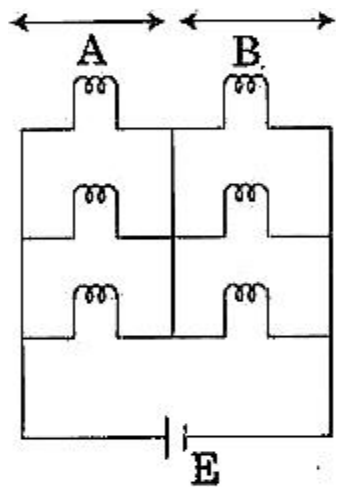
- 14 : 9
- 29 : 4
- 31 : 2
- 42 : 1
Show answer and solution
Correct: option 2, 9 : 4
Each section has three bulbs (resistance R each) in parallel, and the two sections are in series. (i) All glowing: . (ii) Two in A and one in B: . Since , .
Question 18NEET 2019, Q18
For a p-type semiconductor, which of the following statements is true?
- 1Electrons are the majority carriers and trivalent atoms are the dopants.
- 2Holes are the majority carriers and trivalent atoms are the dopants.
- 3Holes are the majority carriers and pentavalent atoms are the dopants.
- 4Electrons are the majority carriers and pentavalent atoms are the dopants.
Show answer and solution
Correct: option 2, Holes are the majority carriers and trivalent atoms are the dopants.
A p-type semiconductor is made by doping silicon or germanium with a trivalent element such as boron, aluminium or indium. Each dopant atom is one electron short of completing four bonds and so creates a hole. Holes are therefore the majority carriers.
Question 19NEET 2019, Q19
Average velocity of a particle executing SHM in one complete vibration is:
- 1
- 2
- 3
- 4zero
Show answer and solution
Correct: option 4, zero
After one complete vibration the particle is back where it started, so its displacement is zero. Average velocity is displacement divided by time, so it is zero.
Question 20NEET 2019, Q20
The unit of thermal conductivity is:
- 1
- 2
- 3
- 4
Show answer and solution
Correct: option 4,
From , , with unit .
Question 21NEET 2019, Q21
A solid cylinder of mass 2 kg and radius 4 cm is rotating about its axis at the rate of 3 rpm. The torque required to stop after revolutions is:
- 1 N m
- 2 N m
- 3 N m
- 4 N m
Show answer and solution
Correct: option 1, N m
. rad/s and rad. From , . Torque N m.
Question 22NEET 2019, Q22
A force acts on a particle in -direction where F is in newton and in meter. Work done by this force to move the particle from to m is:
- 130 J
- 25 J
- 325 J
- 420 J
Show answer and solution
Correct: option 3, 25 J
J.
Question 23NEET 2019, Q23
Which of the following acts as a circuit protection device?
- 1conductor
- 2inductor
- 3switch
- 4fuse
Show answer and solution
Correct: option 4, fuse
A fuse is a thin wire of low melting point placed in series with the circuit. When the current exceeds the safe value the wire melts and breaks the circuit, protecting the appliances. A conductor, an inductor and a switch do not do this.
Question 24NEET 2019, Q24
In the circuits shown below, the readings of the voltmeters and the ammeters will be:
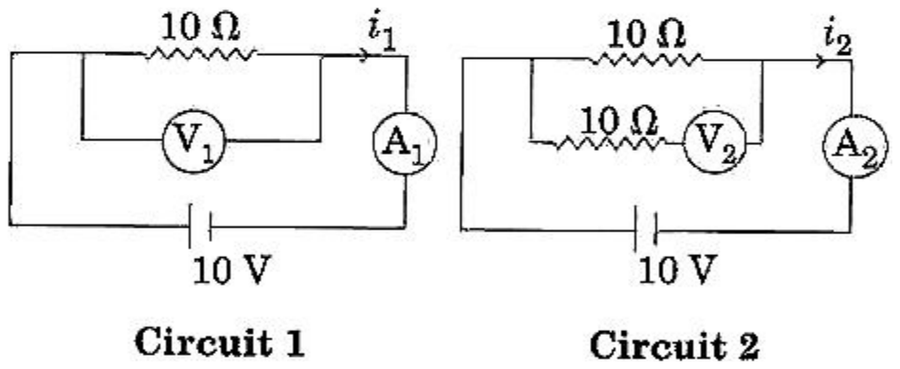
- 1 and
- 2 and
- 3 and
- 4 and
Show answer and solution
Correct: option 3, and
An ideal voltmeter has infinite resistance, so no current flows through the voltmeter branch in either circuit; the extra in series with changes nothing. In both circuits the current is A through the resistor and the voltmeter reads the full 10 V across it. So and .
Question 25NEET 2019, Q25
A hollow metal sphere of radius R is uniformly charged. The electric field due to the sphere at a distance r from the centre:
- 1increases as r increases for and for
- 2zero as r increases for , decreases as r increases for
- 3zero as r increases for , increases as r increases for
- 4decreases as r increases for and for
Show answer and solution
Correct: option 2, zero as r increases for , decreases as r increases for
By the Gauss law a surface inside the hollow sphere encloses no charge, so for . Outside, the sphere acts like a point charge at its centre, , which decreases as r increases.
Question 26NEET 2019, Q26
At a point A on the earth's surface the angle of dip, . At a point B on the earth's surface the angle of dip, . We can interpret that:
- 1A and B are both located in the northern hemisphere.
- 2A is located in the southern hemisphere and B is located in the northern hemisphere.
- 3A is located in the northern hemisphere and B is located in the southern hemisphere.
- 4A and B are both located in the southern hemisphere.
Show answer and solution
Correct: option 3, A is located in the northern hemisphere and B is located in the southern hemisphere.
The angle of dip is taken as positive where the north pole of a dip needle points below the horizontal, which happens in the northern hemisphere, and negative where it points above the horizontal, in the southern hemisphere. So A is in the northern hemisphere and B in the southern.
Question 27NEET 2019, Q27
The total energy of an electron in an atom in an orbit is eV. Its kinetic and potential energies are, respectively:
- 1 eV, eV
- 2 eV, eV
- 33.4 eV, eV
- 43.4 eV, 3.4 eV
Show answer and solution
Correct: option 3, 3.4 eV, eV
For an electron in a Bohr orbit, and . With eV, eV and eV; their sum is eV as required.
Question 28NEET 2019, Q28
In total internal reflection when the angle of incidence is equal to the critical angle for the pair of media in contact, what will be angle of refraction?
- 1
- 2
- 3equal to angle of incidence
- 4
Show answer and solution
Correct: option 4,
The critical angle is defined as the angle of incidence in the denser medium for which the refracted ray just grazes the interface, that is, the angle of refraction is .
Question 29NEET 2019, Q29
The work done to raise a mass m from the surface of the earth to a height h, which is equal to the radius of the earth, is:
- 1
- 2
- 3
- 4
Show answer and solution
Correct: option 3,
Work done equals the gain in potential energy: . Using , .
Question 30NEET 2019, Q30
When an object is shot from the bottom of a long smooth inclined plane kept at an angle with horizontal, it can travel a distance along the plane. But when the inclination is decreased to and the same object is shot with the same velocity, it can travel distance. Then will be:
- 1
- 2
- 3
- 4
Show answer and solution
Correct: option 3,
On a smooth incline the retardation is , so the distance travelled is . Hence .
Question 31NEET 2019, Q31
- 12 protons and 2 neutrons only
- 22 electrons, 2 protons and 2 neutrons
- 32 electrons and 4 protons only
- 42 protons only
Show answer and solution
Correct: option 1, 2 protons and 2 neutrons only
An -particle is a helium-4 nucleus, : 2 protons and 2 neutrons with no electrons.
Question 32NEET 2019, Q32
The speed of a swimmer in still water is 20 m/s. The speed of river water is 10 m/s and is flowing due east. If he is standing on the south bank and wishes to cross the river along the shortest path, the angle at which he should make his strokes w.r.t. north is given by:
- 1 west
- 2
- 3 west
- 4 west
Show answer and solution
Correct: option 1, west
For the shortest path the resultant velocity must point straight north, so the westward component of the velocity of the swimmer must cancel the flow of the river: , giving and west of north.
Question 33NEET 2019, Q33
A particle moving with velocity is acted by three forces shown by the vector triangle PQR. The velocity of the particle will:
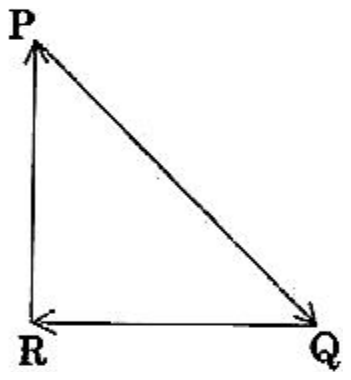
- 1increase
- 2decrease
- 3remain constant
- 4change according to the smallest force
Show answer and solution
Correct: option 3, remain constant
The three forces are represented by the sides of a triangle taken in order (P to Q, Q to R, R to P), so by the triangle law their vector sum is zero. With zero net force there is no acceleration and the velocity remains constant.
Question 34NEET 2019, Q34
Two particles A and B are moving in uniform circular motion in concentric circles of radii and with speed and respectively. Their time period of rotation is the same. The ratio of angular speed of A to that of B will be:
- 1
- 2
- 3
- 41 : 1
Show answer and solution
Correct: option 4, 1 : 1
Angular speed is . Since both particles have the same time period, they have the same angular speed, so the ratio is 1 : 1 whatever the radii and speeds.
Question 35NEET 2019, Q35
A block of mass 10 kg is in contact against the inner wall of a hollow cylindrical drum of radius 1 m. The coefficient of friction between the block and the inner wall of the cylinder is 0.1. The minimum angular velocity needed for the cylinder to keep the block stationary when the cylinder is vertical and rotating about its axis, will be: ()
- 1 rad/s
- 2 rad/s
- 310 rad/s
- 4 rad/s
Show answer and solution
Correct: option 3, 10 rad/s
The normal force from the wall supplies the centripetal force, , and friction must hold up the weight: . So rad/s.
Question 36NEET 2019, Q36
Two parallel infinite line charges with linear charge densities C/m and C/m are placed at a distance of 2R in free space. What is the electric field mid-way between the two line charges?
- 1zero
- 2 N/C
- 3 N/C
- 4 N/C
Show answer and solution
Correct: option 3, N/C
The midpoint is at distance R from each line, and each produces a field . The field of the positive line points away from it and that of the negative line points towards it, so at the midpoint both are in the same direction and add: N/C.
Question 37NEET 2019, Q37
Two point charges A and B, having charges and respectively, are placed at certain distance apart and force acting between them is F. If 25% charge of A is transferred to B, then force between the charges becomes:
- 1F
- 2
- 3
- 4
Show answer and solution
Correct: option 2,
After the transfer A has and B has . The force is proportional to the product of the magnitudes, so .
Question 38NEET 2019, Q38
A small hole of area of cross-section is present near the bottom of a fully filled open tank of height 2 m. Taking , the rate of flow of water through the open hole would be nearly:
- 1
- 2
- 3
- 4
Show answer and solution
Correct: option 1,
By the Torricelli law the speed of efflux is m/s. Rate of flow .
Question 39NEET 2019, Q39
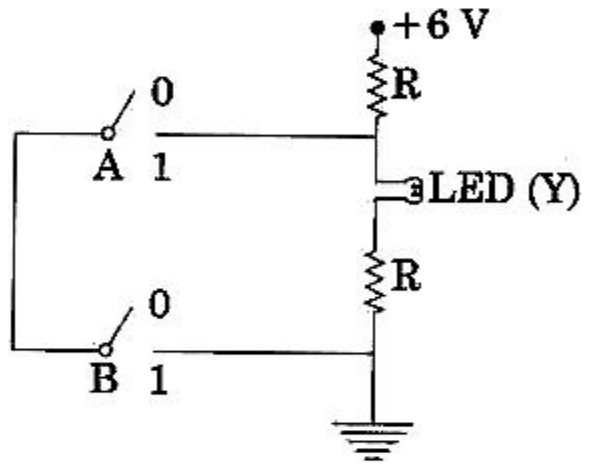
The correct Boolean operation represented by the circuit diagram drawn is:
- 1AND
- 2OR
- 3NAND
- 4NOR
Show answer and solution
Correct: option 3, NAND
The two switches are in series with each other and together they are in parallel with the LED and its lower resistor. Only when both A and B are closed (1, 1) is the LED short-circuited and off; for every other combination the LED glows. Output 0 only for inputs 1, 1 is the NAND operation.
Question 40NEET 2019, Q40
In which of the following processes, heat is neither absorbed nor released by a system?
- 1isothermal
- 2adiabatic
- 3isobaric
- 4isochoric
Show answer and solution
Correct: option 2, adiabatic
An adiabatic process is defined by no heat exchange between the system and its surroundings (). In isothermal, isobaric and isochoric processes heat generally flows in or out.
Question 41NEET 2019, Q41
A 800 turn coil of effective area is kept perpendicular to a magnetic field T. When the plane of the coil is rotated by around any of its coplanar axis in 0.1 s, the emf induced in the coil will be:
- 12 V
- 20.2 V
- 3 V
- 40.02 V
Show answer and solution
Correct: option 4, 0.02 V
The flux through the coil changes from to zero. V.
Question 42NEET 2019, Q42
The radius of circle, the period of revolution, initial position and sense of revolution are indicated in the fig.
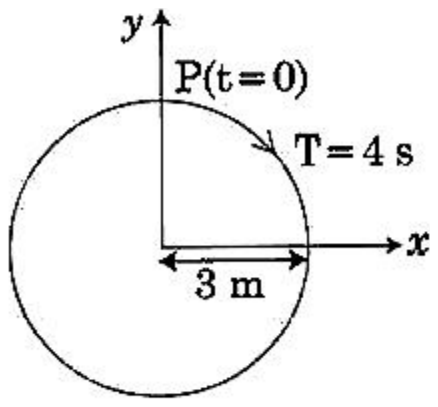
-projection of the radius vector of rotating particle P is:
- 1, where in m
- 2, where in m
- 3, where in m
- 4, where in m
Show answer and solution
Correct: option 4, , where in m
The amplitude is the radius, 3 m, and rad/s. At the particle is at the top of the circle, so starts at its maximum value m, which is a cosine: .
Question 43NEET 2019, Q43
A parallel plate capacitor of capacitance 20 F is being charged by a voltage source whose potential is changing at the rate of 3 V/s. The conduction current through the connecting wires, and the displacement current through the plates of the capacitor, would be, respectively:
- 1zero, 60 A
- 260 A, 60 A
- 360 A, zero
- 4zero, zero
Show answer and solution
Correct: option 2, 60 A, 60 A
Conduction current in the wires: A. The displacement current between the plates equals the conduction current, so it is also 60 A; this keeps the current continuous round the circuit.
Question 44NEET 2019, Q44
In an experiment, the percentage of error occurred in the measurement of physical quantities A, B, C and D are 1%, 2%, 3% and 4% respectively. Then the maximum percentage of error in the measurement X, where , will be:
- 1%
- 216%
- 3%
- 410%
Show answer and solution
Correct: option 2, 16%
For the maximum error the percentage errors add, each multiplied by its power: %.
Question 45NEET 2019, Q45
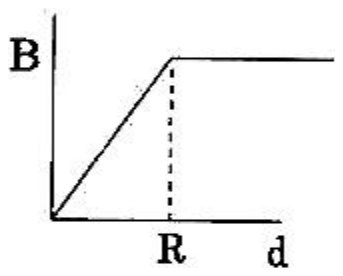
A cylindrical conductor of radius R is carrying a constant current. The plot of the magnitude of the magnetic field, B with the distance, d, from the centre of the conductor, is correctly represented by the figure:
- 1
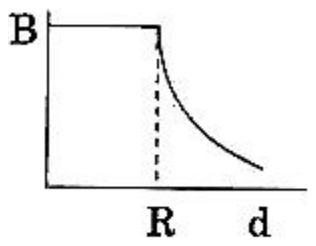
- 2
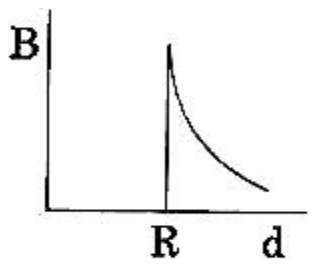
- 3
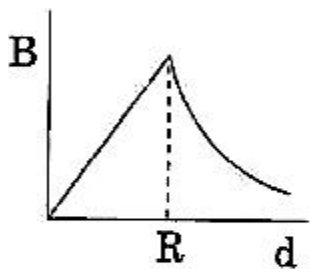
- 4
Show answer and solution
Correct: option 3
By the Ampere circuital law, inside the conductor () the enclosed current grows as , giving , a straight line through the origin. Outside (), , which falls off as . The graph that rises linearly to a peak at and then decays is option (3).
NEET 2019 Chemistry questions
Question 46NEET 2019, Q46
The number of sigma () and pi () bonds in pent-2-en-4-yne is:
- 110 bonds and 3 bonds
- 28 bonds and 5 bonds
- 311 bonds and 2 bonds
- 413 bonds and no bond
Show answer and solution
Correct: option 1, 10 bonds and 3 bonds
The molecule is . It has 4 C–C bonds and 6 C–H bonds, 10 in all. The double bond gives 1 bond and the triple bond gives 2, so there are 3 bonds.
Question 47NEET 2019, Q47
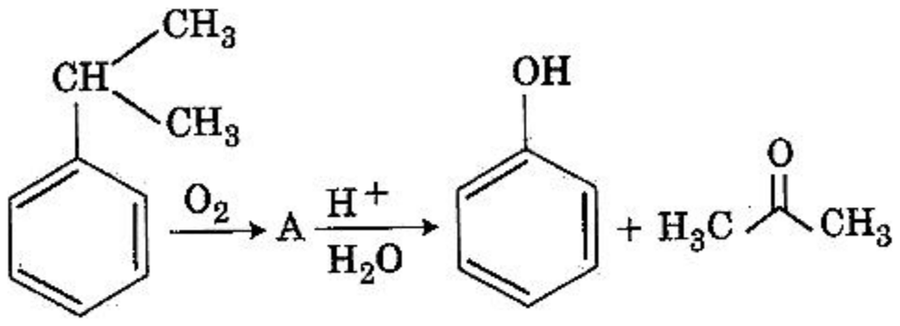
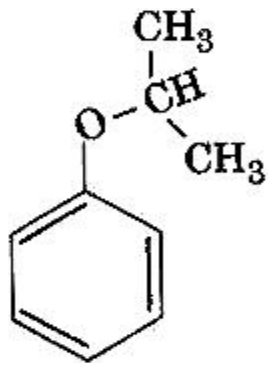
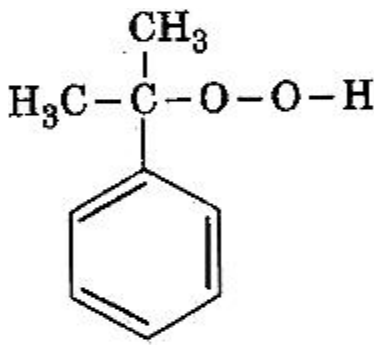
The structure of intermediate A in the following reaction, is:
- 1
- 2
- 3
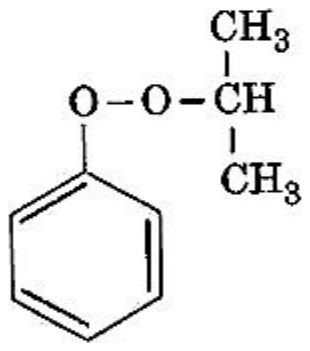
- 4
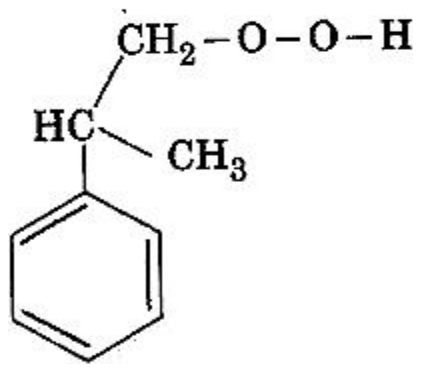
Show answer and solution
Correct: option 2
This is the cumene process for phenol. Air oxidises cumene (isopropylbenzene) at its benzylic C–H to cumene hydroperoxide, , and dilute acid then rearranges it to phenol and acetone. Option (2) is cumene hydroperoxide.
Question 48NEET 2019, Q48
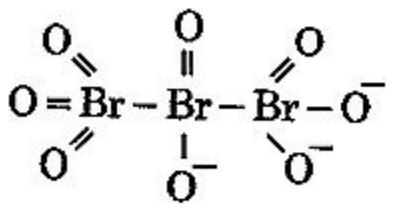
The correct structure of tribromooctaoxide is:
- 1
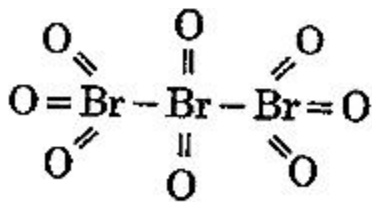
- 2
- 3
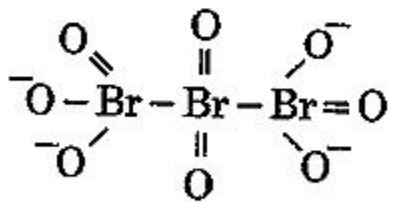
- 4
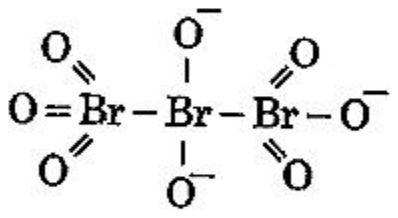
Show answer and solution
Correct: option 1
is a neutral molecule, so its structure carries no charges on oxygen: with every oxygen doubly bonded to bromine. Only option (1) has eight bonds and no charged oxygen; the other options would be anions.
Question 49NEET 2019, Q49
4d, 5p, 5f and 6p orbitals are arranged in the order of decreasing energy. The correct option is:
- 15f > 6p > 5p > 4d
- 26p > 5f > 5p > 4d
- 36p > 5f > 4d > 5p
- 45f > 6p > 4d > 5p
Show answer and solution
Correct: option 1, 5f > 6p > 5p > 4d
Use the rule: 5f has , 6p has , 5p has and 4d has . A higher means higher energy, and for equal the orbital with the larger is higher, so 5p lies above 4d. The order is 5f > 6p > 5p > 4d.
Question 50NEET 2019, Q50
Which of the following reactions are disproportionation reaction?
(a)
(b)
(c)
(d)
Select the correct option from the following:
- 1(a) and (b) only
- 2(a), (b) and (c)
- 3(a), (c) and (d)
- 4(a) and (d) only
Show answer and solution
Correct: option 1, (a) and (b) only
In disproportionation one species in a single oxidation state is both oxidised and reduced. In (a) Cu(+1) goes to +2 and 0; in (b) Mn(+6) goes to +7 and +4. In (c) Mn(+7) is only reduced (to +6 and +4) while oxygen is oxidised, and (d) is the reverse, a comproportionation of Mn(+7) and Mn(+2) to Mn(+4). So only (a) and (b) qualify.
Question 51NEET 2019, Q51
Under isothermal condition, a gas at 300 K expands from 0.1 L to 0.25 L against a constant external pressure of 2 bar. The work done by the gas is:
[Given that 1 L bar = 100 J]
- 1
- 2
- 3
- 4
Show answer and solution
Correct: option 4,
Against a constant external pressure, . This is the work done on the gas, so the work done by the gas is , which is the keyed option (4).
Question 52NEET 2019, Q52
Among the following, the one that is not a green house gas is:
- 1nitrous oxide
- 2methane
- 3ozone
- 4sulphur dioxide
Show answer and solution
Correct: option 4, sulphur dioxide
Carbon dioxide, methane, nitrous oxide, ozone, CFCs and water vapour trap the infrared radiation given off by the earth and are greenhouse gases. Sulphur dioxide is not counted among them; it is known as an acid-rain pollutant.
Question 53NEET 2019, Q53
For the cell reaction
at 298 K. The standard Gibbs energy () of the cell reaction is:
[Given that Faraday constant ]
- 1
- 2
- 3
- 4
Show answer and solution
Correct: option 1,
Two electrons are transferred, so . .
Question 54NEET 2019, Q54
Enzymes that utilize ATP in phosphate transfer require an alkaline earth metal (M) as the cofactor. M is:
- 1Be
- 2Mg
- 3Ca
- 4Sr
Show answer and solution
Correct: option 2, Mg
All enzymes that use ATP for phosphate transfer need magnesium as the cofactor; binds to the phosphate groups of ATP. So M is Mg.
Question 55NEET 2019, Q55
The most suitable reagent for the following conversion, is:
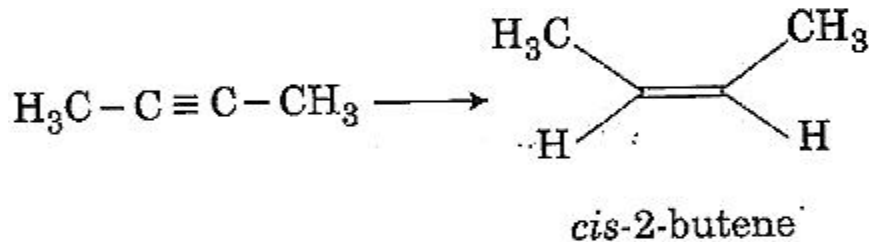
- 1
- 2, Pd/C, quinoline
- 3
- 4
Show answer and solution
Correct: option 2, , Pd/C, quinoline
But-2-yne has to be reduced only as far as the alkene, with both hydrogens added to the same side. Hydrogen over palladium poisoned with quinoline (Lindlar-type catalyst) does this syn addition and gives cis-2-butene. Sodium in liquid ammonia gives the trans alkene, and hydrates the alkyne to a ketone.
Question 56NEET 2019, Q56
Which is the correct thermal stability order for (E = O, S, Se, Te and Po)?
- 1
- 2
- 3
- 4
Show answer and solution
Correct: option 3,
Down group 16 the atom E gets larger, the H–E bond gets longer and weaker, and the hydride decomposes more easily. Thermal stability therefore falls from to , which written in increasing order is .
Question 57NEET 2019, Q57
Which of the following is incorrect statement?
- 1 is covalent in nature
- 2 is easily hydrolysed
- 3 (X = F, Cl, Br, I) is more stable than
- 4 is ionic in nature
Show answer and solution
Correct: option 1, is covalent in nature
Most group 14 tetrahalides are covalent, but and are ionic, so calling covalent is wrong. The others are true: hydrolyses readily because silicon has vacant d orbitals, and germanium is more stable in the +4 state than in +2.
Question 58NEET 2019, Q58
Match the following:
| |
|---|
| (a) Pure nitrogen | (i) Chlorine |
| (b) Haber process | (ii) Sulphuric acid |
| (c) Contact process | (iii) Ammonia |
| (d) Deacon's process | (iv) Sodium azide or Barium azide |
Which of the following is the correct option?
- 1a-i, b-ii, c-iii, d-iv
- 2a-ii, b-iv, c-i, d-iii
- 3a-iii, b-iv, c-ii, d-i
- 4a-iv, b-iii, c-ii, d-i
Show answer and solution
Correct: option 4, a-iv, b-iii, c-ii, d-i
Very pure nitrogen is made by heating sodium azide or barium azide (a-iv). The Haber process makes ammonia (b-iii), the Contact process makes sulphuric acid (c-ii), and Deacon's process oxidises HCl with air over to give chlorine (d-i).
Question 59NEET 2019, Q59
Which of the following diatomic molecular species has only bonds according to Molecular Orbital Theory?
- 1
- 2
- 3
- 4
Show answer and solution
Correct: option 3,
has 12 electrons: . The bonding and antibonding pairs cancel, so the bond order of 2 comes entirely from the four electrons in the two orbitals. and also have a bond, and has bond order zero.
Question 60NEET 2019, Q60
For the second period elements the correct increasing order of first ionisation enthalpy is:
- 1Li < Be < B < C < N < O < F < Ne
- 2Li < B < Be < C < O < N < F < Ne
- 3Li < B < Be < C < N < O < F < Ne
- 4Li < Be < B < C < O < N < F < Ne
Show answer and solution
Correct: option 2, Li < B < Be < C < O < N < F < Ne
Ionisation enthalpy rises across the period, with two exceptions. Be (, filled subshell) is above B, whose electron is easier to remove, and N (, half-filled) is above O. That gives Li < B < Be < C < O < N < F < Ne.
Question 61NEET 2019, Q61
The biodegradable polymer is:
- 1nylon-6, 6
- 2nylon 2-nylon 6
- 3nylon-6
- 4Buna-S
Show answer and solution
Correct: option 2, nylon 2-nylon 6
Nylon 2-nylon 6 is an alternating polyamide of glycine and aminocaproic acid, and it is biodegradable. Nylon-6,6, nylon-6 and Buna-S are ordinary synthetic polymers that microbes do not break down.
Question 62NEET 2019, Q62
pH of a saturated solution of is 9. The solubility product () of is:
- 1
- 2
- 3
- 4
Show answer and solution
Correct: option 1,
pH 9 means pOH = 5, so and . Then .
Question 63NEET 2019, Q63
If the rate constant for a first order reaction is k, the time (t) required for the completion of 99% of the reaction is given by:
- 1
- 2
- 3
- 4
Show answer and solution
Correct: option 3,
For a first order reaction . At 99% completion , so .
Question 64NEET 2019, Q64
The non-essential amino acid among the following is:
- 1valine
- 2leucine
- 3alanine
- 4lysine
Show answer and solution
Correct: option 3, alanine
Non-essential amino acids are the ones the body can make for itself. Alanine is one of them, while valine, leucine and lysine cannot be synthesised in the body and must come from the diet.
Question 65NEET 2019, Q65
Among the following, the reaction that proceeds through an electrophilic substitution, is:
- 1

- 2

- 3
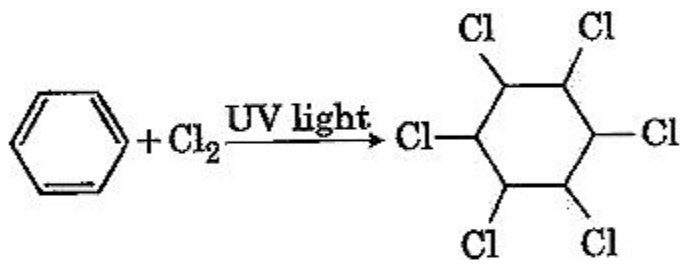
- 4

Show answer and solution
Correct: option 2
In option (2) polarises to give the electrophile , which replaces a ring hydrogen of benzene: electrophilic aromatic substitution. Option (1) is the Sandmeyer reaction (radical-type substitution of the diazonium group), option (3) is free-radical addition of chlorine to give benzene hexachloride, and option (4) is nucleophilic substitution of the OH of benzyl alcohol.
Question 66NEET 2019, Q66
The mixture that forms maximum boiling azeotrope is:
- 1Water + Nitric acid
- 2Ethanol + Water
- 3Acetone + Carbon disulphide
- 4Heptane + Octane
Show answer and solution
Correct: option 1, Water + Nitric acid
A maximum boiling azeotrope comes from a solution with large negative deviation from Raoult's law. Water and nitric acid attract each other strongly and form one (about 68% nitric acid). Ethanol + water and acetone + carbon disulphide show positive deviation (minimum boiling azeotropes), and heptane + octane is nearly ideal.
Question 67NEET 2019, Q67
For the chemical reaction
the correct option is:
- 1
- 2
- 3
- 4
Show answer and solution
Correct: option 3,
The rate is the change of each concentration divided by its coefficient, negative for reactants: rate . Only option (3) matches this.
Question 68NEET 2019, Q68
The number of moles of hydrogen molecules required to produce 20 moles of ammonia through Haber's process is:
- 110
- 220
- 330
- 440
Show answer and solution
Correct: option 3, 30
: 2 moles of ammonia need 3 moles of hydrogen, so 20 moles need moles.
Question 69NEET 2019, Q69
The compound that is most difficult to protonate is:
- 1
- 2
- 3
- 4
Show answer and solution
Correct: option 4,
Protonation uses a lone pair on oxygen. In phenol the oxygen lone pair is delocalised into the benzene ring by resonance, so it is the least available and phenol is the hardest to protonate. Methyl groups push electrons towards oxygen, which makes methanol and dimethyl ether easier to protonate than water.
Question 70NEET 2019, Q70
For an ideal solution, the correct option is:
- 1 at constant T and P
- 2 at constant T and P
- 3 at constant T and P
- 4 at constant T and P
Show answer and solution
Correct: option 3, at constant T and P
An ideal solution forms with no heat change and no volume change, so and . Mixing is still spontaneous: and .
Question 71NEET 2019, Q71
Conjugate base for Brönsted acids and HF are:
- 1 and , respectively
- 2 and , respectively
- 3 and , respectively
- 4 and , respectively
Show answer and solution
Correct: option 3, and , respectively
A conjugate base is what remains after the acid gives up one proton. minus is , and HF minus is .
Question 72NEET 2019, Q72
Which mixture of the solutions will lead to the formation of negatively charged colloidal sol.?
- 150 mL of 1 M + 50 mL of 1.5 M KI
- 250 mL of 1 M + 50 mL of 2 M KI
- 350 mL of 2 M + 50 mL of 1.5 M KI
- 450 mL of 0.1 M + 50 mL of 0.1 M KI
Show answer and solution
Correct: option 1 or 2
The answer key accepts options 1 and 2.
The AgI particles adsorb and become negative only when KI is in excess. In (1) there are 50 mmol of against 75 mmol of KI, and in (2) 50 mmol against 100 mmol, so both leave excess iodide. In (3) silver nitrate is in excess (a positive sol) and in (4) the amounts are equal. The official key accepts both (1) and (2).
Question 73NEET 2019, Q73
Among the following, the narrow spectrum antibiotic is:
- 1penicillin G
- 2ampicillin
- 3amoxycillin
- 4chloramphenicol
Show answer and solution
Correct: option 1, penicillin G
Penicillin G acts on only a limited range of bacteria, so it is a narrow spectrum antibiotic. Ampicillin and amoxycillin are synthetic modifications of penicillin with a broad spectrum, and chloramphenicol is also broad spectrum.
Question 74NEET 2019, Q74
An alkene "A" on reaction with and gives propanone and ethanal in equimolar ratio. Addition of HCl to alkene "A" gives "B" as the major product. The structure of product "B" is:
- 1
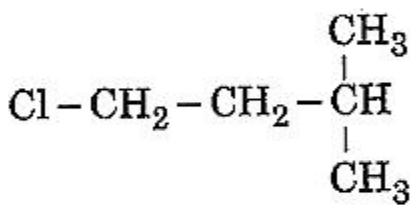
- 2
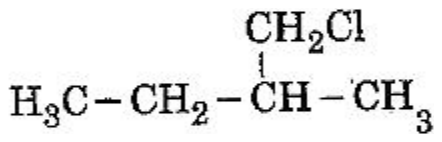
- 3
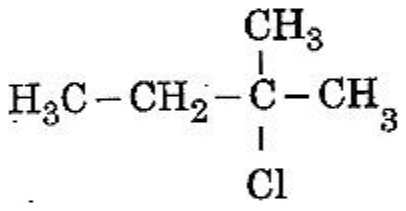
- 4
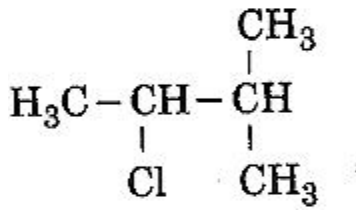
Show answer and solution
Correct: option 3
Joining the carbonyl carbons of propanone and ethanal gives the alkene A, (2-methylbut-2-ene). HCl adds by Markovnikov's rule through the more stable tertiary carbocation, so Cl ends up on the carbon carrying the two methyl groups: 2-chloro-2-methylbutane, option (3).
Question 75NEET 2019, Q75
What is the correct electronic configuration of the central atom in based on crystal field theory?
- 1
- 2
- 3
- 4
Show answer and solution
Correct: option 2,
Iron is () in an octahedral field. is a strong field ligand, so is larger than the pairing energy and all six electrons pair up in the lower set: .
Question 76NEET 2019, Q76
Identify the incorrect statement related to from the following:
- 1Three equatorial P–Cl bonds make an angle of 120° with each other
- 2Two axial P–Cl bonds make an angle of 180° with each other
- 3Axial P–Cl bonds are longer than equatorial P–Cl bonds
- 4 molecule is non-reactive
Show answer and solution
Correct: option 4, molecule is non-reactive
is trigonal bipyramidal: three equatorial bonds at 120° and two axial bonds at 180° to each other. The axial bonds feel more repulsion and are longer and weaker, which makes a reactive molecule. So the statement that it is non-reactive is the incorrect one.
Question 77NEET 2019, Q77
Which will make basic buffer?
- 150 mL of 0.1 M NaOH + 25 mL of 0.1 M
- 2100 mL of 0.1 M + 100 mL of 0.1 M NaOH
- 3100 mL of 0.1 M HCl + 200 mL of 0.1 M
- 4100 mL of 0.1 M HCl + 100 mL of 0.1 M NaOH
Show answer and solution
Correct: option 3, 100 mL of 0.1 M HCl + 200 mL of 0.1 M
A basic buffer is a weak base together with its salt of a strong acid. In (3), 10 mmol of HCl neutralises half of the 20 mmol of , leaving 10 mmol of and 10 mmol of . Option (1) leaves excess strong base, (2) gives only sodium acetate and (4) gives only NaCl.
Question 78NEET 2019, Q78
The major product of the following reaction is:
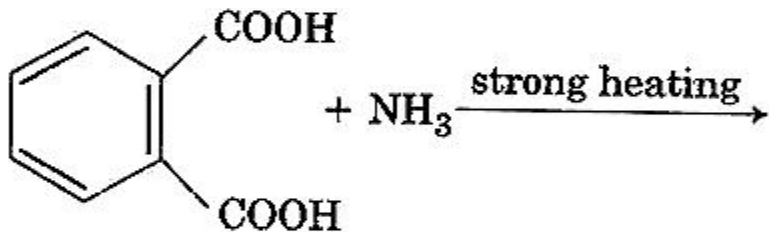
- 1
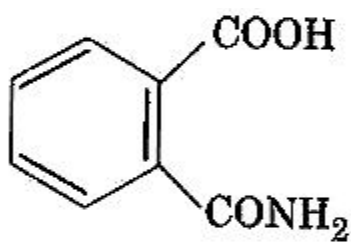
- 2
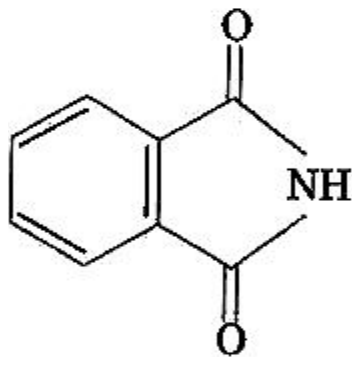
- 3
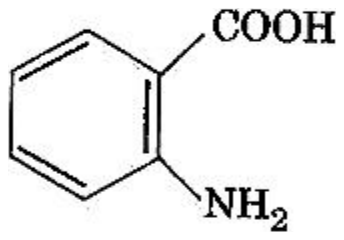
- 4
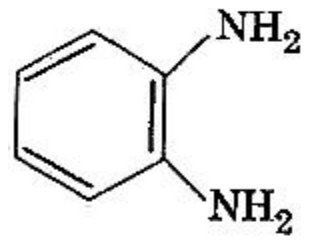
Show answer and solution
Correct: option 2
Phthalic acid and ammonia first form ammonium phthalate, which loses water on heating to give phthalamide. On strong heating this loses ammonia and closes the five-membered ring to give phthalimide, the cyclic imide shown in option (2).
Question 79NEET 2019, Q79
Match the Xenon compounds in Column - I with its structure in Column - II and assign the correct code:
| Column - I | Column - II |
|---|
| (a) | (i) pyramidal |
| (b) | (ii) square planar |
| (c) | (iii) distorted octahedral |
| (d) | (iv) square pyramidal |
Code:
- 1a-i, b-ii, c-iii, d-iv
- 2a-ii, b-iii, c-iv, d-i
- 3a-ii, b-iii, c-i, d-iv
- 4a-iii, b-iv, c-i, d-ii
Show answer and solution
Correct: option 2, a-ii, b-iii, c-iv, d-i
has 4 bond pairs and 2 lone pairs: square planar (a-ii). has 6 bond pairs and 1 lone pair: distorted octahedral (b-iii). has 5 bonded atoms and 1 lone pair: square pyramidal (c-iv). has 3 bonded atoms and 1 lone pair: pyramidal (d-i).
Question 80NEET 2019, Q80
The manganate and permanganate ions are tetrahedral, due to:
- 1The -bonding involves overlap of p-orbitals of oxygen with d-orbitals of manganese
- 2There is no -bonding
- 3The -bonding involves overlap of p-orbitals of oxygen with p-orbitals of manganese
- 4The -bonding involves overlap of d-orbitals of oxygen with d-orbitals of manganese
Show answer and solution
Correct: option 1, The -bonding involves overlap of p-orbitals of oxygen with d-orbitals of manganese
In and the Mn–O bonds are formed by overlap of filled p orbitals of oxygen with d orbitals of manganese (– bonding). Oxygen has no d orbitals available, which rules out option (4).
Question 81NEET 2019, Q81
Which of the following species is not stable?
- 1
- 2
- 3
- 4
Show answer and solution
Correct: option 4,
Silicon is small, and six large chloride ions cannot be fitted around it; the lone pairs of chlorine also interact only weakly with . So does not exist, while the small fluoride gives stable and the larger Ge and Sn atoms can hold six ligands.
Question 82NEET 2019, Q82
For a cell involving one electron at 298 K, the equilibrium constant for the cell reaction is:
[Given that at T = 298 K]
- 1
- 2
- 3
- 4
Show answer and solution
Correct: option 3,
At equilibrium . With , , so .
Question 83NEET 2019, Q83
Which of the following is an amphoteric hydroxide?
- 1
- 2
- 3
- 4
Show answer and solution
Correct: option 4,
dissolves in acids to give salts and in alkalis to give the beryllate ion , so it is amphoteric. The hydroxides of Mg, Ca and Sr are basic, and increasingly so down the group.
Question 84NEET 2019, Q84
A gas at 350 K and 15 bar has molar volume 20 percent smaller than that for an ideal gas under the same conditions. The correct option about the gas and its compressibility factor (Z) is:
- 1Z > 1 and attractive forces are dominant
- 2Z > 1 and repulsive forces are dominant
- 3Z < 1 and attractive forces are dominant
- 4Z < 1 and repulsive forces are dominant
Show answer and solution
Correct: option 3, Z < 1 and attractive forces are dominant
, which is less than 1. A real gas occupies less volume than an ideal gas when the attraction between its molecules pulls them closer together, so attractive forces are dominant.
Question 85NEET 2019, Q85
A compound is formed by cation C and anion A. The anions form hexagonal close packed (hcp) lattice and the cations occupy 75% of octahedral voids. The formula of the compound is:
- 1
- 2
- 3
- 4
Show answer and solution
Correct: option 3,
A close packed lattice has one octahedral void per atom. For N anions there are N octahedral voids, and 75% of them hold cations, giving cations. C : A = : 1 = 3 : 4, so the formula is .
Question 86NEET 2019, Q86
In which case change in entropy is negative?
- 1Evaporation of water
- 2Expansion of a gas at constant temperature
- 3Sublimation of solid to gas
- 4
Show answer and solution
Correct: option 4,
Entropy falls when disorder falls. In two moles of gaseous atoms combine into one mole of gas molecules, so is negative. Evaporation, expansion of a gas and sublimation all increase disorder.
Question 87NEET 2019, Q87
Which of the following series of transitions in the spectrum of hydrogen atom falls in visible region?
- 1Lyman series
- 2Balmer series
- 3Paschen series
- 4Brackett series
Show answer and solution
Correct: option 2, Balmer series
The Balmer series (transitions ending at ) lies in the visible region. The Lyman series is in the ultraviolet, and the Paschen and Brackett series are in the infrared.
Question 88NEET 2019, Q88
The method used to remove temporary hardness of water is:
- 1Calgon's method
- 2Clark's method
- 3Ion-exchange method
- 4Synthetic resins method
Show answer and solution
Correct: option 2, Clark's method
Temporary hardness is caused by the hydrogencarbonates of calcium and magnesium. In Clark's method a calculated amount of lime is added, which precipitates them as calcium carbonate and magnesium hydroxide. The other three methods are the ones used for permanent hardness.
Question 89NEET 2019, Q89
Which one is malachite from the following?
- 1
- 2
- 3
- 4
Show answer and solution
Correct: option 4,
Malachite is the basic carbonate ore of copper, . is copper pyrites and is magnetite.
Question 90NEET 2019, Q90
The correct order of the basic strength of methyl substituted amines in aqueous solution is:
- 1
- 2
- 3
- 4
Show answer and solution
Correct: option 1,
In water the basic strength depends on the electron-releasing effect of the methyl groups, on how well the protonated amine is stabilised by hydrogen bonding with water, and on steric crowding. For methyl amines the combined result is secondary > primary > tertiary: .
NEET 2019 Biology questions
Question 91NEET 2019, Q91
The Earth Summit held in Rio de Janeiro in 1992 was called:
- 1to reduce emissions and global warming.
- 2for conservation of biodiversity and sustainable utilization of its benefits.
- 3to assess threat posed to native species by invasive weed species.
- 4for immediate steps to discontinue use of CFCs that were damaging the ozone layer.
Show answer and solution
Correct: option 2, for conservation of biodiversity and sustainable utilization of its benefits.
The 1992 Earth Summit at Rio de Janeiro produced the Convention on Biological Diversity, which asked all nations to conserve biodiversity and to use its benefits sustainably. Cutting emissions belongs to the Kyoto Protocol and ending CFC use to the Montreal Protocol, so option (2) is right.
Question 92NEET 2019, Q92
Colostrum, the yellowish fluid, secreted by mother during the initial days of lactation is very essential to impart immunity to the newborn infants because it contains:
- 1Natural killer cells
- 2Monocytes
- 3Macrophages
- 4Immunoglobulin A
Show answer and solution
Correct: option 4, Immunoglobulin A
Colostrum is rich in ready-made antibodies of the IgA class. The infant receives them through the milk, which gives it passive immunity during the first days of life, so the answer is Immunoglobulin A.
Question 93NEET 2019, Q93
Grass leaves curl inwards during very dry weather. Select the most appropriate reason from the following:
- 1Closure of stomata
- 2Flaccidity of bulliform cells
- 3Shrinkage of air spaces in spongy mesophyll
- 4Tyloses in vessels
Show answer and solution
Correct: option 2, Flaccidity of bulliform cells
Grass leaves have large, empty, colourless bulliform cells in the upper epidermis. When these cells lose water under water stress they become flaccid and the leaf rolls inwards, which reduces water loss. So flaccidity of bulliform cells is the reason.
Question 94NEET 2019, Q94
The shorter and longer arms of a submetacentric chromosome are referred to as:
- 1s-arm and l-arm respectively
- 2p-arm and q-arm respectively
- 3q-arm and p-arm respectively
- 4m-arm and n-arm respectively
Show answer and solution
Correct: option 2, p-arm and q-arm respectively
In a submetacentric chromosome the centromere lies slightly away from the middle, giving one shorter and one longer arm. By convention the short arm is called the p-arm (from petit, small) and the long arm the q-arm.
Question 95NEET 2019, Q95
Respiratory Quotient (RQ) value of tripalmitin is:
- 10.9
- 20.7
- 30.07
- 40.09
Show answer and solution
Correct: option 2, 0.7
Tripalmitin is a fat. Its complete oxidation is , so RQ . Fats always give an RQ below 1 because they need more oxygen than the carbon dioxide they release.
Question 96NEET 2019, Q96
Which of the following is a commercial blood cholesterol lowering agent?
- 1Cyclosporin A
- 2Statin
- 3Streptokinase
- 4Lipases
Show answer and solution
Correct: option 2, Statin
Statins, produced by the yeast Monascus purpureus, competitively inhibit the enzyme responsible for cholesterol synthesis and are sold as blood cholesterol lowering agents. Cyclosporin A is an immunosuppressant, streptokinase is a clot buster and lipases are used in detergents.
Question 97NEET 2019, Q97
Match the following structures with their respective location in organs:
| | | |
|---|
| (a) | Crypts of Lieberkühn | (i) | Pancreas |
| (b) | Glisson's Capsule | (ii) | Duodenum |
| (c) | Islets of Langerhans | (iii) | Small intestine |
| (d) | Brunner's Glands | (iv) | Liver |
Select the correct option from the following:
- 1a-iii, b-i, c-ii, d-iv
- 2a-ii, b-iv, c-i, d-iii
- 3a-iii, b-iv, c-i, d-ii
- 4a-iii, b-ii, c-i, d-iv
Show answer and solution
Correct: option 3, a-iii, b-iv, c-i, d-ii
Crypts of Lieberkühn are the pits between the bases of the villi of the small intestine (iii). Glisson's capsule is the connective tissue sheath around each lobule of the liver (iv). Islets of Langerhans are the endocrine part of the pancreas (i). Brunner's glands lie in the submucosa of the duodenum (ii). That gives a-iii, b-iv, c-i, d-ii.
Question 98NEET 2019, Q98
Which of the following is the most important cause for animals and plants being driven to extinction?
- 1Habitat loss and fragmentation
- 2Drought and floods
- 3Economic exploitation
- 4Alien species invasion
Show answer and solution
Correct: option 1, Habitat loss and fragmentation
Of the four major causes of biodiversity loss (the "Evil Quartet": habitat loss and fragmentation, over-exploitation, alien species invasions and co-extinctions), habitat loss and fragmentation is the most important one driving animals and plants to extinction.
Question 99NEET 2019, Q99
Which part of the brain is responsible for thermoregulation?
- 1Cerebrum
- 2Hypothalamus
- 3Corpus callosum
- 4Medulla oblongata
Show answer and solution
Correct: option 2, Hypothalamus
The hypothalamus contains the centres that control body temperature, as well as the urge for eating and drinking. The medulla controls respiration and cardiovascular reflexes, and the corpus callosum only connects the two cerebral hemispheres.
Question 100NEET 2019, Q100
Consider following features:
(a) Organ system level of organisation
(b) Bilateral symmetry
(c) True coelomates with segmentation of body
Select the correct option of animal groups which possess all the above characteristics.
- 1Annelida, Arthropoda and Chordata
- 2Annelida, Arthropoda and Mollusca
- 3Arthropoda, Mollusca and Chordata
- 4Annelida, Mollusca and Chordata
Show answer and solution
Correct: option 1, Annelida, Arthropoda and Chordata
Annelids, arthropods and chordates all have organ system level of organisation, bilateral symmetry, a true coelom and a segmented body. Molluscs are true coelomates with bilateral symmetry but their body is unsegmented, so every option containing Mollusca is ruled out.
Question 101NEET 2019, Q101
Select the correct sequence of organs in the alimentary canal of cockroach starting from mouth:
- 1Pharynx Oesophagus Crop Gizzard Ileum Colon Rectum
- 2Pharynx Oesophagus Gizzard Crop Ileum Colon Rectum
- 3Pharynx Oesophagus Gizzard Ileum Crop Colon Rectum
- 4Pharynx Oesophagus Ileum Crop Gizzard Colon Rectum
Show answer and solution
Correct: option 1, Pharynx Oesophagus Crop Gizzard Ileum Colon Rectum
In the cockroach the mouth opens into a short pharynx and a narrow oesophagus, which widens into the crop for storing food. The crop is followed by the gizzard (proventriculus) for grinding, then the midgut, and the hindgut made of ileum, colon and rectum. So crop comes before gizzard and both come before the ileum.
Question 102NEET 2019, Q102
Which of the following pairs of gases is mainly responsible for green house effect?
- 1Ozone and Ammonia
- 2Oxygen and Nitrogen
- 3Nitrogen and Sulphur dioxide
- 4Carbon dioxide and Methane
Show answer and solution
Correct: option 4, Carbon dioxide and Methane
Carbon dioxide and methane absorb the long-wave (infrared) radiation given off by the earth's surface and send much of it back, warming the atmosphere. Together they account for most of the greenhouse effect; oxygen and nitrogen do not absorb infrared radiation.
Question 103NEET 2019, Q103
Which of the following muscular disorders is inherited?
- 1Tetany
- 2Muscular dystrophy
- 3Myasthenia gravis
- 4Botulism
Show answer and solution
Correct: option 2, Muscular dystrophy
Muscular dystrophy is the progressive degeneration of skeletal muscle, mostly due to a genetic disorder. Tetany is caused by low calcium in the body fluid, myasthenia gravis is an autoimmune disorder and botulism is a kind of bacterial food poisoning.
Question 104NEET 2019, Q104
The ciliated epithelial cells are required to move particles or mucus in a specific direction. In humans, these cells are mainly present in:
- 1Bile duct and Bronchioles
- 2Fallopian tubes and Pancreatic duct
- 3Eustachian tube and Salivary duct
- 4Bronchioles and Fallopian tubes
Show answer and solution
Correct: option 4, Bronchioles and Fallopian tubes
Ciliated epithelium lines the inner surface of hollow organs such as the bronchioles, where it moves mucus, and the fallopian tubes, where it moves the ovum. Bile, pancreatic and salivary ducts are not lined by ciliated epithelium.
Question 105NEET 2019, Q105
Match the Column - I with Column - II:
| Column - I | | Column - II |
|---|
| (a) | P-wave | (i) | Depolarisation of ventricles |
| (b) | QRS complex | (ii) | Repolarisation of ventricles |
| (c) | T-wave | (iii) | Coronary ischemia |
| (d) | Reduction in the size of T-wave | (iv) | Depolarisation of atria |
| | (v) | Repolarisation of atria |
Select the correct option.
- 1a-iv, b-i, c-ii, d-iii
- 2a-iv, b-i, c-ii, d-v
- 3a-ii, b-i, c-v, d-iii
- 4a-ii, b-iii, c-v, d-iv
Show answer and solution
Correct: option 1, a-iv, b-i, c-ii, d-iii
In an ECG the P-wave shows depolarisation of the atria (iv), the QRS complex shows depolarisation of the ventricles (i) and the T-wave shows repolarisation of the ventricles (ii). A reduced T-wave means the heart muscle is getting too little oxygen, as in coronary ischemia (iii). So a-iv, b-i, c-ii, d-iii.
Question 106NEET 2019, Q106
Which one of the following is not a method of in situ conservation of biodiversity?
- 1Biosphere Reserve
- 2Wildlife Sanctuary
- 3Botanical Garden
- 4Sacred Grove
Show answer and solution
Correct: option 3, Botanical Garden
In situ conservation protects organisms in their natural habitat, as in biosphere reserves, national parks, wildlife sanctuaries and sacred groves. A botanical garden keeps plants outside their natural home, so it is an ex situ method.
Question 107NEET 2019, Q107
In a species, the weight of newborn ranges from 2 to 5 kg. 97% of the newborn with an average weight between 3 to 3.3 kg survive whereas 99% of the infants born with weights from 2 to 2.5 kg or 4.5 to 5 kg die. Which type of selection process is taking place?
- 1Directional Selection
- 2Stabilizing Selection
- 3Disruptive Selection
- 4Cyclical Selection
Show answer and solution
Correct: option 2, Stabilizing Selection
Newborns of average weight survive while those at both extremes die, so selection favours the mean value of the character and removes both ends of the range. This is stabilizing selection. Directional selection would favour one extreme and disruptive selection both extremes.
Question 108NEET 2019, Q108
The correct sequence of phases of cell cycle is:
- 1
- 2
- 3
- 4
Show answer and solution
Correct: option 4,
Interphase runs as (growth), then S (DNA synthesis), then (preparation for division), and is followed by the M phase. Only option (4) places S between and and ends with M.
Question 109NEET 2019, Q109
How does steroid hormone influence the cellular activities?
- 1Changing the permeability of the cell membrane.
- 2Binding to DNA and forming a gene-hormone complex.
- 3Activating cyclic AMP located on the cell membrane.
- 4Using aquaporin channels as second messenger.
Show answer and solution
Correct: option 2, Binding to DNA and forming a gene-hormone complex.
Steroid hormones are lipid soluble, so they pass through the cell membrane and bind to intracellular receptors, mostly in the nucleus. The hormone-receptor complex then interacts with the genome and regulates gene expression. Second messengers such as cyclic AMP are used by hormones that act on membrane-bound receptors, not by steroids.
Question 110NEET 2019, Q110
Which of the following statements is not correct?
- 1Lysosomes have numerous hydrolytic enzymes.
- 2The hydrolytic enzymes of lysosomes are active under acidic pH.
- 3Lysosomes are membrane bound structures.
- 4Lysosomes are formed by the process of packaging in the endoplasmic reticulum.
Show answer and solution
Correct: option 4, Lysosomes are formed by the process of packaging in the endoplasmic reticulum.
Lysosomes are membrane bound vesicles full of hydrolytic enzymes that work best at acidic pH, so the first three statements are correct. They are formed by packaging in the Golgi apparatus, not in the endoplasmic reticulum, so statement (4) is the wrong one.
Question 111NEET 2019, Q111
Which one of the following statements regarding post-fertilization development in flowering plants is incorrect?
- 1Ovary develops into fruit
- 2Zygote develops into embryo
- 3Central cell develops into endosperm
- 4Ovules develop into embryo sac
Show answer and solution
Correct: option 4, Ovules develop into embryo sac
After fertilisation the ovary becomes the fruit, the zygote becomes the embryo and the primary endosperm cell formed from the central cell becomes the endosperm. The ovules develop into seeds; the embryo sac is formed inside the ovule before fertilisation. So statement (4) is incorrect.
Question 112NEET 2019, Q112
- 1an alkaloid
- 2an essential oil
- 3a lectin
- 4a pigment
Show answer and solution
Correct: option 3, a lectin
Concanavalin A is a lectin, a carbohydrate-binding protein obtained from jack bean, and is listed among the secondary metabolites as a lectin. Alkaloids are compounds such as morphine and codeine, essential oils include lemon grass oil, and pigments include carotenoids and anthocyanins.
Question 113NEET 2019, Q113
Which one of the following equipments is essentially required for growing microbes on a large scale, for industrial production of enzymes?
- 1BOD incubator
- 2Sludge digester
- 3Industrial oven
- 4Bioreactor
Show answer and solution
Correct: option 4, Bioreactor
Large volumes of culture (100 to 1000 litres) are grown in bioreactors, vessels that keep temperature, pH, substrate, salts, vitamins and oxygen at the best levels for the microbes to make the desired product. A BOD incubator is a small laboratory incubator and a sludge digester is part of sewage treatment.
Question 114NEET 2019, Q114
Consider the following statements:
(A) Coenzyme or metal ion that is tightly bound to enzyme protein is called prosthetic group.
(B) A complete catalytic active enzyme with its bound prosthetic group is called apoenzyme.
Select the correct option.
- 1Both (A) and (B) are true.
- 2(A) is true but (B) is false.
- 3Both (A) and (B) are false.
- 4(A) is false but (B) is true.
Show answer and solution
Correct: option 2, (A) is true but (B) is false.
A cofactor that is tightly bound to the protein part of an enzyme is called a prosthetic group, so (A) is true. The protein part alone is the apoenzyme; the complete, catalytically active enzyme together with its cofactor is the holoenzyme, so (B) is false.
Question 115NEET 2019, Q115
Purines found both in DNA and RNA are:
- 1Adenine and thymine
- 2Adenine and guanine
- 3Guanine and cytosine
- 4Cytosine and thymine
Show answer and solution
Correct: option 2, Adenine and guanine
Adenine and guanine are the purines (two-ring bases) and both occur in DNA as well as RNA. Cytosine, thymine and uracil are pyrimidines; thymine is found only in DNA and uracil only in RNA.
Question 116NEET 2019, Q116
Select the correct sequence for transport of sperm cells in male reproductive system.
- 1Testis Epididymis Vasa efferentia Rete testis Inguinal canal Urethra
- 2Seminiferous tubules Rete testis Vasa efferentia Epididymis Vas deferens Ejaculatory duct Urethra Urethral meatus
- 3Seminiferous tubules Vasa efferentia Epididymis Inguinal canal Urethra
- 4Testis Epididymis Vasa efferentia Vas deferens Ejaculatory duct Inguinal canal Urethra Urethral meatus
Show answer and solution
Correct: option 2, Seminiferous tubules Rete testis Vasa efferentia Epididymis Vas deferens Ejaculatory duct Urethra Urethral meatus
Sperms are made in the seminiferous tubules, which open into the rete testis. From there the vasa efferentia carry them to the epididymis, which continues as the vas deferens. The vas deferens joins the duct of the seminal vesicle to form the ejaculatory duct, which opens into the urethra, and the urethra opens outside through the urethral meatus.
Question 117NEET 2019, Q117
Match the hominids with their correct brain size:
| | | |
|---|
| (a) | Homo habilis | (i) | 900 cc |
| (b) | Homo neanderthalensis | (ii) | 1350 cc |
| (c) | Homo erectus | (iii) | 650-800 cc |
| (d) | Homo sapiens | (iv) | 1400 cc |
Select the correct option.
- 1a-iii, b-i, c-iv, d-ii
- 2a-iii, b-ii, c-i, d-iv
- 3a-iii, b-iv, c-i, d-ii
- 4a-iv, b-iii, c-i, d-ii
Show answer and solution
Correct: option 3, a-iii, b-iv, c-i, d-ii
Homo habilis had a brain capacity of 650-800 cc (iii), Homo erectus about 900 cc (i) and the Neanderthal man about 1400 cc (iv). Modern Homo sapiens has about 1350 cc (ii). So a-iii, b-iv, c-i, d-ii.
Question 118NEET 2019, Q118
Variations caused by mutation, as proposed by Hugo de Vries, are:
- 1random and directional
- 2random and directionless
- 3small and directional
- 4small and directionless
Show answer and solution
Correct: option 2, random and directionless
Working on evening primrose, de Vries proposed that evolution is caused by mutations, which are large, sudden changes that arise at random and in no particular direction. Darwin's variations, in contrast, are small and directional. So mutations are random and directionless.
Question 119NEET 2019, Q119
Which of the following pair of organelles does not contain DNA?
- 1Mitochondria and Lysosomes
- 2Chloroplast and Vacuoles
- 3Lysosomes and Vacuoles
- 4Nuclear envelope and Mitochondria
Show answer and solution
Correct: option 3, Lysosomes and Vacuoles
Mitochondria and chloroplasts have their own circular DNA, so any pair that includes one of them is ruled out. Lysosomes and vacuoles are single-membrane sacs with no DNA at all.
Question 120NEET 2019, Q120
Due to increasing air-borne allergens and pollutants, many people in urban areas are suffering from respiratory disorder causing wheezing due to:
- 1benign growth on mucous lining of nasal cavity.
- 2inflammation of bronchi and bronchioles.
- 3proliferation of fibrous tissues and damage of the alveolar walls.
- 4reduction in the secretion of surfactants by pneumocytes.
Show answer and solution
Correct: option 2, inflammation of bronchi and bronchioles.
The disorder described is asthma: difficulty in breathing with wheezing, caused by inflammation of the bronchi and bronchioles in response to allergens. Damage of alveolar walls is emphysema, and proliferation of fibrous tissue is seen in occupational lung diseases.
Question 121NEET 2019, Q121
Select the incorrect statement.
- 1Male fruit fly is heterogametic.
- 2In male grasshoppers, 50% of sperms have no sex-chromosome.
- 3In domesticated fowls, sex of progeny depends on the type of sperm rather than egg.
- 4Human males have one of their sex-chromosome much shorter than the other.
Show answer and solution
Correct: option 3, In domesticated fowls, sex of progeny depends on the type of sperm rather than egg.
Birds have ZW females and ZZ males, so the female is heterogametic and the sex of the chick depends on which egg (Z or W) is fertilised, not on the sperm. Statement (3) is therefore incorrect. The other three are true: male Drosophila is XY, male grasshoppers are XO so half the sperms carry no sex chromosome, and the human Y is much shorter than the X.
Question 122NEET 2019, Q122
DNA precipitation out of a mixture of biomolecules can be achieved by treatment with:
- 1Isopropanol
- 2Chilled ethanol
- 3Methanol at room temperature
- 4Chilled chloroform
Show answer and solution
Correct: option 2, Chilled ethanol
After the cell is broken open and the RNA, proteins and other molecules are removed by enzymes, the purified DNA is precipitated by adding chilled ethanol. It then appears as a mass of fine threads that can be spooled out.
Question 123NEET 2019, Q123
Select the correct group of biocontrol agents.
- 1Bacillus thuringiensis, Tobacco mosaic virus, Aphids
- 2Trichoderma, Baculovirus, Bacillus thuringiensis
- 3Oscillatoria, Rhizobium, Trichoderma
- 4Nostoc, Azospirillium, Nucleopolyhedrovirus
Show answer and solution
Correct: option 2, Trichoderma, Baculovirus, Bacillus thuringiensis
Trichoderma is a fungus used against plant pathogens, baculoviruses attack insects and other arthropods, and Bacillus thuringiensis kills caterpillars; all three are biocontrol agents. The other groups include pests or pathogens (aphids, tobacco mosaic virus) or biofertilisers (Rhizobium, Nostoc, Oscillatoria, Azospirillum).
Question 124NEET 2019, Q124
Select the incorrect statement.
- 1Inbreeding increases homozygosity.
- 2Inbreeding is essential to evolve purelines in any animal.
- 3Inbreeding selects harmful recessive genes that reduce fertility and productivity.
- 4Inbreeding helps in accumulation of superior genes and elimination of undesirable genes.
Show answer and solution
Correct: option 3, Inbreeding selects harmful recessive genes that reduce fertility and productivity.
Inbreeding increases homozygosity, is needed to evolve a pureline, and helps to accumulate superior genes and eliminate less desirable ones. It exposes harmful recessive genes, which are then removed by selection; it does not select them. Reduced fertility and productivity (inbreeding depression) comes from continued close inbreeding. So statement (3) is the incorrect one.
Question 125NEET 2019, Q125
Match the following organisms with the products they produce:
| | | |
|---|
| (a) | Lactobacillus | (i) | Cheese |
| (b) | Saccharomyces cerevisiae | (ii) | Curd |
| (c) | Aspergillus niger | (iii) | Citric Acid |
| (d) | Acetobacter aceti | (iv) | Bread |
| | (v) | Acetic Acid |
Select the correct option.
- 1a-ii, b-iv, c-v, d-iii
- 2a-ii, b-iv, c-iii, d-v
- 3a-iii, b-iv, c-v, d-i
- 4a-ii, b-i, c-iii, d-v
Show answer and solution
Correct: option 2, a-ii, b-iv, c-iii, d-v
Lactobacillus turns milk into curd (ii). Saccharomyces cerevisiae, baker's yeast, ferments dough for bread (iv). Aspergillus niger is the fungus used to make citric acid (iii) and Acetobacter aceti is the bacterium used to make acetic acid (v). So a-ii, b-iv, c-iii, d-v.
Question 126NEET 2019, Q126
What is the direction of movement of sugars in phloem?
- 1Non-multidirectional
- 2Upward
- 3Downward
- 4Bi-directional
Show answer and solution
Correct: option 4, Bi-directional
Phloem carries sugars from a source to a sink, and which organ is the source changes with the season: leaves export downward to roots, while storage organs export upward to growing buds in spring. Movement in the phloem can therefore be upward or downward, that is, bi-directional.
Question 127NEET 2019, Q127
In some plants, the female gamete develops into embryo without fertilization. This phenomenon is known as:
- 1Autogamy
- 2Parthenocarpy
- 3Syngamy
- 4Parthenogenesis
Show answer and solution
Correct: option 4, Parthenogenesis
Development of the female gamete into a new organism without fertilisation is parthenogenesis. Parthenocarpy is the formation of fruit without fertilisation, syngamy is the fusion of gametes and autogamy is self-pollination within the same flower.
Question 128NEET 2019, Q128
Persistent nucellus in the seed is known as:
- 1Chalaza
- 2Perisperm
- 3Hilum
- 4Tegmen
Show answer and solution
Correct: option 2, Perisperm
In some seeds, such as black pepper and beet, remnants of the nucellus persist; this residual nucellus is the perisperm. The chalaza is the basal part of the ovule, the hilum is the scar on the seed and the tegmen is the inner seed coat.
Question 129NEET 2019, Q129
What map unit (Centimorgan) is adopted in the construction of genetic maps?
- 1A unit of distance between two expressed genes, representing 10% cross over.
- 2A unit of distance between two expressed genes, representing 100% cross over.
- 3A unit of distance between genes on chromosomes, representing 1% cross over.
- 4A unit of distance between genes on chromosomes, representing 50% cross over.
Show answer and solution
Correct: option 3, A unit of distance between genes on chromosomes, representing 1% cross over.
Sturtevant used the frequency of recombination between gene pairs on the same chromosome as a measure of the distance between them. One map unit, or centimorgan, is the distance that gives 1% crossing over (recombination).
Question 130NEET 2019, Q130
What would be the heart rate of a person if the cardiac output is 5 L, blood volume in the ventricles at the end of diastole is 100 mL and at the end of ventricular systole is 50 mL?
- 150 beats per minute
- 275 beats per minute
- 3100 beats per minute
- 4125 beats per minute
Show answer and solution
Correct: option 3, 100 beats per minute
Stroke volume = end-diastolic volume end-systolic volume mL. Cardiac output = stroke volume heart rate, so heart rate beats per minute.
Question 131NEET 2019, Q131
Thiobacillus is a group of bacteria helpful in carrying out:
- 1Nitrogen fixation
- 2Chemoautotrophic fixation
- 3Nitrification
- 4Denitrification
Show answer and solution
Correct: option 4, Denitrification
In the nitrogen cycle, nitrate in the soil is reduced back to nitrogen gas by denitrification, which is carried out by bacteria such as Pseudomonas and Thiobacillus. Nitrification is done by Nitrosomonas, Nitrococcus and Nitrobacter, and nitrogen fixation by Rhizobium, Azotobacter and others.
Question 132NEET 2019, Q132
Which of the following factors is responsible for the formation of concentrated urine?
- 1Low levels of antidiuretic hormone.
- 2Maintaining hyperosmolarity towards inner medullary interstitium in the kidneys.
- 3Secretion of erythropoietin by Juxtaglomerular complex.
- 4Hydrostatic pressure during glomerular filtration.
Show answer and solution
Correct: option 2, Maintaining hyperosmolarity towards inner medullary interstitium in the kidneys.
The counter current mechanism of Henle's loop and the vasa recta keeps the medullary interstitium increasingly concentrated, from about 300 mOsmol/L in the cortex to about 1200 mOsmol/L in the inner medulla. This gradient draws water out of the collecting duct and so concentrates the urine. Low ADH would do the opposite and give dilute urine.
Question 133NEET 2019, Q133
Which of the following statements regarding mitochondria is incorrect?
- 1Outer membrane is permeable to monomers of carbohydrates, fats and proteins.
- 2Enzymes of electron transport are embedded in outer membrane.
- 3Inner membrane is convoluted with infoldings.
- 4Mitochondrial matrix contains single circular DNA molecule and ribosomes.
Show answer and solution
Correct: option 2, Enzymes of electron transport are embedded in outer membrane.
The enzymes of the electron transport chain are located in the inner mitochondrial membrane, not the outer one, so statement (2) is incorrect. The outer membrane is freely permeable to small molecules, the inner membrane is folded into cristae, and the matrix holds a single circular DNA molecule and 70S ribosomes.
Question 134NEET 2019, Q134
- 1Water only
- 2Water and mineral salts only
- 3Water, mineral salts and some organic nitrogen only
- 4Water, mineral salts, some organic nitrogen and hormones
Show answer and solution
Correct: option 4, Water, mineral salts, some organic nitrogen and hormones
Xylem is mainly responsible for moving water and mineral salts from the roots upward, but the xylem sap also carries some organic nitrogen (amino acids and amides) and hormones. Option (4) is the most complete description.
Question 135NEET 2019, Q135
- 1exit the cell cycle
- 2enter the cell cycle
- 3suspend the cell cycle
- 4terminate the cell cycle
Show answer and solution
Correct: option 3, suspend the cell cycle
Cells that are not going to divide further leave and enter an inactive, quiescent stage called . They stay metabolically active but do not proliferate unless called on to do so, and then they can return to the cycle. The cycle is therefore suspended rather than ended, which is why the official key gives option (3) and not "terminate".
Question 136NEET 2019, Q136
Which of the statements given below is not true about formation of Annual Rings in trees?
- 1Annual ring is a combination of spring wood and autumn wood produced in a year.
- 2Differential activity of cambium causes light and dark bands of tissue - early and late wood respectively.
- 3Activity of cambium depends upon variation in climate.
- 4Annual rings are not prominent in trees of temperate region.
Show answer and solution
Correct: option 4, Annual rings are not prominent in trees of temperate region.
In temperate regions the seasons differ sharply, so the cambium is very active in spring (light early wood) and slow in autumn (dark late wood). One band of each makes a clear annual ring, so rings are most prominent in temperate trees, not absent. Statement (4) is therefore the untrue one.
Question 137NEET 2019, Q137
Which of the following ecological pyramids is generally inverted?
- 1Pyramid of numbers in grassland
- 2Pyramid of energy
- 3Pyramid of biomass in a forest
- 4Pyramid of biomass in a sea
Show answer and solution
Correct: option 4, Pyramid of biomass in a sea
In the sea the producers are tiny phytoplankton with a very small standing biomass at any moment, while the zooplankton and fishes that feed on them weigh far more. So the pyramid of biomass in a sea is inverted. The pyramid of energy is always upright, and the grassland number pyramid and forest biomass pyramid are upright too.
Question 138NEET 2019, Q138
Placentation, in which ovules develop on the inner wall of the ovary or in peripheral part, is:
- 1Basal
- 2Axile
- 3Parietal
- 4Free central
Show answer and solution
Correct: option 3, Parietal
In parietal placentation the ovules are borne on the inner wall of the ovary or on its peripheral part, as in mustard and Argemone. In axile placentation they are on a central axis of a chambered ovary, in free central on a central axis without septa, and in basal a single ovule sits at the base.
Question 139NEET 2019, Q139
Which of the following protocols did aim for reducing emission of chlorofluorocarbons into the atmosphere?
- 1Montreal Protocol
- 2Kyoto Protocol
- 3Gothenburg Protocol
- 4Geneva Protocol
Show answer and solution
Correct: option 1, Montreal Protocol
The Montreal Protocol (signed in 1987, in force from 1989) was the international treaty to control the emission of ozone-depleting substances such as chlorofluorocarbons. The Kyoto Protocol deals with greenhouse gases and climate change.
Question 140NEET 2019, Q140
Which of the following contraceptive methods do involve a role of hormone?
- 1Lactational amenorrhea, Pills, Emergency contraceptives
- 2Barrier method, Lactational amenorrhea, Pills
- 3CuT, Pills, Emergency contraceptives
- 4Pills, Emergency contraceptives, Barrier methods
Show answer and solution
Correct: option 1, Lactational amenorrhea, Pills, Emergency contraceptives
Lactational amenorrhea works because the high prolactin level during intense breastfeeding suppresses ovulation. Pills and emergency contraceptives contain progestogens or progestogen-estrogen combinations. Barrier methods and CuT (a copper-releasing device) do not act through hormones, so only option (1) lists hormone-based methods alone.
Question 141NEET 2019, Q141
Tidal Volume and Expiratory Reserve Volume of an athlete is 500 mL and 1000 mL respectively. What will be his Expiratory Capacity if the Residual Volume is 1200 mL?
- 11500 mL
- 21700 mL
- 32200 mL
- 42700 mL
Show answer and solution
Correct: option 1, 1500 mL
Expiratory capacity is the total volume of air a person can expire after a normal inspiration: EC = TV + ERV = 500 + 1000 = 1500 mL. Residual volume cannot be expired, so it is not part of the expiratory capacity.
Question 142NEET 2019, Q142
What is the fate of the male gametes discharged in the synergid?
- 1One fuses with the egg, other(s) degenerate(s) in the synergid.
- 2All fuse with the egg.
- 3One fuses with the egg, other(s) fuse(s) with synergid nucleus.
- 4One fuses with the egg and other fuses with central cell nuclei.
Show answer and solution
Correct: option 4, One fuses with the egg and other fuses with central cell nuclei.
The pollen tube releases two male gametes into a synergid. One fuses with the egg to form the zygote (syngamy) and the other fuses with the two polar nuclei of the central cell to form the primary endosperm nucleus (triple fusion). This is double fertilisation.
Question 143NEET 2019, Q143
What is the site of perception of photoperiod necessary for induction of flowering in plants?
- 1Lateral buds
- 2Pulvinus
- 3Shoot apex
- 4Leaves
Show answer and solution
Correct: option 4, Leaves
The light/dark duration is perceived by the leaves, not by the shoot apex. A hormonal substance (florigen) is thought to move from the leaves to the shoot apices and induce flowering there.
Question 144NEET 2019, Q144
Select the correctly written scientific name of Mango which was first described by Carolus Linnaeus:
- 1Mangifera indica Car. Linn.
- 2Mangifera indica Linn.
- 3Mangifera indica
- 4Mangifera Indica
Show answer and solution
Correct: option 2, Mangifera indica Linn.
In binomial nomenclature the genus starts with a capital letter, the specific epithet with a small letter, and the author's name follows in abbreviated form. Linnaeus is abbreviated as Linn., so the name is written Mangifera indica Linn. In the booklet the genus and species names are printed in italics in all four options.
Question 145NEET 2019, Q145
Following statements describe the characteristics of the enzyme Restriction Endonuclease. Identify the incorrect statement.
- 1The enzyme cuts DNA molecule at identified position within the DNA.
- 2The enzyme binds DNA at specific sites and cuts only one of the two strands.
- 3The enzyme cuts the sugar-phosphate backbone at specific sites on each strand.
- 4The enzyme recognizes a specific palindromic nucleotide sequence in the DNA.
Show answer and solution
Correct: option 2, The enzyme binds DNA at specific sites and cuts only one of the two strands.
A restriction endonuclease recognises a specific palindromic sequence, binds there and cuts the sugar-phosphate backbone of both strands of the double helix at specific points. Saying that it cuts only one of the two strands is wrong, so (2) is the incorrect statement.
Question 146NEET 2019, Q146
From evolutionary point of view, retention of the female gametophyte with developing young embryo on the parent sporophyte for some time, is first observed in:
- 1Liverworts
- 2Mosses
- 3Pteridophytes
- 4Gymnosperms
Show answer and solution
Correct: option 3, Pteridophytes
In heterosporous pteridophytes such as Selaginella and Salvinia the megaspore germinates inside the megasporangium, so the female gametophyte and the young embryo stay on the parent sporophyte for a variable period. This is the precursor of the seed habit and is first seen in pteridophytes; gymnosperms show it later in evolution.
Question 147NEET 2019, Q147
In Antirrhinum (Snapdragon), a red flower was crossed with a white flower and in generation, pink flowers were obtained. When pink flowers were selfed, the generation showed white, red and pink flowers. Choose the incorrect statement from the following:
- 1This experiment does not follow the Principle of Dominance.
- 2Pink colour in is due to incomplete dominance.
- 3Ratio of is (Red) : (Pink) : (White)
- 4Law of Segregation does not apply in this experiment.
Show answer and solution
Correct: option 4, Law of Segregation does not apply in this experiment.
Flower colour in snapdragon shows incomplete dominance: the heterozygote Rr is pink, so the Principle of Dominance is not followed and is 1 red : 2 pink : 1 white. The reappearance of pure red and white in shows that the two alleles separated unchanged during gamete formation, so the Law of Segregation does apply. Statement (4) is the incorrect one.
Question 148NEET 2019, Q148
Conversion of glucose to glucose-6-phosphate, the first irreversible reaction of glycolysis, is catalyzed by:
- 1Aldolase
- 2Hexokinase
- 3Enolase
- 4Phosphofructokinase
Show answer and solution
Correct: option 2, Hexokinase
Hexokinase transfers a phosphate from ATP to glucose to give glucose-6-phosphate, the first step of glycolysis. Phosphofructokinase acts later on fructose-6-phosphate, aldolase splits fructose-1,6-bisphosphate, and enolase forms phosphoenolpyruvate.
Question 149NEET 2019, Q149
Drug called 'Heroin' is synthesized by:
- 1methylation of morphine
- 2acetylation of morphine
- 3glycosylation of morphine
- 4nitration of morphine
Show answer and solution
Correct: option 2, acetylation of morphine
Heroin, commonly called smack, is diacetylmorphine. It is made by acetylation of morphine, which is extracted from the latex of the poppy plant Papaver somniferum.
Question 150NEET 2019, Q150
Select the hormone-releasing Intra-Uterine Devices.
- 1Vaults, LNG-20
- 2Multiload 375, Progestasert.
- 3Progestasert, LNG-20
- 4Lippes Loop, Multiload 375
Show answer and solution
Correct: option 3, Progestasert, LNG-20
Progestasert and LNG-20 are the hormone-releasing IUDs. Lippes loop is a non-medicated IUD, Multiload 375 is a copper-releasing IUD, and vaults are barrier devices, not IUDs.
Question 151NEET 2019, Q151
A gene locus has two alleles A, a. If the frequency of dominant allele A is 0.4, then what will be the frequency of homozygous dominant, heterozygous and homozygous recessive individuals in the population?
- 10.36 (AA); 0.48 (Aa); 0.16 (aa)
- 20.16 (AA); 0.24 (Aa); 0.36 (aa)
- 30.16 (AA); 0.48 (Aa); 0.36 (aa)
- 40.16 (AA); 0.36 (Aa); 0.48 (aa)
Show answer and solution
Correct: option 3, 0.16 (AA); 0.48 (Aa); 0.36 (aa)
By the Hardy-Weinberg principle, and . Then AA , Aa and aa . These add up to 1.
Question 152NEET 2019, Q152
Which of the following is true for Golden rice?
- 1It is Vitamin A enriched, with a gene from daffodil.
- 2It is pest resistant, with a gene from Bacillus thuringiensis.
- 3It is drought tolerant, developed using Agrobacterium vector.
- 4It has yellow grains, because of a gene introduced from a primitive variety of rice.
Show answer and solution
Correct: option 1, It is Vitamin A enriched, with a gene from daffodil.
Golden rice is a transgenic rice whose grains make beta-carotene (provitamin A), which gives them the yellow colour. The gene for this pathway was taken from daffodil, so the rice is described as Vitamin A enriched. It was not made for pest resistance or drought tolerance.
Question 153NEET 2019, Q153
Pinus seed cannot germinate and establish without fungal association. This is because:
- 1its embryo is immature.
- 2it has obligate association with mycorrhizae.
- 3it has very hard seed coat.
- 4its seeds contain inhibitors that prevent germination.
Show answer and solution
Correct: option 2, it has obligate association with mycorrhizae.
Some plants depend completely on their mycorrhizal fungi, which supply water and minerals to the roots in return for sugars. Pinus is one of them: its seeds cannot germinate and establish without mycorrhizae, so the association is obligate.
Question 154NEET 2019, Q154
Which of the following features of genetic code does allow bacteria to produce human insulin by recombinant DNA technology?
- 1Genetic code is not ambiguous
- 2Genetic code is redundant
- 3Genetic code is nearly universal
- 4Genetic code is specific
Show answer and solution
Correct: option 3, Genetic code is nearly universal
Because the code is nearly universal, a codon means the same amino acid in bacteria and in humans. So a bacterium reads the human insulin gene and builds the same polypeptide chains that a human cell would.
Question 155NEET 2019, Q155
Which of the following sexually transmitted diseases is not completely curable?
- 1Gonorrhoea
- 2Genital warts
- 3Genital herpes
- 4Chlamydiasis
Show answer and solution
Correct: option 3, Genital herpes
Except for hepatitis-B, genital herpes and HIV infection, the sexually transmitted diseases are completely curable if detected early and treated properly. Genital herpes, caused by the herpes simplex virus, is therefore the one that is not completely curable.
Question 156NEET 2019, Q156
Which of the following statements is incorrect?
- 1Viroids lack a protein coat.
- 2Viruses are obligate parasites.
- 3Infective constituent in viruses is the protein coat.
- 4Prions consist of abnormally folded proteins.
Show answer and solution
Correct: option 3, Infective constituent in viruses is the protein coat.
In a virus the genetic material (DNA or RNA) is the infective part; the protein coat, or capsid, only protects it. The other statements are true: viroids are free RNA with no protein coat, viruses multiply only inside host cells, and prions are abnormally folded proteins.
Question 157NEET 2019, Q157
Match the following organisms with their respective characteristics:
| |
|---|
| (a) Pila | (i) Flame cells |
| (b) Bombyx | (ii) Comb plates |
| (c) Pleurobrachia | (iii) Radula |
| (d) Taenia | (iv) Malpighian tubules |
Select the correct option from the following:
- 1a-iii, b-ii, c-i, d-iv
- 2a-iii, b-iv, c-ii, d-i
- 3a-ii, b-iv, c-iii, d-i
- 4a-iii, b-ii, c-iv, d-i
Show answer and solution
Correct: option 2, a-iii, b-iv, c-ii, d-i
Pila is a mollusc and has a file-like rasping organ, the radula (iii). Bombyx is an insect and excretes through Malpighian tubules (iv). Pleurobrachia is a ctenophore with eight rows of ciliated comb plates (ii). Taenia is a flatworm whose excretory cells are flame cells (i).
Question 158NEET 2019, Q158
Expressed Sequence Tags (ESTs) refers to:
- 1Genes expressed as RNA
- 2Polypeptide expression
- 3DNA polymorphism
- 4Novel DNA sequences
Show answer and solution
Correct: option 1, Genes expressed as RNA
One approach of the Human Genome Project was to identify all the genes that are expressed as RNA; these are called Expressed Sequence Tags. The other approach, sequencing the whole genome and then assigning functions, is called sequence annotation.
Question 159NEET 2019, Q159
Which of the following statements is incorrect?
- 1Morels and truffles are edible delicacies.
- 2Claviceps is a source of many alkaloids and LSD.
- 3Conidia are produced exogenously and ascospores endogenously.
- 4Yeasts have filamentous bodies with long thread-like hyphae.
Show answer and solution
Correct: option 4, Yeasts have filamentous bodies with long thread-like hyphae.
Yeasts are unicellular fungi; they do not have a filamentous body made of hyphae, so statement (4) is incorrect. The others are true: morels and truffles are edible ascomycetes, Claviceps gives alkaloids and LSD, conidia form externally on conidiophores and ascospores form inside asci.
Question 160NEET 2019, Q160
Match Column - I with Column - II.
| Column - I | Column - II |
|---|
| (a) Saprophyte | (i) Symbiotic association of fungi with plant roots |
| (b) Parasite | (ii) Decomposition of dead organic materials |
| (c) Lichens | (iii) Living on living plants or animals |
| (d) Mycorrhiza | (iv) Symbiotic association of algae and fungi |
Choose the correct answer from the options given below:
- 1a-i, b-ii, c-iii, d-iv
- 2a-iii, b-ii, c-i, d-iv
- 3a-ii, b-i, c-iii, d-iv
- 4a-ii, b-iii, c-iv, d-i
Show answer and solution
Correct: option 4, a-ii, b-iii, c-iv, d-i
A saprophyte feeds on dead organic matter and decomposes it (ii). A parasite lives on living plants or animals (iii). Lichens are a symbiotic association of algae and fungi (iv). Mycorrhiza is a symbiotic association of fungi with the roots of plants (i).
Question 161NEET 2019, Q161
Which of the following glucose transporters is insulin-dependent?
- 1GLUT I
- 2GLUT II
- 3GLUT III
- 4GLUT IV
Show answer and solution
Correct: option 4, GLUT IV
GLUT IV is the glucose transporter of muscle and fat cells. Insulin makes these cells move GLUT IV from inside the cell to the membrane, which is how insulin increases glucose uptake. GLUT I, II and III work without insulin.
Question 162NEET 2019, Q162
Which of the following immune responses is responsible for rejection of kidney graft?
- 1Auto-immune response
- 2Humoral immune response
- 3Inflammatory immune response
- 4Cell-mediated immune response
Show answer and solution
Correct: option 4, Cell-mediated immune response
The body tells 'self' from 'non-self', and the response mediated by T-lymphocytes, called cell-mediated immunity, attacks the foreign cells of a transplanted organ. This is why tissue and blood group matching and immunosuppressants are needed for a kidney graft.
Question 163NEET 2019, Q163
Use of an artificial kidney during hemodialysis may result in:
(a) Nitrogenous waste build-up in the body
(b) Non-elimination of excess potassium ions
(c) Reduced absorption of calcium ions from gastro-intestinal tract
(d) Reduced RBC production
Which of the following options is the most appropriate?
- 1(a) and (b) are correct
- 2(b) and (c) are correct
- 3(c) and (d) are correct
- 4(a) and (d) are correct
Show answer and solution
Correct: option 3, (c) and (d) are correct
The dialyser does remove nitrogenous wastes and excess potassium, so (a) and (b) do not happen. It cannot replace the endocrine work of the kidney: no erythropoietin is made, so RBC production falls (d), and vitamin D is not converted to active calcitriol, so less calcium is absorbed from the gut (c).
Question 164NEET 2019, Q164
Which of the following statements is correct?
- 1Cornea is an external, transparent and protective proteinaceous covering of the eye-ball.
- 2Cornea consists of dense connective tissue of elastin and can repair itself.
- 3Cornea is convex, transparent layer which is highly vascularised.
- 4Cornea consists of dense matrix of collagen and is the most sensitive portion of the eye.
Show answer and solution
Correct: option 4, Cornea consists of dense matrix of collagen and is the most sensitive portion of the eye.
The cornea is the transparent front part of the outer coat of the eye. It is made of a dense matrix of collagen, has no blood vessels, and is very richly supplied with nerve endings, which makes it the most sensitive part of the eye. It covers only the front of the eyeball (the rest is sclera) and is not made of elastin, so the other statements fail.
Question 165NEET 2019, Q165
The frequency of recombination between gene pairs on the same chromosome as a measure of the distance between genes was explained by:
- 1T.H. Morgan
- 2Gregor J. Mendel
- 3Alfred Sturtevant
- 4Sutton Boveri
Show answer and solution
Correct: option 3, Alfred Sturtevant
Alfred Sturtevant, a student of Morgan, used the frequency of recombination between gene pairs on the same chromosome as a measure of the distance between the genes and so 'mapped' their positions on the chromosome. Morgan described linkage and recombination, but the mapping idea was Sturtevant's.
Question 166NEET 2019, Q166
Match the following genes of the Lac operon with their respective products:
| |
|---|
| (a) i gene | (i) β-galactosidase |
| (b) z gene | (ii) Permease |
| (c) a gene | (iii) Repressor |
| (d) y gene | (iv) Transacetylase |
Select the correct option.
- 1a-i, b-iii, c-ii, d-iv
- 2a-iii, b-i, c-ii, d-iv
- 3a-iii, b-i, c-iv, d-ii
- 4a-iii, b-iv, c-i, d-ii
Show answer and solution
Correct: option 3, a-iii, b-i, c-iv, d-ii
In the lac operon the i gene codes for the repressor (iii), the z gene for β-galactosidase (i), the y gene for permease (ii) and the a gene for transacetylase (iv). So the match is a-iii, b-i, c-iv, d-ii.
Question 167NEET 2019, Q167
It takes very long time for pineapple plants to produce flowers. Which combination of hormones can be applied to artificially induce flowering in pineapple plants throughout the year to increase yield?
- 1Auxin and Ethylene
- 2Gibberellin and Cytokinin
- 3Gibberellin and Abscisic acid
- 4Cytokinin and Abscisic acid
Show answer and solution
Correct: option 1, Auxin and Ethylene
Auxins promote flowering in pineapple, and ethylene is used to initiate flowering and to synchronise fruit set in pineapple. So auxin and ethylene are the pair applied to make pineapple flower through the year.
Question 168NEET 2019, Q168
Identify the cells whose secretion protects the lining of gastro-intestinal tract from various enzymes.
- 1Chief Cells
- 2Goblet Cells
- 3Oxyntic Cells
- 4Duodenal Cells
Show answer and solution
Correct: option 2, Goblet Cells
Goblet cells of the mucosa secrete mucus. The mucus, with bicarbonate, lubricates the lining and protects it from being damaged by the digestive enzymes and by hydrochloric acid. Chief cells secrete pepsinogen and oxyntic cells secrete HCl, which are the things the lining needs protection from.
Question 169NEET 2019, Q169
Which of the following can be used as a biocontrol agent in the treatment of plant disease?
- 1Trichoderma
- 2Chlorella
- 3Anabaena
- 4Lactobacillus
Show answer and solution
Correct: option 1, Trichoderma
Trichoderma is a free-living fungus common in root ecosystems and is an effective biocontrol agent against several plant pathogens. Chlorella is a green alga, Anabaena is a nitrogen-fixing cyanobacterium and Lactobacillus is a lactic acid bacterium.
Question 170NEET 2019, Q170
Phloem in gymnosperms lacks:
- 1Albuminous cells and sieve cells
- 2Sieve tubes only
- 3Companion cells only
- 4Both sieve tubes and companion cells
Show answer and solution
Correct: option 4, Both sieve tubes and companion cells
Gymnosperm phloem has sieve cells and albuminous cells in place of the sieve tubes and companion cells found in angiosperms. So it lacks both sieve tubes and companion cells.
Question 171NEET 2019, Q171
Extrusion of second polar body from egg nucleus occurs:
- 1after entry of sperm but before fertilization
- 2after fertilization
- 3before entry of sperm into ovum
- 4simultaneously with first cleavage
Show answer and solution
Correct: option 1, after entry of sperm but before fertilization
The ovulated secondary oocyte is arrested in meiosis II. Entry of the sperm makes it complete meiosis II, giving the ovum and the second polar body. Only after that do the sperm and ovum nuclei fuse, which is fertilisation proper. So the second polar body is extruded after sperm entry but before fertilisation.
Question 172NEET 2019, Q172
Under which of the following conditions will there be no change in the reading frame of following mRNA?
5' AACAGCGGUGCUAUU 3'
- 1Insertion of G at 5th position
- 2Deletion of G from 5th position
- 3Insertion of A and G at 4th and 5th positions respectively
- 4Deletion of GGU from 7th, 8th and 9th positions
Show answer and solution
Correct: option 4, Deletion of GGU from 7th, 8th and 9th positions
The mRNA is read as AAC AGC GGU GCU AUU. Adding or removing one or two bases shifts every codon after that point (a frameshift). Deleting the three bases at positions 7, 8 and 9 removes exactly one codon, GGU, so one amino acid is lost but the reading frame of the rest stays the same.
Question 173NEET 2019, Q173
The concept of "Omnis cellula-e cellula" regarding cell division was first proposed by:
- 1Rudolf Virchow
- 2Theodore Schwann
- 3Schleiden
- 4Aristotle
Show answer and solution
Correct: option 1, Rudolf Virchow
Rudolf Virchow (1855) explained that new cells arise from pre-existing cells by division, 'Omnis cellula-e cellula'. This modified the cell theory of Schleiden and Schwann, which had not explained how new cells are formed.
Question 174NEET 2019, Q174
What triggers activation of protoxin to active Bt toxin of Bacillus thuringiensis in boll worm?
- 1Body temperature
- 2Moist surface of midgut
- 3Alkaline pH of gut
- 4Acidic pH of stomach
Show answer and solution
Correct: option 3, Alkaline pH of gut
Bacillus thuringiensis makes its toxin as inactive protoxin crystals. When an insect eats them, the alkaline pH of its gut dissolves the crystals and turns the protoxin into the active toxin, which binds to the midgut epithelial cells, makes pores and kills the insect.
Question 175NEET 2019, Q175
Identify the correct pair representing the causative agent of typhoid fever and the confirmatory test for typhoid.
- 1Plasmodium vivax / UTI test
- 2Streptococcus pneumoniae / Widal test
- 3Salmonella typhi / Anthrone test
- 4Salmonella typhi / Widal test
Show answer and solution
Correct: option 4, Salmonella typhi / Widal test
Typhoid fever is caused by the bacterium Salmonella typhi and is confirmed by the Widal test. Plasmodium vivax causes malaria and Streptococcus pneumoniae causes pneumonia; the anthrone test is a chemical test for carbohydrates.
Question 176NEET 2019, Q176
What is the genetic disorder in which an individual has an overall masculine development, gynaecomastia, and is sterile?
- 1Turner's syndrome
- 2Klinefelter's syndrome
- 3Edward syndrome
- 4Down's syndrome
Show answer and solution
Correct: option 2, Klinefelter's syndrome
Klinefelter's syndrome is caused by an extra X chromosome in a male (47, XXY). The person has overall masculine development but also shows feminine features such as gynaecomastia (development of breasts) and is sterile. Turner's syndrome (45, X0) gives a sterile female.
Question 177NEET 2019, Q177
Polyblend, a fine powder of recycled modified plastic, has proved to be a good material for:
- 1making plastic sacks
- 2use as a fertilizer
- 3construction of roads
- 4making tubes and pipes
Show answer and solution
Correct: option 3, construction of roads
Polyblend, developed by Ahmed Khan in Bangalore, is mixed with bitumen and used to lay roads. The blend increases the water-repellent property of bitumen and makes the road last longer.
Question 178NEET 2019, Q178
Which of these following methods is the most suitable for disposal of nuclear waste?
- 1Shoot the waste into space
- 2Bury the waste under Antarctic ice-cover
- 3Dump the waste within rocks under deep ocean
- 4Bury the waste within rocks deep below the Earth's surface
Show answer and solution
Correct: option 4, Bury the waste within rocks deep below the Earth's surface
The recommended method is to store nuclear waste, after enough pre-treatment, in suitably shielded containers buried within rocks about 500 m deep below the Earth's surface. The other methods risk spreading radioactive material into the air, ice or ocean.
Question 179NEET 2019, Q179
Match the following hormones with the respective disease:
| |
|---|
| (a) Insulin | (i) Addison's disease |
| (b) Thyroxin | (ii) Diabetes insipidus |
| (c) Corticoids | (iii) Acromegaly |
| (d) Growth Hormone | (iv) Goitre |
| (v) Diabetes mellitus |
Select the correct option.
- 1a-v, b-i, c-ii, d-iii
- 2a-ii, b-iv, c-iii, d-i
- 3a-v, b-iv, c-i, d-iii
- 4a-ii, b-iv, c-i, d-iii
Show answer and solution
Correct: option 3, a-v, b-iv, c-i, d-iii
Lack of insulin causes diabetes mellitus (v). Lack of thyroxin, as in iodine deficiency, causes goitre (iv). Underproduction of adrenal corticoids causes Addison's disease (i). Excess growth hormone in an adult causes acromegaly (iii). Diabetes insipidus is due to lack of ADH and is not used.
Question 180NEET 2019, Q180
Select the correct option.
- 18th, 9th and 10th pairs of ribs articulate directly with the sternum.
- 211th and 12th pairs of ribs are connected to the sternum with the help of hyaline cartilage.
- 3Each rib is a flat thin bone and all the ribs are connected dorsally to the thoracic vertebrae and ventrally to the sternum.
- 4There are seven pairs of vertebrosternal, three pairs of vertebrochondral and two pairs of vertebral ribs.
Show answer and solution
Correct: option 4, There are seven pairs of vertebrosternal, three pairs of vertebrochondral and two pairs of vertebral ribs.
Of the 12 pairs of ribs, the first seven are true (vertebrosternal) ribs joined to the sternum by hyaline cartilage. The 8th, 9th and 10th are false (vertebrochondral) ribs that join the cartilage of the seventh rib, not the sternum directly. The 11th and 12th are floating (vertebral) ribs with no ventral connection. So only statement (4) is correct.