120 single-correct MCQs (30 Physics, 30 Chemistry, 60 Biology), +4/-1, 480 marks.
No official answer key is available online for this paper. Answers are checked against published coaching keys and worked out again in each solution.
Questions 12, 102 are not included: the only copy of this paper online is damaged or misprinted there. The numbering of the other questions follows the booklet.
AIPMT 2010 Mains Biology questions
Question 60AIPMT 2010 Mains, Q61
Which one of the following is monoecious
- 1Date palm
- 2Marchantia
- 3Cycas
- 4Pinus
Show answer and solution
Correct: option 4, Pinus
A monoecious plant bears male and female reproductive structures on the same plant. Pinus carries male and female cones on the same tree. Date palm, Marchantia and Cycas are dioecious, with separate male and female plants.
Question 61AIPMT 2010 Mains, Q62
- 1Circulatory system
- 2Excretory system
- 3Skin and eyes
- 4Digestive system
Show answer and solution
Correct: option 4, Digestive system
In jaundice the liver, a digestive gland, is affected and bile pigments build up in the blood. The yellow colour of the skin and eyes is only the sign of this, so it is counted as a disorder of the digestive system.
Question 62AIPMT 2010 Mains, Q63
Given below are four statements (A-D) each with one or two blanks. Select the option which correctly fills up the blanks in two.
Statements:
(A) Wings of butterfly and birds look alike and are the results of ..... (i) ....., evolution
(B) Miller showed that , , and .... (i) ..., when exposed to electric discharge in a flask resulted in formation of ...... (ii) .....
(C) Vermiform appendix is a ...... (i) ..... organ and an ...... (ii) .... evidence of evolution.
(D) According to Darwin evolution took place due to ...... (i) .... and ....... (ii) ..... of the fittest.
Options:
- 1(C) - (i) vestigial, (ii) anatomical, (D) (i) mutations (ii) multiplication
- 2(D) - (i) small variation, (ii) survival, (A) - (i) convergent
- 3(A) - (i) convergent, (B) - (i) oxygen, (ii) nucleosides
- 4(B) - (i) water vapour, (ii) amino acids, (C) - (i) rudimentary (ii) anatomical
Show answer and solution
Correct: option 2, (D) - (i) small variation, (ii) survival, (A) - (i) convergent
(A) Wings of butterflies and birds are analogous organs, the result of convergent evolution. (B) Miller used , , and water vapour and obtained amino acids. (C) The appendix is a vestigial organ and an anatomical evidence. (D) Darwin explained evolution by small variations and survival of the fittest; mutations were de Vries's idea. Only option (2) fills both of its statements correctly.
Question 63AIPMT 2010 Mains, Q64
In eukaryotic cell transcription, RNA splicing and RNA capping take place inside the
- 1ER
- 2Ribosomes
- 3Nucleus
- 4Dictyosomes
Show answer and solution
Correct: option 3, Nucleus
In eukaryotes the DNA is in the nucleus, so hnRNA is transcribed there. It is also processed there, by capping, tailing and splicing, before the finished mRNA moves out to the cytoplasm for translation.
Question 64AIPMT 2010 Mains, Q65
Select the correct matching of a hormone, its source and function.
- 1Hormone: Prolactin; Source: Posterior pituitary; Function: Regulates growth of mammary glands and milk formation in females
- 2Hormone: Vasopressin; Source: Posterior pituitary; Function: Increases loss of water through urine
- 3Hormone: Norepinephrine; Source: Adrenal medulla; Function: Increases heart beat, rate of respiration and alertness
- 4Hormone: Glucagon; Source: Beta-cells of Islets of langerhans; Function: Stimulates glycogenolysis
Show answer and solution
Correct: option 3, Hormone: Norepinephrine; Source: Adrenal medulla; Function: Increases heart beat, rate of respiration and alertness
Norepinephrine is secreted by the adrenal medulla and raises the heart beat, the rate of respiration and alertness, so row 3 is fully correct. Prolactin comes from the anterior pituitary, vasopressin reduces loss of water in urine, and glucagon is made by the alpha-cells of the islets.
Question 65AIPMT 2010 Mains, Q66
A cross in which an organism showing a dominant phenotype crossed with the recessive parent in order to know its genotype is called
- 1Dihybrid cross
- 2Monohybrid cross
- 3Back cross
- 4Test cross
Show answer and solution
Correct: option 4, Test cross
Crossing an individual of dominant phenotype with the homozygous recessive to find out whether it is homozygous or heterozygous is a test cross. All-dominant offspring mean it is homozygous; a 1 : 1 ratio means it is heterozygous. A back cross is a cross with either parent.
Question 66AIPMT 2010 Mains, Q67
A person suffering from a disease caused by Plasmodium, experiences recurring chill and fever at the time when
- 1The microgametocytes and megagametocytes are being destroyed by the WBCs.
- 2The sporozoites released from RBCs are being rapidly killed and broken down inside spleen.
- 3The trophozoites reach maximum growth and give out certain toxins
- 4The parasite after its rapid multiplication inside RBCs ruptures them, releasing the stage to enter fresh RBCs.
Show answer and solution
Correct: option 3, The trophozoites reach maximum growth and give out certain toxins
The chill and fever of malaria are caused by the toxin haemozoin, formed by the parasite as it grows and multiplies inside the red blood cells. The answer key used for this paper gives option (3), the release of toxins by the fully grown parasite. Note that NCERT links the fever to the rupture of the RBCs, which is when haemozoin is released into the blood, as described in option (4).
Question 67AIPMT 2010 Mains, Q68
Select the correct combination of the statements (a-d) regarding the characteristics of certain organisms.
(a) Methanogens are archaebacteria which produce methane in marshy areas
(b) Nostoc is a filamentous blue-green alga which fixes atmospheric nitrogen
(c) Chemosynthetic autotrophic bacteria synthesize cellulose from glucose
(d) Mycoplasma lack a cell wall and can survive without oxygen.
The correct statements are
- 1(a), (b), (d)
- 2(b), (c)
- 3(a), (b), (c)
- 4(b), (c), (d)
Show answer and solution
Correct: option 1, (a), (b), (d)
(a) is correct: methanogens are archaebacteria of marshes and produce methane. (b) is correct: Nostoc is a filamentous cyanobacterium that fixes nitrogen in its heterocysts. (d) is correct: Mycoplasma has no cell wall and can live without oxygen. (c) is wrong: chemosynthetic bacteria oxidise inorganic substances to get energy; making cellulose is not their feature.
Question 68AIPMT 2010 Mains, Q69
Read the following four statements, A, B, C and D and select the right option having both correct statements.
Statement:
(A) Z scheme of light reaction takes place in presence of PSI only
(B) Only PSI is functional in cyclic photophosphorylation.
(C) Cyclic photophosphorylation results into synthesis of ATP and
(D) Stroma lamellae lack PSII as well as NADP.
Options:
- 1C and D
- 2B and D
- 3A and B
- 4B and C
Show answer and solution
Correct: option 2, B and D
(A) is wrong: the Z scheme needs both PS II and PS I. (B) is correct: cyclic photophosphorylation uses PS I alone. (C) is wrong: the cyclic flow makes only ATP, no . (D) is correct: the stroma lamellae lack PS II and NADP reductase, which is why only cyclic flow occurs there.
Question 69AIPMT 2010 Mains, Q70
Which one of the following techniques is safest for the detection of cancers
- 1Histopathological studies
- 2Magnetic resonance imaging (MRI)
- 3Radiography (X-ray)
- 4Computed tomography (CT)
Show answer and solution
Correct: option 2, Magnetic resonance imaging (MRI)
MRI uses a strong magnetic field and non-ionising radiation, so it harms no tissue and needs no cutting. X-ray radiography and CT use ionising X-rays, and histopathology needs a piece of tissue to be removed (biopsy).
Question 70AIPMT 2010 Mains, Q71
Select the answer with correct matching of the structure, its location and function.
- 1Structure: Blind spot; Location: Near the place where optic nerve leaves the eye; Function: Rods and cones are present but inactive here
- 2Structure: Eustachian tube; Location: Anterior part of internal ear; Function: Equalizes air pressure on either sides of tympanic membrane
- 3Structure: Cerebellum; Location: Mid brain; Function: Controls respiration and ganieie
- 4Structure: Hypothalamus; Location: Fore brain; Function: Controls Body temperature, urge for eating and drinking
Show answer and solution
Correct: option 4, Structure: Hypothalamus; Location: Fore brain; Function: Controls Body temperature, urge for eating and drinking
The hypothalamus lies at the base of the fore brain and has the centres for body temperature, hunger and thirst, so row 4 is fully correct. The blind spot has no rods or cones at all, the Eustachian tube joins the middle ear to the pharynx, and the cerebellum is part of the hind brain and controls balance and posture.
Question 71AIPMT 2010 Mains, Q72
Identify the components labelled A, B, C and D in the diagram below from the list (i) to (viii) given with.
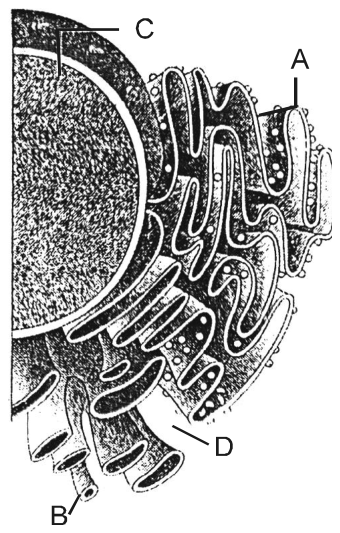
Components:
(i) Cristae of mitochondria
(ii) Inner membrane of mitochondria
(iii) Cytoplasm
(iv) Smooth endoplasmic reticulum
(v) Rough endoplasmic reticulum
(vi) Mitochondrial matrix
(vii) Cell vacuole
(viii) Nucleus
The correct components are
- 1A-v, B-i, C-iii, D-ii
- 2A-v, B-iv, C-viii, D-iii
- 3A-i, B-iv, C-viii, D-vi
- 4A-vi, B-v, C-iv, D-vii
Show answer and solution
Correct: option 2, A-v, B-iv, C-viii, D-iii
The drawing shows the endoplasmic reticulum around the nucleus. A is the rough ER, studded with ribosomes (v); B is the smooth, tubular ER without ribosomes (iv); C is the nucleus (viii); D is the cytoplasm between the membranes (iii).
Question 72AIPMT 2010 Mains, Q73
Signals from fully developed foetus and placenta ultimately lead to parturition which requires the release of
- 1Relaxin from placenta
- 2Estrogen from placenta
- 3Oxytocin from maternal pituitary
- 4Oxytocin from foetal pituitary
Show answer and solution
Correct: option 3, Oxytocin from maternal pituitary
The signals from the mature foetus and placenta start mild uterine contractions (the foetal ejection reflex). This makes the mother's pituitary release oxytocin, which causes stronger contractions of the uterus and leads to delivery.
Question 73AIPMT 2010 Mains, Q74
Consider the following four statements A, B, C and D select the right option for two correct statements.
Statements:
(A) In vexillary aestivation, the large posterior petal is called-standard, two lateral ones are wings and two small anterior petals are termed keel.
(B) The floral formula for Liliaceae is ⊕ ⚥
(C) In pea flower the stamens are monadelphous
(D) The floral formula for Solanaceae is ⊕ ⚥
The Correct statements are
- 1(C) and (D)
- 2(A) and (C)
- 3(A) and (B)
- 4(B) and (C)
Show answer and solution
Correct: option 1, (C) and (D)
The answer key used for this paper gives option (1). Going by NCERT, however: (A) describes vexillary aestivation correctly (standard, wings, keel). (B) Liliaceae has six tepals in two whorls, six stamens and a tricarpellary superior ovary. (C) In pea the stamens are diadelphous (9 + 1), not monadelphous. (D) Solanaceae is . On that basis (A) and (B) are the correct statements, so treat the keyed answer with caution.
Question 74AIPMT 2010 Mains, Q75
The most apparent change during the evolutionary history of Homo sapiens is traced in
- 1Remarkable increase in the brains size
- 2Loss of body hair
- 3Walking upright
- 4Shortening of the jaws
Show answer and solution
Correct: option 1, Remarkable increase in the brains size
Through human evolution the cranial capacity rose steadily, from about 650 to 800 cc in Homo habilis and about 900 cc in Homo erectus to about 1400 cc in Neanderthal man and modern man. This growth of the brain is the most striking change.
Question 75AIPMT 2010 Mains, Q76
Transport of food material in higher plants takes place through
- 1Sieve elements
- 2Companion cells
- 3Transfusion cells
- 4Tracheids
Show answer and solution
Correct: option 1, Sieve elements
Food (mainly sucrose) moves through the phloem, and the conducting channels of phloem are the sieve elements (sieve tubes). Companion cells only help in loading and maintaining them, and tracheids are xylem cells that carry water.
Question 76AIPMT 2010 Mains, Q77
Crocodile and Penguin are similar to Whale and Dogfish in which one of the following features
- 1Have gill slits at some stage
- 2Possess a solid single stranded central nervous system
- 3Lay eggs and guard them till they hatch
- 4Possess bony skeleton.
Show answer and solution
Correct: option 1, Have gill slits at some stage
All four are chordates, and every chordate has pharyngeal gill slits at some stage of life, at least in the embryo. Their nerve cord is hollow, not solid; the whale does not lay eggs; and the dogfish has a cartilaginous skeleton.
Question 77AIPMT 2010 Mains, Q78
The Indian Rhinoceros is a natural inhabitant of which one of the Indian states
- 1Assam
- 2Uttarakhand
- 3Uttar Pradesh
- 4Himachal Pradesh
Show answer and solution
Correct: option 1, Assam
The one-horned Indian rhinoceros lives naturally in the grasslands of the Brahmaputra valley in Assam, where Kaziranga National Park protects most of the population.
Question 78AIPMT 2010 Mains, Q79
In Antirrhinum two plants with pink flowers were hybridized. The F1 plants produced red, pink and white flowers in the proportion of 1 red, 2 pink and 1 white. What could be the genotype of the two plants used for hybridization? Red flower colour is determined by RR, and white by rr genes.
- 1rr
- 2rrr
- 3RR
- 4Rr
Show answer and solution
Correct: option 4, Rr
Flower colour in Antirrhinum shows incomplete dominance, so the heterozygote Rr is pink. Rr x Rr gives 1 RR (red) : 2 Rr (pink) : 1 rr (white), the ratio stated. Both pink parents are therefore Rr.
Question 79AIPMT 2010 Mains, Q80
Fastest distribution of some injectable material / medicine and with no risk of any kind can be achieved by injecting it into the
- 1Lymph vessels
- 2Muscles
- 3Arteries
- 4Veins
Show answer and solution
Correct: option 4, Veins
A substance injected into a vein goes straight to the heart and is pumped to the whole body within moments. Veins lie near the surface and carry blood at low pressure, so the injection is safe. Arteries are deep and under high pressure, and muscles and lymph vessels pass the material on slowly.
Question 80AIPMT 2010 Mains, Q81
Which one of the following is most appropriately defined
- 1Parasite is an organism which always lives inside the body of other organism and may kill it.
- 2Host is an organism which provides food to another organism.
- 3Amensalism is a relationship in which one species is benefited where as the other is unaffected.
- 4Predator is an organism that catches and kills other organism for food.
Show answer and solution
Correct: option 4, Predator is an organism that catches and kills other organism for food.
A predator captures, kills and eats its prey, so option (4) is an accurate definition. A parasite need not live inside the host (ectoparasites live on it), a host gives shelter as well as food and the word is not used for prey, and in amensalism one species is harmed while the other is unaffected (one benefiting with the other unaffected is commensalism).
Question 81AIPMT 2010 Mains, Q82
Kranz anatomy is one of the characteristics of the leaves of
- 1Mustard
- 2Potato
- 3Wheat
- 4Sugarcane
Show answer and solution
Correct: option 4, Sugarcane
Kranz anatomy, a wreath of large bundle sheath cells around the veins, is the mark of C4 plants. Sugarcane is a C4 plant, while mustard, potato and wheat are C3 plants.
Question 82AIPMT 2010 Mains, Q83
The fruit fly Drosophila melanogaster was found to be very suitable for experimental verification of chromosomal theory of inheritance by Morgan and his colleagues because
- 1It completes life cycle in about two weeks
- 2It reproduces parthenogenetically
- 3A single mating produces two young flies
- 4Smaller female is easily recognisable from larger male
Show answer and solution
Correct: option 1, It completes life cycle in about two weeks
Drosophila can be grown on a simple medium and finishes its life cycle in about two weeks, so many generations can be studied quickly. It reproduces sexually, one mating gives a large number of offspring, and it is the male that is smaller than the female, so the other options are wrong.
Question 83AIPMT 2010 Mains, Q84
Leguminous plants are able to fix atmospheric nitrogen through the process of symbiotic nitrogen fixation. Which one of the following statements is not correct during this process of nitrogen fixation
- 1Nitrogenase is insensitive to oxygen
- 2Leghaemoglobin scavenges oxygen and is pinkish in colour
- 3Nodules act as sites nitrogen fixation
- 4The enzyme nitrogenase catalyses the conversion of atmospheric to
Show answer and solution
Correct: option 1, Nitrogenase is insensitive to oxygen
Nitrogenase is highly sensitive to molecular oxygen and works only in anaerobic conditions, so statement (1) is the incorrect one. The pink pigment leghaemoglobin in the nodule removes oxygen to protect the enzyme, the nodules are the sites of fixation, and nitrogenase reduces to .
Question 84AIPMT 2010 Mains, Q85
Which one of the following can not be used for preparation of vaccines against plague
- 1Heat-Killed suspensions of virulent bacteria
- 2Formalin-inactivated suspensions of virulent bacteria
- 3Avirulent live bacteria
- 4Synthetic capsular polysaccharide material
Show answer and solution
Correct: option 1, Heat-Killed suspensions of virulent bacteria
The answer key of the source copy gives option (1). Plague vaccines have been made from formalin-inactivated suspensions of virulent Yersinia pestis and from live avirulent strains. Note that killed whole-cell plague vaccines prepared with heat have also been used, and the capsular antigen of the plague bacterium is a protein and not a polysaccharide, so many textbooks give option (4) for this question.
Question 85AIPMT 2010 Mains, Q86
One of the commonly used plant growth hormone in tea plantations is
- 1Indole-3-acetic acid
- 2Ethylene
- 3Abscisic acid
- 4Zeatin
Show answer and solution
Correct: option 1, Indole-3-acetic acid
Indole-3-acetic acid is an auxin. Auxins control apical dominance and the growth of lateral buds, and are the growth regulators applied in tea plantations and hedge-making, where bushy growth with many lateral shoots is wanted.
Question 86AIPMT 2010 Mains, Q87
The haemoglobin content per 100 ml of blood of a normal healthy adult is
- 112 - 16 g
- 25 - 11 g
- 325 -30 g
- 417 - 20 g
Show answer and solution
Correct: option 1, 12 - 16 g
A healthy adult has about 12 to 16 g of haemoglobin in every 100 ml of blood.
Question 87AIPMT 2010 Mains, Q88
Black (stem) rust of wheat is caused by
- 1Xanthomonas oryzae
- 2Alternaria solani
- 3Ustilago nuda
- 4Puccinia graminis
Show answer and solution
Correct: option 4, Puccinia graminis
Black or stem rust of wheat is caused by the rust fungus Puccinia graminis (a basidiomycete). Xanthomonas oryzae causes bacterial blight of rice, Alternaria solani causes early blight of potato and Ustilago nuda causes loose smut.
Question 88AIPMT 2010 Mains, Q89
In human female the blastocyst
- 1Gets implanted in endometrium by the trophoblast cells
- 2Forms placenta even before implantation
- 3Gets implanted into uterus 3 days after ovulation
- 4gets nutrition from uterine endometrial secretion only after implantation
Show answer and solution
Correct: option 1, Gets implanted in endometrium by the trophoblast cells
The outer trophoblast layer of the blastocyst attaches to the endometrium and the blastocyst becomes embedded in it, which is implantation. The placenta forms only after implantation, implantation takes place about a week after ovulation, and the embryo already uses uterine secretions before it implants.
Question 89AIPMT 2010 Mains, Q90
Which of the following are used in gene cloning
- 1Plasmids
- 2Nucleoids
- 3Lomasomes
- 4Mesosomes
Show answer and solution
Correct: option 1, Plasmids
Plasmids are small circular DNA molecules of bacteria that replicate on their own, so a gene joined to a plasmid is copied along with it. They are the common cloning vectors. Nucleoids, lomasomes and mesosomes are cell structures and are not used as vectors.
Question 90AIPMT 2010 Mains, Q91
ABO blood grouping is controlled by gene I which has three alleles and show co-dominance. There are six genotypes. How many phenotypes in all are possible
- 1Five
- 2Six
- 3Three
- 4Four
Show answer and solution
Correct: option 4, Four
The three alleles , and give six genotypes. and both give group A, and both give group B, gives group AB (co-dominance) and gives group O. That makes four phenotypes: A, B, AB and O.
Question 91AIPMT 2010 Mains, Q92
Given below are four statements (a-d) regarding human blood circulatory system
(a) Arteries are thick-walled and have narrow lumen as compared to veins
(b) Angina is acute chest pain when the blood circulation of the brain is reduced
(c) Persons with blood group AB can donate blood to any person with any blood group under ABO system
(d) Calcium ions play a very important role in blood clotting
Which two of the above statements are correct
- 1(c) and (d)
- 2(a) and (d)
- 3(a) and (b)
- 4(b) and (c)
Show answer and solution
Correct: option 2, (a) and (d)
(a) is correct: arteries have thicker walls and a narrower lumen than veins. (d) is correct: calcium ions are needed for blood clotting. (b) is wrong because angina is chest pain caused by too little blood reaching the heart muscle, not the brain. (c) is wrong because group AB is the universal recipient; the universal donor is group O.
Question 92AIPMT 2010 Mains, Q93
Vegetative propagation in Pistia occurs by
- 1Sucker
- 2Stolon
- 3Offset
- 4Runner
Show answer and solution
Correct: option 3, Offset
Pistia (water lettuce) is a floating plant that multiplies by offsets: short, thick lateral branches of one internode, each ending in a rosette of leaves and a tuft of roots. Eichhornia does the same.
Question 93AIPMT 2010 Mains, Q94
Which one of the following pairs of structure is correctly matched with their correct description
| Structures | Description |
|---|
| Premolars and molars | 20 in all and 3-rooted |
| Tibia and fibula | Both form parts of knee joint |
| Cartilage and cornea | No blood supply but do require oxygen for respiratory need |
| Shoulder joint and elbow joint | Ball and socket type of joint |
- 1Premolars and molars – 20 in all and 3-rooted
- 2Tibia and fibula – Both form parts of knee joint
- 3Cartilage and cornea – No blood supply but do require oxygen for respiratory need
- 4Shoulder joint and elbow joint – Ball and socket type of joint
Show answer and solution
Correct: option 3, Cartilage and cornea – No blood supply but do require oxygen for respiratory need
Cartilage and the cornea have no blood vessels, yet their living cells still need oxygen, which reaches them by diffusion. An adult has 8 premolars and 12 molars, and they are not all 3-rooted; the fibula does not take part in the knee joint; the elbow is a hinge joint, not a ball and socket joint.
Question 94AIPMT 2010 Mains, Q95
Secretions from which one of the following are rich in fructose, calcium and some enzymes
- 1Salivary glands
- 2Male accessory glands
- 3Liver
- 4Pancreas
Show answer and solution
Correct: option 2, Male accessory glands
The male accessory glands (seminal vesicles, prostate and bulbourethral glands) secrete the seminal plasma, which is rich in fructose, calcium and certain enzymes.
Question 95AIPMT 2010 Mains, Q96
When domestic sewage mixes with river water
- 1The river water is still suitable for drinking as impurities only about 0.1%
- 2Small animals like rats will die after drinking river water
- 3The increased microbial activity releases micro-nutrients such as iron
- 4The increased microbial activity uses up dissolved oxygen
Show answer and solution
Correct: option 4, The increased microbial activity uses up dissolved oxygen
Sewage adds biodegradable organic matter to the river. Microbes that break it down multiply and use up the dissolved oxygen, so the biochemical oxygen demand rises and the oxygen level of the water falls sharply. Even 0.1% impurities make the water unfit for drinking.
Question 96AIPMT 2010 Mains, Q97
Three of the following statements about enzymes are correct and one is wrong which one is wrong
- 1Most enzymes are proteins but some are lipids
- 2Enzymes require optimum pH for maximal activity
- 3Enzymes are denatured at high temperatures but in certain exceptional organisms they are effective even at temperatures 80°- 90°C
- 4Enzymes are highly specific
Show answer and solution
Correct: option 1, Most enzymes are proteins but some are lipids
Almost all enzymes are proteins, and the few that are not are RNA molecules (ribozymes), never lipids, so statement (1) is wrong. Enzymes do have an optimum pH, are highly specific, and those of thermophilic organisms stay active at 80° to 90°C.
Question 97AIPMT 2010 Mains, Q98
Root development is promoted by
- 1Ethylene
- 2Abscisic acid
- 3Auxin
- 4Gibberellin
Show answer and solution
Correct: option 3, Auxin
Auxins start root formation, which is why they are applied to stem cuttings to make them root.
Question 98AIPMT 2010 Mains, Q99
In which one of the following organisms its excretory organs are correctly stated
- 1Frog – Kidneys, skin and buccal epithelium
- 2Humans – Kidneys, sebaceous glands and tear glands
- 3Earthworm – Pharyngeal, integumentary and septal nephridia
- 4Cockroach – Malpighian tubules and enteric caeca
Show answer and solution
Correct: option 3, Earthworm – Pharyngeal, integumentary and septal nephridia
The earthworm excretes through three kinds of nephridia: pharyngeal, integumentary and septal. Buccal epithelium of the frog is a respiratory surface, tear glands are not excretory organs, and the enteric (hepatic) caeca of the cockroach secrete digestive juice.
Question 99AIPMT 2010 Mains, Q100
If for some reason the parietal cells of the gut epithelium become partially nonfunctional, what is likely to happen.
- 1Proteins will not be adequately hydrolysed by pepsin into proteoses and peptones
- 2The pancreatic enzymes and specially the trypsin and lipase will not work efficiently
- 3The pH of stomach will fall abruptly
- 4Steapsin will be more effective
Show answer and solution
Correct: option 1, Proteins will not be adequately hydrolysed by pepsin into proteoses and peptones
Parietal (oxyntic) cells of the gastric glands secrete HCl. With less HCl, pepsinogen is not properly converted to pepsin and the acidic pH that pepsin needs is not reached, so proteins are poorly broken down to proteoses and peptones. The stomach pH would rise, not fall.
Question 100AIPMT 2010 Mains, Q101
Which one of the following is now being commercially produced by biotechnological procedures
- 1Insulin
- 2Nicotine
- 3Morphine
- 4Quinine
Show answer and solution
Correct: option 1, Insulin
Human insulin is made commercially by recombinant DNA technology: the genes for its A and B chains are expressed in E. coli and the chains are joined afterwards. Nicotine, morphine and quinine are alkaloids taken from plants.
Question 101AIPMT 2010 Mains, Q103
An elaborate network of filamentous proteinaceous structures present in the cytoplasm which helps in the maintenance of cell shape is called.
- 1Cytoskeleton
- 2Thylakoid
- 3Endoplasmic Reticulum
- 4Plasmalemma
Show answer and solution
Correct: option 1, Cytoskeleton
The cytoskeleton is the network of protein filaments (microtubules, microfilaments and intermediate filaments) in the cytoplasm. It gives mechanical support, keeps the shape of the cell and helps in movement.
Question 102AIPMT 2010 Mains, Q104
Given below is the diagram of a stomatal apparatus. In which of the following all the four parts Labelled as A, B, C and D are correctly identified.
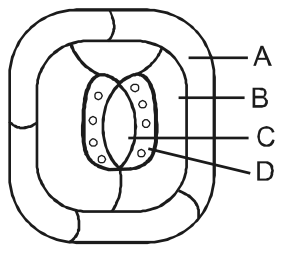
- 1A-Epidermal cell, B-Subsidiary cell, C-Stomatal aperture, D-Guard cell
- 2A-Subsidiary cell, B-Epidermal cell, C-Guard cell, D-Stomatal aperture
- 3A-Guard cell, B-Stomatal aperture, C-Subsidiary cell, D-Epidermal cell
- 4A-Epidermal cell, B-Guard cell, C-Stomatal aperture, D-Subsidiary cell
Show answer and solution
Correct: option 1, A-Epidermal cell, B-Subsidiary cell, C-Stomatal aperture, D-Guard cell
Working from outside to inside: A is an ordinary epidermal cell, B is a subsidiary cell lying next to the guard cells, D is a bean-shaped guard cell containing chloroplasts, and C is the pore between the two guard cells, the stomatal aperture.
Question 103AIPMT 2010 Mains, Q105
Which one of the following statements about the particular entity is true.
- 1DNA consists of a core of eight histones
- 2Centromere is found in animal cells, which produces aster during cell division
- 3The gene for producing insulin is present in every body cell
- 4Nucleosome is formed of nucleotides
Show answer and solution
Correct: option 3, The gene for producing insulin is present in every body cell
Every body cell carries the full set of genes, so the insulin gene is present in all of them, although it is expressed only in the beta cells of the pancreas. It is the nucleosome that has a core of eight histones with DNA wound around it, and it is the centrosome (centrioles), not the centromere, that forms the aster.
Question 104AIPMT 2010 Mains, Q106
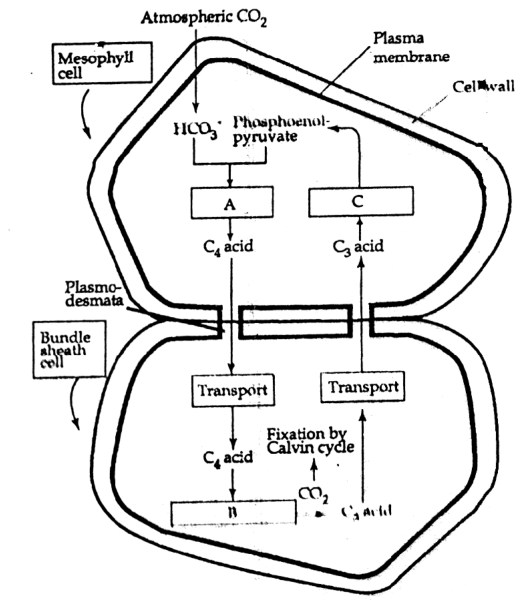
Study the pathway given below
In which of the following options correct words for all the three blanks A, B and C are indicated.
- 1A-Carboxylation, B-Decarboxylation, C-Reduction
- 2A-Decarboxylation, B-Reduction, C-Regeneration
- 3A-Fixation, B-Transamination, C-Regeneration
- 4A-Fixation, B-Decarboxylation, C-Regeneration
Show answer and solution
Correct: option 4, A-Fixation, B-Decarboxylation, C-Regeneration
The figure is the C4 (Hatch and Slack) pathway. In the mesophyll cell is fixed by phosphoenolpyruvate to give a C4 acid (A, fixation). In the bundle sheath cell the C4 acid is decarboxylated to release for the Calvin cycle (B, decarboxylation). The C3 acid returns to the mesophyll, where phosphoenolpyruvate is formed again (C, regeneration).
Question 105AIPMT 2010 Mains, Q107
Which one of the following is a xerophytic plant in which the stem is modified into a flat, green and succulent structure
- 1Acacia
- 2Opuntia
- 3Casuarina
- 4Hydrilla
Show answer and solution
Correct: option 2, Opuntia
In Opuntia the stem is a flattened, green, fleshy phylloclade that stores water and carries out photosynthesis, while the leaves are reduced to spines. Hydrilla is a water plant.
Question 106AIPMT 2010 Mains, Q108
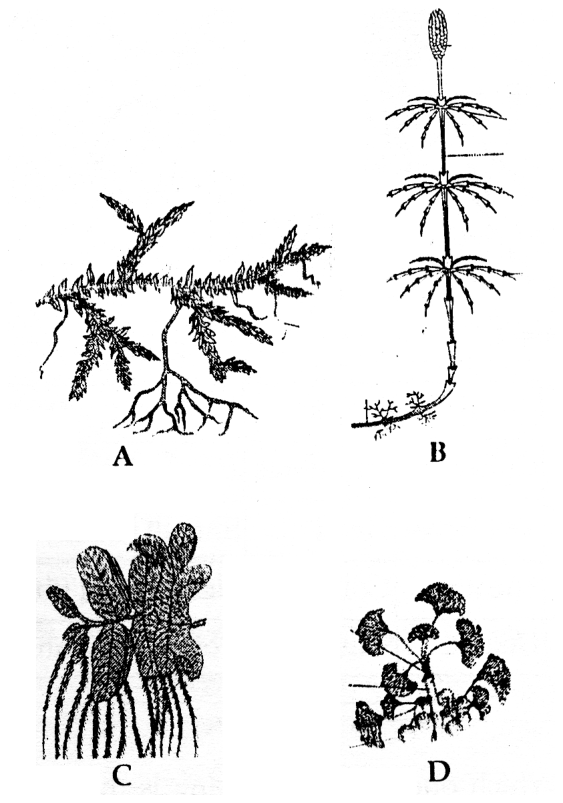
Examine the figures A, B, C and D. In which one of the four options all the items, A, B, C and D are correct
- 1A-Funaria, B-Adiantum, C-Salvinia, D-Riccia
- 2A-Chara, B-Marchantia, C-Fucus, D-Pinus
- 3A-Equisetum, B-Ginkgo, C-Selaginella, D-Lycopodium
- 4A-Selaginella, B-Equisetum, C-Salvinia, D-Ginkgo
Show answer and solution
Correct: option 4, A-Selaginella, B-Equisetum, C-Salvinia, D-Ginkgo
A is Selaginella, a creeping pteridophyte with small leaves and rhizophores. B is Equisetum (horsetail), with a jointed stem, whorled branches and a cone at the tip. C is Salvinia, a floating water fern. D is Ginkgo, a gymnosperm with fan-shaped leaves.
Question 107AIPMT 2010 Mains, Q109
The lac operon consists of
- 1Three regulatory genes and three structural genes
- 2Four regulatory genes only
- 3One regulatory gene and three structural genes
- 4Two regulatory genes and two structural genes
Show answer and solution
Correct: option 3, One regulatory gene and three structural genes
The lac operon has one regulatory gene, i, which codes for the repressor, and three structural genes, z, y and a, which code for beta-galactosidase, permease and transacetylase.
Question 108AIPMT 2010 Mains, Q110
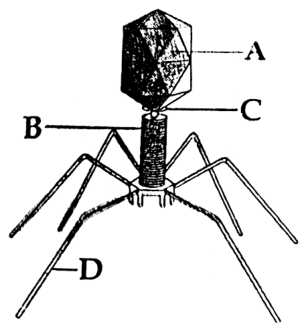
Given below is the diagram of a bacteriophage. In which one of the options all the four parts A, B, C and D are correct.
- 1A-Collar, B-Tail fibres, C-Head, D-Sheath
- 2A-Tail fibres, B-Head, C-Sheath, D-Collar
- 3A-Sheath, B-Collar, C-Head, D-Tail fibres
- 4A-Head, B-Sheath, C-Collar, D-Tail fibres
Show answer and solution
Correct: option 4, A-Head, B-Sheath, C-Collar, D-Tail fibres
A is the polyhedral head that holds the DNA, C is the collar just below the head, B is the contractile sheath around the tail, and D is one of the long tail fibres that attach the phage to the bacterium.
Question 109AIPMT 2010 Mains, Q111
Which one of the following is the correct description of a certain part of a normal human skeleton
- 1Glenoid cavity is a depression to which the thigh bone articulates
- 2Parietal bone and the temporal bone of the skull are joined by fibrous joint
- 3First vertebra is axis which articulates with the occipital condyles
- 4The 9th and 10th pairs of ribs are called the floating ribs
Show answer and solution
Correct: option 2, Parietal bone and the temporal bone of the skull are joined by fibrous joint
The bones of the skull are joined by sutures, which are fibrous joints, so (2) is correct. The glenoid cavity receives the head of the humerus (the thigh bone fits into the acetabulum), the first vertebra is the atlas, and the floating ribs are the 11th and 12th pairs.
Question 110AIPMT 2010 Mains, Q112
An example of endomycorrhiza is
- 1Rhizobium
- 2Nostoc
- 3Glomus
- 4Agaricus
Show answer and solution
Correct: option 3, Glomus
Fungi of the genus Glomus form mycorrhiza in which the hyphae enter the root cells (endomycorrhiza) and help the plant take up phosphorus. Rhizobium is a bacterium, Nostoc is a cyanobacterium and Agaricus is a mushroom.
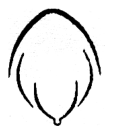
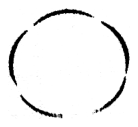
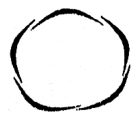
Question 111AIPMT 2010 Mains, Q113
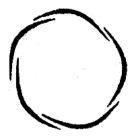
Aestivation of petals in the flower of cotton is correctly shown is
- 1
- 2
- 3
- 4
Show answer and solution
Correct: option 1
Cotton, like china rose and lady's finger, has twisted aestivation: one margin of each petal overlaps the next petal and its other margin is overlapped by the petal before it, all in the same direction. Figure (1) shows this regular one-way overlap.
Question 112AIPMT 2010 Mains, Q114
Examine the figures (A-D) given below and select the right option out of 1-4, in which all the four structures A, B, C and D are identified correctly.
Structures:
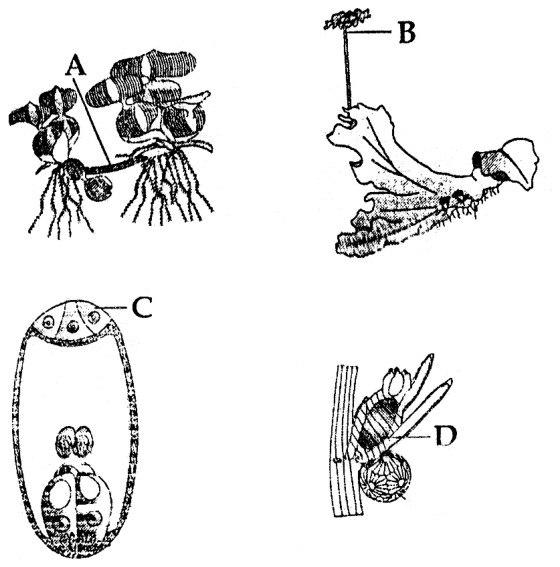
- 1A-Sucker, B-Seta, C-Megaspore mother cell, D-Gemma cup
- 2A-Rhizome, B-Sporangiophore, C-Polar cell, D-Globule
- 3A-Runner, B-Archegoniophore, C-Synergid, D-Antheridium
- 4A-Offset, B-Antheridiophore, C-Antipodals, D-Oogonium
Show answer and solution
Correct: option 4, A-Offset, B-Antheridiophore, C-Antipodals, D-Oogonium
A is the offset joining two plants of a floating plant such as Eichhornia. B is the stalked antheridiophore on the male thallus of Marchantia. C points to the three cells at the chalazal end of the embryo sac, the antipodals. D is the oogonium (nucule), the female sex organ of Chara.
Question 113AIPMT 2010 Mains, Q115
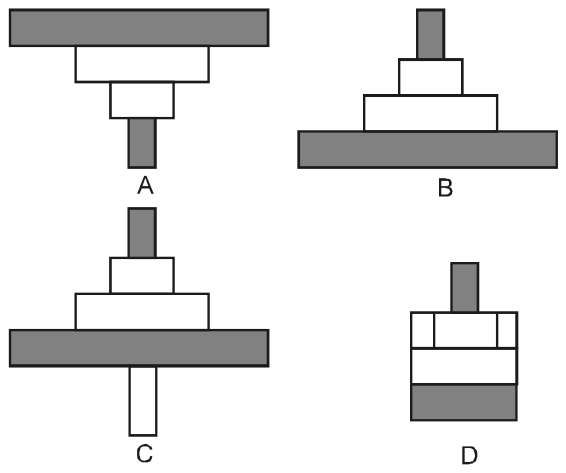
Which of the following representations shows the pyramid of number in a forest ecosystem
- 1C
- 2D
- 3A
- 4B
Show answer and solution
Correct: option 4, B
The answer key gives figure B, an upright pyramid: the producers form the broad base and the number of individuals falls at each higher trophic level, ending with a few top carnivores.
Question 114AIPMT 2010 Mains, Q116
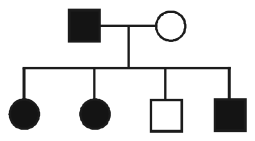
Study the pedigree chart of a certain family given below and select the correct conclusion which can be drawn for the character.
- 1The male parent is homozygous dominant
- 2The female parent is heterozygous
- 3The parents could not have had a normal daughter for this character
- 4The trait under study could not be colour-blindness.
Show answer and solution
Correct: option 4, The trait under study could not be colour-blindness.
The answer key of the source copy gives option (4). The chart shows an affected father and an unaffected mother with two affected daughters, one normal son and one affected son. (1) is ruled out because a homozygous dominant father would have only affected children, and (3) is ruled out because a normal daughter is possible. Note that the chart does fit colour-blindness if the mother is a carrier (colour-blind father and carrier mother can have colour-blind daughters and both kinds of sons), so many books give option (2) for this question.
Question 115AIPMT 2010 Mains, Q117
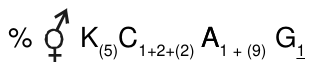
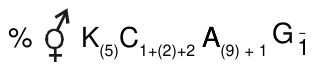
The correct floral formula of soyabean is
- 1
- 2
- 3
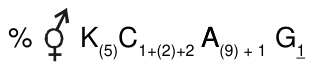
- 4
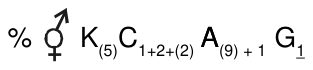
Show answer and solution
Correct: option 1
Soyabean belongs to the family Fabaceae. Its flower is zygomorphic and bisexual, with five united sepals, K(5); five petals, a standard, two wings and two fused keel petals, C1+2+(2); ten stamens that are diadelphous, nine united and one free; and a superior ovary of one carpel, shown by the line below G1. Formula (1) has the corolla as C1+2+(2) and a superior ovary. Formula (4) differs from it only in the order in which the stamens are written, (9)+1 instead of 1+(9); the answer key gives (1).
Question 116AIPMT 2010 Mains, Q118
The 3'-5' phosphodiester linkages inside a polynucleotide chain serve to join
- 1One nitrogenous base with pentose sugar
- 2One DNA strand with the other DNA strand
- 3One nucleoside with another nucleoside
- 4One nucleotide with another nucleotide
Show answer and solution
Correct: option 4, One nucleotide with another nucleotide
A phosphodiester bond links the 3' carbon of the sugar of one nucleotide to the phosphate on the 5' carbon of the next, joining nucleotides into a chain. A base is joined to the sugar by an N-glycosidic bond, and the two DNA strands are held together by hydrogen bonds.
Question 117AIPMT 2010 Mains, Q119
In genetic engineering, a DNA segment (gene) of interest, is transferred to the host cell through a vector. Consider the following four agents (A-D) in this regard and select the correct option about which one or more of these can be used as a vector/vectors:
(A) a bacterium
(B) plasmid
(C) plasmodium
(D) bacteriophage
Options:
- 1(B) and (D) only
- 2(A), (B) and (D) only
- 3(A) only
- 4(A) and (C) only
Show answer and solution
Correct: option 1, (B) and (D) only
Plasmids and bacteriophages can replicate inside a bacterial cell and carry foreign DNA with them, so both are used as cloning vectors. A bacterium is the host, not the vector, and Plasmodium is the malarial parasite.
Question 118AIPMT 2010 Mains, Q120
Study the cycle shown below and select the option which gives correct words for all the four blanks A, B, C and D.
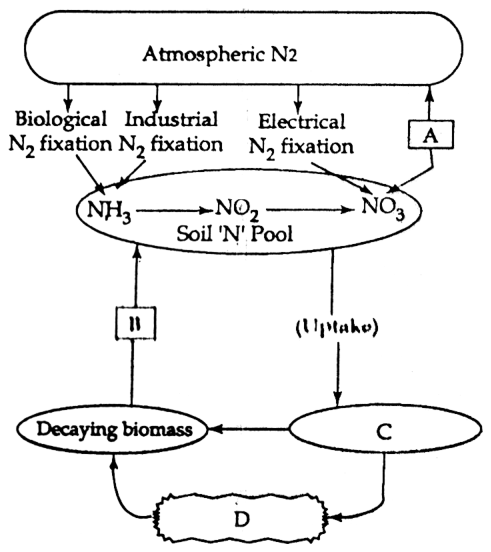
- 1A-Denitrification, B-Nitrification, C-Plants, D-Animals
- 2A-Nitrification, B-Ammonification, C-Animals, D-Plants
- 3A-Denitrification, B-Ammonification, C-Plants, D-Animals
- 4A-Nitrification, B-Denitrification, C-Animals, D-Plants
Show answer and solution
Correct: option 3, A-Denitrification, B-Ammonification, C-Plants, D-Animals
This is the nitrogen cycle. A returns nitrate of the soil to atmospheric , which is denitrification. B turns decaying biomass into ammonia, which is ammonification. C takes up nitrate from the soil, so it is plants, and D, which feeds on plants and then adds to the decaying biomass, is animals.