AIPMT 2008 Prelims Physics questions
Question 1AIPMT 2008 Prelims, Q1
Which two of the following five physical parameters have the same dimensions?
(a) energy density
(b) refractive index
(c) dielectric constant
(d) Young's modulus
(e) magnetic field
- 1(a) and (e)
- 2(b) and (d)
- 3(c) and (e)
- 4(a) and (d)
Show answer and solution
Correct: option 4, (a) and (d)
Energy density is energy per unit volume, . Young's modulus is stress divided by strain, and stress is force per unit area, again . Refractive index and dielectric constant are pure numbers, and magnetic field has dimensions . So (a) and (d) match.
Question 2AIPMT 2008 Prelims, Q2
If the error in the measurement of radius of a sphere is 2%, then the error in the determination of volume of the sphere will be
- 12%
- 24%
- 36%
- 48%
Show answer and solution
Correct: option 3, 6%
, so the fractional error is . With a 2% error in the radius the error in the volume is .
Question 3AIPMT 2008 Prelims, Q3
The distance travelled by a particle starting from rest and moving with an acceleration , in the third second is
- 1
- 26 m
- 34 m
- 4
Show answer and solution
Correct: option 4,
The distance covered in the th second is . With , and : .
Question 4AIPMT 2008 Prelims, Q4
A particle moves in a straight line with a constant acceleration. It changes its velocity from to while passing through a distance 135 m in t second. The value of t is
- 19
- 210
- 31.8
- 412
Show answer and solution
Correct: option 1, 9
For constant acceleration the distance is the average velocity times the time: . So , which gives s.
Question 5AIPMT 2008 Prelims, Q5
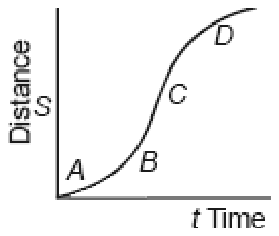
A particle shows distance-time curve as given in this figure. The maximum instantaneous velocity of the particle is around the point
- 1A
- 2B
- 3C
- 4D
Show answer and solution
Correct: option 3, C
Instantaneous velocity is the slope of the distance-time curve. The curve is steepest near C; it is flatter near A and B, where it is still starting to rise, and near D, where it levels off. So the velocity is greatest around C.
Question 6AIPMT 2008 Prelims, Q6
A particle of mass m is projected with velocity v making an angle of with the horizontal. When the particle lands on the level ground the magnitude of the change in its momentum will be
- 1zero
- 2
- 3
- 4
Show answer and solution
Correct: option 4,
The horizontal component of velocity does not change. The vertical component goes from at launch to on landing, so the change in momentum has magnitude .
Question 7AIPMT 2008 Prelims, Q7
Sand is being dropped on a conveyor belt at the rate of M kg/s. The force necessary to keep the belt moving with a constant velocity of v m/s will be
- 1Zero
- 2 newton
- 3 newton
- 4 newton
Show answer and solution
Correct: option 2, newton
Each second a mass of sand, which had no horizontal velocity, is brought up to the belt speed . The momentum given to the sand per second is , and by Newton's second law this is the force needed: newton.
Question 8AIPMT 2008 Prelims, Q8
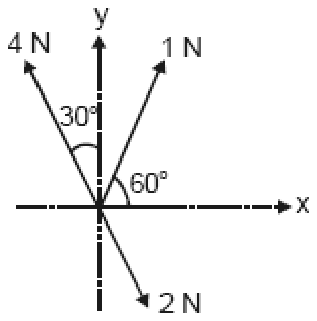
Three forces acting on a body are shown in the figure. To have the resultant force only along the y-direction, the magnitude of the minimum additional force needed is
- 1
- 20.5 N
- 31.5 N
- 4
Show answer and solution
Correct: option 2, 0.5 N
The resultant lies along y only if the x-components add to zero. The 1 N force gives N, the 2 N force (at to the y-axis) gives N, and the 4 N force gives N. The total is N, so the smallest extra force is 0.5 N along .
Question 9AIPMT 2008 Prelims, Q9
Water falls from a height of 60 m at the rate of 15 kg/s to operate a turbine. The losses due to frictional forces are 10% of energy. How much power is generated by the turbine? ()
- 17.0 kW
- 28.1 kW
- 310.2 kW
- 412.3 kW
Show answer and solution
Correct: option 2, 8.1 kW
Potential energy lost by the water each second is W. Ten per cent is lost to friction, so the turbine delivers kW.
Question 10AIPMT 2008 Prelims, Q10
A shell of mass 200 gm is ejected from a gun of mass 4 kg by an explosion that generates 1.05 kJ of energy. The initial velocity of the shell is
- 1
- 2
- 3
- 4
Show answer and solution
Correct: option 2,
Momentum is conserved, so the gun recoils with speed . The explosion energy becomes kinetic energy of both: . Hence and .
Question 11AIPMT 2008 Prelims, Q11
The ratio of the radii of gyration of a circular disc to that of a circular ring, each of same mass and radius, around their respective axes is
- 1
- 2
- 3
- 4
Show answer and solution
Correct: option 3,
About its own axis a disc has , so ; a ring has , so . The ratio is .
Question 12AIPMT 2008 Prelims, Q12
A thin rod of length L and mass M is bent at its midpoint into two halves so that the angle between them is . The moment of inertia of the bent rod about an axis passing through the bending point and perpendicular to the plane defined by the two halves of the rod is
- 1
- 2
- 3
- 4
Show answer and solution
Correct: option 3,
Each half is a rod of mass and length turning about an axis through its end and perpendicular to it, with . The two halves together give . The angle between them does not matter, because every bit of mass stays at the same distance from the axis.
Question 13AIPMT 2008 Prelims, Q13
A roller coaster is designed such that riders experience "weightlessness" as they go round the top of a hill whose radius of curvature is 20 m. The speed of the car at the top of the hill is between
- 113 m/s and 14 m/s
- 214 m/s and 15 m/s
- 315 m/s and 16 m/s
- 416 m/s and 17 m/s
Show answer and solution
Correct: option 2, 14 m/s and 15 m/s
At the top of the hill . Weightlessness means the normal force is zero, so m/s, which lies between 14 m/s and 15 m/s.
Question 14AIPMT 2008 Prelims, Q14
If Q, E and W denote respectively the heat added, change in internal energy and the work done in a closed cycle process, then
- 1
- 2
- 3
- 4
Show answer and solution
Correct: option 4,
Internal energy is a state function. A closed cycle brings the system back to its starting state, so the change in internal energy is zero, . The first law, , then gives , and these need not be zero.
Question 15AIPMT 2008 Prelims, Q15
On a new scale of temperature (which is linear) and called the W scale, the freezing and boiling points of water are and respectively. What will be the temperature on the new scale, corresponding to a temperature of on the Celsius scale?
- 1
- 2
- 3
- 4
Show answer and solution
Correct: option 3,
Both scales are linear, so . Each Celsius degree is 2 degrees on the W scale, so .
Question 16AIPMT 2008 Prelims, Q16
At the value of the density of a fixed mass of an ideal gas divided by its pressure is x. At this ratio is
- 1
- 2
- 3
- 4
Show answer and solution
Correct: option 1,
For an ideal gas , so , which is inversely proportional to the absolute temperature. Going from 283 K to 383 K the ratio becomes .
Question 17AIPMT 2008 Prelims, Q17
Two Simple Harmonic Motions of angular frequency 100 and 1000 have the same displacement amplitude. The ratio of their maximum accelerations is
- 1
- 2
- 3
- 4
Show answer and solution
Correct: option 3,
The maximum acceleration in SHM is . With the same amplitude the ratio is , that is .
Question 18AIPMT 2008 Prelims, Q18
The wave described by , where x and y are in meters and t in seconds, is a wave travelling along the
- 1-ve x direction with amplitude 0.25 m and wavelength = 0.2 m
- 2-ve x direction with frequency 1 Hz
- 3+ve x direction with frequency Hz and wavelength = 0.2 m
- 4+ve x direction with frequency 1 Hz and wavelength = 0.2 m
Show answer and solution
Correct: option 4, +ve x direction with frequency 1 Hz and wavelength = 0.2 m
Compare with . The terms in and have opposite signs, so the wave moves along . gives m, and gives a frequency Hz.
Question 19AIPMT 2008 Prelims, Q19
A point performs simple harmonic oscillation of period T and the equation of motion is given by . After the elapse of what fraction of the time period the velocity of the point will be equal to half of its maximum velocity?
- 1
- 2
- 3
- 4
Show answer and solution
Correct: option 1,
The velocity is , with maximum . It is half the maximum when , that is . So and .
Question 20AIPMT 2008 Prelims, Q20
Two points are located at a distance of 10 m and 15 m from the source of oscillation. The period of oscillation is 0.05 sec and the velocity of the wave is 300 m/sec. What is the phase difference between the oscillations of two points?
- 1
- 2
- 3
- 4
Show answer and solution
Correct: option 3,
The wavelength is m. The path difference between the points is m, so the phase difference is .
Question 21AIPMT 2008 Prelims, Q21
The velocity of electromagnetic radiation in a medium of permittivity and permeability is given by
- 1
- 2
- 3
- 4
Show answer and solution
Correct: option 4,
Maxwell's equations give the speed of an electromagnetic wave as . For permittivity and permeability this is , the speed of light in vacuum. Only this option has the dimensions of a speed.
Question 22AIPMT 2008 Prelims, Q22
Two periodic waves of intensities and pass through a region at the same time in the same direction. The sum of the maximum and minimum intensities is
- 1
- 2
- 3
- 4
Show answer and solution
Correct: option 1,
Amplitudes add at a maximum and subtract at a minimum, so and . Adding them, the cross terms cancel and the sum is .
Question 23AIPMT 2008 Prelims, Q23
Two thin lenses of focal lengths and are in contact and coaxial. The power of the combinations is
- 1
- 2
- 3
- 4
Show answer and solution
Correct: option 1,
Powers of thin lenses in contact add: .
Question 24AIPMT 2008 Prelims, Q24
A boy is trying to start a fire by focusing Sunlight on a piece of paper using an equiconvex lens of focal length 10 cm. The diameter of the Sun is m and its mean distance from the earth is m. What is the diameter of the Sun's image on the paper?
- 1 m
- 2 m
- 3 m
- 4 m
Show answer and solution
Correct: option 2, m
The Sun is so far away that its image forms in the focal plane, 10 cm from the lens. Object and image subtend the same angle at the lens, so and m.
Question 25AIPMT 2008 Prelims, Q25
The energy required to charge a parallel plate condenser of plate separation d and plate area of cross-section A such that the uniform electric field between the plates is E, is
- 1
- 2
- 3
- 4
Show answer and solution
Correct: option 1,
The energy stored in the charged condenser is with and , which gives . This is the energy density times the volume between the plates, and it is the keyed answer. (A battery charging the condenser at constant voltage supplies , twice this, with half lost as heat; the key counts the stored energy.)
Question 26AIPMT 2008 Prelims, Q26
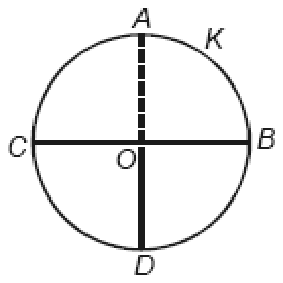
A thin conducting ring of radius R is given a charge +Q. The electric field at the centre O of the ring due to the charge on the part AKB of the ring is E. The electric field at the centre due to the charge on the part ACDB of the ring is
- 13 E along OK
- 23 E along KO
- 3E along OK
- 4E along KO
Show answer and solution
Correct: option 3, E along OK
The charge is spread evenly round the ring, so the total field at the centre is zero. The positive charge on arc AKB pushes a positive test charge at O away from K, so its field E points along KO. The rest of the ring, ACDB, must cancel it: its field has the same magnitude E and points along OK.
Question 27AIPMT 2008 Prelims, Q27
The electric potential at a point in free space due to a charge Q coulomb is volts. The electric field at that point is
- 1 volt/m
- 2 volt/m
- 3 volt/m
- 4 volt/m
Show answer and solution
Correct: option 2, volt/m
gives . The field of a point charge is volt/m.
Question 28AIPMT 2008 Prelims, Q28
A cell can be balanced against 110 cm and 100 cm of potentiometer wire, respectively with and without being short circuited through a resistance of . Its internal resistance is
- 1Zero
- 21.0 ohm
- 30.5 ohm
- 42.0 ohm
Show answer and solution
Correct: option 2, 1.0 ohm
The balance length is proportional to the potential difference across the cell. On open circuit this is the emf (the longer length, cm); with the resistance across the cell it is the smaller terminal voltage ( cm). Then ohm.
Question 29AIPMT 2008 Prelims, Q29
A wire of a certain material is stretched slowly by ten per cent. Its new resistance and specific resistance become respectively
- 11.1 times, 1.1 times
- 21.2 times, 1.1 times
- 31.21 times, same
- 4Both remain the same
Show answer and solution
Correct: option 3, 1.21 times, same
Specific resistance (resistivity) depends only on the material, so it stays the same. The volume of the wire is fixed, so when the length becomes the area becomes , and becomes times.
Question 30AIPMT 2008 Prelims, Q30
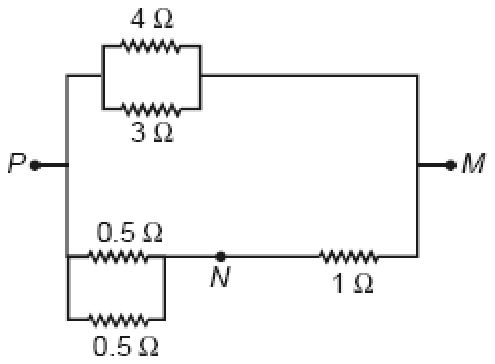
In the circuit shown, the current through the resistor is 1 amp when the points P and M are connected to a d.c. voltage source. The potential difference between the points M and N is
- 13.2 volt
- 21.5 volt
- 31.0 volt
- 40.5 volt
Show answer and solution
Correct: option 1, 3.2 volt
The resistor is connected directly between P and M, so V. The lower branch is the two resistors in parallel () in series with , and it has the same 4 V across it. Its current is A, so the drop across the resistor between N and M is 3.2 volt.
Question 31AIPMT 2008 Prelims, Q31
An electric kettle takes 4A current at 220 V. How much time will it take to boil 1 kg of water from temperature ? The temperature of boiling water is .
- 14.2 min
- 26.3 min
- 38.4 min
- 412.6 min
Show answer and solution
Correct: option 2, 6.3 min
Heat needed is J, taking the specific heat of water as . The kettle supplies W, so s, about 6.3 min.
Question 32AIPMT 2008 Prelims, Q32
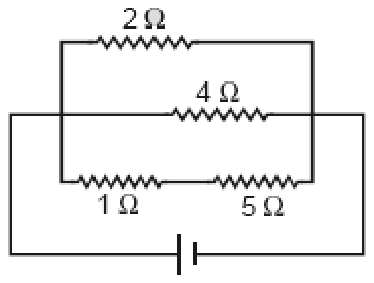
A current of 3 amp. flows through the resistor shown in the circuit. The power dissipated in the resistor is
- 15 watt
- 24 watt
- 32 watt
- 41 watt
Show answer and solution
Correct: option 1, 5 watt
The three branches are in parallel, so each has the voltage of the resistor: V. The branch holding the and resistors in series carries A, so the resistor dissipates watt.
Question 33AIPMT 2008 Prelims, Q33
A particle of mass m, charge Q and kinetic energy T enters a transverse uniform magnetic field of induction . After 3 seconds the kinetic energy of the particle will be
- 14 T
- 23 T
- 32 T
- 4T
Show answer and solution
Correct: option 4, T
The magnetic force on a moving charge is always at right angles to its velocity, so it does no work. The particle changes direction but not speed, and its kinetic energy stays T at all times.
Question 34AIPMT 2008 Prelims, Q34
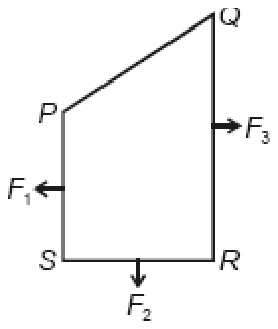
A closed loop PQRS carrying a current is placed in a uniform magnetic field. If the magnetic forces on segments PS, SR and RQ are , and respectively and are in the plane of the paper and along the directions shown, the force on the segment QP is
- 1
- 2
- 3
- 4
Show answer and solution
Correct: option 3,
The net force on a closed current loop in a uniform magnetic field is zero, so the force on QP balances the other three. (to the right) and (to the left) leave horizontally, and acts vertically, at right angles to it. The force on QP therefore has magnitude .
Question 35AIPMT 2008 Prelims, Q35
A circular disc of radius 0.2 meter is placed in a uniform magnetic field of induction in such a way that its axis makes an angle of with . The magnetic flux linked with the disc is
- 10.01 Wb
- 20.02 Wb
- 30.06 Wb
- 40.08 Wb
Show answer and solution
Correct: option 2, 0.02 Wb
The flux is , where is the angle between the field and the axis (the normal) of the disc. Wb.
Question 36AIPMT 2008 Prelims, Q36
A galvanometer of resistance is connected to a battery of 3 V along with a resistance of in series. A full scale deflection of 30 divisions is obtained in the galvanometer. In order to reduce this deflection to 20 divisions, the resistance in series should be
- 1
- 2
- 3
- 4
Show answer and solution
Correct: option 1,
Deflection is proportional to current, and the current is the battery voltage over the total resistance. For 30 divisions the total is . For 20 divisions the current must be as large, so the total must be , and the series resistance is .
Question 37AIPMT 2008 Prelims, Q37
Curie temperature is the temperature above which
- 1Ferromagnetic material becomes diamagnetic material
- 2Ferromagnetic material becomes paramagnetic material
- 3Paramagnetic material becomes diamagnetic material
- 4Paramagnetic material becomes ferromagnetic material
Show answer and solution
Correct: option 2, Ferromagnetic material becomes paramagnetic material
Above the Curie temperature thermal agitation breaks up the magnetic domains of a ferromagnet. The atoms still carry magnetic moments, but they no longer line up on their own, so the material behaves as a paramagnet.
Question 38AIPMT 2008 Prelims, Q38
A long solenoid has 500 turns. When a current of 2 ampere is passed through it, the resulting magnetic flux linked with each turn of the solenoid is Wb. The self-inductance of the solenoid is
- 14.0 henry
- 22.5 henry
- 32.0 henry
- 41.0 henry
Show answer and solution
Correct: option 4, 1.0 henry
The total flux linkage is . So henry.
Question 39AIPMT 2008 Prelims, Q39
In an a.c. circuit the e.m.f. (e) and the current (i) at any instant are given respectively by
The average power in the circuit over one cycle of a.c. is
- 1
- 2
- 3
- 4
Show answer and solution
Correct: option 4,
Average power is , where is the phase difference between emf and current. With and this is .
Question 40AIPMT 2008 Prelims, Q40
In the phenomenon of electric discharge through gases at low pressure, the coloured glow in the tube appears as a result of
- 1Collision between different electrons of the atoms of the gas
- 2Excitation of electrons in the atoms
- 3Collision between the atoms of the gas
- 4Collisions between the charged particles emitted from the cathode and the atoms of the gas
Show answer and solution
Correct: option 2, Excitation of electrons in the atoms
The light of a discharge tube is emitted by the gas atoms themselves: their electrons are raised to higher energy levels and give out light of colours characteristic of the gas when they fall back. The key therefore takes excitation of electrons in the atoms as the cause of the glow. (The excitation is itself produced by collisions with the fast charged particles in the tube, which is why option 4 is a tempting choice.)
Question 41AIPMT 2008 Prelims, Q41
The work function of a surface of a photosensitive material is 6.2 eV. The wavelength of the incident radiation for which the stopping potential is 5 V lies in the
- 1X-ray region
- 2Ultraviolet region
- 3Visible region
- 4Infrared region
Show answer and solution
Correct: option 2, Ultraviolet region
Einstein's equation gives the photon energy as eV. The wavelength is (about 110 nm), which is shorter than visible light (4000 to 7000 Å) and far longer than X-rays, so it is in the ultraviolet.
Question 42AIPMT 2008 Prelims, Q42
A particle of mass 1 mg has the same wavelength as an electron moving with a velocity of . The velocity of the particle is (mass of electron = kg)
- 1
- 2
- 3
- 4
Show answer and solution
Correct: option 2,
The de Broglie wavelength is , so equal wavelengths mean equal momenta. With 1 mg kg: , giving .
Question 43AIPMT 2008 Prelims, Q43
The ground state energy of hydrogen atom is -13.6 eV. When its electron is in the first excited state, its excitation energy is
- 10
- 23.4 eV
- 36.8 eV
- 410.2 eV
Show answer and solution
Correct: option 4, 10.2 eV
The first excited state is , with energy eV. Excitation energy is the energy needed to lift the electron there from the ground state: eV.
Question 44AIPMT 2008 Prelims, Q44
Two radioactive materials and have decay constants and respectively. If initially they have the same number of nuclei, then the ratio of the number of nuclei of to that of will be after a time
- 1
- 2
- 3
- 4
Show answer and solution
Correct: option 4,
and , so . This equals when , that is .
Question 45AIPMT 2008 Prelims, Q45
Two nuclei have their mass numbers in the ratio of 1:3. The ratio of their nuclear densities would be
- 1
- 2
- 3
- 4
Show answer and solution
Correct: option 1,
The nuclear radius is , so the volume is proportional to , and so is the mass. Density, mass over volume, is therefore the same for all nuclei whatever the mass number: the ratio is .
Question 46AIPMT 2008 Prelims, Q46
If , and denote the masses of the nucleus , proton and neutron respectively in units of u () and BE represents its bonding energy in MeV, then
- 1
- 2
- 3
- 4
Show answer and solution
Correct: option 2,
A nucleus is lighter than its separate protons and neutrons by the mass defect, and the binding energy is that mass defect times : . Rearranging, . The division by is needed to turn an energy in MeV into a mass.
Question 47AIPMT 2008 Prelims, Q47
The voltage gain of an amplifier with 9% negative feedback is 10. The voltage gain without feedback will be
- 1100
- 290
- 310
- 41.25
Show answer and solution
Correct: option 1, 100
With negative feedback the gain is , where is the fraction of the output fed back. gives , so .
Question 48AIPMT 2008 Prelims, Q48
If the lattice parameter for a crystalline structure is 3.6 Å, then the atomic radius in fcc crystal is
- 11.27 Å
- 21.81 Å
- 32.10 Å
- 42.92 Å
Show answer and solution
Correct: option 1, 1.27 Å
In a face-centred cubic cell the atoms touch along a face diagonal, which holds four radii: . So Å.
Question 49AIPMT 2008 Prelims, Q49
- 1OR gate
- 2AND gate
- 3NAND gate
- 4NOR gate
Show answer and solution
Correct: option 4, NOR gate
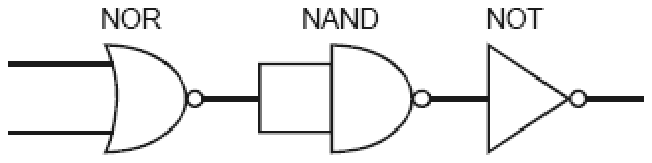
The NAND gate has its two inputs joined, so it acts as a NOT gate. The NOR output therefore passes through two inversions in a row (the NAND used as NOT, then the NOT gate), which cancel. The output is the same as that of the first gate, so the circuit is a NOR gate.
Question 50AIPMT 2008 Prelims, Q50
A p-n photodiode is made of a material with a band gap of 2.0 eV. The minimum frequency of the radiation that can be absorbed by the material is nearly
- 1 Hz
- 2 Hz
- 3 Hz
- 4 Hz
Show answer and solution
Correct: option 3, Hz
A photon is absorbed only if its energy is at least the band gap: . So Hz, nearly Hz.
AIPMT 2008 Prelims Chemistry questions
Question 51AIPMT 2008 Prelims, Q51
If uncertainty in position and momentum are equal, then uncertainty in velocity is
- 1
- 2
- 3
- 4
Show answer and solution
Correct: option 2,
Heisenberg's principle gives . With , , so . Since , .
Question 52AIPMT 2008 Prelims, Q52
If a gas expands at constant temperature, it indicates that
- 1Number of the molecules of gas increases
- 2Kinetic energy of molecules decreases
- 3Pressure of the gas increases
- 4Kinetic energy of molecules remains the same
Show answer and solution
Correct: option 4, Kinetic energy of molecules remains the same
The average kinetic energy of gas molecules depends only on the absolute temperature. At constant temperature it therefore stays the same during the expansion; the number of molecules does not change and the pressure falls rather than rises.
Question 53AIPMT 2008 Prelims, Q53
The value of equilibrium constant of the reaction
is 8.0
The equilibrium constant of the reaction will be
- 1
- 2
- 3
- 416
Show answer and solution
Correct: option 3,
The second reaction is the first one reversed and doubled. Reversing inverts the constant and doubling squares it, so .
Question 54AIPMT 2008 Prelims, Q54
If 'a' stands for the edge length of the cubic systems: simple cubic, body centred cubic and face centred cubic, then the ratio of radii of the spheres in these systems will be respectively
- 1
- 2
- 3
- 4
Show answer and solution
Correct: option 2,
In a simple cube the spheres touch along the edge, so and . In bcc they touch along the body diagonal, so and . In fcc they touch along the face diagonal, so and .
Question 55AIPMT 2008 Prelims, Q55
Kohlrausch's law states that at
- 1Infinite dilution, each ion makes definite contribution to equivalent conductance of an electrolyte, whatever be the nature of the other ion of the electrolyte
- 2Finite dilution, each ion makes definite contribution to equivalent conductance of an electrolyte, whatever be the nature of the other ion of the electrolyte
- 3Infinite dilution each ion makes definite contribution to equivalent conductance of an electrolyte depending on the nature of the other ion of the electrolyte
- 4Infinite dilution, each ion makes definite contribution to conductance of an electrolyte whatever be the nature of the other ion of the electrolyte
Show answer and solution
Correct: option 1, Infinite dilution, each ion makes definite contribution to equivalent conductance of an electrolyte, whatever be the nature of the other ion of the electrolyte
Kohlrausch's law of independent migration of ions holds at infinite dilution, where each ion adds its own fixed share to the equivalent conductance of the electrolyte regardless of which other ion it is paired with. Option (2) has the wrong dilution, option (3) makes the share depend on the other ion, and option (4) speaks of conductance instead of equivalent conductance.
Question 56AIPMT 2008 Prelims, Q56
The measurement of the electron position is associated with an uncertainty in momentum, which is equal to . The uncertainty in electron velocity is, (mass of an electron is )
- 1
- 2
- 3
- 4
Show answer and solution
Correct: option 2,
, so , which is nearest to .
Question 57AIPMT 2008 Prelims, Q57
Which of the following are not state functions?
(I) q + w
(II) q
(III) w
(IV) H-TS
- 1(II) and (III)
- 2(I) and (IV)
- 3(II), (III) and (IV)
- 4(I), (II) and (III)
Show answer and solution
Correct: option 1, (II) and (III)
Heat q and work w each depend on the path taken, so they are not state functions. Their sum q + w is the change in internal energy , and H − TS is the Gibbs energy G; both depend only on the state. So only (II) and (III) are not state functions.
Question 58AIPMT 2008 Prelims, Q58
The bromination of acetone that occurs in acid solution is represented by this equation
These kinetic data were obtained for given reaction concentrations
| Initial concentration , M | Initial concentration , M | Initial concentration , M | Initial rate, disappearance of , |
|---|
| 0.30 | 0.05 | 0.05 | |
| 0.30 | 0.10 | 0.05 | |
| 0.30 | 0.10 | 0.10 | |
| 0.40 | 0.05 | 0.20 | |
Based on these data, the rate equation is
- 1Rate =
- 2Rate =
- 3Rate =
- 4Rate =
Show answer and solution
Correct: option 2, Rate =
Rows 1 and 2: doubling leaves the rate unchanged, so the order in is zero. Rows 2 and 3: doubling doubles the rate, so the order in is one. Rows 1 and 4: is 4 times and acetone is 4/3 times, and the rate is about times, so the order in acetone is one. Hence Rate = .
Question 59AIPMT 2008 Prelims, Q59
What volume of oxygen gas () measured at 0°C and 1 atm, is needed to burn completely 1 L of propane gas () measured under the same conditions?
- 110 L
- 27 L
- 36 L
- 45 L
Show answer and solution
Correct: option 4, 5 L
. At the same temperature and pressure gas volumes are in the ratio of moles, so 1 L of propane needs 5 L of oxygen.
Question 60AIPMT 2008 Prelims, Q60
Bond dissociation enthalpy of , and HCl are 434, 242 and 431 respectively. Enthalpy of formation of HCl is
- 1
- 2
- 3
- 4
Show answer and solution
Correct: option 4,
For , = (bonds broken) − (bonds formed) .
Question 61AIPMT 2008 Prelims, Q61
Which of the following statements is not correct?
- 1The number of Bravais lattices in which a crystal can be categorized is 14
- 2The fraction of the total volume occupied by the atoms in a primitive cell is 0.48
- 3Molecular solids are generally volatile
- 4The number of carbon atoms in an unit cell of diamond is 4
Show answer and solution
Correct: option 4, The number of carbon atoms in an unit cell of diamond is 4
A diamond unit cell holds 8 carbon atoms: 4 from the fcc positions () and 4 more in alternate tetrahedral voids, so statement (4) is not correct. There are indeed 14 Bravais lattices and molecular solids are generally volatile. Note that statement (2) is also inaccurate, since the packing fraction of a simple cubic cell is 0.52; the key takes (4).
Question 62AIPMT 2008 Prelims, Q62
Equal volumes of three acid solutions of pH 3, 4 and 5 are mixed in a vessel. What will be the ion concentration in the mixture?
- 1 M
- 2 M
- 3 M
- 4 M
Show answer and solution
Correct: option 3, M
The three solutions have of , and M. Mixing equal volumes V gives M.
Question 63AIPMT 2008 Prelims, Q63
The values of and for the reactions
............. (1) and
............... (2)
are in ratio of 9:1. If degree of dissociation of X and A be equal, then total pressure at equilibrium (1) and (2) are in the ratio
- 11 : 1
- 23 : 1
- 31 : 9
- 436 : 1
Show answer and solution
Correct: option 4, 36 : 1
Let the degree of dissociation be x in both. For (1), total moles are 1 + x and . For (2), total moles are also 1 + x and . So , giving .
Question 64AIPMT 2008 Prelims, Q64
If the concentration of ions in the reaction
is decreased by times, then equilibrium concentration of will increase by
- 14 times
- 28 times
- 316 times
- 464 times
Show answer and solution
Correct: option 4, 64 times
is constant. If becomes one fourth, becomes of its value, so must become 64 times.
Question 65AIPMT 2008 Prelims, Q65
For the gas phase reaction,
Which of the following conditions is correct?
- 1 and
- 2 and
- 3 and
- 4 and
Show answer and solution
Correct: option 3, and
Breaking apart needs energy, so the dissociation is endothermic (). One mole of gas gives two moles of gas, so the disorder rises ().
Question 66AIPMT 2008 Prelims, Q66
The rate constants and for two different reactions are and respectively. The temperature at which is
- 1
- 21000 K
- 3
- 42000 K
Show answer and solution
Correct: option 1,
Setting gives . Taking natural logs, , so .
Question 67AIPMT 2008 Prelims, Q67
Standard free energies of formation (in kJ/mol) at 298 K are -237.2, -394.4 and -8.2 for , and pentane (g) respectively. The value of for the pentane-oxygen fuel cell is
- 10.0968 V
- 21.968 V
- 32.0968 V
- 41.0968 V
Show answer and solution
Correct: option 4, 1.0968 V
The cell reaction is , with . Eight molecules take up 32 electrons, so n = 32 and .
Question 68AIPMT 2008 Prelims, Q68
The dissociation equilibrium of a gas can be represented as,
.
The degree of dissociation is 'x' and is small compared to 1. The expression relating the degree of dissociation (x) with equilibrium constant and total pressure P is
- 1
- 2
- 3
- 4
Show answer and solution
Correct: option 3,
Starting with 1 mol of , the equilibrium amounts are 1 − x, x and x/2, total . Since x is small, the mole fractions are about 1, x and x/2, so . Hence .
Question 69AIPMT 2008 Prelims, Q69
The sequence of ionic mobility in aqueous solution is
- 1
- 2
- 3
- 4
Show answer and solution
Correct: option 3,
A smaller ion has a higher charge density and holds more water molecules around it, so its hydrated size is larger and it moves more slowly. Hydration falls from to , so mobility rises in that direction: .
Question 70AIPMT 2008 Prelims, Q70
Percentage of free space in a body centred cubic unit cell is
- 128%
- 230%
- 332%
- 434%
Show answer and solution
Correct: option 3, 32%
A bcc cell has 2 atoms with , so the packing fraction is . The free space is 100 − 68 = 32%.
Question 71AIPMT 2008 Prelims, Q71
The correct order of decreasing second ionisation enthalpy of Ti (22), V (23), Cr (24) and Mn (25) is
- 1Ti > V > Cr > Mn
- 2Cr > Mn > V > Ti
- 3V > Mn > Cr > Ti
- 4Mn > Cr > Ti > V
Show answer and solution
Correct: option 2, Cr > Mn > V > Ti
Second ionisation enthalpy generally rises across the series with nuclear charge, so Ti < V < Mn. Chromium is the exception: is , a stable half-filled arrangement, so removing the second electron needs extra energy and Cr comes highest. The order is Cr > Mn > V > Ti.
Question 72AIPMT 2008 Prelims, Q72
How many moles of lead (II) chloride will be formed from a reaction between 6.5 g of PbO and 3.2 g of HCl?
- 10.029
- 20.044
- 30.333
- 40.011
Show answer and solution
Correct: option 1, 0.029
. Moles of PbO = 6.5/223 ≈ 0.029 and moles of HCl = 3.2/36.5 ≈ 0.088. The PbO needs only 0.058 mol of HCl, so PbO is the limiting reagent and 0.029 mol of is formed.
Question 73AIPMT 2008 Prelims, Q73
Which of the following complexes exhibits the highest paramagnetic behaviour?
(Where gly = glycine, en = ethylenediamine and bpy = bipyridyl moieties). (At. number Ti = 22, V = 23, Fe = 26, Co = 27)
- 1
- 2
- 3
- 4
Show answer and solution
Correct: option 4,
Paramagnetism grows with the number of unpaired electrons. is (1 unpaired); vanadium here is , (none); is and with the strong-field en and bpy ligands all six electrons pair (none). In cobalt is +5, , and with weak-field oxalate and hydroxide ligands it keeps 4 unpaired electrons, the most of the four.
Question 74AIPMT 2008 Prelims, Q74
Volume occupied by one molecule of water (density = ) is
- 1
- 2
- 3
- 4
Show answer and solution
Correct: option 4,
One mole of water weighs 18 g and so occupies . One molecule occupies .
Question 75AIPMT 2008 Prelims, Q75
Number of moles of required to oxidize one mole of ferrous oxalate completely in acidic medium will be
- 10.2 moles
- 20.6 moles
- 30.4 moles
- 47.5 moles
Show answer and solution
Correct: option 2, 0.6 moles
In both ions are oxidised: gives 1 electron and gives 2, so one mole loses 3 mol of electrons. In acid, goes to and takes 5 electrons. Moles of needed = 3/5 = 0.6.
Question 76AIPMT 2008 Prelims, Q76
On the basis of the following E° values, the strongest oxidizing agent is
; E° = − 0.35 V
; E° = − 0.77 V
- 1
- 2
- 3
- 4
Show answer and solution
Correct: option 4,
The values given are oxidation potentials, so the reduction potentials are +0.35 V for and +0.77 V for . The species that is reduced most readily, the one with the highest reduction potential, is the strongest oxidizing agent: .
Question 77AIPMT 2008 Prelims, Q77
The alkali metals form salt-like hydrides by the direct synthesis at elevated temperature. The thermal stability of these hydrides decreases in which of the following orders?
- 1LiH > NaH > KH > RbH > CsH
- 2CsH > RbH > KH > NaH > LiH
- 3KH > NaH > LiH > CsH > RbH
- 4NaH > LiH > KH > RbH > CsH
Show answer and solution
Correct: option 1, LiH > NaH > KH > RbH > CsH
The small hydride ion is held most strongly by the smallest cation, so the lattice energy and the thermal stability fall as the metal ion grows down the group: LiH > NaH > KH > RbH > CsH.
Question 78AIPMT 2008 Prelims, Q78
Which one of the following arrangements does not give the correct picture of the trends indicated against it?
- 1: Electronegativity
- 2: Oxidizing power
- 3: Electron gain enthalpy
- 4: Bond dissociation energy
Show answer and solution
Correct: option 4, : Bond dissociation energy
Electronegativity and oxidizing power do fall steadily from fluorine to iodine. Bond dissociation energy does not: the F–F bond is weakened by repulsion between the lone pairs on the two small atoms, so the real order is and (4) is the wrong trend. Note that the electron gain enthalpy order in (3) is also not strictly right, since chlorine releases more energy than fluorine; the key takes (4).
Question 79AIPMT 2008 Prelims, Q79
With which one of the following elements silicon should be doped so as to give p-type of semiconductor?
- 1Boron
- 2Germanium
- 3Arsenic
- 4Selenium
Show answer and solution
Correct: option 1, Boron
A p-type semiconductor needs an impurity with fewer valence electrons than silicon, which leaves a positive hole in the lattice. Boron is in group 13 with three valence electrons, so it does this. Germanium has four like silicon, and arsenic and selenium have more, which would give n-type.
Question 80AIPMT 2008 Prelims, Q80
In which of the following coordination entities the magnitude of (CFSE in octahedral field) will be maximum (at. no. Co = 27)?
- 1
- 2
- 3
- 4
Show answer and solution
Correct: option 4,
All four are complexes of , so the splitting depends only on the ligand. In the spectrochemical series , cyanide is the strongest-field ligand, so has the largest .
Question 81AIPMT 2008 Prelims, Q81
The angular shape of molecule () consists of
- 12 sigma and 1 pi bond
- 21 sigma and 2 pi bonds
- 32 sigma and 2 pi bonds
- 41 sigma and 1 pi bond
Show answer and solution
Correct: option 1, 2 sigma and 1 pi bond
In ozone the central oxygen is joined to the two end oxygens, written O=O–O in a resonance structure. That is one double bond (1 sigma + 1 pi) and one single bond (1 sigma), so 2 sigma and 1 pi bond in all.
Question 82AIPMT 2008 Prelims, Q82
The correct order of increasing bond angles in the following triatomic species is
- 1
- 2
- 3
- 4
Show answer and solution
Correct: option 3,
has no non-bonding electrons on nitrogen and is linear (180°). has a single odd electron on nitrogen, which repels the bonds only a little (about 134°). has a full lone pair, which pushes the bonds closest together (about 115°). So .
Question 83AIPMT 2008 Prelims, Q83
Four diatomic species are listed below the different sequences. Which of these presents the correct order of their increasing bond order?
- 1
- 2
- 3
- 4
Show answer and solution
Correct: option 1,
From molecular orbital theory: (3 electrons) has bond order 0.5, (17 electrons) 1.5, NO (15 electrons) 2.5 and (14 electrons, like ) 3. The increasing order is .
Question 84AIPMT 2008 Prelims, Q84
Equimolar solutions of the following were prepared in water separately. Which one of the solutions will record the highest pH?
- 1
- 2
- 3
- 4
Show answer and solution
Correct: option 3,
These are salts of the strong acid HCl with group 2 hydroxides, whose basic strength rises down the group. The smaller the cation, the more it hydrolyses and the more acidic the solution. is the strongest base, so hydrolyses least and gives the highest pH.
Question 85AIPMT 2008 Prelims, Q85
In the hydrocarbon
The state of hybridization of carbons 1, 3 and 5 are in the following sequence
- 1, ,
- 2, ,
- 3, ,
- 4, ,
Show answer and solution
Correct: option 3, , ,
Carbon 1 is part of the triple bond, so it is . Carbon 3 is a with four single bonds, so it is . Carbon 5 is part of the double bond, so it is .
Question 86AIPMT 2008 Prelims, Q86
Green chemistry means such reactions which
- 1Study the reactions in plants
- 2Produce colour during reactions
- 3Reduce the use and production of hazardous chemicals
- 4Are related to the depletion of ozone layer
Show answer and solution
Correct: option 3, Reduce the use and production of hazardous chemicals
Green chemistry is the design of chemical products and processes that cut down or avoid the use and generation of hazardous substances. It has nothing to do with plants, colours or the ozone layer as such.
Question 87AIPMT 2008 Prelims, Q87
A strong base can abstract an -hydrogen from
- 1Alkane
- 2Alkene
- 3Amine
- 4Ketone
Show answer and solution
Correct: option 4, Ketone
The hydrogen on the carbon next to a carbonyl group is acidic because the carbanion left behind is stabilised by resonance with the C=O group (an enolate ion). Alkanes, alkenes and amines give no such stabilised anion, so the answer is a ketone.
Question 88AIPMT 2008 Prelims, Q88
How many stereoisomers does the molecules have?
- 12
- 24
- 36
- 48
Show answer and solution
Correct: option 2, 4
The molecule has one double bond that can be cis or trans (each doubly bonded carbon carries two different groups) and one chiral carbon, the CHBr carbon, which can be R or S. The number of stereoisomers is .
Question 89AIPMT 2008 Prelims, Q89
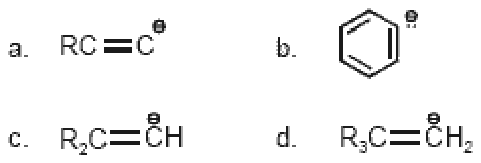
The stability of carbanions in the following
- 1a > c > b > d
- 2a > b > c > d
- 3b > c > d > a
- 4d > b > c > a
Show answer and solution
Correct: option 2, a > b > c > d
A carbanion is more stable when the negative carbon has more s-character, because the electrons are then held closer to the nucleus. In a the carbon is ; in b and c it is ; in d it is . Of the two ions, c carries electron-releasing alkyl groups that make it less stable than the phenyl anion b. So a > b > c > d.
Question 90AIPMT 2008 Prelims, Q90
The relative reactivities of acyl compounds towards nucleophilic substitution are in the order of
- 1Acyl chloride > Ester > Acid anhydride > Amide
- 2Acyl chloride > Acid anhydride > Ester > Amide
- 3Ester > Acyl chloride > Amide > Acid anhydride
- 4Acid anhydride > Amide > Ester > Acyl chloride
Show answer and solution
Correct: option 2, Acyl chloride > Acid anhydride > Ester > Amide
Reactivity follows how easily the group on the acyl carbon leaves, and a weaker base is a better leaving group. Basicity rises in the order , so reactivity falls as acyl chloride > acid anhydride > ester > amide.
Question 91AIPMT 2008 Prelims, Q91
Base strength of
a.
b.
c.
is in the order of
- 1a > b > c
- 2b > a > c
- 3c > b > a
- 4a > c > b
Show answer and solution
Correct: option 1, a > b > c
The parent acids are ethane, ethene and ethyne, whose acidity rises with the s-character of the carbon: ethane () < ethene () < ethyne (). The weaker the acid, the stronger its conjugate base, so the base strength is a > b > c.
Question 92AIPMT 2008 Prelims, Q92
A (predominantly) is
- 1
- 2
- 3
- 4
Show answer and solution
Correct: option 3,
adds to the end (Markovnikov), giving a secondary carbocation next to the branched carbon. A 1,2-hydride shift from that carbon turns it into a more stable tertiary carbocation, and then attacks there. The main product is 2-bromo-2-methylbutane, option (3).
Question 93AIPMT 2008 Prelims, Q93
In DNA, the complementary bases are
- 1Uracil and adenine; cytosine and guanine
- 2Adenine and thymine; guanine and cytosine
- 3Adenine and thymine; guanine and uracil
- 4Adenine and guanine; thymine and cytosine
Show answer and solution
Correct: option 2, Adenine and thymine; guanine and cytosine
In the DNA double helix adenine pairs with thymine through two hydrogen bonds and guanine pairs with cytosine through three. Uracil is found in RNA, not DNA.
Question 94AIPMT 2008 Prelims, Q94
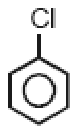
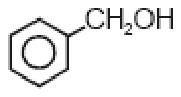
Which one the following is most reactive towards electrophilic attack?
- 1
- 2
- 3
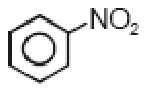
- 4
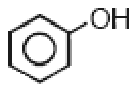
Show answer and solution
Correct: option 4
The ring that is richest in electrons reacts fastest with an electrophile. The –OH group of phenol pushes a lone pair into the ring by resonance and activates it strongly. has only a weak effect, –Cl deactivates slightly and deactivates strongly. So phenol, option (4), is the most reactive.
Question 95AIPMT 2008 Prelims, Q95
An organic compound contains carbon, hydrogen and oxygen. Its elemental analysis gave C, 38.71% and H, 9.67%. The empirical formula of the compound would be
- 1
- 2
- 3
- 4CHO
Show answer and solution
Correct: option 2,
Oxygen = 100 − 38.71 − 9.67 = 51.62%. Moles: C = 38.71/12 = 3.22, H = 9.67/1 = 9.67, O = 51.62/16 = 3.22. Dividing by 3.22 gives C : H : O = 1 : 3 : 1, so the empirical formula is .
Question 96AIPMT 2008 Prelims, Q96
In a substitution reaction of the type
Which one of the following has the highest relative rate?
- 1
- 2
- 3
- 4
Show answer and solution
Correct: option 1,
In an reaction the nucleophile attacks from the back of the carbon carrying bromine, so crowding near that carbon slows it down. All four are primary bromides, but the branching on the next carbon increases from (1) to (4). Ethyl bromide is the least hindered and reacts fastest.
Question 97AIPMT 2008 Prelims, Q97
Acetophenone when reacted with a base, , yields a stable compound which has the structure?
- 1
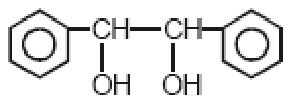
- 2
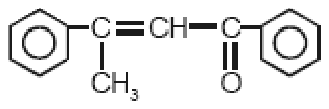
- 3
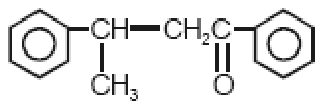
- 4
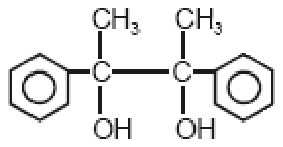
Show answer and solution
Correct: option 2
Acetophenone has -hydrogens, so the base brings about an aldol condensation. The enolate of one molecule adds to the carbonyl carbon of another to give a -hydroxy ketone, which loses water to form the conjugated, stable -unsaturated ketone , option (2).
Question 98AIPMT 2008 Prelims, Q98
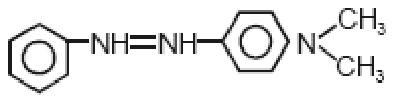
In a reaction of aniline a coloured product C was obtained.
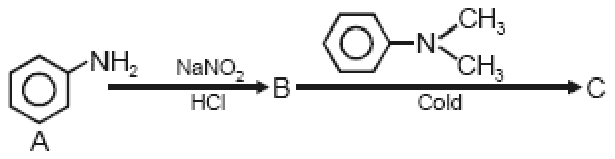
The structure of C would be
- 1
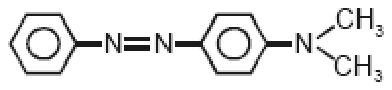
- 2
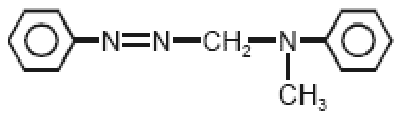
- 3
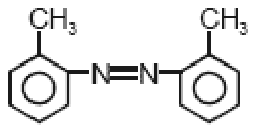
- 4
Show answer and solution
Correct: option 1
Aniline with and HCl gives benzenediazonium chloride (B). This weak electrophile couples in the cold with the activated ring of N,N-dimethylaniline at the position para to the group, giving the coloured azo dye p-(dimethylamino)azobenzene, option (1).
Question 99AIPMT 2008 Prelims, Q99
Which of the following statements is not true?
- 1Natural rubber is a 1, 4 - polymer of isoprene
- 2In vulcanization, the formation of sulphur bridges between different chains make rubber harder and stronger
- 3Natural rubber has the trans-configuration at every double bond
- 4Buna-S is a copolymer of butadiene and styrene
Show answer and solution
Correct: option 3, Natural rubber has the trans-configuration at every double bond
Natural rubber is cis-1,4-polyisoprene: every double bond has the cis arrangement, which is what lets the chains coil and makes it elastic. The all-trans polymer is gutta-percha. The other three statements are true.
Question 100AIPMT 2008 Prelims, Q100
Which one of the following is an amine hormone?
- 1Progesterone
- 2Thyroxine
- 3Oxypurin
- 4Insulin
Show answer and solution
Correct: option 2, Thyroxine
Thyroxine is made from the amino acid tyrosine and is classed as an amine hormone. Progesterone is a steroid and insulin is a polypeptide.
AIPMT 2008 Prelims Biology questions
Question 101AIPMT 2008 Prelims, Q101
Select one of the following of important features distinguishing Gnetum from Cycas and Pinus and showing affinities with angiosperms
- 1Embryo development and apical meristem
- 2Absence of resin duct and leaf venation
- 3Presence of vessel elements and absence of archegonia
- 4Perianth and two integuments
Show answer and solution
Correct: option 3, Presence of vessel elements and absence of archegonia
Gnetum is an advanced gymnosperm. Unlike Cycas and Pinus, its xylem has true vessels and its ovule has no archegonia, and both of these are features of angiosperms. So option (3) is correct.
Question 102AIPMT 2008 Prelims, Q102
Thermococcus, Methanococcus and Methanobacterium exemplify
- 1Bacteria that contain a cytoskeleton and ribosomes
- 2Archaebacteria that contain protein homologous to eukaryotic core histones
- 3Archaebacteria that lack any histones resembling those found in eukaryotes but whose DNA is negatively supercoiled
- 4Bacteria whose DNA is relaxed or positively supercoiled but which have a cytoskeleton as well as mitochondria
Show answer and solution
Correct: option 3, Archaebacteria that lack any histones resembling those found in eukaryotes but whose DNA is negatively supercoiled
All three are archaebacteria (a thermophile and two methanogens), so the options that call them bacteria with mitochondria or a cytoskeleton are out. The key used here gives option (3), which describes them as archaebacteria with negatively supercoiled DNA. Note that many textbooks instead describe these archaea as having histone-like proteins homologous to the eukaryotic core histones, which is option (2).
Question 103AIPMT 2008 Prelims, Q103
Which one of the following is heterosporous?
- 1Equisetum
- 2Dryopteris
- 3Salvinia
- 4Adiantum
Show answer and solution
Correct: option 3, Salvinia
Salvinia, a water fern, produces two kinds of spores: small microspores and large megaspores. Equisetum, Dryopteris and Adiantum produce only one kind of spore, so they are homosporous.
Question 104AIPMT 2008 Prelims, Q104
In which one of the following male and female gametophytes do not have free living independent existence?
- 1Cedrus
- 2Pteris
- 3Funaria
- 4Polytrichum
Show answer and solution
Correct: option 1, Cedrus
Cedrus is a gymnosperm. In gymnosperms the male gametophyte is the reduced pollen grain and the female gametophyte stays inside the ovule on the sporophyte, so neither lives independently. In the mosses Funaria and Polytrichum the gametophyte is the main free-living plant, and in the fern Pteris the prothallus is free-living.
Question 105AIPMT 2008 Prelims, Q105
Which one of the following groups of three animals each is correctly matched with their one characteristic morphological feature?
- 1Cockroach, Locust, Taenia - Metameric segmentation
- 2Liver fluke, Sea anemone, Sea cucumber - Bilateral symmetry
- 3Centipede, Prawn, Sea urchin - Jointed appendages
- 4Scorpion, Spider, Cockroach - Ventral solid central nervous system
Show answer and solution
Correct: option 4, Scorpion, Spider, Cockroach - Ventral solid central nervous system
Scorpion, spider and cockroach are all arthropods, and arthropods have a solid, ventral nerve cord. Taenia is not metamerically segmented, sea anemone is radially symmetrical, and sea urchin (an echinoderm) has no jointed appendages, so the other groups fail.
Question 106AIPMT 2008 Prelims, Q106
Which one of the following phyla is correctly matched with its two general characteristics?
- 1Mollusca - Normally oviparous and development through a trochophore or veliger larva
- 2Arthropoda - Body divided into head, thorax and abdomen and respiration by tracheae
- 3Chordata - Notochord at some stage and separate anal and urinary openings to the outside
- 4Echinodermata - Pentamerous radial symmetry and mostly internal fertilization
Show answer and solution
Correct: option 1, Mollusca - Normally oviparous and development through a trochophore or veliger larva
Molluscs usually lay eggs and develop through a trochophore or veliger larva, so option (1) is right. Not all arthropods have three body regions or tracheae (prawns have gills, scorpions book lungs), many chordates have a common cloaca, and echinoderms mostly have external fertilisation.
Question 107AIPMT 2008 Prelims, Q107
Which one of the following in birds, indicates their reptilian ancestry?
- 1Eggs with a calcareous shell
- 2Scales on their hind limbs
- 3Four-chambered heart
- 4Two special chambers crop and gizzard in their digestive tract
Show answer and solution
Correct: option 2, Scales on their hind limbs
The epidermal scales on the hind limbs of birds are the same kind of scales that cover reptiles, and are taken as evidence that birds evolved from reptiles. A four-chambered heart and a crop and gizzard are bird features, not reptilian ones.
Question 108AIPMT 2008 Prelims, Q108
Ascaris is characterized by
- 1Presence of true coelom and metamerism (metamerisation)
- 2Absence of true coelom but presence of metamerism
- 3Presence of neither true coelom nor metamerism
- 4Presence of true coelom but absence of metamerism
Show answer and solution
Correct: option 3, Presence of neither true coelom nor metamerism
Ascaris is a roundworm (Aschelminthes). Its body cavity is a pseudocoelom, not a true coelom, and its body is unsegmented. So it has neither a true coelom nor metamerism.
Question 109AIPMT 2008 Prelims, Q109
Which one of the following is not a characteristic of phylum Annelida?
- 1Ventral nerve cord
- 2Closed circulatory system
- 3Segmentation
- 4Pseudocoelom
Show answer and solution
Correct: option 4, Pseudocoelom
Annelids are true coelomates: their body cavity is lined by mesoderm on both sides. A pseudocoelom is the feature of roundworms. A ventral nerve cord, closed circulation and segmentation are all annelid characters.
Question 110AIPMT 2008 Prelims, Q110
Cellulose is the major component of cell walls of
- 1Saccharomyces
- 2Pythium
- 3Xanthomonas
- 4Pseudomonas
Show answer and solution
Correct: option 2, Pythium
Pythium is an oomycete (phycomycete), and this group has a cell wall made mainly of cellulose. Saccharomyces is a true fungus with a wall of chitin and other glucans, while Xanthomonas and Pseudomonas are bacteria with peptidoglycan walls.
Question 111AIPMT 2008 Prelims, Q111
- 1Lacks membrane and contains water and excretory substances
- 2Is membrane-bound and contains storage proteins and lipids
- 3Is membrane-bound and contains water and excretory substances
- 4Lacks membrane and contains air
Show answer and solution
Correct: option 3, Is membrane-bound and contains water and excretory substances
The plant vacuole is bounded by a single membrane, the tonoplast. It holds cell sap: water, ions, sugars and excretory or waste products. So option (3) is correct.
Question 112AIPMT 2008 Prelims, Q112
A competitive inhibitor of succinic dehydrogenase is
- 1Malate
- 2Malonate
- 3Oxaloacetate
- 4-ketoglutarate
Show answer and solution
Correct: option 2, Malonate
Malonate closely resembles succinate, the normal substrate, in structure. It binds to the active site of succinic dehydrogenase in place of succinate and so inhibits the enzyme competitively.
Question 113AIPMT 2008 Prelims, Q113
- 1Ribosomes attached to each other in a linear arrangement
- 2Several ribosomes attached to a single mRNA
- 3Many ribosomes attached to a strand of endoplasmic reticulum
- 4A ribosome with several subunits
Show answer and solution
Correct: option 2, Several ribosomes attached to a single mRNA
A polysome (polyribosome) is a single mRNA strand with several ribosomes moving along it at the same time, each making a copy of the same polypeptide.
Question 114AIPMT 2008 Prelims, Q114
Carbohydrates are commonly found as starch in plant storage organs. Which of the following five properties of starch (a - e) make it useful as a storage material?
a. Easily translocated
b. Chemical non-reactive
c. Easily digested by animals
d. Osmotically inactive
e. Synthesized during photosynthesis
The useful properties are
- 1Both a & e
- 2Both b & c
- 3Both b & d
- 4a, c & e
Show answer and solution
Correct: option 3, Both b & d
A good storage substance must sit in the cell without disturbing it. Starch is chemically non-reactive (b) and, being insoluble, osmotically inactive (d), so large amounts can be stored without reacting or drawing in water. Starch is not easily translocated, and being digestible by animals is of no use to the plant.
Question 115AIPMT 2008 Prelims, Q115
In the light of recent classification of living organisms into three domains of life (bacteria, archaea and eukarya), which one of the following statements is true about archaea?
- 1Archaea completely differ from prokaryotes
- 2Archaea resemble eukarya in all respects
- 3Archaea have some novel features that are absent in other prokaryotes and eukaryotes
- 4Archaea completely differ from both prokaryotes and eukaryotes
Show answer and solution
Correct: option 3, Archaea have some novel features that are absent in other prokaryotes and eukaryotes
Archaea are prokaryotic in organisation and share some molecular features with eukaryotes, but they also have features of their own, such as branched ether-linked membrane lipids and a cell wall without peptidoglycan. So they neither differ completely from, nor fully resemble, the other two groups; option (3) is true.
Question 116AIPMT 2008 Prelims, Q116
Keeping in view the 'fluid mosaic model' for the structure of cell membrane, which one of the following statements is correct w.r.t. the movement of lipids and proteins from one lipid monolayer to the other (described as flip-flop movement)?
- 1Neither lipids nor proteins can flip-flop
- 2Both lipids and proteins can flip-flop
- 3While lipids can rarely flip-flop, proteins cannot
- 4While proteins can flip-flop, lipids cannot
Show answer and solution
Correct: option 3, While lipids can rarely flip-flop, proteins cannot
To flip-flop, the polar part of a molecule must cross the hydrophobic core of the bilayer. Lipids manage this only rarely. Proteins, with their large polar regions, do not flip-flop at all, although both move sideways within a layer.
Question 117AIPMT 2008 Prelims, Q117
In germinating seeds fatty acids are degraded exclusively in the
- 1Mitochondria
- 2Proplastids
- 3Glyoxysomes
- 4Peroxisomes
Show answer and solution
Correct: option 3, Glyoxysomes
Germinating fatty seeds contain glyoxysomes. These microbodies carry out the breakdown of fatty acids and the glyoxylate cycle, which converts the stored fat into sugars for the seedling.
Question 118AIPMT 2008 Prelims, Q118
The two sub-units of ribosome remain united at a critical ion level of
- 1Calcium
- 2Copper
- 3Manganese
- 4Magnesium
Show answer and solution
Correct: option 4, Magnesium
The large and small subunits of a ribosome stay joined only when enough ions are present. If the magnesium concentration falls, the two subunits separate.
Question 119AIPMT 2008 Prelims, Q119
Thorn of Bougainvillea and tendril of cucurbita are example of
- 1Retrogressive evolution
- 2Analogous organs
- 3Homologous organs
- 4Vestigial organs
Show answer and solution
Correct: option 3, Homologous organs
Both the thorn of Bougainvillea and the tendril of Cucurbita are modified axillary branches. They have the same origin but different functions (protection and climbing), so they are homologous organs.
Question 120AIPMT 2008 Prelims, Q120
Haploids are more suitable for mutation studies than the diploids. This is because
- 1All mutations, whether dominant or recessive are expressed in haploids
- 2Haploids are reproductively more stable than diploids
- 3Mutagens penetrate in haploids more effectively than diploids
- 4Haploids are more abundant in nature than diploids
Show answer and solution
Correct: option 1, All mutations, whether dominant or recessive are expressed in haploids
A haploid has only one copy of each gene. There is no second allele to mask a recessive mutation, so every mutation, dominant or recessive, shows up in the phenotype and can be detected at once.
Question 121AIPMT 2008 Prelims, Q121
Which one of the following pairs of nitrogenous bases of nucleic acids, is wrongly matched with the category mentioned against it?
- 1Adenine, Thymine - Purines
- 2Thymine, Uracil - Pyrimidines
- 3Uracil, Cytosine - Pyrimidines
- 4Guanine, Adenine - Purines
Show answer and solution
Correct: option 1, Adenine, Thymine - Purines
The purines are adenine and guanine; the pyrimidines are cytosine, thymine and uracil. Thymine is a pyrimidine, so calling the pair adenine and thymine purines is the wrong match.
Question 122AIPMT 2008 Prelims, Q122
Which one of the following conditions in humans is correctly matched with its chromosomal abnormality/ linkage?
- 1Down syndrome - 44 autosomes + XO
- 2Klinefelter syndrome - 44 autosomes + XXY
- 3Colour blindness - Y-linked
- 4Erythroblastosis foetalis - X-linked
Show answer and solution
Correct: option 2, Klinefelter syndrome - 44 autosomes + XXY
Klinefelter syndrome is 44 autosomes + XXY (47 chromosomes). 44 + XO is Turner syndrome, not Down syndrome (which is trisomy 21). Colour blindness is X-linked, and erythroblastosis foetalis is due to Rh incompatibility, an autosomal trait.
Question 123AIPMT 2008 Prelims, Q123
- 1There are two strands which run antiparallel-one in 5' 3' direction and other in 3' 5'
- 2The total amount of purine nucleotides and pyrimidine nucleotides is not always equal
- 3There are two strands which run parallel in the 5' 3' direction
- 4The proportion of Adenine in relation to thymine varies with the organism
Show answer and solution
Correct: option 1, There are two strands which run antiparallel-one in 5' 3' direction and other in 3' 5'
The two strands of the DNA double helix are antiparallel: one runs 5' to 3' and the other 3' to 5'. By Chargaff's rules purines always equal pyrimidines and A always equals T, so the other statements are false.
Question 124AIPMT 2008 Prelims, Q124
What is true about the isolated small tribal populations?
- 1There is no change in population size as they have a large gene pool
- 2There is a decline in population as boys marry girls only from their own tribe
- 3Hereditary diseases like colour blindness do not spread in the isolated population
- 4Wrestlers who develop strong body muscles in their life time pass this character on to their progeny
Show answer and solution
Correct: option 2, There is a decline in population as boys marry girls only from their own tribe
A small isolated tribe has a small gene pool and no gene flow from outside. Marriage within the tribe is inbreeding, which brings harmful recessive genes together and lowers fitness, so the population declines. Hereditary diseases spread more in such groups, and acquired characters such as a wrestler's muscles are not inherited.
Question 125AIPMT 2008 Prelims, Q125
Which one of the following scientist's name is correctly matched with the theory put forth by him?
- 1Mendel - Theory of Pangenesis
- 2Weismann - Theory of continuity of Germplasm
- 3Pasteur - Inheritance of acquired characters
- 4de Vries - Natural selection
Show answer and solution
Correct: option 2, Weismann - Theory of continuity of Germplasm
August Weismann proposed the theory of continuity of germplasm. Pangenesis and natural selection were Darwin's ideas, inheritance of acquired characters was Lamarck's, de Vries gave the mutation theory, and Pasteur disproved spontaneous generation.
Question 126AIPMT 2008 Prelims, Q126
Which one of the following is incorrect about the characteristics of protobionts (coacervates and microspheres) as envisaged in the abiogenic origin of life?
- 1They could maintain an internal environment
- 2They were able to reproduce
- 3They could separate combinations of molecules from the surroundings
- 4They were partially isolated from the surroundings
Show answer and solution
Correct: option 2, They were able to reproduce
Protobionts were aggregates of molecules partly separated from the surroundings by a boundary, able to keep an internal environment different from outside. They were not living cells and could not truly reproduce, so statement (2) is the incorrect one.
Question 127AIPMT 2008 Prelims, Q127
Darwin's Finches are an excellent example of
- 1Connecting links
- 2Adaptive radiation
- 3Seasonal migration
- 4Brood parasitism
Show answer and solution
Correct: option 2, Adaptive radiation
On the Galapagos Islands many finch species with different beaks and food habits evolved from one ancestral seed-eating stock. Such evolution of several forms from one point into different habitats is adaptive radiation.
Question 128AIPMT 2008 Prelims, Q128
Which one of the following pairs of items correctly belongs to the category of organs mentioned against it?
- 1Wings of honey-bee and wings of crow - Homologous organs
- 2Thorn of Bougainvillea and tendrils of Cucurbita - Analogous organs
- 3Nictitating membrane and blind spot in human eye - Vestigial organs
- 4Nephridia of earthworm and malpighian tubules of cockroach - Excretory organs
Show answer and solution
Correct: option 4, Nephridia of earthworm and malpighian tubules of cockroach - Excretory organs
Nephridia and Malpighian tubules are both excretory organs, so pair (4) is right. Insect and bird wings are analogous, the thorn and tendril are homologous, and the blind spot is a functional part of the retina, not a vestigial organ.
Question 129AIPMT 2008 Prelims, Q129
The fruit is chambered, developed from inferior ovary and has seeds with succulent testa in
- 1Cucumber
- 2Pomegranate
- 3Orange
- 4Guava
Show answer and solution
Correct: option 2, Pomegranate
The pomegranate fruit (a balausta) develops from an inferior ovary and is divided into chambers. Its edible part is the juicy outer seed coat (testa) of the seeds.
Question 130AIPMT 2008 Prelims, Q130
The plants are photosynthetically more efficient than plants because
- 1They have more chloroplasts
- 2The compensation point is more
- 3 generated during photorespiration is trapped and recycled through PEP carboxylase
- 4The efflux is not prevented
Show answer and solution
Correct: option 1, They have more chloroplasts
The key used here gives option (1): leaves have chloroplasts in both the mesophyll and the bundle sheath cells. The usual textbook reason for their higher efficiency is that PEP carboxylase concentrates in the bundle sheath, so photorespiratory loss is avoided, which is the idea in option (3). Their compensation point is lower, not higher.
Question 131AIPMT 2008 Prelims, Q131
The chemiosmotic coupling hypothesis of oxidative phosphorylation proposes that adenosine triphosphate (ATP) is formed because
- 1There is a change in the permeability of the inner mitochondrial membrane toward adenosine diphosphate (ADP)
- 2High energy bonds are formed in mitochondrial proteins
- 3ADP is pumped out of the matrix into the intermembrane space
- 4A proton gradient forms across the inner membrane
Show answer and solution
Correct: option 4, A proton gradient forms across the inner membrane
In Mitchell's chemiosmotic hypothesis, electron transport pumps protons from the matrix into the intermembrane space. The resulting proton gradient across the inner membrane drives protons back through ATP synthase, and this flow makes ATP.
Question 132AIPMT 2008 Prelims, Q132
Dry indehiscent single-seeded fruit formed bicarpellary syncarpous inferior ovary is
- 1Cremocarp
- 2Caryopsis
- 3Cypsela
- 4Berry
Show answer and solution
Correct: option 3, Cypsela
A cypsela, the fruit of the sunflower family, is a dry, indehiscent, one-seeded fruit from a bicarpellary, syncarpous, inferior ovary. A cremocarp is two-seeded and splits, a caryopsis comes from a superior monocarpellary ovary, and a berry is fleshy.
Question 133AIPMT 2008 Prelims, Q133
The rupture and fractionation do not usually occur in the water column in vessel/tracheids during the ascent of sap because of
- 1Transpiration pull
- 2Lignified thick walls
- 3Cohesion and adhesion
- 4Weak gravitational pull
Show answer and solution
Correct: option 3, Cohesion and adhesion
Water molecules stick strongly to each other (cohesion) and to the xylem walls (adhesion). This gives the water column high tensile strength, so it does not break even under the pull of transpiration.
Question 134AIPMT 2008 Prelims, Q134
Senescence as an active developmental cellular process in the growth and functioning of a flowering plant, is indicated in
- 1Floral parts
- 2Vessels and tracheid differentiation
- 3Leaf abscission
- 4Annual plants
Show answer and solution
Correct: option 3, Leaf abscission
Before a leaf falls, the plant actively breaks down its contents, withdraws the nutrients and forms an abscission layer at the base. Leaf abscission is therefore senescence working as a controlled, active developmental process, as the key's option (3) says.
Question 135AIPMT 2008 Prelims, Q135
Vascular tissues in flowering plants develop from
- 1Dermatogen
- 2Phellogen
- 3Plerome
- 4Periblem
Show answer and solution
Correct: option 3, Plerome
In the histogen theory the plerome, the central histogen, forms the stele, which includes the vascular tissues. Dermatogen forms the epidermis, periblem the cortex, and phellogen is the cork cambium.
Question 136AIPMT 2008 Prelims, Q136
In leaves of plants malic acid synthesis during fixation occurs in
- 1Guard cells
- 2Epidermal cells
- 3Mesophyll cells
- 4Bundle sheath
Show answer and solution
Correct: option 3, Mesophyll cells
In plants is first fixed in the mesophyll cells by PEP carboxylase into oxaloacetic acid, which is reduced there to malic acid. The malic acid then moves to the bundle sheath, where it is broken down to release .
Question 137AIPMT 2008 Prelims, Q137
Importance of day length in flowering of plants was first shown in
- 1Petunia
- 2Lemna
- 3Tobacco
- 4Cotton
Show answer and solution
Correct: option 3, Tobacco
Garner and Allard discovered photoperiodism while working with the Maryland Mammoth variety of tobacco, which flowered only when the days were short.
Question 138AIPMT 2008 Prelims, Q138
Endosperm is consumed by developing embryo in the seed of
- 1Maize
- 2Coconut
- 3Castor
- 4Pea
Show answer and solution
Correct: option 4, Pea
Pea seeds are non-endospermic: the growing embryo uses up the endosperm and the food is stored in the cotyledons. Maize, coconut and castor seeds keep their endosperm when mature.
Question 139AIPMT 2008 Prelims, Q139
Nitrogen fixation in root nodules of Alnus is brought about by
- 1Azorhizobium
- 2Bradyrhizobium
- 3Clostridium
- 4Frankia
Show answer and solution
Correct: option 4, Frankia
Frankia, a filamentous actinomycete, forms nitrogen-fixing root nodules on non-leguminous plants such as Alnus. The rhizobia nodulate legumes, and Clostridium is a free-living nitrogen fixer.
Question 140AIPMT 2008 Prelims, Q140
The energy releasing process in which the substrate is oxidised without an external electron acceptor is called
- 1Glycolysis
- 2Fermentation
- 3Photorespiration
- 4Aerobic respiration
Show answer and solution
Correct: option 2, Fermentation
In fermentation the electrons removed from the substrate are passed to an organic molecule formed from the substrate itself (pyruvate or acetaldehyde), not to an outside acceptor such as oxygen. Aerobic respiration uses oxygen as the external acceptor.
Question 141AIPMT 2008 Prelims, Q141
Replum is present in the ovary of flower of
- 1Pea
- 2Lemon
- 3Mustard
- 4Sunflower
Show answer and solution
Correct: option 3, Mustard
In mustard and other members of the family Brassicaceae the ovary is divided into two chambers by a false septum called the replum, which grows between the two parietal placentae.
Question 142AIPMT 2008 Prelims, Q142
The fleshy receptacle of syconus of fig encloses a number of
- 1Mericarps
- 2Achenes
- 3Samaras
- 4Berries
Show answer and solution
Correct: option 2, Achenes
The syconus of fig is a hollow, fleshy receptacle formed from a hypanthodium inflorescence. Each female flower inside it develops into a small one-seeded fruit, an achene.
Question 143AIPMT 2008 Prelims, Q143
Electrons from excited chlorophyll molecule of photosystem II are accepted first by
- 1Ferredoxin
- 2Cytochrome - b
- 3Cytochrome - f
- 4Quinone
Show answer and solution
Correct: option 4, Quinone
The electrons leaving excited P680 of photosystem II pass to quinone acceptors (plastoquinone), and only afterwards to the cytochrome complex. Ferredoxin accepts electrons from photosystem I. Among the given options quinone comes first.
Question 144AIPMT 2008 Prelims, Q144
Which type of white blood cells are concerned with the release of histamine and the natural anticoagulant heparin?
- 1Monocytes
- 2Neutrophils
- 3Basophils
- 4Eosinophils
Show answer and solution
Correct: option 3, Basophils
Basophils, like the mast cells of tissues, secrete histamine, serotonin and heparin and take part in inflammatory reactions.
Question 145AIPMT 2008 Prelims, Q145
Which one of the following is the true description about an animal concerned?
- 1Cockroach - 10 pairs of spiracles (2 pairs on thorax and 8 pairs on abdomen)
- 2Earthworm - The alimentary canal consists of a sequence of pharynx, oesophagus, stomach, gizzard and intestine
- 3Frog - Body divisible into three regions - head, neck and trunk
- 4Rat - Left kidney is slightly higher in position than the right one
Show answer and solution
Correct: option 1, Cockroach - 10 pairs of spiracles (2 pairs on thorax and 8 pairs on abdomen)
A cockroach has 10 pairs of spiracles, 2 thoracic and 8 abdominal. In the earthworm the gizzard comes before the stomach, the frog has no neck (only head and trunk), and in the rat the right kidney lies slightly higher than the left.
Question 146AIPMT 2008 Prelims, Q146
Which one of the following is the correct matching of the site of action on the given substrate, the enzyme acting upon it and the end product?
- 1Stomach : Fats micelles
- 2Duodenum : Triglycerides monoglycerides
- 3Small intestine : Starch Disaccharide (Maltose)
- 4Small intestine : Proteins Amino acids
Show answer and solution
Correct: option 3, Small intestine : Starch Disaccharide (Maltose)
Pancreatic -amylase acts in the small intestine and breaks starch into the disaccharide maltose. Trypsin acts on proteins, not triglycerides; pepsin works in the stomach and gives peptones, not amino acids; and micelles are formed by bile salts, not by lipase in the stomach.
Question 147AIPMT 2008 Prelims, Q147
What is vital capacity of our lungs?
- 1Total lungs capacity minus residual volume
- 2Inspiratory reserve volume plus tidal volume
- 3Total lungs capacity minus expiratory reserve volume
- 4Inspiratory reserve volume plus expiratory reserve volume
Show answer and solution
Correct: option 1, Total lungs capacity minus residual volume
Vital capacity = IRV + TV + ERV, the most air that can be breathed out after a full inspiration. Total lung capacity = vital capacity + residual volume, so vital capacity = total lung capacity minus residual volume.
Question 148AIPMT 2008 Prelims, Q148
Which one of the following is the correct difference between Rod Cells and Cone Cells of our retina?
- 1Distribution: Rod Cells - More concentrated in centre of retina; Cone Cells - Evenly distributed all over retina
- 2Visual acuity: Rod Cells - High; Cone Cells - Low
- 3Visual pigment contained: Rod Cells - Iodopsin; Cone Cells - Rhodopsin
- 4Overall function: Rod Cells - Vision in poor light; Cone Cells - Colour vision and detailed vision in bright light
Show answer and solution
Correct: option 4, Overall function: Rod Cells - Vision in poor light; Cone Cells - Colour vision and detailed vision in bright light
Rods work in dim light (scotopic vision); cones give colour vision and sharp vision in bright light. The other rows are reversed: cones are concentrated at the centre of the retina (fovea), cones have the higher acuity, and rods contain rhodopsin while cones contain iodopsin.
Question 149AIPMT 2008 Prelims, Q149
Which one of the following items gives its correct total number?
- 1Cervical vertebrae in humans - 8
- 2Floating ribs in humans - 4
- 3Amino acids found in proteins - 16
- 4Types of diabetes - 3
Show answer and solution
Correct: option 2, Floating ribs in humans - 4
Humans have two pairs of floating ribs, the 11th and 12th, which makes 4 ribs. There are 7 cervical vertebrae and 20 amino acids in proteins, so those numbers are wrong.
Question 150AIPMT 2008 Prelims, Q150
Given below is a diagrammatic cross section of a single loop of human cochlea
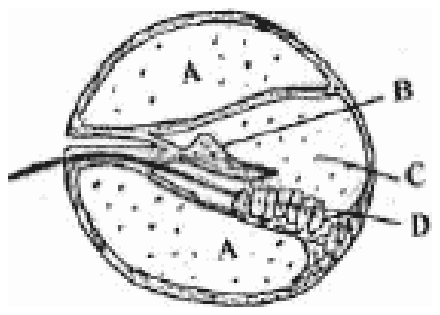
Which one of the following options correctly represents the names of three different parts?
- 1A : Perilymph, B : Tectorial membrane, C : Endolymph
- 2B : Tectorial membrane, C : Perilymph, D : Secretory cells
- 3C : Endolymph, D : Sensory hair cells, A : Serum
- 4D : Sensory hair cells, A : Endolymph, B : Tectorial membrane
Show answer and solution
Correct: option 1, A : Perilymph, B : Tectorial membrane, C : Endolymph
A marks the upper and lower chambers (scala vestibuli and scala tympani), which are filled with perilymph. B is the tectorial membrane lying over the organ of Corti, C is the middle chamber (scala media) filled with endolymph, and D is the sensory hair cells. Only option (1) names all its three parts correctly.
Question 151AIPMT 2008 Prelims, Q151
Given below are four methods (A - D) and their modes of action (a - d) in achieving contraception. Select their correct matching from the four options that follow
| Method | Mode of Action |
|---|
| (A) The pill | (a) Prevents sperms reaching cervix |
| (B) Condom | (b) Prevents implantation |
| (C) Vasectomy | (c) Prevents ovulation |
| (D) Copper T | (d) Semen contains no sperms |
Matching
- 1A-b, B-c, C-a, D-d
- 2A-c, B-a, C-d, D-b
- 3A-d, B-a, C-b, D-c
- 4A-c, B-d, C-a, D-b
Show answer and solution
Correct: option 2, A-c, B-a, C-d, D-b
The pill supplies oestrogen and progestogen, which suppress the gonadotropin surge and so prevent ovulation (c). A condom is a barrier that stops sperms reaching the cervix (a). In vasectomy the vas deferens is cut and tied, so the semen carries no sperms (d). Copper T is an intrauterine device that makes the uterus unsuitable for implantation (b). So A-c, B-a, C-d, D-b.
Question 152AIPMT 2008 Prelims, Q152
What will happen if the secretion of parietal cells of gastric glands is blocked with an inhibitor?
- 1Enterokinase will not be released from the duodenal mucosa and so trypsinogen is not converted to trypsin
- 2Gastric juice will be deficient in chymosin
- 3Gastric juice will be deficient in pepsinogen
- 4In the absence of HCl secretion, inactive pepsinogen is not converted into the active enzyme pepsin.
Show answer and solution
Correct: option 4, In the absence of HCl secretion, inactive pepsinogen is not converted into the active enzyme pepsin.
Parietal (oxyntic) cells secrete HCl and the intrinsic factor. Pepsinogen and prorennin come from the chief cells, so they are still secreted, but without HCl the pepsinogen is not activated to pepsin. Enterokinase is an intestinal enzyme and does not depend on the parietal cells.
Question 153AIPMT 2008 Prelims, Q153
During the propagation of a nerve impulse, the action potential results from the movement of
- 1 ions from extracellular fluid to intracellular fluid
- 2 ions from extracellular fluid to intracellular fluid
- 3 ions from intracellular fluid to extracellular fluid
- 4 ions from intracellular fluid to extracellular fluid
Show answer and solution
Correct: option 1, ions from extracellular fluid to intracellular fluid
When a stimulus reaches threshold, voltage-gated sodium channels open and rushes in from the extracellular fluid down its concentration gradient. This reverses the polarity of the membrane (inside positive), which is the action potential. Outflow of potassium ions comes afterwards and restores the resting state.
Question 154AIPMT 2008 Prelims, Q154
The blood calcium level is lowered by the deficiency of
- 1Calcitonin
- 2Parathormone
- 3Thyroxine
- 4Both Calcitonin and Parathormone
Show answer and solution
Correct: option 2, Parathormone
Parathormone raises blood calcium by releasing it from bone and increasing its reabsorption and absorption. If parathormone is deficient, blood calcium falls (which can lead to tetany). Calcitonin lowers blood calcium, so its deficiency would not lower the level.
Question 155AIPMT 2008 Prelims, Q155
The most active phagocytic white blood cells are
- 1Neutrophils and monocytes
- 2Neutrophils and eosinophils
- 3Lymphocytes and macrophages
- 4Eosinophils and lymphocytes
Show answer and solution
Correct: option 1, Neutrophils and monocytes
Neutrophils and monocytes are the main phagocytes of blood: they engulf and digest microbes and debris. Lymphocytes act through immune responses, and eosinophils are concerned mainly with allergy and parasites.
Question 156AIPMT 2008 Prelims, Q156
Earthworms have no skeleton but during burrowing, the anterior end becomes turgid and acts as a hydraulic skeleton. It is due to
- 1Setae
- 2Coelomic fluid
- 3Blood
- 4Gut peristalsis
Show answer and solution
Correct: option 2, Coelomic fluid
The coelom of the earthworm is filled with coelomic fluid, which cannot be compressed. When the body wall muscles contract against it, the fluid makes the segments stiff and turgid, so it works as a hydrostatic (hydraulic) skeleton.
Question 157AIPMT 2008 Prelims, Q157
In humans, blood passes from the post caval to the diastolic right atrium of heart due to
- 1Pressure difference between the post caval and atrium
- 2Pushing open of the venous valves
- 3Suction pull
- 4Stimulation of the sino auricular node
Show answer and solution
Correct: option 1, Pressure difference between the post caval and atrium
Blood flows from higher to lower pressure. When the right atrium is relaxed (diastole) its pressure is lower than that in the post caval vein, so blood flows into it passively.
Question 158AIPMT 2008 Prelims, Q158
In humans, at the end of the first meiotic division, the male germ cells differentiate into the
- 1Spermatogonia
- 2Primary spermatocytes
- 3Secondary spermatocytes
- 4Spermatids
Show answer and solution
Correct: option 3, Secondary spermatocytes
A primary spermatocyte (diploid) undergoes the first meiotic division to give two haploid secondary spermatocytes. These complete the second meiotic division to form spermatids.
Question 159AIPMT 2008 Prelims, Q159
Which one of the following is resistant to enzyme action?
- 1Leaf cuticle
- 2Cork
- 3Wood fibre
- 4Pollen exine
Show answer and solution
Correct: option 4, Pollen exine
The exine of a pollen grain is made of sporopollenin, one of the most resistant organic materials known. No enzyme is known to degrade it, which is why pollen is well preserved as fossils.
Question 160AIPMT 2008 Prelims, Q160
The length of different internodes in a culm of sugarcane is variable because of
- 1Intercalary meristem
- 2Shoot apical meristem
- 3Position of axillary buds
- 4Size of leaf lamina at the node below each internode
Show answer and solution
Correct: option 1, Intercalary meristem
In grasses such as sugarcane an intercalary meristem lies at the base of each internode. Its activity lengthens that internode, and since it is active to different extents in different internodes, their lengths differ.
Question 161AIPMT 2008 Prelims, Q161
Which one of the following pairs of plant structures has haploid number of chromosomes?
- 1Egg nucleus and secondary nucleus
- 2Megaspore mother cell and antipodal cells
- 3Egg cell and antipodal cells
- 4Nucellus and antipodal cells
Show answer and solution
Correct: option 3, Egg cell and antipodal cells
The egg cell and the antipodal cells are cells of the embryo sac, which develops from a haploid megaspore, so both are haploid. The secondary nucleus (fused polar nuclei), the megaspore mother cell and the nucellus are diploid.
Question 162AIPMT 2008 Prelims, Q162
What does the filiform apparatus do at the entrance into ovule?
- 1It guides pollen tube from a synergid to egg
- 2It helps in the entry of pollen tube into a synergid
- 3It prevents entry of more than one pollen tube into the embryosac
- 4It brings about opening of the pollen tube
Show answer and solution
Correct: option 2, It helps in the entry of pollen tube into a synergid
The filiform apparatus is the set of finger-like wall thickenings at the micropylar tip of the synergids. It guides the pollen tube into a synergid.
Question 163AIPMT 2008 Prelims, Q163
Unisexuality of flowers prevents
- 1Autogamy and geitonogamy
- 2Autogamy, but not geitonogamy
- 3Both geitonogamy and xenogamy
- 4Geitonogamy, but not xenogamy
Show answer and solution
Correct: option 2, Autogamy, but not geitonogamy
A unisexual flower has only stamens or only a pistil, so pollination within the same flower (autogamy) is impossible. If male and female flowers are on the same plant, pollen can still pass between flowers of that plant, so geitonogamy is not prevented.
Question 164AIPMT 2008 Prelims, Q164
Which extraembryonic membrane in humans prevents desiccation of the embryo inside the uterus?
- 1Amnion
- 2Chorion
- 3Allantois
- 4Yolk sac
Show answer and solution
Correct: option 1, Amnion
The amnion encloses the embryo in a cavity filled with amniotic fluid. The fluid keeps the embryo moist and also cushions it against shocks.
Question 165AIPMT 2008 Prelims, Q165
Which one of the following statements is incorrect about menstruation?
- 1The beginning of the cycle of menstruation is called menarche
- 2During normal menstruation about 40 ml blood is lost
- 3The menstrual fluid can easily clot
- 4At menopause in the female, there is especially abrupt increase in gonadotropic hormones
Show answer and solution
Correct: option 3, The menstrual fluid can easily clot
Menstrual blood normally does not clot, because fibrinolysin released with the broken-down endometrium dissolves the clotting protein. The other statements are right: the first menstruation is menarche, about 40 ml of blood is lost, and at menopause the fall in ovarian hormones removes the feedback so gonadotropins rise.
Question 166AIPMT 2008 Prelims, Q166
The haemoglobin of a human foetus
- 1Has a higher affinity for oxygen than that of an adult
- 2Has a lower affinity for oxygen than that of the adult
- 3Its affinity for oxygen is the same as that of an adult
- 4Has only 2 protein subunits instead of 4
Show answer and solution
Correct: option 1, Has a higher affinity for oxygen than that of an adult
Foetal haemoglobin has two alpha and two gamma chains (still four subunits) and binds oxygen more strongly than adult haemoglobin. This lets the foetal blood take up oxygen from the blood of the mother across the placenta.
Question 167AIPMT 2008 Prelims, Q167
Consider the statements given below regarding contraception and answer as directed thereafter
(a) Medical Termination of Pregnancy (MTP) during first trimester is generally safe
(b) Generally chances of conception are nil until mother breast-feeds the infant upto two years
(c) Intrauterine devices like copper-T are effective contraceptives
(d) Contraception pills may be taken upto one week after coitus to prevent conception
Which two of the above statements are correct?
- 1a, b
- 2b, c
- 3c, d
- 4a, c
Show answer and solution
Correct: option 4, a, c
(a) is correct: MTP is relatively safe in the first trimester. (c) is correct: IUDs such as copper-T are effective contraceptives. (b) is wrong because lactational amenorrhoea protects only for about six months of intense breast-feeding. (d) is wrong because emergency pills work only within 72 hours of coitus.
Question 168AIPMT 2008 Prelims, Q168
In human adult females oxytocin
- 1Causes strong uterine contractions during parturition
- 2Is secreted by anterior pituitary
- 3Stimulates growth of mammary glands
- 4Stimulates pituitary to secrete vasopressin
Show answer and solution
Correct: option 1, Causes strong uterine contractions during parturition
Oxytocin is made in the hypothalamus and released from the posterior pituitary. It makes the smooth muscle of the uterus contract strongly at childbirth and also causes milk ejection; it does not make the mammary glands grow.
Question 169AIPMT 2008 Prelims, Q169
Which one of the following is the correct percentage of the two (out of the total of 4) green house gases that contribute to the total global warming?
- 1Methane 20%, 18%
- 2CFCs 14%, Methane 20%
- 3 40%, CFCs 30%
- 4 6%, 86%
Show answer and solution
Correct: option 2, CFCs 14%, Methane 20%
The relative contributions to global warming are about 60% for carbon dioxide, 20% for methane, 14% for CFCs and 6% for nitrous oxide. Only the option giving CFCs 14% and methane 20% has both figures right.
Question 170AIPMT 2008 Prelims, Q170
Quercus species are the dominant component in
- 1Tropical rain forests
- 2Temperate deciduous forests
- 3Alpine forests
- 4Scrub forests
Show answer and solution
Correct: option 2, Temperate deciduous forests
Quercus is the oak. Oaks are broad-leaved trees that dominate temperate deciduous forests.
Question 171AIPMT 2008 Prelims, Q171
About 70% of total global carbon is found in
- 1Forests
- 2Grasslands
- 3Agroecosystems
- 4Oceans
Show answer and solution
Correct: option 4, Oceans
About 71% of the global carbon is dissolved in the oceans. This oceanic reservoir also regulates the amount of carbon dioxide in the atmosphere.
Question 172AIPMT 2008 Prelims, Q172
Which one of the following is not observed in biodiversity hotspots?
- 1Species richness
- 2Endemism
- 3Accelerated species loss
- 4Lesser inter-specific competition
Show answer and solution
Correct: option 4, Lesser inter-specific competition
Hotspots are regions with very high species richness, a high degree of endemism and rapid loss of habitat and species. With so many species living together, competition between species is strong, not less.
Question 173AIPMT 2008 Prelims, Q173
World summit on Sustainable Development (2002) was held in
- 1South Africa
- 2Brazil
- 3Sweden
- 4Argentina
Show answer and solution
Correct: option 1, South Africa
The World Summit on Sustainable Development of 2002 was held at Johannesburg in South Africa. The earlier Earth Summit of 1992 was held at Rio de Janeiro in Brazil.
Question 174AIPMT 2008 Prelims, Q174
The slow rate of decomposition of fallen logs in nature is due to their
- 1Low cellulose content
- 2Low moisture content
- 3Poor nitrogen content
- 4Anaerobic environment around them
Show answer and solution
Correct: option 2, Low moisture content
Decomposers need moisture to grow and work, and a dry log gives them little water, so it decays slowly; this is the keyed answer. The woody material of logs is also rich in lignin and poor in nitrogen, which slows decomposition as well.
Question 175AIPMT 2008 Prelims, Q175
Consider the following statements concerning food chains
(a) Removal of 80% tigers from an area resulted in greatly increased growth of vegetation
(b) Removal of most of the carnivores resulted in an increased population of deers
(c) The length of food chains is generally limited to 3-4 trophic levels due to energy loss
(d) The length of food chains may vary from 2 to 8 trophic levels.
Which two of the above statements are correct?
- 1a, b
- 2b, c
- 3c, d
- 4a, d
Show answer and solution
Correct: option 2, b, c
(b) is correct: with fewer carnivores the deer are less preyed upon and increase. (c) is correct: only about 10% of energy passes to the next level, so chains rarely go beyond 3 to 4 levels. (a) is wrong because fewer tigers means more herbivores and less vegetation, and (d) is wrong because chains do not reach 8 levels.
Question 176AIPMT 2008 Prelims, Q176
According to Central Pollution Control Board (CPCB), which particulate size in diameter (in micrometers) of the air pollutants is responsible for greatest harm to human health?
- 15.2 - 2.5
- 22.5 or less
- 31.5 or less
- 41.0 or less
Show answer and solution
Correct: option 2, 2.5 or less
According to the CPCB, particles of 2.5 micrometres or less in diameter (PM 2.5) do the greatest harm. They are small enough to be breathed deep into the lungs, where they cause irritation, inflammation and lung damage.
Question 177AIPMT 2008 Prelims, Q177
The table below gives the populations (in thousands) of ten species (A - J) in four areas (a - d) consisting of the number of habitats given within brackets against each. Study the table and answer the question which follows
Species, and their populations (in thousands) in the areas
| Area and Number of habitats | A | B | C | D | E | F | G | H | I | J |
|---|
| a (11) | 2.3 | 1.2 | 0.52 | 6.0 | – | 3.1 | 1.1 | 9.0 | – | 10.3 |
| b (11) | 10.2 | – | 0.62 | – | 1.5 | 3.0 | – | 8.2 | 1.1 | 11.2 |
| c (13) | 11.3 | 0.9 | 0.48 | 2.4 | 1.4 | 4.2 | 0.8 | 8.4 | 2.2 | 4.1 |
| d (12) | 3.2 | 10.2 | 11.1 | 4.8 | 0.4 | 3.3 | 0.8 | 7.3 | 11.3 | 2.1 |
Which area out of a to d shows maximum species diversity?
- 1a
- 2b
- 3c
- 4d
Show answer and solution
Correct: option 4, d
Areas a and b each lack some species (a has 8, b has 7), while c and d have all ten. Of these two, d has its ten species in fewer habitats (12 against 13) and several of them present in large, more comparable numbers, so its species diversity is the highest.
Question 178AIPMT 2008 Prelims, Q178
A lake near a village suffered heavy mortality of fishes within a few days. Consider the following reasons for this
(a) Lots of urea and phosphate fertilizer were used in the crops in the vicinity
(b) The area was sprayed with DDT by an aircraft
(c) The lake water turned green and stinky
(d) Phytoplankton populations in the lake declined initially thereby greatly reducing photosynthesis
Which two of the above were the main causes of fish mortality in the lake?
- 1a, b
- 2b, c
- 3c, d
- 4a, c
Show answer and solution
Correct: option 4, a, c
Run-off of urea and phosphate fertilizers enriches the lake with nutrients (a), which causes an algal bloom that turns the water green and foul-smelling (c). The decay of the bloom uses up the dissolved oxygen and the fish die. This is eutrophication; DDT acts slowly through biomagnification, and phytoplankton increase rather than decline.
Question 179AIPMT 2008 Prelims, Q179
Consider the following four statements (a - d) about certain desert animals such as kangaroo rat.
(a) They have dark colour and high rate of reproduction and excrete solid urine
(b) They do not drink water, breathe at a slow rate to conserve water and have their body covered with thick hairs
(c) They feed on dry seeds and do not require drinking water
(d) They excrete very concentrated urine and do not use water to regulate body temperature
Which two of the above statements for such animals are true?
- 1a and b
- 2c and d
- 3b and c
- 4c and a
Show answer and solution
Correct: option 2, c and d
The kangaroo rat lives on dry seeds and meets its water needs from the water formed in its own metabolism, so it does not need to drink (c). It saves water by passing very concentrated urine and by not sweating to cool itself (d). Statements (a) and (b) contain features that are not true of it, such as dark colour, solid urine and thick hair.
Question 180AIPMT 2008 Prelims, Q180
A transgenic food crop which may help in solving the problem of night blindness in developing countries is
- 1Golden rice
- 2Flavr Savr tomatoes
- 3Starlink maize
- 4Bt Soybean
Show answer and solution
Correct: option 1, Golden rice
Golden rice carries genes for making beta-carotene, the precursor of vitamin A, in the grain. Night blindness is caused by vitamin A deficiency, so this rice can help where rice is the staple food.
Question 181AIPMT 2008 Prelims, Q181
Bacterial leaf blight of rice is caused by a species of
- 1Erwinia
- 2Xanthomonas
- 3Pseudomonas
- 4Alternaria
Show answer and solution
Correct: option 2, Xanthomonas
Bacterial leaf blight of rice is caused by the bacterium Xanthomonas oryzae.
Question 182AIPMT 2008 Prelims, Q182
Which one of the following is linked to the discovery of Bordeaux mixture as a popular fungicide?
- 1Black rust of wheat
- 2Bacterial leaf blight of rice
- 3Downy mildew of grapes
- 4Loose smut of wheat
Show answer and solution
Correct: option 3, Downy mildew of grapes
Bordeaux mixture (copper sulphate and lime) was discovered by Millardet in the vineyards of Bordeaux in France, where it was found to control downy mildew of grapes.
Question 183AIPMT 2008 Prelims, Q183
Which one of the following is being tried in India as a biofuel substitute for fossil fuels?
- 1Aegilops
- 2Jatropha
- 3Azadirachta
- 4Musa
Show answer and solution
Correct: option 2, Jatropha
The seeds of Jatropha are rich in oil that can be processed into biodiesel, and the plant is being grown in India for this purpose.
Question 184AIPMT 2008 Prelims, Q184
Trichoderma harzianum has proved a useful microorganism for
- 1Biological control of soil-borne plant pathogens
- 2Bioremediation of contaminated soils
- 3Reclamation of wastelands
- 4Gene transfer in higher plants
Show answer and solution
Correct: option 1, Biological control of soil-borne plant pathogens
Trichoderma is a free-living fungus common in root ecosystems. It attacks and suppresses several soil-borne plant pathogens, so it is used as a biological control agent.
Question 185AIPMT 2008 Prelims, Q185
Gel electrophoresis is used for
- 1Isolation of DNA molecule
- 2Cutting of DNA into fragments
- 3Separation of DNA fragments according to their size
- 4Construction of recombinant DNA by joining with cloning vectors
Show answer and solution
Correct: option 3, Separation of DNA fragments according to their size
DNA fragments are negatively charged and move towards the anode through the agarose gel. The gel acts as a sieve, so smaller fragments move farther, and the fragments are separated according to size.
Question 186AIPMT 2008 Prelims, Q186
To which type of barriers under innate immunity, do the saliva in the mouth and the tears from the eyes, belong?
- 1Physical barriers
- 2Cytokine barriers
- 3Cellular barriers
- 4Physiological barriers
Show answer and solution
Correct: option 4, Physiological barriers
Acid in the stomach, saliva in the mouth and tears from the eyes prevent the growth of microbes and are classed as physiological barriers. Skin and mucus are physical barriers, phagocytes are cellular barriers and interferons are cytokine barriers.
Question 187AIPMT 2008 Prelims, Q187
Match the disease in Column I with the appropriate items (pathogen/prevention/treatment) in Column II
| Column I | Column II |
|---|
| (a) Amoebiasis | (i) Treponema pallidum |
| (b) Diphtheria | (ii) Use only sterilized food and water |
| (c) Cholera | (iii) DPT Vaccine |
| (d) Syphilis | (iv) Use oral rehydration therapy |
- 1a-ii, b-iii, c-iv, d-i
- 2a-i, b-ii, c-iii, d-iv
- 3a-ii, b-iv, c-i, d-iii
- 4a-ii, b-i, c-iii, d-iv
Show answer and solution
Correct: option 1, a-ii, b-iii, c-iv, d-i
Amoebiasis spreads through contaminated food and water, so it is prevented by using sterilized food and water (ii). Diphtheria is prevented by the DPT vaccine (iii). Cholera causes severe loss of water and is treated with oral rehydration therapy (iv). Syphilis is caused by Treponema pallidum (i).
Question 188AIPMT 2008 Prelims, Q188
Consider the following statements about biomedical technologies
(a) During open heart surgery blood is circulated in the heart-lung machine
(b) Blockage in coronary arteries is removed by angiography
(c) Computerised Axial Tomography (CAT) shows detailed internal structure as seen in a section of body
(d) X-ray provides clear and detailed images of organs like prostate glands and lungs
Which two of the above statements are correct?
- 1a and b
- 2b and d
- 3c and d
- 4a and c
Show answer and solution
Correct: option 4, a and c
(a) is correct: the heart-lung machine takes over circulation and oxygenation of blood during open heart surgery. (c) is correct: a CAT scan gives detailed images of sections of the body. (b) is wrong because angiography only shows a blockage (angioplasty removes it), and (d) is wrong because plain X-rays do not show soft organs like the prostate clearly.
Question 189AIPMT 2008 Prelims, Q189
Which one of the following pairs of codons is correctly matched with their function or the signal for the particular amino acid?
- 1UUA, UCA - Leucine
- 2GUU, GCU - Alanine
- 3UAG, UGA - Stop
- 4AUG, ACG - Start / Methionine
Show answer and solution
Correct: option 3, UAG, UGA - Stop
UAG and UGA (with UAA) are the stop codons. In the other pairs one codon is wrong: UCA codes for serine, GUU for valine and ACG for threonine.
Question 190AIPMT 2008 Prelims, Q190
Which one of the following is the correct statement regarding the particular psychotropic drug specified?
- 1Barbiturates cause relaxation and temporary euphoria
- 2Hashish causes after thought perceptions and hallucinations
- 3Opium stimulates nervous system and causes hallucinations
- 4Morphine leads to delusions and disturbed emotions
Show answer and solution
Correct: option 2, Hashish causes after thought perceptions and hallucinations
Hashish is a cannabinoid, a hallucinogen that changes thoughts and perceptions and can cause hallucinations. Barbiturates are sedatives that depress the brain, and opium and morphine are opiates that depress the nervous system and relieve pain rather than stimulate it.
Question 191AIPMT 2008 Prelims, Q191
Cry 1 endotoxins obtained from Bacillus thuringiensis are effective against
- 1Boll worms
- 2Mosquitoes
- 3Flies
- 4Nematodes
Show answer and solution
Correct: option 1, Boll worms
The Cry I proteins of Bacillus thuringiensis are toxic to lepidopteran insects. The genes cryIAc and cryIIAb used in Bt cotton control the cotton bollworms.
Question 192AIPMT 2008 Prelims, Q192
Modern detergents contain enzyme preparations of
- 1Thermophiles
- 2Acidophiles
- 3Alkaliphiles
- 4Thermoacidophiles
Show answer and solution
Correct: option 2, Acidophiles
The key used for this paper marks Acidophiles. Note that detergent solutions are alkaline, and the proteases and lipases added to detergents are generally taken from alkaliphilic bacteria, whose enzymes stay active at high pH, so the answer usually accepted for this question is Alkaliphiles.
Question 193AIPMT 2008 Prelims, Q193
The linking of antibiotic resistance gene with the plasmid vector became possible with
- 1Exonucleases
- 2DNA ligase
- 3Endonucleases
- 4DNA polymerase
Show answer and solution
Correct: option 2, DNA ligase
DNA ligase joins the ends of DNA fragments by forming phosphodiester bonds. It was used to link the antibiotic resistance gene, cut out with a restriction enzyme, to the plasmid vector to make the first recombinant DNA.
Question 194AIPMT 2008 Prelims, Q194
Which one of the following proved effective for biological control of nematodal disease in plants?
- 1Paecilomyces lilacinus
- 2Pisolithus tinctorius
- 3Pseudomonas cepacia
- 4Gliocladium virens
Show answer and solution
Correct: option 3, Pseudomonas cepacia
The key used for this paper marks Pseudomonas cepacia. Note that the organism best known for biological control of plant-parasitic nematodes is the fungus Paecilomyces lilacinus, which parasitises the eggs of root-knot nematodes, so many books give that option as the answer.
Question 195AIPMT 2008 Prelims, Q195
Main objective of production/use of herbicide resistant GM crops is to
- 1Reduce herbicide accumulation in food articles for health safety
- 2Eliminate weeds from the field without the use of manual labour
- 3eliminate weeds from the field without the use of herbicides
- 4Encourage eco-friendly herbicides
Show answer and solution
Correct: option 2, Eliminate weeds from the field without the use of manual labour
A herbicide resistant crop is not harmed when the field is sprayed with the herbicide, while the weeds are killed. The weeds are thus removed without manual weeding; herbicides are still used.
Question 196AIPMT 2008 Prelims, Q196
Consider the following four measures (a - d) that could be taken to successfully grow chick-pea in an area where bacterial blight disease is common
(a) Spray with Bordeaux mixture
(b) Control of the insect vector of the disease pathogen
(c) Use of only disease-free seeds
(d) Use of varieties resistant to the disease
Which two of the above measures can control the disease?
- 1(a) and (d)
- 2(b) and (c)
- 3(a) and (b)
- 4(c) and (d)
Show answer and solution
Correct: option 4, (c) and (d)
Bacterial blight is carried over through infected seed, so sowing only disease-free seeds (c) and growing resistant varieties (d) control it. Bordeaux mixture is a fungicide, and the disease is not spread by an insect vector.
Question 197AIPMT 2008 Prelims, Q197
Human insulin is being commercially produced from a transgenic species of
- 1Saccharomyces
- 2Escherichia
- 3Mycobacterium
- 4Rhizobium
Show answer and solution
Correct: option 2, Escherichia
In 1983 Eli Lilly prepared DNA sequences for the A and B chains of human insulin and introduced them into plasmids of Escherichia coli. The chains produced by the bacteria are joined by disulphide bonds to give human insulin.
Question 198AIPMT 2008 Prelims, Q198
Cornea transplant in humans is almost never rejected. This is because
- 1It is a non-living layer
- 2Its cells are least penetrable by bacteria
- 3It has no blood supply
- 4It is composed of enucleated cells
Show answer and solution
Correct: option 3, It has no blood supply
The cornea has no blood vessels, so the cells and antibodies of the immune system of the recipient hardly reach the grafted tissue. With no immune attack, the graft is not rejected.
Question 199AIPMT 2008 Prelims, Q199
Which of the following pairs of organs includes only the endocrine glands?
- 1Adrenal and Ovary
- 2Parathyroid and Adrenal
- 3Pancreas and Parathyroid
- 4Thymus and Testes
Show answer and solution
Correct: option 2, Parathyroid and Adrenal
The parathyroid and the adrenal are purely endocrine glands. The ovary and testes also produce gametes, and the pancreas also has an exocrine part that secretes digestive enzymes.
Question 200AIPMT 2008 Prelims, Q200
What is antisense technology?
- 1RNA polymerase producing DNA
- 2A cell displaying a foreign antigen used for synthesis of antigens
- 3Production of somaclonal variants in tissue cultures
- 4When a piece of RNA that is complementary in sequence is used to stop expression of a specific gene
Show answer and solution
Correct: option 4, When a piece of RNA that is complementary in sequence is used to stop expression of a specific gene
In antisense technology an RNA complementary to a particular mRNA is introduced or produced in the cell. It pairs with that mRNA, which then cannot be translated, so the gene is silenced.