AIPMT 2006 Prelims Physics questions
Question 1AIPMT 2006 Prelims, Q1
In producing chlorine through electrolysis 100 watt power at 125 V is being consumed. How much chlorine per minute is liberated? E.C.E. of chlorine is kg/coulomb:-
- 117.6 mg
- 221.3 mg
- 324.3 mg
- 413.6 mg
Show answer and solution
Correct: option 1, 17.6 mg
The current is , so the charge passed in one minute is . By Faraday's first law .
Question 2AIPMT 2006 Prelims, Q2
In the circuit shown, if a conducting wire is connected between points A and B, the current in this wire will-
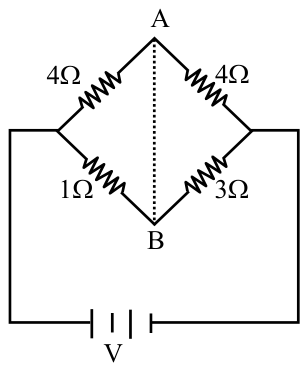
- 1Flow from A to B
- 2Flow in the direction which will be decided by the value of V
- 3Be zero
- 4Flow from B to A
Show answer and solution
Correct: option 4, Flow from B to A
Before the wire is joined, each branch divides the battery voltage in the ratio of its resistances. In the upper branch ( and ) point A is below the left junction. In the lower branch ( and ) point B is only below the left junction. With the left junction joined to the positive terminal of the battery, B is at the higher potential ( against ), so current flows in the wire from B to A, whatever the value of V.
Question 3AIPMT 2006 Prelims, Q3
A rectangular block of mass m and area of cross-section A floats in a liquid of density . If it is given a small vertical displacement from equilibrium it undergoes oscillation with a time period T. Then:-
- 1
- 2
- 3
- 4
Show answer and solution
Correct: option 2,
Pushing the block down by adds a buoyant restoring force , so the motion is simple harmonic with force constant . Hence , which gives , and . Only the last of these is among the options.
Question 4AIPMT 2006 Prelims, Q4
A Carnot engine whose sink is at 300 K has an efficiency of 40%. By how much should the temperature of source be increased so as to increase its efficiency by 50% of original efficiency:-
- 1275 K
- 2325 K
- 3250 K
- 4380 K
Show answer and solution
Correct: option 3, 250 K
From , gives . The new efficiency is , so gives . The source temperature must rise by .
Question 5AIPMT 2006 Prelims, Q5
When a charged particle moving with velocity is subjected to a magnetic field of induction , the force on it is non-zero. This implies the:-
- 1Angle between and is necessary
- 2Angle between and can have any value other than
- 3Angle between and can have any value other than zero and
- 4Angle between and is either zero or
Show answer and solution
Correct: option 3, Angle between and can have any value other than zero and
The magnetic force has magnitude . It vanishes only when , that is for or . A non-zero force therefore only tells us that the angle is something other than zero and ; it need not be .
Question 6AIPMT 2006 Prelims, Q6
Two cells, having the same e.m.f., are connected in series through an external resistance R. Cell have internal resistances and () respectively. When the circuit is closed, the potential difference across the first cell is zero. The value of R is:-
- 1
- 2
- 3
- 4
Show answer and solution
Correct: option 1,
The current is . The terminal voltage of the first cell is , so . Equating, , which gives .
Question 7AIPMT 2006 Prelims, Q7
A black body at emits radiations with maximum intensity at a wavelength of 5000 Å. The temperature of the body is increased by , the maximum intensity will be observe at:-
- 14000 Å
- 25000 Å
- 36000 Å
- 43000 Å
Show answer and solution
Correct: option 4, 3000 Å
Wien's displacement law says is constant. The temperatures are and . So Å.
Question 8AIPMT 2006 Prelims, Q8
Two circular coil 1 and 2 are made from the same wire but the radius of the 1st coil is twice that of the 2nd coil. What potential difference in volts should be applied across them so that the magnetic field at their centres is the same-
- 13
- 24
- 36
- 42
Show answer and solution
Correct: option 2, 4
The question is asking for the ratio of the two potential differences, . The field at the centre of a coil is , so equal fields need . The coils are of the same wire, so resistance is proportional to the length , giving . Then .
Question 9AIPMT 2006 Prelims, Q9
A transistor-oscillator using a resonant circuit with an inductor L (of negligible resistance) and a capacitor C in series produce oscillations of frequency f. If L is doubled and C is changed to 4C, the frequency will be:-
- 1
- 2
- 3
- 4
Show answer and solution
Correct: option 3,
The resonant frequency is . The product becomes , so the frequency falls by a factor , giving .
Question 10AIPMT 2006 Prelims, Q10
The binding energy of deuteron is 2.2 MeV and that of is 28 MeV. If two deuterons are fused to form one then the energy released is:-
- 125.8 MeV
- 223.6 MeV
- 319.2 MeV
- 430.2 MeV
Show answer and solution
Correct: option 2, 23.6 MeV
The energy released equals the gain in binding energy. Two deuterons have a total binding energy of and the helium nucleus has 28 MeV, so the energy released is .
Question 11AIPMT 2006 Prelims, Q11
In a radioactive material the activity at time is and at a later time , it is . If the decay constant of the material is , then
- 1
- 2
- 3
- 4
Show answer and solution
Correct: option 1,
Activity decays as , so and . Dividing, , that is . Since the exponent is positive, so as it should be.
Question 12AIPMT 2006 Prelims, Q12
Ionization potential of hydrogen atom is 13.6 eV. Hydrogen atoms in the ground state are excited by monochromatic radiation of photon energy 12.1 eV. According to Bohr's theory, the spectral lines emitted by hydrogen will be:-
- 1Two
- 2Three
- 3Four
- 4One
Show answer and solution
Correct: option 2, Three
The atom's energy after absorbing the photon is , which is the level (). From the possible transitions are , and , so spectral lines are emitted.
Question 13AIPMT 2006 Prelims, Q13
The potential energy of a long spring when stretched by 2 cm is U. If the spring is stretched by 8 cm the potential energy stored in it is:-
- 14U
- 28U
- 316U
- 4
Show answer and solution
Correct: option 3, 16U
The energy stored in a spring is , proportional to the square of the extension. The extension becomes 4 times as large, so the energy becomes times, that is .
Question 14AIPMT 2006 Prelims, Q14
For angles of projection of a projectile at angles and , the horizontal ranges described by the projectile are in the ratio of:
- 11 : 1
- 22 : 3
- 31 : 2
- 42 : 1
Show answer and solution
Correct: option 1, 1 : 1
The range is . For the two angles and , which are equal. The two angles are complementary, so for the same speed the ranges are equal and the ratio is 1 : 1.
Question 15AIPMT 2006 Prelims, Q15
A body of mass 3 kg is under a constant force which causes a displacement s in metres in it, given by the relation , where t is in seconds. Work done by the force in 2 seconds is:-
- 1
- 2
- 3
- 4
Show answer and solution
Correct: option 3,
Differentiating twice, the acceleration is , so the force is . In 2 s the displacement is . Work done .
Question 16AIPMT 2006 Prelims, Q16
A particle moves along a straight line OX. At a time t (in seconds) the distance x (in metres) of the particle from O is given by . How long would the particle travel before coming to rest:-
- 124 m
- 240 m
- 356 m
- 416 m
Show answer and solution
Correct: option 4, 16 m
The velocity is , which is zero at . At , ; at , . The particle moves one way throughout, so the distance travelled is .
Question 17AIPMT 2006 Prelims, Q17
The velocity v of a particle at time t is given by , where a, b and c are constants. The dimensions of a, b and c are respectively:-
- 1, and
- 2, and
- 3, and
- 4, and
Show answer and solution
Correct: option 1, , and
Each term must have the dimensions of velocity, . So . Since is added to , . Then .
Question 18AIPMT 2006 Prelims, Q18
A microscope is focused on a mark on a piece of paper and then a slab of glass of thickness 3 cm and refractive index 1.5 is placed over the mark. How should the microscope be moved to get the mark in focus again:-
- 11 cm upward
- 24.5 cm downward
- 31 cm downward
- 42 cm upward
Show answer and solution
Correct: option 1, 1 cm upward
Seen through the slab the mark appears raised by . The image is 1 cm nearer the microscope, so the microscope must be raised by 1 cm to keep the same working distance.
Question 19AIPMT 2006 Prelims, Q19
300 J of work is done in sliding a 2 kg block up an inclined plane of height 10 m. Taking , work done against friction is
- 1200 J
- 2100 J
- 3Zero
- 41000 J
Show answer and solution
Correct: option 2, 100 J
The work done against gravity is . The rest of the 300 J goes against friction: .
Question 20AIPMT 2006 Prelims, Q20
A transistor is operated in common emitter configuration at constant collector voltage such that a change in the base current from 100 µA to 150 µA produces a change in the collector current from 5 mA to 10 mA. The current gain () is:-
- 167
- 275
- 3100
- 450
Show answer and solution
Correct: option 3, 100
The a.c. current gain is .
Question 21AIPMT 2006 Prelims, Q21
A forward biased diode is:-
- 1

- 2

- 3

- 4

Show answer and solution
Correct: option 4
A diode is forward biased when its p-side (the base of the arrow in the symbol) is at a higher potential than its n-side. In every option the arrow points to the right, so the left end must be the higher one. That is true only for on the left and on the right; in the other three the left end is lower, so those diodes are reverse biased.
Question 22AIPMT 2006 Prelims, Q22
A photo-cell employs photoelectric effect to convert:-
- 1Change in the frequency of light into a change in electric voltage
- 2Change in the intensity of illumination into a change in photoelectric current
- 3Change in the intensity of illumination into a change in the work function of the photocathode
- 4Change in the frequency of light into a change in the electric current
Show answer and solution
Correct: option 2, Change in the intensity of illumination into a change in photoelectric current
In a photocell the number of electrons emitted per second, and so the photoelectric current, is proportional to the intensity of the light falling on the cathode. The cell therefore turns changes of illumination into changes of current. The work function is a fixed property of the cathode material, and the current does not follow the frequency.
Question 23AIPMT 2006 Prelims, Q23
The core of a transformer is laminated because:-
- 1Energy losses due to eddy currents may be minimised
- 2The weight of the transformer may be reduced
- 3Rusting of the core may be prevented
- 4Ratio of voltage in primary and secondary may be increased
Show answer and solution
Correct: option 1, Energy losses due to eddy currents may be minimised
The changing flux induces circulating (eddy) currents in the iron core, which waste energy as heat. Building the core from thin insulated sheets breaks up the paths of these currents and raises their resistance, so the eddy current loss becomes small. Lamination has nothing to do with weight, rusting or the voltage ratio.
Question 24AIPMT 2006 Prelims, Q24
Two coils of self inductances 2 mH and 8 mH are placed so close together that the effective flux in one coil is completely linked with the other. The mutual inductance between these coils is:
- 110 mH
- 26 mH
- 34 mH
- 416 mH
Show answer and solution
Correct: option 3, 4 mH
With complete flux linkage the coupling coefficient is 1, so .
Question 25AIPMT 2006 Prelims, Q25
In a discharge tube ionization of enclosed gas produced due to collisions between:
- 1Positive ions and neutral atoms/molecules
- 2Negative electrons and neutral atoms/molecules
- 3Photons and neutral atoms/molecules
- 4Neutral gas atoms/molecules
Show answer and solution
Correct: option 2, Negative electrons and neutral atoms/molecules
In a discharge tube the electric field accelerates the free electrons. Being light, they gain enough energy between collisions to knock electrons out of the neutral gas atoms or molecules they hit, and this is what ionises the gas. The heavy positive ions gain too little speed to do so.
Question 26AIPMT 2006 Prelims, Q26
When photons of energy fall on an aluminium plate (of work function ), photoelectrons of maximum kinetic energy K are ejected. If the frequency of the radiation is doubled, the maximum kinetic energy of the ejected photoelectrons will be
- 1
- 2
- 3
- 4
Show answer and solution
Correct: option 4,
Einstein's equation gives . With the frequency doubled, .
Question 27AIPMT 2006 Prelims, Q27
The following figure shows a logic gate circuit with two inputs A and B and the output C. The voltage waveforms of A, B and C are as shown below-
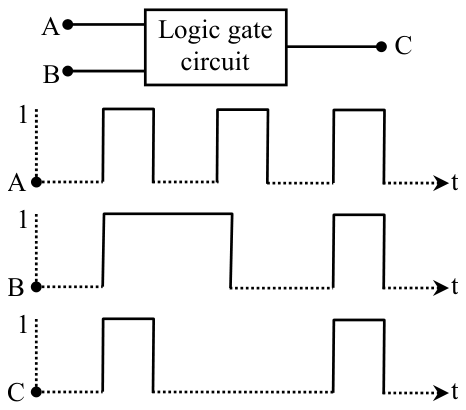
The logic circuit gate is:
- 1AND gate
- 2NAND gate
- 3NOR gate
- 4OR gate
Show answer and solution
Correct: option 1, AND gate
Compare the waveforms pulse by pulse. During the first and third pulses of A, B is also high and C is high. During the second pulse of A, B is low and C is low; when both inputs are low C is low. The output is high only when both inputs are high, which is the AND gate.
Question 28AIPMT 2006 Prelims, Q28
A coil of inductive reactance has a resistance of . It is placed in series with a condenser of capacity reactance . The combination is connected to an a.c. source of 110 volt. The power factor of the circuit is:-
- 10.56
- 20.64
- 30.80
- 40.33
Show answer and solution
Correct: option 3, 0.80
The net reactance is , so the impedance is . The power factor is .
Question 29AIPMT 2006 Prelims, Q29
A 0.5 kg ball moving with a speed of 12 m/s strikes a hard wall at an angle of with the wall. It is reflected with the same speed and at the same angle. If the ball is in contact with the wall for 0.25 seconds, the average force acting on the wall is:-
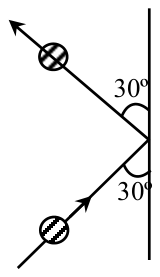
- 148 N
- 224 N
- 312 N
- 496 N
Show answer and solution
Correct: option 2, 24 N
Only the velocity component perpendicular to the wall is reversed. Since the angle is measured from the wall, that component is . The change of momentum is , so the average force is .
Question 30AIPMT 2006 Prelims, Q30
The moment of inertia of a uniform circular disc of radius 'R' and mass 'M' about an axis touching the disc at its diameter and normal to the disc is:-
- 1
- 2
- 3
- 4
Show answer and solution
Correct: option 3,
The axis is perpendicular to the disc and passes through a point on its rim (the end of a diameter). About the parallel axis through the centre , and the two axes are a distance apart. By the parallel axis theorem .
Question 31AIPMT 2006 Prelims, Q31
The momentum of a photon of energy 1 MeV in kg m/s, will be-
- 1
- 2
- 3
- 4
Show answer and solution
Correct: option 4,
For a photon . Here , so , which is closest to .
Question 32AIPMT 2006 Prelims, Q32
The radius of Germanium (Ge) nuclide is measured to be twice the radius of . The number of nucleons in Ge are:-
- 173
- 274
- 375
- 472
Show answer and solution
Correct: option 4, 72
Nuclear radius follows , so . Doubling the radius multiplies the mass number by , giving nucleons.
Question 33AIPMT 2006 Prelims, Q33
The molar specific heat at constant pressure of an ideal gas is . The ratio of specific heat at constant pressure to that at constant volume is:-
- 1
- 2
- 3
- 4
Show answer and solution
Correct: option 1,
For an ideal gas , so . The ratio is .
Question 34AIPMT 2006 Prelims, Q34
The Earth is assumed to be a sphere of radius R. A platform is arranged at a height R from the surface of the Earth. The escape velocity of a body from this platform is fv, where v is its escape velocity from the surface of the Earth. The value of f is:-
- 1
- 2
- 3
- 4
Show answer and solution
Correct: option 2,
Escape velocity from a distance from the Earth's centre is . At the surface ; on the platform . So the escape velocity from the platform is , and .
Question 35AIPMT 2006 Prelims, Q35
Two sound waves with wavelength 5.0 m and 5.5 m respectively, each propagate in a gas with velocity 330 m/s. We expect the following number of beats per second:-
- 112
- 20
- 31
- 46
Show answer and solution
Correct: option 4, 6
The frequencies are and . The beat frequency is their difference, beats per second.
Question 36AIPMT 2006 Prelims, Q36
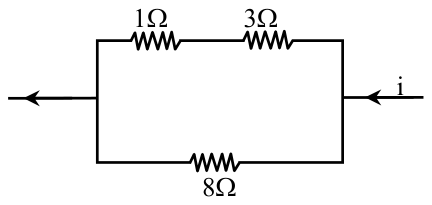
Power dissipated across the resistor in the circuit shown here is 2 watt. The power dissipated in watt units across the resistor is:-
- 12.0
- 21.0
- 30.5
- 43.0
Show answer and solution
Correct: option 4, 3.0
The resistor is in parallel with the series pair . From , the voltage across the resistor is . The same 4 V drives a current of through the upper branch, so the resistor dissipates .
Question 37AIPMT 2006 Prelims, Q37
Kirchhoff's first and second laws for electrical circuits are consequences of:-
- 1Conservation of energy
- 2Conservation of electric charge and energy respectively
- 3Conservation of electric charge
- 4Conservation of energy and electric charge respectively
Show answer and solution
Correct: option 2, Conservation of electric charge and energy respectively
The first (junction) law says the currents entering a junction equal those leaving it; charge cannot pile up or vanish there, which is conservation of charge. The second (loop) law says the potential changes round a closed loop add to zero; a charge taken round the loop returns with the same energy, which is conservation of energy.
Question 38AIPMT 2006 Prelims, Q38
A transverse wave propagating along x-axis is represented by
where x is in metres and t is in seconds. The speed of the wave is:-
- 1 m/s
- 2 m/s
- 3 m/s
- 48 m/s
Show answer and solution
Correct: option 4, 8 m/s
Comparing with gives and . The wave speed is .
Question 39AIPMT 2006 Prelims, Q39
The time of reverberation of a room A is one second. What will be the time (in seconds) of reverberation of a room, having all the dimensions double of those of room A-
- 12
- 24
- 3
- 41
Show answer and solution
Correct: option 1, 2
Sabine's formula gives the reverberation time as proportional to , the volume of the room divided by its absorbing surface area. Doubling every dimension makes the volume 8 times and the surface area 4 times, so the time doubles to 2 s.
Question 40AIPMT 2006 Prelims, Q40
Which one of the following statements is true:
- 1Both light and sound waves in air are transverse
- 2The sound waves in air are longitudinal while the light waves are transverse
- 3Both light and sound waves in air are longitudinal
- 4Both light and sound waves can travel in vacuum
Show answer and solution
Correct: option 2, The sound waves in air are longitudinal while the light waves are transverse
Sound in air travels as compressions and rarefactions, with the air moving back and forth along the direction of travel, so it is longitudinal. Light is an electromagnetic wave whose electric and magnetic fields oscillate at right angles to the direction of travel, so it is transverse. Sound needs a medium and cannot cross a vacuum.
Question 41AIPMT 2006 Prelims, Q41
Above Curie temperature:-
- 1A ferromagnetic substance becomes paramagnetic
- 2A paramagnetic substance becomes diamagnetic
- 3A diamagnetic substance becomes paramagnetic
- 4A paramagnetic substance becomes ferromagnetic
Show answer and solution
Correct: option 1, A ferromagnetic substance becomes paramagnetic
The Curie temperature is the temperature above which thermal agitation destroys the domain structure of a ferromagnetic material. The atomic magnets then point at random and respond only weakly to a field, so the material behaves as a paramagnet.
Question 42AIPMT 2006 Prelims, Q42
A convex lens and a concave lens, each having same focal length of 25 cm, are put in contact to form a combination of lenses. The power in diopters of the combination is:-
- 125
- 250
- 3Infinite
- 4Zero
Show answer and solution
Correct: option 4, Zero
Powers of thin lenses in contact add. The convex lens has and the concave lens , so the combination has power (its focal length is infinite).
Question 43AIPMT 2006 Prelims, Q43
An electric dipole of moment is lying along a uniform electric field . The work done in rotating the dipole by is:-
- 1
- 2
- 3
- 4
Show answer and solution
Correct: option 4,
The potential energy of a dipole is . It starts at with and ends at with . The work done is the change, .
Question 44AIPMT 2006 Prelims, Q44
A parallel plate air capacitor is charged to a potential difference of V volts. After disconnecting the charging battery the distance between the plates of the capacitor is increased using an insulating handle. As a result the potential difference between the plates:-
- 1Decreases
- 2Does not change
- 3Becomes zero
- 4Increases
Show answer and solution
Correct: option 4, Increases
With the battery removed the charge on the plates cannot change. Increasing the separation lowers the capacitance , so rises. Equivalently, the field between the plates stays the same and grows with .
Question 45AIPMT 2006 Prelims, Q45
A car runs at a constant speed on a circular track of radius 100 m, taking 62.8 seconds for every circular lap. The average velocity and average speed for each circular lap respectively is:
- 10, 0
- 20, 10 m/s
- 310 m/s, 10 m/s
- 410 m/s, 0
Show answer and solution
Correct: option 2, 0, 10 m/s
After one full lap the car is back where it started, so its displacement and hence its average velocity are zero. The distance covered is , so the average speed is .
Question 46AIPMT 2006 Prelims, Q46
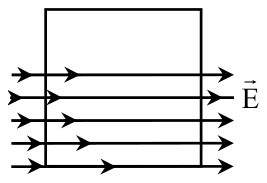
A square surface of side L metres is in the plane of the paper. A uniform electric field (volt/m), also in the plane of the paper, is limited only to the lower half of the square surface, (see figure). The electric flux in SI units associated with the surface is:-
- 1
- 2
- 3Zero
- 4
Show answer and solution
Correct: option 3, Zero
Flux is , where is the angle between the field and the normal to the surface. The field lies in the plane of the square, so it is perpendicular to the normal () and no field line passes through the surface. The flux is zero, however much of the square the field covers.
Question 47AIPMT 2006 Prelims, Q47
A tube of length L is filled completely with an incompressible liquid of mass M and closed at both the ends. The tube is then rotated in a horizontal plane about one of its ends with a uniform angular velocity . The force exerted by the liquid at the other ends is:-
- 1
- 2
- 3
- 4
Show answer and solution
Correct: option 1,
The far end of the tube must supply the centripetal force for the whole liquid column. The centre of mass of the liquid is at from the axis, so the force is . (Integrating from 0 to gives the same result.)
Question 48AIPMT 2006 Prelims, Q48
A uniform rod of length and mass m is free to rotate in a vertical plane about A. The rod initially in horizontal position is released. The initial angular acceleration of the rod is (Moment of inertia of rod about A is ):

- 1
- 2
- 3
- 4
Show answer and solution
Correct: option 1,
The weight acts at the centre of the rod, a distance from A, so the torque about A when the rod is horizontal is . Then .
Question 49AIPMT 2006 Prelims, Q49
The vectors and are such that . The angle between the two vectors is:-
- 1
- 2
- 3
- 4
Show answer and solution
Correct: option 1,
Squaring both sides, , so and . The vectors are perpendicular, .
Question 50AIPMT 2006 Prelims, Q50
Two bodies, A (of mass 1 kg) and B (of mass 3 kg), are dropped from heights of 16 m and 25 m respectively. The ratio of the time taken by them to reach the ground is:-
- 1
- 2
- 3
- 4
Show answer and solution
Correct: option 4,
For free fall from rest , so , which does not depend on mass. Therefore .
AIPMT 2006 Prelims Chemistry questions
Question 51AIPMT 2006 Prelims, Q51
Identify the correct statement for change of Gibbs energy for a system () at constant temperature and pressure:
- 1If , the process is spontaneous
- 2If , the system has attained equilibrium
- 3If , the system is still moving in a particular direction
- 4If , the process is not spontaneous
Show answer and solution
Correct: option 2, If , the system has attained equilibrium
At constant temperature and pressure a process is spontaneous when and non-spontaneous when . When there is no net driving force in either direction, so the system is at equilibrium. Only option (2) says this.
Question 52AIPMT 2006 Prelims, Q52
A solution containing 10 g per of urea (molecular mass = ) is isotonic with a 5% solution of a nonvolatile solute. The molecular mass of this nonvolatile solution is:
- 1
- 2
- 3
- 4
Show answer and solution
Correct: option 2,
Isotonic solutions at the same temperature have the same molar concentration. Urea: . A 5% solution holds 50 g of solute per , so , which gives .
Question 53AIPMT 2006 Prelims, Q53
A plot of versus for the adsorption of a gas on a solid gives a straight line with slope equal to:
- 1
- 2
- 3
- 4
Show answer and solution
Correct: option 3,
The Freundlich isotherm is . Taking logarithms, , a straight line whose slope is and whose intercept is .
Question 54AIPMT 2006 Prelims, Q54
Assume each reaction is carried out in an open container. For which reaction will ?
- 1
- 2
- 3
- 4
Show answer and solution
Correct: option 1,
, so the two are equal only when the number of moles of gas does not change. is for option (1), for (2), for (3) and for (4). Hence option (1).
Question 55AIPMT 2006 Prelims, Q55
In a set of reactions propionic acid yielded a compound D.
The structure of D would be:
- 1
- 2
- 3
- 4
Show answer and solution
Correct: option 4,
turns the acid into propanoyl chloride (B), and ammonia turns that into propanamide, (C). with KOH is the Hofmann bromamide degradation, which gives a primary amine with one carbon fewer than the amide. D is therefore ethylamine, .
Question 56AIPMT 2006 Prelims, Q56
During the process of digestion, the proteins present in food materials are hydrolysed to amino acids. The two enzymes involved in the process:
Proteins Polypeptides Amino acids,
are respectively:
- 1Amylase and Maltase
- 2Diastase and Lipase
- 3Pepsin and Trypsin
- 4Invertase and Zymase
Show answer and solution
Correct: option 3, Pepsin and Trypsin
Pepsin (in the stomach) and trypsin (from the pancreas) are the protein-digesting enzymes that break peptide bonds. Amylase, maltase, diastase, invertase and zymase act on carbohydrates, and lipase acts on fats, so only option (3) names two proteases.
Question 57AIPMT 2006 Prelims, Q57
The human body does not produce:
- 1DNA
- 2Vitamin
- 3Hormones
- 4Enzymes
Show answer and solution
Correct: option 2, Vitamin
DNA, hormones and enzymes are all made in the body's own cells. Most vitamins cannot be synthesised by the body and have to come from the diet, which is why they are essential dietary factors.
Question 58AIPMT 2006 Prelims, Q58
CsBr crystallizes in a body centred cubic lattice. The unit cell length is 436.6 pm. Given that the atomic mass of Cs = 133 and that of Br = 80 amu and Avogadro number being , the density of CsBr is:
- 1
- 2
- 3
- 4
Show answer and solution
Correct: option 4,
The CsBr cell has at the corners and at the body centre, so it holds one formula unit (, ). . Density .
Question 59AIPMT 2006 Prelims, Q59
More number of oxidation states are exhibited by the actinoids than by the lanthanoids. The main reason for this is:
- 1More energy difference between 5f and 6d orbitals than that between 4f and 5d orbitals
- 2Lesser energy difference between 5f and 6d orbitals than between 4f and 5d orbitals
- 3Greater metallic character of the lanthanoids than that of the corresponding actinoids
- 4More active nature of the actinoids
Show answer and solution
Correct: option 2, Lesser energy difference between 5f and 6d orbitals than between 4f and 5d orbitals
In the actinoids the 5f, 6d and 7s levels lie very close in energy, closer than 4f and 5d do in the lanthanoids. Electrons from all three sets can therefore take part in bonding, which gives the actinoids a wider range of oxidation states.
Question 60AIPMT 2006 Prelims, Q60
Given: The mass of electron is Planck constant is , the uncertainty involved in the measurement of velocity within a distance of is:
- 1
- 2
- 3
- 4
Show answer and solution
Correct: option 1,
Heisenberg's principle gives . With , .
Question 61AIPMT 2006 Prelims, Q61
Copper sulphate dissolved in excess of KCN to give:
- 1
- 2
- 3
- 4
Show answer and solution
Correct: option 2,
Cyanide first gives , which is unstable and breaks down to CuCN and cyanogen, so copper is reduced to the +1 state. CuCN then dissolves in excess KCN as the complex , that is the ion .
Question 62AIPMT 2006 Prelims, Q62
In which of the following pairs are both the ions coloured in aqueous solution:
[At. No.: Sc = 21, Ti = 22, Ni = 28, Cu = 29, Co = 27]
- 1
- 2
- 3
- 4
Show answer and solution
Correct: option 1,
An ion is coloured when it has a partly filled d subshell that allows d-d transitions. is , is and is , so these are coloured; () and () are colourless. Only the pair in option (1) has two coloured ions.
Question 63AIPMT 2006 Prelims, Q63
can be converted to anhydrous by heating:
- 1 with HCl gas
- 2 with NaCl in solid state
- 3A mixture of and carbon in dry gas
- 4 with gas
Show answer and solution
Correct: option 3, A mixture of and carbon in dry gas
Alumina is very stable and chlorine alone cannot remove its oxygen. When carbon is present it takes up the oxygen as CO, and dry chlorine then forms the chloride: . The dry conditions keep the product anhydrous.
Question 64AIPMT 2006 Prelims, Q64
The enthalpy and entropy change for the reaction:
are and respectively. The temperature at which the reaction will be in equilibrium is:
- 1285.7 K
- 2273 K
- 3450 K
- 4300 K
Show answer and solution
Correct: option 1, 285.7 K
At equilibrium , so .
Question 65AIPMT 2006 Prelims, Q65
The appearance of colour in solid alkali metal halides is generally due to:
- 1F-centres
- 2Schottky defect
- 3Frenkel defect
- 4Interstitial positions
Show answer and solution
Correct: option 1, F-centres
When an alkali halide is heated in the vapour of its metal, anion vacancies are created and each traps an electron. These trapped electrons, called F-centres, absorb visible light and give the crystal its colour (for example yellow NaCl, violet KCl).
Question 66AIPMT 2006 Prelims, Q66
The general molecular formula, which represents the homologous series of alkanols is:
- 1
- 2
- 3
- 4
Show answer and solution
Correct: option 4,
An alkanol is , a saturated alkyl group joined to OH. Counting all the hydrogens together gives , for example methanol and ethanol .
Question 67AIPMT 2006 Prelims, Q67
If and , the standard EMF of the reaction: will be:
- 10.330 V
- 21.653 V
- 31.212 V
- 40.111 V
Show answer and solution
Correct: option 3, 1.212 V
Fe is oxidised to (anode) and is reduced to (cathode). . Electrode potentials are not multiplied by the number of electrons.
Question 68AIPMT 2006 Prelims, Q68
For the reaction:
Which of the following does not express the reaction rate:
- 1
- 2
- 3
- 4
Show answer and solution
Correct: option 1,
Rate . C is a product, so its term must carry a plus sign. Option (1) has a minus sign and therefore does not express the rate.
Question 69AIPMT 2006 Prelims, Q69
For the reaction:
Which of the following statements is not true:
- 1At equilibrium, the concentrations of and are not equal
- 2The equilibrium constant for the reaction is given by
- 3Addition of or at equilibrium will cause a shift to the right
- 4The reaction is exothermic
Show answer and solution
Correct: option 2, The equilibrium constant for the reaction is given by
The correct expression is : oxygen has the coefficient 2, so its term must be squared (and liquid water is left out). The expression in option (2) is therefore wrong. The other statements hold: is negative, adding a reactant shifts the equilibrium forward, and a gas and a pure liquid do not have equal concentrations.
Question 70AIPMT 2006 Prelims, Q70
is a:
- 1copolymer
- 2Addition polymer
- 3Thermosetting polymer
- 4Homopolymer
Show answer and solution
Correct: option 1, copolymer
The repeating unit contains two different parts joined by amide links: one from a diamine (the NH...NH part) and one from adipic acid (the CO...CO part). A polymer built from two different monomers is a copolymer. It is formed by condensation, not addition, and a linear polyamide of this kind (nylon) is a thermoplastic fibre, not a thermosetting polymer.
Question 71AIPMT 2006 Prelims, Q71
A carbonyl compound reacts with hydrogen cyanide to form cyanohydrin which on hydrolysis forms a racemic mixture of -hydroxy acid. The carbonyl compound is:
- 1Acetaldehyde
- 2Acetone
- 3diethyl ketone
- 4Formaldehyde
Show answer and solution
Correct: option 1, Acetaldehyde
A racemic mixture needs a chiral carbon in the product. Acetaldehyde gives and then lactic acid, , whose carbon carries four different groups; attack of cyanide on either face of the planar carbonyl gives both mirror forms equally. Formaldehyde, acetone and diethyl ketone give hydroxy acids with two identical groups on that carbon, so they are not chiral.
Question 72AIPMT 2006 Prelims, Q72
Which one of the following is a peptide hormone:
- 1Glucagon
- 2Testosterone
- 3Thyroxin
- 4Adrenaline
Show answer and solution
Correct: option 1, Glucagon
Glucagon is a chain of 29 amino acids made by the pancreas, so it is a peptide hormone. Testosterone is a steroid, while thyroxin and adrenaline are small molecules derived from the amino acid tyrosine.
Question 73AIPMT 2006 Prelims, Q73
The major organic product in the reaction,
Product is:
- 1
- 2
- 3
- 4
Show answer and solution
Correct: option 4,
HI protonates the ether oxygen and iodide then attacks by the path at the less hindered carbon. That carbon is the methyl group, so the products are methyl iodide and propan-2-ol: .
Question 74AIPMT 2006 Prelims, Q74
Nucleophilic addition reaction will be most favoured in:
- 1
- 2
- 3
- 4
Show answer and solution
Correct: option 4,
Nucleophilic addition is easier when the carbonyl carbon is more positive and less crowded. Alkyl groups donate electrons and add bulk, so aldehydes react faster than ketones, and a smaller alkyl group is better than a larger one. Acetaldehyde, with only one methyl group, is the most reactive of the four.
Question 75AIPMT 2006 Prelims, Q75
The enthalpy of hydrogenation of cyclohexene is . If resonance energy of benzene is , its enthalpy of hydrogenation would be:
- 1
- 2
- 3
- 4
Show answer and solution
Correct: option 2,
Three isolated double bonds would release . Benzene is already more stable than that imaginary triene by , so it releases that much less: .
Question 76AIPMT 2006 Prelims, Q76
Self condensation of two moles of ethyl acetate in presence of sodium ethoxide yields:
- 1Ethyl butyrate
- 2Acetoacetic ester
- 3Methyl acetoacetate
- 4Ethyl propionate
Show answer and solution
Correct: option 2, Acetoacetic ester
This is the Claisen condensation. Ethoxide removes an -hydrogen from one ester molecule and the carbanion attacks the carbonyl of the second, losing ethanol: . The product, ethyl acetoacetate, is known as acetoacetic ester.
Question 77AIPMT 2006 Prelims, Q77
Consider the reaction
The equality relationship between and is:
- 1
- 2
- 3
- 4
Show answer and solution
Correct: option 2,
Rate . Multiplying by 2 gives : two moles of ammonia form for every three moles of hydrogen used.
Question 78AIPMT 2006 Prelims, Q78
Which of the following is not chiral:
- 12-Butanol
- 22,3-Dibromopentane
- 33-Bromopentane
- 42-Hydroxypropanoic acid
Show answer and solution
Correct: option 3, 3-Bromopentane
In 3-bromopentane, , the carbon bearing bromine carries two identical ethyl groups, so there is no chiral centre. 2-Butanol and 2-hydroxypropanoic acid each have one carbon with four different groups, and 2,3-dibromopentane has two such carbons with unlike ends, so all three are chiral.
Question 79AIPMT 2006 Prelims, Q79
exhibits:
- 1Linkage isomerism, ionization isomerism and optical isomerism
- 2Linkage isomerism, ionization isomerism and geometrical isomerism
- 3Ionization isomerism, geometrical isomerism and optical isomerism
- 4Linkage isomerism, geometrical isomerism and optical isomerism
Show answer and solution
Correct: option 2, Linkage isomerism, ionization isomerism and geometrical isomerism
can bind through N or through O, which gives linkage isomers. Chloride outside the sphere can change places with a nitrite inside it, which gives ionization isomers. The octahedral arrangement has cis and trans forms, which are geometrical isomers. Both of those forms have a plane of symmetry, so there is no optical isomerism.
Question 80AIPMT 2006 Prelims, Q80
(at. No. of Cr = 24) has a magnetic moment of 3.83 B.M. The correct distribution of 3d electrons in the Chromium of the complex is:
- 1
- 2
- 3
- 4
Show answer and solution
Correct: option 3,
A moment of 3.83 B.M. matches with unpaired electrons, as expected for (). In an octahedral field the three lower orbitals are , and (the set), and the three electrons occupy them singly. The and orbitals are the higher set and stay empty.
Question 81AIPMT 2006 Prelims, Q81
1.00 g of a non-electrolyte solute (molar mass ) was dissolved in 51.2 g of benzene. If the freezing point depression constant of benzene is , the freezing point of benzene will be lowered by:
- 10.4 K
- 20.3 K
- 30.5 K
- 40.2 K
Show answer and solution
Correct: option 1, 0.4 K
Molality . .
Question 82AIPMT 2006 Prelims, Q82
Which of the following pairs constitutes a buffer:
- 1 &
- 2 &
- 3 &
- 4 &
Show answer and solution
Correct: option 1, &
An acidic buffer is a weak acid with a salt of that acid and a strong base. is a weak acid and is its sodium salt, so this pair is a buffer. The other pairs contain a strong acid or a strong base, which cannot resist a change in pH.
Question 83AIPMT 2006 Prelims, Q83
The hydrogen ion concentration of a HCl aqueous solution at 298 K () is:
- 1
- 2
- 3
- 4
Show answer and solution
Correct: option 2,
The acid is so dilute that water's own ionisation cannot be ignored. If water supplies of and , then , which gives . Total , slightly more than in pure water, which matches option (2).
Question 84AIPMT 2006 Prelims, Q84
A solution of acetone in ethanol:
- 1Shows a negative deviation from Raoult's law
- 2Shows a positive deviation from Raoult's law
- 3Behaves like a near ideal solution
- 4Obeys Raoult's law
Show answer and solution
Correct: option 2, Shows a positive deviation from Raoult's law
Ethanol molecules are held together by hydrogen bonds. Acetone molecules get between them and break some of these bonds, so the attractions in the mixture are weaker than in the pure liquids. Molecules escape more easily, the vapour pressure is higher than Raoult's law predicts, and the deviation is positive.
Question 85AIPMT 2006 Prelims, Q85
A hypothetical electrochemical cell is shown below:
The emf measured is +0.20 V. The cell reaction is:
- 1
- 2
- 3The cell reaction cannot be predicted
- 4
Show answer and solution
Correct: option 4,
The left electrode is the negative one, the anode, where oxidation takes place: . The right electrode is the cathode: . The positive emf confirms the cell runs in this direction, so the overall reaction is .
Question 86AIPMT 2006 Prelims, Q86
Ethylene oxide when treated with Grignard reagent yields:
- 1Secondary alcohol
- 2Tertiary alcohol
- 3Cyclopropyl alcohol
- 4Primary alcohol
Show answer and solution
Correct: option 4, Primary alcohol
The alkyl group of RMgX attacks a ring carbon and opens the epoxide to give , which on hydrolysis gives . The OH is on a group, so the product is a primary alcohol with two more carbons than R.
Question 87AIPMT 2006 Prelims, Q87
During osmosis, flow of water through a semipermeable membrane is:
- 1From solution having higher concentration only
- 2From both sides of semipermeable membrane with equal flow rates
- 3From both sides of semipermeable membrane with unequal flow rates
- 4From solution having lower concentration only
Show answer and solution
Correct: option 3, From both sides of semipermeable membrane with unequal flow rates
Solvent molecules cross the membrane in both directions all the time. More of them pass from the dilute side to the concentrated side than the other way, and this difference in the two rates is the net flow seen as osmosis.
Question 88AIPMT 2006 Prelims, Q88
Which of the following is more basic than aniline:
- 1Diphenylamine
- 2Triphenylamine
- 3p-Nitroaniline
- 4Benzylamine
Show answer and solution
Correct: option 4, Benzylamine
In aniline the lone pair on nitrogen is spread into the ring, which lowers its basicity. Extra phenyl groups or a nitro group pull the pair away even more. In benzylamine, , the nitrogen is attached to a group and not to the ring, so the lone pair stays on nitrogen and the compound is a stronger base, like an alkyl amine.
Question 89AIPMT 2006 Prelims, Q89
In which of the following molecules all the bonds are not equal:
- 1
- 2
- 3
- 4
Show answer and solution
Correct: option 1,
has five electron pairs around chlorine () with two lone pairs in the equatorial plane, giving a T shape. The two axial Cl-F bonds are longer than the one equatorial bond. In , and the three fluorines are equivalent, so the bonds are equal.
Question 90AIPMT 2006 Prelims, Q90
The electronegativity difference between N and F is greater than that between N and H yet the dipole moment of (1.5 D) is larger than that of (0.2 D). This is because:
- 1In as well as in the atomic dipole and bond dipole are in the same direction
- 2In the atomic dipole and bond dipole are in the same direction whereas in these are in opposite directions
- 3In as well as the atomic dipole and bond dipole are in opposite directions
- 4In the atomic dipole and bond dipole are in the opposite directions whereas in these are in the same direction
Show answer and solution
Correct: option 2, In the atomic dipole and bond dipole are in the same direction whereas in these are in opposite directions
The lone pair on nitrogen has its own dipole (the atomic or orbital dipole) pointing away from the nucleus. In the N-H bond dipoles point towards nitrogen, the same way as the lone pair dipole, so they add. In the N-F bond dipoles point towards fluorine, against the lone pair dipole, so they largely cancel.
Question 91AIPMT 2006 Prelims, Q91
The correct order of the mobility of the alkali metal ions in aqueous solution is:
- 1
- 2
- 3
- 4
Show answer and solution
Correct: option 4,
The smaller the bare ion, the higher its charge density and the more water molecules it carries. is therefore the largest hydrated ion and moves slowest, while is the least hydrated and moves fastest. Mobility rises down the group: .
Question 92AIPMT 2006 Prelims, Q92
The correct order regarding the electronegativity of hybrid orbitals of carbon is:
- 1
- 2
- 3
- 4
Show answer and solution
Correct: option 2,
Electrons in an s orbital are held closer to the nucleus than those in a p orbital, so a hybrid orbital with more s character is more electronegative. The s character is 50% in , 33% in and 25% in , which gives .
Question 93AIPMT 2006 Prelims, Q93
Which of the following species has a linear shape:
- 1
- 2
- 3
- 4
Show answer and solution
Correct: option 3,
has 16 valence electrons like : nitrogen forms two double bonds and has no lone pair, so it is hybridised and linear. In , and the central atom carries a lone pair, which makes them bent.
Question 94AIPMT 2006 Prelims, Q94
Which of the following is the most basic oxide:
- 1
- 2
- 3
- 4
Show answer and solution
Correct: option 3,
Oxides become more basic as the element becomes more metallic. is the oxide of a non-metal and is acidic; and are amphoteric. Bismuth is the most metallic element of group 15, and is a purely basic oxide.
Question 95AIPMT 2006 Prelims, Q95
The orientation of an atomic orbital is governed by:
- 1Azimuthal quantum number
- 2Spin quantum number
- 3Magnetic quantum number
- 4Principal quantum number
Show answer and solution
Correct: option 3, Magnetic quantum number
The magnetic quantum number fixes how an orbital points in space (for example , , ). The principal quantum number gives the size and energy, the azimuthal quantum number gives the shape, and the spin quantum number describes the electron's spin.
Question 96AIPMT 2006 Prelims, Q96
Which of the following is not a correct statement:
- 1The electron-deficient molecules can act as Lewis acids
- 2The canonical structures have no real existence
- 3Every molecule does infact have square pyramid structure
- 4Multiple bonds are always shorter than corresponding single bonds
Show answer and solution
Correct: option 3, Every molecule does infact have square pyramid structure
molecules with no lone pair on the central atom, such as , are trigonal bipyramidal; only those with one lone pair, such as , are square pyramidal. So the word \"every\" makes statement (3) wrong. The other three statements are true.
Question 97AIPMT 2006 Prelims, Q97
The number of unpaired electrons in a paramagnetic diatomic molecule of an element with atomic number 16 is:
- 12
- 23
- 34
- 41
Show answer and solution
Correct: option 1, 2
The element is sulphur, and has the same valence molecular orbital pattern as . Its last two electrons enter the two degenerate antibonding orbitals singly (Hund's rule), so the molecule has 2 unpaired electrons.
Question 98AIPMT 2006 Prelims, Q98
Which one of the following orders is not in accordance with the property stated against it?
- 1; Oxidising power
- 2; Acidic property in water
- 3; Electronegativity
- 4; Bond dissociation energy
Show answer and solution
Correct: option 4, ; Bond dissociation energy
The bond in is unusually weak because the lone pairs on the two small fluorine atoms repel each other strongly. The real order of bond dissociation energy is , so option (4) is the wrong order. Oxidising power and electronegativity do fall from fluorine to iodine, and acid strength in water does rise from HF to HI.
Question 99AIPMT 2006 Prelims, Q99
Which of the following is not isostructural with :
- 1
- 2
- 3
- 4
Show answer and solution
Correct: option 1,
is tetrahedral: four bond pairs and no lone pair on silicon. , and are tetrahedral too. In sulphur has four bond pairs and one lone pair (), which gives a see-saw shape.
Question 100AIPMT 2006 Prelims, Q100
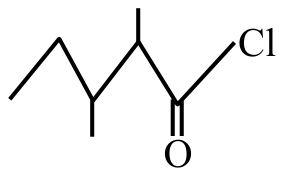
- 13,4-dimethylpentanoyl chloride
- 21-chloro-1-oxo-2,3-dimethylpentane
- 32-ethyl-3-methylbutanoyl chloride
- 42,3-dimethylpentanoyl chloride
Show answer and solution
Correct: option 4, 2,3-dimethylpentanoyl chloride
The compound is an acid chloride, so the name ends in "oyl chloride" and the carbonyl carbon is C-1. The longest chain that includes it has five carbons (pentanoyl), and the two branches are methyl groups on C-2 and C-3. The name is 2,3-dimethylpentanoyl chloride.
AIPMT 2006 Prelims Biology questions
Question 101AIPMT 2006 Prelims, Q101
What would be the number of chromosomes in the cells of the aleurone layer in a plant species with 8 chromosomes in its synergids?
- 116
- 224
- 332
- 48
Show answer and solution
Correct: option 2, 24
Synergids are haploid cells of the embryo sac, so n = 8. The aleurone layer is the outer layer of the endosperm, which is triploid (3n) because it forms from the fusion of two polar nuclei with one male gamete. So its cells have 3 × 8 = 24 chromosomes.
Question 102AIPMT 2006 Prelims, Q102
Pineapple (ananas) fruit develops from-
- 1a unilocular polycarpellary flower
- 2a multipistillate syncarpous flower
- 3a cluster of compactly borne flowers on a common axis
- 4a multilocular monocarpellary flower
Show answer and solution
Correct: option 3, a cluster of compactly borne flowers on a common axis
Pineapple is a composite (multiple) fruit of the sorosis type. It forms from a whole spike inflorescence: the many closely packed flowers, their bracts and the common axis fuse and become fleshy together.
Question 103AIPMT 2006 Prelims, Q103
Golden rice is a promising transgenic crop. When released for cultivation, it will help in
- 1Alleviation of vitamin A deficiency
- 2Pest resistance
- 3Herbicide tolerance
- 4Producing a petrol-like fuel from rice
Show answer and solution
Correct: option 1, Alleviation of vitamin A deficiency
Golden rice carries added genes for making beta-carotene (provitamin A) in the grain, which gives it the yellow colour. The body converts beta-carotene to vitamin A, so the crop is meant to reduce vitamin A deficiency.
Question 104AIPMT 2006 Prelims, Q104
Parthenocarpic tomato fruits can be produced by-
- 1Removing androecium of flowers before pollen grains are released
- 2Treating the plants with low concentrations of gibberellic acid and auxins
- 3Raising the plants from vernalized seeds
- 4Treating the plants with phenylmercuric acetate
Show answer and solution
Correct: option 2, Treating the plants with low concentrations of gibberellic acid and auxins
Parthenocarpy is fruit formation without fertilisation, giving seedless fruits. Auxins and gibberellins applied in low concentration make the ovary grow into a fruit without fertilisation. Emasculation alone gives no fruit, vernalisation affects flowering, and phenylmercuric acetate is an antitranspirant.
Question 105AIPMT 2006 Prelims, Q105
How does pruning help in making the hedge dense?
- 1It induces the differentiation of new shoots from the rootstock
- 2It frees axillary buds from apical dominance
- 3The apical shoot grows faster after pruning
- 4It released wound hormones
Show answer and solution
Correct: option 2, It frees axillary buds from apical dominance
The shoot tip makes auxin that keeps the axillary (lateral) buds below it from growing, which is apical dominance. Pruning removes the tips, so the axillary buds grow out into branches and the hedge becomes bushy and dense.
Question 106AIPMT 2006 Prelims, Q106
The 'blue baby' syndrome results from-
- 1Excess of chloride
- 2Methemoglobin
- 3Excess of dissolved oxygen
- 4Excess of TDS (total dissolved solids)
Show answer and solution
Correct: option 2, Methemoglobin
Drinking water with excess nitrate leads to nitrite in the body, which changes haemoglobin into methemoglobin. Methemoglobin cannot carry oxygen, so the infant's skin turns bluish (methemoglobinemia, the blue baby syndrome).
Question 107AIPMT 2006 Prelims, Q107
Praying mantis is a good example of-
- 1Mullerian mimicry
- 2Warning colouration
- 3Social insects
- 4Camouflage
Show answer and solution
Correct: option 4, Camouflage
The green or brown body of a praying mantis blends with the leaves and twigs it sits on, hiding it from both its prey and its predators. This concealing resemblance to the surroundings is camouflage. It is neither a warningly coloured nor a social insect.
Question 108AIPMT 2006 Prelims, Q108
Which one of the following statements is correct?
- 1Neurons regulate endocrine activity, but not vice versa
- 2Endocrine glands regulate neural activity, and nervous system regulates endocrine glands
- 3Neither hormones control neural activity nor the neurons control endocrine activity
- 4Endocrine glands regulate neural activity, but not vice versa
Show answer and solution
Correct: option 2, Endocrine glands regulate neural activity, and nervous system regulates endocrine glands
Control runs both ways. The hypothalamus, a part of the brain, controls the pituitary and through it other endocrine glands, while hormones such as thyroxine and adrenaline affect the development and working of the nervous system.
Question 109AIPMT 2006 Prelims, Q109
Examination of blood of a person suspected of having anemia, shows large, immature, nucleated erythrocytes without haemoglobin. Supplementing his diet with which of the following is likely to alleviate his symptoms?
- 1Thiamine
- 2Folic acid and cobalamine
- 3Riboflavin
- 4Iron compounds
Show answer and solution
Correct: option 2, Folic acid and cobalamine
Large, immature, nucleated red cells are the sign of megaloblastic anaemia, in which red cells fail to mature. Maturation needs folic acid and vitamin B12 (cobalamine) for DNA synthesis, so these two are given. Iron deficiency instead gives small, pale cells.
Question 110AIPMT 2006 Prelims, Q110
Farmers in a particular region were concerned that pre-mature yellowing of leaves of a pulse crop might cause decrease in the yield. Which treatment could be most beneficial to obtain maximum seed yield?
- 1Frequent irrigation of the crop
- 2Treatment of the plants with cytokinins alongwith a small dose of nitrogenous fertilizer
- 3Removal of all yellow leaves and spraying the remaining green leaves with 2,4,5-trichlorophenoxy acetic acid
- 4Application of iron and magnesium to promote synthesis of chlorophyll
Show answer and solution
Correct: option 4, Application of iron and magnesium to promote synthesis of chlorophyll
Yellowing of leaves is chlorosis, a loss of chlorophyll. Magnesium is part of the chlorophyll molecule and iron is needed for its synthesis, so supplying these two restores the green colour and photosynthesis. A pulse crop fixes its own nitrogen, so nitrogenous fertilizer is not the need, and 2,4,5-T is a herbicide.
Question 111AIPMT 2006 Prelims, Q111
In which of the following fruits is the edible part the aril?
- 1Custard apple
- 2Pomegranate
- 3Orange
- 4Litchi
Show answer and solution
Correct: option 4, Litchi
In litchi the edible part is the fleshy white aril, an outgrowth that covers the seed. In custard apple it is the fleshy pericarp of the fruitlets, in pomegranate the juicy seed coat (testa), and in orange the juicy hairs of the endocarp.
Question 112AIPMT 2006 Prelims, Q112
Which one of the following amino-acids was not found to be synthesized in Miller's experiment?
- 1Glycine
- 2Aspartic acid
- 3Glutamic acid
- 4Alanine
Show answer and solution
Correct: option 3, Glutamic acid
Miller passed electric sparks through a mixture of methane, ammonia, hydrogen and water vapour and reported amino acids such as glycine, alanine and aspartic acid. Glutamic acid is the one in this list that was not among the amino acids he reported.
Question 113AIPMT 2006 Prelims, Q113
Crop plants grown in monoculture are-
- 1Low in yield
- 2Free from intraspecific competition
- 3Characterised by poor root system
- 4Highly prone to pests
Show answer and solution
Correct: option 4, Highly prone to pests
A monoculture is a large area of one crop, usually of one genetically uniform variety. A pest or pathogen that can attack one plant can attack all of them and has unlimited food, so it spreads quickly. Plants of the same species still compete with each other.
Question 114AIPMT 2006 Prelims, Q114
Montreal Protocol which calls for appropriate action to protect the ozone layer from human activities was passed in the year-
- 11986
- 21987
- 31988
- 41985
Show answer and solution
Correct: option 2, 1987
The Montreal Protocol, the international treaty to control the release of ozone-depleting substances, was signed at Montreal in 1987 and came into force in 1989.
Question 115AIPMT 2006 Prelims, Q115
The formula for exponential population growth is-
- 1dt/dN = rN
- 2dN/rN = dt
- 3rN/dN = dt
- 4dN/dt = rN
Show answer and solution
Correct: option 4, dN/dt = rN
With unlimited resources, the rate of change of population size (dN/dt) is proportional to the population size N, with r the intrinsic rate of natural increase: dN/dt = rN. This gives a J-shaped growth curve.
Question 116AIPMT 2006 Prelims, Q116
Which one of the following is not used for construction of ecological pyramids?
- 1Dry weight
- 2Number of individuals
- 3Rate of energy flow
- 4Fresh weight
Show answer and solution
Correct: option 4, Fresh weight
Ecological pyramids are of number (individuals), biomass (dry weight) and energy (rate of energy flow). Fresh weight is not used because the water content of organisms varies widely and would distort the comparison.
Question 117AIPMT 2006 Prelims, Q117
- 1Active cooperation between two species
- 2Two different parasites on the same host
- 3Sharing of one or more resources between the two species
- 4Mutualism between two species
Show answer and solution
Correct: option 3, Sharing of one or more resources between the two species
A niche is the set of resources and conditions a species uses. When the niches of two species overlap, they use one or more of the same resources, such as food or space, which can lead to competition between them.
Question 118AIPMT 2006 Prelims, Q118
In photosystem-I, the first electron acceptor is-
- 1Ferredoxin
- 2Cytochrome
- 3Plastocyanin
- 4An iron sulphur protein
Show answer and solution
Correct: option 4, An iron sulphur protein
The excited electron from the P700 reaction centre of photosystem I is first taken up by a bound iron-sulphur protein (FeS). It is then passed to ferredoxin and finally used to reduce NADP+. Plastocyanin and cytochromes are carriers that bring electrons to P700.
Question 119AIPMT 2006 Prelims, Q119
Treatment of seed at low temperature under moist conditions to break its dormancy is called-
- 1Scarification
- 2Vernalization
- 3Chelation
- 4Stratification
Show answer and solution
Correct: option 4, Stratification
Stratification is keeping seeds moist at low temperature for some weeks to break dormancy. Scarification is weakening a hard seed coat, and vernalization is a cold treatment that promotes flowering, not germination.
Question 120AIPMT 2006 Prelims, Q120
Which one of the following is the most suitable medium for culture of Drosophila melanogaster?
- 1Moist bread
- 2Agar-agar
- 3Ripe banana
- 4cow dung
Show answer and solution
Correct: option 3, Ripe banana
Drosophila melanogaster is the fruit fly. It feeds and breeds on the yeast growing on ripe, fermenting fruit, so it is easily raised in the laboratory on ripe banana.
Question 121AIPMT 2006 Prelims, Q121
Which one of the following is not included under in-situ conservation?
- 1Sanctuary
- 2Botanical garden
- 3Biosphere reserve
- 4National park
Show answer and solution
Correct: option 2, Botanical garden
In-situ conservation protects organisms in their natural habitat, as in sanctuaries, national parks and biosphere reserves. A botanical garden keeps plants outside their natural habitat, so it is ex-situ conservation.
Question 122AIPMT 2006 Prelims, Q122
Which antibiotic inhibits interaction between tRNA and mRNA during bacterial protein synthesis?
- 1Erythromycin
- 2Neomycin
- 3Streptomycin
- 4Tetracycline
Show answer and solution
Correct: option 2, Neomycin
Neomycin, an aminoglycoside, acts on the bacterial ribosome and is described as blocking the interaction between tRNA and mRNA. Tetracycline stops aminoacyl-tRNA from binding to the ribosome, streptomycin blocks initiation and causes misreading, and erythromycin blocks translocation.
Question 123AIPMT 2006 Prelims, Q123
Phenotype of an organism is the result of-
- 1Mutations and linkages
- 2Cytoplasmic effects and nutrition
- 3Environmental changes and sexual dimorphism
- 4Genotype and environment interactions
Show answer and solution
Correct: option 4, Genotype and environment interactions
The phenotype is the observable form of a character. It is produced by the genes an organism carries (its genotype) as they are expressed in a particular environment, so it is the result of genotype and environment acting together.
Question 124AIPMT 2006 Prelims, Q124
Photochemical smog pollution does not contain-
- 1Ozone
- 2Nitrogen dioxide
- 3Carbon dioxide
- 4PAN (peroxy acyl nitrate)
Show answer and solution
Correct: option 3, Carbon dioxide
Photochemical smog forms when sunlight acts on nitrogen oxides and hydrocarbons from vehicle exhaust. Its components are nitrogen dioxide, ozone and PAN. Carbon dioxide is not one of its constituents.
Question 125AIPMT 2006 Prelims, Q125
Moss peat is used as a packing material for sending flowers and live plants to distant places because-
- 1It is easily available
- 2It is hygroscopic
- 3It reduces transpiration
- 4It serves as a disinfectant
Show answer and solution
Correct: option 2, It is hygroscopic
Peat moss (Sphagnum) can absorb and hold many times its weight of water, that is, it is hygroscopic. Packed around live plants it keeps them moist during transport.
Question 126AIPMT 2006 Prelims, Q126
A common structural feature of vessel elements and sieve tube elements is-
- 1Thick secondary walls
- 2Pores on lateral wall
- 3Presence of p-protein
- 4Enucleate condition
Show answer and solution
Correct: option 4, Enucleate condition
Both lack a nucleus at maturity: a vessel element is a dead cell with no protoplast, and a sieve tube element is living but loses its nucleus. Thick lignified secondary walls belong only to vessels, and P-protein only to sieve tubes.
Question 127AIPMT 2006 Prelims, Q127
The thalloid body of a slime mould (Myxomycetes) is known as-
- 1Protonema
- 2Plasmodium
- 3Fruiting body
- 4Mycelium
Show answer and solution
Correct: option 2, Plasmodium
The vegetative body of a slime mould is a plasmodium, a naked, multinucleate mass of protoplasm that creeps over decaying matter. Protonema belongs to mosses and mycelium to fungi; the fruiting body is the spore-bearing stage.
Question 128AIPMT 2006 Prelims, Q128
In which mode of inheritance do you expect more maternal influence among the offspring?
- 1Autosomal
- 2Cytoplasmic
- 3Y-linked
- 4X-linked
Show answer and solution
Correct: option 2, Cytoplasmic
Genes of mitochondria and chloroplasts lie in the cytoplasm. The zygote gets almost all its cytoplasm from the egg and hardly any from the sperm, so cytoplasmic characters are passed on by the mother alone.
Question 129AIPMT 2006 Prelims, Q129
What type of placentation is seen in sweet pea?
- 1Basal
- 2Axile
- 3Free central
- 4Marginal
Show answer and solution
Correct: option 4, Marginal
Sweet pea belongs to the pea family, whose ovary is made of one carpel with one chamber. The ovules are borne in a row along the ventral suture, which is marginal placentation.
Question 130AIPMT 2006 Prelims, Q130
Long filamentous threads protruding at the end of a young cob of maize are-
- 1Anthers
- 2Styles
- 3Ovaries
- 4Hairs
Show answer and solution
Correct: option 2, Styles
The cob is the female inflorescence of maize. The silky threads hanging out of its tip are the very long styles (with stigmas) of the female flowers, which catch wind-borne pollen.
Question 131AIPMT 2006 Prelims, Q131
Conifers differ from grasses in the-
- 1Production of seeds from ovules
- 2Lack of xylem tracheids
- 3Absence of pollen tubes
- 4Formation of endosperm before fertilization
Show answer and solution
Correct: option 4, Formation of endosperm before fertilization
Conifers are gymnosperms: their endosperm is the haploid female gametophyte, formed before fertilisation. In grasses (angiosperms) the endosperm is triploid and forms after double fertilisation. Both groups have ovules, tracheids and pollen tubes.
Question 132AIPMT 2006 Prelims, Q132
How many different kinds of gametes will be produced by a plant having the genotype AABbCC?
- 1Three
- 2Four
- 3Nine
- 4Two
Show answer and solution
Correct: option 4, Two
The number of kinds of gametes is , where n is the number of heterozygous gene pairs. Only Bb is heterozygous, so n = 1 and there are two kinds: ABC and AbC.
Question 133AIPMT 2006 Prelims, Q133
In Maize, hybrid vigour is exploited by-
- 1Bombarding the protoplast with DNA
- 2Crossing of two inbred parental lines
- 3Harvesting seeds from the most productive plants
- 4Inducing mutations
Show answer and solution
Correct: option 2, Crossing of two inbred parental lines
Hybrid vigour (heterosis) is the superiority of a hybrid over both its parents. In maize, pure inbred lines are first made by repeated selfing, and two different inbred lines are then crossed to give vigorous, high-yielding hybrid seed.
Question 134AIPMT 2006 Prelims, Q134
Which of the following statements regarding mitochondrial membrane is not correct?
- 1The outer membrane is permeable to all kinds of molecules
- 2The enzymes of the electron transfer chain are embedded in the outer membrane
- 3The inner membrane is highly convoluted forming a series of infoldings
- 4The outer membrane resembles a sieve
Show answer and solution
Correct: option 2, The enzymes of the electron transfer chain are embedded in the outer membrane
The enzymes of the electron transport chain are embedded in the inner mitochondrial membrane, not the outer one, so statement (2) is wrong. The inner membrane is folded into cristae, and the outer membrane has porins that make it freely permeable, like a sieve.
Question 135AIPMT 2006 Prelims, Q135
Amino acid sequence, in protein synthesis is decided by the sequence of-
- 1tRNA
- 2mRNA
- 3cDNA
- 4rRNA
Show answer and solution
Correct: option 2, mRNA
During translation the codons of mRNA are read one after another, and each codon specifies one amino acid. So the order of bases in mRNA fixes the order of amino acids. tRNA only brings the amino acids and rRNA forms the ribosome.
Question 136AIPMT 2006 Prelims, Q136
How many ATP molecules could maximally be generated from one molecule of glucose, if the complete oxidation of one mole of glucose to and yields 686 kcal and the useful chemical energy available in the high energy phosphate bond of one mole of ATP is 12 kcal?
- 1Two
- 2Thirty
- 3Fifty-seven
- 4One
Show answer and solution
Correct: option 3, Fifty-seven
If all the energy were captured, the number of ATP would be the total energy divided by the energy per ATP: . So at most fifty-seven ATP molecules could be formed per molecule of glucose.
Question 137AIPMT 2006 Prelims, Q137
An organic substance bound to an enzyme and essential for its activity is called-
- 1Coenzyme
- 2Holoenzyme
- 3Apoenzyme
- 4isoenzyme
Show answer and solution
Correct: option 1, Coenzyme
A coenzyme is a non-protein organic compound that binds to an enzyme and is needed for its activity. The apoenzyme is the protein part alone, the holoenzyme is the complete enzyme (protein plus cofactor), and isoenzymes are different forms of the same enzyme.
Question 138AIPMT 2006 Prelims, Q138
Bowman's glands are found in-
- 1Olfactory epithelium
- 2External auditory canal
- 3Cortical nephrons only
- 4Juxtamedullary nephrons
Show answer and solution
Correct: option 1, Olfactory epithelium
Bowman's glands (olfactory glands) lie in the olfactory epithelium of the nose and secrete the mucus in which odour molecules dissolve. They are not the same as Bowman's capsule of the nephron.
Question 139AIPMT 2006 Prelims, Q139
The bacterium (Clostridium botulinum) that causes botulism is-
- 1A facultative anaerobe
- 2An obligate anaerobe
- 3A facultative aerobe
- 4An obligate aerobe
Show answer and solution
Correct: option 2, An obligate anaerobe
Clostridium botulinum can grow only where oxygen is absent, as in badly canned food, so it is an obligate anaerobe. There it produces the toxin that causes botulism.
Question 140AIPMT 2006 Prelims, Q140
Which one of the following is the correctly matched pair of an endangered animal and a National Park?
- 1Lion – Corbett National Park
- 2Rhinoceros – Kaziranga National Park
- 3Wild Ass – Dudhwa National Park
- 4Great Indian Bustard – Keoladeo National Park
Show answer and solution
Correct: option 2, Rhinoceros – Kaziranga National Park
Kaziranga National Park in Assam is known for the one-horned rhinoceros. The lion is protected in Gir (Corbett is known for tigers), the wild ass in the Rann of Kutch, and the Great Indian Bustard in the Desert National Park (Keoladeo is a wetland bird park).
Question 141AIPMT 2006 Prelims, Q141
A person showing unpredictable moods, outbursts of emotion, quarrelsome behaviour and conflicts with others is suffering from-
- 1Schizophrenia
- 2Borderline Personality Disorder (BPD)
- 3Mood disorders
- 4Addictive disorders
Show answer and solution
Correct: option 2, Borderline Personality Disorder (BPD)
Unstable moods, emotional outbursts, quarrelsome behaviour and unstable relations with others are the features of borderline personality disorder. Schizophrenia shows disordered thinking with delusions and hallucinations, and mood disorders show lasting depression or mania.
Question 142AIPMT 2006 Prelims, Q142
Sulphur is an important nutrient for optimum growth and productivity in-
- 1Pulse crops
- 2Cereals
- 3Fibre crops
- 4Oilseed crops
Show answer and solution
Correct: option 4, Oilseed crops
Oilseed crops such as mustard and groundnut have a high sulphur requirement, as sulphur is needed for oil formation and for sulphur-containing amino acids and compounds. Their yield and oil content fall when sulphur is short.
Question 143AIPMT 2006 Prelims, Q143
Pentamerous, actinomorphic flowers, bicarpellary ovary with oblique septa, and fruit a capsule or berry, are characteristic features of-
- 1Asteraceae
- 2Brassicaceae
- 3Solanaceae
- 4Liliaceae
Show answer and solution
Correct: option 3, Solanaceae
Solanaceae has regular, five-part flowers and a superior ovary of two fused carpels that are placed obliquely, with a swollen placenta; the fruit is a berry (tomato, brinjal) or a capsule (Datura). Liliaceae is trimerous and Brassicaceae is tetramerous with a siliqua.
Question 144AIPMT 2006 Prelims, Q144
In a moss the sporophyte-
- 1is partially parasitic on the gametophyte
- 2produces gametes that give rise to the gametophyte
- 3Arises from a spore produced from the gametophyte
- 4Manufactures food for itself, as well as for the gametophyte
Show answer and solution
Correct: option 1, is partially parasitic on the gametophyte
The moss sporophyte (foot, seta and capsule) stays attached to the gametophyte and draws water and minerals from it, but the green capsule makes some of its own food. So it is only partly dependent, or partially parasitic. It arises from the zygote and produces spores, not gametes.
Question 145AIPMT 2006 Prelims, Q145
Curing of tea leaves is brought about by the activity of-
- 1Bacteria
- 2Mycorrhiza
- 3Viruses
- 4Fungi
Show answer and solution
Correct: option 1, Bacteria
Curing is the fermentation step that gives tea leaves their flavour and colour. It is brought about by bacteria, such as Micrococcus candidans.
Question 146AIPMT 2006 Prelims, Q146
People living at sea level have around 5 million RBC per cubic millimeter of their blood whereas those living at an altitude of 5400 metres have around 8 million. This is because at high altitude-
- 1People get pollution-free air to breathe and more oxygen is available
- 2Atmospheric level is less and hence more RBCs are needed to absorb the required amount of to survive
- 3There is more UV radiation which enhances RBC production
- 4People eat more nutritive food, therefore more RBCs are formed
Show answer and solution
Correct: option 2, Atmospheric level is less and hence more RBCs are needed to absorb the required amount of to survive
At high altitude the partial pressure of oxygen in the air is low, so each red cell picks up less oxygen. The body responds by releasing more erythropoietin, which raises red cell production, so that the blood can still carry enough oxygen.
Question 147AIPMT 2006 Prelims, Q147
An important evidence in favour of organic evolution is the occurrence of-
- 1Homologous and vestigial organs
- 2Analogous and vestigial organs
- 3Homologous organs only
- 4Homologous and analogous organs
Show answer and solution
Correct: option 1, Homologous and vestigial organs
Homologous organs have the same basic structure and origin but different functions, which points to a common ancestor. Vestigial organs are reduced, functionless remains of organs that worked in ancestors. Both show descent with change. Analogous organs show only similar adaptation in unrelated groups.
Question 148AIPMT 2006 Prelims, Q148
Which one of the following is not a living fossil-
- 1King crab
- 2Sphenodon
- 3Archaeopteryx
- 4Peripatus
Show answer and solution
Correct: option 3, Archaeopteryx
A living fossil is a species still alive today that has changed little from its ancient relatives, such as the king crab (Limulus), Sphenodon and Peripatus. Archaeopteryx is an extinct Jurassic form linking reptiles and birds, known only from fossils.
Question 149AIPMT 2006 Prelims, Q150
A major breakthrough in the studies of cells came with the development of electron microscope. This is because-
- 1The resolution power of the electron microscope is much higher than that of the light microscope
- 2The resolving power of the electron microscope is 200-350 nm as compared to 0.1-0.2 nm for the light microscope
- 3Electron beam can pass through thick materials, whereas light microscopy requires thin sections
- 4The electron microscope is more powerful than the light microscope as it uses a beam of electrons which has wavelength much longer than that of photons
Show answer and solution
Correct: option 1, The resolution power of the electron microscope is much higher than that of the light microscope
An electron beam has a far shorter wavelength than visible light, so the electron microscope can separate points much closer together, down to a fraction of a nanometre against about 200 nm for the light microscope. Option (2) has the figures the wrong way round, and electron microscopy needs very thin sections.
Question 150AIPMT 2006 Prelims, Q151
Which one of the following is a matching set of phylum and its three examples?
- 1Cnidaria - Bonellia, Physalia, Aurelia
- 2Platyhelminthes - Planaria, Schistosoma, Enterobius
- 3Mollusca - Loligo, Teredo, Octopus
- 4Porifera - Spongilla, Euplectella, Pennatula
Show answer and solution
Correct: option 3, Mollusca - Loligo, Teredo, Octopus
Loligo (squid), Teredo (shipworm) and Octopus are all molluscs, so option (3) is a correct set. In the others one member does not belong: Bonellia is an echiuroid worm, Enterobius is a roundworm (Aschelminthes), and Pennatula (sea pen) is a cnidarian.
Question 151AIPMT 2006 Prelims, Q152
Metameric segmentation is the characteristic of
- 1Platyhelminthes and Arthropoda
- 2Echinodermata and Annelida
- 3Annelida and Arthropoda
- 4Mollusca and Chordata
Show answer and solution
Correct: option 3, Annelida and Arthropoda
In true metameric segmentation the body is divided, outside and inside, into a series of repeated segments. This is seen in Annelida and Arthropoda (and in chordates). Platyhelminthes, Echinodermata and Mollusca are not metamerically segmented, so only option (3) has two correct phyla.
Question 152AIPMT 2006 Prelims, Q153
Which of the following pairs of an animal and a plant represents endangered organisms in India
- 1Bentinckia nicobarica and Red Panda
- 2Tamarind and Rhesus monkey
- 3Cinchona and Leopard
- 4Banyan and Black buck
Show answer and solution
Correct: option 1, Bentinckia nicobarica and Red Panda
Bentinckia nicobarica is a palm found only in the Nicobar Islands and is endangered, and the Red Panda of the eastern Himalayas is an endangered animal. Tamarind, Cinchona, Banyan and the Rhesus monkey are common, so the other pairs do not fit.
Question 153AIPMT 2006 Prelims, Q154
Jurassic period of the Mesozoic era characterized by
- 1Gymnosperms are dominant plants and first birds appear
- 2Radiation of reptiles and origin of mammal like reptiles
- 3Dinosaurs become extinct and angiosperms appear
- 4Flowering plants and first dinosaurs appear
Show answer and solution
Correct: option 1, Gymnosperms are dominant plants and first birds appear
In the Jurassic the land vegetation was dominated by gymnosperms (cycads and conifers), dinosaurs ruled, and the first birds such as Archaeopteryx appeared. Mammal-like reptiles arose earlier (Permian to Triassic), and the extinction of dinosaurs with the rise of flowering plants belongs to the Cretaceous.
Question 154AIPMT 2006 Prelims, Q155
What is common about Trypanosoma, Noctiluca, Monocystis and Giardia
- 1These are all unicellular protists
- 2They have flagella
- 3They produce spores
- 4These are all parasites
Show answer and solution
Correct: option 1, These are all unicellular protists
All four are single-celled eukaryotes placed in Kingdom Protista. They do not all share the other features: Monocystis has no flagella, Noctiluca is a free-living marine dinoflagellate and not a parasite, and only Monocystis forms spores.
Question 155AIPMT 2006 Prelims, Q156
Which of the following statements regarding cilia is not correct
- 1The organized beating of cilia is controlled by fluxes of across the membrane
- 2Cilia are hair-like cellular appendages
- 3Microtubules of cilia are composed of tubulin
- 4Cilia contain an outer ring of nine doublet microtubules surrounding two single microtubules
Show answer and solution
Correct: option 1, The organized beating of cilia is controlled by fluxes of across the membrane
Cilia are hair-like outgrowths with a 9 + 2 axoneme: nine peripheral doublet microtubules around two central single ones, all built of tubulin. So statements (2), (3) and (4) are standard facts. The coordinated beat comes from dynein arms sliding the doublets using ATP, not from calcium fluxes across the membrane, so statement (1) is the one taken as not correct.
Question 156AIPMT 2006 Prelims, Q157
Two microbes found to be very useful in genetic engineering are
- 1Escherichia coli and Agrobacterium tumefaciens
- 2Vibrio cholerae and a tailed bacteriophage
- 3Diplococcus sp. and Pseudomonas sp.
- 4Crown gall bacterium and Caenorhabditis elegans
Show answer and solution
Correct: option 1, Escherichia coli and Agrobacterium tumefaciens
Escherichia coli is the standard host for cloning genes and supplies plasmids and restriction enzymes, and Agrobacterium tumefaciens carries the Ti plasmid used to transfer genes into plants. Caenorhabditis elegans is a nematode worm, not a microbe, and the other pairs are not the main tools of genetic engineering.
Question 157AIPMT 2006 Prelims, Q158
Which of the following environmental conditions are essential for optimum growth of Mucor on a piece of bread?
A. Temperature of about
B. Temperature of about
C. Relative humidity of about 5%
D. Relative humidity of about 95%
E. A shady place
F. A brightly illuminated place
Choose the answer from the following options
- 1A, C and E only
- 2A, D and E only
- 3B, D and E only
- 4B, C and F only
Show answer and solution
Correct: option 2, A, D and E only
Mucor, the bread mould, is a saprophytic fungus that grows best in warm, moist and dark conditions. That means a temperature near (A), high relative humidity of about 95% (D) and a shady place (E). Cold, dry air and bright light all slow its growth.
Question 158AIPMT 2006 Prelims, Q159
Evolutionary history of an organism is known as
- 1Phylogeny
- 2Ancestry
- 3Paleontology
- 4Ontogeny
Show answer and solution
Correct: option 1, Phylogeny
Phylogeny is the evolutionary history of a species or group. Ontogeny is the developmental history of an individual from zygote to adult, and paleontology is the study of fossils.
Question 159AIPMT 2006 Prelims, Q160
Which of the following is considered a hot-spot of biodiversity in India?
- 1Western Ghats
- 2Indo-Gangetic Plain
- 3Eastern Ghats
- 4Aravalli Hills
Show answer and solution
Correct: option 1, Western Ghats
A biodiversity hot-spot is a region with very high species richness and endemism that is under threat. Of the places listed, only the Western Ghats (with Sri Lanka) is a recognised hot-spot; the others are not.
Question 160AIPMT 2006 Prelims, Q161
During photorespiration the oxygen consuming reaction (s) occur in
- 1Stroma of chloroplasts and mitochondria
- 2Stroma of chloroplasts and peroxisomes
- 3Grana of chloroplasts and peroxisomes
- 4Stroma of chloroplasts
Show answer and solution
Correct: option 2, Stroma of chloroplasts and peroxisomes
Photorespiration uses oxygen at two steps. In the chloroplast stroma RuBisCO acts as an oxygenase and adds to RuBP, giving phosphoglycolate. In the peroxisome glycolate is oxidised to glyoxylate by glycolate oxidase, again using . In the mitochondrion is released, but oxygen is not consumed there.
Question 161AIPMT 2006 Prelims, Q162
Which one of the following is an example of polygenic inheritance?
- 1Flower colour in Mirabilis jalapa
- 2Production of male honey bee
- 3Pod shape in garden pea
- 4Skin colour in humans
Show answer and solution
Correct: option 4, Skin colour in humans
A polygenic trait is controlled by several genes whose effects add up, giving a continuous range of phenotypes. Human skin colour is the classic case. Flower colour in Mirabilis jalapa shows incomplete dominance of one gene, pod shape in pea is a single-gene Mendelian trait, and male honey bees arise by haploid parthenogenesis.
Question 162AIPMT 2006 Prelims, Q163
Which one of the following does not act as a neurotransmitter?
- 1Acetylcholine
- 2Epinephrine
- 3Norepinephrine
- 4Cortisone
Show answer and solution
Correct: option 4, Cortisone
Acetylcholine, epinephrine and norepinephrine are all released at synapses and carry the signal to the next cell. Cortisone is a steroid hormone of the adrenal cortex and is not a neurotransmitter.
Question 163AIPMT 2006 Prelims, Q164
Sertoli cells are regulated by the pituitary hormone known as
- 1FSH
- 2GH
- 3Prolactin
- 4LH
Show answer and solution
Correct: option 1, FSH
FSH from the anterior pituitary acts on the Sertoli cells of the seminiferous tubules and makes them release factors that support spermiogenesis. LH acts on the Leydig cells instead, stimulating androgen secretion.
Question 164AIPMT 2006 Prelims, Q165
A steroid hormone which regulates glucose metabolism is
- 1Cortisol
- 2Corticosterone
- 311-deoxycorticosterone
- 4Cortisone
Show answer and solution
Correct: option 1, Cortisol
Cortisol is the main glucocorticoid of the human adrenal cortex. It raises blood glucose by promoting gluconeogenesis and reducing glucose uptake by cells. The other steroids listed have only minor glucocorticoid action in humans or act mainly as mineralocorticoids.
Question 165AIPMT 2006 Prelims, Q166
The contractile protein of skeletal muscle involving ATPase activity is
- 1Tropomyosin
- 2Myosin
- 3-Actin
- 4Troponin
Show answer and solution
Correct: option 2, Myosin
The globular head of the myosin molecule is an ATPase: it binds and splits ATP and uses the energy to pull the actin filament. Actin has no ATPase role in contraction, and tropomyosin and troponin are regulatory proteins.
Question 166AIPMT 2006 Prelims, Q167
Which one of the following is not a second messenger in hormone action?
- 1cGMP
- 2Calcium
- 3Sodium
- 4cAMP
Show answer and solution
Correct: option 3, Sodium
Hormones that bind membrane receptors act through second messengers produced or released inside the cell, such as cAMP, cGMP, and . Sodium ions do not serve as a second messenger.
Question 167AIPMT 2006 Prelims, Q168
In Mendel's experiments with garden pea, round seed shape (RR) was dominant over wrinkled seeds (rr), yellow cotyledon (YY) was dominant over green cotyledon (yy). What are the expected phenotypes in the generation of the cross RRYY rryy?
- 1Only round seeds with green cotyledons
- 2Only wrinkled seeds with yellow cotyledons
- 3Only wrinkled seeds with green cotyledons
- 4Round seeds with yellow cotyledons, and wrinkled seeds with yellow cotyledons
Show answer and solution
Correct: option 4, Round seeds with yellow cotyledons, and wrinkled seeds with yellow cotyledons
The is RrYy, and selfing it gives the 9 : 3 : 3 : 1 ratio of round yellow, round green, wrinkled yellow and wrinkled green. The therefore has several phenotypes, so the three options beginning with "Only" are wrong. Option (4) names two phenotypes that do appear in the and is the only acceptable choice, although it does not list all four.
Question 168AIPMT 2006 Prelims, Q169
One gene-one enzyme hypothesis was postulated by
- 1R. Franklin
- 2Hershey and Chase
- 3A. Garrod
- 4Beadle and Tatum
Show answer and solution
Correct: option 4, Beadle and Tatum
Beadle and Tatum, working with nutritional mutants of the mould Neurospora, showed that each mutation blocked one enzyme-controlled step and proposed the one gene-one enzyme hypothesis. Franklin produced X-ray pictures of DNA, Hershey and Chase showed that DNA is the genetic material, and Garrod described inborn errors of metabolism.
Question 169AIPMT 2006 Prelims, Q170
One turn of the helix in a B-form DNA is approximately
- 120 nm
- 20.34 nm
- 33.4 nm
- 42 nm
Show answer and solution
Correct: option 3, 3.4 nm
In B-DNA one complete turn holds about 10 base pairs, each 0.34 nm apart, so the pitch is nm. The value 0.34 nm is the distance between neighbouring base pairs and 2 nm is the diameter of the helix.
Question 170AIPMT 2006 Prelims, Q171
- 1Crossing between two genotypes with recessive trait
- 2Crossing between two hybrids
- 3Crossing the hybrid with a double recessive genotype
- 4Crossing between two genotypes with dominant trait
Show answer and solution
Correct: option 3, Crossing the hybrid with a double recessive genotype
In a test cross an individual showing the dominant phenotype, such as an hybrid, is crossed with the homozygous recessive. Because the recessive parent contributes only recessive alleles, the offspring ratio reveals the genotype of the individual being tested.
Question 171AIPMT 2006 Prelims, Q172
Antiparallel strands of a DNA molecule means that
- 1One strand turns anti-clockwise
- 2The phosphate groups of two DNA strands, at their ends, share the same position
- 3The phosphate groups at the start of two DNA strands are in opposite position (pole)
- 4One strand turns clockwise
Show answer and solution
Correct: option 3, The phosphate groups at the start of two DNA strands are in opposite position (pole)
The two strands of DNA run in opposite directions: one is and the other . So the 5' phosphate ends of the two strands lie at opposite ends of the molecule, which is what option (3) says. Both strands coil in the same sense, so the clockwise and anti-clockwise options are wrong.
Question 172AIPMT 2006 Prelims, Q173
Areolar connective tissue joins
- 1Fat body with muscles
- 2Integument with muscles
- 3Bones with muscles
- 4Bones with bones
Show answer and solution
Correct: option 2, Integument with muscles
Areolar tissue is loose connective tissue lying under the skin, where it attaches the integument to the muscles beneath and supports epithelia. Bones are joined to muscles by tendons and to other bones by ligaments, which are dense connective tissues.
Question 173AIPMT 2006 Prelims, Q174
- 1Hippurin
- 2Myoglobin
- 3Histamine
- 4Haemoglobin
Show answer and solution
Correct: option 3, Histamine
Mast cells of connective tissue contain granules of histamine (along with heparin and serotonin). Histamine released from them widens blood vessels and is responsible for inflammatory and allergic reactions. Myoglobin and haemoglobin are oxygen-binding proteins of muscle and red blood cells.
Question 174AIPMT 2006 Prelims, Q175
If a colourblind woman marries a normal visioned man, their sons will be
- 1All normal visioned
- 2One-half colourblind and one-half normal
- 3Three-fourths colourblind and one-fourth normal
- 4All colourblind
Show answer and solution
Correct: option 4, All colourblind
Colour blindness is an X-linked recessive trait. A colourblind woman is , and every son gets his single X from his mother and a Y from his father. All sons are therefore and colourblind, while all daughters are carriers.
Question 175AIPMT 2006 Prelims, Q176
Cri-du-chat syndrome in humans is caused by the
- 1Fertilization of an XX egg by a normal Y-bearing sperm
- 2Loss of half of the short arm of chromosome 5
- 3Loss of half of the long arm of chromosome 5
- 4Trisomy of 21st chromosome
Show answer and solution
Correct: option 2, Loss of half of the short arm of chromosome 5
Cri-du-chat (cat-cry) syndrome results from a deletion in the short (p) arm of chromosome 5. An XX egg fertilised by a Y sperm gives Klinefelter's syndrome (XXY), and trisomy 21 gives Down's syndrome.
Question 176AIPMT 2006 Prelims, Q177
- 1Cuts the DNA molecule randomly
- 2Cuts the DNA molecule at specific sites
- 3Restricts the synthesis of DNA inside the nucleus
- 4Synthesizes DNA
Show answer and solution
Correct: option 2, Cuts the DNA molecule at specific sites
A restriction endonuclease recognises a particular short, usually palindromic, base sequence and cuts both DNA strands at that site. This specificity is what makes these enzymes useful as molecular scissors. They neither cut at random nor make DNA.
Question 177AIPMT 2006 Prelims, Q178
Antibodies in our body are complex
- 1Lipoproteins
- 2Steroids
- 3Prostaglandins
- 4Glycoproteins
Show answer and solution
Correct: option 4, Glycoproteins
Antibodies (immunoglobulins) are proteins made of two heavy and two light polypeptide chains with carbohydrate chains attached, so they are glycoproteins. They are produced by B-lymphocytes.
Question 178AIPMT 2006 Prelims, Q179
Limit of BOD prescribed by Central Pollution Control Board for the discharge of industrial and municipal waste waters into natural surface waters, is
- 1< 3.0 ppm
- 2< 10 ppm
- 3< 100 ppm
- 4< 30 ppm
Show answer and solution
Correct: option 4, < 30 ppm
The Central Pollution Control Board's general standard for effluent discharged into inland surface waters is a BOD of not more than 30 mg per litre, that is, below 30 ppm. The limit of 100 ppm applies to discharge on land for irrigation.
Question 179AIPMT 2006 Prelims, Q180
- 1Ureotelic when plenty of water is available
- 2Uricotelic when plenty of water is available
- 3Uricotelic under conditions of water scarcity
- 4Ammonotelic when plenty of water is available.
Show answer and solution
Correct: option 4, Ammonotelic when plenty of water is available.
Ammonia is very toxic and needs a lot of water to be flushed out. When water is plentiful the earthworm excretes mainly ammonia (ammonotelic); in drier conditions it switches to urea (ureotelic). It does not excrete uric acid as its main waste.
Question 180AIPMT 2006 Prelims, Q181
Which of the following is an accumulation and release centre of neurohormones?
- 1Posterior pituitary lobe
- 2Intermediate lobe of the pituitary
- 3Hypothalamus
- 4Anterior pituitary lobe
Show answer and solution
Correct: option 1, Posterior pituitary lobe
Oxytocin and vasopressin are neurohormones made by neurosecretory cells of the hypothalamus. They travel down the axons and are stored in, and released from, the posterior lobe of the pituitary (neurohypophysis), which makes no hormones of its own. The hypothalamus is where they are synthesised, not where they accumulate.
Question 181AIPMT 2006 Prelims, Q182
Withdrawal of which of the following hormones is the immediate cause of menstruation?
- 1Estrogen
- 2FSH
- 3FSH-RH
- 4Progesterone
Show answer and solution
Correct: option 4, Progesterone
Progesterone from the corpus luteum maintains the thickened endometrium. If fertilisation does not occur the corpus luteum degenerates, the progesterone level falls, and the endometrium breaks down and is shed as the menstrual flow.
Question 182AIPMT 2006 Prelims, Q183
Which one of the following statements is incorrect?
- 1The residual air in lungs slightly decreases the efficiency of respiration in mammals
- 2The presence of non-respiratory air sacs, increases the efficiency of respiration in birds
- 3In insects, circulating body fluids serve to distribute oxygen to tissues
- 4The principle of countercurrent flow facilitates efficient respiration in gills of fishes
Show answer and solution
Correct: option 2, The presence of non-respiratory air sacs, increases the efficiency of respiration in birds
The answer key used for this paper gives option (2). On working through the statements, however, the one that is factually wrong is (3): in insects oxygen reaches the tissues directly through the tracheal tubes and tracheoles, and the haemolymph plays almost no part in carrying it. Air sacs do improve respiration in birds by keeping fresh air flowing one way through the lungs, residual air does dilute incoming air in mammals, and countercurrent flow does make fish gills efficient. The key for this paper is unofficial and may be in error on this question.
Question 183AIPMT 2006 Prelims, Q184
Which one of the following has an open circulatory system?
- 1Pheretima
- 2Periplaneta
- 3Hirudinaria
- 4Octopus
Show answer and solution
Correct: option 2, Periplaneta
In an open circulatory system the blood leaves the vessels and bathes the organs in body spaces (a haemocoel). This is found in arthropods such as the cockroach Periplaneta. The earthworm Pheretima and the cephalopod Octopus have closed systems, and the leech Hirudinaria has a system of haemocoelomic channels.
Question 184AIPMT 2006 Prelims, Q185
Which hormone causes dilation of blood vessels, increased oxygen consumption and glucogenesis?
- 1ACTH
- 2Insulin
- 3Adrenalin
- 4Glucagon
Show answer and solution
Correct: option 3, Adrenalin
Adrenalin, the emergency hormone of the adrenal medulla, dilates the blood vessels supplying skeletal muscles and the heart, raises the metabolic rate and oxygen consumption, and raises blood glucose by breaking down glycogen. Insulin lowers blood glucose, glucagon does not affect blood vessels, and ACTH acts on the adrenal cortex.
Question 185AIPMT 2006 Prelims, Q186
The causative agent of mad-cow disease is a
- 1Bacterium
- 2Prion
- 3Worm
- 4Virus
Show answer and solution
Correct: option 2, Prion
Mad-cow disease (bovine spongiform encephalopathy) is caused by a prion, an abnormally folded infectious protein that contains no nucleic acid and damages brain tissue.
Question 186AIPMT 2006 Prelims, Q187
The translocation of organic solutes in sieve tube members is supported by
- 1Root pressure and transpiration pull
- 2P-proteins
- 3Mass flow involving a carrier and ATP
- 4Cytoplasmic streaming
Show answer and solution
Correct: option 3, Mass flow involving a carrier and ATP
Sugars move through the phloem by mass (pressure) flow from source to sink. Loading sucrose into the sieve tubes at the source is an active process that needs carrier proteins and ATP; water then enters by osmosis and the pressure drives the sap along. Root pressure and transpiration pull move water in the xylem, not food in the phloem.
Question 187AIPMT 2006 Prelims, Q188
Biradial symmetry and lack of cnidoblasts are the characteristics of
- 1Starfish and sea anemone
- 2Ctenoplana and Beroe
- 3Aurelia and Paramecium
- 4Hydra and starfish
Show answer and solution
Correct: option 2, Ctenoplana and Beroe
Ctenoplana and Beroe are ctenophores (comb jellies). Ctenophores are biradially symmetrical and have no stinging cells (cnidoblasts), which separates them from cnidarians such as Hydra, Aurelia and the sea anemone.
Question 188AIPMT 2006 Prelims, Q189
The arrangement of the nuclei in a normal embryo sac in the dicot plants is
- 12 + 4 + 2
- 23 + 2 + 3
- 32 + 3 + 3
- 43 + 3 + 2
Show answer and solution
Correct: option 2, 3 + 2 + 3
The usual (Polygonum type) embryo sac has 8 nuclei in 7 cells: three at the micropylar end forming the egg apparatus (one egg and two synergids), two polar nuclei in the central cell, and three antipodals at the chalazal end. That is 3 + 2 + 3.
Question 189AIPMT 2006 Prelims, Q190
An enzyme that can stimulate germination of barley seeds is
- 1-amylase
- 2Lipase
- 3Protease
- 4Invertase
Show answer and solution
Correct: option 1, -amylase
In a germinating barley grain, gibberellin from the embryo makes the aleurone layer produce -amylase. This enzyme breaks the starch stored in the endosperm into sugars that feed the growing embryo, so it is the enzyme linked with germination of barley.
Question 190AIPMT 2006 Prelims, Q191
In a cereal grain the single cotyledon of embryo is represented by
- 1Coleorhiza
- 2Scutellum
- 3Prophyll
- 4Coleoptile
Show answer and solution
Correct: option 2, Scutellum
In grasses and cereals the single cotyledon is a shield-shaped structure called the scutellum, lying to one side of the embryonal axis. The coleoptile is the sheath covering the plumule and the coleorhiza is the sheath covering the radicle.
Question 191AIPMT 2006 Prelims, Q192
The majority of carbon dioxide produced by our body cells is transported to the lungs
- 1Dissolved in the blood
- 2As bicarbonates
- 3As carbonates
- 4Attached to hemoglobin
Show answer and solution
Correct: option 2, As bicarbonates
About 70 per cent of the carbon dioxide is carried as bicarbonate ions, formed in red blood cells by carbonic anhydrase. Around 20 to 25 per cent travels bound to haemoglobin as carbaminohaemoglobin and only about 7 per cent is dissolved in plasma.
Question 192AIPMT 2006 Prelims, Q193
Triticale, the first man-made cereal crop, has been obtained by crossing wheat with
- 1Rye
- 2Pearl millet
- 3Sugarcane
- 4Barley
Show answer and solution
Correct: option 1, Rye
Triticale is an intergeneric hybrid of wheat (Triticum) and rye (Secale), made fertile by doubling the chromosomes. Its name is built from the two genus names.
Question 193AIPMT 2006 Prelims, Q194
In order to obtain virus-free plants through tissue culture the best method is
- 1Protoplast culture
- 2Embryo rescue
- 3Anther culture
- 4Meristem culture
Show answer and solution
Correct: option 4, Meristem culture
Even in a virus-infected plant the apical and axillary meristems are usually free of virus, because the cells divide fast and are not yet connected to the vascular tissue. Culturing the meristem therefore gives virus-free plants. Anther culture is used to raise haploids and embryo rescue to save hybrid embryos.
Question 194AIPMT 2006 Prelims, Q195
HIV that causes AIDS, first starts destroying
- 1B-lymphocytes
- 2Leucocytes
- 3Thrombocytes
- 4Helper T-lymphocytes
Show answer and solution
Correct: option 4, Helper T-lymphocytes
HIV binds the CD4 receptor, so it enters helper T-lymphocytes, multiplies in them and kills them. The steady fall in the number of helper T cells is what weakens the immune system in AIDS.
Question 195AIPMT 2006 Prelims, Q196
In which one of the following sets of animals do all the four give birth to young ones?
- 1Lion, Bat, Whale, Ostrich
- 2Platypus, Penguin, Bat, Hippopotamus
- 3Shrew, Bat, Cat, Kiwi
- 4Kangaroo, Hedgehog, Dolphin, Loris
Show answer and solution
Correct: option 4, Kangaroo, Hedgehog, Dolphin, Loris
Kangaroo, hedgehog, dolphin and loris are all viviparous mammals. Each of the other sets contains an egg-layer: the ostrich, penguin and kiwi are birds, and the platypus is an egg-laying mammal.
Question 196AIPMT 2006 Prelims, Q197
Sickle cell anemia has not been eliminated from the African population because
- 1It is controlled by recessive genes
- 2It is not a fatal disease
- 3It provides immunity against malaria
- 4It is controlled by dominant genes
Show answer and solution
Correct: option 3, It provides immunity against malaria
People heterozygous for the sickle cell allele are resistant to malaria, because the parasite does not survive well in their red blood cells. In malaria-prone parts of Africa this advantage of the heterozygote keeps the allele in the population even though homozygotes are severely ill.
Question 197AIPMT 2006 Prelims, Q198
Two common characters found in centipede, cockroach, and crab are
- 1Compound eyes and anal cerci
- 2Jointed legs and chitinous exoskeleton
- 3Green gland and tracheae
- 4Book lungs and antennae
Show answer and solution
Correct: option 2, Jointed legs and chitinous exoskeleton
Centipede, cockroach and crab are all arthropods, and every arthropod has jointed appendages and a chitinous exoskeleton. Anal cerci and tracheae are not found in the crab, green glands are found only in crustaceans, and book lungs belong to arachnids.
Question 198AIPMT 2006 Prelims, Q199
Both sickle cell anemia and Huntington's chorea are
- 1Bacteria-related diseases
- 2Congenital disorders
- 3Pollutant-induced disorders
- 4Virus-related diseases
Show answer and solution
Correct: option 2, Congenital disorders
Both are inherited genetic disorders, present from birth in the genes: sickle cell anaemia is autosomal recessive and Huntington's chorea is autosomal dominant. Neither is caused by a microbe or a pollutant, so they are congenital disorders.
Question 199AIPMT 2006 Prelims, Q200
Angiotensinogen is a protein produced and secreted by
- 1Macula densa cells
- 2Endothelial cells (cells lining the blood vessels)
- 3Liver cells
- 4Juxtaglomerular (JG) cells
Show answer and solution
Correct: option 3, Liver cells
Angiotensinogen is a plasma protein made by the liver. The juxtaglomerular cells of the kidney release renin, which converts angiotensinogen to angiotensin I; this is then changed to angiotensin II.